Common Rush (Juncus patens)
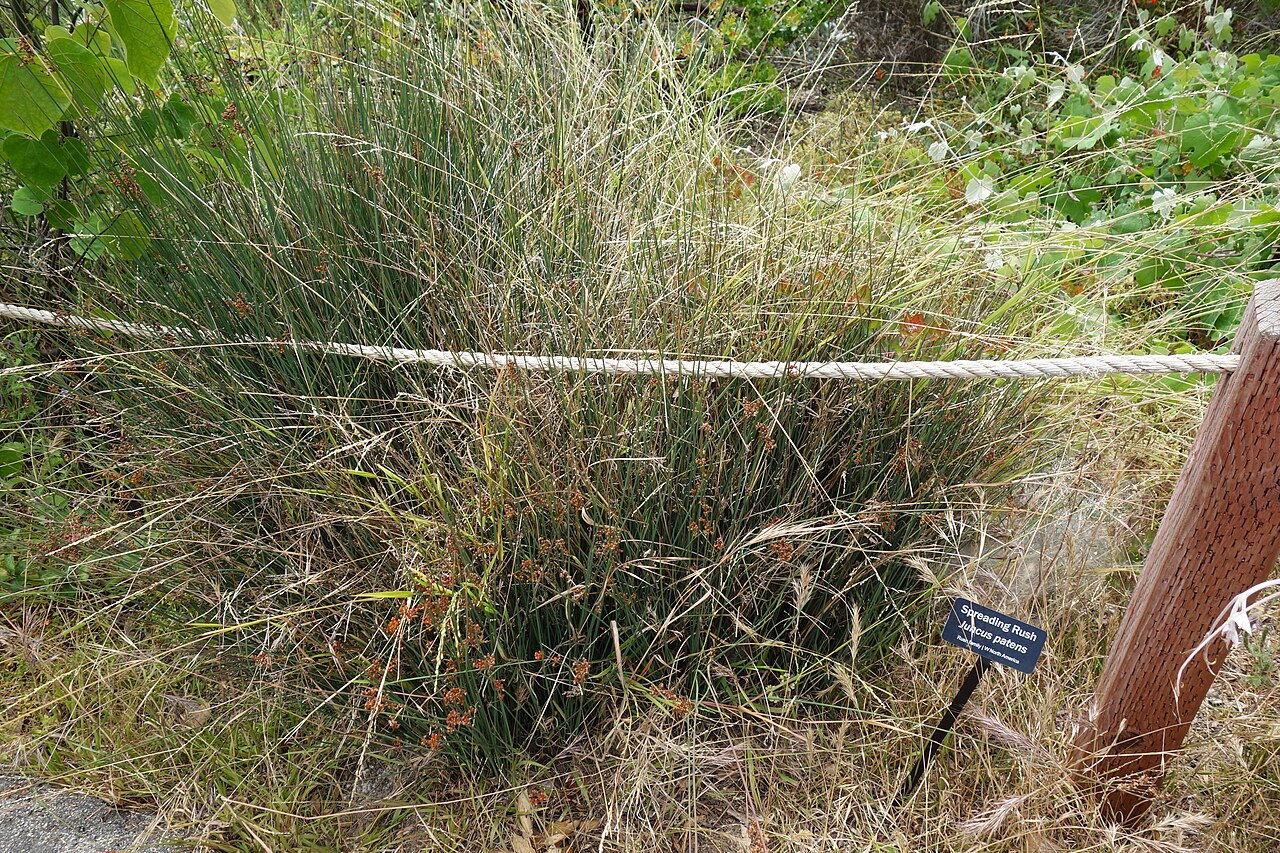
Juncus patens, commonly called Common Rush, Spreading Rush, or California Grey Rush, is an evergreen, clump-forming perennial native to the wetlands, seeps, and stream edges of the West Coast. Its wiry, blue-gray stems rise in tight vertical tufts that hold their color through the dry California summer, which is part of why this rush has become a favorite structural plant for rain gardens, bioswales, and pondside plantings even though it was overlooked by gardeners for decades in favor of the coarser, brighter-green Juncus effusus.
In the wild, Common Rush grows in wet, marshy ground, roadside ditches, seasonal seeps, and the margins of streams and vernal pools, usually where the soil stays damp through spring before drying out in summer. Mature clumps reach 1 to 3 feet tall and about as wide, with round, leafless stems that stand nearly straight up, giving the plant a neat, architectural look that holds up through fall and winter without staking or cutting back.
Common Rush tolerates both standing water and surprisingly long dry spells once established, which makes it one of the more forgiving native rushes for garden use. It asks for almost nothing beyond occasional moisture, handles heavy clay as readily as sand, and rarely needs dividing. For a California or Pacific Northwest garden that needs a tough, good-looking accent for a damp corner, a bioswale, or the edge of a pond, Common Rush is hard to beat.
Identification
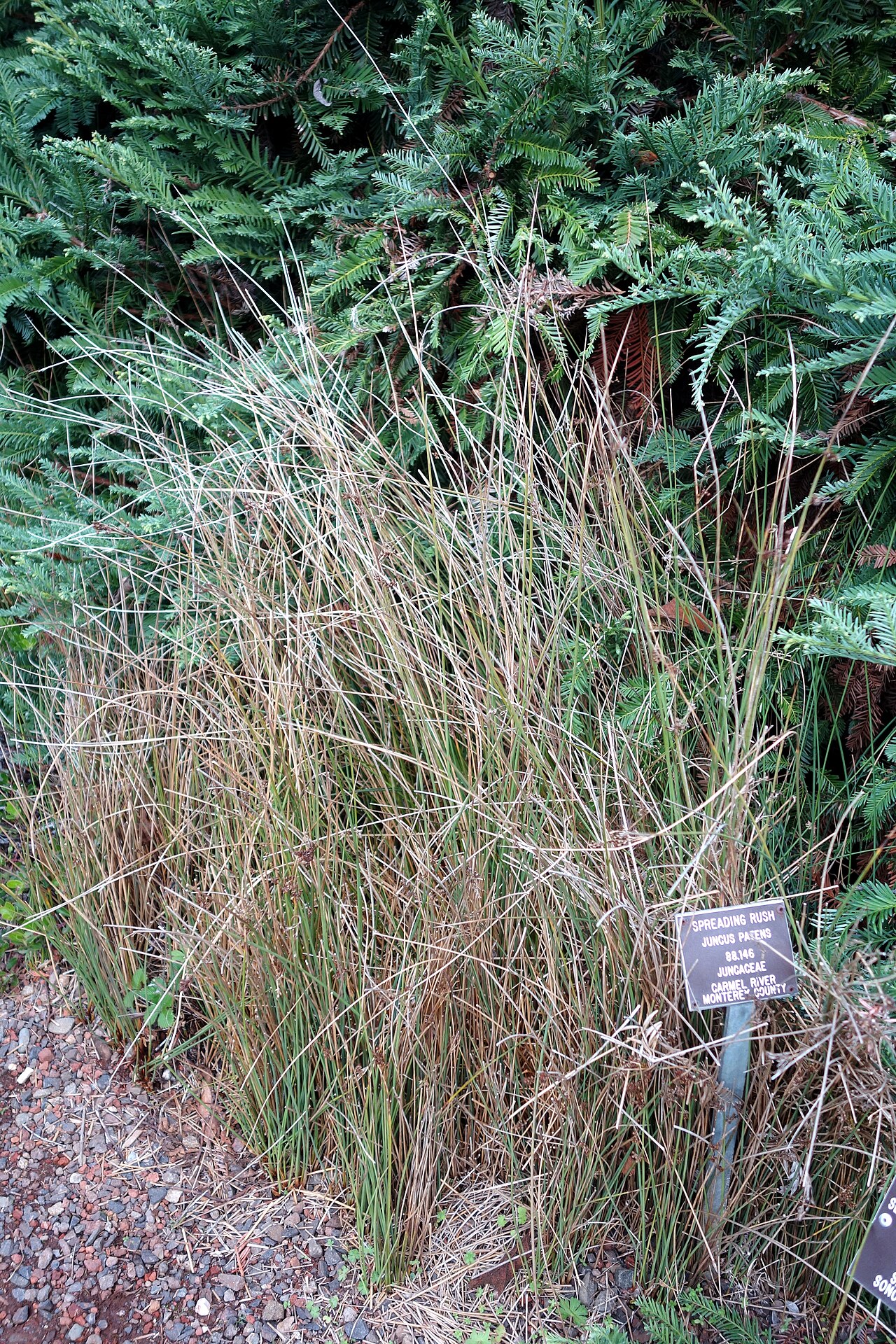
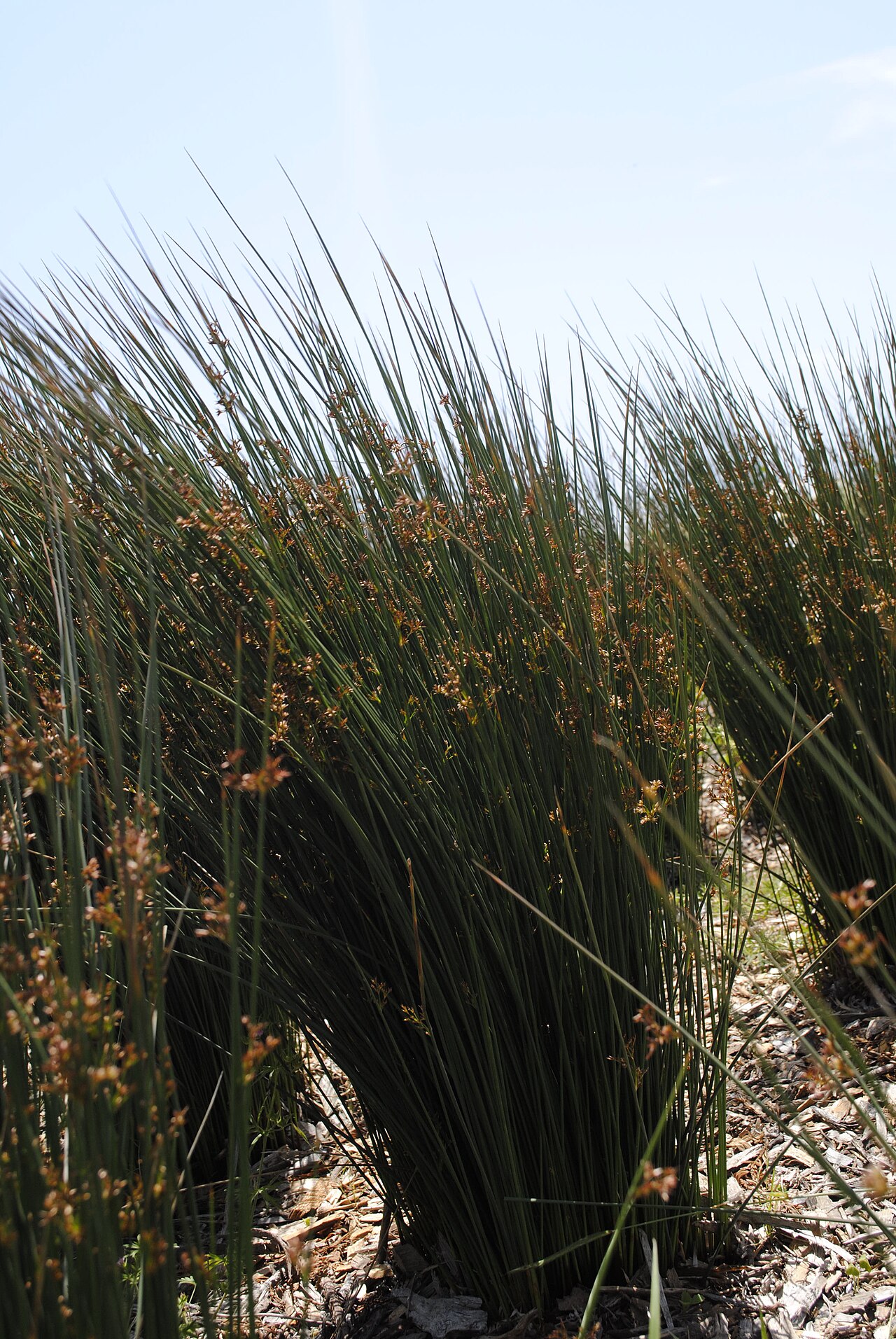
Common Rush is immediately recognizable by its tight, upright clumps of unbranched, cylindrical stems that are a distinctive blue-gray to blue-green color, setting it apart from the yellower-green, more sprawling Juncus effusus. The stems have faint longitudinal ridges you can feel if you run a finger along them, and they stay rigid and erect rather than arching over, which keeps the clump looking tidy year-round.
Stems
The stems (culms) are round in cross-section, 1 to 3 feet tall, and smooth to the touch with subtle fine ridges. They are solid, filled with white pith, and uniformly blue-green to gray-green along their length. Because the plant lacks true leaves, the stems themselves handle photosynthesis, which is why keeping them unshorn is important to the plant’s vigor.
Leaves
True leaf blades are absent. What look like leaves are actually leaf sheaths that wrap tightly around the base of each stem, usually reddish-brown to dark brown and papery, giving the base of the clump a rusty collar where the stems emerge from the soil.
Flowers
Small, inconspicuous flowers appear in branched clusters that emerge from the side of the stem, not at the very tip, a detail that separates true rushes from grasses and sedges. Each cluster holds many tiny brown to reddish-brown flowers with six tepals, blooming from late spring into summer.
Fruit & Seeds
After flowering, the plant sets small, three-chambered brown capsules that persist on the stems well into fall, adding subtle texture and a source of seed for birds. The capsules split open to release tiny seeds that are mostly spread by water and by birds foraging in wet ground.
Quick Facts
| Scientific Name | Juncus patens |
| Family | Juncaceae (Rush) |
| Plant Type | Evergreen Perennial Rush |
| Mature Height | 1–3 ft |
| Mature Spread | 1–2 ft |
| Growth Rate | Moderate |
| Sun Exposure | Full Sun to Part Shade |
| Water Needs | Moderate to High; tolerates seasonal drought once established |
| Soil Type | Clay, loam, or sand; tolerates poor drainage |
| Soil pH | 5.5–7.5 |
| Bloom Time | May – July |
| Flower Color | Brown to reddish-brown |
| Fall Color | Evergreen; blue-gray year-round |
| Fruit | Small brown three-chambered capsules |
| Deer Resistant | Yes |
| USDA Hardiness Zones | 7–10 |
Native Range
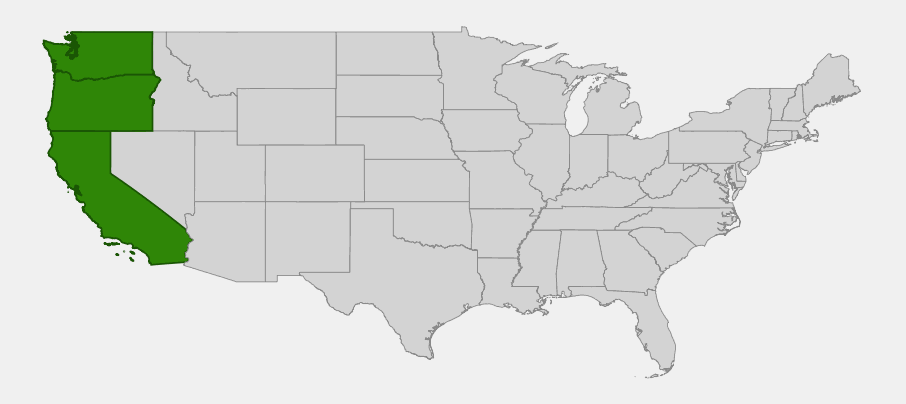
Common Rush is native to the West Coast of the United States, ranging from western Washington south through western Oregon and through California, with populations continuing south into Baja California, Mexico. Within this range it is most abundant in California, where it grows from the coast ranges into the Central Valley and foothill drainages.
It typically occupies seasonally wet ground: freshwater marsh edges, seeps on hillsides, roadside ditches that hold winter water, vernal pool margins, and the banks of slow streams. These are sites that are saturated or flooded in winter and spring and then dry out considerably by late summer, a pattern Common Rush is well adapted to handle.
Because it is widely sold in the native plant nursery trade and performs well outside its exact wild range, Common Rush is now planted well beyond where it naturally occurs, including in gardens throughout the West and in stormwater projects nationwide. In those plantings it is a garden selection rather than a wild population, and gardeners outside the West Coast should check with a local native plant society before assuming it is native to their area.
📋 Regional plant lists featuring Common Rush: California & Nevada · Western Oregon & Western Washington
Growing & Care Guide
Common Rush is one of the easiest native rushes to grow, asking only for a damp start and tolerating a wide range of conditions once its roots are established. It is a go-to plant for stormwater and rain garden projects because it handles both brief flooding and summer dry-down without complaint.
Light
Common Rush grows best in full sun along the coast, where fog and mild temperatures keep it from stressing, and appreciates light afternoon shade in hot inland gardens. In too much shade, clumps become looser and less upright, losing some of the tidy vertical form that makes the plant useful as a structural accent.
Soil & Water
This rush is not picky about soil texture, growing equally well in heavy clay, loam, or sand, as long as it gets consistent moisture through spring. Established plants tolerate standing water for extended periods and can also handle surprising summer drought, though they look best and grow fastest with occasional deep watering during the dry season. It is an excellent choice for the saturated soil at the bottom of a bioswale or rain garden.
Planting Tips
Plant from containers in fall or early spring so roots can establish before the first dry season. Space clumps 18 to 24 inches apart for a continuous planting, or use single specimens as vertical accents among lower groundcovers. Common Rush transplants and divides easily, making it simple to propagate more plants from an established clump.
Pruning & Maintenance
Little maintenance is needed. Cut back old or browned stems at the base in late winter every two to three years to keep clumps looking fresh, but avoid shearing the whole clump, since this removes the photosynthetic stems the plant depends on. Divide congested clumps every four to five years in fall or winter.
Landscape Uses
Common Rush brings vertical, architectural texture to a wide range of garden settings:
- Rain gardens and bioswales, where it handles both flooding and dry-down
- Pond and stream margins for a tidy, evergreen edge
- Container plantings as a striking blue-gray accent
- Erosion control on damp slopes and ditch banks
- Mixed native plantings as a vertical contrast to mounding perennials
- Wildlife gardens providing cover and seed for birds
Wildlife & Ecological Value
Common Rush plays a quiet but steady role in wetland and garden ecosystems, offering structure and shelter more than showy blooms.
For Pollinators
The flowers are wind-pollinated and not a major nectar source, but the dense clumps provide shelter for small native bees and beneficial insects, especially during the heat of summer when low, humid microhabitats are scarce.
For Birds
Small songbirds and sparrows forage among the stems for insects and seeds, and the dense clumps provide low cover for ground-foraging birds. The seed capsules that persist into fall and winter offer a modest food source when other seed is scarce.
For Mammals
Dense rush clumps along streambanks and marsh edges give small mammals, including voles and mice, protective cover close to water. Larger mammals browse rush foliage only lightly, as the tough, fibrous stems are not a preferred food.
Ecosystem Role
As a wetland-edge species, Common Rush helps stabilize damp soil with its fibrous root system, reducing erosion along streambanks, ditches, and seasonal wetlands. Its presence signals healthy seasonal hydrology, and stands of it help filter runoff before it reaches open water, a quality now put to deliberate use in stormwater and bioswale design.
Cultural & Historical Uses
Indigenous peoples throughout California traditionally used various native rushes, including species in the Juncus genus, for basketry, mats, and cordage, valuing the long, pliable, pithy stems for their flexibility and durability. While specific ethnobotanical records distinguishing Juncus patens from closely related rushes are limited, rushes in general held an important place in Californian Indigenous material culture for generations.
In modern horticulture, Common Rush has shifted from an overlooked native to a staple of water-wise and climate-adapted landscape design. Its rise in popularity tracks with growing interest in stormwater management, as municipalities and homeowners alike look for tough, attractive plants that can handle the boom-and-bust water cycle of California’s Mediterranean climate.
Today Common Rush is a mainstay of California native plant nurseries and is specified by landscape architects for everything from public rain gardens to residential pondside plantings, valued as much for its reliability as for its handsome blue-gray form.
Frequently Asked Questions
How is Common Rush different from Juncus effusus?
Common Rush has distinctly blue-gray to blue-green stems that stand upright and stiff, while Juncus effusus is a brighter green and tends to arch and flop as it matures. Common Rush also tends to hold a tidier form in the garden with less need for grooming.
Does Common Rush need standing water to survive?
No. While it tolerates periodic flooding and grows naturally in seasonally wet ground, established plants handle real summer drought once their roots are developed, which is part of why it works so well in rain gardens that are wet in winter and dry in summer.
Can Common Rush be grown in a container or small garden?
Yes. Its upright, clumping habit and manageable size make it an excellent container plant or small-garden accent, and it does not spread aggressively by runners the way some wetland grasses do.
Is Common Rush deer resistant?
Generally yes. Deer tend to avoid the tough, fibrous stems in favor of softer forage, which makes Common Rush a dependable choice in gardens where deer browsing is a persistent problem.
How fast does Common Rush spread?
It spreads slowly by short rhizomes, gradually widening its clump rather than running aggressively. Most gardeners find it stays where it is planted for years before needing division.

Looking for a nursery that carries Common Rush?
Browse our native plant nursery directory: California · Oregon · Washington