Green Sprangletop (Leptochloa dubia)
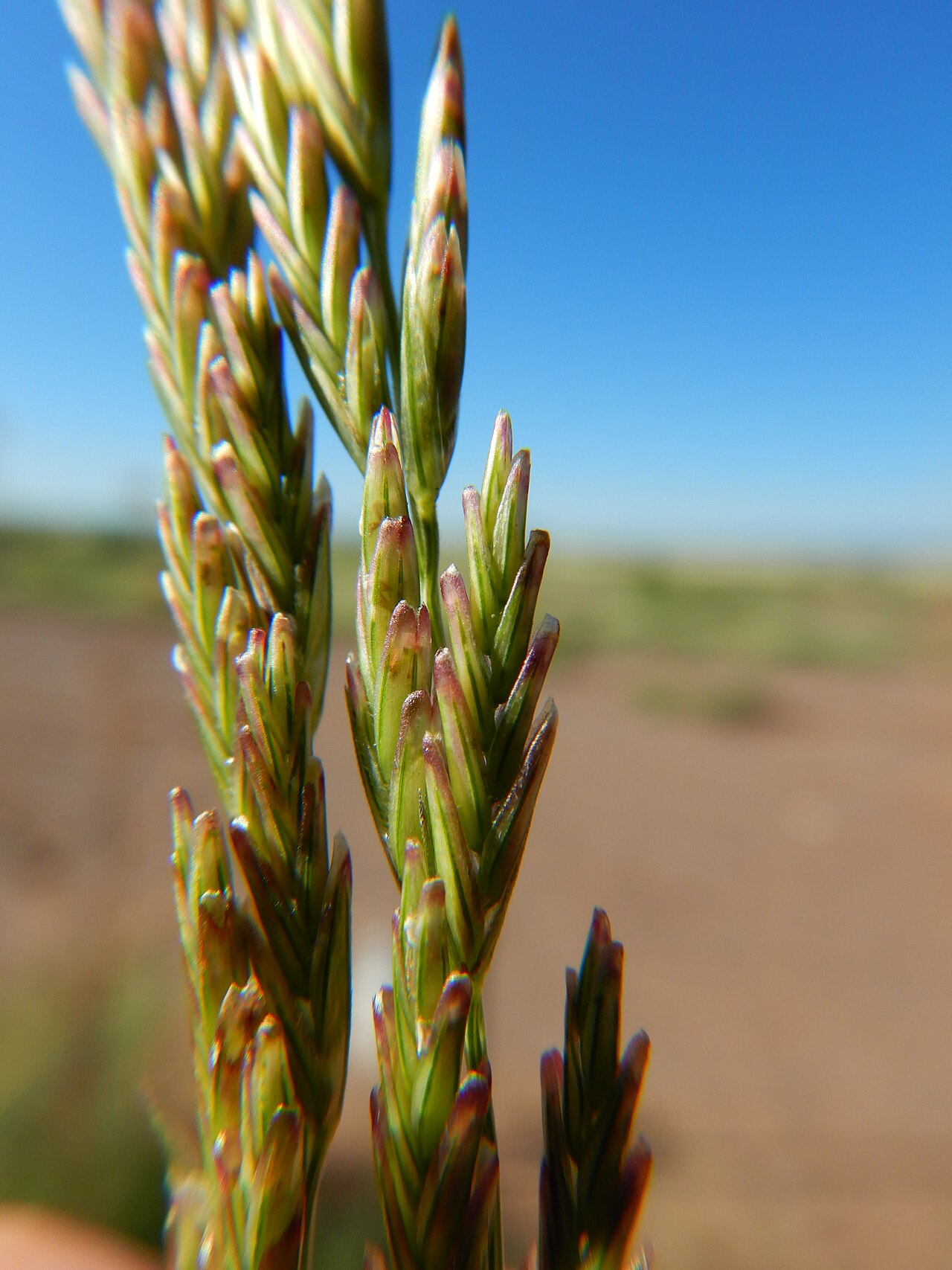
Leptochloa dubia, commonly known as Green Sprangletop or zacate gigante, is a warm-season, clump-forming perennial bunchgrass native to the southern and southwestern United States. It is widely valued as a reliable forage and rangeland grass, prized by ranchers for the way livestock and wildlife readily graze it while it is green, and it has become a standard component of native seed mixes used to revegetate disturbed and eroded rangeland across its range.
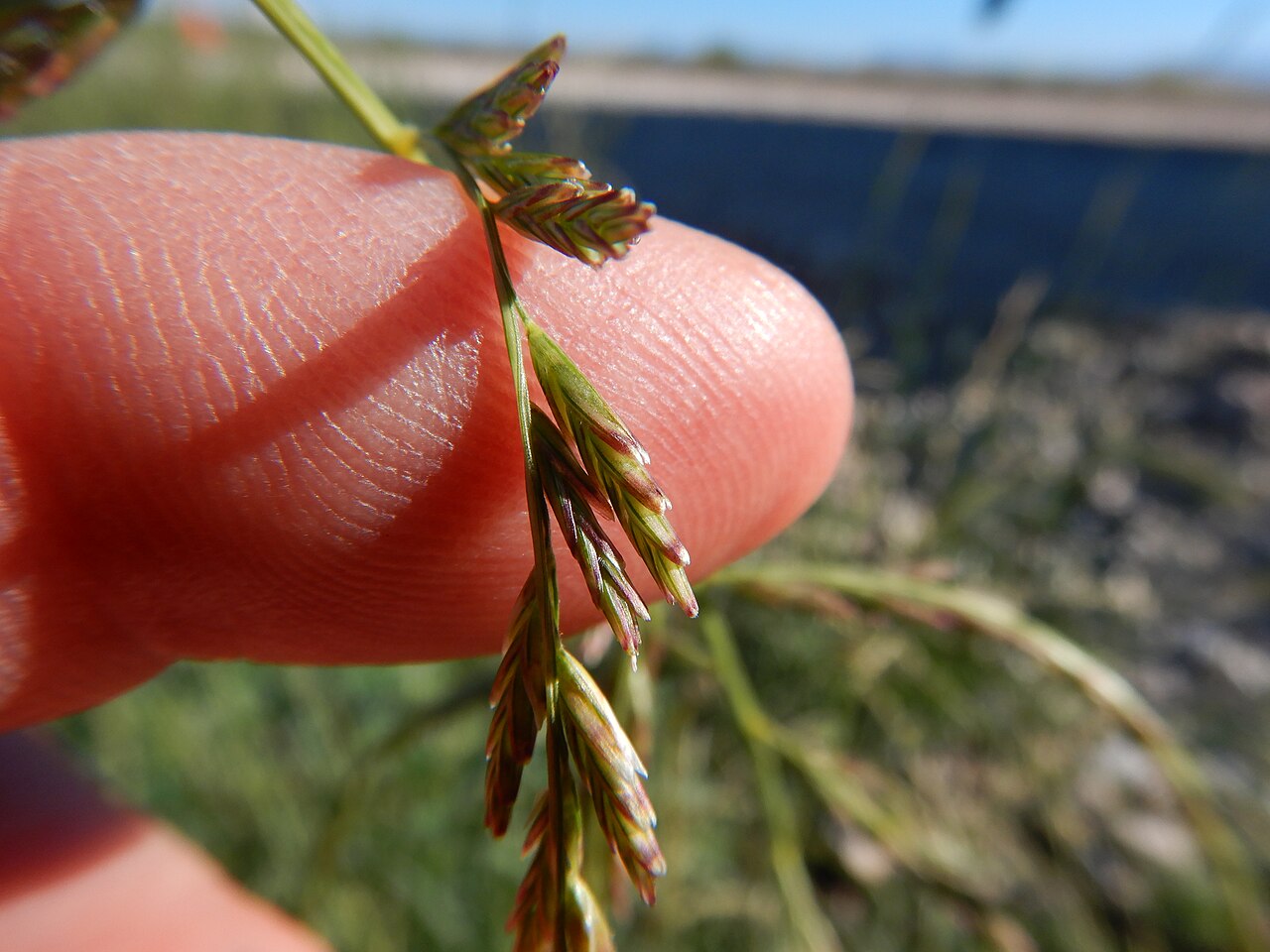
Green Sprangletop forms upright to slightly arching clumps of narrow leaves topped by distinctive branching seed heads, with slender spikelet-bearing branches that radiate outward in a loose, airy spray. It grows readily in rocky, sandy, or clay-based soils, tolerating considerable heat and drought once established, which makes it a dependable pioneer species for rebuilding plant cover on bare or disturbed ground.
For native plant gardeners in the southern Plains and Southwest, Green Sprangletop offers an attractive, low-maintenance bunchgrass with good drought tolerance and genuine wildlife value, equally at home in a naturalistic prairie planting or as part of an erosion-control seeding.
Identification
Green Sprangletop is a tufted, perennial bunchgrass growing from 1.5 to 3.5 feet tall, forming distinct clumps rather than spreading by rhizomes, which keeps it well-behaved in both rangeland and garden settings.
Stems & Leaves
The leaf blades are narrow and up to about 14 inches long, ranging from hairless to hairy or rough to the touch, and the leaf sheaths are sometimes tinged purplish, particularly at the base of the plant. Stems are slender and upright, rising cleanly from the basal clump of foliage.
Flowers & Seed Heads
The inflorescence is a branching panicle, with numerous slender branches bearing brownish to purplish-green spikelets arranged in a one-sided, comb-like pattern along each branch. This distinctive branching seed head, which can appear almost feathery when backlit, is the easiest way to identify the species once it begins flowering in summer.
Fruit & Seeds
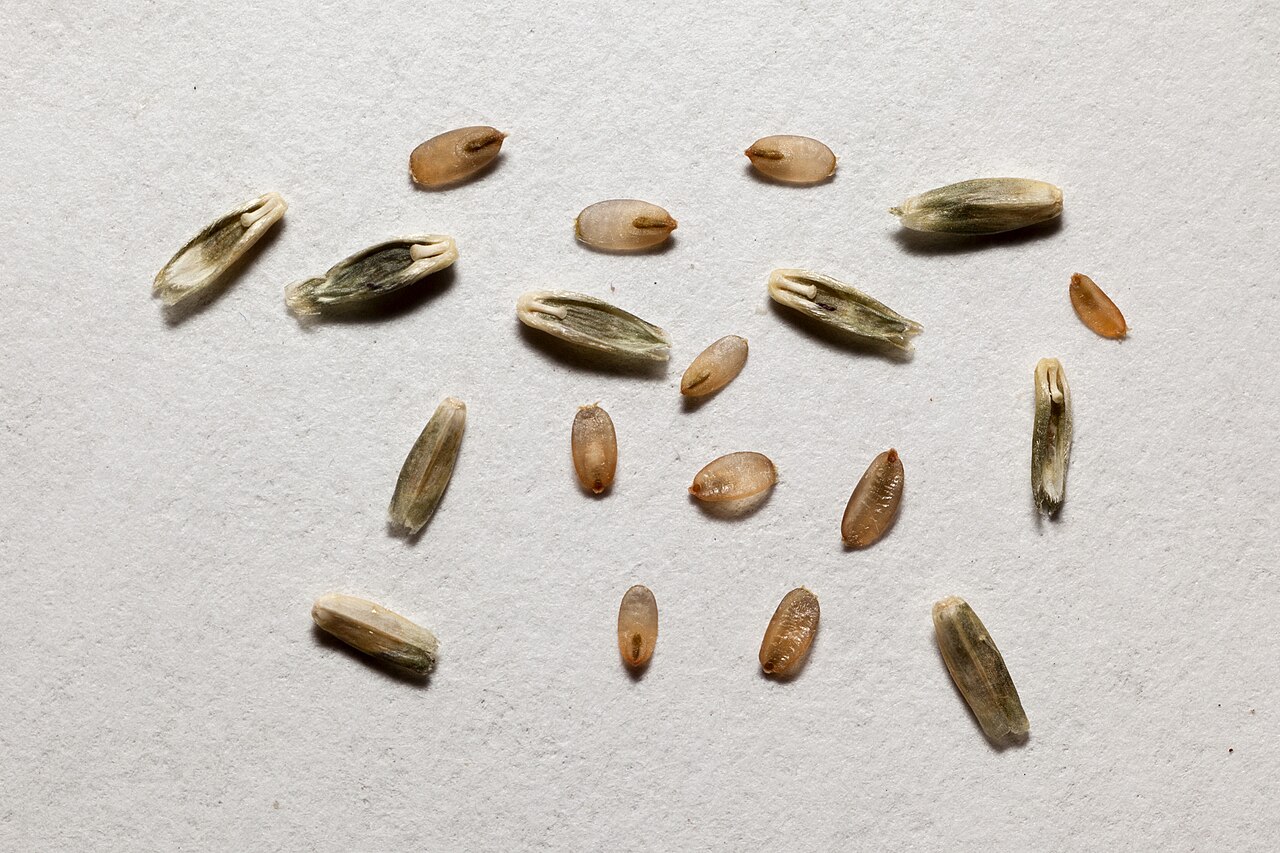
Each spikelet contains four to seven awnless, blunt-tipped lemmas (the small bracts enclosing the seed), which mature to a light tan to golden-brown color. The small grain-like seeds that follow are an important food source for seed-eating birds and are also collected commercially for rangeland reseeding.
Quick Facts
| Scientific Name | Leptochloa dubia |
| Family | Poaceae (Grass) |
| Plant Type | Warm-Season Perennial Bunchgrass |
| Mature Height | 1.5–3.5 ft |
| Mature Spread | 1–2 ft |
| Growth Rate | Moderate to Fast |
| Sun Exposure | Full Sun to Part Shade |
| Water Needs | Low to Moderate |
| Soil Type | Rocky, sandy, or clay loam; tolerates poor soils |
| Soil pH | 6.5–8.5 (neutral to alkaline); high CaCO3 tolerance |
| Bloom Time | June – October |
| Flower Color | Brownish-purple to green |
| Fall Color | Golden tan |
| Fruit | Small grain-like seeds in branching panicles |
| Deer Resistant | No (readily grazed) |
| USDA Hardiness Zones | 7–10 |
Native Range
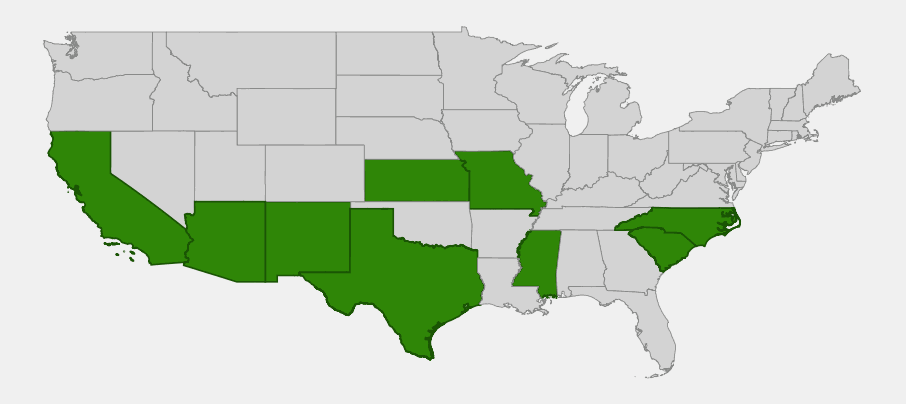
Green Sprangletop is native across a broad swath of the southern and southwestern United States, with confirmed populations in Arizona, California, Colorado, Florida, Kansas, Mississippi, Missouri, New Mexico, North Carolina, Oklahoma, South Carolina, and Texas. Its range continues south through Mexico to Argentina, making it one of the more widely distributed native grasses in the Americas.
Within the United States it is most abundant and most ecologically important in Texas and the Southwest, where it is a common component of desert grassland, limestone hill country, and Chihuahuan Desert plant communities, typically growing in well-drained, rocky, or sandy soils on slopes, flats, and disturbed ground. The more easterly populations in the Carolinas, Georgia-adjacent Florida, and the Ozark region occupy specialized habitats such as limestone glades and sandhills.
Because it is such a widely adapted pioneer species, Green Sprangletop is also planted well beyond its confirmed native range as part of commercial rangeland and erosion-control seed mixes; gardeners in states outside its documented native distribution should treat it as an introduced rangeland grass rather than a local native.
📋 Regional plant lists featuring Green Sprangletop: South & West Texas · Arizona & New Mexico · California & Nevada · Nebraska, Kansas & Eastern Colorado · Illinois, Iowa & Missouri · Georgia, Alabama & Mississippi · North Carolina & South Carolina
Growing & Care Guide
Green Sprangletop is one of the easier native bunchgrasses to establish from seed, which is part of why it is so widely used in rangeland restoration. In the garden, it rewards minimal care with reliable summer texture and seasonal seed heads.
Light
This grass performs best in full sun, where it develops the strongest, most upright clumps and the most abundant seed heads. It tolerates light shade but becomes looser and less floriferous as shade increases.
Soil & Water
Green Sprangletop is adapted to rocky or sandy soils with excellent drainage and high lime (calcium carbonate) content, and it tolerates heat and drought well once established. It needs only moderate water during establishment and can largely rely on natural rainfall afterward, making it a genuinely low-water choice for southwestern and southern plains gardens.
Planting Tips
Seed in spring after the soil has warmed, as this is a warm-season grass that germinates readily in heat. It behaves as a pioneer species, often used in seed mixes to provide quick ground cover while slower-establishing perennials get going, so it pairs well with other native grasses and wildflowers in a new planting.
Pruning & Maintenance
Cut back old growth in late winter before new spring shoots emerge to keep clumps tidy and encourage fresh growth. Established plants need little additional care and generally do not require division.
Landscape Uses
Green Sprangletop fits naturally into a range of dry, sunny garden and rangeland settings:
- Erosion control and rangeland restoration on disturbed or bare ground
- Native prairie and meadow plantings for seasonal texture
- Xeriscape gardens as a drought-tolerant bunchgrass accent
- Wildlife and pollinator habitat plantings for seed and cover
- Pasture and forage mixes within its native range
Wildlife & Ecological Value
As a widespread native grass across much of the southern U.S., Green Sprangletop contributes substantially to rangeland and prairie ecosystems, both as forage and as cover.
For Pollinators
Like most grasses, Green Sprangletop is wind-pollinated and offers limited direct value to pollinators, but its dense clumps provide shelter and nesting material for ground-nesting native bees in prairie and grassland settings.
For Birds
The abundant seed produced in its branching panicles is readily eaten by seed-eating grassland birds, including sparrows and quail, which also use the clumps for nesting and escape cover in open rangeland.
For Mammals
Green Sprangletop is a genuinely important forage grass, grazed readily by cattle, deer, and other livestock and wildlife, especially while green and actively growing; this palatability is precisely why it is so valued in rangeland management.
Ecosystem Role
As a fast-establishing pioneer species, Green Sprangletop plays an outsized role in stabilizing disturbed soils and preventing erosion while slower-growing perennial grasses and forbs become established, making it an important early-succession species across much of its range.
Cultural & Historical Uses
Green Sprangletop has long been recognized by ranchers and range managers across the Southwest and southern Plains as a valuable forage grass, readily grazed by all classes of livestock when green and succulent, and it remains an important component of native rangeland today.
Its common Spanish name, zacate gigante, reflects its long use and recognition throughout Mexico and the borderlands, where ranching traditions have relied on native grasses like this one for generations of livestock production.
In more recent decades, Green Sprangletop has become a standard seed-mix component for commercial rangeland restoration and erosion control projects throughout its native range, a modern application that builds directly on its traditional value as dependable livestock forage.
Frequently Asked Questions
Is Green Sprangletop a good lawn substitute?
Not typically. It grows in distinct upright clumps rather than a dense, mowable turf, making it better suited to meadow, prairie, or rangeland plantings than a conventional lawn.
How drought-tolerant is Green Sprangletop?
Very, once established. It is adapted to the hot, dry conditions of the Southwest and southern Plains, and mature plants need little supplemental water beyond natural rainfall in most of its range.
Will livestock and wildlife eat Green Sprangletop?
Yes, enthusiastically. It is considered excellent forage, especially while actively growing and green, which is a major reason it is included in so many native pasture and rangeland seed mixes.
How is Green Sprangletop different from other sprangletop species?
It is distinguished by its awnless, blunt-tipped lemmas and its relatively tall, upright clumping habit; other Leptochloa species in its range may have awned lemmas or a more sprawling growth form.
Can Green Sprangletop be grown from seed easily?
Yes, it is one of the easier native grasses to establish from seed, germinating readily in warm soil, which is exactly why it is so widely used as a quick-establishing component of native seed mixes.

Looking for a nursery that carries Green Sprangletop?
Browse our native plant nursery directory: Texas · Arizona & New Mexico · California · Kansas