Trailing Ratany (Krameria lanceolata)
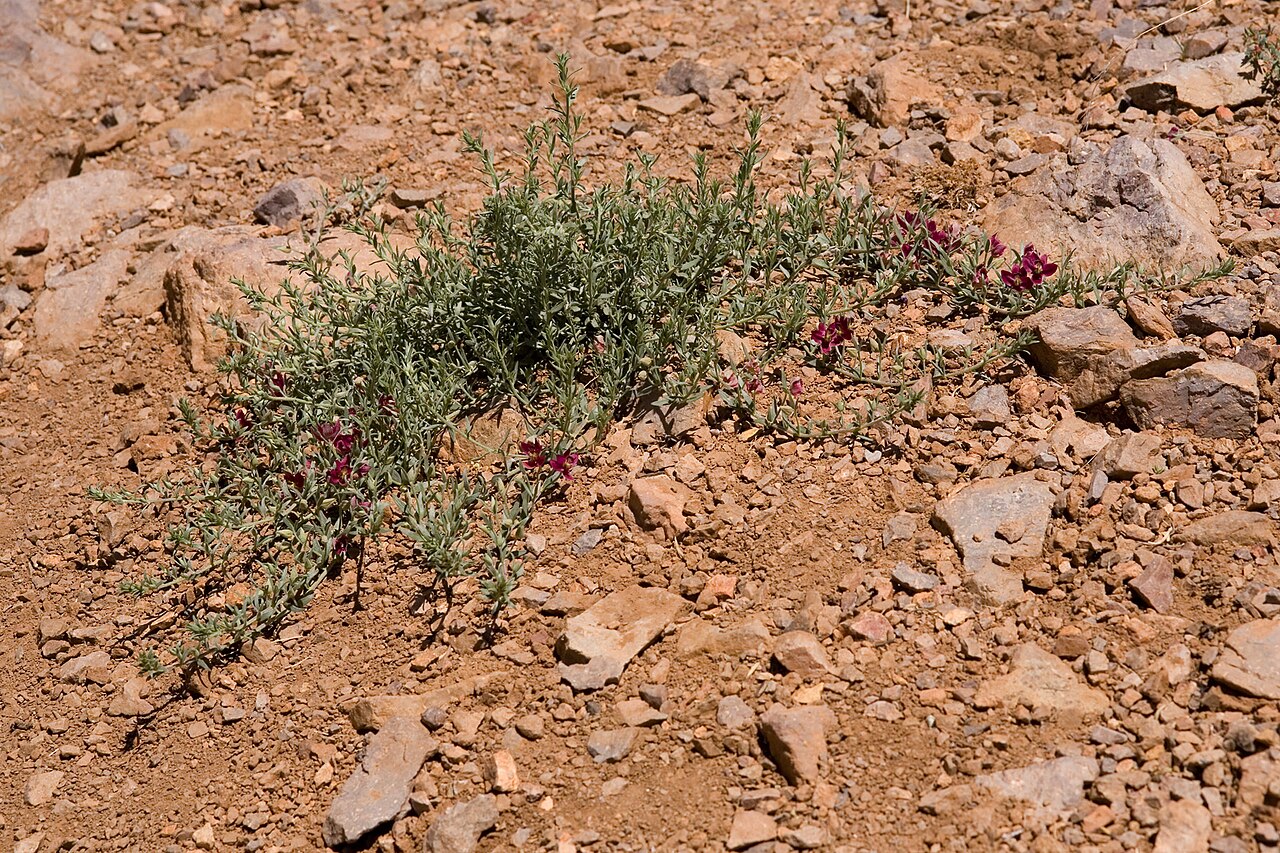
Krameria lanceolata, known as Trailing Ratany, Texas Ratany, or Sandspur, is a low, mat-forming perennial subshrub native to the grasslands, prairies, and rocky plains of the southwestern and south-central United States. It spreads along the ground in loose, sprawling patches, rarely rising more than a few inches tall, with silvery-green foliage and small but striking magenta-purple flowers that bloom through the heat of summer.
Trailing Ratany is a hemiparasite, meaning it taps into the roots of nearby grasses and other plants for some of its water and nutrients while still photosynthesizing on its own, a strategy well suited to the dry, nutrient-poor calcareous and sandy soils it favors. This unusual biology makes it tricky to establish from seed alone, but where it occurs naturally it is a tough, long-lived component of shortgrass prairie and desert grassland communities.
For xeriscape and wildlife gardens within its native range, Trailing Ratany offers a low, drought-tough groundcover with unusual, jewel-like flowers that are a favored nectar source for a specialized group of oil-collecting native bees. It is not a common nursery plant, but it is well worth seeking out for native prairie and desert plantings.
Identification
Trailing Ratany is a low, spreading, herbaceous perennial with stems that lie flat along the ground, sometimes extending 2 feet or more from a central root crown, forming loose patches up to 6 feet across in favorable conditions.
Stems & Leaves
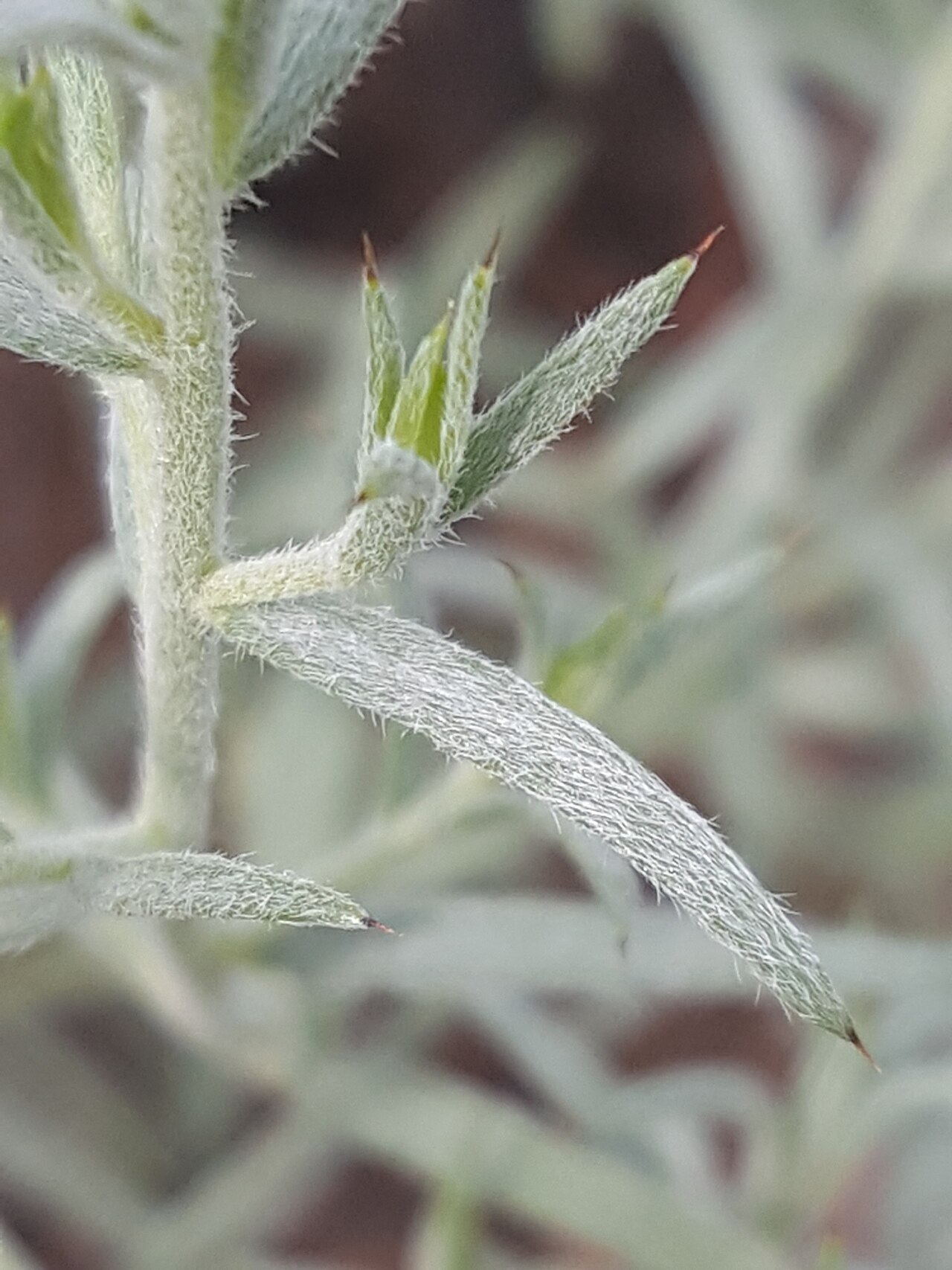
The stems are slender, decumbent (trailing along the ground), and covered in fine, silvery hairs that give the whole plant a soft gray-green cast. Leaves are small, narrow, linear to lance-shaped, and also silky-hairy, an adaptation that helps the plant conserve moisture in its hot, sunny habitat.
Flowers
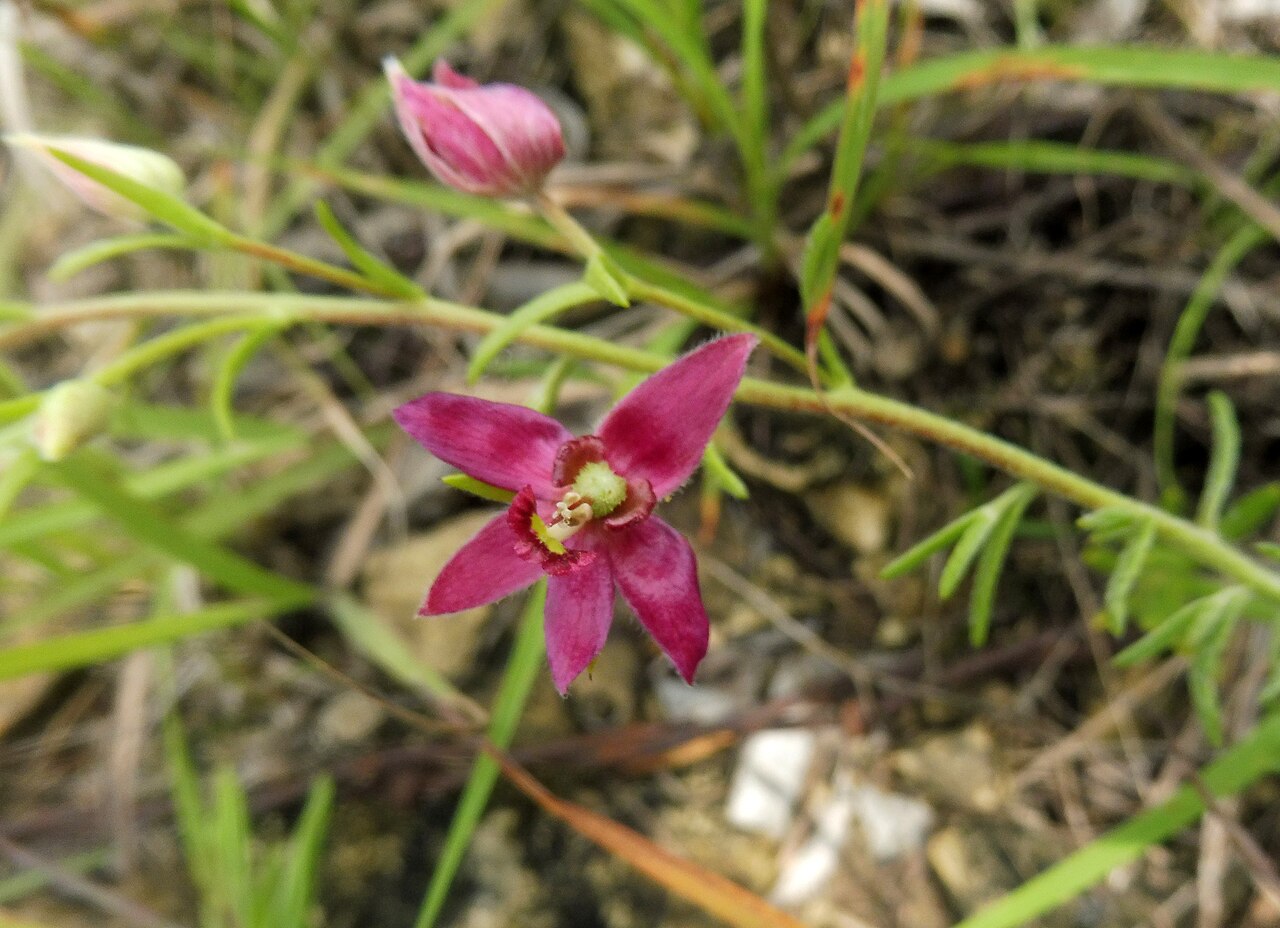
The flowers are the plant’s most distinctive feature: five spreading, purple-red to magenta sepals form a star-like bloom about half an inch across, with smaller, fringed petals at the center. They appear singly along the stems from late spring through summer, and their unusual color and shape set Trailing Ratany apart from almost any other low-growing native plant in its range.
Fruit & Seeds
Flowers are followed by small, round, spiny seed capsules covered in stout, barbed spines tipped with fine hairs, an adaptation for clinging to the fur of passing animals for seed dispersal, which also accounts for the common name “sandspur.”
Quick Facts
| Scientific Name | Krameria lanceolata |
| Family | Krameriaceae (Rhatany) |
| Plant Type | Perennial Trailing Subshrub (Root Hemiparasite) |
| Mature Height | 2–6 in |
| Mature Spread | 2–6 ft |
| Growth Rate | Slow |
| Sun Exposure | Full Sun |
| Water Needs | Low |
| Soil Type | Sandy, rocky, or calcareous; excellent drainage required |
| Soil pH | 6.5–8.0 (neutral to alkaline) |
| Bloom Time | May – August |
| Flower Color | Magenta-purple to pink |
| Fall Color | Silvery gray-green year-round |
| Fruit | Small spiny, barbed seed capsules |
| Deer Resistant | Yes |
| USDA Hardiness Zones | 6–10 |
Native Range
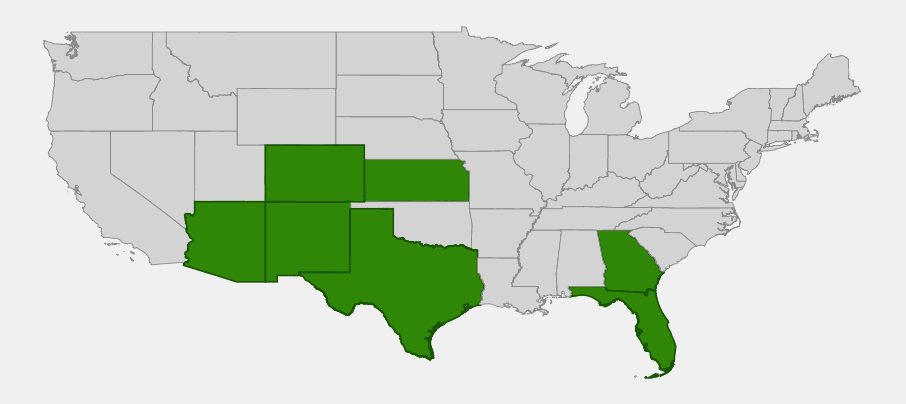
Trailing Ratany is native to the southwestern and south-central United States, with confirmed populations in Arizona, Colorado, Kansas, New Mexico, Oklahoma, and Texas, plus disjunct populations on the Coastal Plain of Florida and Georgia far to the east. It also occurs in the Mexican states of Chihuahua and Coahuila.
Across its range it favors open grasslands, prairies, and savannas on sandy, rocky, or calcareous (lime-rich) soils, from shortgrass prairie in the Great Plains to limestone outcrops and sandy post oak woodlands further south and east. It tends to grow in full sun, in sparsely vegetated openings where it can tap into the roots of neighboring grasses.
Trailing Ratany is absent from most of the eastern and northern United States, and the Florida and Georgia populations are genuinely disjunct outposts rather than evidence of a broader eastern range; gardeners outside its confirmed native states should not treat it as locally native.
📋 Regional plant lists featuring Trailing Ratany: South & West Texas · Arizona & New Mexico · Nebraska, Kansas & Eastern Colorado · Georgia, Alabama & Mississippi
Growing & Care Guide
Trailing Ratany is an unusual and challenging plant to establish because of its partial parasitism on grass roots, but where conditions suit it, it rewards patience with years of low-maintenance, drought-proof groundcover and striking summer flowers.
Light
This plant demands full sun. It is adapted to open, sparsely vegetated grassland and prairie, and will not perform well or flower reliably in shaded or heavily planted garden beds.
Soil & Water
Excellent drainage is essential; Trailing Ratany is adapted to sandy, rocky, or calcareous soils and will not tolerate heavy, wet clay or regular irrigation. Once established, it needs very little supplemental water and is best left to rely on natural rainfall except during extended drought. Because it draws some resources from the roots of neighboring grasses, planting it near native bunchgrasses such as Blue Grama or Little Bluestem can improve its vigor.
Planting Tips
Trailing Ratany is difficult to propagate and transplant because of its hemiparasitic root habit, and is rarely available in the nursery trade. Where seed or plants can be sourced, plant in fall in a sunny, well-drained site already established with compatible native grasses, and be patient, since establishment can be slow.
Pruning & Maintenance
Little to no pruning is needed; the plant’s naturally low, trailing habit requires no shaping. Avoid disturbing the root zone of nearby host grasses, since this can interfere with the hemiparasitic connection the plant partly depends on.
Landscape Uses
Trailing Ratany suits specialized native and xeric plantings:
- Prairie and shortgrass restoration alongside native bunchgrasses
- Rock gardens on calcareous or gravelly soil
- Xeriscape groundcover in low-water landscapes
- Pollinator gardens for specialist oil-collecting bees
- Caliche or limestone slope plantings where little else thrives
Wildlife & Ecological Value
Trailing Ratany has an outsized ecological role for such a low, inconspicuous plant, thanks largely to a remarkable and highly specific pollination relationship.
For Pollinators
Trailing Ratany produces floral oils rather than nectar, and is pollinated almost exclusively by specialist bees in the genus Ctenoplectra and related oil-collecting bees that gather these oils to provision their nests. This tight, co-evolved relationship makes Trailing Ratany a keystone resource for a narrow group of native bee specialists that depend on ratany and its relatives.
For Birds
Ground-foraging prairie birds such as sparrows may glean seeds from the spiny capsules, and the plant’s low, matting growth provides minor ground cover in otherwise open grassland habitat.
For Mammals
The barbed, spiny seed capsules cling readily to the fur of passing mammals, an effective seed dispersal strategy in open grassland. Grazing mammals generally avoid the tough, wiry stems in favor of more palatable grasses.
Ecosystem Role
As a root hemiparasite, Trailing Ratany occupies an unusual ecological niche, drawing water and nutrients from neighboring grass roots while contributing its own photosynthesis and specialized floral resources to the prairie community. Its presence is often associated with healthy, diverse native grassland rather than disturbed or monoculture sites.
Cultural & Historical Uses
Documented traditional uses of Krameria lanceolata specifically are limited, but other species in the genus Krameria, collectively known as rhatany, have a long history of use. Roots of related ratany species were traditionally used by various Indigenous groups and later in commercial herbal medicine, particularly in Latin America, for their astringent, tannin-rich properties.
Within its U.S. range, Trailing Ratany itself has been more a subject of botanical curiosity than a widely utilized plant, valued historically more for its striking flowers and unusual biology than for direct practical use. Its reliance on grassland host plants has also made it something of an indicator species for intact, undisturbed prairie.
In recent decades, interest in Trailing Ratany has grown mainly among native bee researchers and prairie restoration specialists studying its unique pollination ecology, rather than among those researching traditional plant uses.
Frequently Asked Questions
What does it mean that Trailing Ratany is a hemiparasite?
It means the plant taps into the root systems of nearby grasses to draw some water and nutrients, while still making its own food through photosynthesis. This partial dependence makes it harder to grow in isolation than typical garden perennials.
Can I buy Trailing Ratany at a nursery?
Rarely. Because of its hemiparasitic root habit, it is difficult to propagate commercially, and most nurseries do not carry it. Specialty native prairie or restoration seed suppliers are the most likely source.
Is Trailing Ratany invasive or aggressive?
No. It spreads slowly and stays low to the ground, never becoming aggressive or weedy; if anything, it can be challenging to establish and keep going in a garden setting.
Why are the flowers such an unusual color?
The vivid magenta-purple color and oil-producing structure of the flowers are adaptations tied to its specialized pollinators, oil-collecting bees that are drawn to this particular floral signal and reward.
Is Trailing Ratany the same plant found in Florida and in Texas?
Yes, it is the same species, but the Florida and Georgia populations are a genuinely disjunct, geographically separated part of its range from the main Texas-to-Arizona population, not a continuous distribution across the Gulf states.