Attracting Bees with Native Flowers: Essential Tips for a Thriving Garden Ecosystem
Last updated: September 16, 2026
Attracting bees with native flowers is a pretty hands-on way to help local ecosystems and get better pollination in your garden.
Native flowers give local bee populations the nutrients and shelter they actually need, so they’re essential for bee conservation. Using native flowers makes it way more likely you’ll see a variety of bee species, since these plants are used to the local climate and soil.
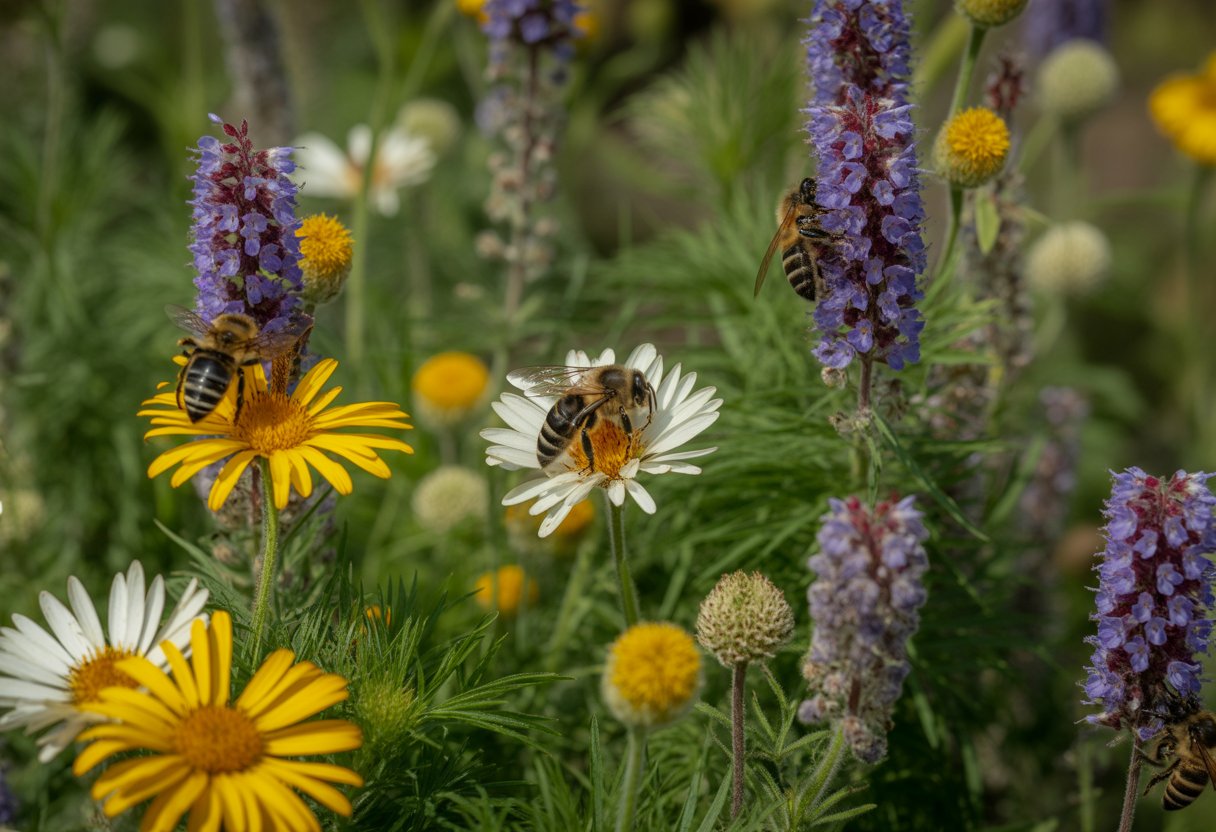
Bees don’t just visit any flower; they’re picky and often stick to blooms that evolved right alongside them.
When you pick native plants, you’re making sure flowers bloom at the right times and offer bees the kind of pollen and nectar they recognize, so they get a steady food source while they’re active.
Planting native flowers encourages bees to hang around and visit more often.
That helps bees stay healthy and usually means your garden gets better pollination, too.
The Importance of Attracting Bees With Native Flowers
When you attract bees with native flowers, you’re directly helping local ecosystems and native pollinators survive.
It’s a simple way to boost natural pollination and keep habitats strong for all sorts of species.
The Role of Bees and Pollinators
Bees handle a huge part of pollination, fertilizing all kinds of flowering plants.
They help wild plants and crops reproduce just by moving pollen around. Native bees, especially, are tuned in to their local environment and plants, so they do the job really well.
Pollinating insects impact food production and keep things balanced.
If bee numbers drop, lots of plants can’t reproduce, which messes with food for wildlife and people. Healthy bee populations also mean more genetic diversity in plants, which is never a bad thing.
Benefits of Native Flowers for Bee Populations
Native flowers give native bees exactly the nectar and pollen they count on.
These plants bloom in sync with pollinators’ lifecycles, so there’s always something for bees to eat. That timing helps keep bee populations going all year.
Unlike non-native plants, native flowers usually meet bees’ nutritional needs better.
They also cut down on the need for chemical pesticides, which can be rough on bees. Planting native flowers builds a stable habitat where pollinators can nest and reproduce.
Supporting Biodiversity and Ecosystem Health
Native plants bring in more pollinators and other insects, so you end up with a more diverse, resilient garden.
More biodiversity means the ecosystem can handle things like disease or weird weather a bit better.
Gardens with lots of native plants usually have healthier soil and better water retention, too.
All this supports a balanced food web and keeps the ecosystem humming along for both people and wildlife.
Selecting the Best Native Flowers for Bees
Pick native flowers that bloom at different times so bees never run out of food.
Mix in wildflowers, shrubs, and herbs to keep the habitat balanced and appealing for all sorts of bees.
Top Native Wildflowers for Attracting Bees
Go for wildflowers like black-eyed Susan, purple coneflower, and blazing star if you want to draw in bees.
These plants offer loads of pollen and nectar, and they don’t need much fussing over.
Milkweed and butterfly weed are especially good for certain bees.
Joe Pye weed comes in handy late in the season when not much else is blooming.
And don’t forget dandelions—they might look like weeds, but bees rely on them for early-season nectar.
All together, these wildflowers keep bees busy from spring through fall.
Essential Flowering Shrubs and Trees
Shrubs like potentilla, viburnum, and bee balm give bees plenty of nectar and a bit of shelter, too.
Since they bloom at different times, they help fill in the gaps.
Trees such as serviceberry, redbud, and dogwood come alive early in spring, which is great for bees waking up or emerging from hibernation.
Their flowers not only attract bees but also make your garden look more layered and interesting.
Adding these shrubs and trees gives bees pollen and cover right when they need it most.
Perennials, Annuals, and Herbs for Bee Gardens
Perennials like lavender, catmint, and borage bloom over and over, so bees know they can count on them.
Their scents and nectar are a big draw.
Annuals such as zinnia and sunflower bring bold colors and fill in the flowering gaps during summer and fall.
They grow fast, so you’re not left with bare spots.
Herbs like chives might seem minor, but their flowers are surprisingly productive for bees.
Mixing herbs in with perennials and annuals gives bees more options and keeps the garden lively.
Designing and Maintaining a Bee-Friendly Garden
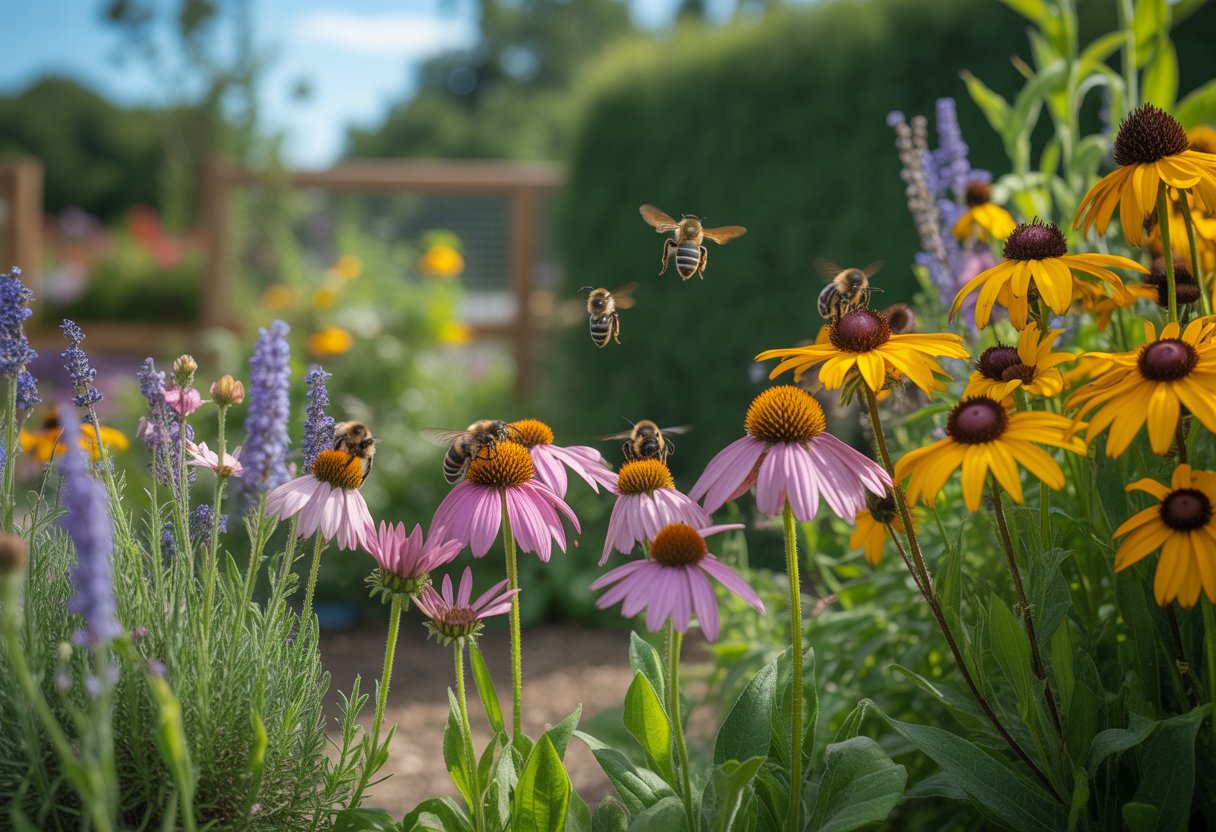
Building a bee-friendly garden takes a bit of planning.
You’ll want to provide different food sources, safe spots for nesting, and some year-round care to help pollinators like honey bees, bumblebees, and mason bees stick around.
Creating Suitable Habitat and Nesting Sites
Bees need safe places to nest.
A lot of native solitary bees, like mason bees, look for hollow stems, dead wood, or even tunnels in bare ground.
You can help by leaving some earth undisturbed, putting up bee houses, or letting old wood lie around.
Carpenter bees like softwood, so you might skip tearing down every old wooden thing in your yard.
Keep pesticides away from nesting spots to avoid harming bees.
Offering different nesting options helps support more bee species, which means you’ll see more buzzing around your veggies and flowers.
Best Practices for Planting and Garden Layout
Plant all sorts of native, single-flowered plants so bees have easy access to pollen and nectar.
Single flowers work better since they’re open and easier for bees to reach.
Cluster your plants together; bees like bumblebees can forage more efficiently that way.
Try to have something blooming from early spring all the way to late fall.
Skip the big blocks of just one plant.
Scatter bee-friendly flowers, herbs, and veggies throughout your garden to make it more inviting for pollinators and to boost pollination across the board.
Providing Food and Water Sources Year-Round
Bees need food and water in every season.
Plant early bloomers like crocuses and late ones like goldenrod to keep the buffet open.
Set out shallow dishes of water with stones or floating stuff so bees can land and sip safely.
Skip deep water—it’s risky for them.
Don’t pull every weed; leave some bee favorites like clover so there’s always a backup food source.
This kind of maintenance keeps things steady for honeybees and native pollinators.
Protecting Bee Populations and Promoting Pollination
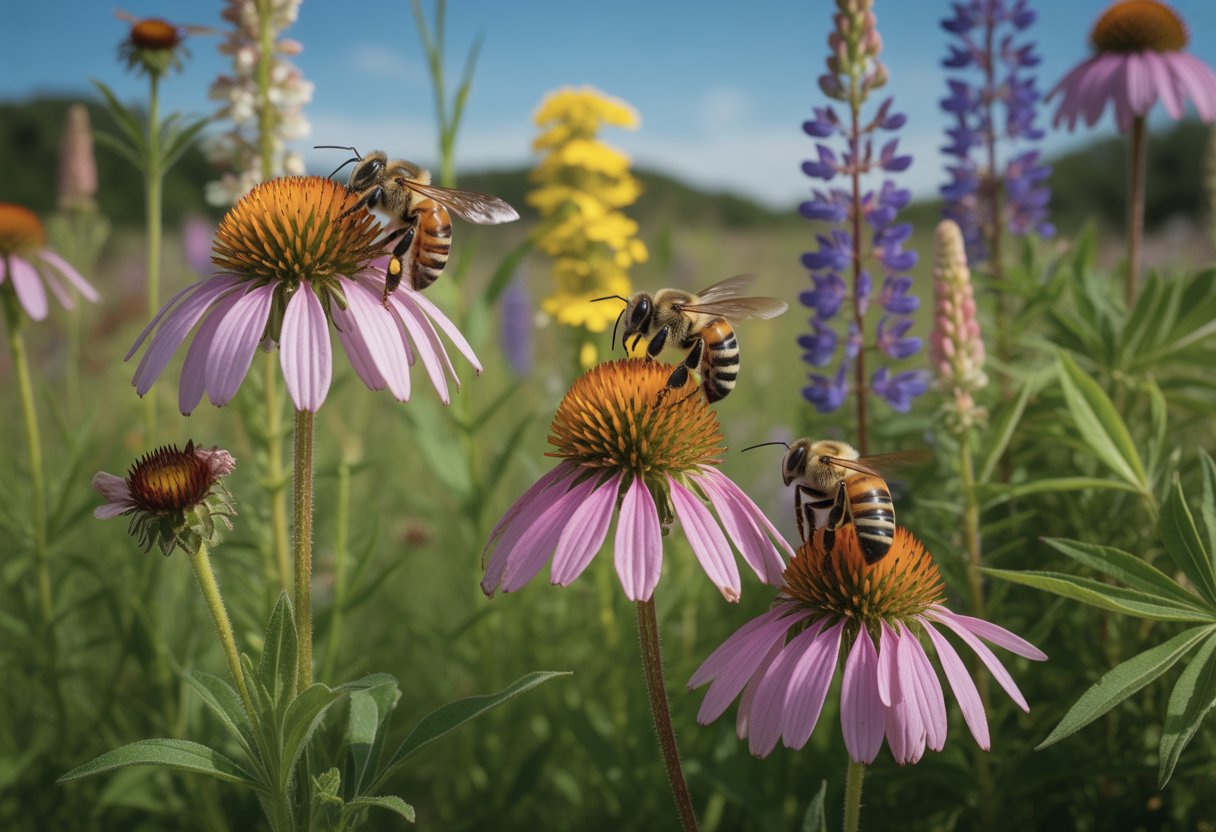
Protecting bees takes a bit of vigilance and some thoughtful gardening.
Minimize chemical exposure, stay aware of threats like colony collapse disorder, and get your community involved in pollinator-friendly habits.
Avoiding Harmful Chemicals and Supporting Beneficial Insects
Pesticides—especially neonicotinoids—are rough on bees.
They can mess with bees’ nervous systems and make it hard for them to forage.
Skip using these chemicals in your garden or on your lawn to help bees stay healthy.
Other helpful insects like ladybugs and lacewings do a lot of pest control, so you don’t need to reach for chemicals as often.
Planting native flowers feeds both bees and these “good bugs.”
Try integrated pest management (IPM).
That means keeping an eye on pests, using biological solutions, and only using chemicals if you really have to—and then, only in a targeted way.
That keeps pollinators safer.
Addressing Challenges: Colony Collapse Disorder and CCD
Colony collapse disorder (CCD) is a real problem, wiping out honeybee colonies and hurting pollination.
Scientists think it’s caused by a mix of things: pesticides, parasites like Varroa mites, bad nutrition, and disease.
Keeping gardens diverse with plenty of native flowers can help bees stay healthier and more resilient.
A varied diet gives bees a better shot at fighting off pests and illness.
Groups like the Xerces Society fund research to understand CCD and find solutions.
If you keep an eye on your bees and spot trouble early, you can step in before things get out of hand.
Community Action and Resources for Pollinator Conservation
Community involvement really matters when it comes to conserving pollinators. Jumping into events like Pollinator Week sparks awareness and gets people planting more native flowers.
Bees, butterflies, and even hummingbirds show up when you plant the right stuff. The Xerces Society and similar groups share advice on how to make your yard or neighborhood more pollinator-friendly.
You can start small—plant flowers that bloom at different times, and skip the pesticides. That’s already a big help.
Pollinator corridors connect habitats in cities and rural spots, letting pollinators travel with less risk. It’s not just gardeners; schools and local governments can team up too, finding creative ways to keep these efforts going.