Rocky Mountain Woodsia (Woodsia scopulina)
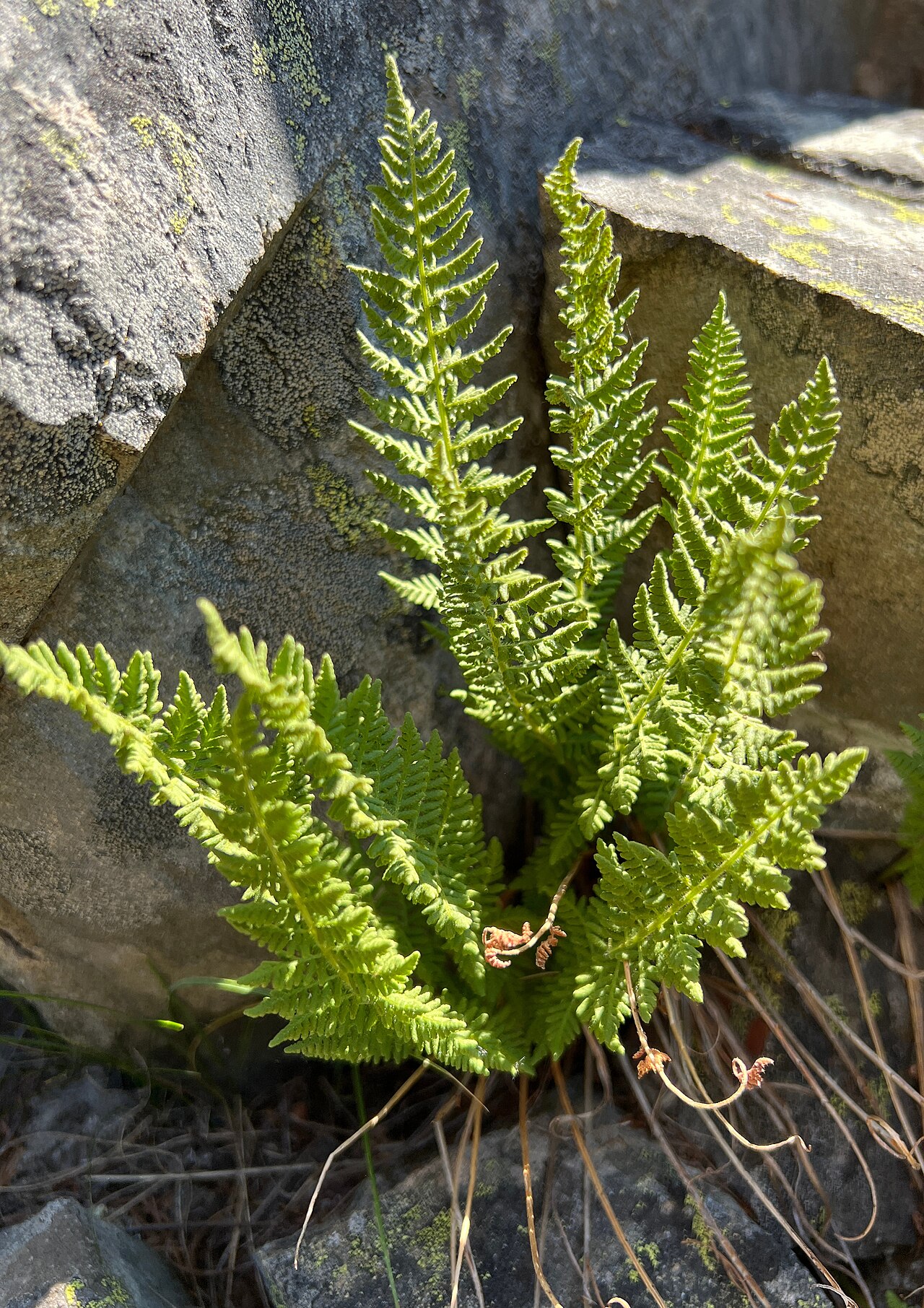
Woodsia scopulina, commonly called Rocky Mountain woodsia or cliff fern, is a small, tough native fern of rocky slopes and crevices across much of the mountainous West. Rather than the moist, shaded forest floor most people picture when they think of ferns, this species makes its home in some of the driest, most exposed microsites available to a fern: cracks in cliff faces, gaps between talus boulders, and thin soil pockets on sun-baked rock outcrops. Its wiry, twice-divided fronds form tidy, dense clumps that cling tenaciously to vertical and near-vertical rock.
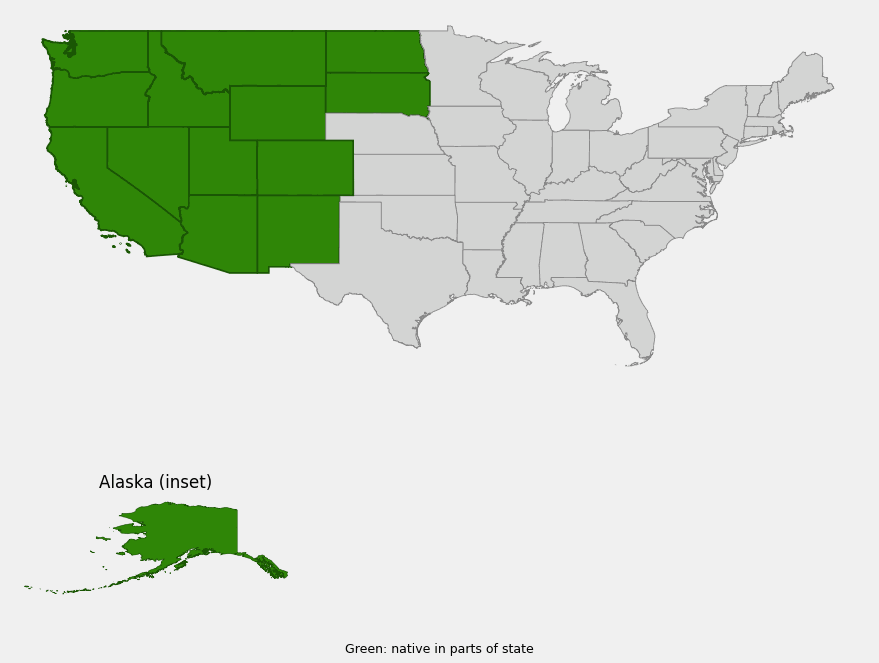
Rocky Mountain woodsia has an unusually broad geographic range for a rock fern, running from the coastal mountains of southern Alaska down through the Cascades and Sierra Nevada to southern California, and east across the entire Rocky Mountain cordillera into the Dakotas. Wherever it grows, the formula is similar: sunny to lightly shaded rock crevices and talus, usually at middle to high elevation, where its deep, wiry roots can find moisture in rock fissures even after the surrounding soil has dried out for the season.
This is a specialist plant for a specialist spot in the garden: a rock garden, dry-stacked stone wall, or scree slope where few other ferns would survive. It is not a plant for a shady woodland fern bed, and gardeners should resist the temptation to baby it with rich soil or constant moisture — Rocky Mountain woodsia thrives on the lean, well-drained conditions that would stress most other ferns.
Identification
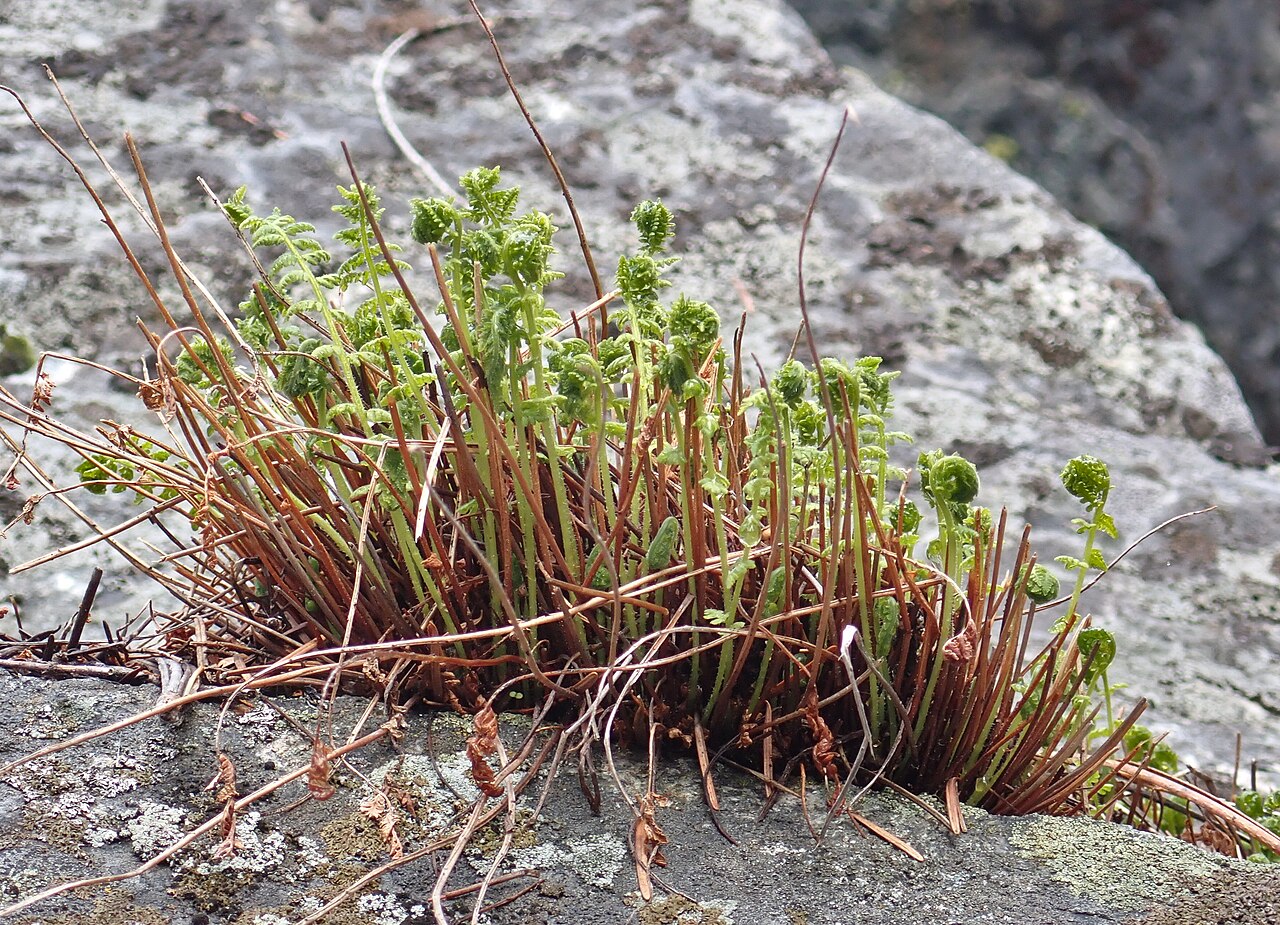
Rocky Mountain woodsia is a small to medium deciduous fern, with clustered fronds arising from a short, scaly rhizome to form a dense tuft 4 to 12 inches (10–30 cm) tall. Unlike spreading woodland ferns, it grows as a tight clump rather than a running colony, which suits its rock-crevice habitat.
Fronds
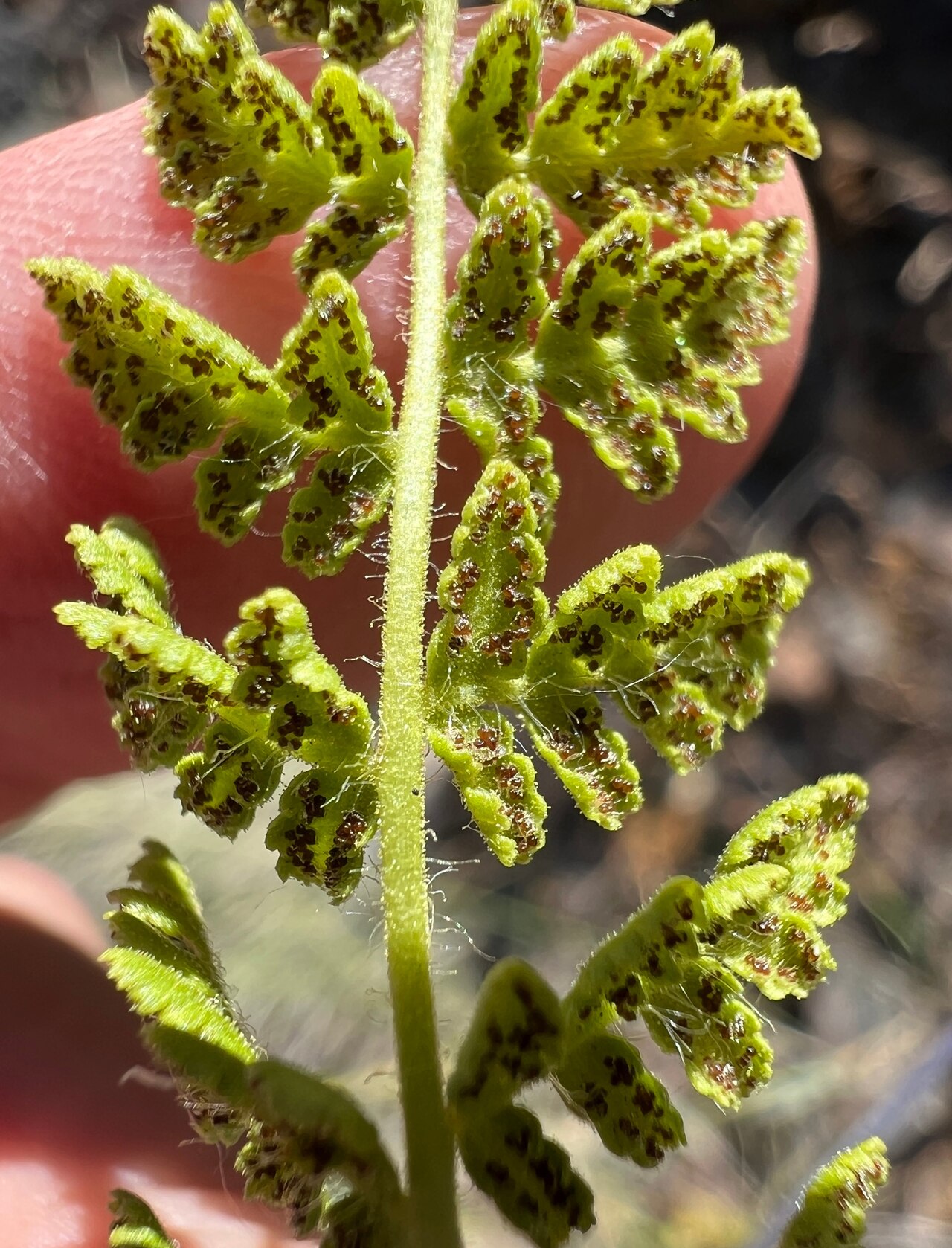
Fronds are twice-pinnate (divided into leaflets that are themselves divided), medium to pale green, mostly upright, and 10 to 30 cm long by up to 8 cm wide. New fronds emerge tightly coiled (circinate vernation, the classic fiddlehead curl) in spring. The rachis (central stem) is grooved on the upper surface and is sparsely to moderately covered with long, sharply protruding hairs, some tipped with a tiny gland — this hairy rachis is the key field mark separating it from the closely related and very similar Oregon woodsia (Woodsia oregana), which has a smoother, less hairy rachis.
Sori & Reproduction
Like all ferns, Rocky Mountain woodsia reproduces by spores rather than flowers or seeds. Small, round spore clusters (sori) form on the undersides of the pinnae, each initially covered by a narrow, lobed protective flap (indusium) that splits open as the spores mature. Spores are typically ripe from mid to late summer.
Quick Facts
| Scientific Name | Woodsia scopulina (syn. Physematium scopulinum) |
| Family | Woodsiaceae (Cliff Fern) |
| Plant Type | Deciduous Perennial Fern |
| Mature Height | 4–12 in (10–30 cm) |
| Mature Spread | 6–10 in, forms tight clumps |
| Growth Rate | Slow |
| Sun Exposure | Full Sun to Part Shade |
| Water Needs | Low to Average; excellent drought tolerance once established |
| Soil Type | Rocky, gravelly, sharply drained; crevices and thin talus soils |
| Soil pH | 6.0–7.5 |
| Bloom Time | Not applicable (fern; spores ripen mid–late summer) |
| Flower Color | None (reproduces by spores) |
| Fall Color | Fronds brown and die back with frost |
| Fruit | None; spores borne in sori on frond undersides |
| Deer Resistant | Yes |
| USDA Hardiness Zones | 3–8 |
Native Range
Rocky Mountain woodsia is native to the mountainous West, from southern coastal Alaska south through Washington, Oregon, and California’s Cascade and Sierra Nevada ranges, east through Nevada, Idaho, and Montana, and south through the Rocky Mountain states of Wyoming, Utah, Colorado, Arizona, and New Mexico, with outlying populations in North Dakota and South Dakota. It is one of the more widely distributed rock ferns in western North America.
Across this huge range, the species sticks to a consistent habitat type: sunny to lightly shaded rock crevices, cliff faces, and talus slopes, usually at middle to subalpine elevations, though it can occur lower in cooler, more northern parts of its range. It is a true crevice specialist, rooting in narrow cracks where its roots can reach moisture deep in the rock even when surface soils are bone dry.
Because it depends on bare rock habitat rather than competing in closed plant communities, Rocky Mountain woodsia is not typically threatened by competition from other plants, though localized populations can be vulnerable to rock quarrying, trail and road cuts, and other disturbance of cliff and talus habitat. It is not documented as native or naturalized outside the western mountain states and provinces listed here.
📋 Regional plant lists featuring Rocky Mountain woodsia: Alaska · California & Nevada · North & South Dakota and Western Minnesota
Growing & Care Guide
Rocky Mountain woodsia is a specialist for the rock garden rather than a general-purpose landscape fern. Its needs are the opposite of a typical shade-garden fern: lean soil, sharp drainage, and tolerance of dry spells once established.
Light
Full sun to part shade suits this species well, reflecting the open, exposed rock habitats it occupies in the wild. In hot, low-elevation gardens, some afternoon shade helps prevent excessive frond scorch during summer.
Soil & Water
Sharp drainage is essential. Plant in gravelly, rocky soil or in the crevices of a dry-stacked stone wall or scree bed rather than in rich garden loam, which tends to hold too much moisture around the crown and invites rot. Water moderately during the first year to establish roots, then reduce; established plants tolerate real drought, drawing on moisture held deep in rock crevices much as they do in the wild.
Planting Tips
Tuck divisions or young plants into vertical or steeply sloped rock crevices, packing a little gritty soil mix around the roots to get them started. A north- or east-facing crevice in hot climates reduces stress; in cooler, cloudier climates a sunnier aspect works well. Patience is useful — this is a slow-growing fern that settles in gradually rather than filling space quickly.
Pruning & Maintenance
Minimal care is needed. Trim away dead fronds in late winter or early spring before new growth emerges. Avoid heavy fertilization or rich soil amendments, both of which push soft, floppy growth that doesn’t suit the plant’s naturally wiry, compact habit.
Landscape Uses
Rocky Mountain woodsia is purpose-built for specific garden settings:
- Rock gardens and crevice gardens, tucked between stones
- Dry-stacked stone walls where roots can reach into mortar-free gaps
- Scree and talus-style plantings mimicking alpine or subalpine terrain
- Xeric native plant collections alongside other drought-tolerant rock dwellers
- Container culture in a shallow, well-drained trough planting
Wildlife & Ecological Value
As a fern, Rocky Mountain woodsia does not offer nectar, fruit, or large-scale forage value, but it plays a quiet, specialized role in the rocky habitats it colonizes.
For Pollinators
Ferns reproduce by spores, not flowers, so this species offers no direct nectar or pollen resource. Its value to pollinators is indirect, as part of the broader structural diversity of rock-outcrop plant communities.
For Birds
The dense fronds and crevice-rooted clumps can offer small-scale shelter for insects and, in turn, foraging opportunities for birds working rocky slopes and cliff habitat, though this fern is not a primary food or nesting resource.
For Mammals
Rocky Mountain woodsia is not a significant forage plant for mammals; its wiry, often slightly tough fronds and exposed rocky habitat make it of minor interest to browsers compared to more palatable streamside and meadow vegetation nearby.
Ecosystem Role
By rooting into bare rock crevices, this fern is among the first vascular plants to colonize fractured rock surfaces, contributing organic matter and helping initiate soil development in talus and cliff habitats over time. Its presence is also an indicator of relatively undisturbed rocky terrain in many of the mountain ranges where it grows.
Cultural & Historical Uses
Rocky Mountain woodsia does not have a well-documented history of use as a food, medicine, or material plant among Indigenous peoples or early settlers, likely reflecting both its small size and its occurrence in habitats — steep rock faces and talus — that offer little practical yield compared to more accessible and productive plants nearby.
Its primary historical and contemporary significance has been botanical and horticultural: as a textbook example of a crevice- and talus-adapted fern, it appears frequently in regional floras and rock garden literature as a model species for understanding how ferns can occupy dry, exposed habitats typically considered inhospitable to the fern family.
Today, Rocky Mountain woodsia is valued chiefly by rock garden enthusiasts and native plant restorationists working on talus, scree, and cliff-face habitat projects, where its toughness and modest size make it a practical choice for recreating authentic western rock-garden plant communities.
Frequently Asked Questions
Can Rocky Mountain woodsia grow in a regular shaded fern bed?
It can tolerate part shade, but it needs sharp drainage and lean, rocky soil to thrive — the rich, consistently moist soil of a typical woodland fern bed is more likely to cause crown rot than to help it grow.
How do I tell Rocky Mountain woodsia apart from Oregon woodsia?
The clearest field mark is the rachis (frond stem): Rocky Mountain woodsia has long, sharply protruding hairs on the rachis, some tipped with a tiny gland, while Oregon woodsia’s rachis is smoother and much less hairy.
Does this fern need regular watering?
Established plants are quite drought tolerant, reflecting their native rock-crevice habitat. Water moderately during the first year while roots establish, then let the plant largely rely on natural rainfall and the moisture held in surrounding rock.
Is Rocky Mountain woodsia evergreen?
No, it is deciduous. Fronds die back and turn brown with fall frost, and new, tightly coiled fronds emerge again the following spring.
Where is the best spot to plant it in my garden?
Look for a crevice garden, dry-stacked stone wall, or scree slope with full sun to part shade and excellent drainage — conditions that mimic the rocky outcrops and talus it grows in throughout its wild range.

Looking for a nursery that carries Rocky Mountain woodsia?
Browse our native plant nursery directory: California · Alaska & Arizona · Idaho · Nevada & New Mexico · Montana · Wyoming · Utah · Colorado · Washington · Oregon