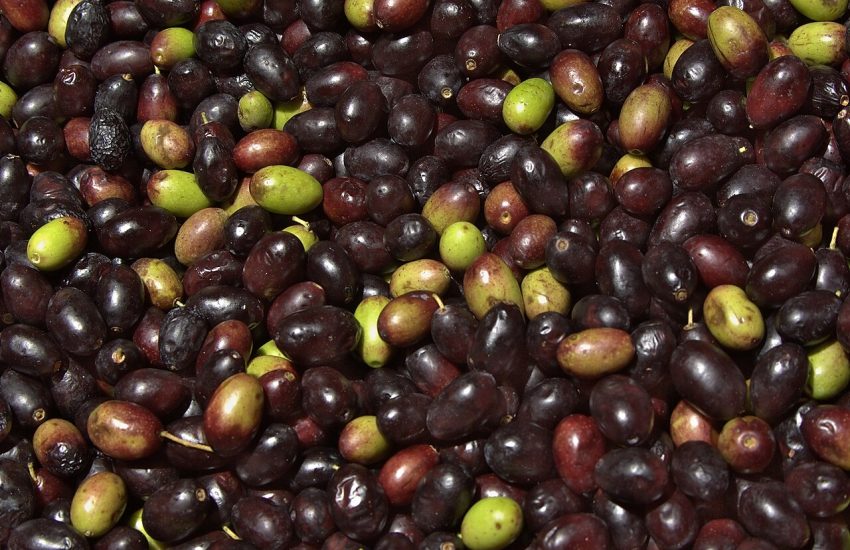
Hojiblanca Olive Tree (Olea europaea ‘Hojiblanca’)
Last updated: November 3, 2026
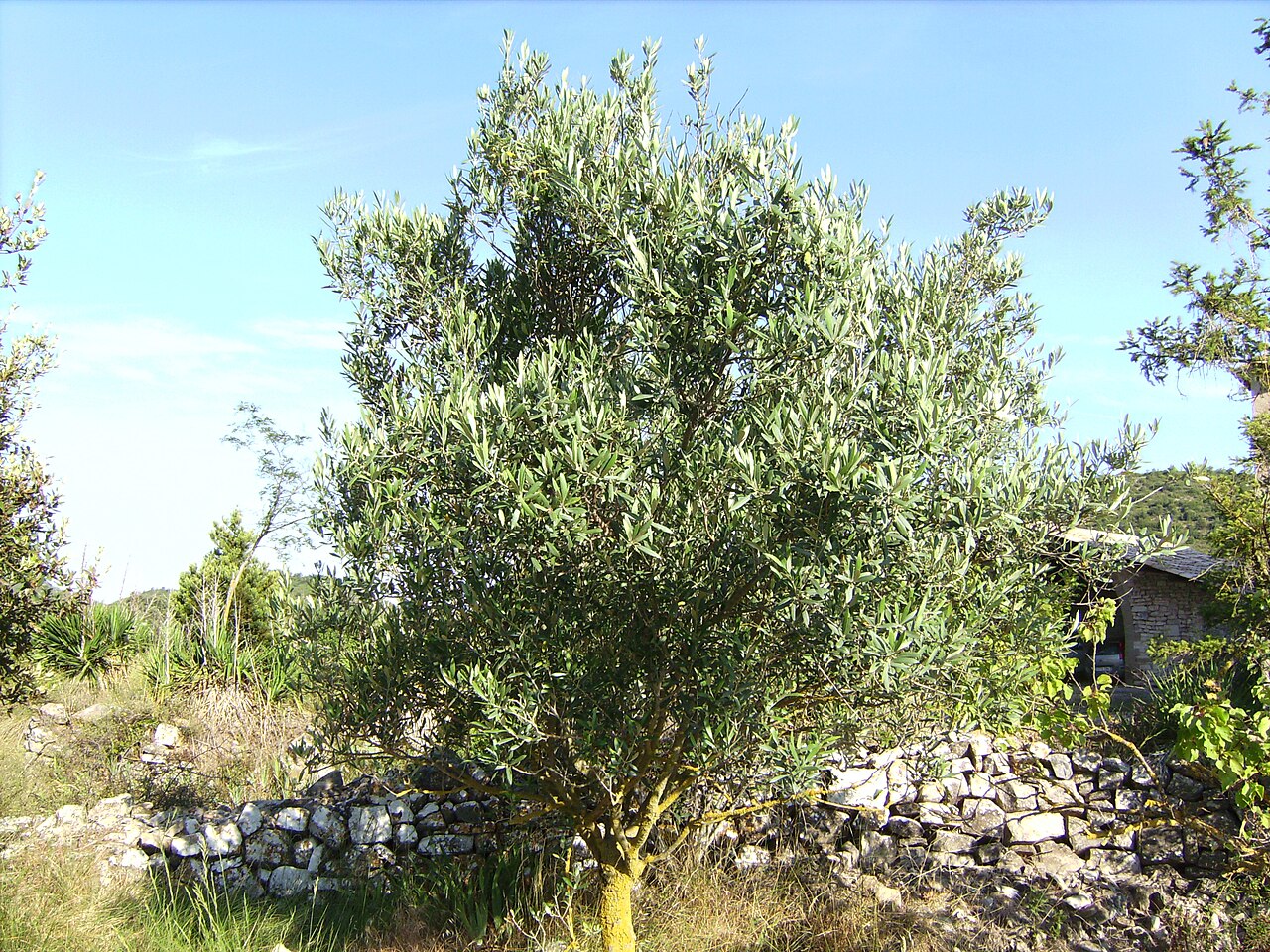
Olea europaea ‘Hojiblanca’, the Hojiblanca Olive Tree, is a large, vigorous Spanish cultivar named for the pale, almost white underside of its leaves (“hoja blanca” means “white leaf” in Spanish). It is the third most widely planted olive cultivar in Spain, concentrated in the provinces of Córdoba, Málaga, Seville and Granada, and it is prized as a true dual-purpose tree that gives both a fine golden oil and a crisp, mild-tasting table olive from the same crop.
Gardeners and small-scale growers choose Hojiblanca for its sheer vigor, upright growth, heavy production, and good tolerance of heat, drought and moderate cold once established. Because a single tree reliably sets fruit on its own, it is also one of the easier cultivars for a home orchard where there is room for only one olive tree, though a second cultivar nearby, such as Frantoio or Leccino, improves the crop further.
Olive (Olea europaea) is not native to North America; it is native to the Mediterranean basin. It has no federal noxious-weed listing, but the California Invasive Plant Council (Cal-IPC) lists olive as a limited-impact invasive in parts of California, where birds carry the fruit of fruiting cultivars into oak woodland and other wildland habitat. Hojiblanca is a heavy-fruiting cultivar, so California gardeners near natural open space should harvest the crop each year, avoid planting next to wildlands, and remove any volunteer seedlings that appear.
Identification
Hojiblanca forms a large, vigorous, upright tree, noticeably more erect in habit than spreading, weeping cultivars such as Pendolino.
Bark & Stems
Young branches are stiff and ascending rather than drooping, giving the whole tree a columnar-to-rounded outline as it matures; the bark follows the typical gray, shallowly fissured pattern of mature olive wood.
Leaves
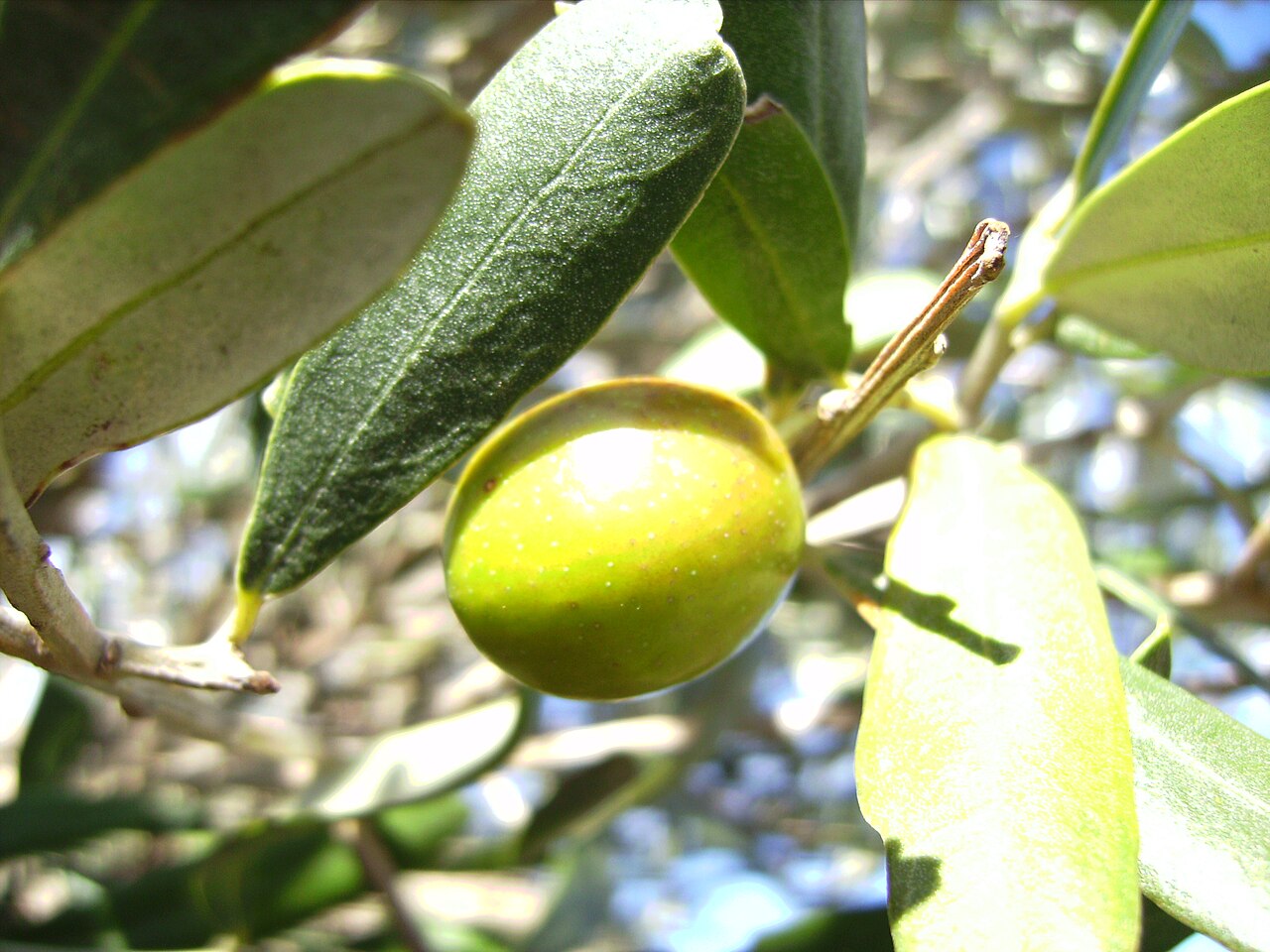
The cultivar’s name describes its most distinctive feature: leaves are lanceolate and medium-sized, dull gray-green above, but strikingly pale, almost white and densely scaly on the underside, brighter than the silvery undersides typical of most olive cultivars. This pronounced two-tone leaf is one of the easiest ways to identify Hojiblanca in a mixed planting.
Flowers & Fruit
Flowering is medium to late in the season; the tree is self-compatible with medium-quality pollen, meaning a lone Hojiblanca sets a good crop on its own, with yields improving further alongside a compatible pollinizer. The fruit is large for an olive cultivar, up to about 4.8 grams, spherical rather than elongated, with a flesh-to-stone ratio of roughly 8:1 and an oil content around 17 to 19 percent. Fruit clings tightly to the stem, which makes mechanical harvesting more difficult than with looser-fruited cultivars, and ripening is late, typically November into December. Flavor runs slightly sweet at first with a mild bitterness and a faint almond finish.
Quick Facts
| Scientific Name | Olea europaea ‘Hojiblanca’ |
| Cultivar | Hojiblanca (syn. Lucentino, Casta de Lucena, Ojiblanca) |
| Family | Oleaceae (Olive) |
| Plant Type | Evergreen fruiting tree |
| Native to North America | No — introduced from Andalusia, Spain (Mediterranean basin) |
| Mature Height | 20–30 ft (large and vigorous; prunable to 10–12 ft) |
| Mature Spread | 15–20 ft, upright and erect bearing |
| Growth Rate | Fast; high vigor, medium precocity to first bearing |
| Sun Exposure | Full sun |
| Water Needs | Low to moderate once established; notably drought tolerant |
| Soil Type | Well-drained loam, sand or rocky, calcareous soil |
| Soil pH | Neutral to alkaline, about 6.5–8.5 |
| Bloom Time | Medium to late spring |
| Leaf / Fall Color | Evergreen; gray-green above, strikingly white-silver beneath |
| Fruit | Large, to about 4.8 g, round; dual-purpose oil (17–19% yield) and table use |
| Deer Resistant | Yes |
| USDA Hardiness Zones | 8–10; noted among the more cold-tolerant Spanish cultivars |
| Invasive Status | Not federally listed; Cal-IPC limited-impact invasive risk in parts of California for fruiting cultivars |
Origin & Where It Grows
The species Olea europaea is native to the Mediterranean basin, where it has been cultivated for food and oil for thousands of years, with wild and naturalized populations stretching from Iberia and North Africa through the Levant.
Hojiblanca is endemic to the area around Priego de Córdoba and Lucena in Andalusia, southern Spain, and today it covers more than 265,000 hectares across the provinces of Córdoba, Málaga, Seville and Granada, making it the third most planted olive cultivar in Spain by area. Its popularity rests on heavy, if somewhat alternate-year (biennial), yields and the versatility of a fruit that works equally well cured as a table olive or pressed for oil.
In the United States, Hojiblanca is grown mainly in California’s Mediterranean-climate olive districts — the Central Valley, Sierra foothills and Central Coast — and it has gained attention from newer super-high-density olive oil operations for its vigor and productivity. It can also succeed as a container or sheltered-garden specimen in warm microclimates of the Southwest and Gulf Coast.
Hojiblanca Origin & Range
| Species Native Range | Mediterranean basin: southern Europe, North Africa, the Levant |
| Cultivar Origin | Priego de Córdoba / Lucena, Andalusia, Spain |
| Best U.S. Regions | California Central Valley, Sierra foothills, Central Coast; warm, sheltered sites in the Southwest and Gulf Coast |
| USDA Zones | 8–10 |
| Invasive Status | Not native; limited-impact invasive risk in parts of California (Cal-IPC) for fruiting cultivars |
Growing & Care Guide
Hojiblanca’s vigor and heat tolerance make it a forgiving choice for a sunny, dry garden once it has a season or two to establish roots.
Light
Full sun is essential — Hojiblanca’s large, erect canopy needs all the light it can get to ripen its heavy late-season crop and to keep oil quality high.
Soil & Water
Plant in well-drained soil; like all olives, Hojiblanca resents waterlogged roots and is prone to root rot in heavy, poorly drained ground. Water deeply and regularly through the first two to three years, then reduce frequency — mature trees are quite drought tolerant, though some supplemental water during fruit sizing in summer improves yield and oil content.
Planting Tips
Because Hojiblanca is vigorous and grows large, give it plenty of room — 15 to 20 feet from structures or other trees in an orchard planting. It is self-fruitful, so a single tree will bear, but interplanting with Frantoio or Leccino within bee range increases the crop. Plant in spring once frost danger has passed.
Pruning & Maintenance
Because of its vigor, Hojiblanca benefits from more assertive annual pruning than slower cultivars, to keep the erect canopy open to light and manage its size. Prune in late winter after the coldest weather has passed, removing crossing and crowded growth; avoid heavy cuts in the growing season since fruit forms on the previous year’s wood.
Propagation
Hojiblanca, like every named olive cultivar, must be propagated by cuttings or grafting to come true; seedlings grown from its fruit pits revert to unpredictable, usually inferior wild-type traits. Hojiblanca’s rooting capacity from cuttings is considered average, a little lower than some other Spanish cultivars, so nursery propagation under mist with rooting hormone gives the most reliable results.
Landscape Uses
- Home and small-farm orchards wanting a dependable, self-fruitful, dual-purpose tree
- Mediterranean and xeriscape gardens paired with lavender, rosemary and other low-water companions
- Shade or specimen tree where its large, upright silhouette and silvery foliage stand out
- Windbreak plantings in hot, dry regions, thanks to its vigor and heat tolerance
Harvest & Pollination
Hojiblanca is self-compatible, so a single tree reliably sets fruit, although yields improve further with a compatible pollinizer such as Frantoio or Leccino nearby. Ripening is late, typically November into December, and the fruit clings tightly to the stem, which is why Hojiblanca orchards often rely more on hand or shake-and-catch harvesting than on fully mechanical systems. Fruit intended for the table must always be cured — by brine, lye, water, or dry-salt processing — before eating; like all olives, raw Hojiblanca fruit is intensely bitter from natural oleuropein and is not something to eat straight off the tree.
Wildlife & Ecological Value
Olive flowers are wind-pollinated rather than insect-pollinated, so Hojiblanca offers little in the way of nectar or pollen for bees and other pollinators compared with native flowering trees, and because it evolved outside North America it supports very few native insects here. Birds readily eat unharvested olives, and that is the exact pathway by which fruiting cultivars like Hojiblanca have become a limited-impact invasive concern in parts of California, spreading seed into oak woodland and chaparral — one more reason to pick the crop promptly each year. Beyond its edible harvest, Hojiblanca functions mainly as a structural evergreen tree in the garden rather than as wildlife habitat.
Native Alternatives
- Desert Olive (Forestiera neomexicana) — a compact, silvery-leaved native of the Southwest with a similar fine texture and a fraction of the water need
- Texas Olive (Cordia boissieri) — a small, gray-leaved evergreen native tree from South Texas with showy white flowers, often used as an olive look-alike in dry gardens
- American Sweet Olive / Devilwood (Osmanthus americanus) — a native evergreen tree in the same olive family (Oleaceae), with fragrant flowers and glossy foliage
- Arizona Rosewood (Vauquelinia californica) — a tough, drought-tolerant native evergreen tree/large shrub of the Southwest with a similar dense, silvery-green look
History & Uses
Hojiblanca takes its name directly from its leaves — “white leaf” in Spanish — a trait so pronounced that it has long served to distinguish the cultivar in the field even before fruit forms. Long grown around Lucena and Priego de Córdoba in Andalusia, it spread steadily through the twentieth century until it became the third most widely planted olive cultivar in Spain, prized by growers for high if alternating yields and valued by processors for working equally well as oil or as a cured table olive.
In Spain, Hojiblanca anchors several regional Protected Designation of Origin olive oils and is also widely used for the plump green and black table olives sold throughout the country and exported abroad. Its vigor and adaptability have more recently drawn interest from modern, high-density olive oil plantings outside its native Andalusia, including trial and commercial plantings in parts of California.
Frequently Asked Questions
Is Hojiblanca olive tree native to the United States?
No. Olive (Olea europaea) is native to the Mediterranean basin, not North America. Hojiblanca is an introduced, cultivated variety; in parts of California it is treated as a limited-impact invasive risk because birds can carry unharvested fruit into wildland habitat, so pick the crop each year and avoid planting it next to natural open space in that region.
Does a Hojiblanca olive tree need a second tree to produce fruit?
No — it is self-compatible and a single tree will set a good crop on its own, though yields improve further with a compatible pollinizer such as Frantoio or Leccino growing nearby.
What is the easiest way to identify a Hojiblanca olive tree?
Look at the undersides of the leaves: Hojiblanca’s are unusually pale, almost white, which is where the cultivar gets its name (“hoja blanca,” white leaf). Combined with its upright, vigorous, erect growth habit, that leaf color is the clearest field mark.
Can Hojiblanca olives be eaten fresh off the tree?
No. Like all olive fruit, Hojiblanca olives are intensely bitter when raw because of a natural compound called oleuropein. They must be cured — typically brined, lye-treated, water-cured or dry-salted — before they are edible.
Is Hojiblanca used for oil or table olives?
Both. It is a classic dual-purpose cultivar in Spain, pressed for oil with a yield around 17 to 19 percent and also cured as a large, mild-flavored green or black table olive.