Texas Olive (Cordia boissieri)
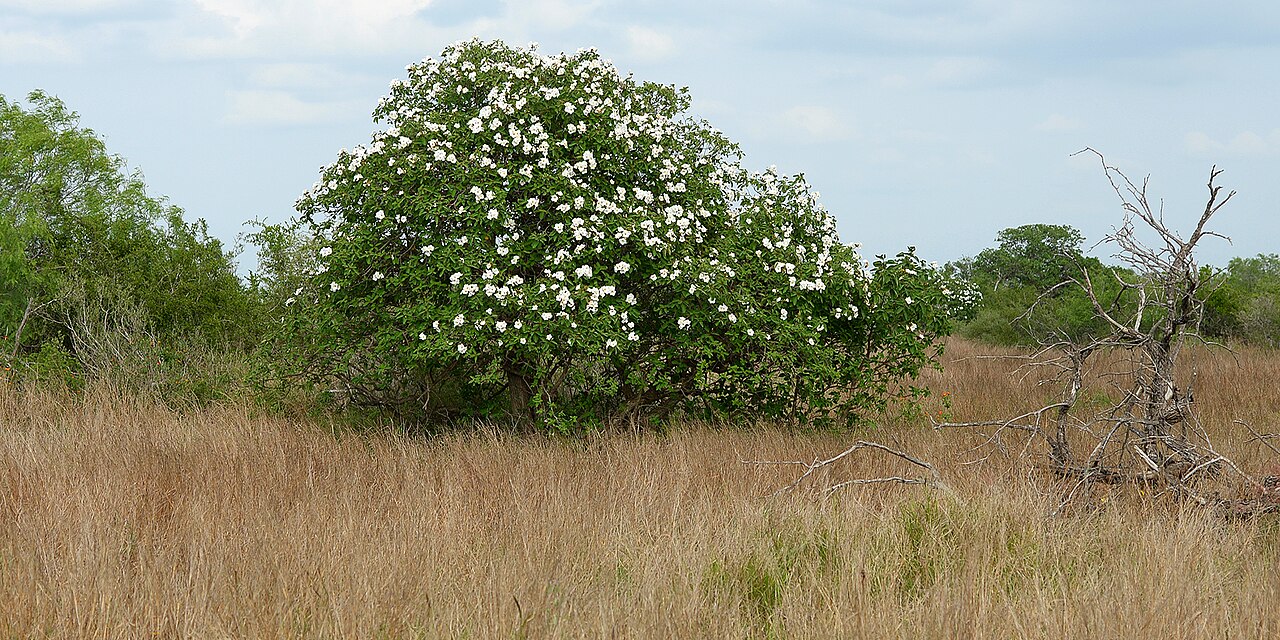
Cordia boissieri, commonly called Texas Olive (also Mexican Olive, Anacahuita, or Texas Wild Olive), is a showy evergreen-to-semi-evergreen shrub or small tree native to the brushland of deep South Texas and northeastern Mexico. Despite its common names, it is not related to the true olive (Olea europaea) at all — it belongs to the borage family, and its “olive” is simply a passing resemblance in the shape of its fruit.
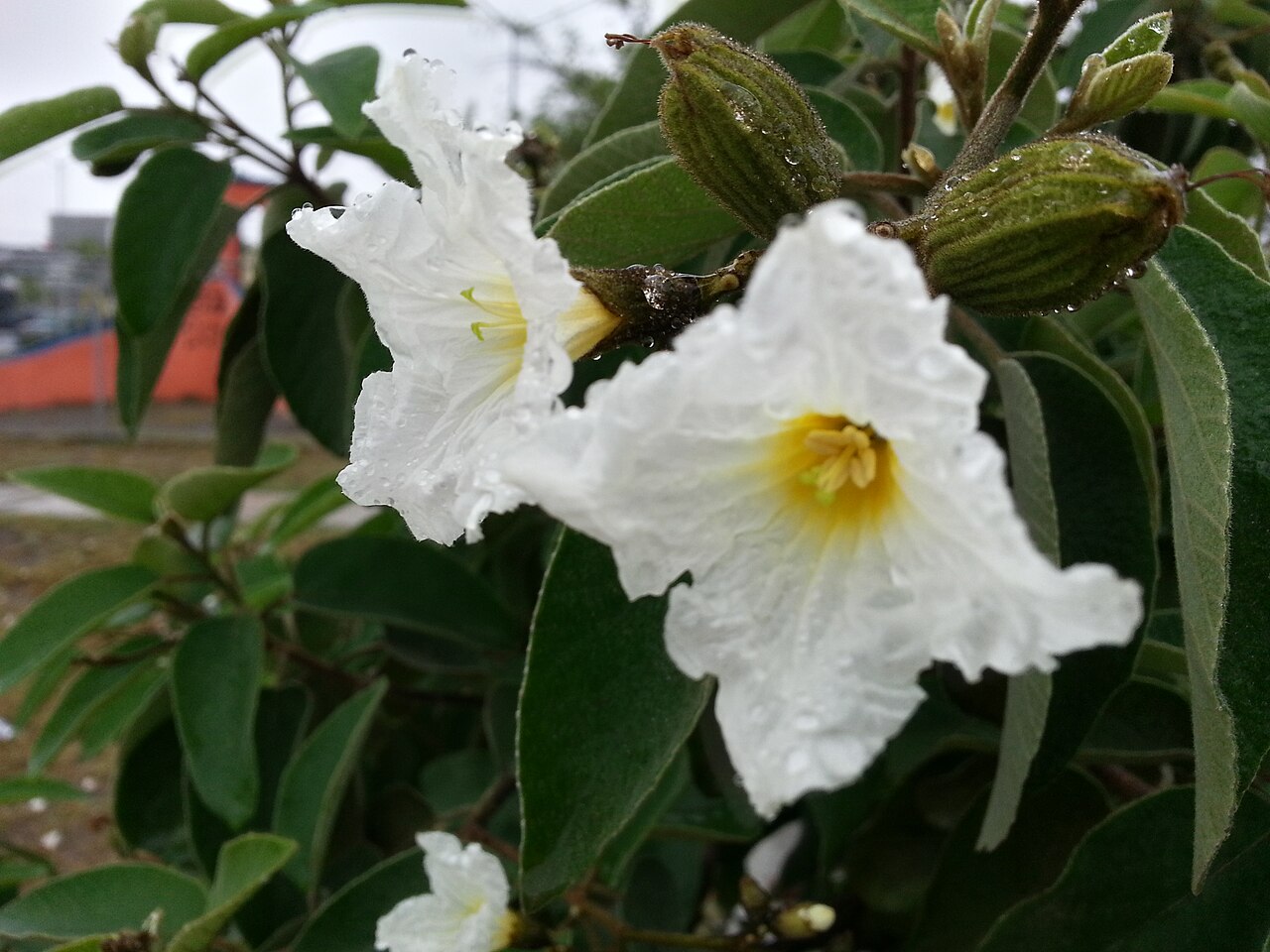
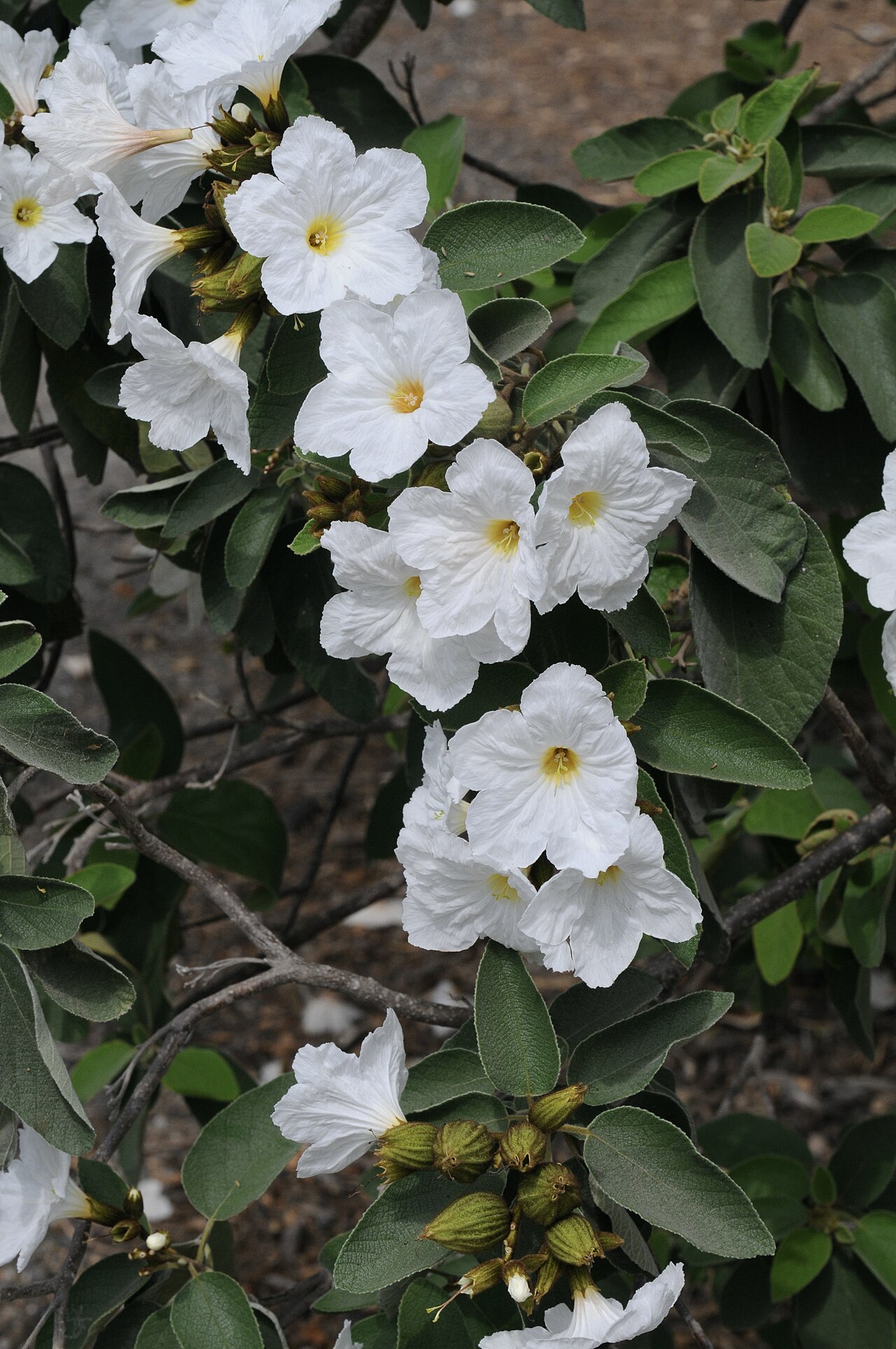
What Texas Olive is really grown for is its flowers: large, ruffled, crepe-paper-textured white blooms with a bright yellow throat, often 2 to 3 inches across, produced in flushes nearly year-round across much of its range and most heavily from spring through summer. A mature specimen in full bloom, with its rounded crown and picturesque, gently twisting trunk, is one of the signature flowering trees of the Rio Grande Plains.
In the wild, Texas Olive is a true South Texas native, found no farther north than the Rio Grande Valley and the brush country immediately north of it. It has become a popular, tough, drought-tolerant landscape and highway tree well beyond that native range — as far north as Austin and San Antonio, and even in other warm states — but it is cold-sensitive and is not native outside deep South Texas; plantings farther north should be understood as ornamental, not habitat restoration.
Identification
Texas Olive grows as a large, rounded, multi-trunked shrub or small tree, typically 15 to 25 feet tall and often wider than it is tall, occasionally reaching 30 feet with a single trunk under good conditions. The trunk and major limbs are often sinuous and twisting, becoming more picturesque and sculptural with age.
Leaves
The leaves are large — 3 to 8 inches long — broadly oval, soft, and thick, with a rough, velvety texture and a dull grayish-green to olive-green color on both surfaces. They are evergreen in milder winters but are shed or badly damaged after a hard freeze, so the tree behaves as semi-evergreen to briefly deciduous across the colder parts of its range.
Flowers
Flowers are large, trumpet-shaped, and showy: white with a strong yellow throat, the five crinkled, crepe-paper-like petal lobes giving each bloom a soft, ruffled look. They are borne in clusters at the branch tips and open over a long season, with flushes of bloom possible in almost any month in the warmest parts of the range but concentrated from late spring into summer, often triggered by rain.
Fruit
The fruit is a small, white to yellowish, egg-shaped drupe about an inch long, superficially resembling a true olive — the source of the common name — though the two plants are unrelated. The pulp is sweet and is eaten by birds, deer, and livestock, but parts of the fruit have been reported as mildly toxic to people, sometimes causing dizziness, so it should not be treated as a foraging crop for human use.
Quick Facts
| Scientific Name | Cordia boissieri |
| Family | Boraginaceae (Borage) |
| Plant Type | Evergreen to semi-evergreen large shrub / small tree |
| Mature Height | 15–25 ft (to 30 ft) |
| Growth Rate | Moderate |
| Sun Exposure | Full sun |
| Water Needs | Low to moderate; drought tolerant once established |
| Soil Type | Well-drained; tolerates caliche, clay, and poor soils |
| Soil pH | Neutral to alkaline |
| Bloom Time | Nearly year-round in mild winters; heaviest late spring–summer |
| Flower Color | White with a yellow throat |
| Fall Color | None (evergreen to semi-evergreen) |
| Fruit | White to yellow olive-like drupe, about 1 in |
| Deer Resistant | No (deer browse foliage and fruit) |
| USDA Hardiness Zones | 8b – 11 |
Native Range
Texas Olive is native to the Rio Grande Plains of deep South Texas, south through the Tamaulipan brushlands of northeastern Mexico to around San Luis Potosí. Within the United States it occurs no farther north or east than the brush country of South Texas; it is not native to the rest of Texas or to any other U.S. state.
Because it is so tough and showy, Texas Olive has been widely planted well outside this native range — as a street and highway tree as far north as Austin and San Antonio, and ornamentally in other warm-climate states and even internationally. Those plantings are landscape use, not native range: the tree is frost-sensitive and is reliably hardy as a landscape plant only in warm winters, and it should not be assumed native anywhere outside the South Texas brush country described above.
In its home range, Texas Olive grows in Tamaulipan thornscrub, chaparral and brushland, open prairies and savannas, rocky hillsides, and along roadsides and pastures, often alongside other brush-country natives such as cenizo, anacacho orchid tree, huisache, and various acacias.
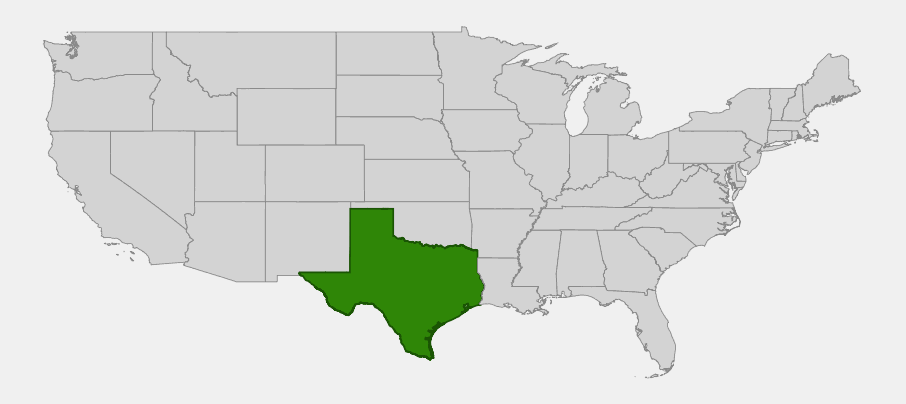
📋 Texas Olive’s native range is limited to the South Texas brush country and is not currently covered by one of our regional plant lists.
Growing & Care Guide
Within its native South Texas range and in similarly warm, frost-light climates, Texas Olive is an easy, rewarding, low-water flowering tree. Outside of USDA zone 8b and warmer, treat it as a tender ornamental that may suffer significant freeze damage rather than as a reliable landscape tree.
Light
Plant Texas Olive in full sun. It flowers most heavily and holds its best form with as much direct sun as the site allows.
Soil & Water
Texas Olive is remarkably adaptable to poor, rocky, caliche, and clay soils as long as drainage is reasonable; it does not need rich garden soil. Water regularly during the first one to two years to establish a deep root system, then taper off — established plants are quite drought tolerant and are a common sight thriving along unirrigated South Texas highway medians. It does not tolerate standing water or poorly drained sites.
Planting Tips
Set out container-grown plants in spring after the last frost so they have a full growing season to establish before their first winter. Give the tree room to develop its naturally wide, rounded crown — 15 to 20 feet of space is reasonable for a mature specimen. In the coldest parts of its usable range, choose a south-facing, wind-sheltered spot and be prepared for occasional freeze dieback, from which established plants usually resprout.
Pruning & Maintenance
Texas Olive needs little regular pruning beyond removing freeze-damaged or dead wood in spring once new growth shows where the live wood ends. It can be trained to a single trunk when young or left to grow as a multi-trunked large shrub; both forms are attractive. The tree is generally low-maintenance, pest-resistant, and tolerant of the heat and wind of its native brush country.
Landscape Uses
- Flowering specimen tree for a xeriscape, courtyard, or native South Texas garden
- Street and highway planting, where its drought tolerance and long bloom season have made it a South Texas favorite
- Pollinator and butterfly gardens, since the flowers draw a steady stream of bees and butterflies
- Wildlife plantings, where deer, birds, and small mammals use the fruit
- Screening or informal hedgerow when planted in groups and allowed to grow as a large multi-trunked shrub
Wildlife & Ecological Value
Texas Olive is one of the most wildlife-friendly flowering trees of the South Texas brush country, valuable across much of the year thanks to its long bloom season.
For Pollinators
The large white flowers are highly attractive to bees and butterflies, including large sulphur butterflies, which visit the blooms through much of the growing season. The long, repeated flowering cycles make Texas Olive an unusually reliable nectar source compared with trees that bloom only briefly each year.
For Birds & Mammals
The sweet-pulped fruit is eaten by a variety of birds and mammals, including deer, which also browse the foliage. Livestock will eat the fruit as well, though the plant is not a preferred forage species. The dense, rounded crown provides good cover and nesting structure in open brushland and grassland settings where tree cover is otherwise limited.
Ecosystem Role
As a conspicuous flowering tree in the Tamaulipan thornscrub and Rio Grande Plains, Texas Olive adds structural diversity to a landscape dominated by thorny shrubs and grasses, and its long flowering season helps support pollinators through stretches of the year when fewer other plants are in bloom.
Cultural & Historical Uses
In its native South Texas and northeastern Mexican range, Texas Olive has long been used as a folk medicinal plant, with various plant parts employed in traditional remedies; these uses are a matter of historical record rather than a current medical recommendation, and the fruit in particular carries some reported mild toxicity, so it is not treated as food today. The tree’s sweet-fleshed fruit gave rise to its common “olive” names even though it is unrelated to the true olive of the Mediterranean.
More recently, Texas Olive’s drought tolerance, long bloom season, and striking flowers have made it a favorite of South Texas horticulture, widely planted along highways and in urban landscaping from the Rio Grande Valley north into Central Texas, well beyond where it grows wild.
Frequently Asked Questions
Is Texas Olive related to the olive tree?
No. Despite the common name, Texas Olive belongs to the borage family (Boraginaceae) and is unrelated to the true olive, Olea europaea. The name comes only from the superficial resemblance of its fruit.
Can you eat Texas Olive fruit?
The sweet pulp is eaten by birds, deer, and livestock, but parts of the fruit have been reported to be mildly toxic to people and may cause dizziness. It should not be treated as a food source for humans.
Is Texas Olive native to all of Texas?
No. It is native only to the Rio Grande Plains of deep South Texas. It is widely planted as an ornamental farther north, including around Austin and San Antonio, but those plantings are not within its native range and the tree can suffer significant cold damage there.
How cold-hardy is Texas Olive?
It is reliably hardy in USDA zone 8b and warmer. Hard freezes can kill the plant back to the ground, though established plants often resprout from the roots. In colder parts of its planted range, expect occasional dieback after severe winters.
How fast does Texas Olive grow?
It grows at a moderate pace, often reaching a flowering size of several feet within a few years and a full-sized small tree within a decade or so under good conditions with regular establishment watering.

Looking for a nursery that carries Texas Olive?
Browse our native plant nursery directory: Texas