Manzanillo Olive Tree (Olea europaea ‘Manzanillo’)
Last updated: November 3, 2026
Olea europaea ‘Manzanillo’ is the classic Spanish table-olive cultivar, named for its “little apple” shape — a plump, broadly oval fruit that is the one most North Americans picture when they think of a green or black olive. In the garden, Manzanillo is a vigorous, broad-canopied, slightly weeping tree with the gray-green, silver-backed foliage typical of olives, and it is one of the most widely planted cultivars for both commercial table-olive production and home orchards in California, Arizona and Texas.
Gardeners choose Manzanillo for its large, meaty fruit — good for home curing as table olives — combined with reliable, early, heavy cropping and a tree that is more cold-hardy and adaptable than many oil-focused cultivars. It is widely available from nurseries, takes well to being trained as a hedge, specimen tree, or even bonsai, and its broad, rounded form gives useful light shade in a Mediterranean or xeriscape garden.
Olive (Olea europaea) is not native to North America; it originated in the Mediterranean basin and was brought to the Americas by Spanish growers. Manzanillo is not on any federal noxious-weed list, but in parts of coastal and central California, birds spread the fruit of productive, fruiting cultivars like Manzanillo into wildland, where Cal-IPC lists olive as a limited-impact invasive. Gardeners in those areas should harvest fruit promptly and avoid planting next to natural open space.
Identification
Manzanillo is a medium to large olive cultivar, typically reaching a broader, rounder canopy than compact cultivars like Arbequina, with somewhat larger leaves and notably large, rounded fruit.
Bark & Stems
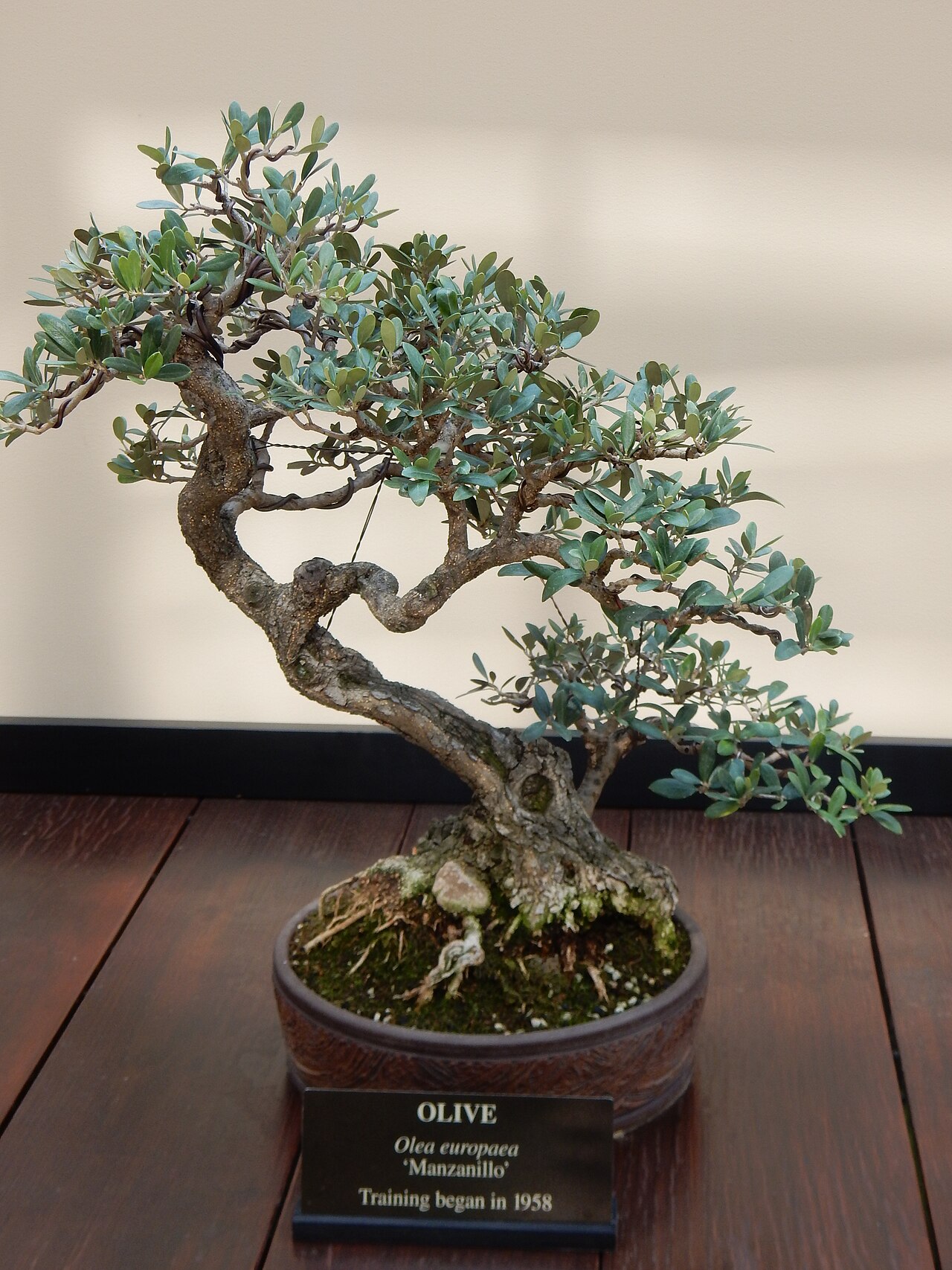
The trunk is sturdy and develops a thick, gnarled, deeply furrowed gray bark with age, a trait that makes old Manzanillo trees — and especially bonsai specimens trained from the cultivar — strikingly sculptural. Young twigs are gray-green and slightly angled, aging to gray-brown.
Leaves
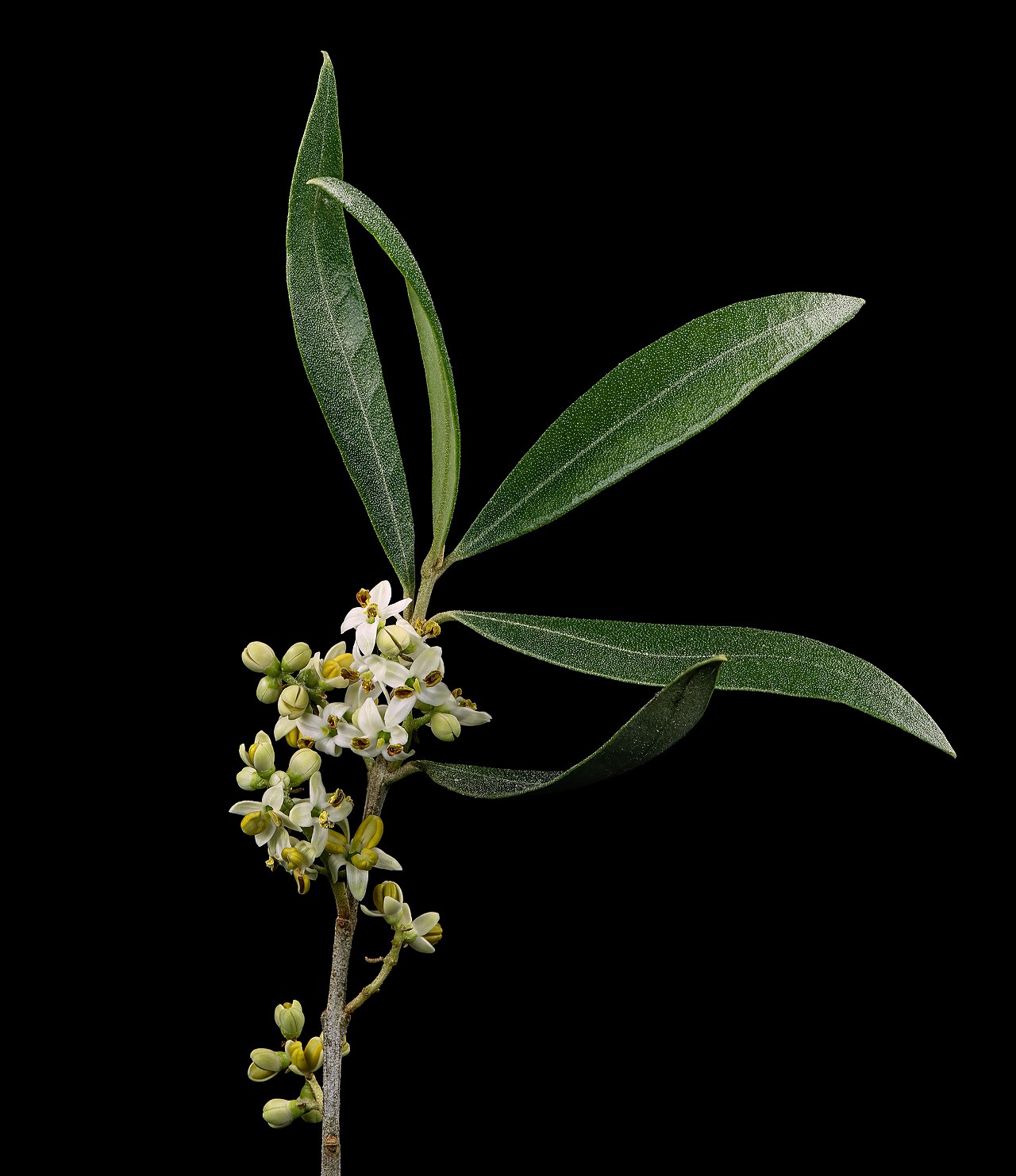
Leaves are lance-shaped, 1.5 to 3 inches long, dull gray-green above and densely silver-scaled beneath, somewhat broader than Arbequina’s narrower leaves. The dense, two-toned canopy shimmers in wind, a hallmark of the species.
Flowers
Small, creamy-white, wind-pollinated flowers appear in loose clusters in the leaf axils in spring. Manzanillo is partly self-fertile — a lone tree will set some fruit — but yields increase noticeably with a nearby pollinizer cultivar such as Arbequina or Frantoio.
Fruit & Seeds
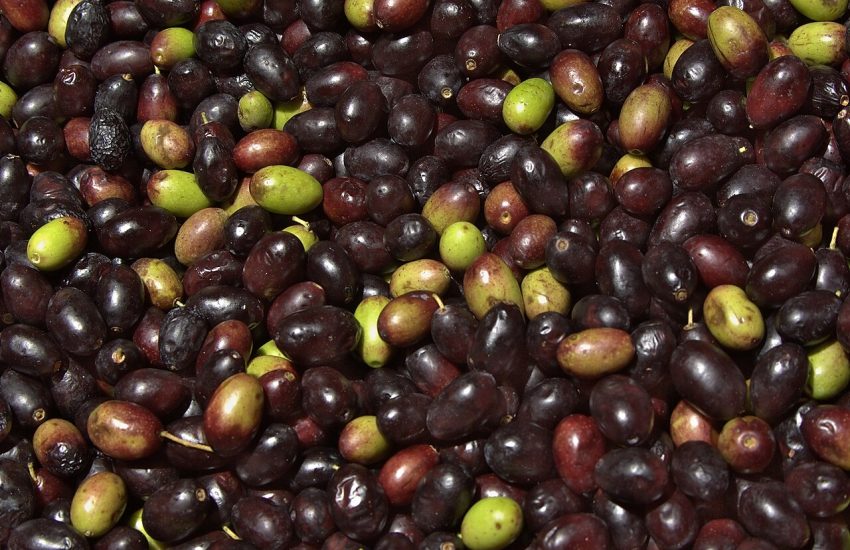
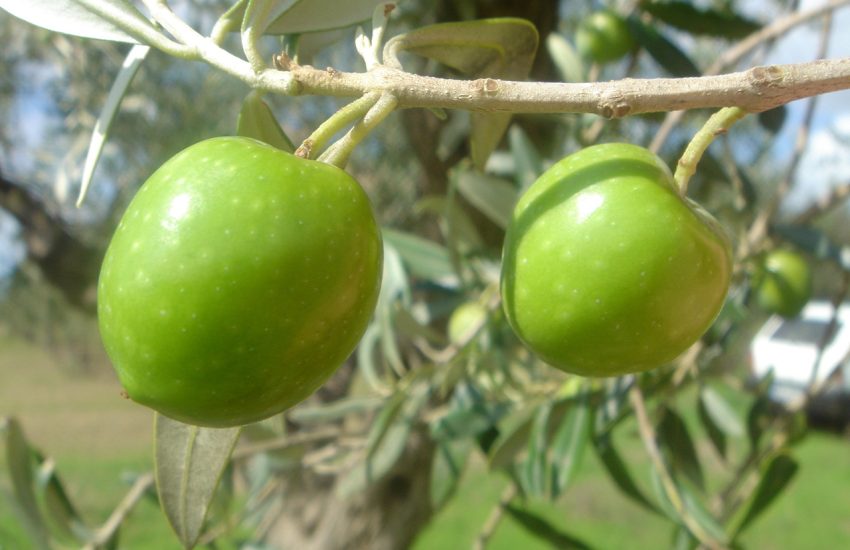
Manzanillo’s fruit is its signature trait: large, broadly oval to nearly round olives, among the biggest of the common table cultivars, with a relatively small pit for their size — a trait prized for table-olive processing. Fruit ripens from green to purplish-black over fall and into winter. Like all olives, the raw fruit is bitter and must be cured (typically in lye or brine for the traditional “Spanish-style” green process, or in brine alone for ripe black olives) before eating.
Quick Facts
| Scientific Name | Olea europaea ‘Manzanillo’ |
| Cultivar | Manzanillo (Spanish: Manzanilla) |
| Family | Oleaceae (Olive) |
| Plant Type | Evergreen fruit tree |
| Native to North America | No — introduced from the Mediterranean basin; cultivar developed in Spain |
| Mature Height | 15–25 ft (to 30 ft in ideal conditions) |
| Mature Spread | 15–25 ft, broad and slightly weeping |
| Growth Rate | Moderate to fast; slow once mature |
| Sun Exposure | Full sun |
| Water Needs | Low to moderate; drought tolerant once established |
| Soil Type | Well-drained; tolerates poor, rocky soil |
| Soil pH | 6.0–8.5; tolerates alkaline soils |
| Bloom Time | April – May |
| Leaf / Fall Color | Evergreen; gray-green with silvery undersides, no fall color change |
| Fruit | Large, broadly oval olives with a small pit; excellent for table/brined use, moderate oil content |
| Deer Resistant | Yes, generally |
| USDA Hardiness Zones | 8–10 |
| Invasive Status | Not native; not federally listed; Cal-IPC limited-impact concern for fruiting olives in parts of coastal/central California wildlands |
Origin & Where It Grows
Olea europaea is native to the Mediterranean basin, the Near East and parts of North Africa, where it has been cultivated for food and oil for thousands of years. Manzanillo is a Spanish cultivar, long associated with the olive-growing regions of Andalusia and Seville, where it remains a mainstay of the Spanish-style green table-olive industry.
Spanish missionaries and later commercial growers brought olive cultivation to California beginning in the 18th century, and Manzanillo became established there as a leading table-olive cultivar by the early 20th century, prized for its large fruit and reliable cropping. It remains one of the most widely planted table-olive cultivars in California’s Central Valley today, alongside Sevillano and Mission.
In the United States, Manzanillo grows best in California’s Central Valley and coastal valleys, parts of Arizona, and the warmer parts of Texas, generally wherever winters stay above the low 20s °F and summers are long, hot and dry enough to properly ripen and harden the wood.
Growing & Care Guide
Manzanillo is a forgiving, adaptable olive cultivar once established, tolerant of heat, drought and poor soil, with the main care points centered on drainage, winter protection in marginal zones, and pruning for an open canopy.
Light
Plant in full sun for the best fruit set and densest foliage; six to eight hours of direct sun daily is ideal. Partial shade is tolerated but reduces flowering and crop size.
Soil & Water
Manzanillo needs well-drained soil above all else; standing water or heavy, poorly drained clay quickly leads to root rot. It thrives in lean, rocky or sandy soils and tolerates alkaline conditions well. Water deeply but infrequently once established; consistent moisture during flowering and early fruit set improves fruit size, which matters more for a table cultivar like Manzanillo than for oil cultivars.
Planting Tips
Plant in spring or fall in a site with good air drainage, avoiding low spots where cold air pools. Because Manzanillo grows into a fairly large, broad tree, allow at least 15 to 20 feet of space from structures and other trees at planting.
Pruning & Maintenance
Prune in late winter to open the canopy to light and air, which improves fruit size and ripening and reduces disease pressure. Manzanillo responds well to being kept smaller through regular pruning or trained as a hedge; its thick, characterful trunk also makes it a popular subject for bonsai. Fertilize lightly in spring; olives generally need little supplemental feeding once established.
Propagation
Manzanillo is propagated from cuttings or by grafting onto rootstock, never from seed, since seedlings do not come true to the parent cultivar and are typically inferior in fruit size and quality. Semi-hardwood cuttings root with bottom heat and rooting hormone.
Landscape Uses
- Home table-olive orchards, where its large fruit is prized for home curing and brining
- Shade and specimen trees in Mediterranean and xeriscape gardens
- Hedges and screens, tolerant of regular shearing
- Bonsai and container culture, exploiting its characterful, gnarled trunk
Harvest & Pollination
Manzanillo is partially self-fertile; a single tree will set some fruit, but planting a second cultivar such as Arbequina, Frantoio or Arbosana nearby reliably increases yield through cross-pollination. Chill requirements are moderate, generally met by typical winters in zones 8–10. For green “Spanish-style” table olives, fruit is picked while still green to straw-colored in early fall and lye-cured; for ripe black olives, fruit is left to darken into winter before brine-curing. All raw olives are inedibly bitter until cured.
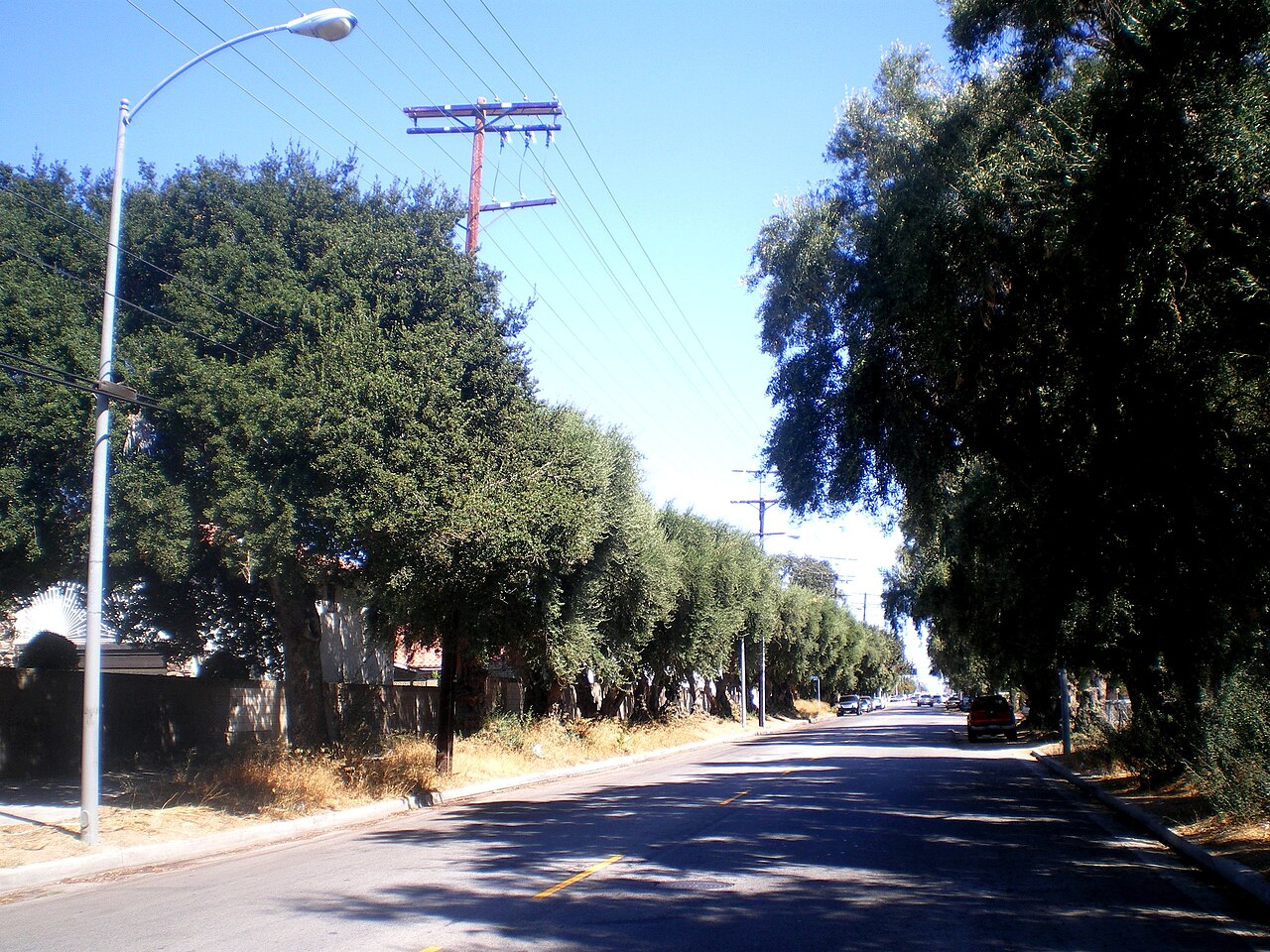
Wildlife & Ecological Value
Manzanillo’s small, wind-pollinated flowers provide little nectar or pollen to bees and other pollinators compared with native flowering trees. Its large, abundant fruit is attractive to birds, which can disperse seed into nearby wildland in parts of coastal and central California — another reason to harvest fruit rather than let it fall and rot. As with other olive cultivars, Manzanillo supports far fewer native insect species than a comparable native tree, since it shares no long evolutionary history with North American wildlife.
Native Alternatives
For a similarly tough, Mediterranean-feeling tree with greater regional wildlife value, consider:
- Desert olive (Forestiera neomexicana) — a drought-tolerant Southwestern native with gray-green foliage and a similar rugged look
- Texas olive (Cordia boissieri) — a small, drought-tough native tree with showy flowers for hot climates
- American sweet olive / devilwood (Osmanthus americanus) — a native evergreen relative in the olive family
- Fringetree (Chionanthus virginicus) — a native olive-family relative grown for its fringed spring flowers
History & Uses
Manzanillo, whose Spanish name means roughly “little apple” for its rounded fruit shape, has long been one of Spain’s leading table-olive cultivars, grown extensively around Seville for the traditional lye-and-brine “Spanish-style” green olive that remains a standard supermarket product worldwide. Its large, meaty, small-pitted fruit made it an obvious choice for the table-olive trade, as opposed to oil-focused cultivars bred for smaller, oil-rich fruit.
Manzanillo arrived in California with the broader wave of commercial olive planting in the 19th and 20th centuries and became, alongside Sevillano and Mission, one of the state’s three dominant table-olive cultivars, particularly suited to mechanical harvesting and brining operations in the Central Valley.
Beyond the orchard, Manzanillo’s gnarled, muscular trunk has made it a favorite subject for bonsai artists, and its reliable, heavy cropping and relative cold tolerance have made it one of the most commonly sold olive cultivars at retail nurseries for home gardeners who want to cure their own table olives.
Frequently Asked Questions
Is the Manzanillo olive tree native or invasive?
No. Olive (Olea europaea) is native to the Mediterranean basin, not North America. It is not on federal noxious-weed lists, but in parts of coastal and central California, birds can spread the fruit of productive cultivars like Manzanillo into wildland, where Cal-IPC lists olive as a limited-impact invasive; harvest fruit promptly in those areas.
Does Manzanillo need a pollinizer tree?
Manzanillo is partially self-fertile and will produce some fruit alone, but planting a second cultivar such as Arbequina or Frantoio nearby for cross-pollination significantly improves yield.
Can I eat Manzanillo olives right off the tree?
No. Raw olives are very bitter due to natural compounds in the fruit. Manzanillo must be cured, traditionally in a lye-and-brine process for green olives or a simple brine cure for ripe black olives, before it is edible.
How big does a Manzanillo olive tree get?
Manzanillo typically reaches 15 to 25 feet tall and wide at maturity, larger and broader than compact cultivars like Arbequina, though regular pruning or hedging can keep it considerably smaller.
Is Manzanillo better for oil or for table olives?
Manzanillo is primarily grown as a table-olive cultivar, valued for its large size and small pit; its oil content and yield are moderate compared with dedicated oil cultivars like Arbequina or Koroneiki, though home growers do press it for oil as well.