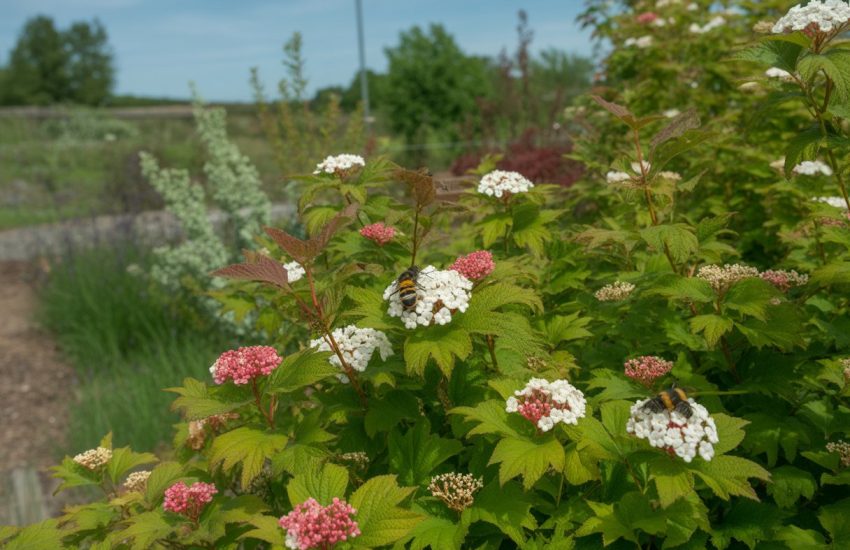
Western Blackhaw (Viburnum ellipticum)
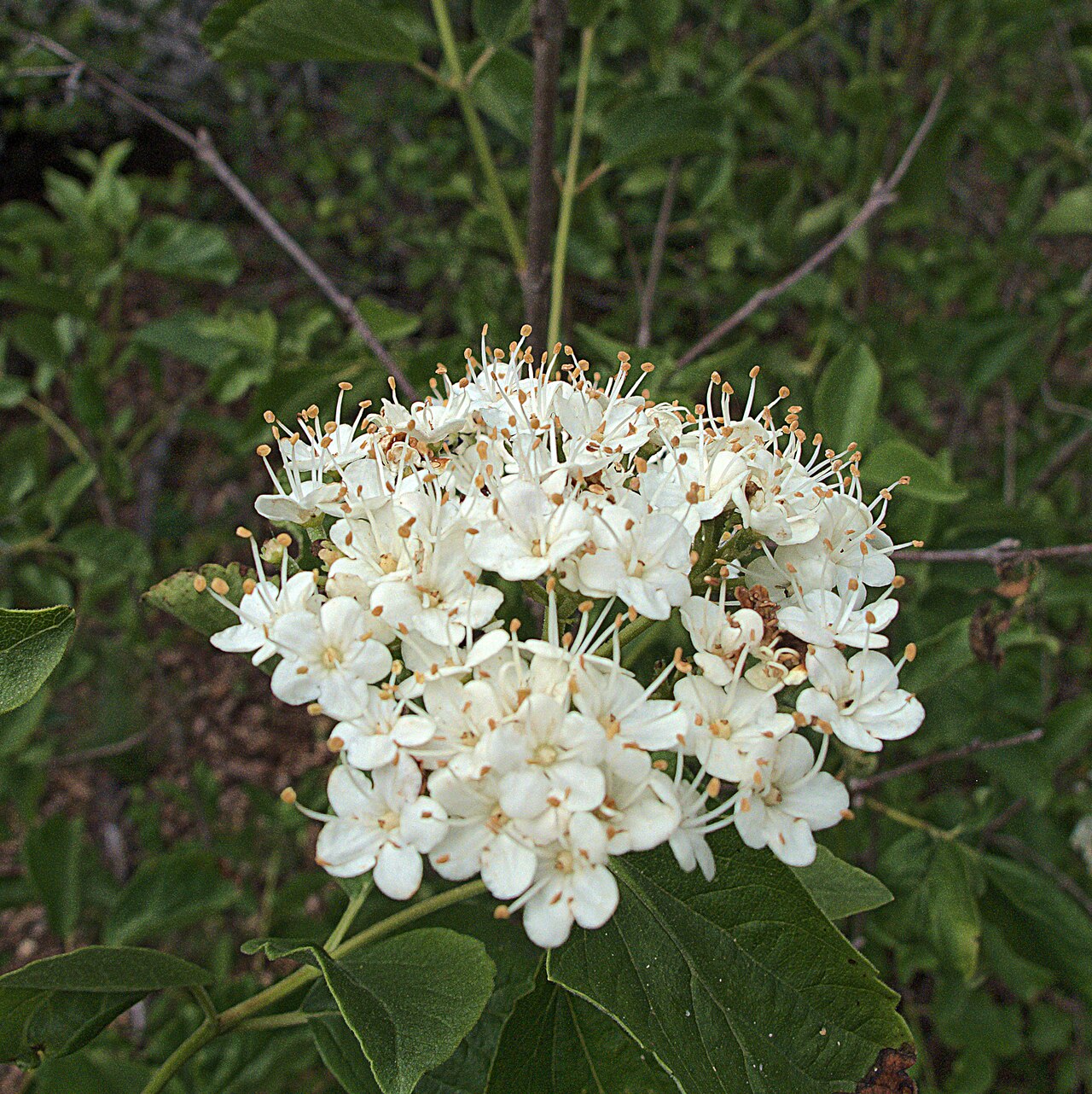
Viburnum ellipticum, commonly called Western Blackhaw or Oval-leaf Viburnum, is the only native viburnum found on the West Coast’s drier forest margins and chaparral edges — a modest, deciduous shrub found in a narrow band from southwestern Washington through western Oregon into the mountains of central California. It is a genuinely uncommon plant through much of that range, tracked as rare in California, and absent from huge stretches of otherwise suitable-looking habitat between its scattered populations, which makes it a plant most West Coast native plant gardeners have never grown, even if they know their region’s flora well.
In the wild, western blackhaw grows as an upright, multi-stemmed shrub with neat, rounded, oval leaves, flattened clusters of small white flowers in late spring, and dark, bluish-black fruit by late summer. It favors open, partly shaded sites at the edge of oak woodland, mixed conifer forest, and chaparral — habitats that get summer drought but retain enough structure and shade to keep the soil from baking.
For gardeners in its native range, western blackhaw offers something few other West Coast native shrubs do: an authentically local viburnum with spring flowers, fall color, and fruit for wildlife, adapted to summer-dry Mediterranean and interior climates rather than the wetter conditions most garden viburnums expect. It deserves to be planted more widely within its range, both for its own sake and to support the increasingly fragmented wild populations that remain.
Identification
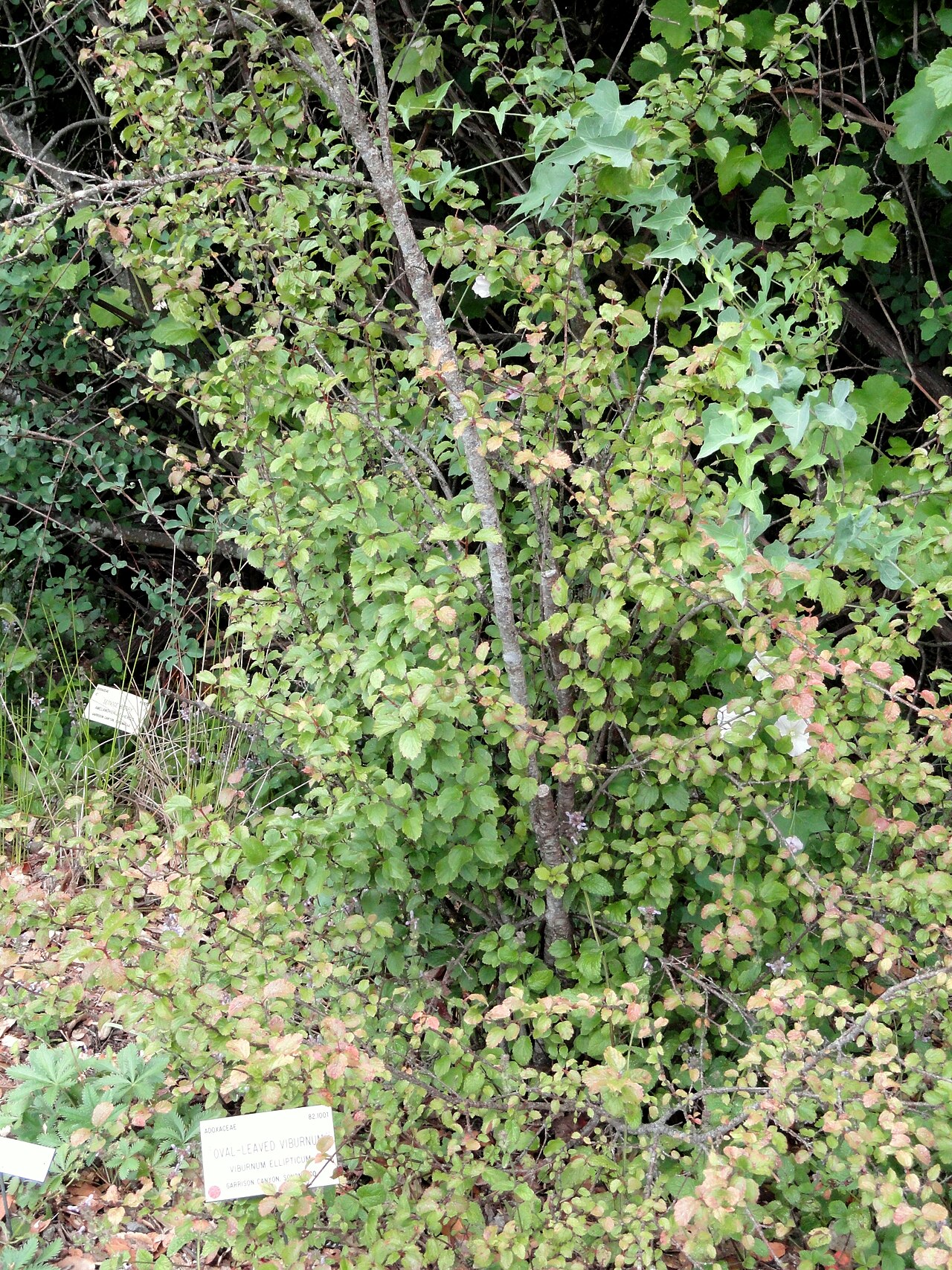
Western blackhaw is a deciduous shrub, typically 3 to 10 feet (1–3 m) tall, with an upright, multi-stemmed, somewhat open habit. It occasionally reaches small-tree stature in favorable sites but is usually encountered as a modest understory or edge shrub.
Bark & Stems
Young stems are slender and grayish-brown, becoming only slightly rougher with age; the bark offers no particularly showy winter interest compared to some viburnums, staying smooth and understated through the plant’s life.
Leaves
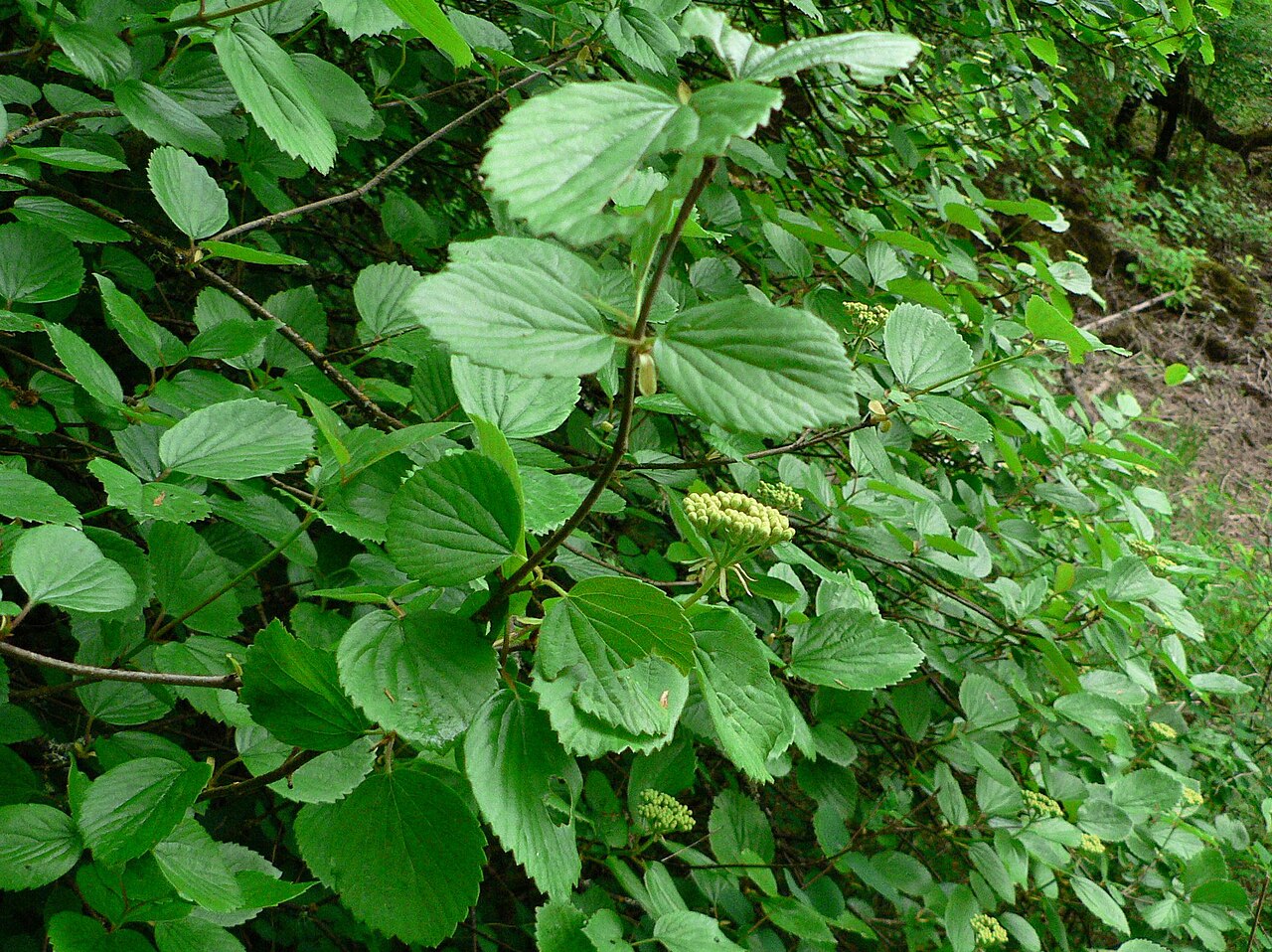
Leaves are opposite, simple, oval to broadly elliptic (hence the species name ellipticum), 1 to 3 inches long, with a rounded base, a blunt to slightly pointed tip, and evenly, finely toothed margins — distinctly different from the lobed, maple-like leaves of many other native viburnums. The upper surface is a dull to medium green; leaves turn yellow to reddish-purple in fall, a modest but genuine seasonal highlight.
Flowers
Small, white, five-lobed flowers are held in rounded to slightly flat-topped clusters (cymes) roughly 1.5 to 2.5 inches across at branch tips, blooming in May and June. The clusters are showier and more rounded than squashberry‘s flatter inflorescence, giving western blackhaw a fuller, more visible spring display for a modest shrub.
Fruit & Seeds
Flowers develop into small, oval drupes about ⅓ inch long, ripening from green through red to a final bluish-black by late summer and early fall, held in loose, drooping clusters. Unlike squashberry’s tart edible fruit, western blackhaw’s small, seedy drupes are primarily a wildlife food rather than a human foraging fruit, though they are not known to be toxic.
Quick Facts
| Scientific Name | Viburnum ellipticum |
| Family | Adoxaceae (Moschatel, formerly Caprifoliaceae) |
| Plant Type | Deciduous Shrub |
| Mature Height | 3–10 ft (1–3 m) |
| Mature Spread | 4–8 ft (1.2–2.4 m) |
| Growth Rate | Slow to moderate |
| Sun Exposure | Part Shade to Full Sun |
| Water Needs | Low to Moderate once established |
| Soil Type | Well-drained loam or rocky soils; tolerates summer-dry conditions |
| Soil pH | 6.0–7.5 (neutral to slightly alkaline) |
| Bloom Time | May – June |
| Flower Color | White |
| Fall Color | Yellow to reddish-purple |
| Fruit | Small bluish-black drupes, primarily for wildlife |
| Deer Resistant | Somewhat (occasional browsing) |
| USDA Hardiness Zones | 6–9 |
Native Range
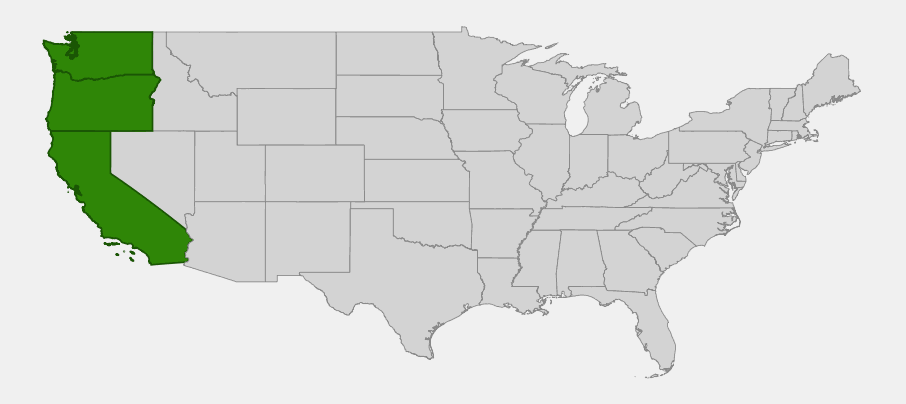
Western blackhaw occurs in a relatively narrow West Coast band, native from southwestern Washington south through western Oregon — mostly west of or along the Cascade crest — into the Klamath-Siskiyou region of far northern California and south through the Sierra Nevada foothills and inner Coast Ranges to central California. Within this range it is naturally patchy and uncommon rather than evenly distributed, and in California it is tracked by the California Native Plant Society as rare in parts of its range, so a report of “present” at the state level does not mean it is common or secure everywhere within that state.
Typical habitat includes the drier margins of mixed-conifer and oak woodland, chaparral edges, and rocky slopes, usually in partial shade or at the woodland-chaparral interface, at low to moderate elevations. It is adapted to the Mediterranean climate pattern of wet winters and dry summers that defines so much of its range, unlike many eastern and boreal viburnums that expect consistent summer moisture.
Given its naturally scattered distribution and documented rarity in parts of California, gardeners within its native range are encouraged to plant nursery-propagated western blackhaw rather than ever collecting from the relatively few wild populations that remain.
📋 Regional plant lists featuring Western Blackhaw: Western Oregon & Western Washington · California & Nevada
Growing & Care Guide
Western blackhaw is one of the more drought-adapted native viburnums, a real asset for West Coast gardeners trying to reduce summer irrigation without giving up flowering shrubs and wildlife value.
Light
It grows well in part shade to full sun, with the best flowering and most compact form generally seen in sites with several hours of direct sun. In hotter interior sites, afternoon shade helps keep the foliage from stressing during peak summer heat.
Soil & Water
Western blackhaw prefers well-drained soil, including rocky or gravelly sites, and is notably more tolerant of summer drought than most other native viburnums once established — a reflection of its Mediterranean-climate origins. Regular water during the first one to two years helps establish a deep root system; after that, established plants generally need only occasional deep watering through the dry season in most of their range.
Planting Tips
Plant in fall, taking advantage of the winter rainy season to establish roots before the first dry summer. Choose a site with good drainage, avoiding heavy, poorly drained clay or low spots that stay wet in winter. Because wild populations are naturally patchy and sometimes rare, source plants from a reputable native plant nursery rather than wild collection.
Pruning & Maintenance
Little pruning is required. Remove dead or crossing branches in late winter, and thin congested interior growth occasionally to maintain an open, airy form and good air circulation. Once established, western blackhaw is a genuinely low-maintenance shrub within its native climate.
Landscape Uses
This shrub fits well into several West Coast garden roles:
- Drought-tolerant native shrub border paired with oak woodland and chaparral companions
- Woodland edge and transition plantings between irrigated garden and dry wildland
- Wildlife gardens — spring flowers for pollinators and fall fruit for birds
- Fire-wise landscaping as part of a defensible-space planting palette, given its moderate size and drought tolerance
- Native plant and restoration plantings supporting a locally uncommon species
Wildlife & Ecological Value
Within its range, western blackhaw provides seasonal resources that are genuinely scarce in summer-dry West Coast plant communities.
For Birds
Fruit-eating birds, including robins, thrushes, and various songbirds, feed on the ripening bluish-black drupes in late summer and fall, at a time when many other native fruiting shrubs in the same dry habitats have already finished.
For Mammals
Deer browse the foliage and young stems, and small mammals take advantage of fallen fruit; the shrub’s structure also offers cover in otherwise relatively open oak woodland and chaparral-margin habitat.
For Pollinators
The rounded clusters of small white flowers attract native bees and other pollinating insects during the late-spring bloom period, adding to the limited palette of flowering shrubs available in dry woodland and chaparral transition zones at that time of year.
Ecosystem Role
As one of relatively few native shrubs adapted to the specific niche between closed-canopy forest and open chaparral on the West Coast, western blackhaw adds structural and species diversity to habitats that can otherwise be dominated by just a few common shrub species, and its naturally patchy distribution makes each wild population locally significant for regional plant diversity.
Cultural & Historical Uses
Documented traditional use of western blackhaw specifically is limited compared to more common and widespread western shrubs, in part because of its naturally scattered distribution — early botanical collectors, including David Douglas in the early 1800s, noted and collected the species, but it was never a major resource plant for Indigenous communities in the way that more abundant regional shrubs and trees were.
Historically, the wider viburnum genus has been used across cultures for flexible wood in small tool handles and similar craft purposes, and it is plausible that western blackhaw’s straight, pliable young stems saw some local, informal use for similar purposes, though this is not well documented specifically for this species.
Today, western blackhaw’s primary significance is horticultural and ecological: a genuinely West Coast native viburnum increasingly valued by regional native plant gardeners and restoration practitioners looking for drought-adapted shrubs that support local wildlife, as covered more broadly in our overview of the benefits of planting native viburnum in the garden.
Frequently Asked Questions
Is western blackhaw the same as other blackhaw viburnums?
No — “blackhaw” is used as a common name for several unrelated viburnum species. Western blackhaw (Viburnum ellipticum) is a distinct West Coast species, different from the eastern and southeastern Rusty Blackhaw (Viburnum rufidulum) and from true blackhaw (Viburnum prunifolium), which are native to entirely different regions of the country.
How drought-tolerant is western blackhaw really?
It is considerably more drought-tolerant than most garden viburnums once established, reflecting its native Mediterranean-climate range of wet winters and dry summers. It is not a true low-water xeriscape plant, however, and performs best with occasional deep summer watering in hotter or drier sites.
Can I eat western blackhaw berries?
They are not documented as a significant food plant and are not recommended for eating; treat them as a wildlife fruit rather than a foraging crop, unlike the closely related squashberry, whose tart berries do have a documented history of human use.
Why is western blackhaw hard to find in nurseries?
Its naturally patchy, locally uncommon wild distribution has meant limited seed collection and commercial propagation compared to more widespread native shrubs. Specialty native plant nurseries within its range are the best source, and demand from gardeners interested in regionally authentic, drought-adapted shrubs has been slowly increasing availability.
Does western blackhaw need another viburnum nearby to fruit?
Good fruit set generally improves with more than one plant present for cross-pollination, as with many viburnums, though isolated plants can still flower attractively even if fruiting is reduced.

Looking for a nursery that carries Western Blackhaw?
Browse our native plant nursery directory: California · Oregon · Washington