Alabama Azalea (Rhododendron alabamense)
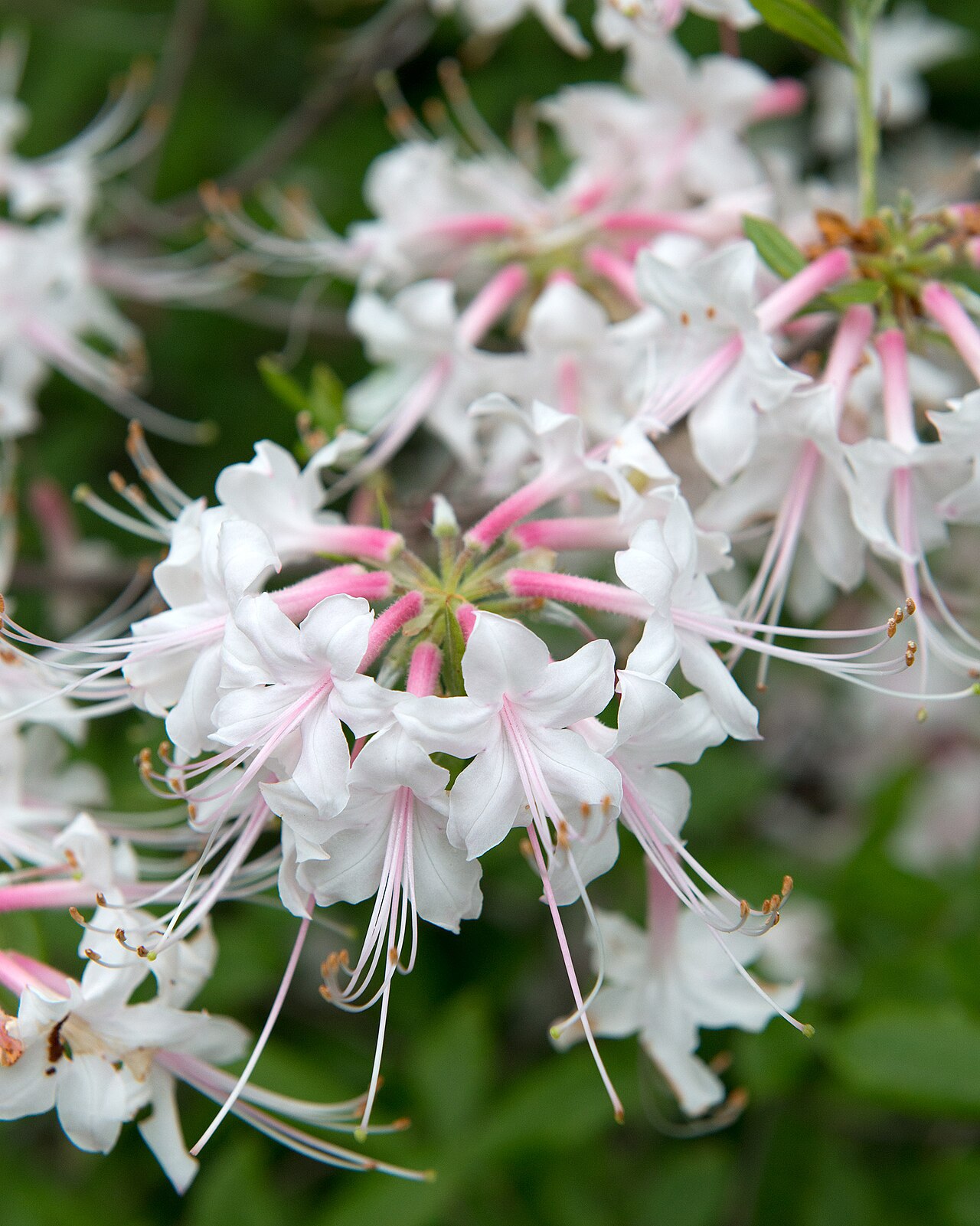
Rhododendron alabamense, the Alabama Azalea, is a deciduous native shrub of the Deep South prized for its clean white, lemon-scented flowers and its tolerance of drier, sandier soils than many other native azaleas. Though most common in its namesake state, it also occurs in neighboring Georgia, Mississippi, the Florida panhandle, and southern Tennessee, typically on flat to gently sloping, sandy, seasonally moist sites.
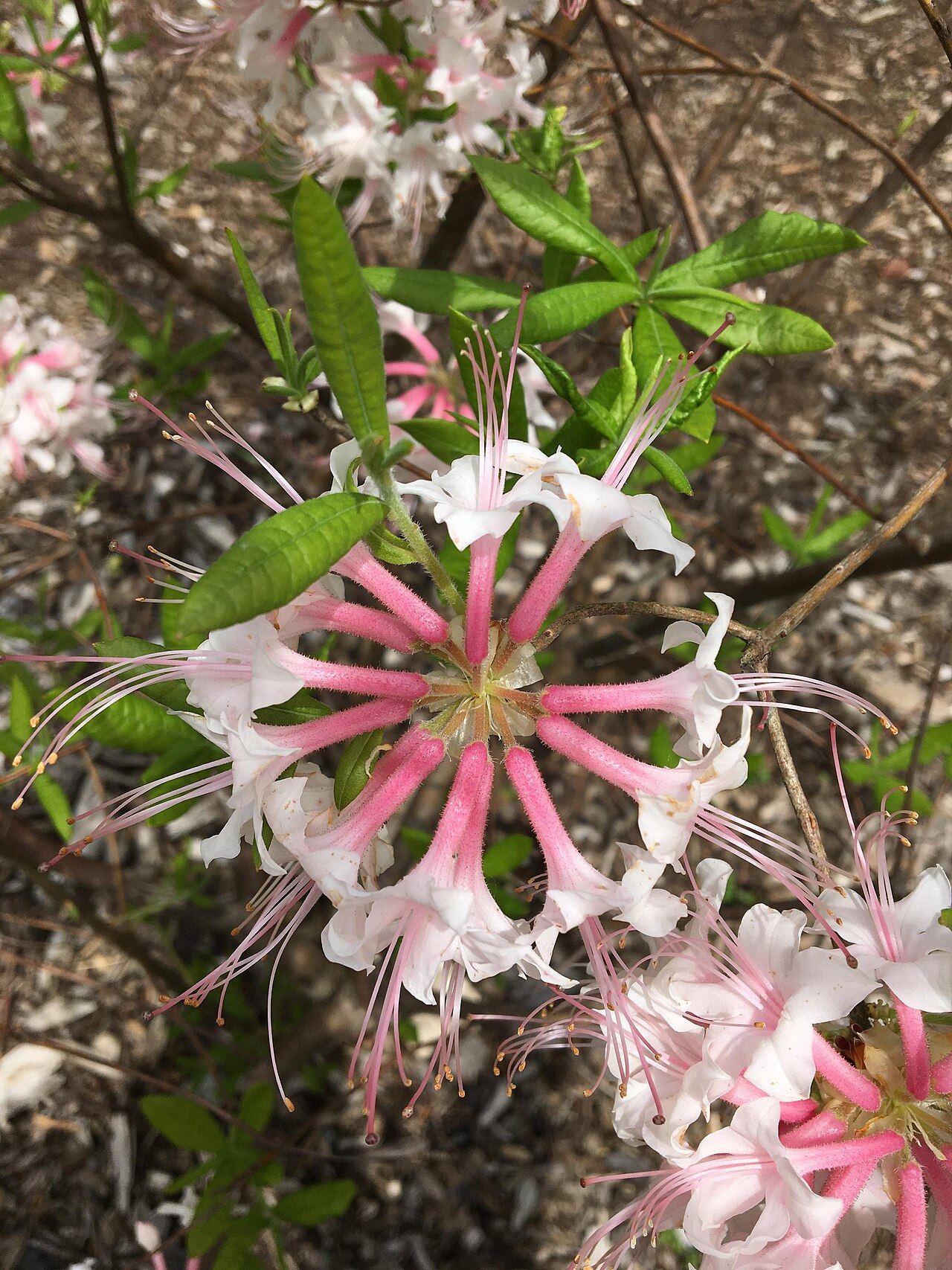
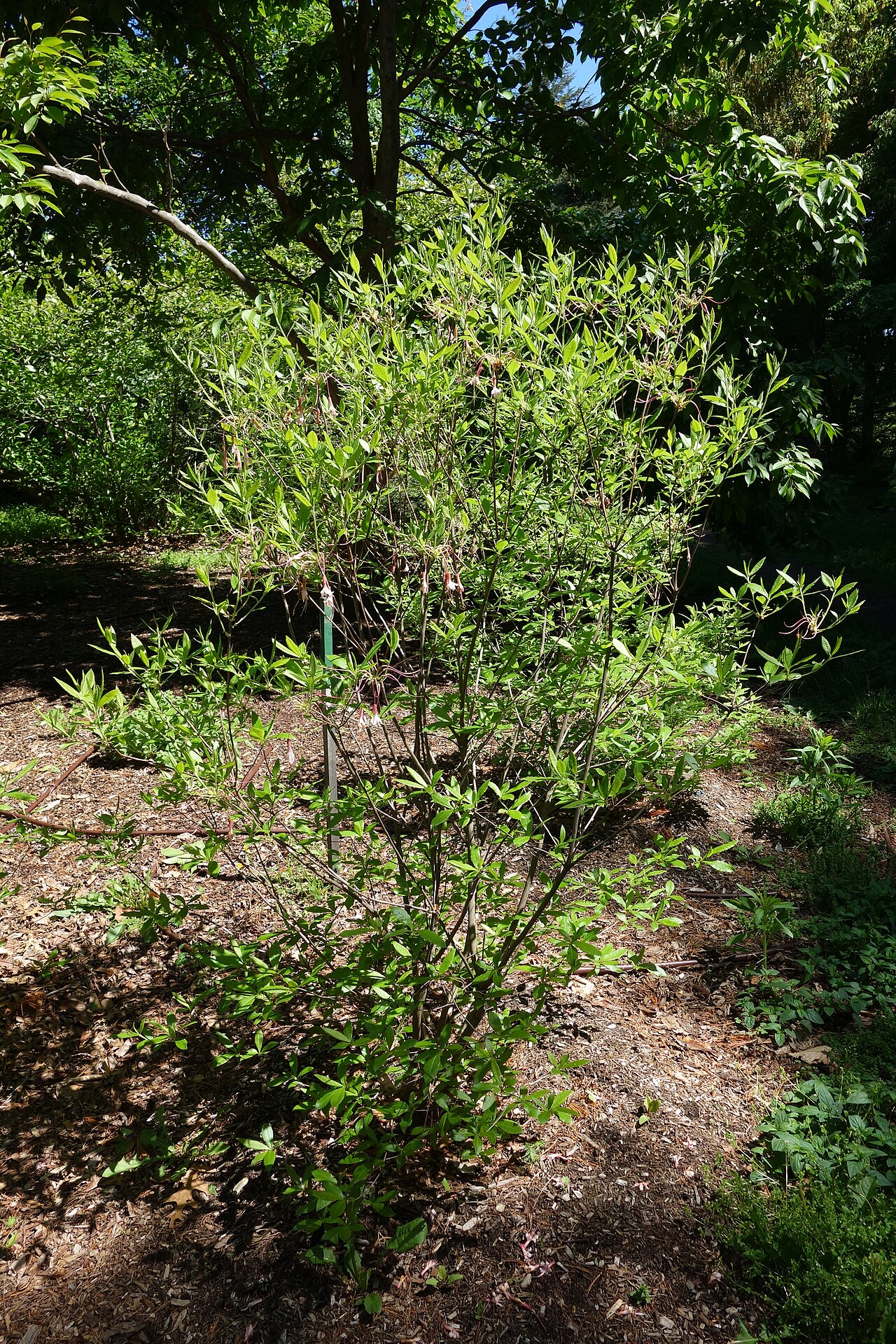
Alabama Azalea grows as a suckering, multi-stemmed shrub 3 to 10 feet tall, often forming loose colonies where root suckers spread the plant outward over time. Its white, funnel-shaped flowers usually carry a touch of pink along the tube and a bright yellow blotch, and they open in mid-spring with a fragrance many gardeners describe as citrusy or lemon-like, distinct from the clove scent of some other native azaleas.
Though not a common plant anywhere across its range, Alabama Azalea is an important parent species behind several fragrant deciduous hybrid azaleas, and it remains a favorite among native plant gardeners in the Southeast for its fragrance, moderate size, and relative ease of culture compared to its rarer relatives.
Identification
Alabama Azalea is a deciduous, multi-stemmed, suckering shrub, often forming loose colonial patches in the wild as root suckers emerge around the parent plant.
Bark & Stems
Young twigs are slender and finely hairy, becoming smooth gray-brown with age. The suckering habit distinguishes mature colonies from the single-clump growth typical of some other native azaleas.
Leaves
Leaves are elliptic to obovate, 1.5 to 3 inches long, medium to dark green, with fine hairs along the midrib and margins. Fall color is a modest yellow to bronze.
Flowers
Flowers open in mid-spring, usually March into April, in trusses of 6 to 12 blooms appearing with or slightly before the leaves. Each flower is white to pale pink with a pink-blushed tube and a yellow blotch on the upper lobe, funnel-shaped and about 1.5 to 2 inches across, with long protruding stamens. The strong, sweet, citrusy fragrance is a defining trait, often noticeable before the shrub is in view.
Fruit & Seeds
Small, dry, hairy seed capsules follow the flowers, maturing by late summer and splitting to release numerous tiny wind-dispersed seeds.
Quick Facts
| Scientific Name | Rhododendron alabamense |
| Family | Ericaceae (Heath) |
| Plant Type | Deciduous Shrub |
| Mature Height | 3–10 ft |
| Mature Spread | 4–8 ft (spreads by suckers) |
| Growth Rate | Moderate |
| Sun Exposure | Part Sun to Part Shade |
| Water Needs | Moderate; more drought-tolerant than many azaleas once established |
| Soil Type | Moist to moderately dry, sandy, well-drained |
| Soil pH | 5.0–6.0 (acidic) |
| Bloom Time | March – April |
| Flower Color | White with pink-blushed tube and yellow blotch |
| Fall Color | Yellow to bronze |
| Fruit | Small dry seed capsules (not showy) |
| Deer Resistant | Mostly yes (foliage contains grayanotoxins) |
| USDA Hardiness Zones | 6–9 |
Native Range
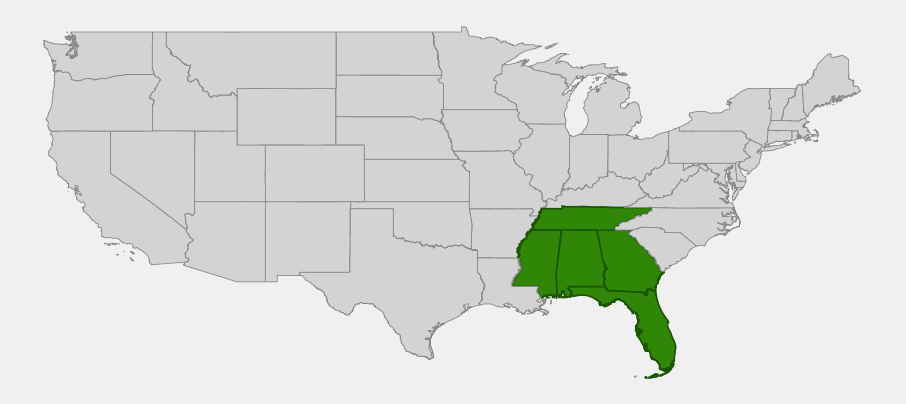
Alabama Azalea is found most commonly in Alabama, extending into western Georgia, eastern Mississippi, the Florida panhandle, and southern Tennessee. It is not a common species anywhere across this range despite the broad footprint, occurring in scattered local populations rather than forming the kind of widespread thickets seen with some other azaleas.
Within this range it favors moist, sandy flats and gentle slopes, often in open pine-hardwood woodland or along the margins of wooded wetlands, where its root-suckering habit lets it form loose colonies over time. It tends to tolerate somewhat drier sites than many other native azaleas once established, a trait tied to its sandy-soil habitat.
Older records reporting Alabama Azalea in South Carolina are now considered misidentifications; the species’ confirmed native range runs from the Florida panhandle west through Alabama into eastern Mississippi, with Georgia and southern Tennessee populations at the eastern and northern edges.
📋 Regional plant lists featuring Alabama Azalea: Georgia, Alabama & Mississippi · Kentucky & Tennessee
Growing & Care Guide
Alabama Azalea is one of the more adaptable native azaleas for gardens in the Deep South, tolerating a wider range of soil moisture than species that demand constant streamside conditions.
Light
Part sun to part shade produces the best flowering; too much shade leads to leggy growth and fewer blooms, while intense full sun in the hottest parts of its range can stress the plant. See our guide on how much sun azaleas need for help finding the right exposure.
Soil & Water
Plant in sandy, acidic, well-drained soil amended with organic matter; Alabama Azalea tolerates drier conditions once established better than many native azaleas, but still benefits from regular watering during its first two years and through extended dry spells. A mulch layer helps retain moisture and moderate soil temperature; see our notes on mulches for native plant beds for acid-friendly materials.
Planting Tips
Plant container stock in fall or early spring, giving room for the shrub’s suckering habit to spread into a loose colony over time if left unchecked, or plan to manage suckers if a single, contained clump is preferred. Amend sandy soils with compost to improve moisture retention at planting time.
Pruning & Maintenance
Prune out dead or crossing wood after flowering, and remove unwanted root suckers at the base if a more contained form is desired. Watch for yellowing between leaf veins, typically a sign of iron deficiency in overly alkaline soil; our article on why rhododendron leaves turn yellow covers common causes. A light application of acid-forming fertilizer can help weak plants; see our guide to fertilizing azaleas for timing.
Propagation
Propagate by separating rooted suckers from an established colony, by semi-hardwood cuttings taken in summer, or from seed sown on the surface of an acidic growing medium.
Landscape Uses
- Fragrance gardens near patios, paths, or windows
- Naturalized colonies where suckering spread is welcome
- Pine-hardwood woodland gardens throughout the Deep South
- Pollinator and wildlife gardens in Alabama, Georgia, and the Gulf Coastal Plain
- Mixed native shrub borders with other spring-blooming azaleas
Wildlife & Ecological Value
Alabama Azalea’s fragrant, early-to-mid-spring flowers make it an important nectar source as pollinators become active across the Deep South.
For Pollinators
Bumblebees, mason bees, and other native bees are drawn to the strongly citrus-scented flowers, with swallowtail butterflies also visiting for nectar during peak spring bloom.
For Birds
Hummingbirds use the flowers for nectar in early spring, an important resource as they arrive back in the Southeast after winter migration.
For Mammals
Deer and rabbits generally avoid the toxic foliage, making Alabama Azalea a reliable choice in gardens with browsing pressure.
Ecosystem Role
By colonizing sandy flats and pine-hardwood woodland margins through root suckering, Alabama Azalea helps stabilize these transitional habitats and adds understory diversity and spring nectar resources to fire-adapted Southeastern pine woodlands.
Cultural & Historical Uses
Alabama Azalea was first described by botanist Alfred Rehder in the early twentieth century, based on material collected in its namesake state. Because of its strong, pleasant citrus fragrance, it has long been admired by Southern gardeners and was collected and cultivated in botanical gardens well before its ecological role was broadly documented.
The species has contributed its fragrance and cold-hardiness to several deciduous azalea breeding programs, and it remains a sought-after plant among native azalea collectors in the Southeast, who prize it as one of the more reliably fragrant and garden-adaptable native species.
There is no significant historical record of medicinal or food use of Alabama Azalea; like other native azaleas, its documented value has always been ornamental and ecological rather than edible.
Frequently Asked Questions
Is Alabama Azalea the same as other white-flowered native azaleas?
No. While several native azaleas have white flowers, Alabama Azalea is distinguished by its pink-blushed flower tube, strong citrus fragrance, and suckering, colony-forming growth habit.
Does Alabama Azalea tolerate drought better than other native azaleas?
Somewhat. It is adapted to sandy soils that drain faster than the streamside or ravine habitats of some other azaleas, so established plants handle short dry spells reasonably well, though they still prefer consistent moisture.
Why does my Alabama Azalea keep sending up new shoots nearby?
This is normal; the species spreads by root suckers in the wild, forming loose colonies over time. Remove unwanted suckers at the base if you want to keep a single, contained clump.
Is Alabama Azalea native to South Carolina?
No. An older record from Calhoun County, South Carolina, is now considered a misidentification; the species’ confirmed native range covers Alabama, Georgia, Mississippi, the Florida panhandle, and southern Tennessee.
Is Alabama Azalea toxic?
Yes, like other native azaleas, all parts contain grayanotoxins and should not be ingested by people or pets; its value is strictly ornamental and ecological.

Looking for a nursery that carries Alabama Azalea?
Browse our native plant nursery directory: Alabama · Georgia & Florida · Mississippi · Tennessee