When to Fertilize Azaleas for Optimal Growth and Blooming
Last updated: September 5, 2026
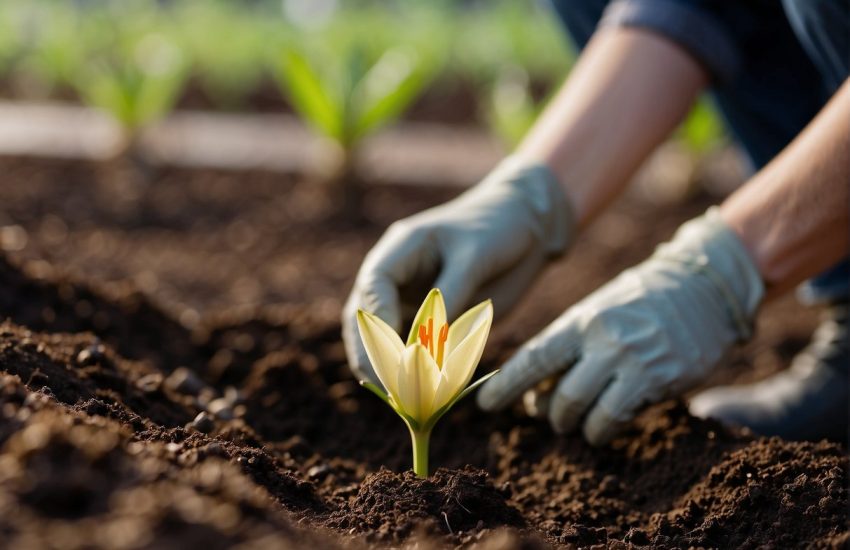
Azaleas really come alive with a good dose of fertilizer in early spring, right when new growth peeks out. You want to get the nutrients in before blooming kicks off, so flowers and leaves have plenty of support through the year.
Applying fertilizer too late? That’s risky—it can actually hurt the plant or mess with the blooms.
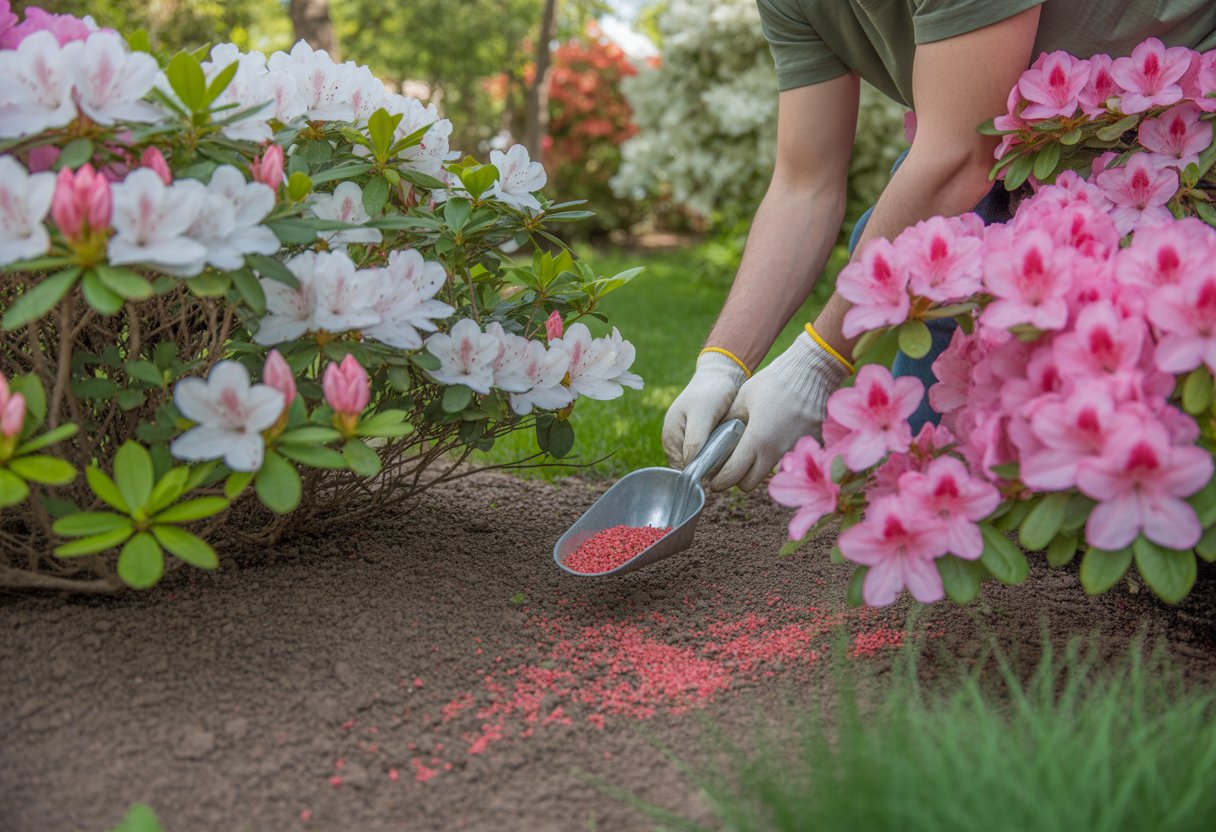
Some folks like to go for a second, lighter feeding right after the flowers fade, just to boost root strength. Fertilizer made for acid-loving plants works best since azaleas soak up those nutrients more easily.
Getting the timing right and picking a fertilizer type that matches their needs keeps azaleas looking vibrant.
Best Timing to Fertilize Azaleas
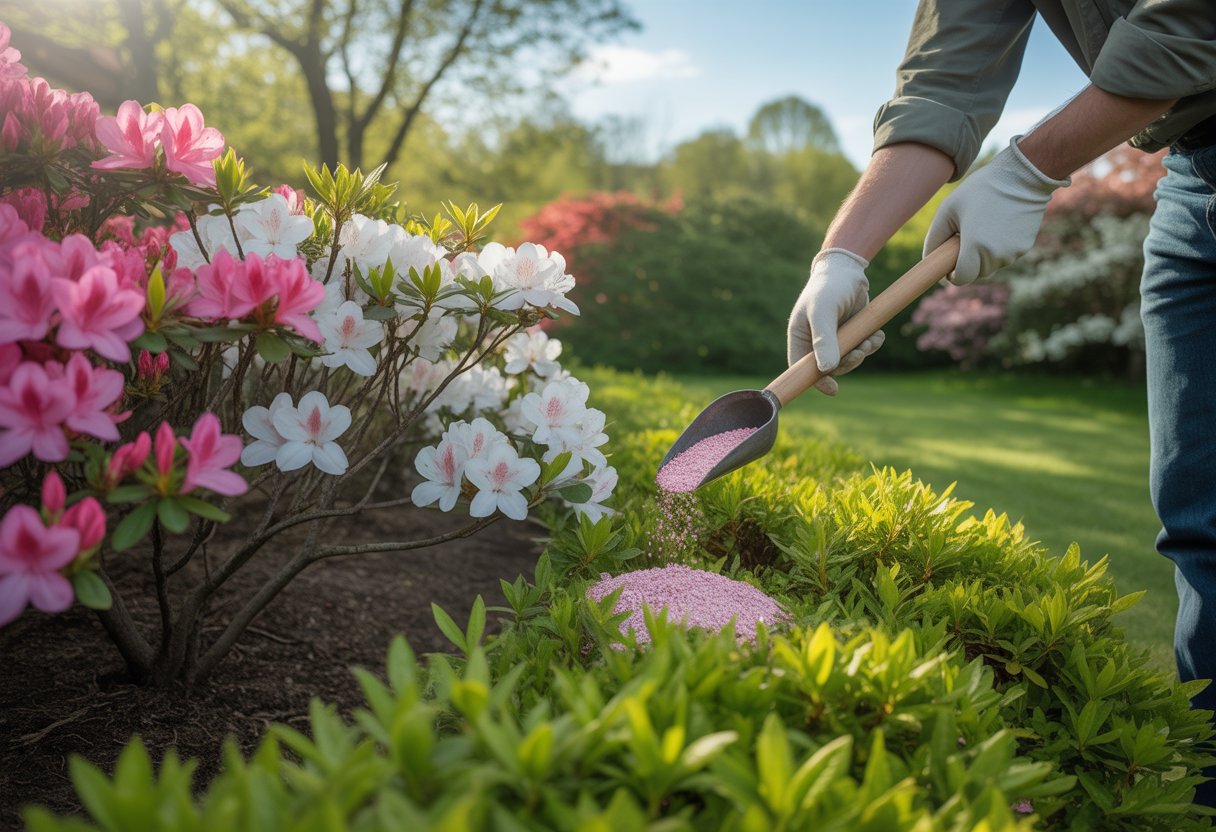
The perfect time to fertilize azaleas depends on their growth phase, your soil, and which variety you’re growing. These factors can make a surprising difference.
If you get the timing right, you’ll see better flowers, new growth, and stronger roots.
Factors Affecting Fertilization Timing
Soil type and pH can totally change how and when azaleas want their food. They love acidic soil, so testing now and then helps you decide when to feed them.
Some azaleas, like Encore varieties, bloom more than once. Their feeding schedule isn’t quite the same as the classic spring-bloomers.
Weather matters too. Late or early frosts can mess with growth and bloom times, so you might need to adjust your fertilizing routine.
Signs Azaleas Need Fertilizer
Leaves turning yellow, flowers looking sparse, and slow growth? Those are pretty clear signs your azaleas are hungry for nutrients—usually nitrogen.
If the branches look thin or weak, that’s another clue. Fertilizing at this stage can really perk them up and help set buds for next year.
If you’re not seeing healthy flower buds during bloom season, a well-timed fertilizer boost can help.
Seasonal Fertilization Schedule
The best window for fertilizing azaleas is just after spring flowering, when new buds start to form. If you fertilize too early, you might actually set them back.
Encore azaleas can handle a little more feeding in summer since they keep blooming. Skip late fall feedings, though—new growth won’t survive winter cold.
Here’s a quick cheat sheet:
| Season | Action |
|---|---|
| Early spring | Apply balanced fertilizer |
| Post-bloom | Light feeding for encore azaleas |
| Late summer | Avoid fertilizing |
Soil and Environmental Considerations
How well your azaleas respond to fertilizer depends a lot on soil conditions. If you don’t have the right pH or drainage, even the fanciest fertilizer won’t help much.
Adjusting soil pH and making sure water drains properly are musts before you even think about feeding your plants.
Testing and Adjusting Soil pH
Azaleas prefer their soil on the acidic side—pH 4.5 to 6.0 is the sweet spot. If your soil’s outside that range, they’ll struggle to get nutrients, especially iron and phosphorus.
Regular soil pH tests are a good habit. If the soil’s too alkaline, pelletized limestone can help, though it takes time.
If you need to make things more acidic, try elemental sulfur or aluminum sulfate. Go slow—overdoing it can stress your plants.
Test in early spring or fall. If you’ve got rhododendrons growing well nearby, that’s usually a good sign your soil’s acidic enough.
Improving Drainage and Soil Structure
Azaleas hate soggy roots. Well-drained soil keeps them happy and healthy, while heavy clay or compacted ground can stunt growth or invite disease.
Mixing in organic compost can lighten up heavy soils, boost drainage, and add nutrients. Raised beds or mounded soil are smart moves if your yard tends to stay wet.
Steer clear of spots where water pools after rain. If your soil’s really dense, add coarse stuff like sand or pine bark chips to loosen it up.
Keeping the soil loose helps roots breathe and lets fertilizer soak in where it’s needed.
Recommended Fertilizers and Application Techniques
Azaleas do best with fertilizers made for acid-loving plants. These blends help them pull in nutrients and stay vibrant.
How you apply fertilizer and what you use can make a big difference in root health and overall growth.
Choosing the Right Fertilizer Type
Azaleas love fertilizers with a little extra phosphorus—it helps with blooms and root strength. Look for a rhododendron fertilizer with an N-P-K like 10-8-6 or 12-6-6.
If your soil test shows they’re low on iron, chelated iron fertilizer can stop those yellow leaves without messing with pH. Slow-release options are great if you’re worried about overfeeding.
You can add root stimulators when planting or during early growth, especially if your soil’s not great or you’re transplanting.
Application Methods and Frequency
Fertilize in early spring before new growth, then again after blooms fade. Don’t fertilize after mid-summer—it can stress the plant as it gets ready for dormancy.
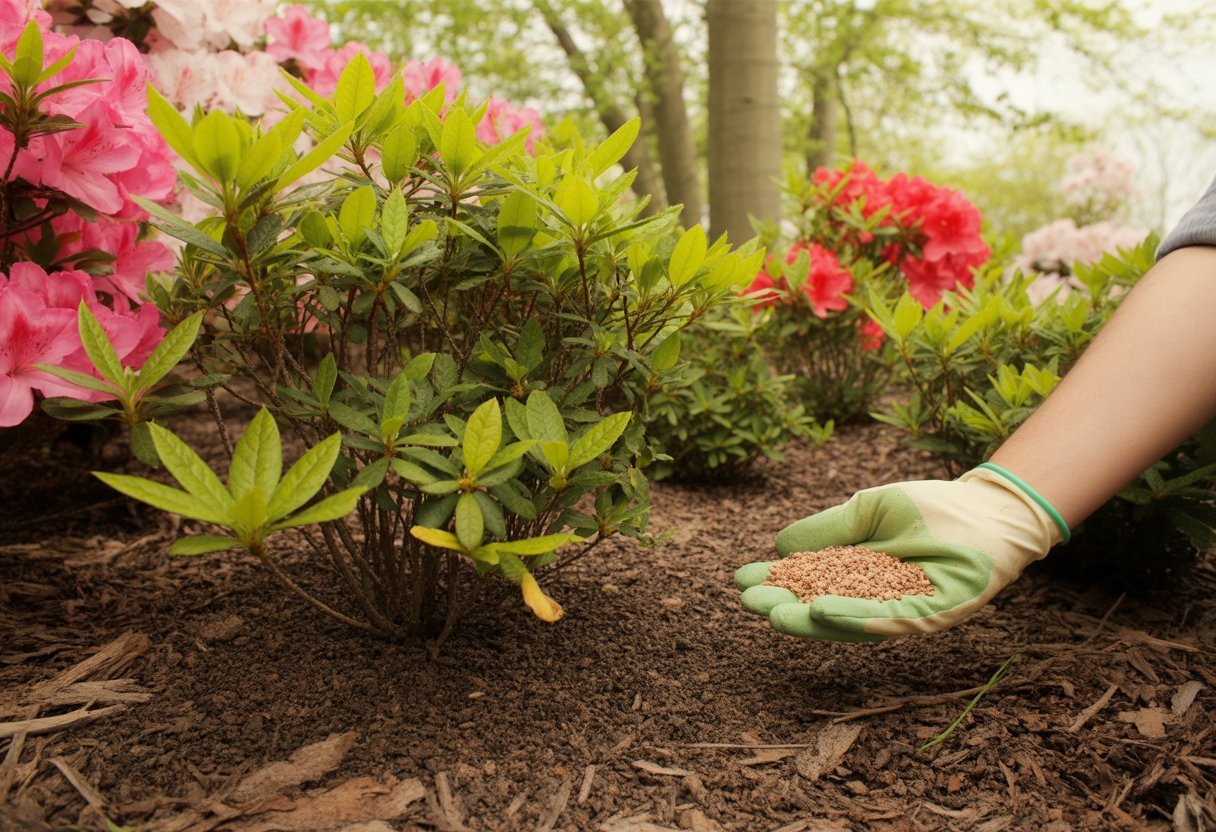
Spread dry fertilizer evenly but keep it away from the stems. Water well after you feed them so the nutrients reach the roots.
Mulch with pine needles or shredded bark to lock in moisture and slowly feed the soil. Try not to disturb the mulch too much when fertilizing—roots are delicate.
Organic Versus Synthetic Fertilizers
Organic fertilizers break down slowly, improving soil and feeding microbes. Compost, fish emulsion, or cottonseed meal are all good bets for acid-loving plants.
Synthetic fertilizers act fast but need careful measuring to avoid burning roots. They’re handy for quick fixes.
Mixing both types can give you the best of both worlds—fast results and long-term soil health. Organic mulches help keep things acidic and moist, too.
Azalea Care After Fertilization
After fertilizing, azaleas need a little TLC—think watering, light pruning, and keeping an eye out for problems. If you manage soil moisture and avoid stress, they’ll soak up nutrients and stay healthy.
Watering Tips and Soil Moisture Management
Give azaleas a deep drink after fertilizing to help nutrients get to the roots. Don’t drown them, though—roots need air, too.
Soil should be moist but not soaked. Automated watering systems help, especially in hot southern gardens where things dry out fast.
Azaleas aren’t great with drought, so mulch helps keep moisture in and soil temps steady. If you’ve just transplanted, water a bit more, but never let them sit in soggy soil.
Pruning and Plant Health
After fertilizing, only prune away dead or damaged branches—don’t go overboard. Heavy pruning right now can slow them down.
Wait until after blooming and before new growth hardens if you need to shape them. Good pruning opens up the plant to air and helps prevent foliar diseases.
Keep an eye out for pests like lace bugs, especially on azaleas and camellias. Healthy, well-fed azaleas bounce back from trouble faster, but it’s all about balance—don’t stress them with too much at once.
Common Issues After Fertilizing
Sometimes, nutrient deficiencies like iron deficiency pop up when the soil pH gets too high. Azaleas really want acidic soil so they can actually soak up nutrients.
Over-fertilizing or watering the wrong way can burn leaves or stunt growth. It’s surprisingly easy to go overboard.
Watch out for root rot if the soil stays soggy; too much moisture makes it harder for roots to grab nutrients. High humidity can also invite more foliar diseases.
If you spot lace bugs or fungal issues early, you can usually get things under control with fungicides or a little insecticidal soap.