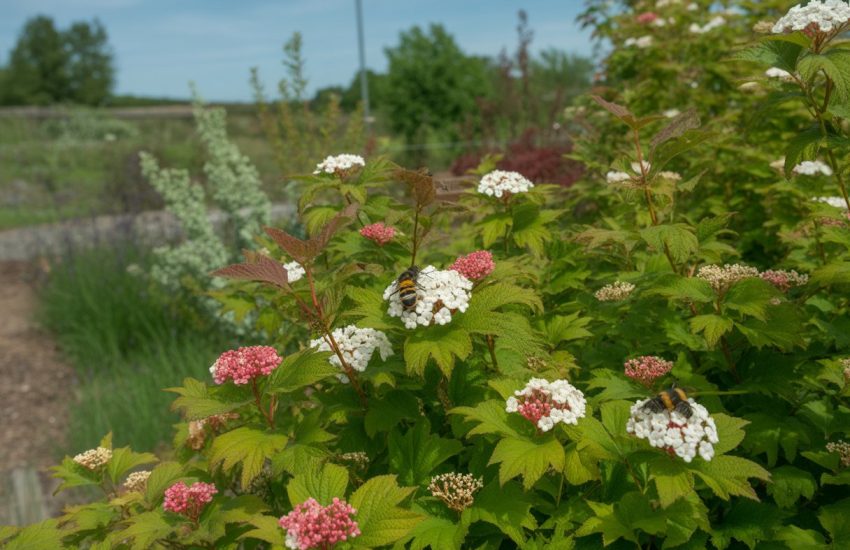
Western Azalea (Rhododendron occidentale)
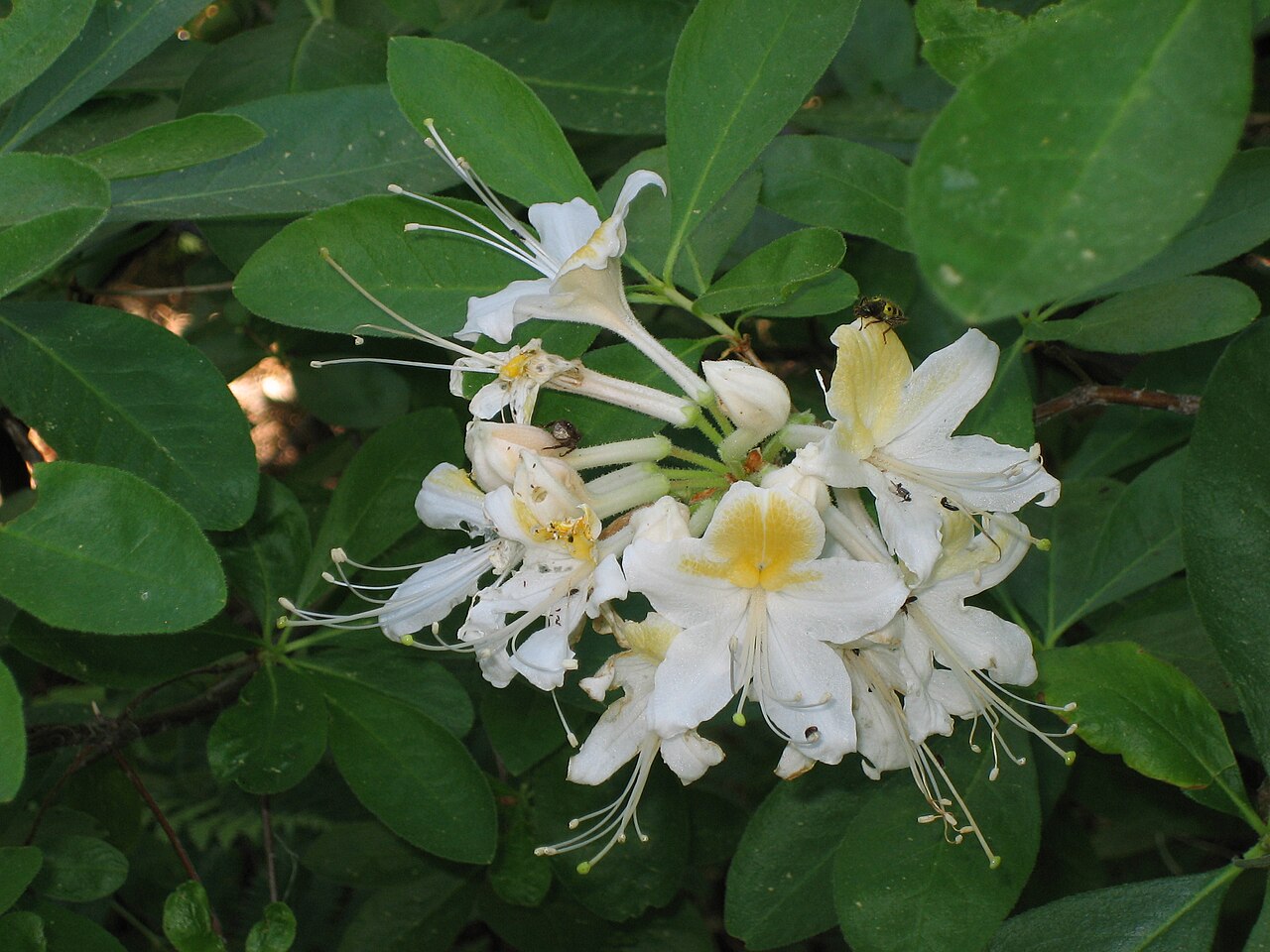
Rhododendron occidentale, the Western Azalea (also called California Azalea), is the only deciduous azalea native to the West Coast and one of just two deciduous Rhododendron species found anywhere in western North America — the other, Cascade Azalea (R. albiflorum), is a high-elevation shrub of a different section of the genus. Western Azalea belongs to the Ericaceae (heath) family and is prized for its intensely fragrant, funnel-shaped white to pale pink flowers, each marked with a bold yellow or orange blotch on the upper petal. It is the wild parent behind many of the hardy “Western” and “Knap Hill” garden azalea hybrids grown worldwide.
In the wild, Western Azalea forms a loose, multi-stemmed shrub 3 to 20 feet tall, usually smaller in open sun and taller when reaching for light in forest gaps. It follows seeps, streambanks, and seasonally moist swales through coastal ranges, the Klamath-Siskiyou mountains, the Cascade foothills, and the Sierra Nevada, where it can form spectacular blooming thickets in June and July — Azalea State Reserve in Mendocino County and the Azalea Trail in the Sierra foothills are built around wild stands of this plant.
Because it needs reliably moist, acidic soil and cool roots, Western Azalea is not a plant for every yard, but where conditions suit it — streamside gardens, woodland edges, and shaded slopes in Oregon and California — it rewards with weeks of fragrant bloom, strong wildlife value, and a direct connection to the native flora of the Pacific Coast.
Identification
Western Azalea is deciduous and loosely branched, with an open, airy habit rather than the dense form typical of evergreen rhododendrons. Stems are slender and often somewhat sprawling in shade, more upright and compact in full sun.
Bark & Stems
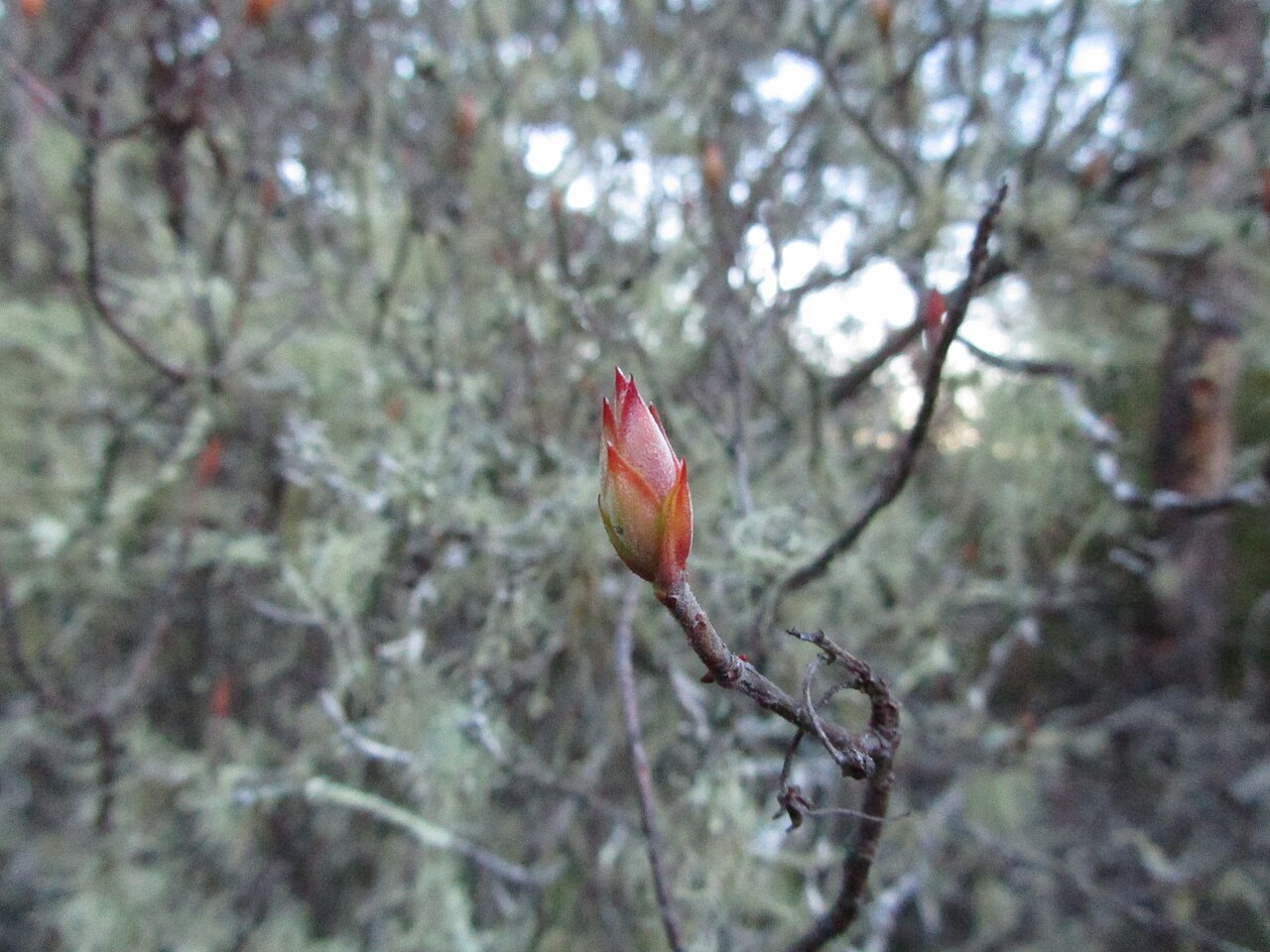
Young twigs are slender, often reddish-brown, and finely hairy to glandular-hairy; older bark becomes gray-brown and smooth to slightly fissured. Growth is in flushes, with new shoots extending noticeably after the spring bloom.
Leaves
Leaves are simple, alternate, and clustered toward the branch tips, 1.5 to 4 inches long, elliptic to oblong, with a soft, slightly hairy texture and a pale midrib. They emerge after or alongside the flowers and turn yellow, orange, or red before dropping in fall — one of the few reliable sources of autumn color among West Coast native shrubs.
Flowers
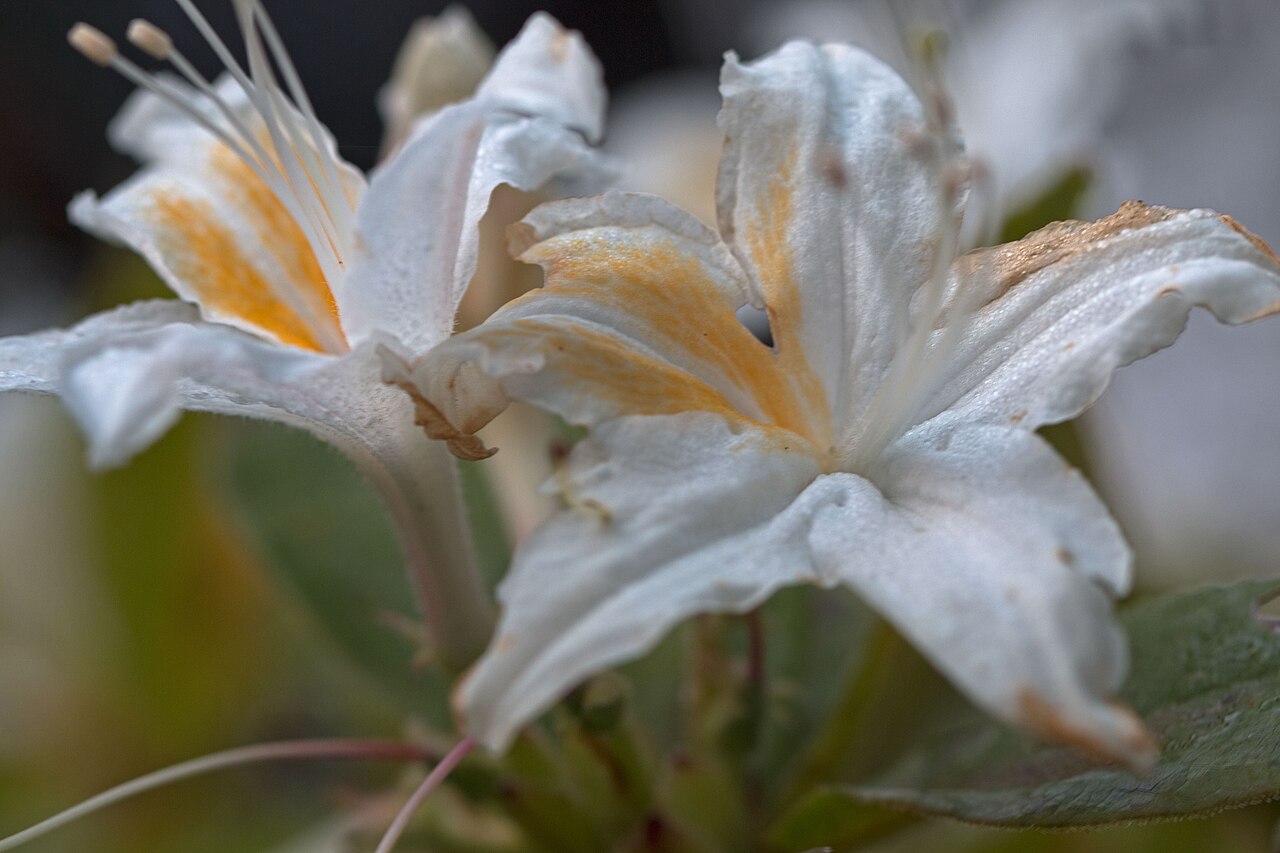
Flowers open in rounded trusses of 6 to 12 blooms at the branch tips from late spring into mid-summer, with timing shifting from April near the coast to as late as August at high Sierra elevations. Each flower is a flaring, funnel-shaped tube 1.5 to 2 inches across, white to pale pink, with a conspicuous yellow or orange blotch on the upper lobe and long, showy pink-tipped stamens that extend well beyond the petals. The fragrance is strong, sweet, and often compared to honeysuckle or jasmine — it is one of the most fragrant native shrubs in North America.
Fruit & Seeds
After bloom, flowers give way to small, dry, cylindrical seed capsules covered in fine hairs, maturing to brown by late summer and splitting open to release many dust-like seeds dispersed by wind and water.
Quick Facts
| Scientific Name | Rhododendron occidentale |
| Family | Ericaceae (Heath) |
| Plant Type | Deciduous Shrub |
| Mature Height | 3–10 ft typical (to 20 ft in ideal streamside sites) |
| Mature Spread | 4–8 ft |
| Growth Rate | Slow to moderate |
| Sun Exposure | Part Sun to Part Shade |
| Water Needs | Moderate to High; needs consistent moisture |
| Soil Type | Moist, humus-rich, well-drained; streamside loams |
| Soil pH | 5.0–6.5 (acidic) |
| Bloom Time | April – August (varies with elevation) |
| Flower Color | White to pale pink with yellow-orange blotch |
| Fall Color | Yellow, orange, red |
| Fruit | Small dry seed capsules (not showy) |
| Deer Resistant | Mostly yes (foliage contains grayanotoxins) |
| USDA Hardiness Zones | 6–9 |
Native Range
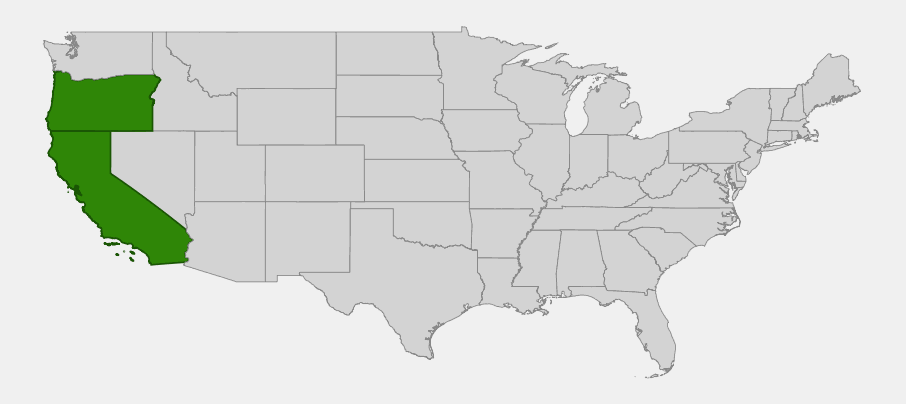
Western Azalea is native to the coastal and interior mountain ranges of Oregon and California, from Lincoln and Douglas Counties on the southern Oregon coast south through the Klamath-Siskiyou region, the Coast Ranges, and the Cascade and Sierra Nevada foothills, down to the mountains of San Diego County. It is absent from the Central Valley and the arid interior, tracking instead the moist, acidic soils found along streams and seeps in both coastal fog belts and mid-elevation forest.
Across this range it grows from near sea level on the coast to roughly 7,000 feet in the southern Sierra, which is why its bloom season stretches from April near the ocean to midsummer in the mountains. It is typically found in riparian corridors, seasonally wet meadows, and partially shaded slopes within mixed evergreen forest, often alongside conifers and broadleaf evergreens that share its preference for cool, humid microclimates.
Western Azalea is sometimes planted as an ornamental outside this native range, including in other mild-climate regions of the Pacific Northwest and in botanical collections worldwide, but it is not naturalized or considered part of the native flora beyond Oregon and California.
📋 Regional plant lists featuring Western Azalea: Western Oregon & Western Washington · California & Nevada
Growing & Care Guide
Western Azalea rewards gardeners who can replicate its streamside origins: consistent moisture, acidic soil, and some relief from the hottest afternoon sun. It is less forgiving of drought and heavy clay than many native shrubs, so site selection matters more than for most plants on this list.
Light
Give it part sun to part shade. On the cool, foggy coast it tolerates more sun; in hot interior valleys it needs afternoon shade to avoid leaf scorch. Too much shade reduces bloom and produces a leggy, open shrub, so aim for dappled or morning light with afternoon protection. See our guide on how much sun azaleas need for a closer look at balancing bloom and foliage health.
Soil & Water
Plant in humus-rich, acidic, well-drained soil that still stays reliably moist — a streamside loam is the model. Heavy clay or fast-draining sand both cause problems unless amended with compost and organic mulch. Water deeply and regularly during the first two to three years and through dry summers thereafter; established plants in truly moist sites can get by on less, but this is not a drought-tolerant shrub. A 2 to 3 inch mulch layer of pine needles or shredded bark helps hold moisture and keep roots cool; see our notes on mulches for native plant beds for options that suit acid-loving shrubs.
Planting Tips
Plant in fall or early spring from container stock, setting the root crown level with or slightly above grade — azaleas resent being planted too deep. Choose a site near a seasonal seep, rain garden, or the shaded side of a slope where runoff collects. Space plants 4 to 8 feet apart depending on expected mature size. If your native soil is alkaline or heavy, build a raised, amended bed rather than fighting the existing ground.
Pruning & Maintenance
Little pruning is needed beyond removing dead or crossing wood right after flowering, before next year’s buds set. Watch for the yellowing of interior or older leaves that signals iron deficiency in soils that are too alkaline or too wet; our article on why rhododendron leaves turn yellow walks through the most common causes and fixes. Feed sparingly with an acid-forming fertilizer formulated for azaleas and rhododendrons if growth is weak; see our guide on when to fertilize azaleas for timing.
Propagation
Western Azalea is usually propagated from semi-hardwood cuttings taken in summer, rooted under mist with rooting hormone, or from seed sown on the surface of a moist, acidic medium — seeds need light to germinate and take several years to reach flowering size.
Landscape Uses
- Streamside and rain garden plantings where soil stays consistently moist
- Woodland garden understory beneath open conifer or oak canopy
- Fragrance gardens sited near patios, paths, or windows
- Wildlife gardens for pollinators and hummingbirds
- Native plant restoration along Pacific Coast riparian corridors
Wildlife & Ecological Value
Western Azalea is an important nectar source during its long bloom season and provides structural cover in riparian habitats that support a range of native wildlife.
For Pollinators
The long, fragrant tubular flowers are built for large bees and hawkmoths, which can reach the nectar at the base of the tube while brushing against the long stamens and depositing pollen. Bumblebees, mason bees, and swallowtail butterflies are regular visitors during peak bloom.
For Birds
Hummingbirds, including Anna’s and Rufous Hummingbirds, visit the flowers for nectar, especially where Western Azalea blooms early in the season before many other nectar sources are available. The dense branching also offers nesting cover for small songbirds along streambanks.
For Mammals
Deer and other browsers generally avoid the foliage, which like other rhododendrons contains grayanotoxins, making Western Azalea a useful shrub in gardens with heavy deer pressure. Small mammals use the thickets for cover along stream corridors.
Ecosystem Role
By colonizing streambanks and seeps, Western Azalea helps stabilize moist soils and shades small waterways, contributing to cooler water temperatures valuable to native fish and amphibians. Its presence is often an indicator of healthy, undisturbed riparian habitat in Pacific Coast forests.
Cultural & Historical Uses
Western Azalea has long been admired by Indigenous peoples of California and Oregon, who recognized its reliable association with reliable water sources in the landscape; several tribal groups used the wood for small implements, though it was valued more for its beauty and fragrance than for utilitarian use.
The species gained international attention in the nineteenth century when European and American plant hunters introduced it into cultivation, where it became one of the key wild parents of the “Exbury” and “Knap Hill” deciduous azalea hybrids bred in England, prized for fragrance and flower color. Many garden azaleas sold today carry Western Azalea genes even though gardeners may never encounter the wild California or Oregon shrub itself.
Today it remains a signature wildflower of Pacific Coast forests, celebrated locally at events such as the Mendocino Azalea Reserve bloom season and sought out by hikers along trails in the Sierra Nevada foothills each early summer.
Frequently Asked Questions
Is Western Azalea the same plant as garden “Exbury” azaleas?
Not exactly. Western Azalea is the wild California-Oregon species; Exbury and Knap Hill azaleas are complex hybrids bred using Western Azalea along with several Asian deciduous azalea species. The wild species is generally more fragrant but less showy in flower size than the hybrids.
Will Western Azalea grow outside Oregon and California?
It can succeed in similarly mild, humid climates with acidic soil, such as parts of the Pacific Northwest, but it is not native outside Oregon and California and should not be planted where it could spread into wild habitat beyond that range.
Why isn’t my Western Azalea blooming well?
Too much shade, insufficient water during bud formation in late summer, or alkaline soil are the most common causes of poor bloom. Check soil pH first, since azaleas struggle to take up nutrients above pH 7.
Is Western Azalea poisonous?
Yes. Like other rhododendrons, all parts of the plant contain grayanotoxins that are toxic if ingested by people or livestock. It is not used as food or medicine; its value is strictly ornamental and ecological.
Can Western Azalea tolerate drought once established?
Only mild, short dry spells. It is adapted to seasonally moist sites and performs best with supplemental water through dry California and Oregon summers, especially on garden sites without a natural seep or stream nearby.

Looking for a nursery that carries Western Azalea?
Browse our native plant nursery directory: Oregon · California