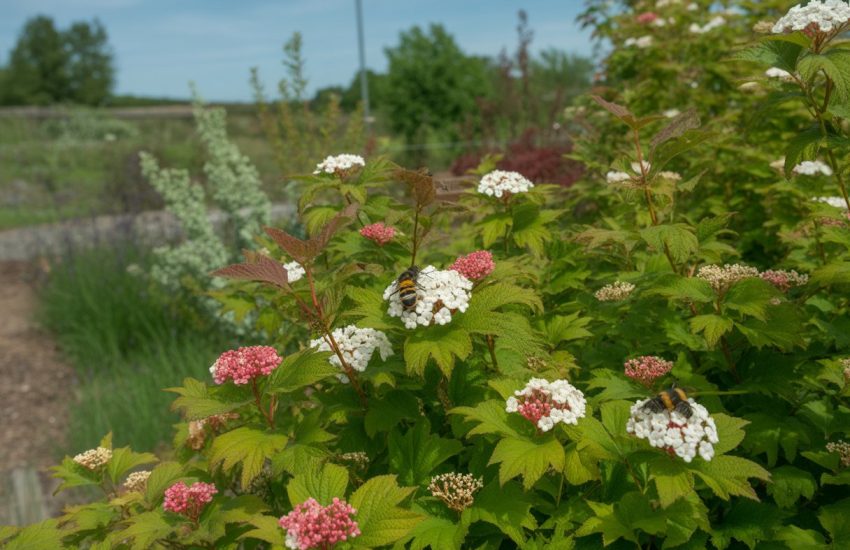
Roseshell Azalea (Rhododendron prinophyllum)
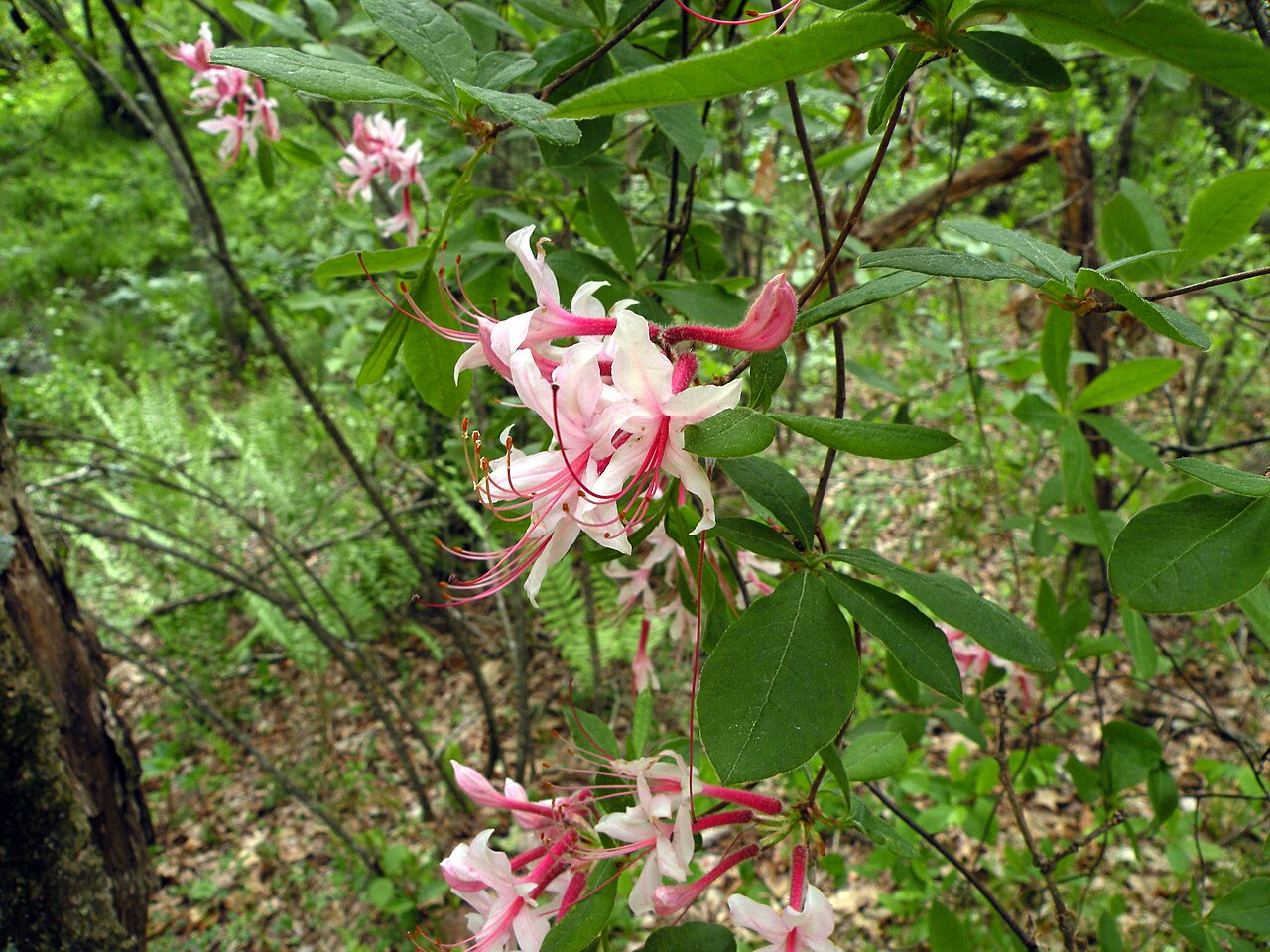
Rhododendron prinophyllum, the Roseshell Azalea (also called Early Azalea or Election Pink), is a deciduous shrub prized as the most fragrant of the pink-flowered native azaleas, with a strong, sweet, clove-like scent that can perfume an entire woodland clearing in spring. Unusual among native azaleas for its broad but strongly disjunct range, it turns up in isolated pockets from New England and the Mid-Atlantic through the Appalachians and Ozarks, a pattern botanists describe as one of the most fragmented distributions of any eastern Rhododendron.
Roseshell Azalea grows as a multi-stemmed shrub 4 to 8 feet tall, occasionally taller, with an ascending, picturesque branching habit. It favors rocky or ledgy woodlands, talus slopes, and open thickets, often on drier upland sites than many of its azalea relatives, which makes it a useful choice for gardeners who want native azalea character without a consistently wet site.
Because wild populations are scattered and often small, Roseshell Azalea is considered uncommon to rare across parts of its range even though it is ranked globally secure; the New England Wild Flower Society notes it as the region’s only naturally pink-flowering, fragrant azalea, which has made it a favorite for native plant gardens from Vermont to the Ozarks.
Identification
Roseshell Azalea is a deciduous, multi-stemmed shrub with an upright to spreading, somewhat open branching pattern that gives older plants a picturesque, sculptural form.
Bark & Stems
Twigs are densely and often minutely hairy, reddish-brown when young and aging to brown or dark gray; bark on older stems becomes dark gray and somewhat scaly with small plates.
Leaves
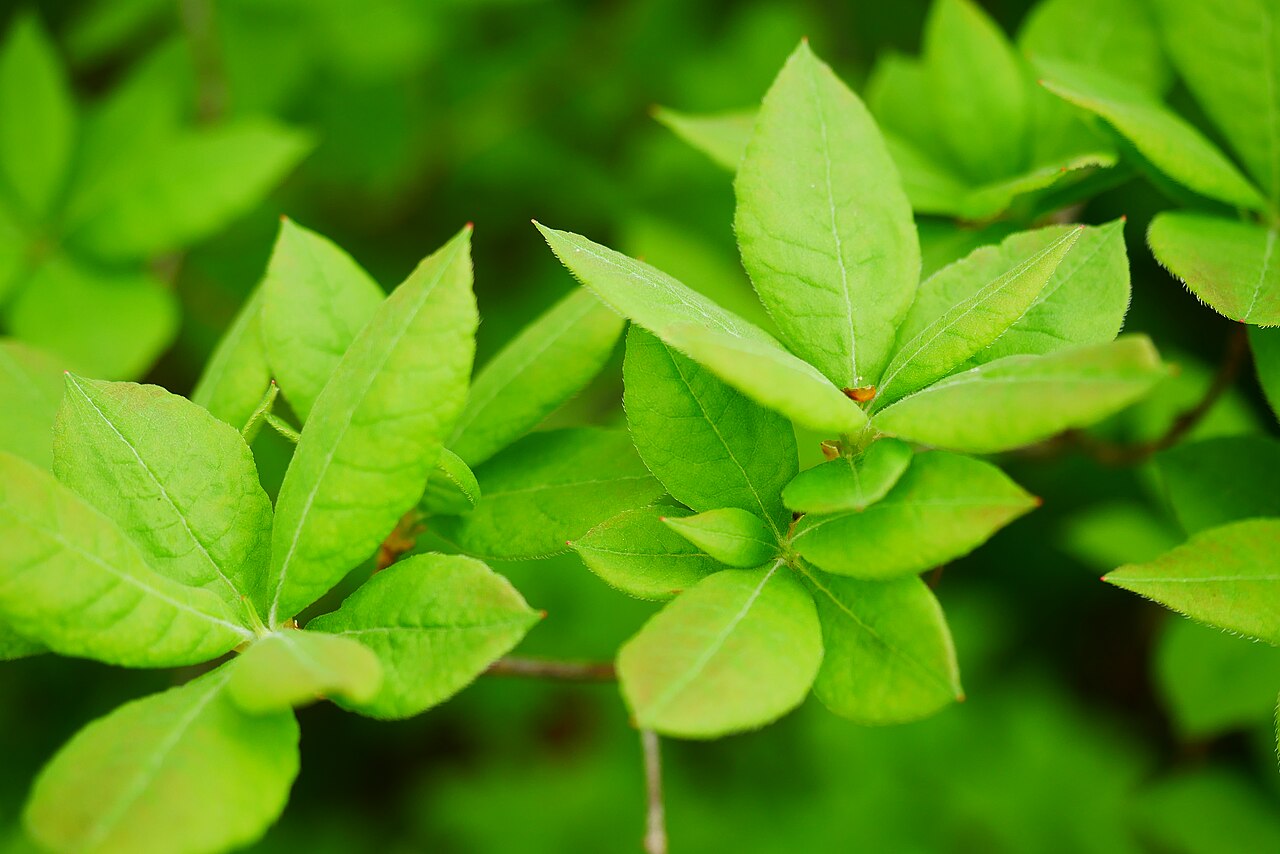
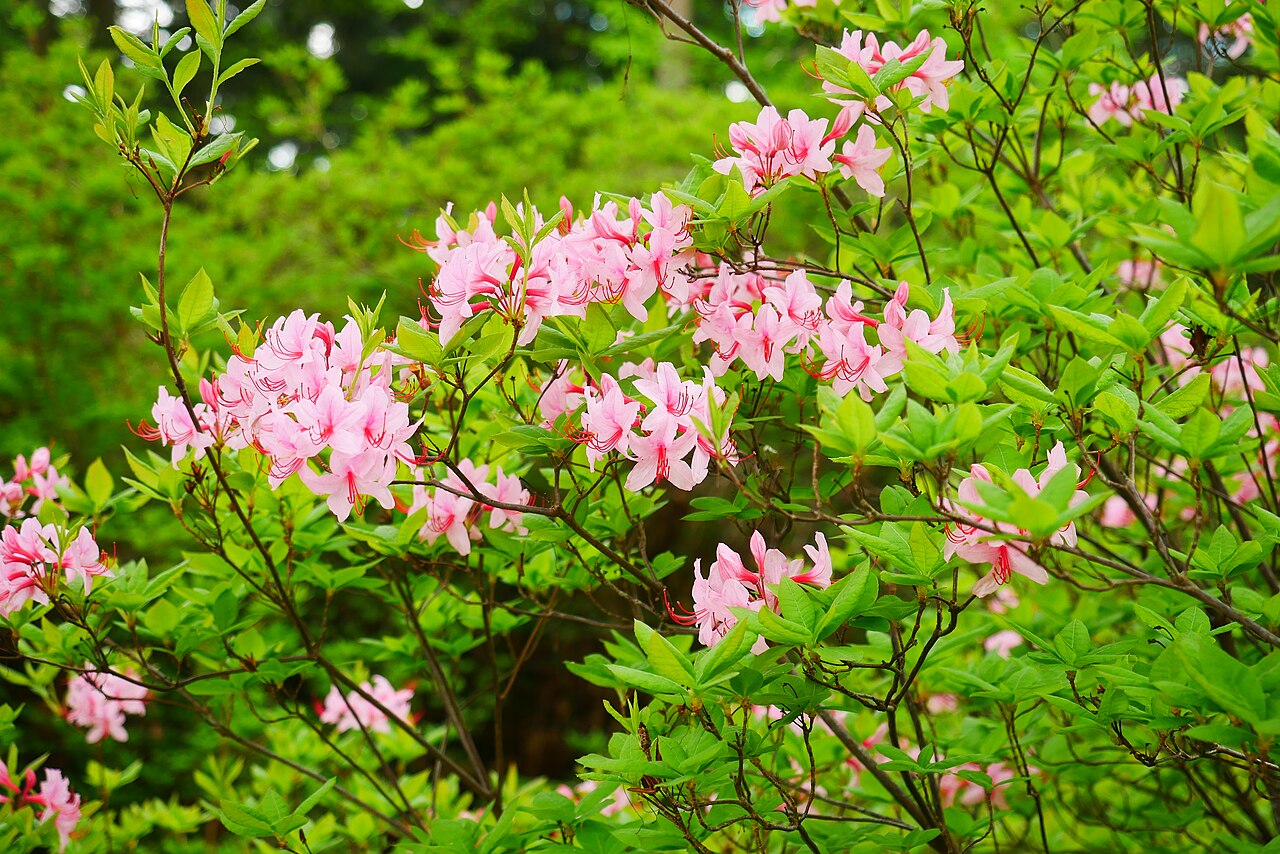
Leaves are elliptic to oblong, 1.5 to 3 inches long, medium green, and often slightly hairy, especially along the midrib and margins, with a soft texture and a somewhat dull surface compared to the glossier leaves of some other native azaleas.
Flowers
Flowers open before or with the leaves in mid-to-late spring in showy clusters, funnel-shaped and light pink to purplish-pink, roughly 1.5 to 2 inches across, with protruding stamens that extend well beyond the petals. The strong, sweet, clove-like fragrance is the species’ most distinctive identification feature, often detectable before the plant is in sight.
Fruit & Seeds
Flowers are followed by small, dry, hairy (though not sticky-glandular) seed capsules that mature in late summer and split to release numerous tiny seeds dispersed by wind.
Quick Facts
| Scientific Name | Rhododendron prinophyllum (syn. R. roseum) |
| Family | Ericaceae (Heath) |
| Plant Type | Deciduous Shrub |
| Mature Height | 4–8 ft (rarely to 15 ft) |
| Mature Spread | 4–8 ft |
| Growth Rate | Slow to moderate |
| Sun Exposure | Full Sun to Part Shade |
| Water Needs | Moderate; tolerates drier upland sites better than most azaleas |
| Soil Type | Well-drained, rocky to loamy; woodland or talus soils |
| Soil pH | 5.0–6.5 (acidic) |
| Bloom Time | April – May |
| Flower Color | Light pink to purplish-pink |
| Fall Color | Yellow to bronze |
| Fruit | Small dry seed capsules (not showy) |
| Deer Resistant | Mostly yes (foliage contains grayanotoxins) |
| USDA Hardiness Zones | 4–8 |
Native Range
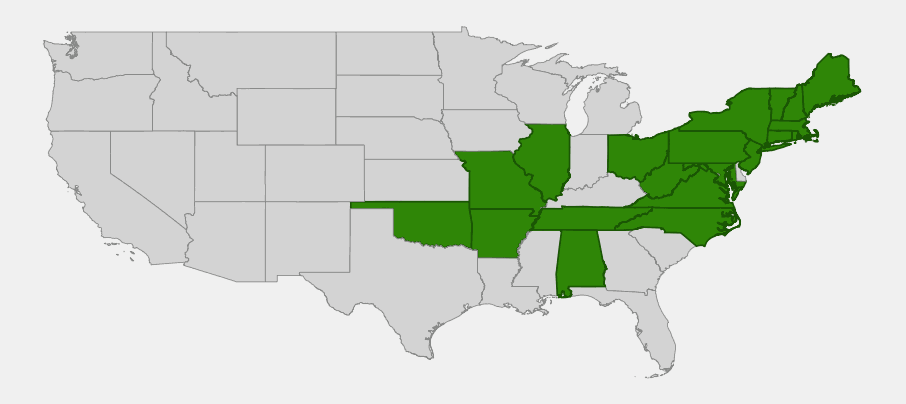
Roseshell Azalea has one of the most strongly disjunct distributions of any eastern North American shrub. It occurs in scattered populations from New Hampshire, Maine, and Vermont south through the New York, Pennsylvania, and New Jersey highlands, into Maryland, Virginia, and West Virginia, with outlying stands reaching North Carolina and a notable disjunct population in Alabama. A separate western population runs from southern Illinois and Missouri into the Ozarks of Arkansas and eastern Oklahoma, with rare outlying sites in Ohio, the southern Appalachians and northern Alabama.
Within this patchwork range it favors rocky, ledgy woodlands, talus slopes, open thickets, and shoreline edges — generally drier, more open sites than the streamside habitats preferred by many other native azaleas. Local populations are often small and isolated, which is why the species is uncommon or rare in several states even though it is not globally imperiled.
Because the range is so fragmented, gardeners should confirm Roseshell Azalea’s status in their specific state or region before assuming it is locally native; it is absent from large stretches of territory between its documented population centers.
📋 Regional plant lists featuring Roseshell Azalea: New Hampshire, Maine & Vermont · Connecticut, Massachusetts & Rhode Island · New York, Pennsylvania & Northern New Jersey · Maryland, Virginia & West Virginia · North Carolina & South Carolina · Kentucky & Tennessee · Ohio & Indiana · Illinois, Iowa & Missouri · Arkansas, Louisiana, Eastern Oklahoma & Eastern Texas · Georgia, Alabama & Mississippi
Growing & Care Guide
Roseshell Azalea is more adaptable to drier, rockier sites than many native azaleas, making it a good option for gardeners without a consistently moist spot, though it still prefers acidic, well-drained soil.
Light
Full sun to part shade suits this species well; in cooler northern parts of its range it tolerates more sun, while in warmer areas some afternoon shade helps prevent stress. See our guide on how much sun azaleas need for more detail on balancing light and bloom.
Soil & Water
Well-drained, acidic soil is essential; Roseshell Azalea tolerates rocky or gravelly ground better than wetter-site azaleas, but still benefits from organic matter worked into the planting area. Water regularly through the first two years, then taper off for established plants, which are reasonably tolerant of short dry spells once rooted in. A mulch layer helps moderate soil temperature and moisture; see our notes on mulches for native plant beds for acid-friendly choices.
Planting Tips
Plant in fall or early spring, choosing a site with good drainage such as a slope or raised bed if your native soil tends to stay wet. Roseshell Azalea’s tolerance for rockier ground makes it a strong choice for naturalistic plantings on talus slopes or woodland edges where many other azaleas would struggle.
Pruning & Maintenance
Minimal pruning is required; remove dead or crossing wood right after bloom. Watch for yellowing between leaf veins, which usually signals iron deficiency from alkaline soil conditions; our article on why rhododendron leaves turn yellow covers the common causes. If growth is weak, a light application of acid-forming fertilizer can help; see our guide to fertilizing azaleas for timing.
Propagation
Propagate from semi-hardwood cuttings in summer or from seed sown on the surface of an acidic growing medium; because of its scattered, locally adapted populations, seed sourced from a nearby native population will establish best in a given region.
Landscape Uses
- Rock gardens and talus-slope plantings where drainage is excellent
- Fragrance gardens sited near paths, patios, or windows
- Woodland edge and open thicket restoration
- Naturalistic plantings on drier upland sites unsuited to wetter azaleas
- Pollinator and wildlife gardens throughout its scattered native range
Wildlife & Ecological Value
Roseshell Azalea’s strong fragrance and early bloom time make it a valuable nectar source for a range of pollinators emerging in spring across its scattered native range.
For Pollinators
Bumblebees, mason bees, and other native bees are drawn to the fragrant flowers, along with occasional swallowtail butterflies. The intense clove-like scent is thought to help attract pollinators over longer distances than less fragrant native azaleas.
For Birds
Hummingbirds visit the flowers for nectar, particularly in the northern parts of the range where Roseshell Azalea is among the earlier nectar sources available after spring migration arrives.
For Mammals
Deer and rabbits generally avoid browsing the toxic foliage, making this a reliable shrub choice in areas with heavy browsing pressure.
Ecosystem Role
Because Roseshell Azalea often grows in isolated populations, each stand can represent a locally important genetic reservoir; protecting and propagating regional populations helps maintain the species’ already fragmented range rather than letting isolated colonies disappear.
Cultural & Historical Uses
Roseshell Azalea has long been noted by botanists for its exceptional fragrance, which earned it attention in early American horticultural writing as one of the most pleasantly scented native shrubs. Its old common name, “Election Pink,” refers to the plant’s bloom time coinciding with spring town-meeting and election days in parts of New England, where the pink blossoms became a seasonal landmark.
The species has also been known under the synonym Rhododendron roseum in older botanical and horticultural literature, and some sources still list it that way; both names refer to the same plant recognized today as R. prinophyllum.
There is no significant historical record of medicinal or food use; like other native azaleas, Roseshell Azalea’s documented value has always been ornamental and, more recently, ecological.
Frequently Asked Questions
Why is Roseshell Azalea sometimes called “Election Pink”?
In parts of New England, its bloom time historically coincided with spring town meetings and elections, giving rise to the old regional nickname.
Is Roseshell Azalea the same as Rhododendron roseum?
Yes. Rhododendron roseum is an older scientific synonym for the same species now accepted as Rhododendron prinophyllum.
Why does my area have Roseshell Azalea populations while a neighboring state does not?
The species has an unusually fragmented, disjunct native range, occurring in scattered pockets rather than a continuous band, so its presence can vary sharply between nearby counties or states.
Does Roseshell Azalea need wet soil like some other native azaleas?
No. It is more tolerant of drier, rocky upland sites than many azaleas, though it still needs acidic, well-drained soil and benefits from regular watering while establishing.
Is Roseshell Azalea toxic?
Yes, like other native azaleas, all parts contain grayanotoxins and should not be ingested by people or pets; its value is ornamental and ecological rather than edible or medicinal.

Looking for a nursery that carries Roseshell Azalea?
Browse our native plant nursery directory: NH/NY/NJ/NC/OH/OK · ME/CT/MA/MD/MO · VT/RI/PA/VA/TN · WV · IN/IL/IA · AR/AL