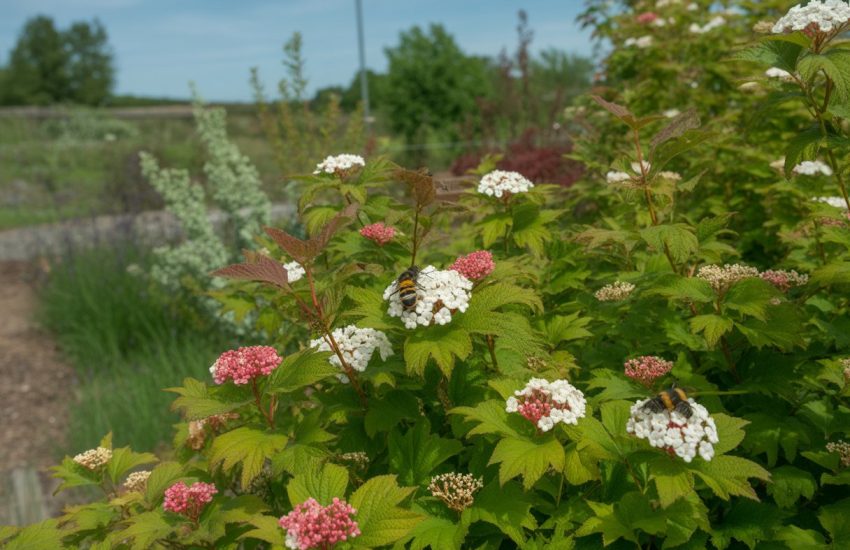
Allegheny Plum (Prunus alleghaniensis)
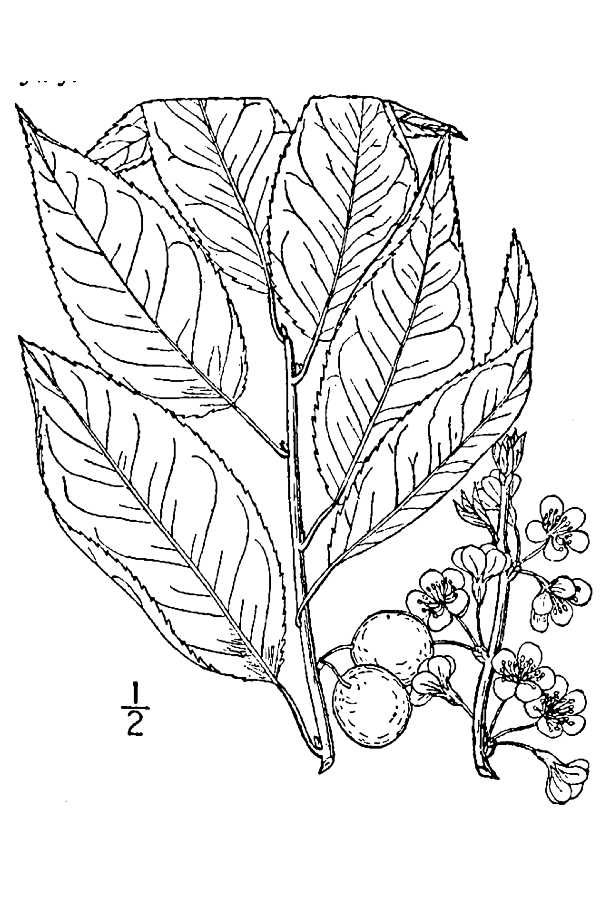
Prunus alleghaniensis, the Allegheny Plum, is an uncommon native shrub of the Appalachian Mountains and the Lower Peninsula of Michigan. Named for the Allegheny Mountains where botanist Thomas Conrad Porter first described it in 1877, this thicket-forming plum is far less familiar to gardeners than American Plum or the ornamental flowering cherries sold at nurseries, yet it fills an important niche: a cold-hardy, early-blooming native shrub for upland thickets, old fields, and fencerows in the heart of Appalachia.
Allegheny Plum is a shrub or small tree, usually 3 to 12 feet tall, that spreads by root suckers to form loose colonies. Its abundant white flowers, which turn pink as they age, open in a flush before the leaves, followed later in summer by small, dark purple, waxy-coated plums. Though apparently secure range-wide, it is genuinely uncommon within its range and has disappeared from a few states at the margins of its historical distribution, making garden plantings a worthwhile way to keep the species visible and available to pollinators and wildlife.
Some regional floras continue to recognize an infraspecific variety, Prunus alleghaniensis var. alleghaniensis, within the species; USDA PLANTS, however, treats Prunus alleghaniensis itself as the accepted name, and that is the treatment followed here.
Identification
This species reaches 3 to 12 feet, occasionally more, as a multi-stemmed shrub or small tree. Twigs are sometimes armed with short thorns, and the bark becomes fissured with age. Root suckering is common, so a single planted specimen will often expand into a small thicket over several years unless suckers are removed.
Bark & Stems
Young stems are reddish brown and may bear short, stiff thorns, particularly on vigorous growth. Older bark develops shallow fissures, distinguishing mature stems from the smoother bark of young growth.
Leaves
Leaves are 2 to 3.5 inches long, finely toothed along the margin, and often drawn out to a long, pointed tip — a feature that helps separate Allegheny Plum from the related Beach Plum (Prunus maritima) of the Atlantic coast, which has blunter, untoothed leaves and larger fruit.
Flowers
Flowers are plentiful and showy for a shrub this size, opening white and gradually turning pink as they age, in clusters that appear on the bare branches before the leaves emerge in early spring.
Fruit
The fruit is a small, dark purple drupe up to about 1/2 inch wide, covered with a whitish, waxy bloom typical of wild plums. It ripens in late summer and, like other native plums, makes excellent pies, preserves, and jelly once cooked with sugar.
Quick Facts
| Scientific Name | Prunus alleghaniensis Porter |
| Family | Rosaceae (Rose) |
| Plant Type | Deciduous Shrub / Small Tree |
| Mature Height | 3–12 ft |
| Mature Spread | 4–10 ft, wider with root suckers |
| Growth Rate | Moderate |
| Sun Exposure | Full Sun to Part Shade |
| Water Needs | Low to Average |
| Soil Type | Well-drained upland soils; tolerates rocky or sandy ground |
| Soil pH | 5.5–7.0 |
| Bloom Time | April, before leaves |
| Flower Color | White aging to pink |
| Fall Color | Yellow to bronze |
| Fruit | Small dark purple drupes with waxy bloom, edible cooked |
| Deer Resistant | No |
| USDA Hardiness Zones | 4–7 |
Native Range
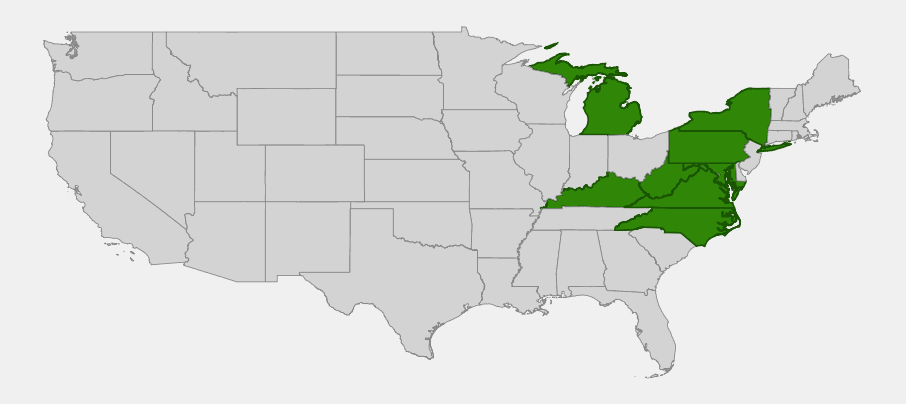
Allegheny Plum is native to the Appalachian Mountains from New York south through Pennsylvania, Maryland, West Virginia, and Virginia to Kentucky and North Carolina, with a notable disjunct population in the Lower Peninsula of Michigan. Within this range it typically grows at elevations of roughly 1,200 to 2,000 feet, favoring upland sites rather than the floodplains preferred by American Plum.
Habitat includes dry to mesic upland woodland edges, old fields, fencerows, and roadside thickets, usually in small, scattered colonies rather than large stands, often growing near American Plum and Chokecherry. It is uncommon almost everywhere it occurs, and historical reports from New Jersey and Connecticut are now considered extirpated — the species has not persisted at the far northeastern edge of its former range.
Because Allegheny Plum is genuinely scarce, check with your state natural heritage program before collecting any plant material from the wild, and favor nursery-propagated stock for garden plantings. Buying or growing nursery plants takes pressure off the thin, scattered wild populations that remain.
📋 Regional plant lists featuring Allegheny Plum: New York, Pennsylvania & Northern New Jersey · Maryland, Virginia & West Virginia · Kentucky & Tennessee · North Carolina & South Carolina · Michigan, Wisconsin & Eastern Minnesota
Growing & Care Guide
Allegheny Plum is undemanding once established, tolerating the dry, rocky upland soils of its native Appalachian range better than many other native plums. It is a good choice where a tidy, single-trunk flowering tree is not the goal — gardeners who already enjoy ornamental cherries may want to compare bloom habit with our flowering cherry trees guide, since Allegheny Plum blooms on a similar schedule but on a much smaller, thicket-forming shrub.
Light
Plant in full sun for the best flower and fruit production. Light shade is tolerated, especially at woodland edges, but flowering is reduced in heavier shade.
Soil & Water
This species is well adapted to average to dry, well-drained upland soils, including rocky or sandy sites where many garden plants struggle. It does not need supplemental watering once established, though young plants benefit from regular water during their first one to two growing seasons.
Planting Tips
Give Allegheny Plum room to sucker, or plan to control its spread with a root barrier or periodic thinning if space is limited. Because it is not reliably self-fertile, plant more than one unrelated specimen if fruit production matters to you; general spacing guidance for wild and cultivated plums is covered in our article on how wide plum trees grow.
Pruning & Maintenance
Remove dead or damaged wood in late winter. Watch for black knot fungus, a disease common to wild and cultivated Prunus species that causes hard black swellings on branches; cut out infected wood promptly well below the visible swelling. Thin root suckers as needed to keep the thicket within bounds.
Propagation
Propagate from root suckers dug while dormant, or from seed after several months of cold stratification. Because the species is uncommon, source plants or seed from a reputable native plant nursery rather than wild populations.
Landscape Uses
- Wildlife thickets on dry, upland sites where few other native shrubs thrive
- Conservation plantings that help maintain an uncommon native species
- Naturalized hedgerows and fencerow plantings
- Pollinator gardens, for its early and abundant spring bloom
- Slope stabilization on rocky, well-drained banks
Wildlife & Ecological Value
Despite its small stature, Allegheny Plum punches above its weight ecologically, offering some of the earliest nectar of the spring season and a documented role as a larval host plant for several butterflies and moths.
For Pollinators
The abundant, early flowers provide an important nectar source for native bees and other pollinators emerging in spring, before many other woody plants have bloomed. The shrub is also recorded as a larval host for several butterflies and moths, including the Luna Moth, making it valuable for anyone gardening for Lepidoptera.
For Birds
Songbirds feed on the late-summer fruit, and the dense, thicket-forming growth habit provides good nesting cover and protection from predators, especially where thorny young growth deters larger animals.
For Mammals
Small mammals and deer browse the foliage and twigs, while foxes and other mid-sized mammals eat the ripe fruit and help disperse the seeds to new sites.
Ecosystem Role
As an uncommon, thicket-forming shrub of dry upland edges, Allegheny Plum adds structural and genetic diversity to Appalachian plant communities that are otherwise dominated by a handful of common species. Garden and restoration plantings help offset the species’ scarcity in the wild and keep its early-spring nectar resource available to pollinators across more of its historical range.
Cultural & Historical Uses
Allegheny Plum was first described scientifically in 1877 by botanist Thomas Conrad Porter, who named it for the Allegheny Mountains where he found it growing. Like its more common relatives, the fruit has long been gathered by rural households within its range and cooked into pies, preserves, and jelly, following the same traditions applied to American Plum and other wild Prunus species.
Unlike widely cultivated plums, Allegheny Plum was never developed into orchard cultivars and remains almost entirely a wild or garden-grown species rather than a commercial fruit crop. Its primary modern value lies in conservation horticulture and wildlife gardening rather than food production, though home gardeners within its native range can still enjoy a modest crop of tart plums most years.
Today the species carries a NatureServe global rank of G4, “Apparently Secure,” though it is uncommon to rare at the state level across much of its range and has been lost from New Jersey and Connecticut. Growing it in home gardens and restoration plantings is a meaningful, low-effort way to support a native plant that most people have never heard of, let alone seen.
Frequently Asked Questions
Is Allegheny Plum the same as American Plum?
No. Allegheny Plum (Prunus alleghaniensis) is a distinct, smaller, more thicket-forming species restricted to the Appalachian region and Michigan, while American Plum (Prunus americana) is larger and far more widespread across the eastern and central United States.
Is Allegheny Plum rare or endangered?
It carries a global NatureServe rank of “Apparently Secure,” but it is genuinely uncommon within its range and has been extirpated from a couple of states at the edge of its historical distribution, so check local status before collecting wild material.
Can I eat Allegheny Plum fruit?
Yes, the small purple plums are edible, typically cooked into jam, jelly, or pie filling rather than eaten raw, since they are tart and have relatively little flesh around the stone.
How big does Allegheny Plum get?
Most plants stay in the 3 to 12 foot range as a multi-stemmed shrub, though it can occasionally grow slightly taller as a small tree in favorable conditions.
Does Allegheny Plum need special soil?
No — it is actually valued for tolerating poorer, drier, rockier upland soils than many other native fruiting shrubs, making it useful on sites where richer-soil species struggle.

Looking for a nursery that carries Allegheny Plum?
Browse our native plant nursery directory: New York, North Carolina & Virginia · Pennsylvania · Kentucky, Maryland & Michigan · West Virginia