Canada Plum (Prunus nigra)
Prunus nigra, commonly called Canada Plum or Canadian Plum, is one of the toughest native fruit trees of the northern United States and adjacent Canada. A close relative of the more widespread American Plum (Prunus americana), it is the plum of choice for truly cold winters, surviving conditions that would kill most other fruiting trees in the Rosaceae. Gardeners in the Upper Midwest, New England, and the Great Lakes region plant it for its fragrant, early spring bloom, its tart but useful fruit, and the dense thickets it forms for birds and other wildlife.
Canada Plum grows as a shrub or small tree, typically 15 to 25 feet tall with a low-branched, dense crown of stiff, rigid branches. The bark is gray-brown and flakes into thick plates with age, while young twigs are bright green before turning dark brown tinged with red. It can be told apart from American Plum, which it closely resembles, by its leaf margins: Canada Plum has blunt, gland-tipped teeth along the leaf edge, while American Plum has sharp teeth without glands.
Because it tolerates alkaline, limestone-derived soils and extreme cold better than almost any other plum, Canada Plum has long been valued both for naturalistic plantings and for breeding hardy orchard cultivars. Indigenous peoples throughout its range dried the fruit for winter use long before European contact, and 19th- and 20th-century plant breeders crossed it with Japanese plum to create cold-hardy hybrids still grown today.
Identification
Canada Plum reaches 10 meters (about 33 feet) at most, though garden specimens are usually smaller, with a trunk up to 10 inches in diameter. The winter buds are a giveaway: chestnut brown, long-pointed, and up to 3/8 inch long, noticeably larger than those of American Plum. Branches are often somewhat spiny, especially on vigorous young growth, and older trees send up root suckers that can form a loose thicket over time.
Bark
Young bark is smooth and gray-brown; with age it splits and peels into thick, curling plates, giving older trunks a shaggy, textured look. This flaking bark, combined with the stiff, almost architectural branching pattern, makes Canada Plum identifiable in winter even without leaves or fruit.
Leaves
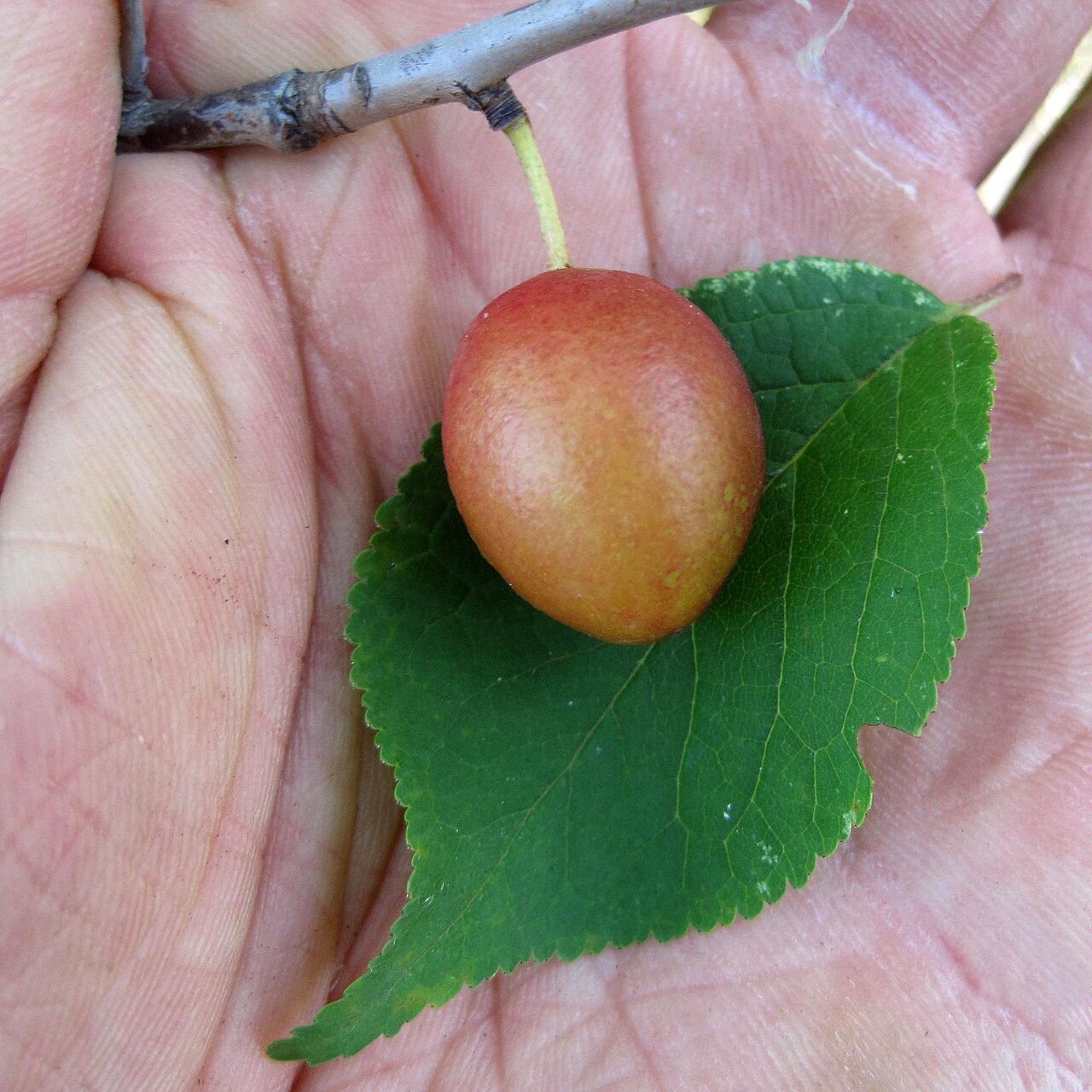
Leaves are alternate, simple, oblong-ovate to obovate, 2 to 4.75 inches long and 1.125 to 2.75 inches wide. The base is wedge-shaped to slightly heart-shaped, the tip narrows abruptly to a point, and the margin is doubly crenate-serrate with teeth tipped by small glands — the key feature separating this species from the sharp-toothed, glandless leaves of American Plum. New leaves emerge downy and tinged red, becoming bright green above and paler below as they mature.
Flowers & Fruit
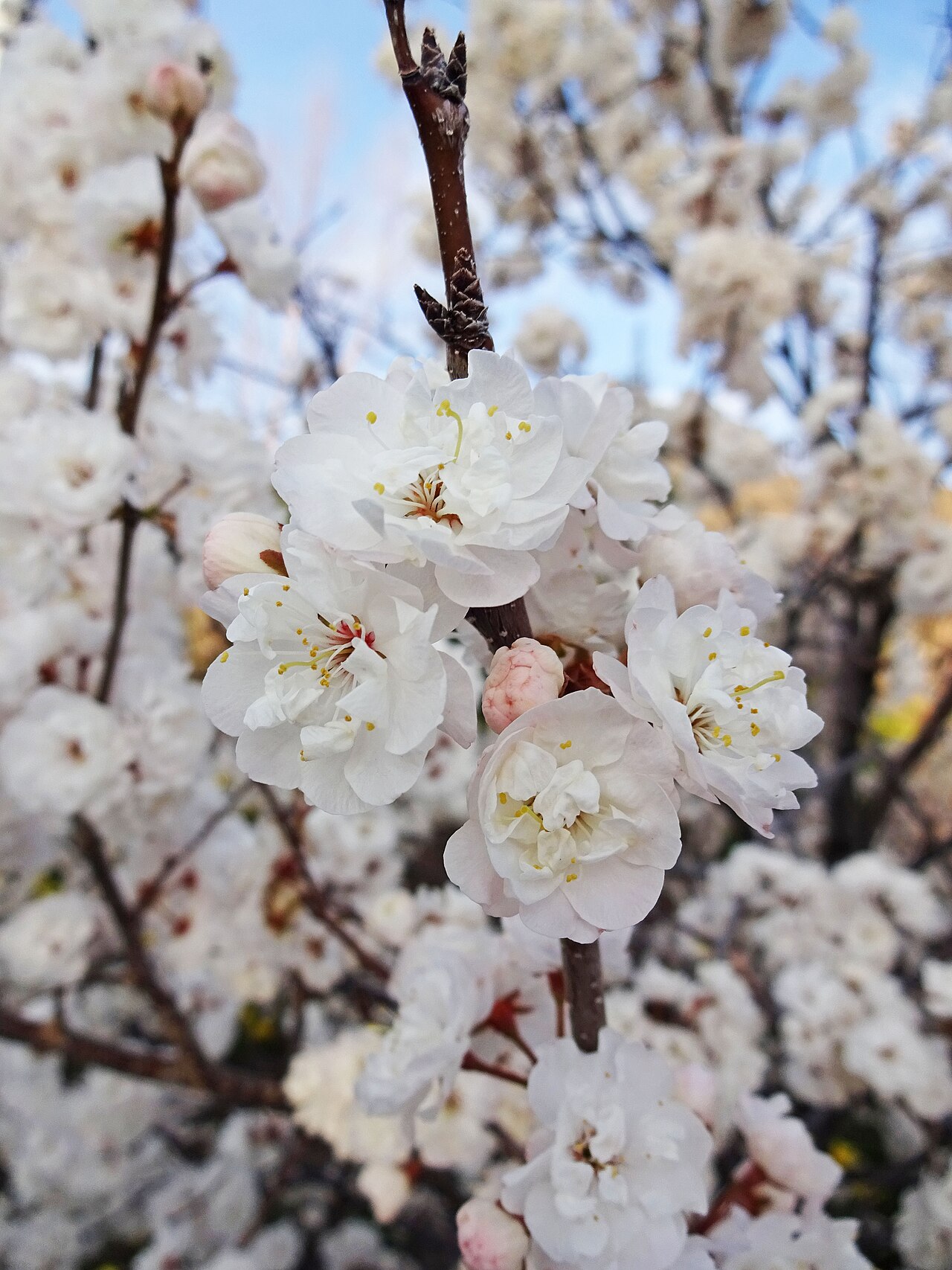
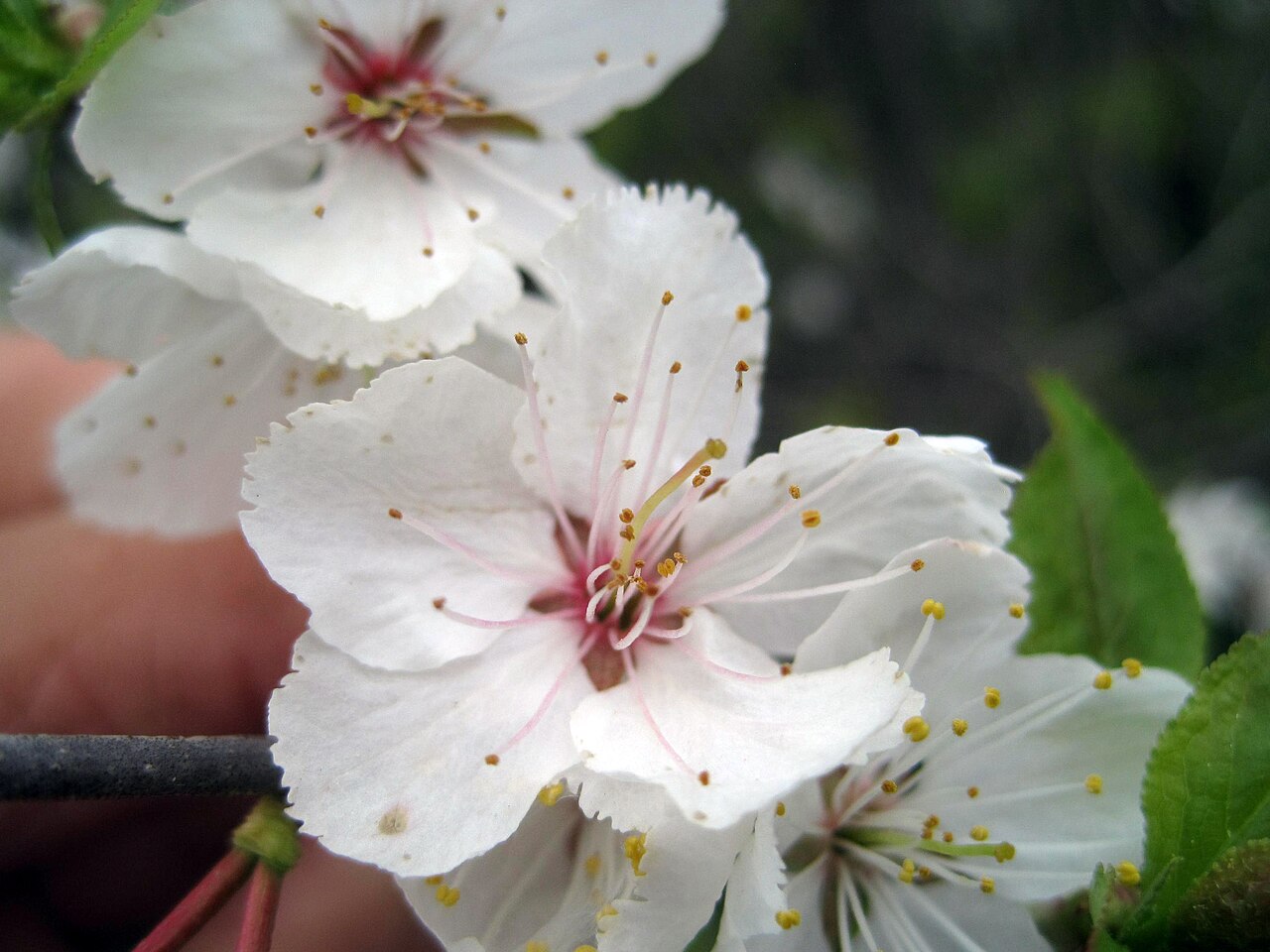
Flowers open in mid to late spring before the leaves, in clusters of three to four on short, thick stalks. Each flower is 5/8 to 1 inch across with five white petals that fade to pale pink, and a slight fragrance. The fruit is an oblong-oval drupe, 1 to 1.125 inches long, with tough, thick, orange-red skin and yellow flesh clinging tightly to a flattened stone. Fruit ripens in late summer to early fall and is sour enough to require sweetening, but it cooks into excellent jam, jelly, and pie filling.
Quick Facts
| Scientific Name | Prunus nigra (syn. Prunus americana var. nigra) |
| Family | Rosaceae (Rose) |
| Plant Type | Deciduous Large Shrub / Small Tree |
| Mature Height | 15–30 ft |
| Mature Spread | 12–20 ft, wider with root suckers |
| Growth Rate | Moderate |
| Sun Exposure | Full Sun to Part Shade |
| Water Needs | Average to Moist |
| Soil Type | Alluvial, loamy, tolerant of limestone/alkaline soils |
| Soil pH | 6.0–7.8 (tolerates alkaline) |
| Bloom Time | April – May, before leaves |
| Flower Color | White fading to pale pink |
| Fall Color | Yellow |
| Fruit | Orange-red drupes, tart, edible cooked |
| Deer Resistant | No (browsed by deer; thicket also used as cover) |
| USDA Hardiness Zones | 2–6 |
Native Range
Canada Plum is a tree of the cold northern tier of the eastern United States and southeastern Canada. It ranges from Nova Scotia west through the Canadian Maritimes and southern Quebec and Ontario to Minnesota and southeastern Manitoba, with scattered outlying populations along streambanks in Saskatchewan and Alberta. In the United States it reaches south into New England, New York, Pennsylvania, the Great Lakes states, and the upper Midwest, generally following river valleys and limestone-influenced soils.
Within this range, Canada Plum favors alluvial floodplain soils and limestone-derived substrates, where it often forms dense streamside thickets alongside American Plum, hawthorns such as Downy Hawthorn, and Chokecherry. It is intolerant of heavy shade and does best at forest edges, fencerows, old fields, and riparian corridors rather than deep woods.
The species has declined in parts of its range. It is considered rare or endangered in Ohio, and a notable population along the Maine–New Brunswick border has been reduced over the decades because the tree hosts an aphid that also attacks potato crops, leading to clearing. Elsewhere it remains locally common, and planting it in gardens and hedgerows helps maintain genetic diversity outside of shrinking wild thickets.
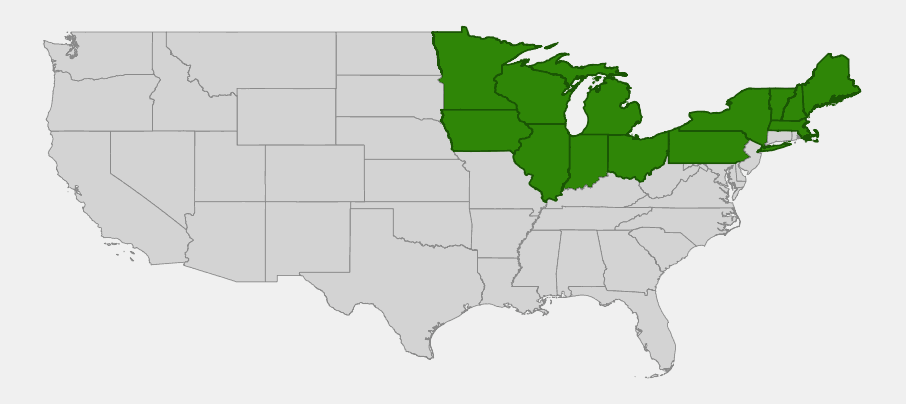
📋 Regional plant lists featuring Canada Plum: Illinois, Iowa & Missouri · Ohio & Indiana · Connecticut, Massachusetts & Rhode Island · New Hampshire, Maine & Vermont · Michigan, Wisconsin & Eastern Minnesota · New York, Pennsylvania & Northern New Jersey
Growing & Care Guide
Canada Plum is forgiving and cold-hardy, making it one of the easiest native fruit trees to establish in northern gardens. It asks for little beyond sun and reasonably drained soil, and it shrugs off winters that would damage many ornamental fruit trees. If you have grown a flowering cherry tree and want something equally showy in bloom but far hardier and more useful to wildlife, Canada Plum is worth a look — see our guide to flowering cherry trees for a comparison of bloom timing and care between ornamental Prunus species.
Light
Plant Canada Plum in full sun for the heaviest bloom and best fruit set; it will tolerate light shade but flowers and fruits more sparsely there. As a thicket-forming understory edge species, it is naturally suited to open woodland margins rather than closed-canopy forest.
Soil & Water
This species is notably tolerant of alkaline, limestone-derived soils that frustrate many other fruit trees, and it also does well in ordinary loam. It prefers consistent moisture, especially while young, but established plants handle brief dry spells. Avoid soils that stay waterlogged for long periods; good drainage during the growing season keeps roots healthy even though the species tolerates occasional flooding on floodplains.
Planting Tips
Plant bare-root or container stock in spring while still dormant, in a site with room for the tree to sucker outward over time. If you want fruit, plant at least two unrelated seedlings or a seedling plus a cultivar, since Canada Plum is not reliably self-fertile; how wide a mature specimen spreads depends partly on rootstock and site — see our notes on how wide plum trees grow for general spacing guidance that applies to wild and cultivated plums alike.
Pruning & Maintenance
Remove dead, crossing, or diseased branches in late winter while the tree is dormant. Watch for black knot fungus, a common disease of wild and cultivated plums that produces hard black swellings on branches; prune out infected wood promptly, cutting several inches into healthy tissue, and destroy the cuttings rather than composting them. Root suckers can be thinned to control thicket spread or left in place for a naturalized hedge.
Propagation
Canada Plum propagates readily from root suckers, which can be dug and transplanted while dormant. Seed propagation requires cold stratification of the stones for several months before spring sowing, mimicking the natural overwinter period the seed would experience on the ground.
Landscape Uses
- Naturalized hedgerows and windbreaks in cold climates
- Wildlife thickets providing nesting cover and early-season nectar
- Edible landscaping — fruit for jam, jelly, and preserves
- Streambank and floodplain restoration
- Orchard breeding stock for cold-hardy hybrid plums
Wildlife & Ecological Value
Canada Plum supports wildlife across the growing season, from early-spring pollinators through to fall fruit eaters, and its dense thicket form makes it valuable structural habitat as well as a food source.
For Pollinators
The early, fragrant flowers are an important nectar and pollen source for native bees and honeybees emerging in spring, when few other woody plants are blooming yet in cold climates. Because the flowers open before the leaves, pollinators have easy, unobstructed access to them.
For Birds
Robins, cedar waxwings, and other fruit-eating songbirds feed on the ripe plums, which also persist on branches into early fall. The thicket growth habit, dense and thorny on young wood, provides excellent nesting cover and protection from predators.
For Mammals
Black bears, foxes, and other mammals eat the fruit and help disperse the seeds, while deer and rabbits browse the twigs and foliage, particularly in winter when other forage is scarce. Root-suckering thickets create dense cover used by small mammals for shelter.
Ecosystem Role
As an early-successional, thicket-forming species of floodplains and forest edges, Canada Plum helps stabilize streambank soils and provides structural diversity in open habitats. It is also host to a fungal pathogen, Taphrina, that causes hollow “plum pockets” in the fruit — a natural part of the system that, while it reduces seed set in affected fruit, does not seriously threaten healthy trees.
Cultural & Historical Uses
Canada Plum has a long history with Indigenous peoples of eastern North America, who dried the fruit for winter storage well before European arrival. French explorer Jacques Cartier recorded being given dried Canada plums by the St. Lawrence Iroquoians during his first voyage up the St. Lawrence River, an early written account of the fruit’s importance as a preserved food source.
As one of the few tree fruits native to the Upper Midwest and prairie provinces capable of surviving harsh winters, Canada Plum attracted the attention of 19th- and 20th-century plant breeders seeking cold-hardy fruit trees. Crosses with the cultivated Japanese plum (Prunus salicina), which shares the same chromosome number, produced hybrid cultivars such as ‘Pembina’, ‘Superior’, and ‘Patterson Pride’ that combine Japanese plum quality with Canada Plum’s hardiness. Pure selections like ‘Assiniboine’ and ‘Cheney’ are still grown today in cold-climate orchards.
The wood is heavy, hard, and close-grained, turning an attractive red color when wounded; woodturners have sought out intentionally wounded logs for this reason. The fruit itself remains a favorite for home preserving, and the species’ resilience continues to make it a parent plant in breeding programs aimed at expanding cold-climate fruit production.
Frequently Asked Questions
How do I tell Canada Plum apart from American Plum?
Look closely at the leaf edges: Canada Plum has blunt, gland-tipped teeth, while American Plum has sharp teeth without glands. Canada Plum also has notably larger winter buds, up to 3/8 inch long.
Is Canada Plum fruit good to eat?
Yes, though it is tart when raw. It is best cooked into jam, jelly, or pie filling, which mellows the sourness and makes use of the fruit’s naturally high pectin content.
How cold-hardy is Canada Plum?
Very. It is reliably hardy through USDA Zone 2, making it one of the most cold-tolerant native fruit trees, and it is a parent species of several hybrid plums bred specifically for prairie and northern climates.
Will Canada Plum spread by suckering?
Yes, mature plants send up root suckers and can form a loose thicket over time. This is useful for naturalized hedgerows and wildlife plantings but may need occasional thinning in a tidy garden bed.
Does Canada Plum need a second tree to produce fruit?
Most seedlings are not reliably self-fertile, so plant at least two genetically distinct trees (two seedlings, or a seedling and a named cultivar) within about 50 feet of each other for good fruit set.

Looking for a nursery that carries Canada Plum?
Browse our native plant nursery directory: Illinois, Indiana & Iowa · Maine, Michigan & Minnesota · New York, New Hampshire & Ohio · Pennsylvania & Vermont · Massachusetts · Wisconsin