
Twombly’s Red Sentinel Japanese Maple (Acer palmatum ‘Twombly’s Red Sentinel’)
Last updated: November 3, 2026
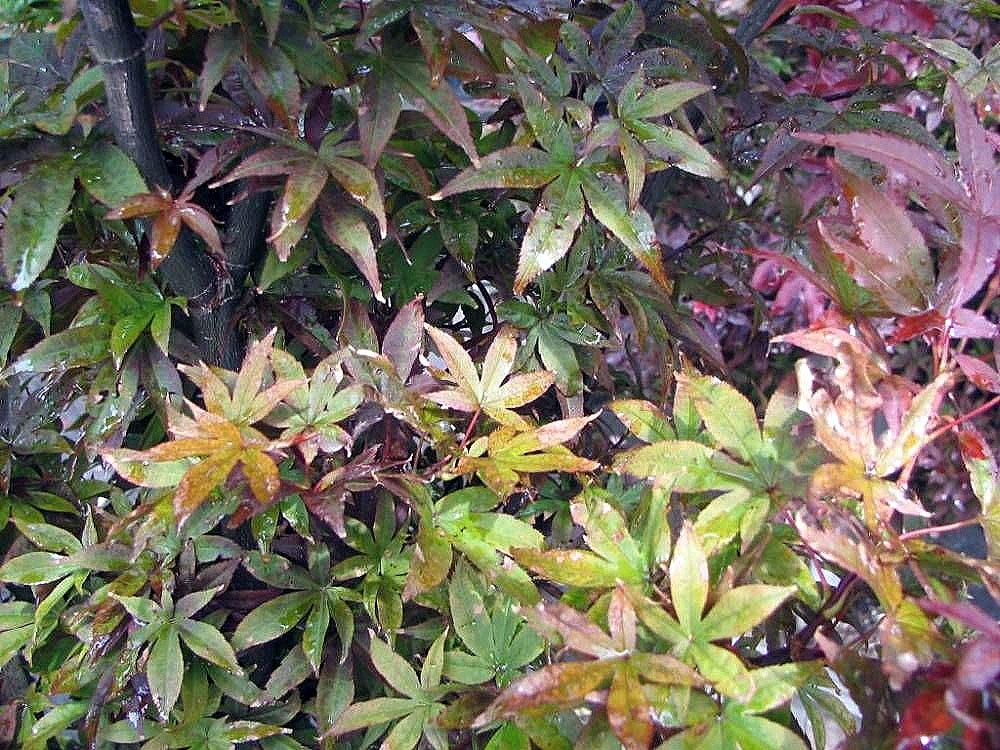
Acer palmatum ‘Twombly’s Red Sentinel’ is an upright, narrow-growing Japanese maple cultivar prized for doing something very few red-leafed Japanese maples can do: stand up straight. Where most purple and red Japanese maples spread wide and arch outward, ‘Twombly’s Red Sentinel’ holds a tight, columnar shape, its branches rising close to the main trunk rather than sprawling. The result is a small tree that reads almost like a living exclamation point in the landscape, useful anywhere a Japanese maple’s color is wanted but its usual wide canopy is not.
Gardeners grow ‘Twombly’s Red Sentinel’ for exactly that combination: the rich burgundy-red of a classic red Japanese maple packed into a slim, dense column. New spring growth opens bright red-purple, the color holds reasonably well into summer in cooler climates (fading more toward bronze-green in hot, sunny regions), and the small, deeply cut palmate leaves give the whole narrow silhouette a fine, lacy texture rather than a solid block of color. Because the branching stays so compact and upright, it fits into tight side yards, narrow beds along a wall or walkway, and large containers where a spreading maple would quickly outgrow its space.
Japanese maple (Acer palmatum) is not native to North America; it is native to Japan, Korea and eastern China, and ‘Twombly’s Red Sentinel’ is a cultivated selection of that species, not a wild plant. It is not listed as a federal or state noxious weed, but in parts of the eastern United States, especially the Mid-Atlantic, seedling Japanese maples have been found escaping into forest understories, where they can crowd out native tree seedlings. Columnar, dense cultivars like this one are not reported as prolific self-seeders the way some green-leaved seedling-grown understock can be, but as a precaution it is still worth planting away from the edges of natural woodland and pulling any volunteer maple seedlings that pop up nearby.
Identification
‘Twombly’s Red Sentinel’ is identified less by any single leaf trait than by its overall shape: a dense, narrow, upright column of fine reddish foliage, quite unlike the broad mounded or weeping forms most people picture when they hear “Japanese maple.”
Bark & Stems
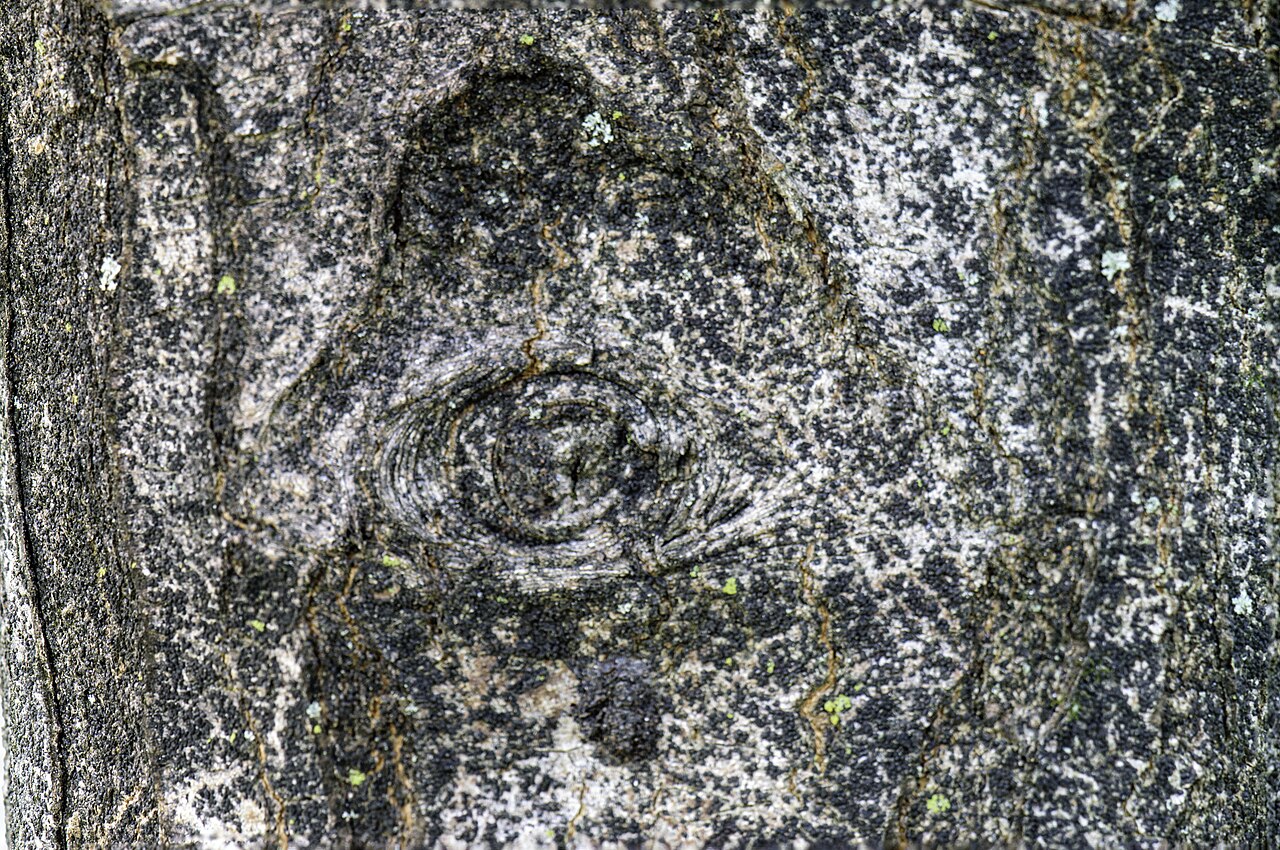
Young stems are slender and reddish-brown, thickening to smooth gray-brown bark with age. Because the plant originated as a witch’s-broom-type mutation with unusually tight, upright branching, the stems stay close together along the main leader rather than spreading, giving the whole plant a dense, twiggy look even in winter when the leaves are gone.
Leaves
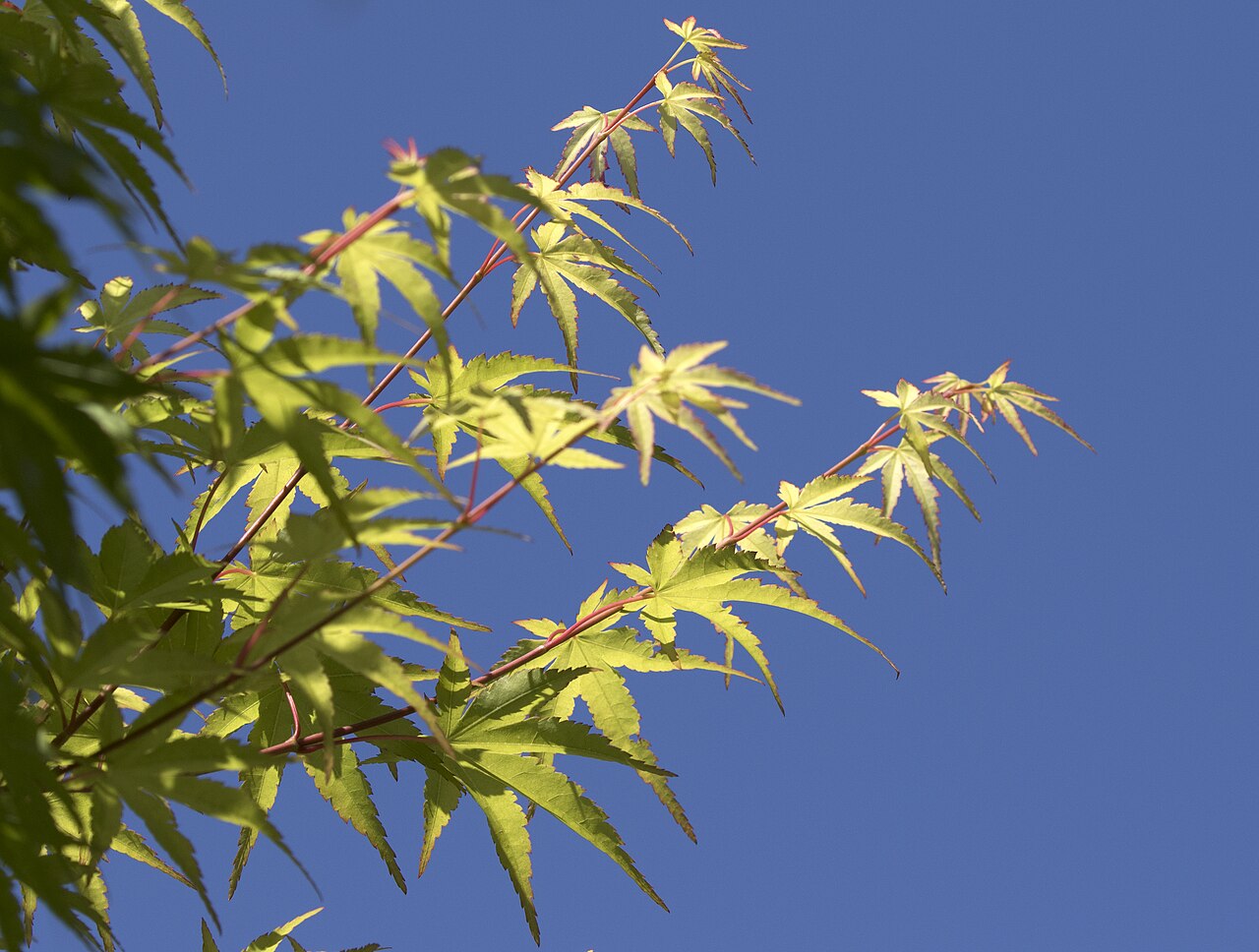
Leaves are palmate with five to seven slender, pointed lobes, smaller and more delicate-looking than those of broad-canopied red cultivars such as ‘Bloodgood‘. They emerge bright red to red-purple in spring. In cooler summer climates the color holds fairly well; in hot, sunny inland gardens the leaves often shift toward a bronzed green by midsummer before returning to strong red, orange and crimson tones in fall. Full sun generally keeps the red color more saturated through the season than shade does.
Flowers & Fruit
Small, reddish-purple flowers appear in spring, mostly hidden among the new leaves, and are followed by the small winged seed pairs (samaras) typical of all Japanese maples. Neither flowers nor fruit are a significant ornamental feature; the plant is grown for its foliage and silhouette.
Telling It From Other Upright Red Maples
The giveaway is the combination of red-purple leaf color with a genuinely narrow, columnar outline. Most red-leafed Japanese maple cultivars, including ‘Bloodgood’ and ‘Fireglow‘, eventually spread into a broad rounded or vase-shaped small tree; ‘Twombly’s Red Sentinel’ instead stays noticeably slim relative to its height for many years, which is its main distinguishing feature in the nursery row or in a mixed planting.
Quick Facts
| Scientific Name | Acer palmatum ‘Twombly’s Red Sentinel’ |
| Cultivar | ‘Twombly’s Red Sentinel’ |
| Family | Sapindaceae (Maple) |
| Plant Type | Deciduous columnar small tree/large shrub |
| Native to North America | No — introduced; species native to Japan, Korea and eastern China |
| Mature Height | About 10 ft in 10–20 years (to roughly 15–20 ft in great age) |
| Mature Spread | 3–5 ft while young and columnar; widens somewhat with age |
| Growth Rate | Slow to moderate |
| Sun Exposure | Full sun to part shade; afternoon shade helps in hot climates |
| Water Needs | Average, consistent moisture; not drought tolerant when young |
| Soil Type | Rich, well-drained loam; tolerates some clay if not waterlogged |
| Soil pH | Slightly acidic to neutral (about 5.5–7.0) |
| Bloom Time | Mid-spring; flowers are inconspicuous |
| Leaf / Fall Color | Red-purple spring foliage, often bronzing in summer heat, turning crimson-orange in fall |
| Fruit | Small winged samaras; not ornamentally significant |
| Deer Resistant | Somewhat (occasional browsing reported, especially on young plants) |
| USDA Hardiness Zones | 5–8 |
| Invasive Status | Not listed as invasive; species occasionally self-seeds into eastern U.S. woodlands |
Origin & Where It Grows
The species Acer palmatum is native to the mountains and woodlands of Japan, the Korean peninsula and parts of eastern China, where it grows as an understory and forest-edge tree. Centuries of selection by Japanese horticulturists, and later by Western nurseries, have produced many hundreds of named cultivars that vary in leaf shape, color and growth habit; ‘Twombly’s Red Sentinel’ is one of the relatively small group bred or selected specifically for a narrow, upright form rather than the species’ usual rounded crown.
This particular cultivar is an American introduction. It arose as a mutation, a “witch’s broom” of unusually dense, upright growth, discovered on a ‘Bloodgood’ Japanese maple by nurseryman Ken Twombly of Connecticut. Growers propagated cuttings from that tight-growing shoot, and because the trait held true when grafted, ‘Twombly’s Red Sentinel’ became established as its own named selection, carrying the columnar habit as a stable, reproducible feature.
In the United States, ‘Twombly’s Red Sentinel’ is widely grown as a landscape and container plant from the Pacific Northwest through the Mid-Atlantic and into parts of the Southeast, generally wherever Japanese maples in general perform well. It does best with some protection from the most intense afternoon sun in hot-summer regions, where its best leaf color shows in morning sun with afternoon shade.
Growing & Care Guide
‘Twombly’s Red Sentinel’ is grown much like other Japanese maples, with its narrow shape doing most of the design work for you.
Light
Full sun to light shade suits this cultivar. In regions with hot, intense summer sun, morning sun paired with afternoon shade keeps the red color from scorching or bronzing out too early; in milder, cooler-summer climates it can take more sun and still hold good color.
Soil & Water
Plant in rich, well-drained soil; Japanese maples generally dislike soggy, compacted ground. Keep the root zone evenly moist, especially through the first two or three growing seasons, and mulch to conserve moisture and moderate soil temperature. Once established, it tolerates brief dry spells but still performs best with regular watering during hot weather.
Planting Tips
Because the habit is narrow, ‘Twombly’s Red Sentinel’ is well suited to tight side-yard strips, narrow foundation beds and large decorative containers. Give it a sheltered spot out of strong, drying winds, which can brown the delicate leaf margins. Set the root ball at the same depth it was growing in the nursery pot and avoid piling mulch against the trunk.
Pruning & Maintenance
Very little pruning is needed to maintain the column shape, since the dense, upright branching is the plant’s natural habit. Remove dead or crossing twigs in late winter while the plant is dormant, and watch for any fast, vigorous shoots growing out of character (wide-spreading or green-leaved), which can signal reversion from the graft union and should be cut out at the base.
Propagation
Like all named Japanese maple cultivars, ‘Twombly’s Red Sentinel’ comes true only from grafting or cuttings taken from the cultivar itself, typically grafted onto seedling Acer palmatum rootstock. Seeds collected from this tree will not reliably reproduce its narrow form or leaf color; seedlings usually revert toward generic green-leafed, spreading Japanese maple.
Landscape Uses
- Narrow side yards and tight planting strips where a normal Japanese maple’s spread would not fit
- Vertical accents flanking an entry, gate or garden focal point
- Large container specimens on a patio or terrace
- Screening with color in a row along a narrow property line
- Companion planting with low groundcovers or perennials at its base, since it casts little shade compared with broad-canopied maples
Wildlife & Ecological Value
‘Twombly’s Red Sentinel’, like Japanese maple generally, offers modest wildlife value in a North American garden. Its small spring flowers provide some nectar for early-season bees, and its dense twiggy structure can give small songbirds a bit of cover or a nesting spot, but it does not support anywhere near the range of native moth and butterfly caterpillars that native maples such as red maple or sugar maple do, since North American insects did not evolve alongside this Asian species. It is best thought of as an ornamental accent rather than a wildlife planting.
Native Alternatives
Gardeners who want a narrow, colorful small tree but prefer to plant regionally native species have several strong options:
- Bigtooth maple (Acer grandidentatum) — a native maple with strong orange-red fall color and a more modest size than red maple, well suited to drier, western and south-central landscapes.
- Rocky Mountain maple (Acer glabrum) — a small, often multi-stemmed native maple that can be trained to a more upright form and colors well in fall.
- Eastern redbud (Cercis canadensis) — not a maple, but a compact native flowering tree with reddish-purple spring color and a manageable size for small gardens.
- Fringetree (Chionanthus virginicus) — a small native tree with fragrant white spring flowers and golden fall color, a good narrow accent for tight spaces.
History & Uses
Japanese maples have been cultivated and selected in Japan for centuries, prized for subtle variations in leaf shape, color and habit long before Western gardeners took up the practice. ‘Twombly’s Red Sentinel’ belongs to the more recent wave of American-discovered cultivars: rather than being bred intentionally, it was found as a chance sport, a naturally occurring mutant branch with unusually tight, upright growth, on an existing cultivar.
Since nurseryman Ken Twombly first propagated cuttings from that upright branch, ‘Twombly’s Red Sentinel’ has become one of the more widely available columnar red Japanese maples in the American nursery trade, valued specifically for solving a design problem: how to get classic Japanese maple color into a space too narrow for a normal-spreading tree.
Its use remains almost entirely ornamental. Unlike some other maple species, Japanese maple wood and sap are not commercially harvested from garden specimens, and the plant’s role in the landscape is purely as a structural and color accent.
Frequently Asked Questions
Is Twombly’s Red Sentinel Japanese maple native to the United States?
No. It is a cultivar of Acer palmatum, a species native to Japan, Korea and eastern China. It is an introduced, not native, plant, though it is not considered invasive; gardeners in the eastern U.S. should still avoid planting any Japanese maple right at the edge of natural woodland and should remove any volunteer seedlings.
How tall and wide does it really get?
Expect roughly 10 feet in height after 10 to 20 years, with a narrow 3- to 5-foot spread while young, gradually widening somewhat with age. It stays noticeably columnar compared with most other Japanese maple cultivars.
Does it keep its red color all summer?
Not always. In cooler climates the red-purple color tends to hold well through summer; in hot, sunny regions the leaves often bronze toward green by midsummer, with strong red and orange returning in fall. Morning sun and afternoon shade help preserve color in hot climates.
Can I grow it in a container?
Yes. Its narrow, upright habit makes it one of the better Japanese maple cultivars for large pots on a patio or balcony, provided the container has good drainage and the soil is kept consistently moist.
Will seeds from my tree grow true to this narrow red form?
No. Like all named Japanese maple cultivars, ‘Twombly’s Red Sentinel’ must be propagated by grafting or cuttings to keep its columnar shape and leaf color; seedlings usually revert to a more ordinary, spreading, green-leaved form.

