
Barouni Olive Tree (Olea europaea ‘Barouni’)
Last updated: November 3, 2026
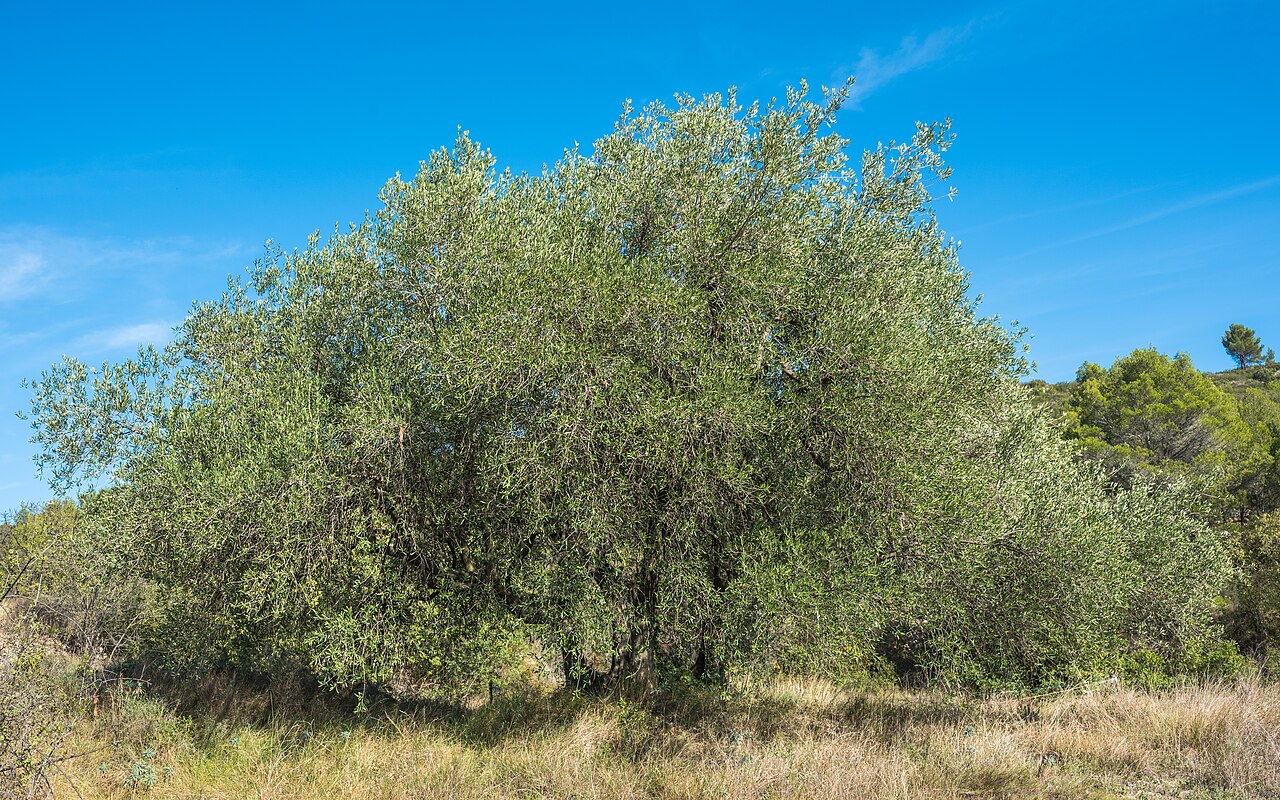
Olea europaea ‘Barouni’ is a large-fruited table-olive cultivar best known for producing some of the biggest olives grown in California home orchards. A Tunisian selection introduced to the United States through early-20th-century plant-introduction work, Barouni stands out among common olive varieties for its unusually low, spreading growth habit and its oval fruit, which can be two to three times the size of a ‘Manzanillo‘ olive once fully swollen on the tree.
Gardeners who want to cure their own olives at home grow Barouni specifically because the fruit is so large and meaty that even a modest harvest yields a satisfying batch of cured table olives. The tree also bears reliably most years, and its lower, more horizontal branching habit than upright commercial cultivars like ‘Sevillano‘ makes the fruit easier to reach without a tall ladder. Some growers press a portion of the crop for oil as well, though Barouni is not considered a premium oil cultivar and is grown overwhelmingly for the table.
Olive (Olea europaea) is not native to North America; it originated in the Mediterranean basin and Middle East and was brought to California by Spanish missionaries in the 18th century. It is not on any federal noxious-weed list, but the California Invasive Plant Council lists olive as a limited-impact invasive in parts of coastal and central California, where birds carry fruit into wildland areas and seedlings can establish in dry chaparral and oak woodland. Because Barouni is a heavy-fruiting cultivar, gardeners in or near those regions should harvest the crop promptly each year, clean up fallen fruit, and avoid planting it within bird-dispersal range of wildland edges.
Identification
Barouni is identified mainly by its fruit size and tree form rather than by unusual foliage or bark, since its leaves and bark closely resemble those of other olive cultivars.
Bark & Stems
Young branches are smooth and gray-green, aging to the furrowed, silvery-gray bark typical of mature olive trees. Barouni’s framework branches tend to arch outward and droop under fruit load more than upright cultivars such as ‘Sevillano’, giving older trees a lower, broader silhouette than a typical commercial grove tree.
Leaves
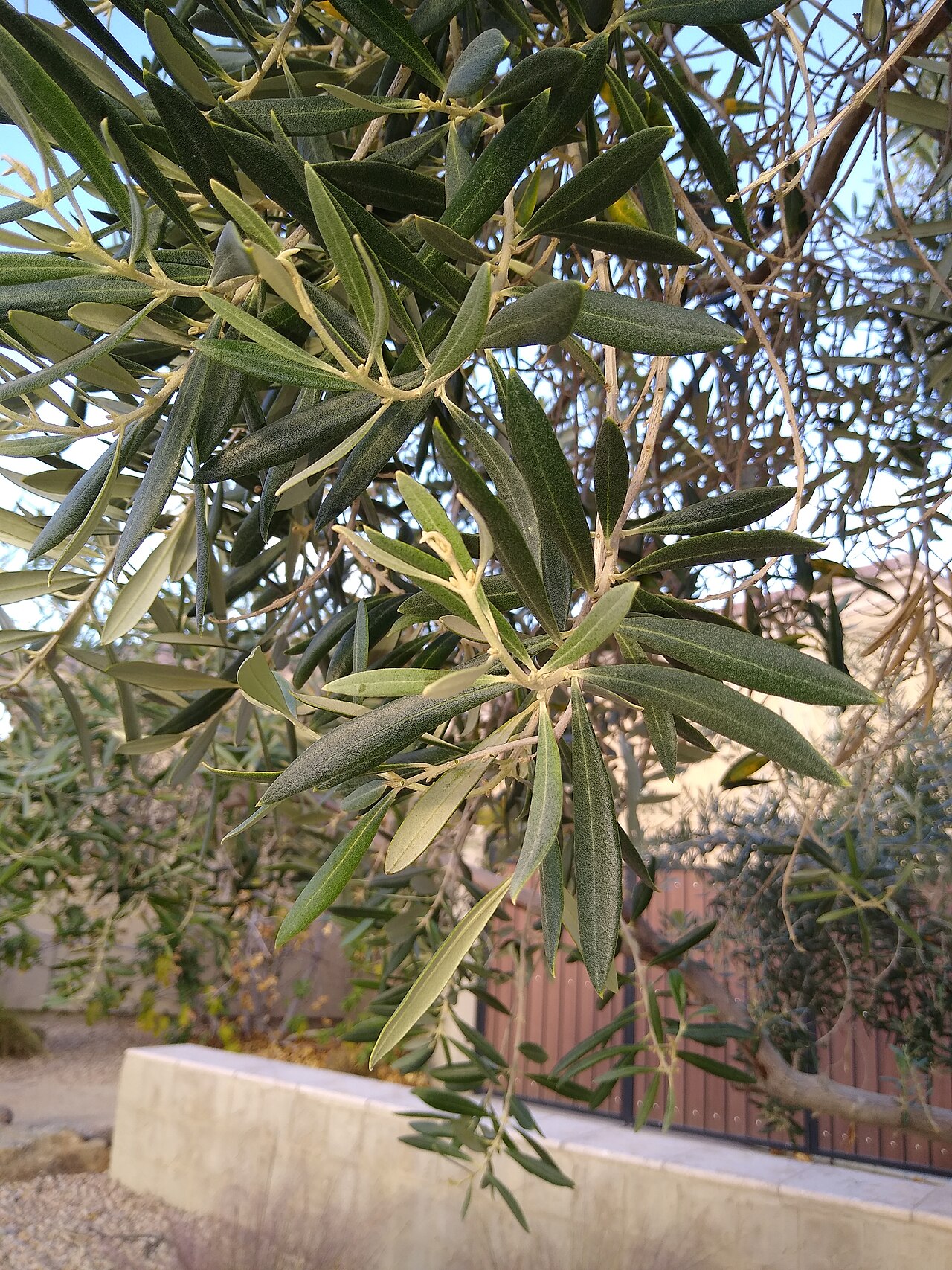
Leaves are narrow, lance-shaped, 1.5 to 3 inches long, leathery, dull gray-green above and distinctly silvery with fine scales beneath — the standard olive leaf shared by essentially all Olea europaea cultivars, so leaf shape alone will not separate Barouni from ‘Manzanillo’ or ‘Mission‘.
Flowers
In mid-spring, small cream-white flowers open in loose, branched clusters (panicles) at the leaf axils of the previous year’s wood. They are wind-pollinated and have no real ornamental value; they are easy to miss unless you look closely at the stems.
Fruit & Seeds
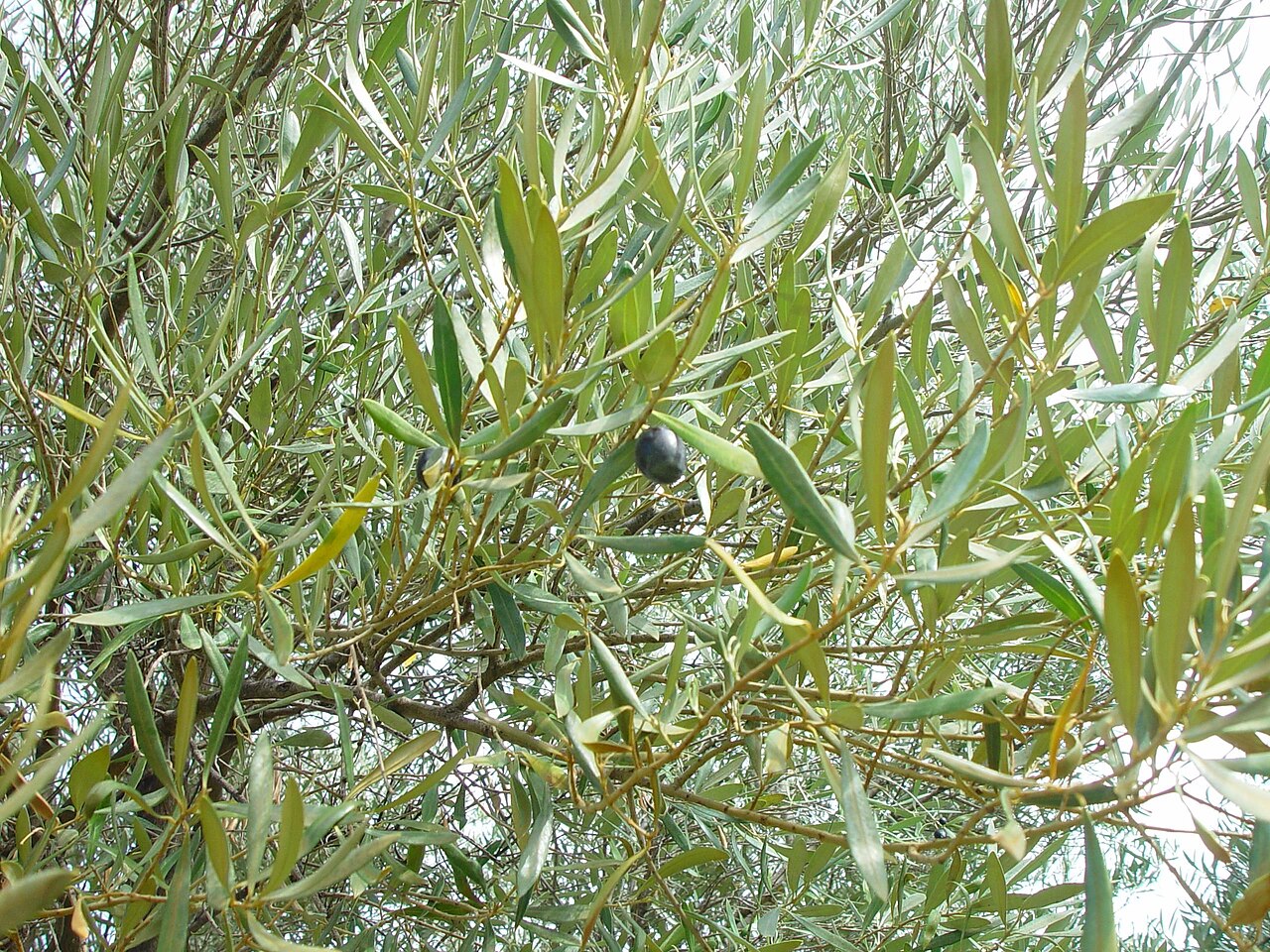
This is Barouni’s defining trait: the fruit is large and oval, often an inch or more long, noticeably bigger and fleshier than ‘Manzanillo’ or ‘Mission’ olives. Fruit ripens from green through a reddish-purple stage to black from October into November. Like all olives, the raw fruit is extremely bitter from oleuropein and is never eaten off the tree — it must be cured (brined, lye-cured, water-cured, or dry-salt-cured) before it is edible.
Quick Facts
| Scientific Name | Olea europaea ‘Barouni’ |
| Cultivar | ‘Barouni’, large-fruited Tunisian table olive |
| Family | Oleaceae (Olive) |
| Plant Type | Evergreen fruiting tree |
| Native to North America | No — introduced from the Mediterranean basin; cultivar developed in Tunisia |
| Mature Height | 15–25 ft (lower-growing than upright olive cultivars) |
| Mature Spread | 15–25 ft, broad and spreading |
| Growth Rate | Moderate |
| Sun Exposure | Full sun |
| Water Needs | Low to moderate once established; drought tolerant, but deep watering during fruit swell improves size |
| Soil Type | Well-drained loam or sandy loam; tolerates poor, rocky soil |
| Soil pH | Slightly acidic to alkaline (about 6.0–8.5) |
| Bloom Time | April–May |
| Leaf / Fall Color | Evergreen gray-green; no fall color change |
| Fruit | Large, oval table olives, green to black, October–November; must be cured before eating |
| Deer Resistant | Yes, generally |
| USDA Hardiness Zones | 8–10 |
| Invasive Status | Not federally listed; Cal-IPC limited-impact invasive risk in parts of coastal/central California where fruit is bird-dispersed into wildlands |
Origin & Where It Grows
The species Olea europaea is native to the Mediterranean basin, the Levant, and parts of the Middle East and North Africa, where it has been cultivated for oil and table fruit for several thousand years. ‘Barouni’ itself was selected and named in Tunisia, prized there for its unusually large fruit, and it was brought into U.S. olive-growing collections and trial plantings in the early-to-mid 20th century as growers and the USDA evaluated Mediterranean and North African cultivars for California conditions.
In the United States, Barouni is grown almost entirely in California’s interior valleys and foothills, where it shares the same climate requirements as other commercial and dooryard olive cultivars: hot, dry summers, mild winters with enough chill to set a reliable crop, and minimal humidity during bloom and fruit ripening.
Outside California, Barouni can be grown as a warm-climate dooryard fruit tree in similar Mediterranean-type or arid climates, including parts of Arizona and Texas, but it will not reliably fruit, or survive winters, outside USDA zones 8 through 10.
Growing & Care Guide
Barouni grows under the same basic regime as other olive cultivars, but its heavier fruit load and lower branching mean a bit more attention to support and thinning than a purely ornamental olive.
Light
Plant in full sun. Olives need long, hot, sunny summers to ripen a good fruit crop, and shaded plants produce little fruit and open, leggy growth.
Soil & Water
Barouni tolerates poor, rocky, or shallow soils as long as drainage is good; it does not tolerate standing water or heavy, waterlogged clay. Once established, trees are drought tolerant, but regular deep watering through spring and summer fruit swell produces larger, juicier olives and reduces alternate-bearing swings.
Planting Tips
Give Barouni extra room compared with upright cultivars — its broad, spreading habit benefits from 20 to 25 feet of clearance from structures and other trees. Plant in spring after the last frost, in a spot with full sun and good air movement to reduce fungal disease.
Pruning & Maintenance
Prune in late winter, after the risk of hard frost but before bloom, to open the canopy to light and air and to remove crossing or drooping branches that touch the ground under fruit weight. Because Barouni’s branches arch lower than upright cultivars, periodic lifting of low limbs keeps fruit clean and off the soil.
Propagation
Barouni is propagated by hardwood cuttings or grafting, never by seed — seedling olives do not come true to the parent cultivar and typically revert toward smaller, more bitter, less productive fruit. Buy grafted or rooted-cutting nursery stock sold specifically as ‘Barouni’.
Landscape Uses
- Home orchard fruit tree for gardeners who want to cure their own large table olives
- Dual-purpose shade and fruit tree in dry, sunny Mediterranean-style gardens
- Low, spreading specimen where a lower silhouette than upright olive cultivars is preferred
- Xeriscape and drought-tolerant plantings once established
Harvest & Pollination
Olives are wind-pollinated and largely self-fruitful, but fruit set and yield improve for most cultivars, Barouni included, when a different olive cultivar is flowering nearby to cross-pollinate. Harvest Barouni’s large fruit from October into November, picking green for green-cured olives or waiting for the fruit to turn reddish-purple to black for ripe-cured olives; either way, fresh olives are inedibly bitter and must be cured in brine, lye, water, or dry salt before eating.
Wildlife & Ecological Value
Barouni’s flowers are wind-pollinated and offer little nectar or pollen reward, so they draw few bees or other pollinators compared with native flowering trees. The fruit, however, is readily eaten by birds — including robins, waxwings, and mockingbirds — once it ripens, and this is exactly why fruiting olive cultivars like Barouni carry an invasiveness caution in parts of California: birds disperse the seeds into wildland habitat. Because of this honest trade-off, Barouni is best treated as a harvested food tree rather than a wildlife planting, and fruit should be picked promptly each season rather than left to drop and be carried off by birds near natural areas.
Native Alternatives
Gardeners in fire-prone or wildland-adjacent parts of California who want the look or drought toughness of an olive without the fruit-drop and dispersal concerns can consider these native trees and shrubs instead:
- Desert Olive (Forestiera neomexicana) — a small, tough, silvery-leaved native tree/shrub of the Southwest with a similar fine-textured look
- Texas Olive (Cordia boissieri) — a drought-tolerant small flowering tree native to South Texas with olive-like gray-green foliage
- American Sweet Olive / Devilwood (Osmanthus americanus) — an evergreen native with leathery leaves and fragrant flowers, a Southeastern alternative to Mediterranean olive
- Swamp Privet (Forestiera acuminata) — a native relative in the olive family for wetter sites
- Silverberry (Elaeagnus commutata) — a cold-hardy native shrub with silvery foliage reminiscent of olive
History & Uses
Olive cultivation reaches back thousands of years around the Mediterranean, and Tunisia has long been one of the world’s major olive-growing regions for both oil and table fruit. ‘Barouni’ was selected there for its exceptionally large fruit, a trait that made it attractive once American growers and plant collectors began trialing North African and Mediterranean cultivars in California’s developing olive industry in the early-to-mid 1900s.
Today Barouni remains a minor commercial cultivar but a popular choice among home gardeners and small growers in California who want to cure their own table olives, precisely because its large fruit size yields more usable olive per tree than many other cultivars. Its lower, spreading habit, a side effect of its vigor and branching pattern, also makes hand-harvest more practical in a backyard setting than tall, upright commercial cultivars bred for mechanical or ladder harvest.
Frequently Asked Questions
Is Barouni olive native to the United States?
No. Olive (Olea europaea) is native to the Mediterranean basin and Middle East, and ‘Barouni’ is a Tunisian selection. It is not native anywhere in North America, though it has been grown in California since the Spanish mission era and is considered a limited-impact invasive in some wildland-adjacent parts of the state.
Can you eat Barouni olives straight off the tree?
No. Raw olives of every cultivar, including Barouni, are intensely bitter from a compound called oleuropein and are unpalatable until cured in brine, lye, water, or dry salt.
How big do Barouni olives get compared with other cultivars?
Barouni is known for unusually large fruit, often noticeably bigger and more oval than common cultivars like ‘Manzanillo’ or ‘Mission’, which is a major reason home curers choose it.
Does Barouni need another olive tree nearby to produce fruit?
Olives are largely self-fruitful and wind-pollinated, but like most cultivars, Barouni tends to set a heavier crop when a different olive cultivar is blooming nearby for cross-pollination.
Is Barouni a good choice for oil instead of table olives?
It can be pressed for oil, but Barouni is grown primarily as a table-olive cultivar; its oil yield and flavor are not considered top-tier compared with dedicated oil cultivars like ‘Arbequina‘ or ‘Koroneiki‘.

