
Little Ollie Olive Tree (Olea europaea ‘Montra’)
Last updated: November 3, 2026
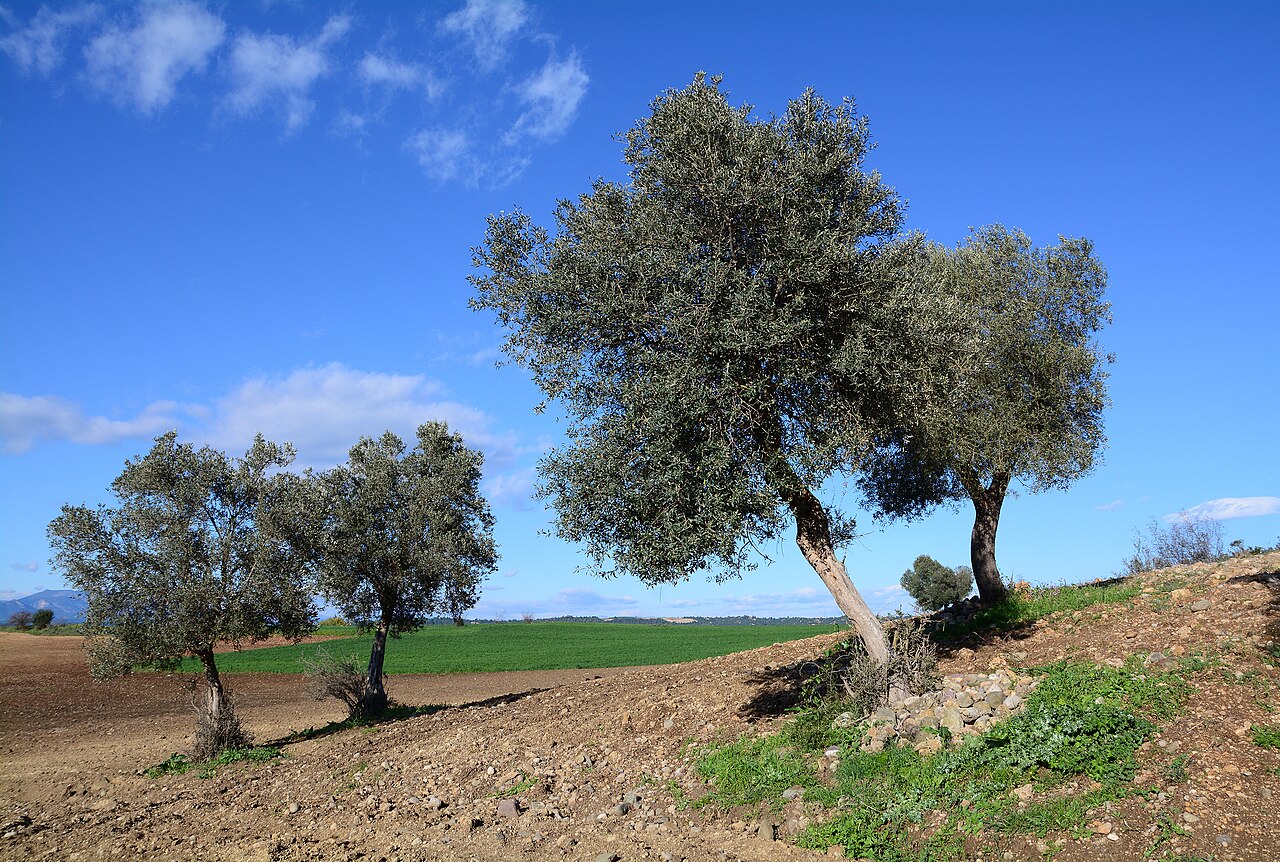
Olea europaea ‘Montra’, sold under the trademark Little Ollie, is a compact, non-fruiting dwarf olive introduced by Monrovia Nursery in the 1980s. Instead of growing into a 20- to 30-foot olive tree, Little Ollie stays a dense, multi-branched shrub a few feet tall and wide, with the same fine, silvery-green olive foliage as full-size cultivars packed onto a far smaller frame.
Gardeners plant Little Ollie because it delivers the texture and Mediterranean look of an olive tree in spaces too small for the real thing: foundation beds, containers, low hedges, and sheared topiary balls. Because it is a genuinely non-fruiting selection, it also avoids the olive’s biggest landscape drawback, the annual mess and fruit-fly concerns of dropped fruit, which makes it a popular pick near patios, pools, and walkways.
Olive (Olea europaea) is not native to North America; it is native to the Mediterranean basin and parts of the Middle East. It is not on any federal noxious-weed list, but the California Invasive Plant Council flags fruiting olive as a limited-impact invasive in parts of coastal and central California, where birds spread fruit into wildland habitat. Little Ollie avoids that concern directly: as a non-fruiting cultivar it produces no seed for birds to disperse, making it one of the lower-risk olive selections for California gardens near natural areas.
Identification
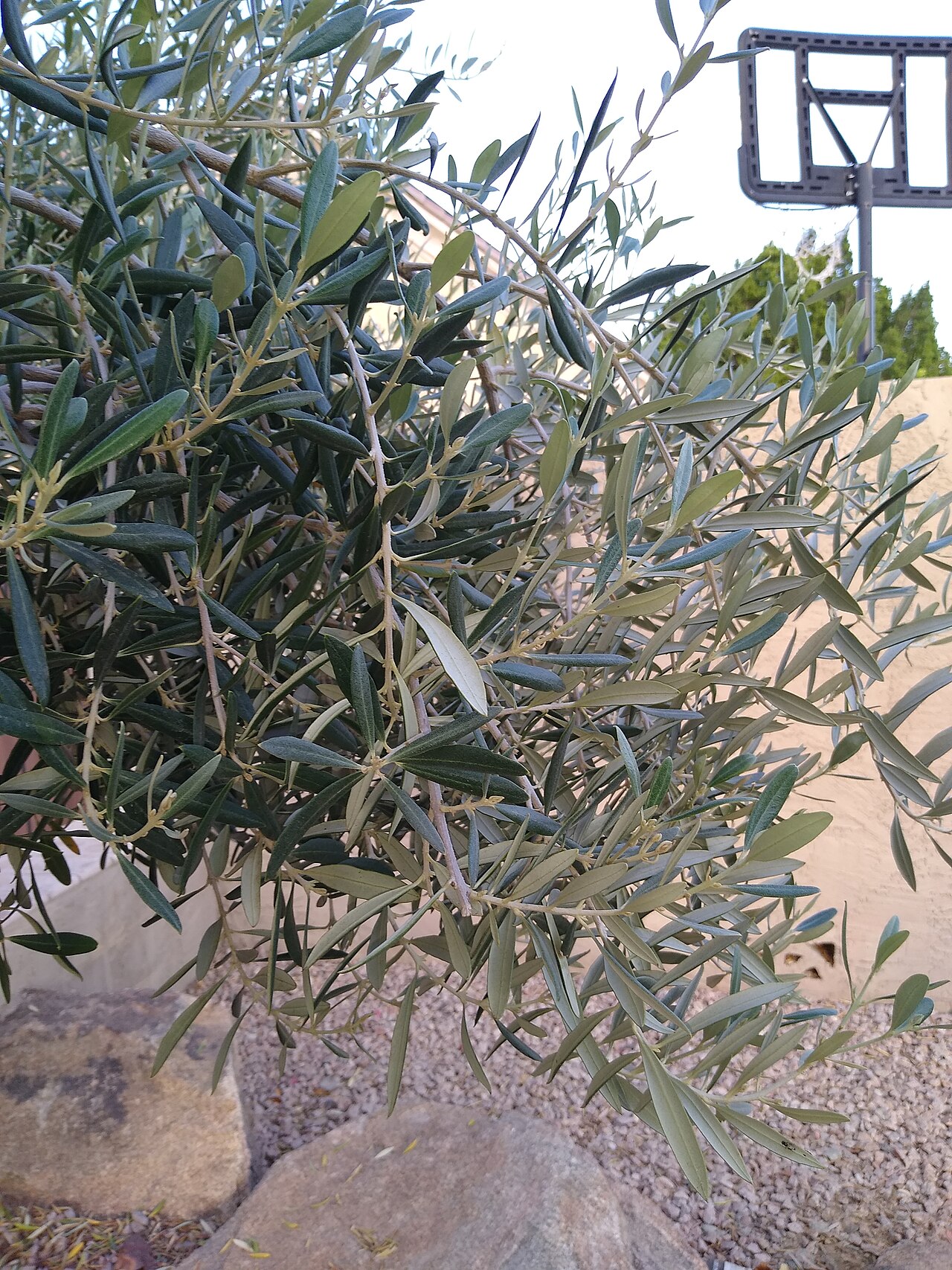
Little Ollie is identified mainly by its small, shrubby, densely branched habit rather than by anything unusual in its leaves or flowers, which look like standard olive foliage shrunk onto a compact plant.
Bark & Stems
Stems are slender and gray-green when young, maturing to the pale gray, slightly furrowed bark typical of olives, though on a much smaller scale than a full-size tree trunk. Little Ollie branches freely from low on the plant, which is what gives it its dense, rounded form without heavy pruning.
Leaves
Leaves are narrow, lance-shaped, leathery, gray-green to silvery above and silvery beneath, generally on the smaller end for olive cultivars, which adds to the plant’s fine, airy texture at close range.
Flowers
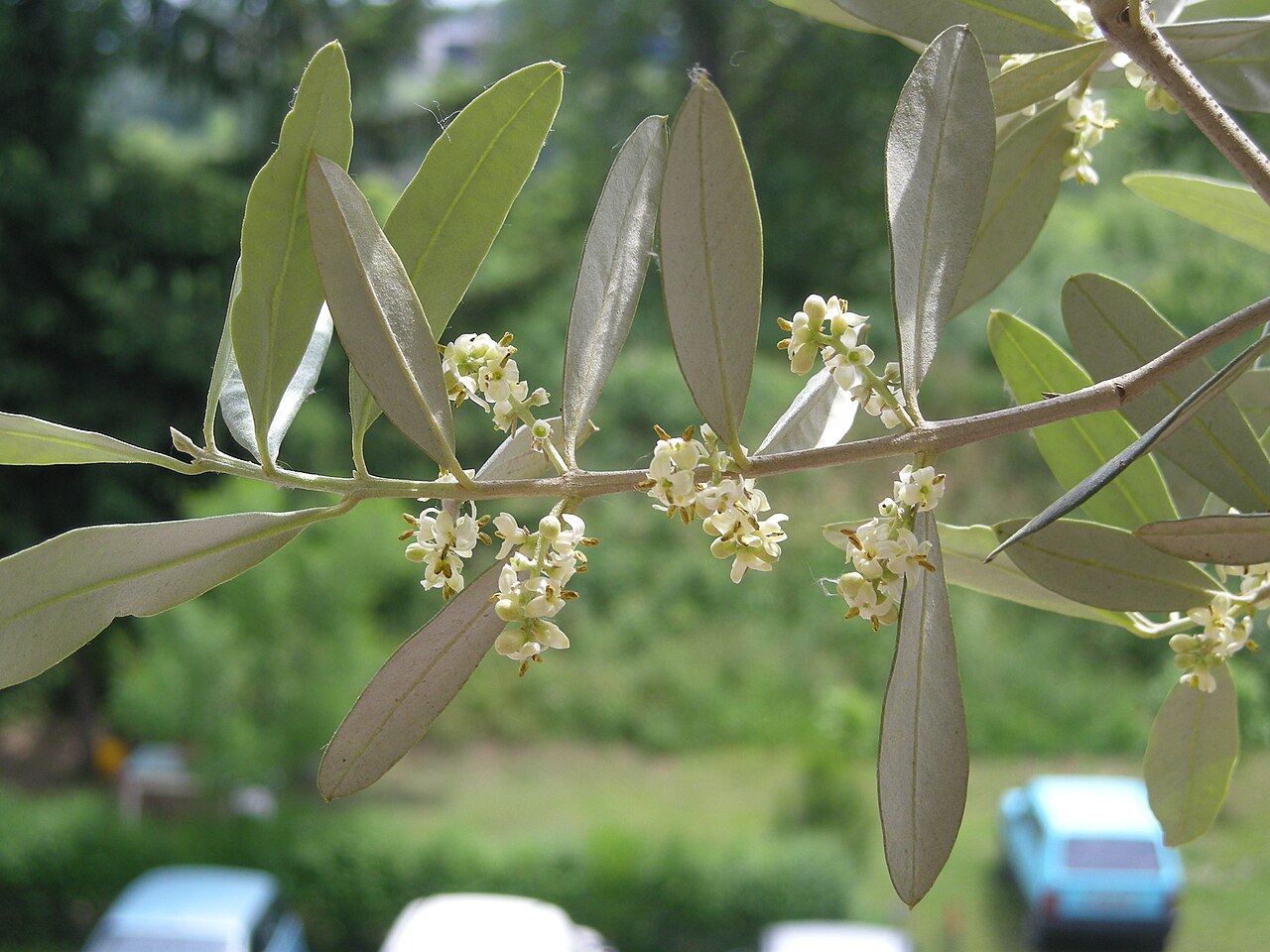
Little Olive produces few if any of the small cream-white spring flowers typical of olive, and the plant is marketed specifically as a reliable non-fruiter; growers should not expect a significant bloom or fruit display.
Fruit & Seeds
Little Ollie is sold and grown specifically as a non-fruiting, or at most extremely sparsely fruiting, cultivar. This is its single most important identifying and selling trait: unlike full-size olive cultivars, it does not produce the mess of dropped fruit that concerns homeowners planting olive near patios, driveways, or pools.
Quick Facts
| Scientific Name | Olea europaea ‘Montra’ |
| Cultivar | ‘Montra’, trademarked and sold as Little Ollie |
| Family | Oleaceae (Olive) |
| Plant Type | Evergreen dwarf shrub |
| Native to North America | No — introduced; species native to the Mediterranean basin and Middle East |
| Mature Height | 4–6 ft (reports vary; can be kept lower with shearing or grown slightly taller unpruned) |
| Mature Spread | 4–6 ft, dense and rounded |
| Growth Rate | Slow to moderate |
| Sun Exposure | Full sun |
| Water Needs | Low once established; drought tolerant |
| Soil Type | Well-drained soil of almost any type; adapts to containers |
| Soil pH | Slightly acidic to alkaline (about 6.0–8.5) |
| Bloom Time | Sparse to none |
| Leaf / Fall Color | Evergreen gray-green/silver; no fall color change |
| Fruit | None to negligible — marketed and grown as a non-fruiting cultivar |
| Deer Resistant | Yes, generally |
| USDA Hardiness Zones | 9–11 (grown as a container plant brought indoors in colder zones) |
| Invasive Status | Not federally listed; as a non-fruiting selection it carries minimal wildland-dispersal risk, unlike fruiting olive cultivars in parts of coastal/central California |
Origin & Where It Grows
The species Olea europaea is native to the Mediterranean basin, the Levant, and nearby parts of the Middle East and North Africa, where it has been cultivated for millennia. ‘Montra’, the botanical name behind the Little Ollie trademark, is a Monrovia Nursery introduction dating to the 1980s, selected and propagated as a compact, reliably non-fruiting form suited to modern small-space landscaping rather than fruit or oil production.
In the United States, Little Ollie is grown mainly in California, Arizona, and other warm, dry-summer parts of the Southwest where full-size olive is also common, as well as further afield as a patio or container plant that can be moved indoors or to a sheltered spot in winter outside its hardiness range.
Because it is usually grown in containers or small garden beds rather than as an orchard tree, Little Ollie’s realistic range is broader than a full-size olive’s: gardeners in borderline zones often succeed with it in pots that can be moved to shelter for winter.
Growing & Care Guide
Little Ollie is one of the easiest olive-type plants to grow, especially in a container, and needs very little beyond sun and good drainage.
Light
Give Little Ollie full sun for the densest, most compact growth. It tolerates light shade but becomes looser and less tightly branched without strong, direct light.
Soil & Water
Plant in well-drained soil; Little Ollie is tolerant of poor or rocky ground but, like all olives, resents waterlogged roots. In containers, use a fast-draining potting mix and let the top few inches of soil dry between waterings. Once established in the ground, it is quite drought tolerant.
Planting Tips
Little Ollie works equally well planted directly in the garden or kept permanently in a container, which also makes it practical for gardeners outside its hardiness range who can move the pot to a sheltered location in winter. Space in-ground plants 4 to 6 feet apart for a hedge, or give a single specimen room to fill out as a rounded shrub.
Pruning & Maintenance
Little Ollie takes shearing extremely well and is commonly grown as a clipped hedge, low screen, or topiary ball or standard. Prune after the main spring flush to maintain shape; because it rarely fruits, there is little need to prune for fruit access or cleanup the way full-size olive cultivars sometimes require.
Propagation
Like other olive cultivars, Little Ollie is propagated from cuttings rather than seed, since seedlings would not reliably inherit the dwarf, non-fruiting character of ‘Montra’. Buy plants sold specifically under the Little Ollie trademark or as Olea europaea ‘Montra’.
Landscape Uses
- Clipped low hedges and screens along walkways or property lines
- Topiary and sculpted forms, including standards and balls
- Containers and patio plantings where a full-size olive would outgrow the space
- Foundation plantings for Mediterranean-style gardens
- Low-maintenance, fruit-free landscaping near pools, patios, and walkways
Wildlife & Ecological Value
Because Little Ollie flowers only sparingly and sets little to no fruit, it offers minimal food value to pollinators, birds, or other wildlife compared with native flowering and fruiting shrubs. Its dense, evergreen branching does provide some year-round shelter and nesting cover for small birds, similar to other dense evergreen hedging shrubs, but gardeners looking to actively support pollinators or birds should pair it with native plants rather than rely on it for ecological value.
Native Alternatives
For a similar fine-textured, silvery-leaved, low-maintenance shrub with more wildlife value, consider these native alternatives:
- Desert Olive (Forestiera neomexicana) — a compact, drought-tolerant native shrub with fine gray-green foliage and a similar Mediterranean look
- Silverberry (Elaeagnus commutata) — a cold-hardy native shrub with silvery leaves that takes shearing well
- Swamp Privet (Forestiera acuminata) — a native relative in the olive family, useful for hedging in moister soils
- American Sweet Olive / Devilwood (Osmanthus americanus) — an evergreen native with leathery leaves and fragrant flowers for Southeastern gardens
History & Uses
Monrovia Nursery introduced ‘Montra’ in the 1980s to meet growing demand for Mediterranean-style landscaping in smaller residential lots, where a full-size, fruiting olive tree was impractical. By selecting and propagating a naturally compact, non-fruiting form of olive, Monrovia created a plant that delivers olive’s signature silvery foliage and dense form without the space requirements or fruit-drop maintenance of the species.
Little Ollie has since become one of the most widely planted dwarf shrubs in dry-climate Western landscaping, valued by homeowners and landscapers alike for its drought tolerance, its tolerance of hard shearing into hedges or topiary shapes, and its reliable lack of messy fruit. It has no significant history of food, oil, or traditional use, since it was bred specifically as an ornamental, fruitless selection.
Frequently Asked Questions
Is Little Ollie native to North America?
No. Little Ollie is a cultivar of Olea europaea, a species native to the Mediterranean basin and Middle East. The cultivar itself was bred in California but is not a native plant.
Does Little Ollie produce olives?
No, or next to none. It is sold and grown specifically as a non-fruiting, or extremely sparsely fruiting, dwarf olive, which is a major reason gardeners choose it over full-size olive cultivars.
How big does Little Ollie actually get?
Typically 4 to 6 feet tall and wide, though exact mature size can vary with climate, pruning, and whether it is grown in a container or in the ground; regular shearing keeps it smaller and denser.
Can Little Ollie be grown in a pot?
Yes, it is commonly grown in containers on patios and in courtyards, which also lets gardeners outside its USDA zone 9–11 range move it to shelter for winter.
Is Little Ollie considered invasive like some olive trees?
Fruiting olive is a limited-impact invasive concern in parts of coastal and central California because birds spread the fruit into wildlands. Because Little Ollie does not reliably fruit, it does not share that specific risk, though it is still a non-native, introduced plant.

