
Majestic Beauty Olive Tree (Olea europaea ‘Monher’)
Last updated: November 3, 2026
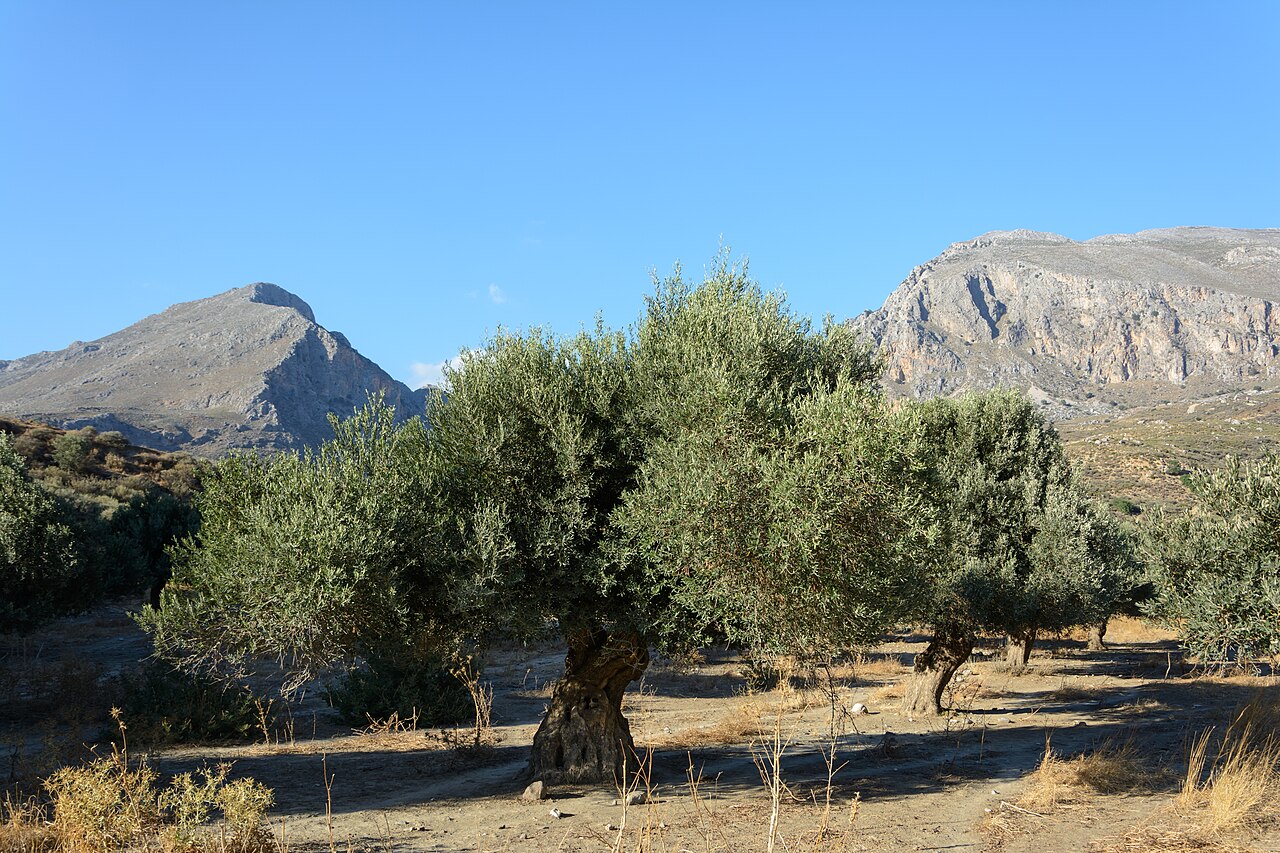
Olea europaea ‘Monher’, trademarked and sold as Majestic Beauty, is a full-size landscape olive cultivar valued for its refined, upright, open crown and airy, narrow gray-green foliage. It was discovered by Julian Herman in Irvine, California, in 1978 and later introduced and propagated commercially by Monrovia Nursery as a fruitless or very low-fruiting selection suited to Southern California’s hot, dry-summer climate.
Gardeners choose Majestic Beauty over other fruitless olive cultivars mainly for its appearance: its narrower, longer leaves and more upright, open branching give it a lighter, more willowy look than the rounder canopy of ‘Swan Hill‘ or the multi-trunk, V-shaped form of ‘Wilsonii‘. It is commonly used as a specimen patio or garden tree where its refined silhouette is the main attraction, while also avoiding the heavy fruit drop of standard olive cultivars.
Olive (Olea europaea) is not native to North America; it is native to the Mediterranean basin and the Middle East. It is not on any federal noxious-weed list, but the California Invasive Plant Council lists fruiting olive as a limited-impact invasive in parts of coastal and central California, where birds disperse fruit into wildlands. University of California IPM guidance lists Majestic Beauty among its recommended fruitless landscape olive options, though some retail sources describe it as rarely, rather than absolutely never, producing fruit, so it is best described honestly as a very low-fruiting selection rather than a guaranteed zero-fruit cultivar.
Identification
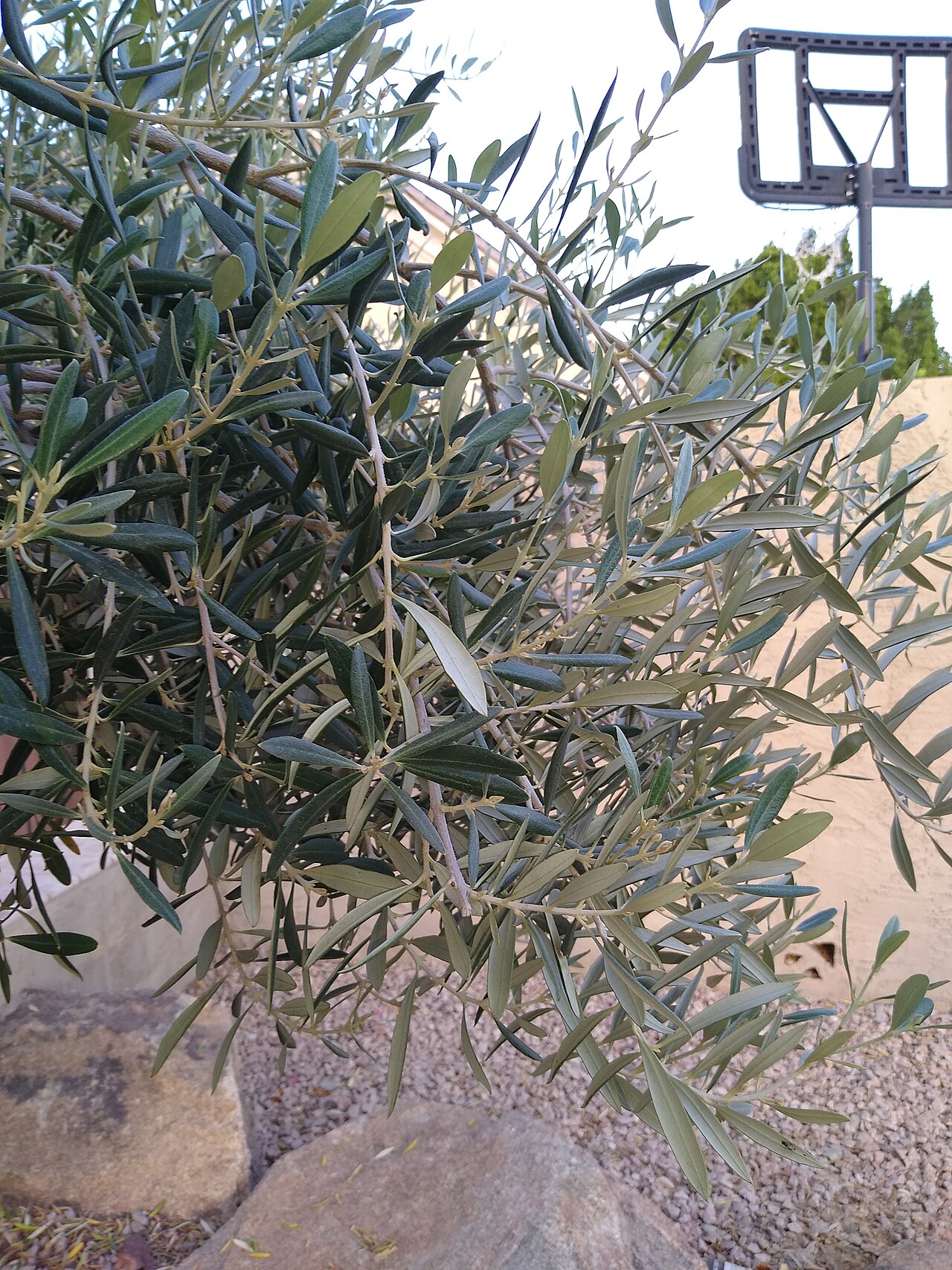
Majestic Beauty is identified by its narrower, longer leaves and more upright, open crown compared with other fruitless olive cultivars, along with its minimal to absent fruiting.
Bark & Stems
Mature trees develop the typical gray, furrowed olive bark on an upright, somewhat open branching framework that reads as lighter and less dense than rounder cultivars like ‘Swan Hill’.
Leaves
Leaves are narrow and notably long for an olive cultivar, gray-green above and silvery beneath, giving the canopy an airy, almost willow-like texture that is one of the main ways to distinguish Majestic Beauty from broader-leaved olive selections.
Flowers
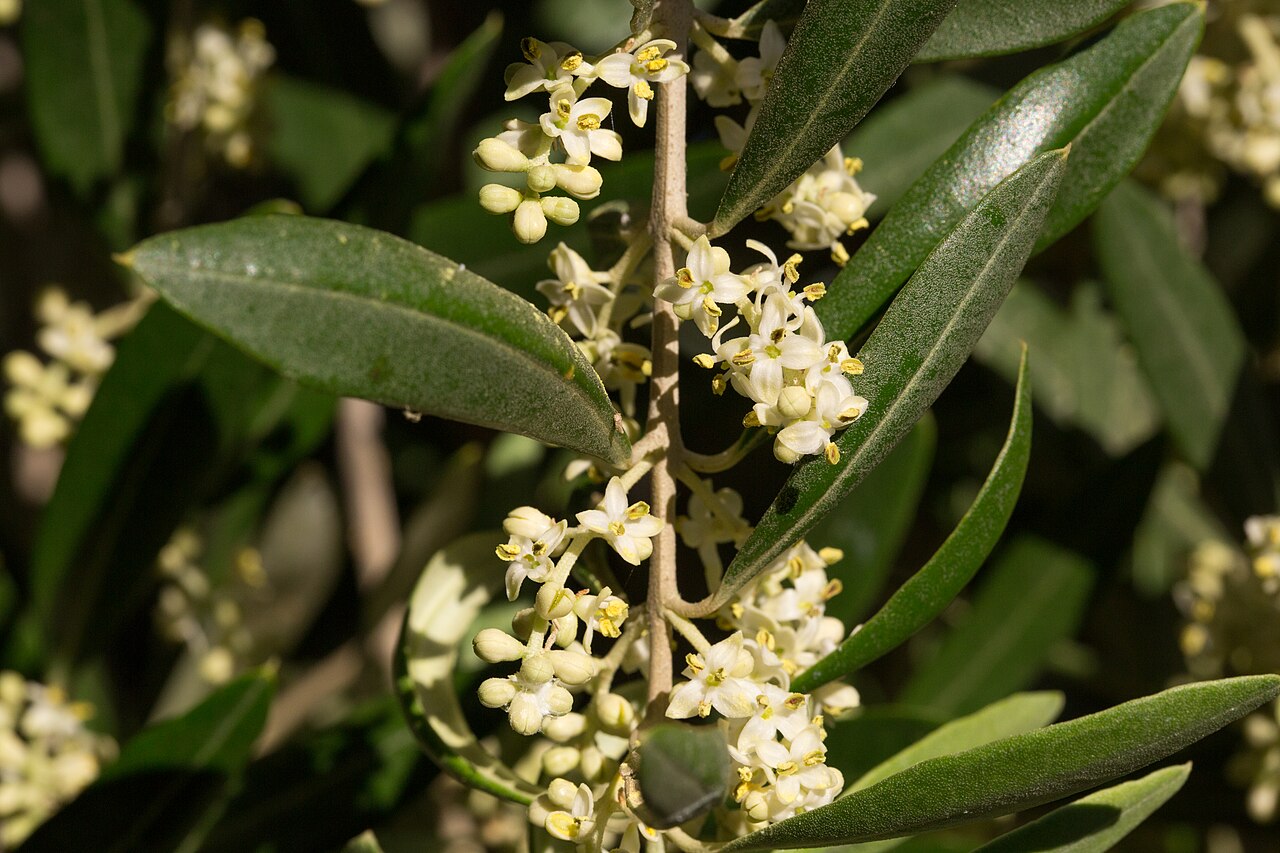
Majestic Beauty produces the small cream-white olive flower clusters typical of the species in spring, though, as with other fruitless cultivars, the bloom itself is not a significant ornamental feature.
Fruit & Seeds
Majestic Beauty is marketed as a fruitless olive and is described by most retail and landscape sources as not producing messy mature fruit, though a few sources more precisely describe it as “rarely” fruiting rather than absolutely fruit-free in every situation. Either way, fruiting is minimal enough that it is not considered a landscape maintenance issue the way standard fruiting olive cultivars are.
Quick Facts
| Scientific Name | Olea europaea ‘Monher’ |
| Cultivar | ‘Monher’, trademarked and sold as Majestic Beauty |
| Family | Oleaceae (Olive) |
| Plant Type | Evergreen fruitless/low-fruiting landscape tree |
| Native to North America | No — introduced; species native to the Mediterranean basin; cultivar discovered in Irvine, California, 1978 |
| Mature Height | 20–25 ft |
| Mature Spread | 15–20 ft, upright and relatively open |
| Growth Rate | Moderate |
| Sun Exposure | Full sun |
| Water Needs | Low once established; drought tolerant |
| Soil Type | Well-drained soil; tolerates poor or rocky ground |
| Soil pH | Slightly acidic to alkaline (about 6.0–8.5) |
| Bloom Time | April–May |
| Leaf / Fall Color | Evergreen gray-green/silver, narrower and longer than typical olive foliage; no fall color change |
| Fruit | None to rare — marketed as fruitless, though some sources note occasional sparse fruit |
| Deer Resistant | Yes, generally |
| USDA Hardiness Zones | 9–11 |
| Invasive Status | Not federally listed; low wildland-dispersal risk as a largely fruitless selection, though not absolutely zero |
Origin & Where It Grows
The species Olea europaea is native to the Mediterranean basin, the Levant, and North Africa. ‘Monher’, the botanical name behind the Majestic Beauty trademark, was discovered as a distinct seedling by Julian Herman in Irvine, California, in 1978, and Monrovia Nursery subsequently selected and propagated it commercially, developing it in and for the hot-summer, mild-winter conditions of coastal and inland Southern California.
In the United States, Majestic Beauty is grown predominantly in California, from coastal gardens that handle ocean breezes to hot inland valleys and desert-edge landscapes, reflecting its origin and breeding in that range of Southern California microclimates. It is also planted in Arizona and similar warm, dry-summer parts of the Southwest.
Because it shares the same basic climate needs as other olive cultivars, Majestic Beauty performs best in USDA zones 9 through 11 and is not well suited to humid or hard-freeze regions.
Growing & Care Guide
Majestic Beauty is grown much like other olive cultivars, with care focused on preserving its refined, upright form.
Light
Plant in full sun for the best form and densest, most even foliage; the open, airy crown looks best with strong light from all sides rather than filtered or partial shade.
Soil & Water
Majestic Beauty tolerates poor or rocky soils with good drainage and, like all olives, does not tolerate waterlogged roots. Once established it is drought tolerant and well adapted to both coastal and hot inland Southern California conditions, a reflection of its breeding across that climate range.
Planting Tips
Give Majestic Beauty 15 to 20 feet of clearance for its mature spread, and plant where its more upright, airier profile can be appreciated, such as near a patio, entry, or garden focal point, rather than crowding it among denser plantings.
Pruning & Maintenance
Prune in late winter to maintain the tree’s naturally refined, open structure, removing crossing or crowded interior branches rather than shearing the canopy into a dense mass, which would obscure its airy character. Because fruiting is minimal to none, little to no fruit cleanup is typically needed.
Propagation
Majestic Beauty is propagated by cuttings or grafting, never seed, since its narrow-leaved, low-fruiting character is specific to the ‘Monher’ clone. Buy nursery stock labeled specifically as Majestic Beauty or Olea europaea ‘Monher’.
Landscape Uses
- Specimen patio or garden tree where its refined, airy silhouette is the focal point
- Coastal and inland Southern California landscapes, reflecting its breeding range
- Low-fruit or fruitless screening where minimal fruit drop is acceptable
- Mediterranean and xeriscape garden design
Harvest & Pollination
Majestic Beauty is not grown for harvest. Because fruiting is minimal to absent, any fruit that occasionally appears is typically left to drop rather than collected. Like other olives, it is wind-pollinated, and its own pollen contribution to nearby fruiting cultivars is limited given how little fruit it sets itself.
Wildlife & Ecological Value
Majestic Beauty’s flowers are wind-pollinated and offer limited nectar or pollen value to bees and other pollinators compared with native flowering trees. Because it sets little to no fruit, it provides minimal food value to birds. Its evergreen canopy offers some shelter similar to other broadleaf evergreens, but it should not be relied upon for wildlife support in place of native plantings.
Native Alternatives
For an airy, fine-leaved look or a drought-tolerant specimen tree from a native species, consider:
- Desert Olive (Forestiera neomexicana) — a native shrub or small tree with similarly fine, silvery-green foliage
- Texas Olive (Cordia boissieri) — a drought-tolerant native flowering tree for South Texas gardens
- American Sweet Olive / Devilwood (Osmanthus americanus) — a graceful evergreen native specimen tree for the Southeast
- Silverberry (Elaeagnus commutata) — a cold-hardy native shrub with silvery foliage
History & Uses
Majestic Beauty was discovered by Julian Herman in Irvine, California, in 1978, during a period of growing interest in fruitless olive selections for Southern California landscaping. Monrovia Nursery subsequently developed and introduced it commercially under the ‘Monher’ name and Majestic Beauty trademark, positioning it as a more refined-looking alternative to rounder fruitless cultivars for gardeners who wanted a lighter, more upright silhouette.
Majestic Beauty has no significant food, oil, or traditional-use history, having been selected and marketed specifically as an ornamental, low-fruiting landscape tree. Its main legacy is horticultural: it helped establish Southern California’s broader market for fruitless olive cultivars alongside contemporaries like ‘Swan Hill’ and ‘Wilsonii’.
Frequently Asked Questions
Is Majestic Beauty olive native to North America?
No. The species Olea europaea is native to the Mediterranean basin and Middle East, and the ‘Monher’ cultivar was discovered and developed in California. It is an introduced, non-native tree wherever it is grown.
Is Majestic Beauty completely fruitless?
It is marketed as not producing messy mature fruit, and most sources describe it as fruitless or rarely fruiting; a few note occasional sparse fruit, so it is best understood as very low-fruiting rather than absolutely guaranteed fruit-free in every situation.
How is Majestic Beauty different from Swan Hill or Wilsonii?
Majestic Beauty has narrower, longer leaves and a more upright, open, airy crown, compared with Swan Hill’s rounder canopy and Wilsonii’s dramatic multi-trunk, V-shaped form. All three are grown as fruitless or very low-fruiting landscape olives.
Where does Majestic Beauty grow best?
It was discovered and developed in Irvine, California, and performs best across similar coastal-to-inland Southern California conditions, as well as other warm, dry-summer parts of the Southwest in USDA zones 9 to 11.
Does Majestic Beauty need regular pruning?
Light annual pruning in late winter helps maintain its refined, open form, but it does not need the fruit-removal maintenance that standard fruiting olive cultivars require.

