Wilsonii Olive Tree (Olea europaea ‘Wilsonii’)
Last updated: November 3, 2026
Olea europaea ‘Wilsonii’ is a full-size, multi-trunk landscape olive cultivar grown mainly for its dramatic, V-shaped branching habit and its reputation as a low-fruiting selection. Nursery sources describe its parentage as derived from ‘Manzanillo‘, and it is most often sold and trained as a multi-trunk specimen rather than a single-trunk tree, which gives it a sculptural, almost artistic silhouette that is often used as a lit accent or focal point in courtyards.
Gardeners choose Wilsonii for its striking form as much as for reduced fruiting, since its multi-trunk, V-shaped habit sets it apart visually from the rounder, more uniform canopy of cultivars like ‘Swan Hill‘ or ‘Majestic Beauty‘. Be precise about expectations, though: Wilsonii is widely marketed as “nearly fruitless” or “semi-fruitless” rather than guaranteed completely fruitless, and some sources describe it as occasionally setting a light, sparse crop in a given year, so it should not be assumed to be as consistently fruitless as ‘Swan Hill’.
Olive (Olea europaea) is not native to North America; it is native to the Mediterranean basin and the Middle East. It is not on any federal noxious-weed list, but the California Invasive Plant Council lists fruiting olive as a limited-impact invasive in parts of coastal and central California, where birds carry fruit into wildlands. University of California IPM guidance lists Wilsonii (sometimes spelled Wilsoni) among the fruitless landscape olive options for areas where fruiting olive is discouraged, but because some sources describe it as only nearly fruitless rather than completely fruitless, gardeners near wildland edges should still monitor for any occasional fruit set and remove it.
Identification
Wilsonii is identified chiefly by its multi-trunk, upright-spreading form and sparse-to-absent fruiting, since its leaves and flowers match standard olive foliage.
Bark & Stems
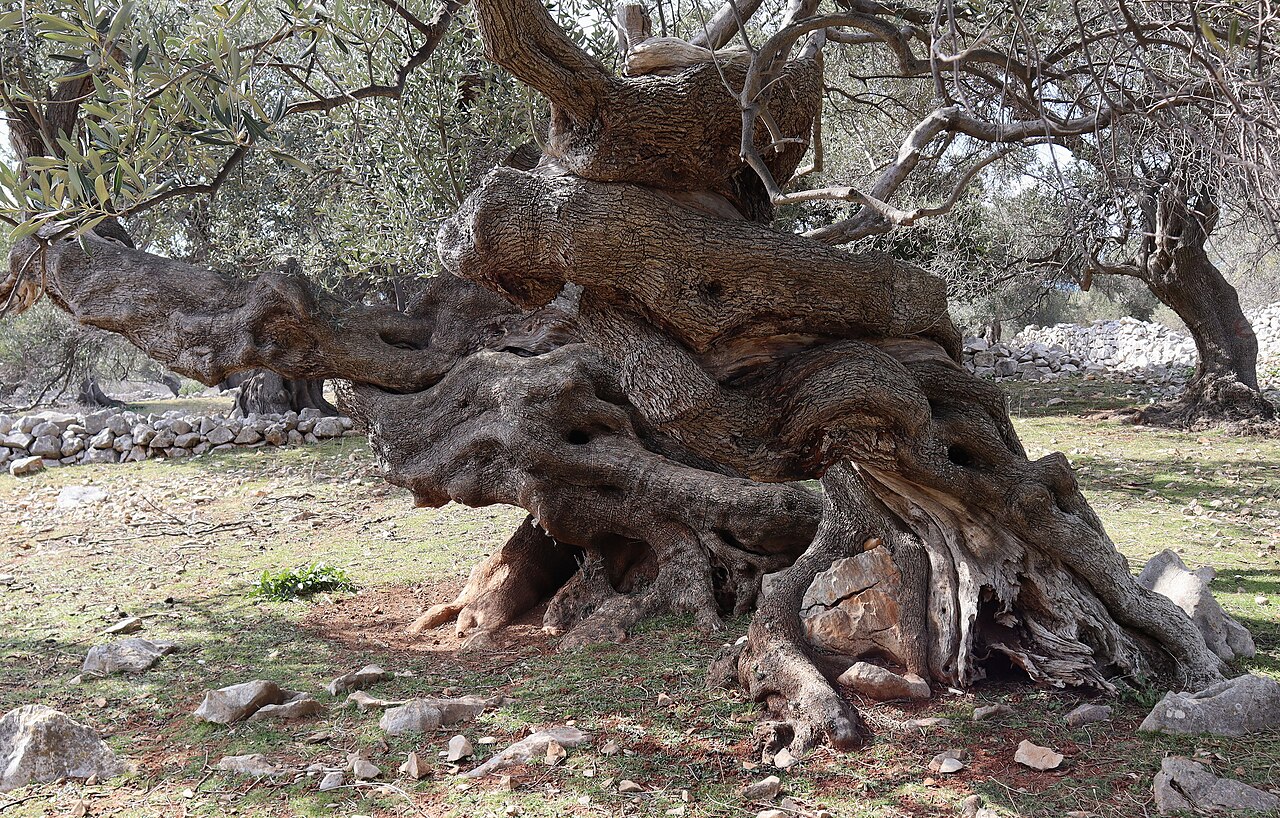
Wilsonii is usually trained with several trunks arising from or near the base, producing a dramatic, open, V-shaped branch structure rather than the single central trunk of some other cultivars. Bark is the typical gray, furrowed olive bark, aging to a more rugged, sculptural texture as the tree matures.
Leaves
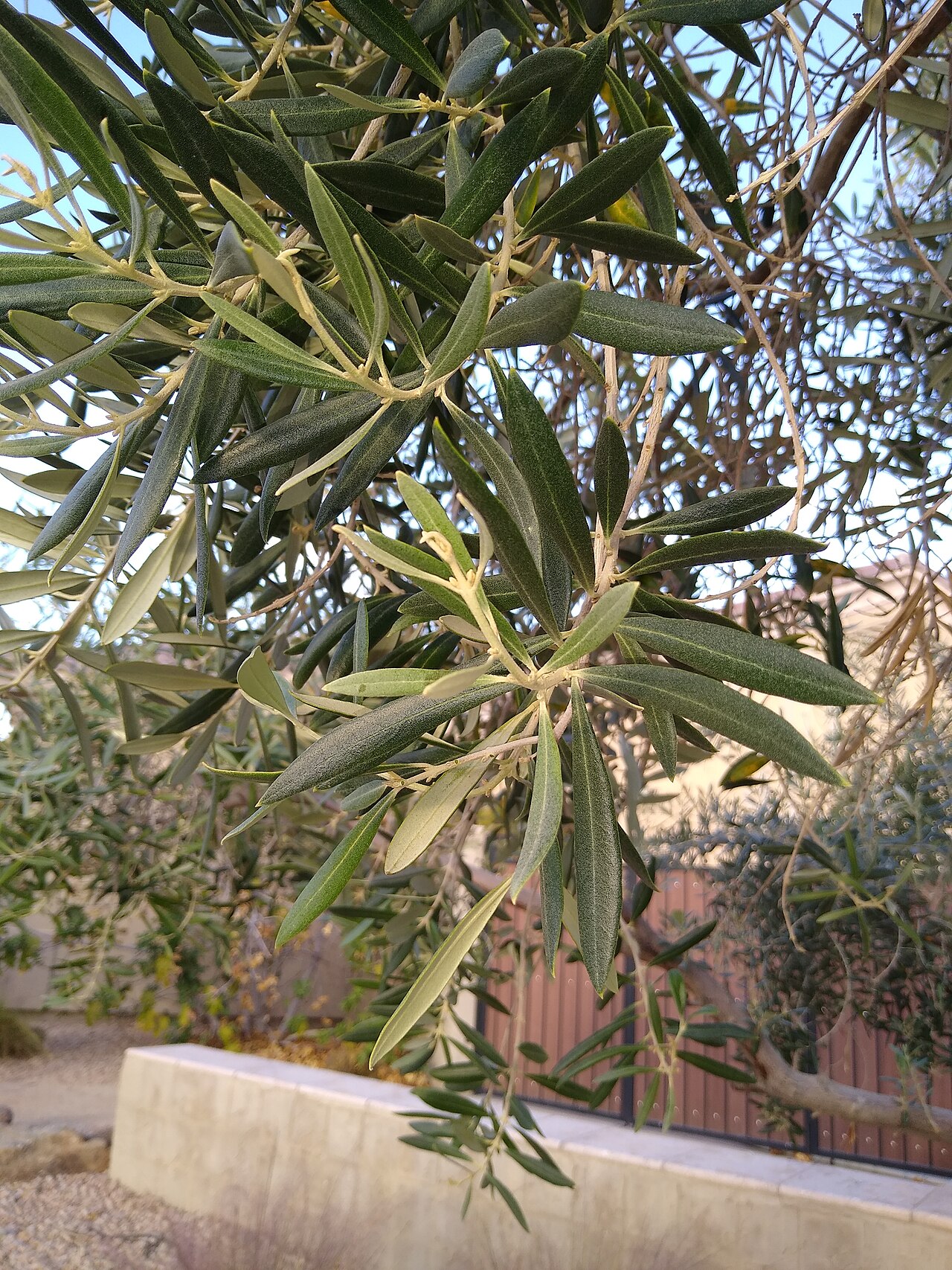
Leaves are narrow, lance-shaped, leathery, gray-green above and silvery beneath — standard olive foliage shared with other cultivars, offering abundant, fine-textured cover along the branches.
Flowers
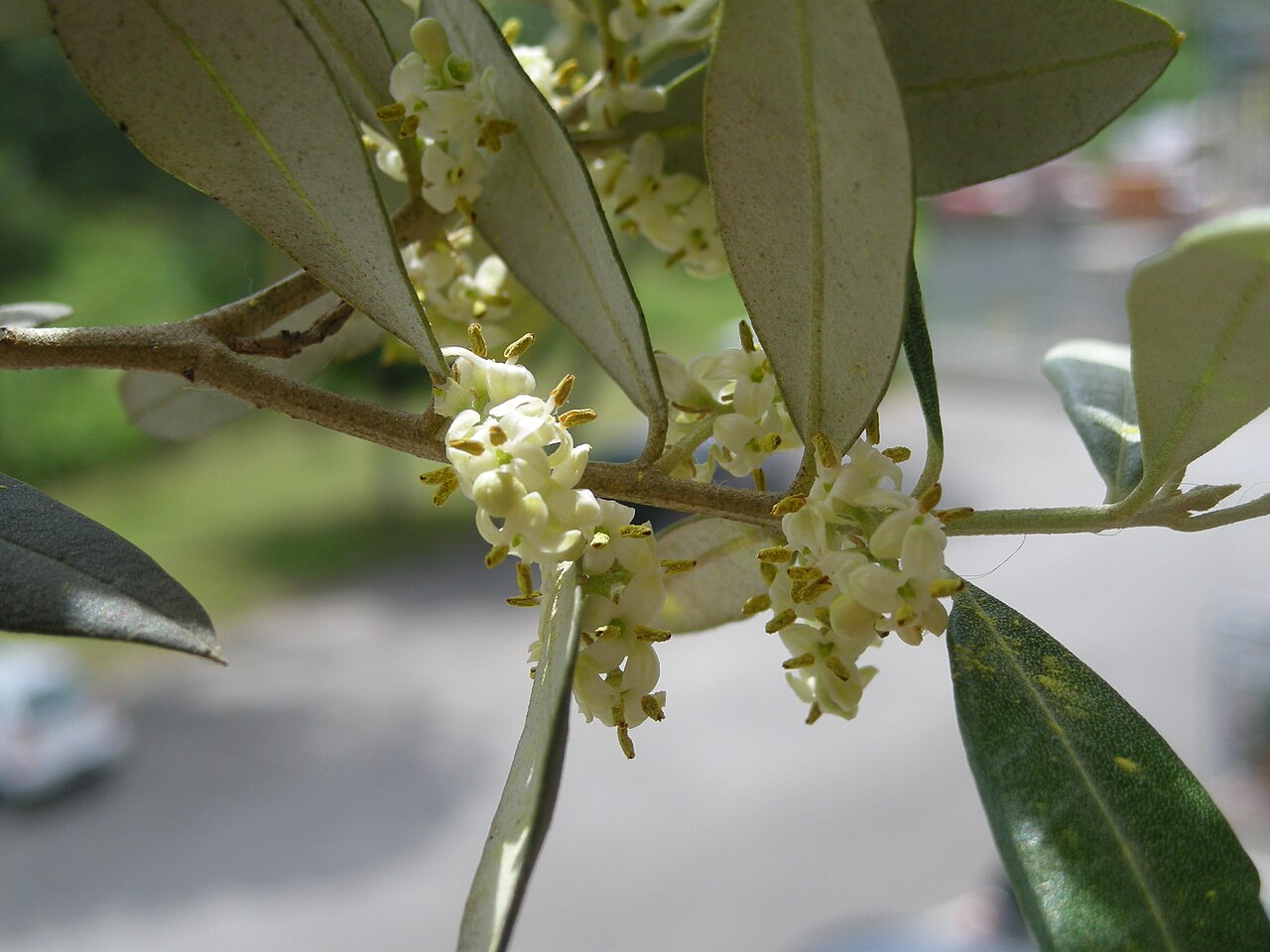
Wilsonii produces the small cream-white olive flower clusters typical of the species in mid-spring, though as with other low-fruiting cultivars, the bloom is not a significant ornamental feature.
Fruit & Seeds
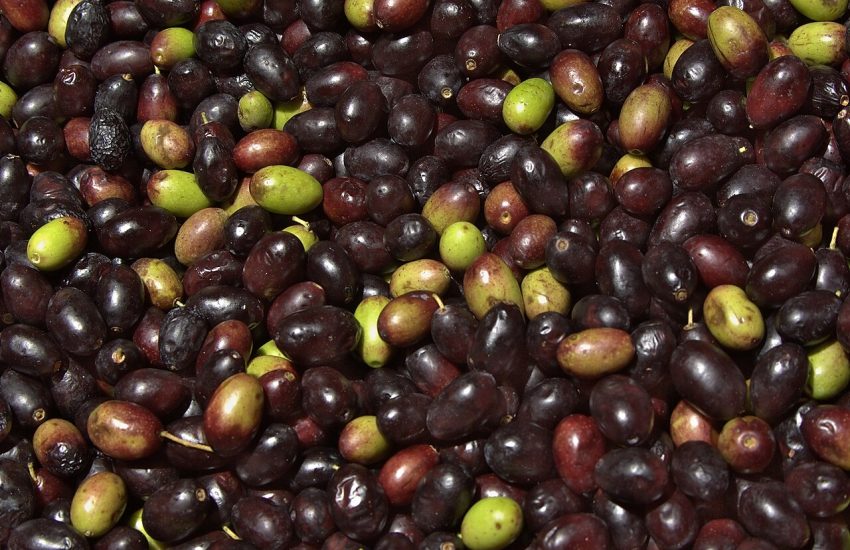
This is the trait to get right: Wilsonii is marketed by most nurseries as “nearly fruitless” or producing minimal fruit rather than being absolutely fruit-free. Expect occasional light, sparse fruit set in some years rather than the more consistent fruitlessness reported for ‘Swan Hill’. If a completely fruit-free multi-trunk tree is essential, confirm current fruiting behavior with the nursery supplying the specific stock.
Quick Facts
| Scientific Name | Olea europaea ‘Wilsonii’ |
| Cultivar | ‘Wilsonii’ (also seen as ‘Wilsoni’); nursery sources describe it as derived from ‘Manzanillo’ |
| Family | Oleaceae (Olive) |
| Plant Type | Evergreen multi-trunk landscape tree |
| Native to North America | No — introduced; species native to the Mediterranean basin and Middle East |
| Mature Height | 15–25 ft |
| Mature Spread | 12–20 ft, upright-spreading, V-shaped multi-trunk form |
| Growth Rate | Moderate |
| Sun Exposure | Full sun |
| Water Needs | Low once established; drought tolerant |
| Soil Type | Well-drained soil; tolerates poor, rocky ground |
| Soil pH | Slightly acidic to alkaline (about 6.0–8.5) |
| Bloom Time | April–May |
| Leaf / Fall Color | Evergreen gray-green/silver; no fall color change |
| Fruit | Nearly fruitless to sparsely fruiting — not guaranteed 100% fruit-free in every year |
| Deer Resistant | Yes, generally |
| USDA Hardiness Zones | 8–10 |
| Invasive Status | Not federally listed; low but not zero wildland-dispersal risk given occasional light fruit set — monitor near natural areas in California |
Origin & Where It Grows
The species Olea europaea is native to the Mediterranean basin, the Levant, and North Africa. ‘Wilsonii’ is a selected landscape cultivar, with nursery sources tracing it to ‘Manzanillo’ stock, developed for its distinctive multi-trunk habit and reduced fruiting rather than for fruit or oil production.
In the United States, Wilsonii is grown mainly in California and Arizona, favored by landscape designers for its sculptural, often artificially lit, multi-trunk form in courtyards, entries, and other accent locations where a dramatic silhouette matters as much as fruitlessness.
Like other olive cultivars, Wilsonii needs the hot, dry-summer, mild-winter conditions of USDA zones 8 through 10 and will not perform reliably in humid or harder-freeze climates.
Growing & Care Guide
Wilsonii is grown and cared for much like other full-size olive cultivars, with pruning geared toward maintaining its signature multi-trunk form.
Light
Plant in full sun for the strongest branching structure and densest canopy; the dramatic V-shaped silhouette is most pronounced with strong, even light from all sides.
Soil & Water
Wilsonii tolerates poor, rocky soils as long as drainage is good and does not tolerate waterlogged roots. Once established it is drought tolerant, though occasional deep watering during extended dry spells supports denser foliage.
Planting Tips
Because Wilsonii is usually trained as a multi-trunk specimen, choose nursery stock with well-spaced trunks from the start, since the branching structure is largely set while the tree is young. Give it the same 15- to 20-foot clearance as other full-size olive cultivars.
Pruning & Maintenance
Prune in late winter to maintain the open, V-shaped multi-trunk form, removing crossing interior growth and suckers at the base that would clutter the silhouette. If any light fruit set occurs, it can simply be left to drop and be raked up, since it is typically too sparse to be a significant maintenance burden.
Propagation
Wilsonii is propagated by cuttings or grafting rather than seed, since its reduced-fruiting, multi-trunk character is specific to the selected clone. Buy nursery stock labeled specifically as ‘Wilsonii’ or ‘Wilsoni’.
Landscape Uses
- Courtyard and entry accent tree, often lit at night to highlight the trunk structure
- Multi-trunk specimen as a sculptural focal point
- Low-fruit screen or privacy planting where the occasional dropped olive is not a concern
- Mediterranean and xeriscape garden design
Harvest & Pollination
Wilsonii is not grown for harvest. Because it sets fruit only lightly and inconsistently, any fruit that does appear is generally left to drop rather than collected or cured. Like other olives, it is wind-pollinated, and pollen from nearby fruiting cultivars can modestly increase whatever light fruit set occurs.
Wildlife & Ecological Value
Wilsonii’s flowers are wind-pollinated and provide limited nectar or pollen value to bees or other pollinators compared with native flowering trees. Because it sets fruit only occasionally and lightly, it offers little reliable food source for birds, though any fruit that does form can still be eaten and dispersed. Its dense, evergreen multi-trunk canopy offers some shelter value similar to other broadleaf evergreens, but it should not be relied on for ecological or wildlife-support purposes in place of native species.
Native Alternatives
For a similarly sculptural, multi-trunk silhouette or fine silvery foliage from a native species, consider:
- Desert Olive (Forestiera neomexicana) — a native shrub or small multi-stemmed tree with similar fine, silvery-green foliage
- Texas Olive (Cordia boissieri) — a drought-tolerant flowering native tree often grown multi-trunk in South Texas landscapes
- American Sweet Olive / Devilwood (Osmanthus americanus) — an evergreen native with a graceful branching habit for the Southeast
- Silverberry (Elaeagnus commutata) — a cold-hardy, silver-leaved native shrub
History & Uses
Wilsonii emerged from the same wave of mid-to-late-20th-century interest in low-fruiting olive selections that produced cultivars like ‘Swan Hill’ and ‘Majestic Beauty’, as California and Arizona landscape designers sought full-size olive trees without heavy fruit drop. Its multi-trunk, V-shaped training became something of a signature look, particularly in courtyard and entry plantings where the sculptural trunk structure is often emphasized with uplighting at night.
Wilsonii has no significant food, oil, or traditional-use history, since it is valued almost entirely for its ornamental form and reduced, rather than eliminated, fruiting. Gardeners who need a completely fruit-free multi-trunk olive should compare it carefully against more consistently fruitless options like ‘Swan Hill’.
Frequently Asked Questions
Is Wilsonii olive native to North America?
No. The species Olea europaea is native to the Mediterranean basin and Middle East, and ‘Wilsonii’ is a selected landscape cultivar. It is an introduced, non-native tree wherever it is grown in North America.
Is Wilsonii completely fruitless?
Not reliably. Most nursery sources describe it as “nearly fruitless” or sparsely fruiting rather than guaranteed fruit-free, and it can set a light crop in some years. ‘Swan Hill’ is generally considered the more consistently fruitless full-size cultivar.
Why is Wilsonii usually grown with multiple trunks?
It is specifically trained and marketed for its dramatic, V-shaped, multi-trunk silhouette, which landscape designers often use as an accent feature, sometimes with uplighting to highlight the trunk structure at night.
What species did Wilsonii come from?
Nursery sources describe Wilsonii as derived from the ‘Manzanillo’ olive cultivar, selected and propagated for its reduced fruiting and distinctive branching form.
Does Wilsonii cause the same fruit-drop mess as a regular olive tree?
Much less. Because fruiting is sparse and inconsistent, cleanup is minimal compared with a fully fruiting cultivar, though it is not guaranteed to be entirely fruit-free every year.