Swan Hill Olive Tree (Olea europaea ‘Swan Hill’)
Last updated: November 3, 2026
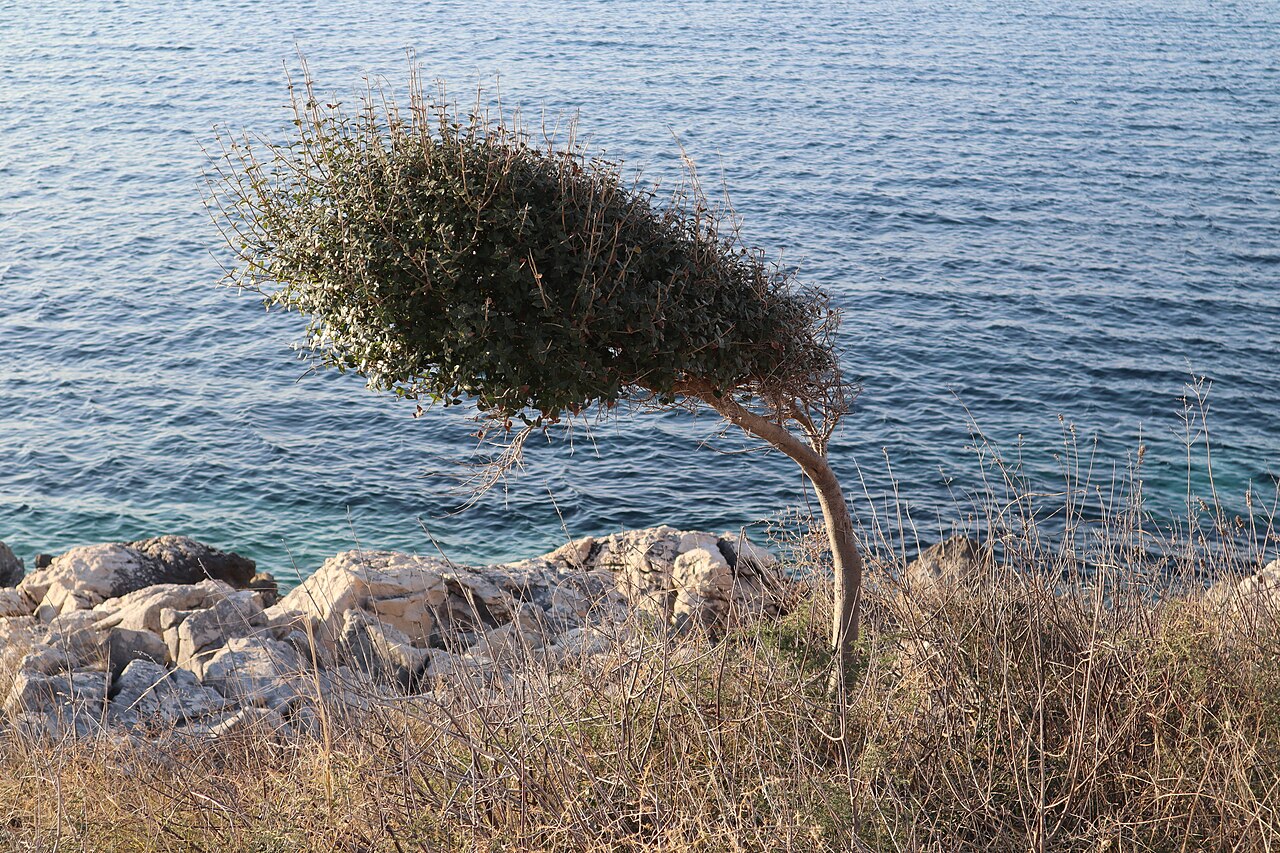
Olea europaea ‘Swan Hill’ is a full-size, tree-form olive cultivar prized for being both fruitless and essentially non-pollinating. It was discovered as a chance seedling in 1961 near the town of Swan Hill in Victoria, Australia, and was selected specifically because it does not set viable fruit and produces very little pollen, making it one of the most reliable “clean” olive trees available for landscaping.
Gardeners and landscapers choose Swan Hill where they want the classic shade and silhouette of a full-size olive tree, 20 to 30 feet tall and wide, without the fruit drop, staining, and olive-fruit-fly concerns of a fruiting cultivar, and without the heavy pollen load that can aggravate allergies in spring. It is commonly planted as a shade tree over patios, pools, and driveways for exactly this reason.
Olive (Olea europaea) is not native to North America; it is native to the Mediterranean basin and the Middle East. It is not on any federal noxious-weed list, but the California Invasive Plant Council lists fruiting olive as a limited-impact invasive in parts of coastal and central California, where birds disperse fruit into wildlands. Because Swan Hill is selected and consistently reported as non-fruiting, it is one of the cultivars specifically recommended by University of California IPM guidance as a lower-risk alternative to fruiting olive in home and landscape plantings, though it should still never be described as a native species.
Identification
Swan Hill is identified primarily by its full, tree-sized habit combined with the near-total absence of fruit and flower pollen, distinguishing it from both standard fruiting olive cultivars and from smaller fruitless selections like ‘Little Ollie‘.
Bark & Stems
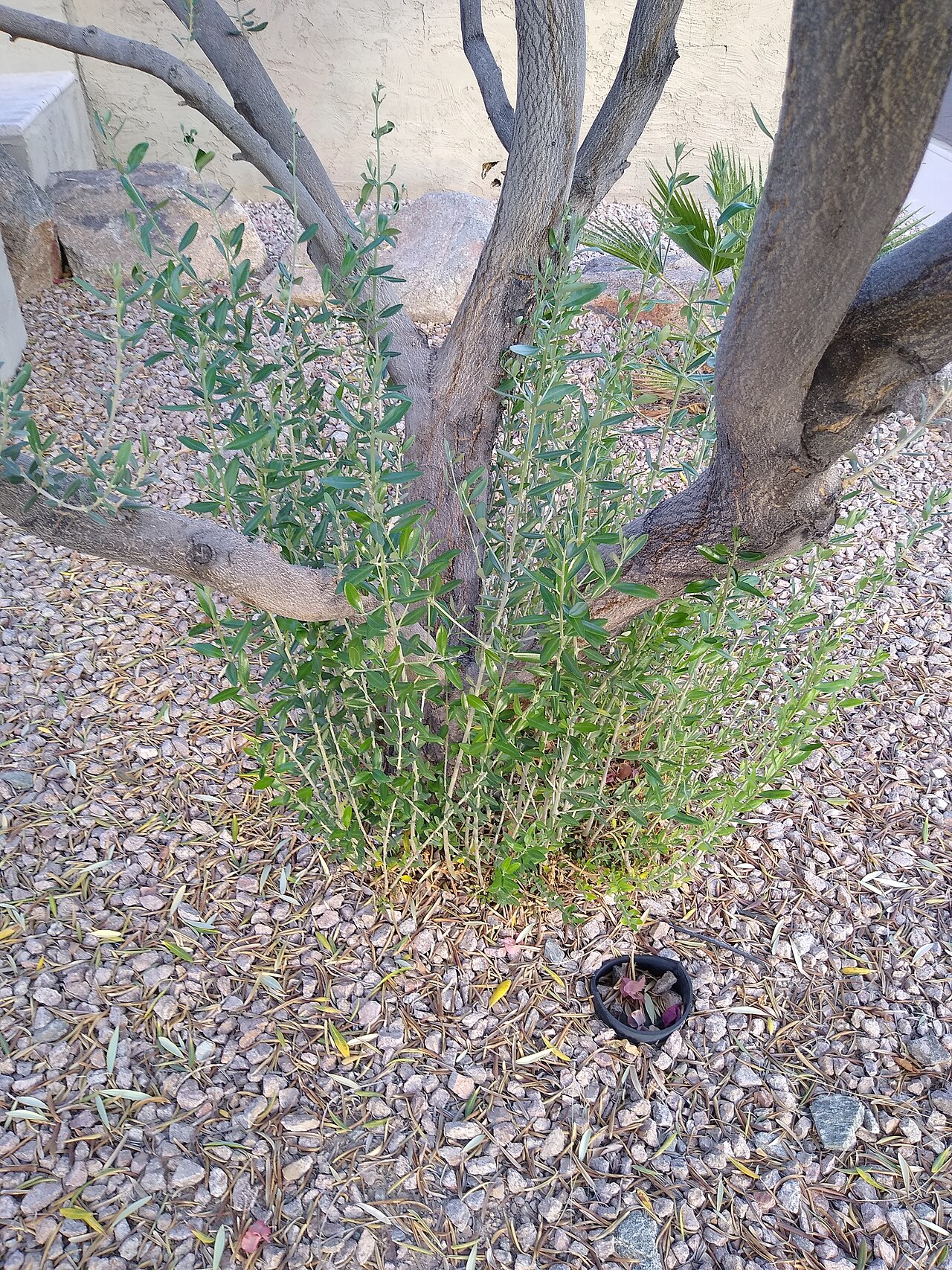
Mature Swan Hill trees develop the gnarled, furrowed gray bark typical of old olive trees, with a broad, rounded crown on a single or occasionally multi-trunk form, depending on how the nursery stock was trained.
Leaves
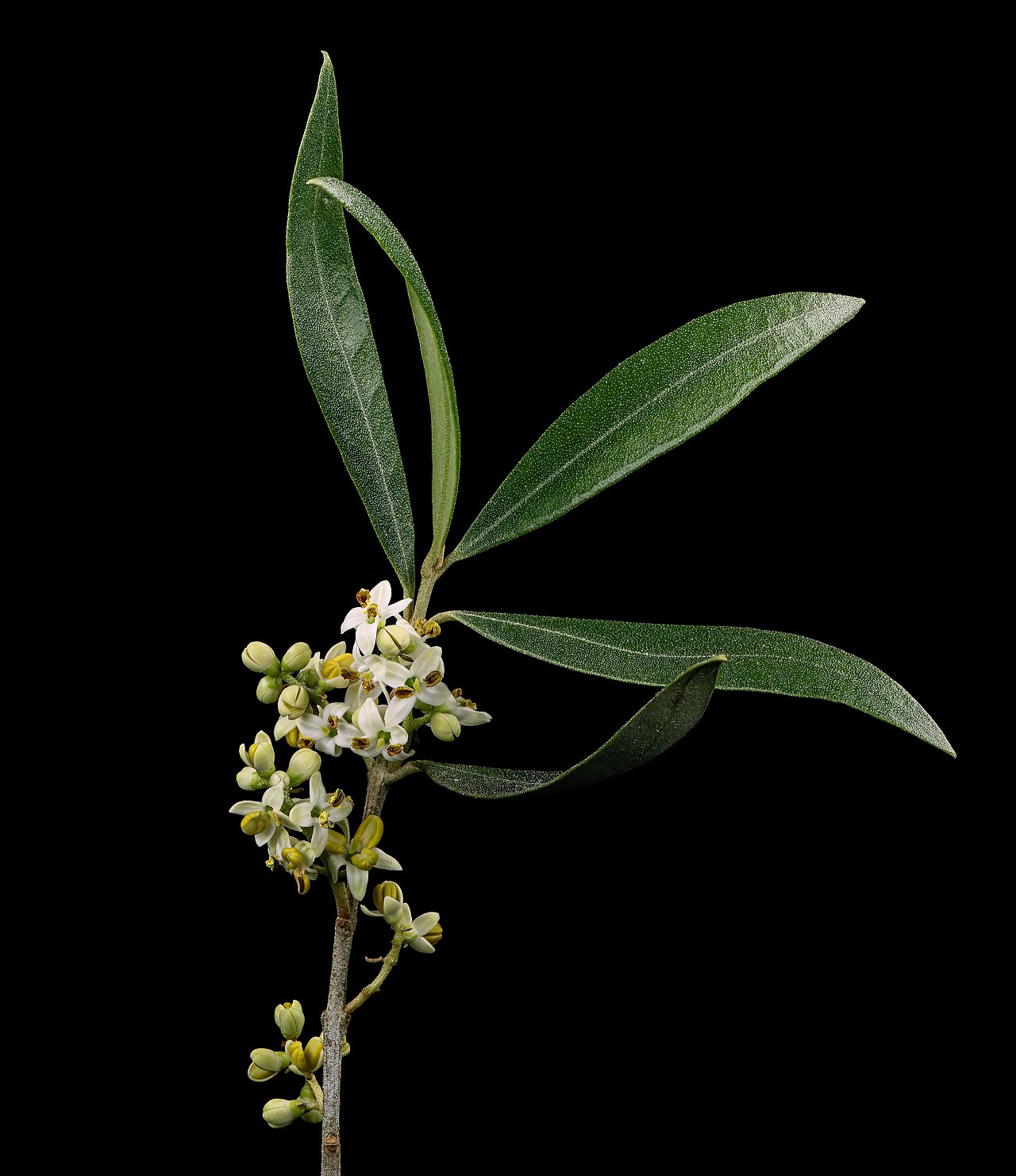
Leaves are the standard narrow, lance-shaped olive leaf, 1.5 to 3 inches long, gray-green above and silvery beneath, giving the canopy its characteristic shimmer in a breeze; foliage looks essentially identical to other olive cultivars.
Flowers
Swan Hill still produces the small, cream-colored spring flower clusters typical of olive, but peer-reviewed studies cited by growers have found the cultivar to be essentially non-pollinating, meaning it releases very little viable pollen compared with standard olive cultivars — a major reason it is marketed to allergy-sensitive gardeners.
Fruit & Seeds
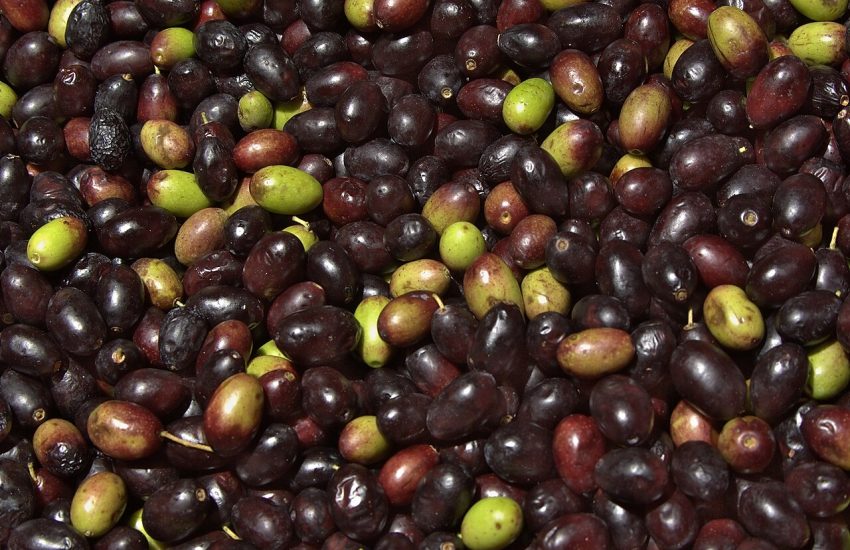
This is Swan Hill’s defining feature: despite flowering, it reliably fails to set fruit. Growers and extension sources describe it as one of the most consistently fruitless olive cultivars available, in contrast to some other “fruitless” selections that occasionally produce a light, sparse crop in some years.
Quick Facts
| Scientific Name | Olea europaea ‘Swan Hill’ |
| Cultivar | ‘Swan Hill’, trademarked Swan Hill Olives |
| Family | Oleaceae (Olive) |
| Plant Type | Evergreen fruitless landscape tree |
| Native to North America | No — introduced; species native to the Mediterranean basin; cultivar selected in Victoria, Australia |
| Mature Height | 20–30 ft |
| Mature Spread | 20–30 ft, rounded canopy |
| Growth Rate | Moderate |
| Sun Exposure | Full sun |
| Water Needs | Low once established; drought tolerant |
| Soil Type | Well-drained soil; nurseries commonly graft onto ‘Oblonga’ rootstock for Verticillium wilt resistance |
| Soil pH | Slightly acidic to alkaline (about 6.0–8.5) |
| Bloom Time | April–May; sparse, low-pollen bloom |
| Leaf / Fall Color | Evergreen gray-green/silver; no fall color change |
| Fruit | None — reliably fruitless |
| Deer Resistant | Yes, generally |
| USDA Hardiness Zones | 8–10 |
| Invasive Status | Not federally listed; reliably fruitless, so it largely avoids the wildland fruit-dispersal concern of fruiting olive cultivars in California |
Origin & Where It Grows
The species Olea europaea is native to the Mediterranean basin, the Levant, and North Africa. ‘Swan Hill’ itself, however, was not selected in that native range: it was found as a naturally occurring fruitless seedling in 1961 near Swan Hill, a town on the Murray River in Victoria, Australia, and was later trademarked and propagated commercially as Swan Hill Olives.
In the United States, Swan Hill is grown across the warm, dry-summer West, most heavily in California and Arizona, as a shade and specimen tree in residential and commercial landscapes, parking lots, and street-tree plantings where a fruitless tree is required or preferred.
Because it needs the same hot, dry-summer, mild-winter conditions as other olive cultivars, Swan Hill performs best in USDA zones 8 through 10 and is not reliably hardy or well-suited to humid or hard-freeze climates.
Growing & Care Guide
Swan Hill grows under the same conditions as a standard full-size olive tree and needs little special care once established.
Light
Plant in full sun for the densest canopy and best overall form; light shade is tolerated but produces thinner growth.
Soil & Water
Swan Hill tolerates poor, rocky, or alkaline soils as long as drainage is good, and it does not tolerate standing water. Many nurseries graft Swan Hill onto ‘Oblonga’ rootstock specifically for its resistance to Verticillium wilt, a soil-borne fungal disease that can affect olives planted in old vegetable or cotton ground. Once established, it is drought tolerant, though occasional deep watering during long dry spells keeps the canopy denser.
Planting Tips
Give Swan Hill the same 20- to 30-foot clearance as any full-size olive, away from pavement that could be lifted by surface roots and from structures the mature canopy would crowd. Stake young trees loosely until the trunk develops enough taper to stand on its own.
Pruning & Maintenance
Prune in late winter to open the canopy for light and air circulation and to remove crossing or low-hanging branches. Because Swan Hill does not fruit, it needs none of the fruit-drop cleanup that fruiting olive cultivars require, which is a large part of its appeal as a low-maintenance shade tree.
Propagation
Swan Hill is propagated by grafting or cuttings, never from seed, since the non-fruiting, low-pollen trait is specific to this selected clone and would not reliably pass to seedlings even if viable seed were produced. Buy nursery stock labeled specifically as Swan Hill or ‘Swan Hill Olives’.
Landscape Uses
- Shade tree over patios, pools, and driveways where fruit drop cannot be tolerated
- Street and parking-lot tree in municipal and commercial landscapes
- Low-allergen planting near homes, schools, and public spaces, given its very low pollen output
- Mediterranean and xeriscape garden specimen once established
Harvest & Pollination
There is no harvest with Swan Hill, since the cultivar is grown specifically for its reliable fruitlessness. Because it produces very little viable pollen, Swan Hill also contributes minimally to pollinating nearby fruiting olive trees, so gardeners who want a fruiting olive elsewhere on the property should not rely on a Swan Hill tree as a pollenizer.
Wildlife & Ecological Value
Because Swan Hill produces very little viable pollen and no fruit, it offers minimal direct food value to pollinators, birds, or other wildlife compared with native flowering and fruiting trees. Its dense, evergreen canopy does provide shade and some nesting or roosting cover for birds, similar to other broadleaf evergreens, but it should not be considered a wildlife-support planting, and gardeners prioritizing pollinator or bird value should favor native trees instead.
Native Alternatives
For the silvery, fine-textured look of an olive without a non-native tree, consider these native alternatives:
- Desert Olive (Forestiera neomexicana) — a tough, drought-tolerant native with fine silvery-green foliage and a similar informal form
- Texas Olive (Cordia boissieri) — a small, drought-tolerant flowering native tree for South Texas gardens
- American Sweet Olive / Devilwood (Osmanthus americanus) — an evergreen native shade tree with fragrant flowers for the Southeast
- Silverberry (Elaeagnus commutata) — a cold-hardy, silver-leaved native shrub or small tree
History & Uses
Swan Hill’s origin story is simple: a grower near the Australian town that gave the cultivar its name noticed, in 1961, an olive tree that flowered but never set fruit and produced little pollen. Recognizing the horticultural value of a “clean” olive, growers propagated and eventually trademarked the selection, and it was later introduced into U.S. nursery production, where it became one of the standard fruitless, full-size olive cultivars recommended by university extension and IPM programs for landscape use.
Swan Hill has no food, oil, or traditional-use history of its own, since it was selected and valued specifically for the opposite trait, an absence of fruit. Its primary role is purely ornamental and functional: giving landscapers and homeowners a genuine, full-size olive tree that behaves predictably in a maintained landscape.
Frequently Asked Questions
Is Swan Hill olive native to the United States?
No. The species Olea europaea is native to the Mediterranean basin, and the ‘Swan Hill’ cultivar itself was discovered in Victoria, Australia. It is an introduced, non-native tree wherever it is grown in North America.
Is Swan Hill really completely fruitless?
Growers and university sources describe it as one of the most consistently, reliably fruitless olive cultivars available, more reliable in this respect than some other fruitless-marketed selections that occasionally set a light, sparse crop.
Does Swan Hill cause allergies like other olive trees?
Studies cited by growers describe Swan Hill as essentially non-pollinating, producing far less viable pollen than standard fruiting olive cultivars, which is why it is often recommended for allergy-sensitive landscapes, though individual sensitivity can still vary.
How big does Swan Hill olive get?
Swan Hill is a full-size olive cultivar, typically reaching 20 to 30 feet tall and wide at maturity, the same general scale as standard fruiting olive trees.
Does Swan Hill need a special rootstock?
Many nurseries graft Swan Hill onto ‘Oblonga’ rootstock for resistance to Verticillium wilt, a soil fungus that can be a problem in ground previously used for susceptible crops like tomatoes or cotton.