
Sevillano Olive Tree (Olea europaea ‘Sevillano’)
Last updated: November 3, 2026
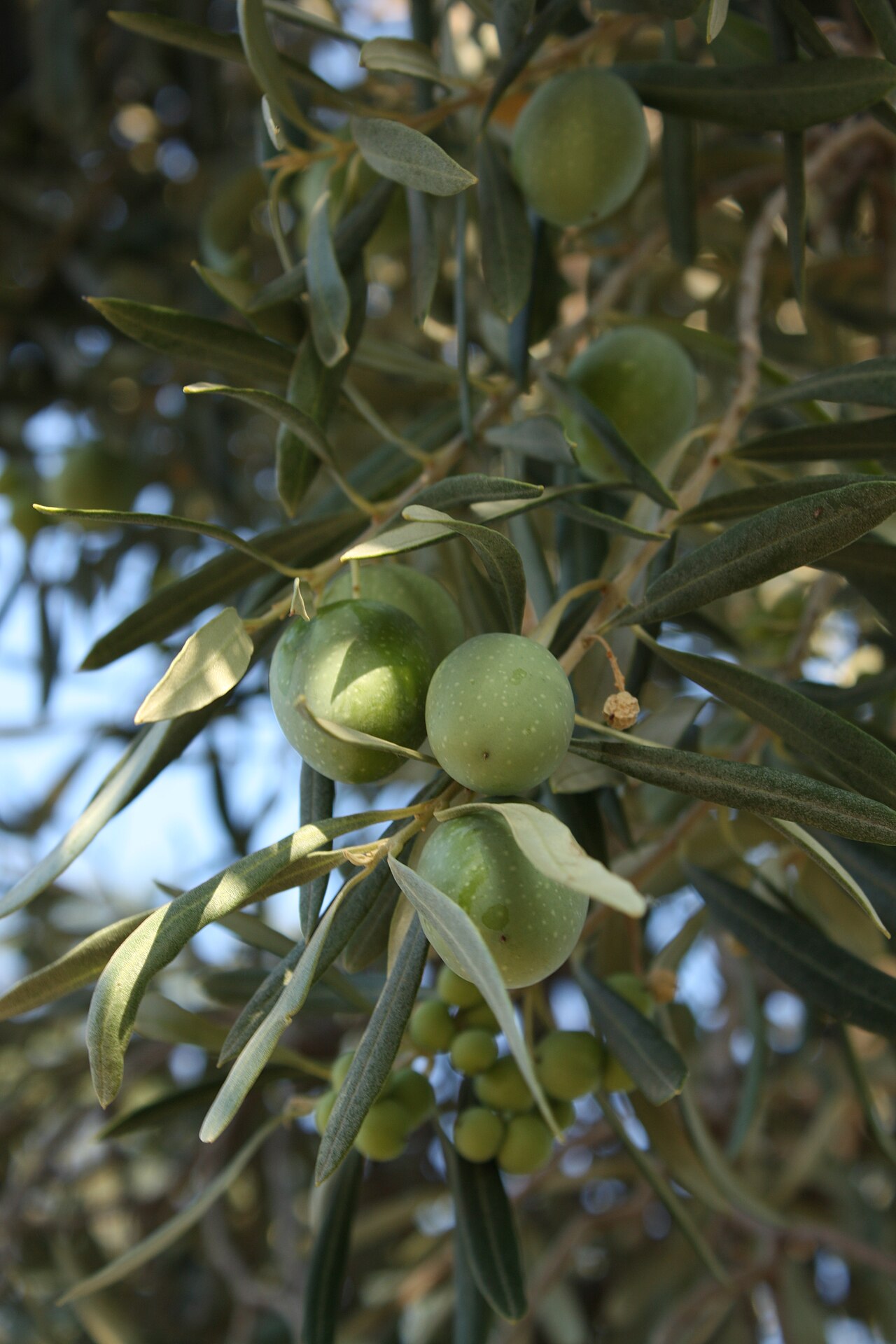
Sevillano (Olea europaea ‘Sevillano’), known in its native Spain as Gordal Sevillana, produces the largest fruit of any commonly grown olive cultivar. Named for Seville in Andalusia, it became the backbone of California’s canned ripe-olive industry after its introduction in the late 1800s, prized for its huge, meaty, easy-to-pit fruit used for the familiar canned black olives and pimento-stuffed green olives found on American tables.
Gardeners grow Sevillano as much for its handsome form as its fruit: it develops an open, airy canopy of small, dark green, willow-like leaves on a gracefully gnarled trunk as it ages, giving it real ornamental value beyond the table-olive harvest. Because it needs a pollinizer and produces low to moderate oil, it is grown almost exclusively for table use.
Olive (Olea europaea) is not native to North America; it is native to the Mediterranean basin and the Near East, and Sevillano itself originated in the Seville region of Spain. It carries no federal noxious-weed listing, but Cal-IPC lists olive as a limited-impact invasive in parts of coastal and central California, where birds spread fruit from fruiting trees into nearby wildlands — notable for Sevillano given how widely it has been planted in California’s Central Valley. Harvest fruit each season and avoid planting next to natural areas in that region; elsewhere, winter cold keeps the species from naturalizing.
Identification
Bark & Stems
Young Sevillano wood is smooth and gray-green. With age the trunk develops a distinctively gnarled, twisting character, and the tree’s open branching gives it a more picturesque, sculptural silhouette than denser cultivars.
Leaves
Leaves are small, narrow and dark green, noticeably smaller than the leaves of many other olive cultivars, creating a light, willow-like, airy effect across the whole canopy rather than a dense mass of foliage.
Flowers
Small cream-white flowers appear in loose clusters at the leaf axils in late spring, typically May into June, wind-pollinated with some insect activity. Sevillano is not reliably self-fruitful and needs a compatible pollinizer, commonly Manzanillo, Ascolana or Mission, planted nearby to set a full crop.
Fruit & Seeds
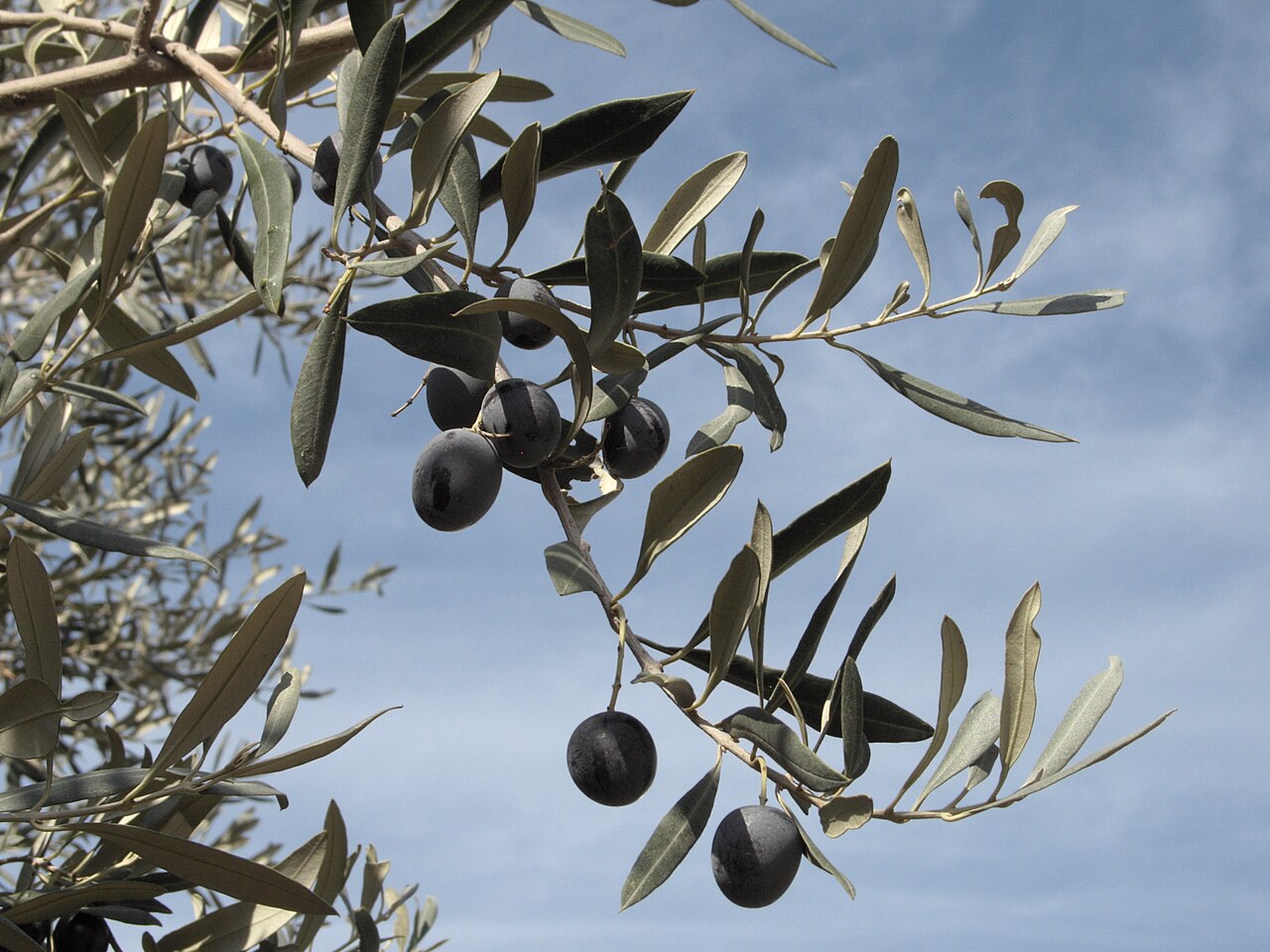
Sevillano is known first and foremost for fruit size — the largest of the major table cultivars, oval and plump, with a relatively high proportion of flesh to pit despite the pit itself also being larger than average. Oil content is low to moderate, so the fruit is grown almost entirely for table use: picked green for the classic Spanish-style or California-style green olive, or allowed to ripen and oxidize dark for canned “ripe black” olives, often pimento-stuffed when sold whole.
Quick Facts
| Scientific Name | Olea europaea |
| Cultivar | ‘Sevillano’ (Gordal Sevillana) |
| Family | Oleaceae (Olive) |
| Plant Type | Evergreen fruiting tree |
| Native to North America | No — introduced from the Mediterranean; cultivar selected near Seville, Spain |
| Mature Height | 25–30 ft unpruned (commonly kept 15–20 ft) |
| Mature Spread | 20–25 ft |
| Growth Rate | Moderate; open, airy, willow-like canopy |
| Sun Exposure | Full sun |
| Water Needs | Low to moderate once established; drought tolerant |
| Soil Type | Well-drained loam, sand or rocky soil |
| Soil pH | Slightly acidic to alkaline (about 6.0–8.5) |
| Bloom Time | May – June |
| Leaf / Fall Color | Evergreen dark green above, silvery below; no fall color change |
| Fruit | Very large oval olives, green to black; low to moderate oil; table use; needs a pollinizer |
| Deer Resistant | Yes, generally |
| USDA Hardiness Zones | 9–10 |
| Invasive Status | Not federally listed; Cal-IPC limited impact in parts of coastal/central California |
Origin & Where It Grows
The species Olea europaea is native to the Mediterranean basin, the Near East and parts of the Horn of Africa; it has no native range in North America.
Sevillano descends from the Gordal Sevillana of Seville in Andalusia, Spain, where its enormous fruit has long been prized as a table olive. Cuttings were brought to California in the 1870s and 1880s, and the cultivar — renamed Sevillano in the United States — quickly became the dominant variety behind California’s canned ripe-olive industry, an industry built almost entirely around this one giant-fruited cultivar through much of the 20th century.
In the United States, Sevillano is most widely grown in California’s Central Valley, particularly around Corning and Tehama County, historically the heart of the state’s canning-olive production. It also grows well in other warm, dry Mediterranean-climate regions, including parts of Arizona and the warmest zones of Texas.
Sevillano Origin & Range
| Species Native Range | Mediterranean basin, Near East |
| Cultivar Origin | Seville (Andalusia), Spain, as Gordal Sevillana |
| Best U.S. Regions | California’s Central Valley, southern Arizona, warm-zone Texas |
| USDA Zones | 9–10 |
| Invasive Status | Not federally listed; Cal-IPC limited impact, coastal/central California only |
Growing & Care Guide
Sevillano is well suited to hot, dry inland climates and rewards growers who want very large fruit, provided they also have the space for a vigorous, spreading tree.
Light
Plant in full sun — at least 6 to 8 hours of direct light daily — for the best flowering, fruit set and fruit size.
Soil & Water
Give Sevillano well-drained soil; like other olive cultivars it is intolerant of wet feet and prone to root rot in heavy clay. Water young trees regularly for the first two to three seasons; mature trees handle drought well, but even watering during fruit development helps the fruit reach its characteristic large size.
Planting Tips
Plant in spring so roots establish before winter. Give Sevillano plenty of room — 20 to 25 feet of spread at maturity — and plant a second cultivar such as Manzanillo, Ascolana or Mission nearby for cross-pollination, since Sevillano is not reliably self-fruitful.
Pruning & Maintenance
Prune in late winter to early spring, thinning crowded growth and shaping the naturally open canopy; because Sevillano already grows airy and willow-like, light annual pruning is usually enough to maintain form and let light into the fruiting wood. Fertilize lightly in spring with a balanced fertilizer.
Propagation
Sevillano does not come true from seed; seedlings vary and lose the parent’s distinctive large fruit size. Propagate by rooted cuttings or grafting onto olive rootstock for true-to-type trees.
Harvest & Pollination
Sevillano needs cross-pollination from a compatible cultivar, commonly Manzanillo, Ascolana or Mission, to produce a full crop. Harvest green for the classic large green table olive, or let fruit ripen to black for canned ripe olives. As with all olives, raw Sevillano fruit is bitter and inedible straight off the tree; it must be cured — traditionally in a lye-and-brine process for California-style canned olives, or in brine for Spanish-style green olives — before eating.
Landscape Uses
- Specimen or shade tree, valued for its sculptural, gnarled trunk and open, willowy canopy as it ages
- Mediterranean and xeriscape gardens, where its airy texture pairs well with drought-tolerant perennials
- Home table-olive production, paired with a pollinizer cultivar for reliable fruiting
- Hot, inland valley plantings where its heat tolerance is an asset
Wildlife & Ecological Value
Sevillano’s small, wind-pollinated flowers offer limited nectar for bees and flies compared with native flowering trees. Its very large, abundant fruit is attractive to fruit-eating birds, which can spread seed into nearby wildlands in mild-winter regions — a key reason olive carries limited-impact invasive status in parts of California, where Sevillano has historically been planted at commercial scale. The open, evergreen canopy offers some shade and perching habitat. Overall, Sevillano supports far fewer native insects than a comparable native tree and is best treated as a food and ornamental landscape tree rather than a wildlife planting.
Native Alternatives
For a similarly airy-canopied, sculptural, drought-tolerant tree, or a true native companion for Sevillano, consider these North American species:
- Desert Olive (Forestiera neomexicana) — a tough Southwestern native shrub/small tree with fine gray-green foliage
- Texas Olive (Cordia boissieri) — a drought-tolerant flowering small tree for warm Texas and Gulf Coast gardens
- American Sweet Olive / Devilwood (Osmanthus americanus) — a fragrant evergreen native in the same olive family, Oleaceae
- Honey Mesquite (Prosopis glandulosa) — a native, fine-textured, drought-tolerant tree with a similarly open, gnarled form
History & Uses
Sevillano’s story in the United States is inseparable from the rise of the California canned-olive industry. After its introduction from Seville in the late 19th century, growers found that its enormous fruit was perfectly suited to the newly developed California curing and canning process, which neutralizes the fruit’s natural bitterness with a lye treatment followed by brining and oxidation. For much of the 20th century, Sevillano was the single most important cultivar behind the canned black and pimento-stuffed green olives found on American grocery shelves.
Though newer, higher-yielding cultivars have taken over some commercial acreage, Sevillano remains popular with home growers and specialty producers who want the biggest possible olives, and it is still grown commercially in California’s Central Valley for traditional canned and brined products.
Frequently Asked Questions
Is Sevillano olive tree native to North America?
No. Olive (Olea europaea) is native to the Mediterranean basin, and Sevillano itself descends from the Gordal Sevillana of Seville, Spain. It is an introduced, cultivated tree here, not a federally listed invasive, though Cal-IPC lists olive as limited-impact invasive in parts of coastal/central California, where Sevillano has historically been grown at commercial scale.
Why is Sevillano famous?
It produces the largest fruit of any widely grown olive cultivar, which made it the backbone of California’s canned ripe-olive and pimento-stuffed green-olive industry starting in the late 1800s.
Does Sevillano need another olive tree to produce fruit?
Yes — Sevillano is not reliably self-fruitful and generally needs a compatible pollinizer such as Manzanillo, Ascolana or Mission planted nearby for a full crop.
Can Sevillano olives be eaten right off the tree?
No. Like all olives, raw Sevillano fruit is bitter and must be cured before eating — traditionally with a lye-and-brine process for canned ripe olives, or a simple brine cure for green Spanish-style olives.
Is Sevillano a good oil olive?
No — it has low to moderate oil content and is grown almost entirely as a table olive rather than for pressing.

