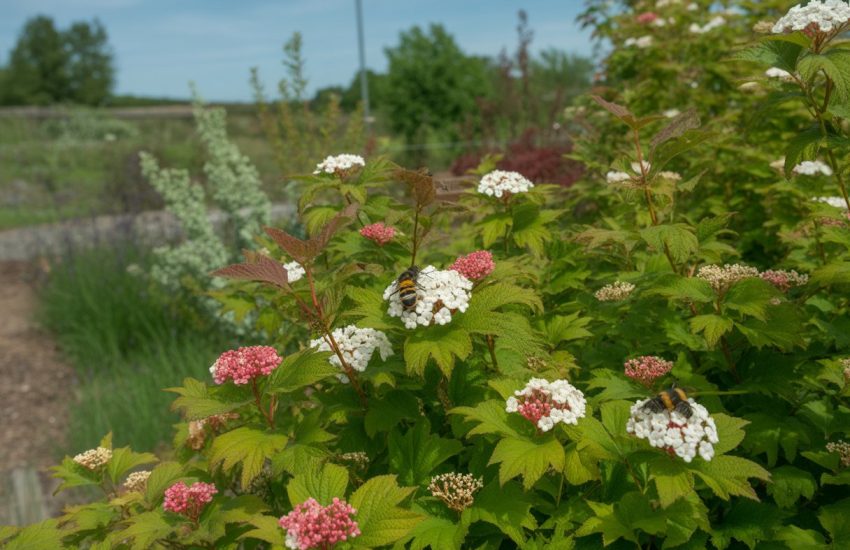
Cluster Rose (Rosa pisocarpa)
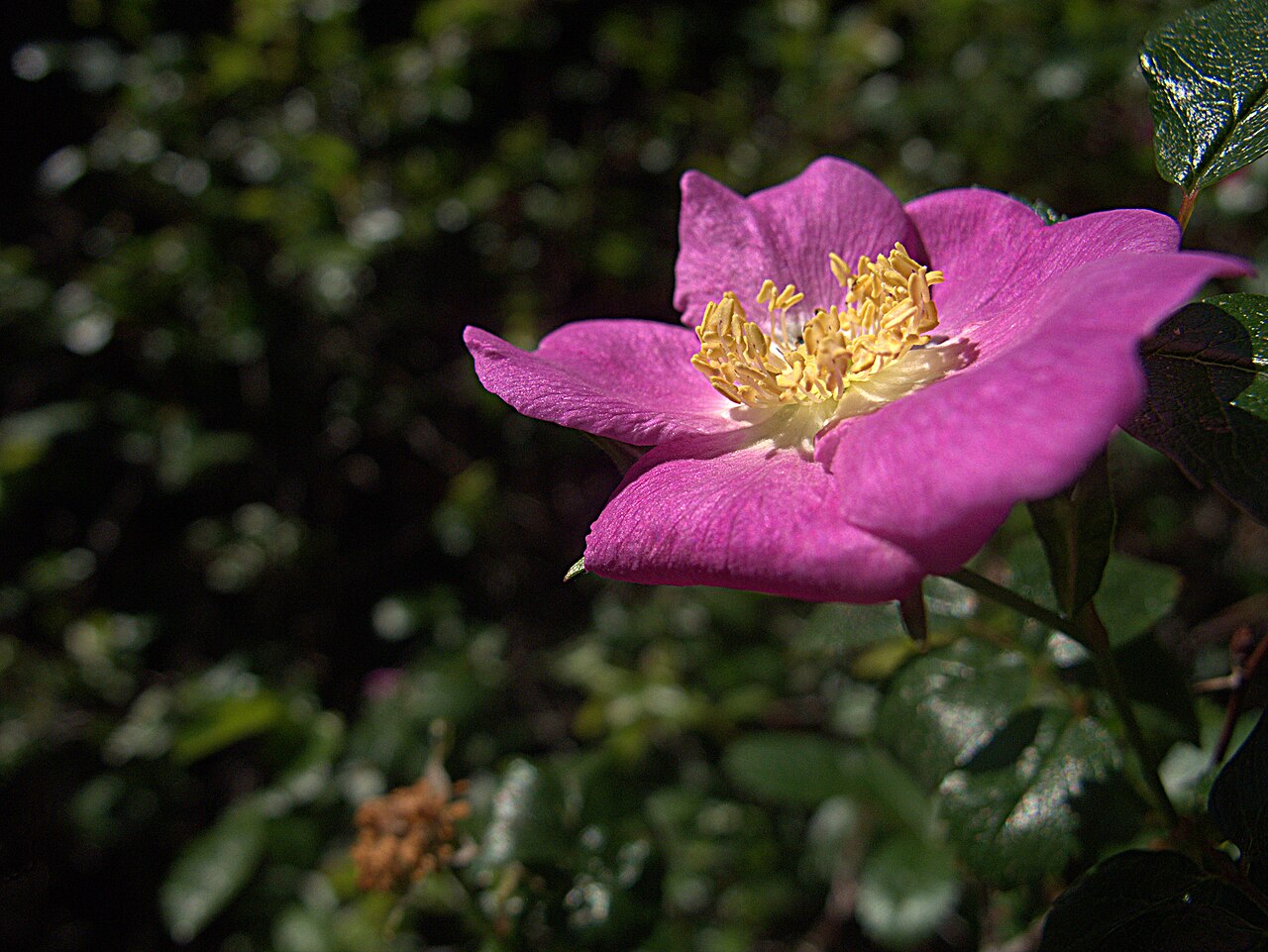
Rosa pisocarpa, commonly called the Cluster Rose or Swamp Rose, is a thicket-forming native shrub of the Pacific Coast, found from British Columbia south through Washington and Oregon into northern California. Its name comes from its distinctive flower arrangement: rather than opening singly, blooms appear in loose clusters, or cymes, of up to ten flowers at the tips of the season’s new growth. The alternate common name “Swamp Rose” reflects its affinity for consistently moist soils, though this species tolerates a wider range of conditions than that name suggests.
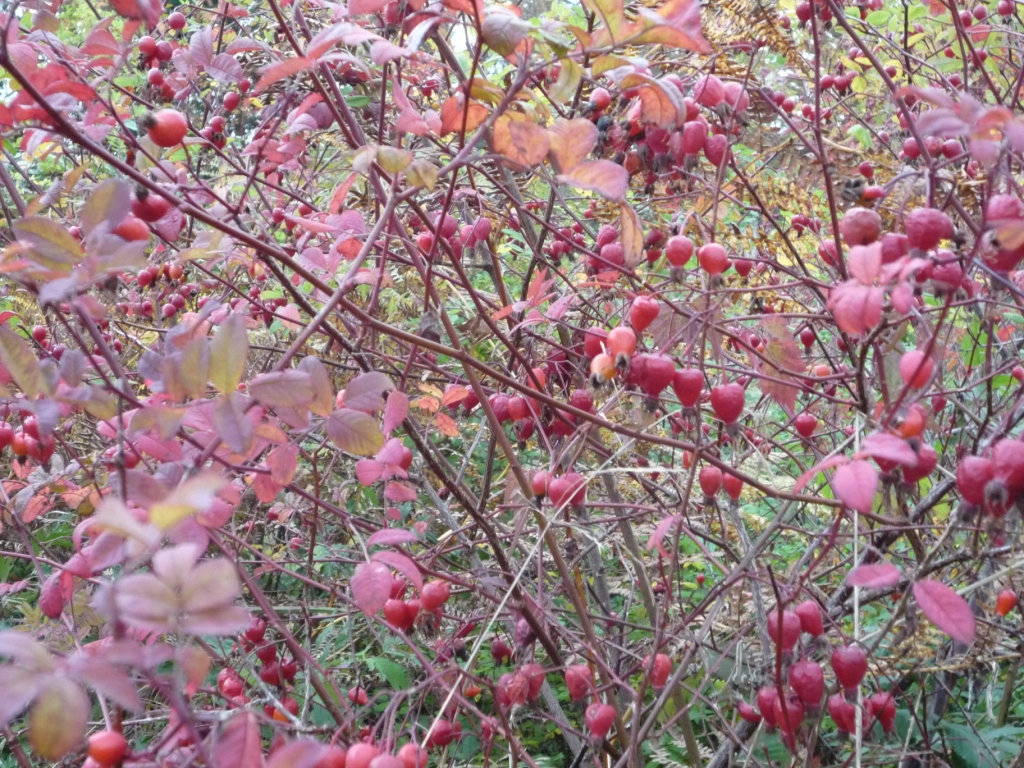
Cluster Rose is a familiar sight along Pacific Northwest streambanks, wetland margins, roadside ditches, and powerline corridors — places where moisture collects and disturbance keeps competing vegetation in check. Dark reddish stems armed with straight, paired thorns carry clusters of pink, lightly fragrant flowers in early summer, followed by pear-shaped red hips that persist into winter alongside striking yellow and red fall foliage.
Note that the common name “Swamp Rose” is also used for the eastern North American species Rosa palustris, an unrelated plant native to the eastern and central United States. The two are easily told apart by range — Rosa palustris does not occur on the West Coast — and gardeners sourcing plants should confirm they are getting true Rosa pisocarpa if a Pacific Coast native is what’s wanted.
Identification
Cluster Rose is a deciduous shrub that often forms loose thickets through root suckering, typically reaching 3 to 8 feet in height depending on site moisture and light.
Bark & Stems
Stems are slender and can be dark red to nearly blackish, often studded with straight, paired prickles at the nodes — a useful identification feature distinguishing it from roses with scattered, curved thorns. New growth is noticeably reddish and smooth before thorns harden.
Leaves
Leaves are pinnately compound, made up of several toothed, oval leaflets, with the terminal leaflet reaching up to about 1.5 inches (4 cm) long. Foliage is a fresh mid-green through the growing season, turning yellow or dark red in fall, often with both colors present on the same shrub at once.
Flowers
The defining trait of this species is its inflorescence: flowers are borne in a cyme, a flat-topped to rounded cluster of up to ten blooms, rather than singly as in many other wild roses. Each flower has pink petals up to about ¾ inch (2 cm) long surrounding a cluster of yellow stamens, with a light, sweet fragrance. Flowering runs from late spring into mid-summer.
Fruit & Seeds
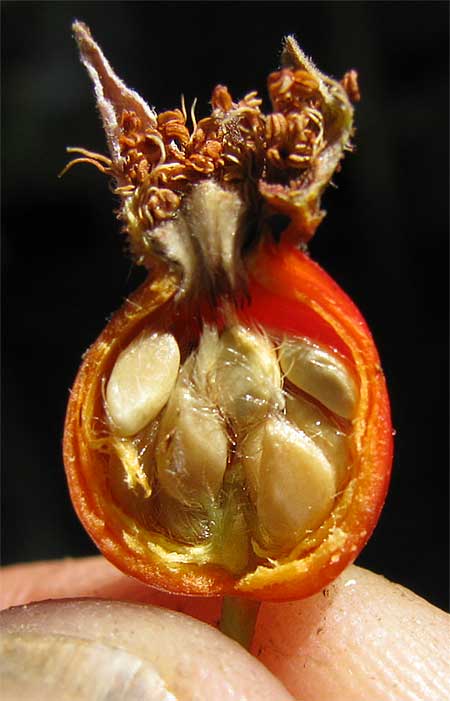
The fruit is a small rose hip, about ⅓ inch (1 cm) wide, pear- or egg-shaped, and borne in clusters that echo the flower arrangement. Hips ripen to red or reddish-purple in fall and are especially decorative against the shrub’s yellow or dark red fall foliage, often persisting into early winter.
Quick Facts
| Scientific Name | Rosa pisocarpa |
| Family | Rosaceae (Rose) |
| Plant Type | Deciduous, Thicket-forming Shrub |
| Mature Height | 3–8 ft (to about 2.5 m) |
| Mature Spread | 4–8+ ft, spreading by root suckers |
| Growth Rate | Moderate |
| Sun Exposure | Full Sun to Part Shade |
| Water Needs | Moderate to High; tolerates occasional dry or lean soils |
| Soil Type | Moist to seasonally wet; adaptable to various textures |
| Soil pH | 5.5–7.0 |
| Bloom Time | May – July |
| Flower Color | Pink |
| Fall Color | Yellow to dark red |
| Fruit | Small red to reddish-purple hips in clusters |
| Deer Resistant | Moderate (thorny stems deter some browsing) |
| USDA Hardiness Zones | 6–9 |
Native Range
Cluster Rose ranges along the Pacific Coast from British Columbia south through Washington and Oregon to northern California, generally staying within a few hundred miles of the coast and the adjacent lowlands and foothills, though it extends somewhat farther inland in parts of Washington and Oregon. It is a familiar component of Pacific Northwest wetland-edge and riparian plant communities.
Habitat includes streambanks, roadside ditches, powerline rights-of-way, wetland buffers, fencerows and hedgerows, and the margins of woodlands — in short, the moist, semi-disturbed edges where many Pacific Coast shrubs thrive. The species has a wetland indicator status of facultative (FAC) in the Pacific Northwest, meaning it occurs in wetlands about as often as in non-wetland sites, and more upland-leaning (FACU) in California. It grows in full sun in the wetter, more northern parts of its range but tolerates partial shade and leaner soils further south.
Because the common name “Swamp Rose” is shared with the unrelated eastern species Rosa palustris, it is worth noting plainly that true Rosa pisocarpa does not occur naturally east of the Pacific Coast states and British Columbia.
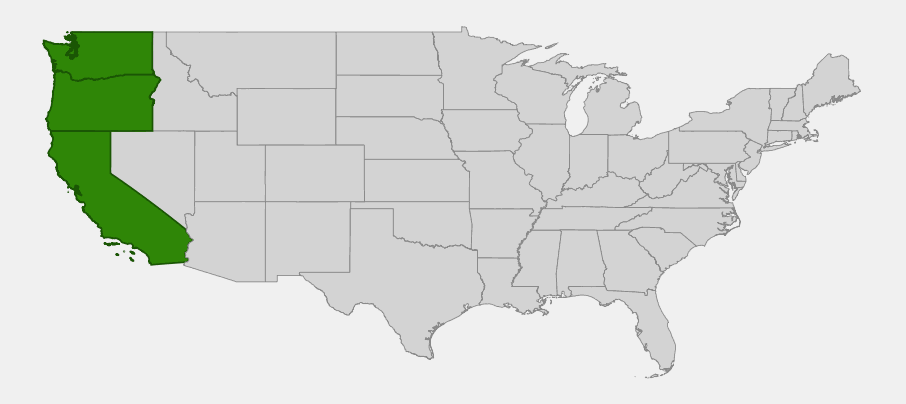
📋 Regional plant lists featuring Cluster Rose: Western Oregon & Western Washington · California & Nevada
Growing & Care Guide
Cluster Rose fits naturally into Pacific Northwest and northern California gardens that have, or can mimic, consistently moist soil for at least part of the year.
Light
Full sun produces the heaviest bloom, especially in the cooler, wetter northern part of its range. In warmer or drier inland gardens, partial shade helps the shrub cope with summer heat and reduces water demand, though flowering may be somewhat lighter.
Soil & Water
This species is at its best in consistently moist soil — streambank edges, rain garden margins, and low spots that collect seasonal water all suit it well. It is more tolerant of occasional dry or lean soils than its “swamp” name implies, but performs best with regular moisture during the growing season rather than a true xeric planting regime.
Planting Tips
Plant bare-root or container stock in fall or late winter, while the plant is dormant and winter rains can help establish roots. Because it suckers to form thickets, give it 6 to 8 feet of room, or plan on periodic sucker removal if a more contained form is wanted. It is particularly well suited to rain garden edges, bioswales, and streambank restoration plantings.
Pruning & Maintenance
Remove dead, damaged, or overly old canes in late winter to keep the thicket productive, and thin congested growth every few years to maintain good air circulation and strong flowering wood. Heavy gloves are recommended — the paired node thorns are sharp, if less densely scattered than in some other wild roses.
Landscape Uses
Cluster Rose suits a range of practical native-garden roles:
- Rain gardens and bioswales — tolerant of periodic standing water
- Streambank stabilization — suckering roots help hold moist soils
- Wildlife hedgerow — dense, thorny cover with multi-season food value
- Pollinator garden — clustered blooms concentrate nectar and pollen in one spot
- Fall and winter interest — colorful foliage and persistent hips
- Naturalized wetland-edge plantings — appropriate for restoring disturbed moist sites
Wildlife & Ecological Value
Cluster Rose is a valuable, multi-season wildlife shrub within its Pacific Coast range, especially in the riparian and wetland-edge habitats it favors.
For Pollinators
The clustered flowers concentrate nectar and pollen resources in dense bloom heads, making a single shrub an efficient stop for native bees and other pollinating insects. Because flowering runs through much of early summer, the species helps bridge the gap between spring ephemerals and mid-summer bloomers.
For Birds
Songbirds including sparrows, thrushes, and various finches feed on the persistent red hips through fall and into winter, when other food sources become scarcer. The dense, thorny thickets also provide valuable nesting and escape cover, particularly in the open, semi-disturbed habitats — ditches, hedgerows, field edges — where this species often grows.
For Mammals
Small mammals use the thickets for cover, and deer and other browsers feed on the foliage and stems to some degree, tempered somewhat by the straight node thorns. The hips are also eaten by various small mammals once they soften through the winter months.
Ecosystem Role
Along streams, ditches, and wetland margins, Cluster Rose’s suckering root system helps bind moist soils in place, reducing erosion in exactly the disturbed, water-adjacent settings where erosion control matters most. Its presence in hedgerows and field margins also supports the broader insect and bird communities associated with semi-natural edge habitat across the Pacific Northwest.
Cultural & Historical Uses
Like other native roses of the Pacific Coast, Cluster Rose hips were gathered and eaten by Indigenous peoples within its range, valued as a source of vitamin C, particularly late in the season when other fresh plant foods were scarce. Various plant parts were also used in traditional preparations by different coastal and inland groups; these are documented here as historical ethnobotanical practice, not as modern medical guidance.
The flexible, thorny stems had practical uses as well, and the dense, suckering growth habit made the shrub a natural component of informal boundary and windbreak plantings in traditional land use, a role it continues to serve in contemporary hedgerow and restoration plantings.
Today, Cluster Rose is valued chiefly for ecological restoration work along Pacific Northwest streams and wetlands, where its moisture tolerance, suckering habit, and wildlife value make it one of the standard native shrub choices for riparian buffer and rain garden projects.
Frequently Asked Questions
Is Cluster Rose the same plant as Swamp Rose (Rosa palustris)?
No. “Swamp Rose” is a shared common name, but Rosa pisocarpa is a distinct Pacific Coast species, while Rosa palustris is native to the eastern and central United States. The two do not naturally overlap in range, and gardeners should use the scientific name to be sure they are getting the right plant for their region.
Does Cluster Rose need wet soil to survive?
It grows best with consistent moisture and is often found in genuinely wet sites, but it is more adaptable than a true wetland obligate and can tolerate periods of drier soil once established, especially with some afternoon shade.
How can I tell Cluster Rose from other wild roses in the Pacific Northwest?
The clustered flower arrangement — up to ten blooms in a rounded cyme rather than single flowers — combined with straight, paired thorns at the leaf nodes and dark reddish stems are the most reliable field marks for this species.
Will Cluster Rose spread too aggressively in a small garden?
It does spread by root suckers and can form a substantial thicket over time, so it suits a hedgerow, streambank, or naturalized area better than a small, tightly maintained bed. Suckers can be cut back if a more contained shrub is desired.
Are the hips good for wildlife or for people?
Both. Songbirds and small mammals rely on the persistent red hips through fall and winter, and the hips are also edible for people, historically gathered by Indigenous communities as a vitamin C source, though they are tart and typically prepared rather than eaten raw in quantity.

Looking for a nursery that carries Cluster Rose?
Browse our native plant nursery directory: Oregon · Washington · California