Spreading Stonecrop (Sedum divergens)
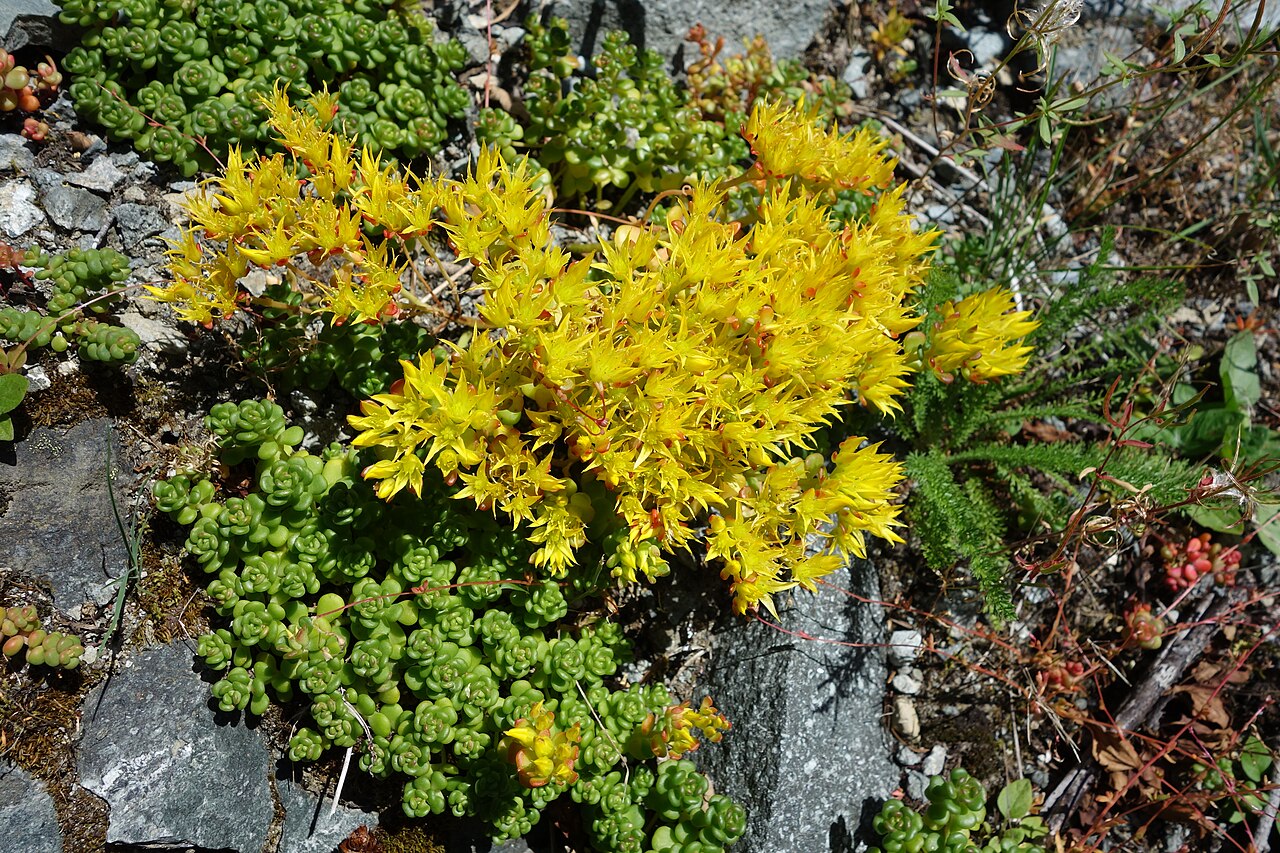
Sedum divergens, known as Spreading Stonecrop (and also called Cascade stonecrop or Pacific stonecrop), is a compact, mat-forming succulent native to the volcanic and granite high country of the Pacific Northwest. It is one of the signature small plants of subalpine meadows and rocky slopes from the Cascade and Olympic Mountains of Washington north into Alaska, where it threads itself into cracks and gravel alongside some of the region’s most photographed wildflower displays.
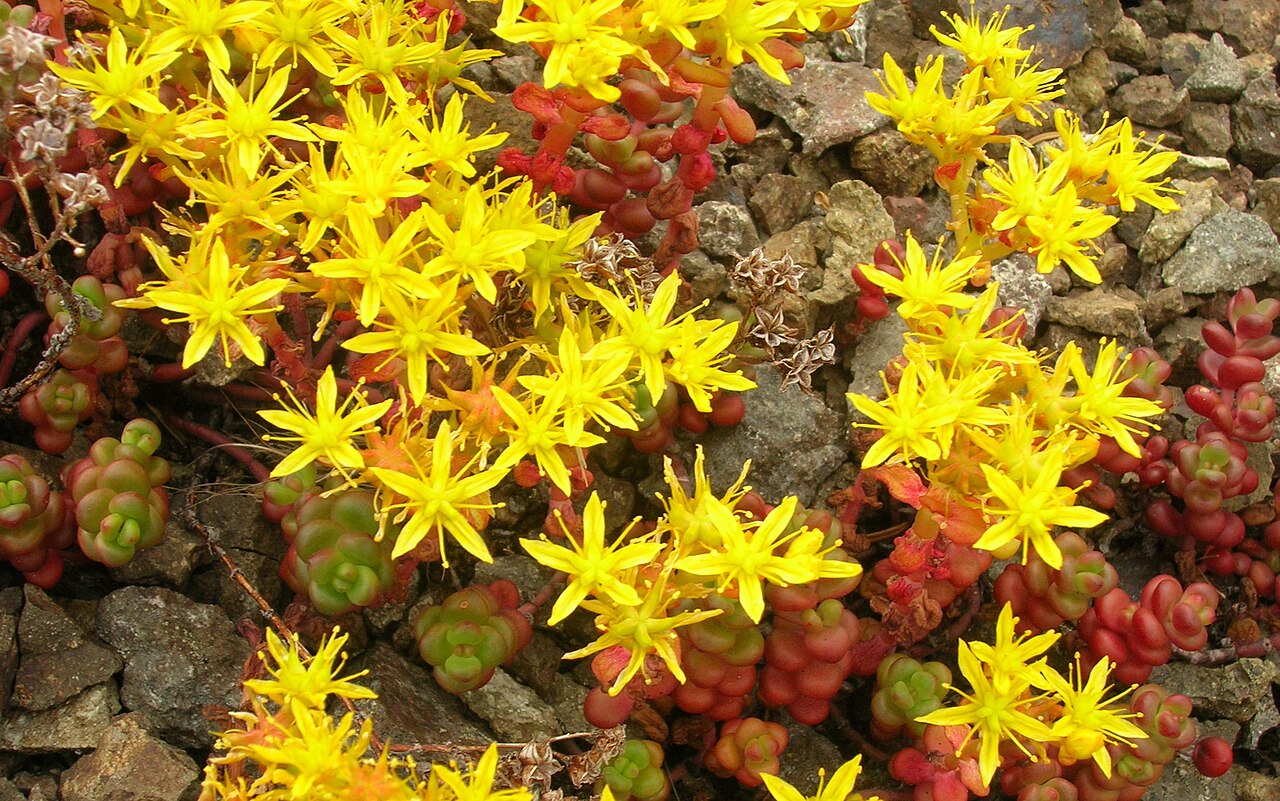
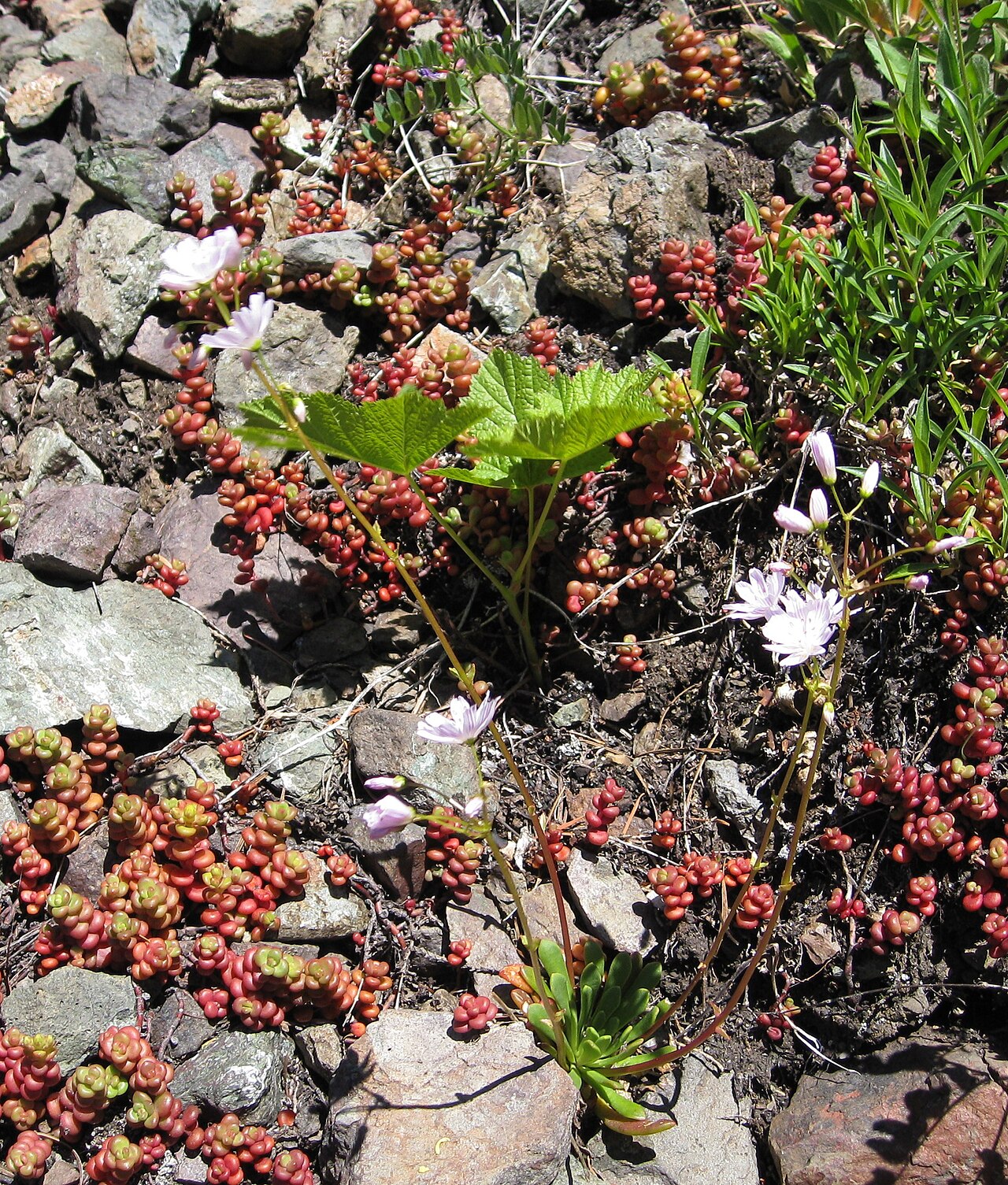
The plant forms dense, low mats of rounded, bead-like succulent leaves, often tinged red to bronze in full sun, with clusters of star-shaped bright yellow flowers appearing in mid to late summer. Its opposite leaf arrangement — distinctive among the region’s sedums — gives rise to the species name divergens, referring to how the paired leaves diverge from the stem. In the wild it is frequently found growing side by side with other classic subalpine rock dwellers such as Columbia lewisia, forming colorful patchwork mats on talus and lava rock.
For Pacific Northwest gardeners with a sunny, well-drained rock garden, green roof, or gravel bed, spreading stonecrop offers an easy, tidy, evergreen groundcover that asks for almost nothing once established — a native alternative to the many non-native sedums sold for the same purpose.
Identification
Spreading stonecrop is a low, mat-forming succulent perennial, generally staying under 4 inches tall while spreading slowly outward to form patches of dense, fleshy foliage.
Growth Habit
The plant spreads by short, trailing to upright stems that root readily where they touch soil, gradually building a dense, interlocking mat rather than running aggressively. Growth is slow and well-behaved, making it reliable for small rock garden pockets as well as larger gravel beds.
Leaves
Leaves are small, fleshy, and rounded to oval, borne in opposite pairs along the stems — a key identification feature that distinguishes it from many similar-looking native and introduced sedums with alternate leaves. Foliage is bright green in shade or cooler weather, often flushing red, orange, or bronze under full sun and drought stress, adding seasonal color even outside of bloom.
Flowers
From roughly July into August, clusters of small, star-shaped, bright yellow flowers with five pointed petals open atop short stems just above the foliage mat. Blooming colonies create a vivid yellow haze across otherwise gray talus and lava rock, a hallmark sight of Cascade and Olympic subalpine meadows in high summer.
Fruit & Seeds
Flowers give way to small, dry, star-shaped clusters of follicles that split to release fine seed by late summer. As with most stonecrops, the seed capsules are inconspicuous compared to the flowers, and the species also spreads readily by rooting stem fragments.
Quick Facts
| Scientific Name | Sedum divergens |
| Family | Crassulaceae (Stonecrop) |
| Plant Type | Succulent Perennial Groundcover |
| Mature Height | 2–4 in |
| Mature Spread | 8–18 in as mats fill in |
| Growth Rate | Slow |
| Sun Exposure | Full Sun to Part Sun |
| Water Needs | Low once established |
| Soil Type | Gravelly, rocky, lean; sharp drainage essential |
| Soil pH | 5.5–7.0 |
| Bloom Time | July – August |
| Flower Color | Bright yellow |
| Fall Color | Foliage often reddens/bronzes in sun and cooler weather |
| Fruit | Small star-shaped dry follicle clusters |
| Deer Resistant | Yes |
| USDA Hardiness Zones | 4–8 |
Native Range
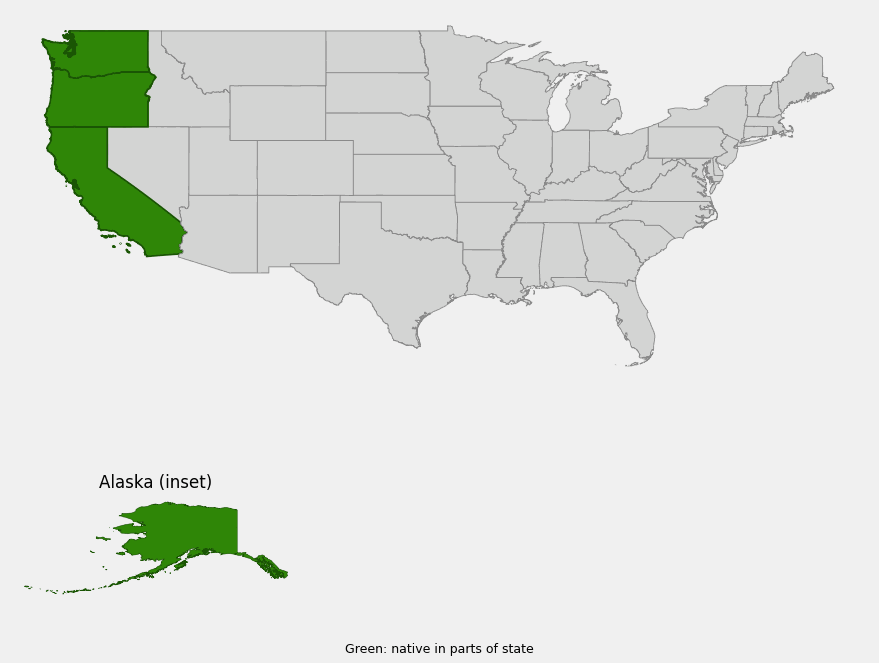
Spreading stonecrop occurs in scattered, often disjunct populations from the coastal mountains of Alaska and British Columbia south through the northern Cascade Mountains and Olympic Mountains of Washington, with a small outlying population at Lake Peak in Josephine County in far southwestern Oregon, and additional disjunct occurrences recorded in the Klamath and Siskiyou Mountains of northern California. It is genuinely a high-elevation plant through most of its range, typically found from subalpine parkland up to rocky alpine ridges.
Its favored habitat is bare lava beds, basalt and granite talus, and rocky subalpine meadows, often appearing in the same rocky openings as lewisias, saxifrages, and other classic alpine rock-garden wildflowers. In Washington it occurs on both the east and west sides of the Cascade crest wherever suitably rocky high terrain exists, and it is especially common and conspicuous in the volcanic rock fields around Mount Rainier and other Cascade peaks.
The California populations are considered rare within that state, tracked by the California Native Plant Society as uncommon though not seriously imperiled, since the species remains secure and widespread farther north. Gardeners in northern California within its native counties should treat any wild population with care and rely on nursery-propagated stock rather than wild collection.
📋 Regional plant lists featuring Spreading Stonecrop: Alaska · Western Oregon & Western Washington · California & Nevada
Growing & Care Guide
Spreading stonecrop is an easy, low-maintenance groundcover for Pacific Northwest gardens that can offer it full sun and fast drainage, making a great companion plant for a broader rock garden planted for dry sites.
Light
Full sun produces the most compact growth, the brightest flowering, and the strongest red-bronze foliage color. It also tolerates light to part shade, especially at lower, hotter elevations, where some afternoon relief can reduce stress.
Soil & Water
Good drainage is essential — a gritty, mineral soil mimicking volcanic scree or crushed rock suits it best. Once established it needs very little supplemental water, surviving on the Pacific Northwest’s natural wet-winter, dry-summer rainfall pattern, though an occasional deep watering during extended summer drought keeps mats looking their best.
Planting Tips
Plant divisions or small starts in spring or fall, tucking them into gritty soil pockets among rocks, in a gravel bed, or along the edge of a dry rock wall. Space plants 6 to 10 inches apart; mats will knit together within a season or two in good conditions.
Pruning & Maintenance
Essentially none required. Trim back any winter-damaged growth in spring if needed, but the plant is otherwise self-maintaining and evergreen in mild coastal climates.
Propagation
Propagates very easily from stem cuttings, which root readily in gritty soil, or by dividing established mats. Seed collected from dried follicles can also be surface-sown on gritty mix.
Landscape Uses
- Rock gardens and scree beds
- Green roofs with shallow, well-drained substrate
- Gravel paths and crevice plantings
- Dry rock walls
- Container and trough plantings
- Evergreen groundcover for sunny, low-water spots
Wildlife & Ecological Value
In the sparse rock gardens of the subalpine Cascades and Olympics, spreading stonecrop is a reliable source of color and nectar during the short high-elevation summer, and a stabilizing presence on otherwise bare volcanic rock.
For Pollinators
The bright yellow summer flowers attract native bees, flies, and some butterflies at a time when subalpine meadow blooms are at their peak, adding to the diversity of nectar sources available in these brief alpine growing seasons. Gardeners wanting to build on that value at lower elevations can find general design ideas in our pollinator garden design basics guide.
For Birds
Though not a major bird food plant, the dense low mats offer limited ground cover for small birds foraging in otherwise exposed rocky terrain.
For Mammals
Mountain goats, pikas, and marmots may occasionally browse the succulent foliage in passing, though it is not considered an important forage species for any of them.
Ecosystem Role
As a pioneer species able to colonize bare lava and talus, spreading stonecrop helps stabilize loose volcanic substrate and slowly builds organic matter in crevices, creating microhabitats that allow other subalpine wildflowers to establish nearby. It is part of the small community of mat-forming plants that give Cascade and Olympic rock gardens their characteristic late-summer color.
Cultural & Historical Uses
Spreading stonecrop has a documented place in Indigenous use within its range: the Nisga’a First Nation of northwestern British Columbia, where the plant is common in extensive lava beds, have historically used it as one of several food plants gathered from that distinctive volcanic landscape. Beyond this documented use, detailed ethnobotanical records specific to this species are relatively limited compared to larger, more widely harvested native plants.
Early botanical collectors and alpine naturalists in the Cascades and Olympics frequently noted the species as a conspicuous, easily identified component of the region’s subalpine rock flora, and it remains a familiar sight to hikers crossing talus and lava fields on well-known routes around Mount Rainier, Mount Baker, and the Olympic high country.
In recent decades its primary significance has shifted toward horticulture and conservation, where it is valued as an attractive, well-behaved native groundcover for regional gardens and as a representative species in discussions of the Pacific Northwest’s volcanic alpine plant communities.
Frequently Asked Questions
Is spreading stonecrop the same as “Cascade stonecrop” sold at nurseries?
Yes, “Cascade stonecrop,” “Pacific stonecrop,” and “spreading stonecrop” are all common names for the same species, Sedum divergens. Confirm the scientific name when buying, since common names can occasionally be applied loosely to similar-looking sedums.
Why do the leaves turn red in my garden?
Red or bronze foliage color is a normal response to full sun and drought stress, matching how the plant looks in its native rocky, exposed habitat. It is not a sign of poor health.
Is spreading stonecrop evergreen?
In mild Pacific coastal climates it stays evergreen through winter. In colder inland or higher-elevation gardens, foliage may die back partially in hard winters and regrow from the persistent base in spring.
Can it handle foot traffic like some groundcover sedums?
It is not recommended for regular foot traffic; the foliage is more brittle than tread-tolerant groundcover sedums. It is best used as an ornamental mat in beds, rock gardens, and borders rather than a walkable surface.
Is it invasive or aggressive in garden settings?
No. It spreads slowly and stays within bounds, making it a well-behaved choice for small rock garden pockets as well as larger gravel beds without concern about it overwhelming neighboring plants.

Looking for a nursery that carries Spreading Stonecrop?
Browse our native plant nursery directory: Alaska · Washington · Oregon · California