
Elephant Tree (Bursera microphylla)
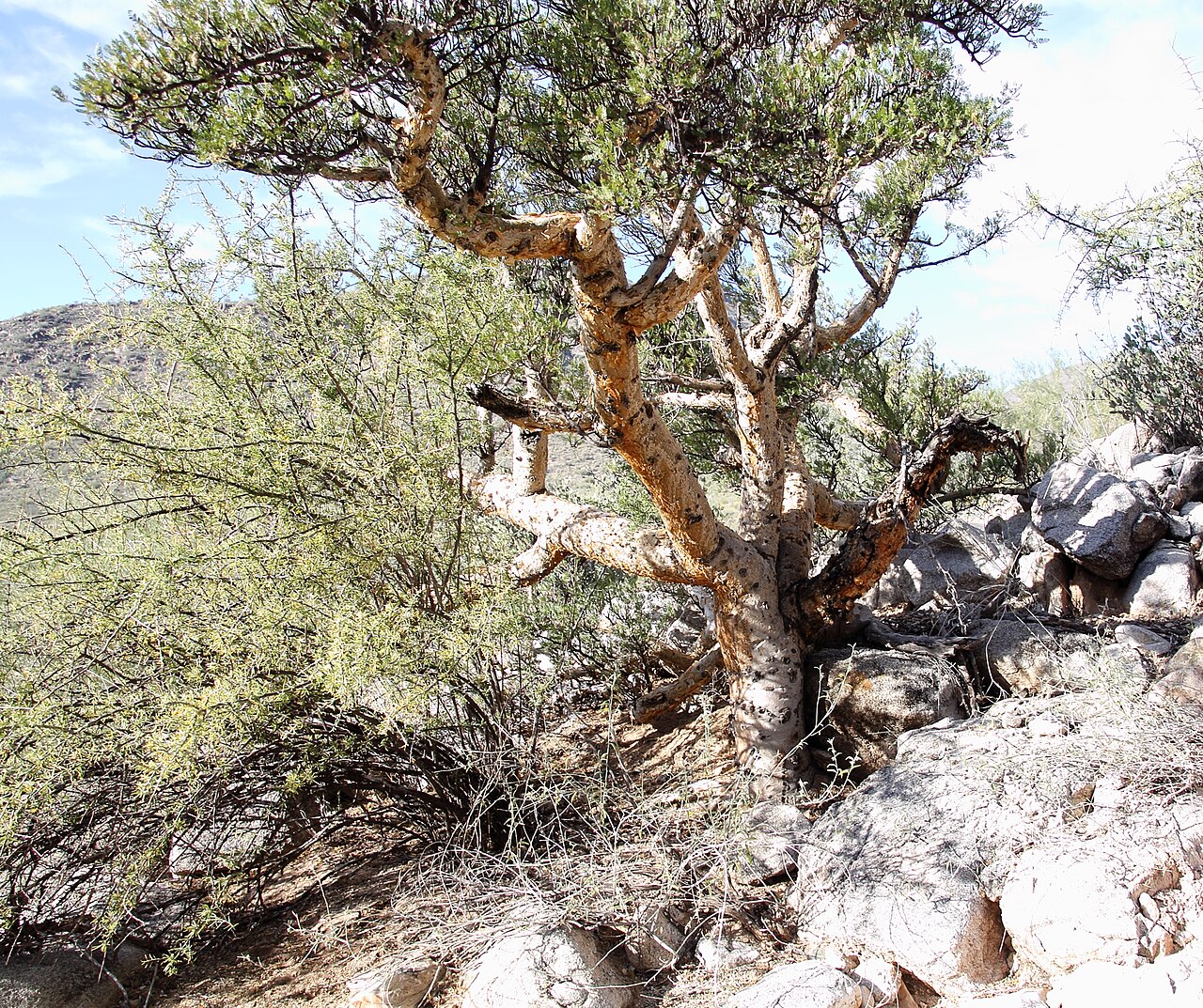
Bursera microphylla, commonly known as the Elephant Tree or Torote, is one of the most unusual and sought-after native trees of the American Southwest. Named for its swollen, pachyderm-like trunk and branches, this small, aromatic desert tree reaches the very northern edge of its range in extreme Southern California and Arizona, where it clings to rocky volcanic and granitic slopes far from any source of surface water.
Elephant Tree rarely exceeds 10 to 20 feet tall, with a thick, swollen, often multi-trunked base that tapers into slender, twisting branches covered in smooth, peeling, copper- to cream-colored bark. The small, fern-like compound leaves and tiny cream flowers give the tree a delicate appearance that belies its toughness — this is one of the most heat- and drought-adapted trees in North America, surviving conditions that few other woody plants can tolerate.
Because it is so rare and restricted within the United States — found in just a handful of counties in the lower Colorado Desert of California and south-central Arizona — Elephant Tree is a true specialty plant for desert gardeners. It is prized by cactus and succulent collectors and desert botanical gardens as a striking, long-lived accent, but should only be sourced from reputable nurseries rather than collected from the wild, given how limited its natural populations already are.
Identification
Elephant Tree grows as a small, often broader-than-tall tree or large shrub, typically 6 to 20 feet in height, with an unmistakable swollen trunk and lower branches that can reach a foot or more in diameter despite the tree’s modest overall size. The silhouette is gnarled and sculptural, often described as resembling a bonsai or a miniature baobab.
Bark & Stems
The bark is the tree’s signature feature: smooth, thin, and papery, peeling in small curls to reveal a pale, cream to greenish layer beneath a coppery to reddish-brown outer surface. All parts of the plant are aromatic, releasing a strong, resinous, turpentine-like scent when crushed or bruised — a trait shared with its tropical relative, copal (Bursera spp., widely burned as incense in Mexico).
Leaves
Leaves are small, odd-pinnately compound, 1 to 3 inches long, with 7 to 31 tiny, rounded to oblong leaflets giving the foliage a fine, feathery texture. The tree is drought-deciduous, dropping its leaves during the driest, hottest parts of the year and refoliating quickly after rain, an adaptation that conserves water during extended dry spells.
Flowers & Fruit
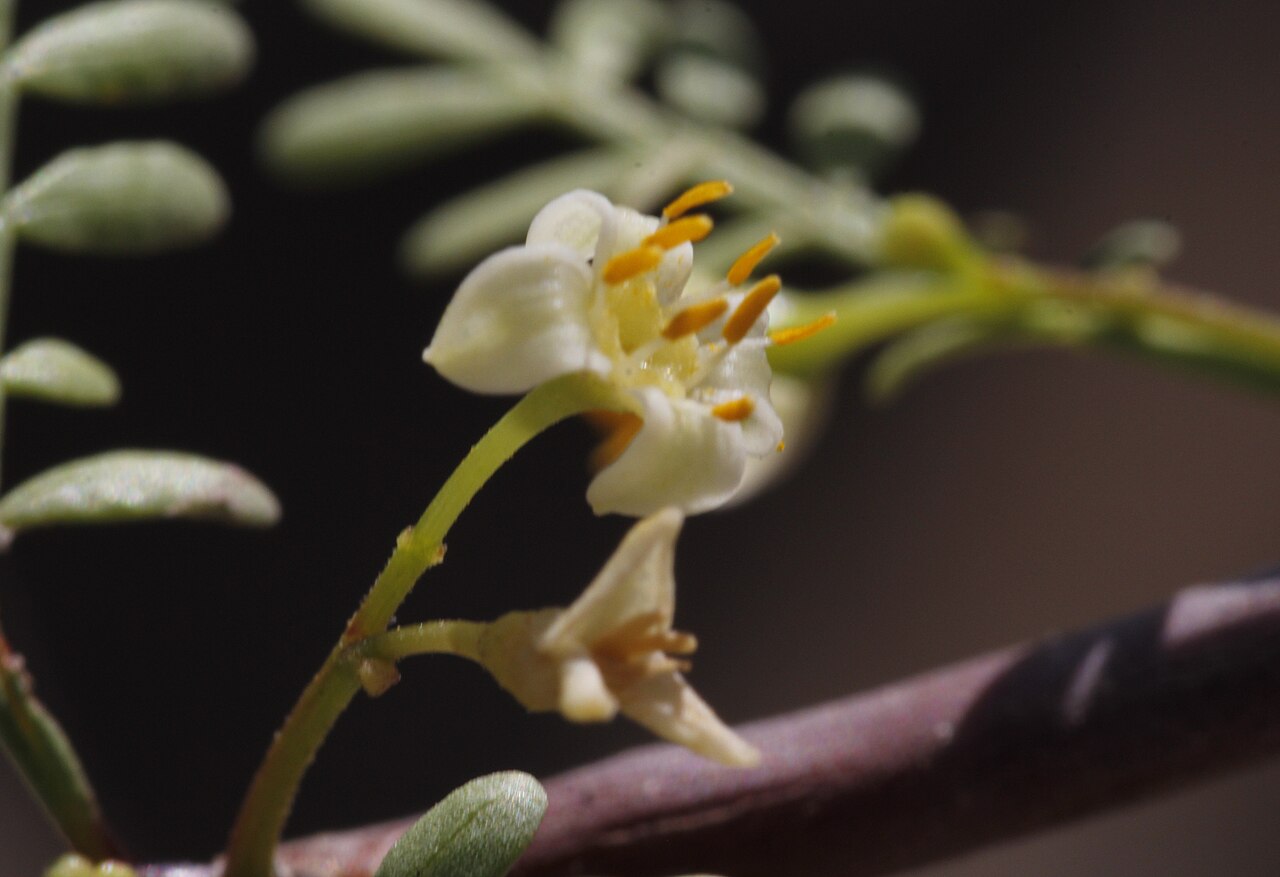
Small, inconspicuous cream to pale yellow flowers with five petals appear in clusters along the branches, typically after summer or winter rains. They are followed by small, three-angled fruits about ¼ inch long that split open to reveal a hard seed partly covered by a fleshy, red-orange aril — a food source for desert birds that also aids seed dispersal.
Quick Facts
| Scientific Name | Bursera microphylla |
| Family | Burseraceae (Torchwood/Incense) |
| Plant Type | Drought-deciduous Small Tree |
| Mature Height | 6–20 ft |
| Mature Spread | 8–15 ft |
| Growth Rate | Very slow |
| Sun Exposure | Full Sun |
| Water Needs | Very Low |
| Soil Type | Rocky, gravelly, well-drained desert soils |
| Soil pH | 7.0–8.5 (neutral to alkaline) |
| Bloom Time | After summer or winter rains |
| Flower Color | Cream to pale yellow |
| Fall Color | None (drought-deciduous, not fall-deciduous) |
| Fruit | Small 3-angled capsules with red-orange aril |
| Deer Resistant | Yes |
| USDA Hardiness Zones | 9–11 |
Native Range
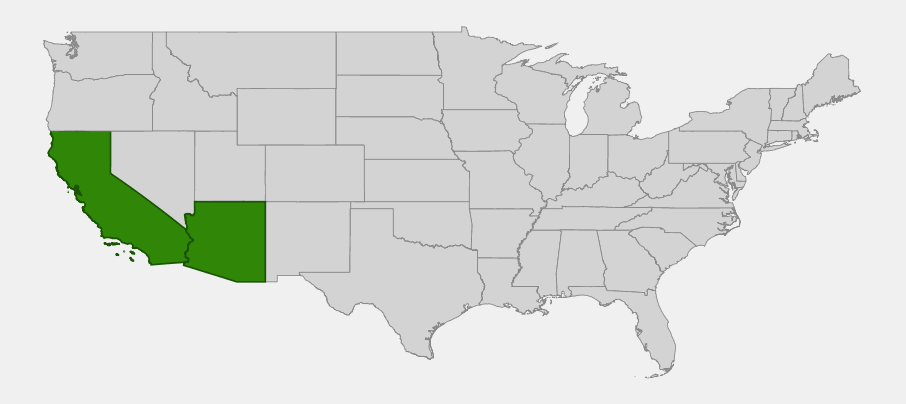
In the United States, Elephant Tree reaches only the northernmost edge of its range, occurring in the Sonoran and lower Colorado Desert of extreme southern Arizona and southeastern California. In California it is largely restricted to the Anza-Borrego Desert and nearby ranges of San Diego and Imperial counties. In Arizona it is found from the Kitt Peak area west to the mountains near Yuma, and north into the Phoenix-area ranges such as the White Tank and Table Top Mountains.
South of the border, the species is far more widespread and abundant across Baja California, Baja California Sur, and Sonora, Mexico, where it is a common and conspicuous element of Sonoran Desert scrub. U.S. populations represent a small, disjunct, and ecologically significant extension of this much larger Mexican range.
Elephant Tree grows almost exclusively on steep, rocky slopes, canyon walls, and volcanic or granitic outcrops between about 500 and 3,500 feet elevation, often in nearly soil-free crevices where few other woody plants can establish. This narrow habitat preference, combined with its limited U.S. range, makes it an uncommon and locally treasured desert specialty.
📋 Regional plant lists featuring Elephant Tree: California & Nevada · Arizona & New Mexico
Growing & Care Guide
Elephant Tree is a slow but rewarding plant for low-desert gardeners who can give it the hot, dry, rocky conditions it evolved with. It is not suited to humid climates, heavy soils, or regular irrigation regimes designed for typical landscape trees.
Light
Full, intense sun is essential. This species thrives in exposed, south-facing rocky sites that would scorch many other plants, and performs poorly with any significant shading.
Soil & Water
Extremely well-drained, rocky or gravelly soil is critical — Elephant Tree is highly susceptible to root rot in soils that retain moisture. Once established, it needs very little supplemental water and is best irrigated only occasionally and deeply during the hottest months, mimicking the sparse summer monsoon rains of its native range. Overwatering is the most common cause of failure in cultivation.
Planting Tips
Plant in late spring or early summer once soil has warmed, choosing a site with excellent drainage such as a raised bed, slope, or rock garden. Because of its slow growth, starting with a reasonably sized nursery specimen from a reputable desert-plant grower is far more practical than growing from seed for most gardeners. Avoid planting in lawn areas or anywhere near regular irrigation.
Pruning & Maintenance
Little pruning is needed or desired — the tree’s gnarled, swollen form is its chief ornamental appeal, and heavy-handed shaping diminishes its natural character. Remove only dead or damaged wood as needed. Established plants are essentially maintenance-free and require no fertilization.
Propagation
Elephant Tree can be grown from seed, which benefits from scarification and warm, consistent temperatures to germinate, or from hardwood cuttings taken during the growing season, which often root with bottom heat. Both methods are slow, and commercially available plants are typically several years old before reaching a modest landscape size.
Landscape Uses
This is a specialty plant best suited to the following settings:
- Desert accent or specimen tree in rock gardens and xeriscapes
- Cactus and succulent garden companion plant
- Container or bonsai-style cultivation for collectors
- Low-desert botanical and educational plantings showcasing Sonoran Desert flora
Wildlife & Ecological Value
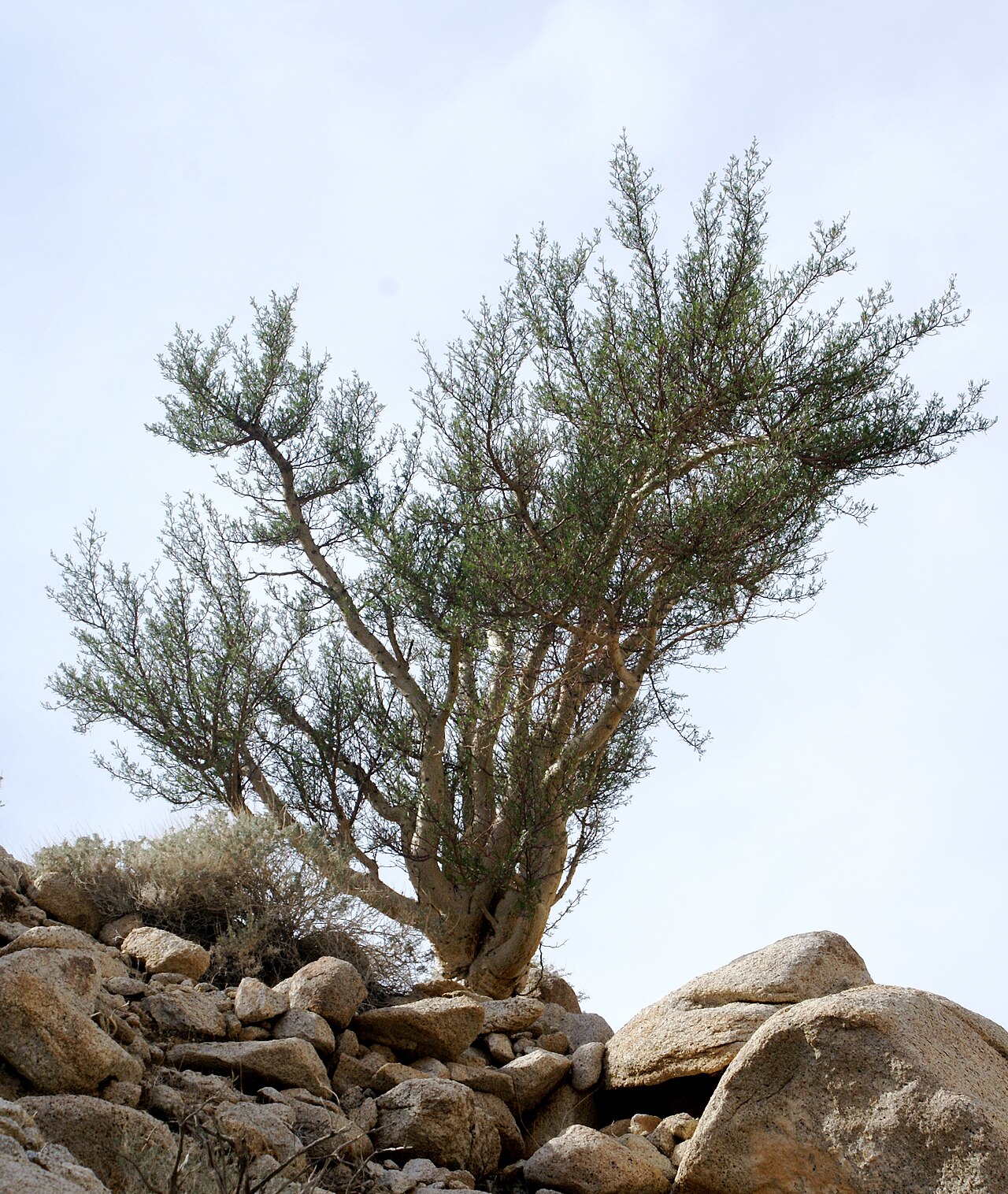
Despite its sparse distribution, Elephant Tree provides important, concentrated habitat value in the harsh rocky terrain where it grows, often serving as one of the few woody plants of any size on otherwise barren desert slopes.
For Birds
The fleshy, orange-aril-covered seeds are eaten by desert birds including Phainopeplas and various desert sparrows, which help disperse seed to new rocky outcrops. The branching structure also offers rare perching and limited nesting cover on slopes where few other trees grow.
For Mammals
Desert Bighorn Sheep are known to browse Elephant Tree foliage in parts of its range, and the dense, resinous wood and rocky habitat it occupies provide shelter for small desert mammals such as rock squirrels and various rodents that den among the boulders where it typically grows.
For Pollinators
The small cream flowers attract native bees and other desert insects during their brief bloom period after rains, offering a pulse of nectar and pollen resources in an otherwise resource-scarce rocky desert environment.
Ecosystem Role
As one of the few trees able to establish directly in rock crevices on steep desert slopes, Elephant Tree plays a disproportionate ecological role relative to its small population size, anchoring thin desert soils, providing the only significant woody structure in some rocky habitats, and supporting a community of wildlife in terrain too harsh for most other vegetation.
Cultural & Historical Uses
The Cahuilla people of Southern California historically used parts of the Elephant Tree in treating skin conditions and other ailments, drawing on the plant’s aromatic, resinous sap. The Seri people of Sonora, Mexico, whose traditional territory overlaps the heart of the species’ range, made extensive use of the wood — among other things, crafting it into boxes and other small items — and the resin has long been valued regionally in traditional practices, though as with any historical medicinal use, these applications are not a substitute for professional medical care.
The tree’s close relatives in the genus Bursera, widely known as copal, have been burned as incense throughout Mexico and Central America for centuries, and Elephant Tree’s own strongly aromatic resin places it within this same cultural tradition among desert and borderlands communities.
Today, Elephant Tree is primarily valued ornamentally, prized by cactus and succulent enthusiasts and desert botanical gardens throughout the low-desert Southwest for its sculptural form and rarity, and it remains a signature attraction of protected areas such as Anza-Borrego Desert State Park and Organ Pipe Cactus National Monument.
Frequently Asked Questions
Why is it called Elephant Tree?
The common name refers to the swollen, thick, pachyderm-like trunk and branches, which taper dramatically from a wide base into thin twigs — a shape reminiscent of an elephant’s leg or trunk.
Is Elephant Tree the same as the plant called “copal”?
Elephant Tree is in the same genus, Bursera, as the aromatic trees traditionally burned as copal incense in Mexico and Central America, though “copal” more commonly refers to other Bursera species farther south. All share the strong, resinous fragrance typical of the genus.
Where can I see Elephant Tree growing wild in the U.S.?
Anza-Borrego Desert State Park in California and Organ Pipe Cactus National Monument and the mountains near Yuma in Arizona are among the most accessible places to see this rare desert tree in its native habitat.
How much water does Elephant Tree need?
Very little. Mature plants are highly drought-adapted and should be watered only occasionally and deeply during the warm season; overwatering, especially in poorly drained soil, is the most common cause of failure in cultivation.
Can Elephant Tree be grown outside the low desert?
It is only reliably hardy in USDA zones 9–11 and needs intense sun, heat, and excellent drainage. It is not suited to humid, cold, or heavy-clay-soil climates, and is best grown within or near its native low-desert range, or in a container that can be protected from frost.

Looking for a nursery that carries Elephant Tree?
Browse our native plant nursery directory: California · Arizona
For more low-desert landscaping ideas, see our guides to the best evergreen trees to grow in Arizona and desert landscaping ideas.

