Fevertree (Pinckneya bracteata)
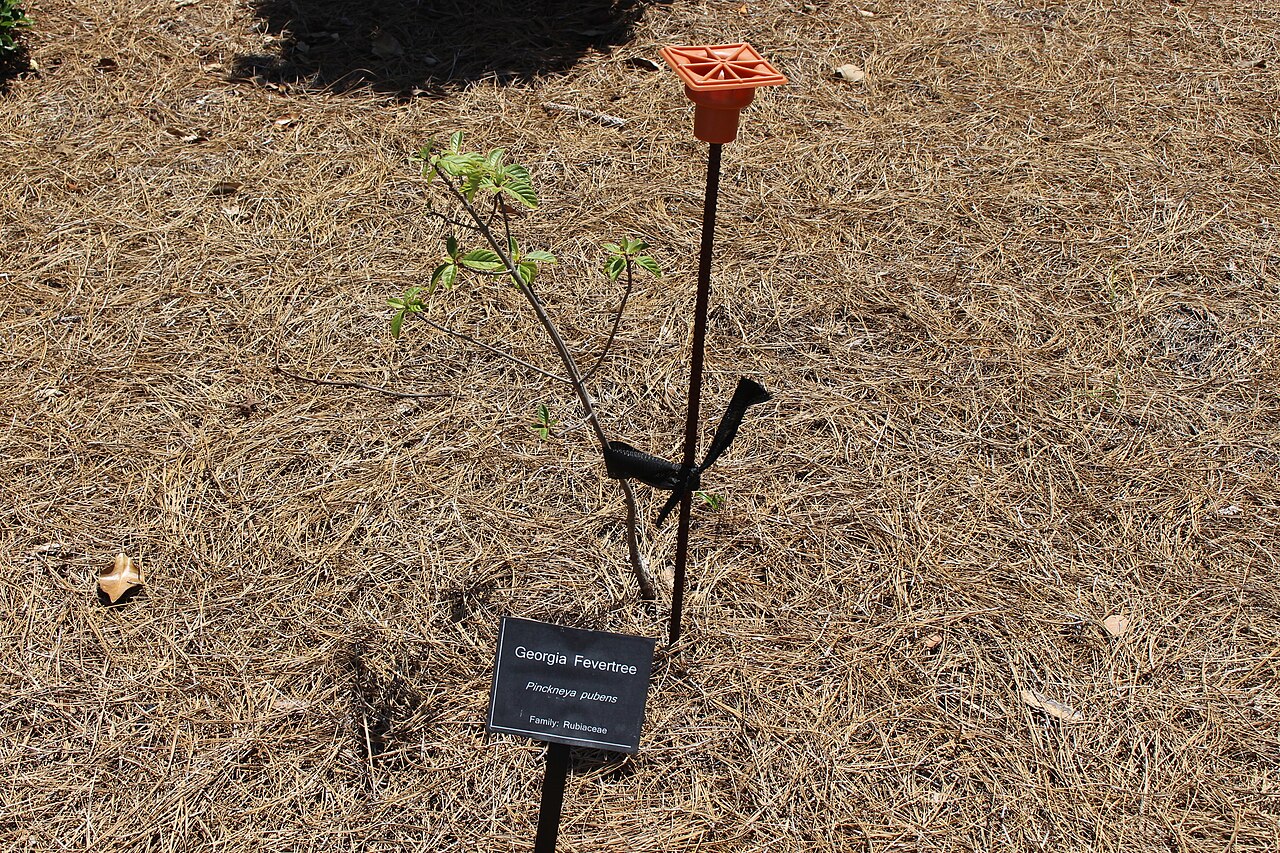
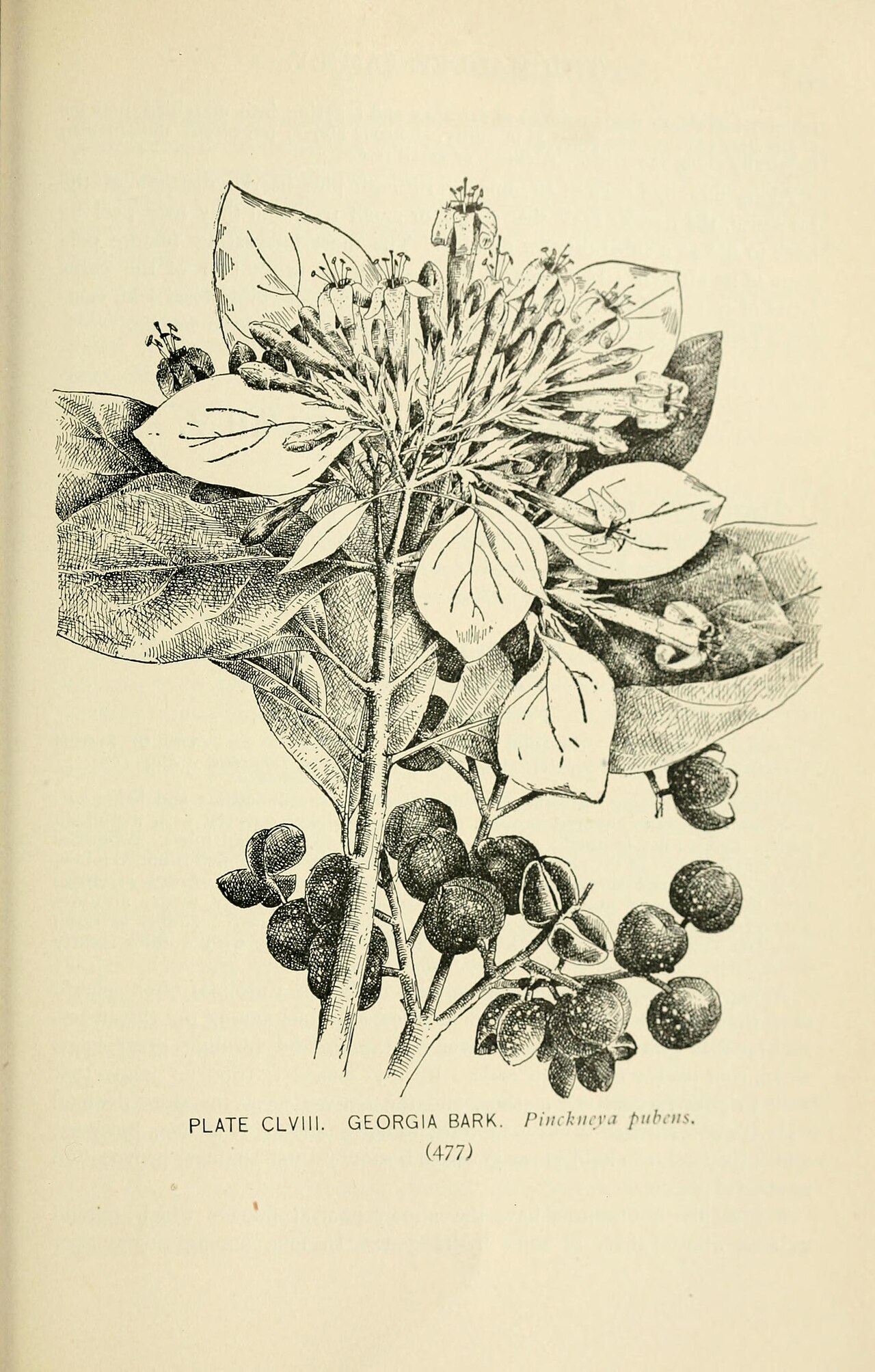
Pinckneya bracteata (also published as Pinckneya pubens), commonly known as Fevertree, Georgia Bark, or Feverbark, is one of the most distinctive small flowering trees of the southeastern Coastal Plain. Related to the tropical cinchona trees that gave the world quinine, Fevertree is the only member of its genus in North America, and it stands out from early summer onward with large, showy, pink-and-white bracts that most visitors mistake for petals.
This deciduous understory tree typically grows 10 to 25 feet tall along the swampy margins where it is found, forming an open, airy crown of broad, soft leaves above a slender trunk. Its true flowers are modest, tubular, and cream-colored with rose stripes, but each cluster is surrounded by dramatically enlarged, petal-like calyx lobes that flush pale pink to rose — giving the whole tree a flowering display more often associated with ornamental garden trees than wild swamp-edge natives.
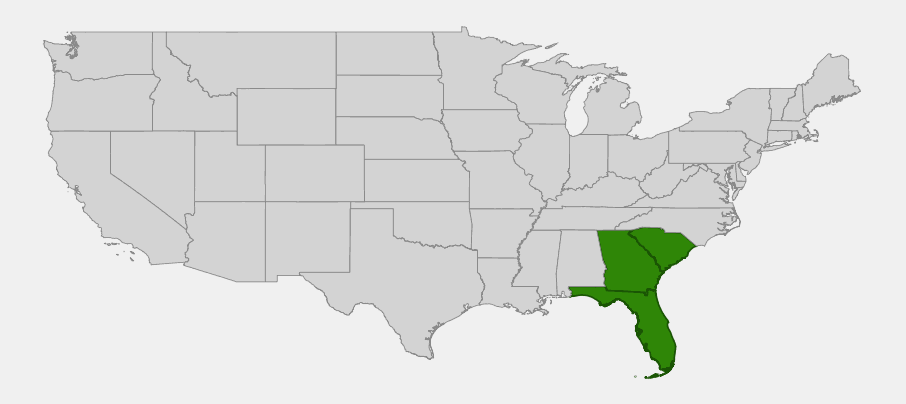
Fevertree is uncommon across its naturally narrow range of Georgia, northern Florida, and southeastern South Carolina, and is listed as a species of conservation concern in parts of that range. For gardeners with a consistently moist, acidic spot in the Deep South, it is an exceptional native alternative to more commonly planted ornamental flowering trees, offering a long bloom season and genuine regional rarity.
Identification
Fevertree grows as a small, often multi-trunked understory tree or large shrub, with slender branches and a loose, open canopy that allows dappled light to reach the swamp-margin plants growing beneath it. It rarely exceeds 25 feet in height and is usually considerably shorter where growing conditions are marginal.
Bark & Stems
The bark is thin, grayish-brown, and relatively smooth on young stems, becoming slightly furrowed with age. Twigs are stout and covered in fine, soft hairs (the “pubens” in its older scientific name refers to this downy pubescence), especially on new growth.
Leaves
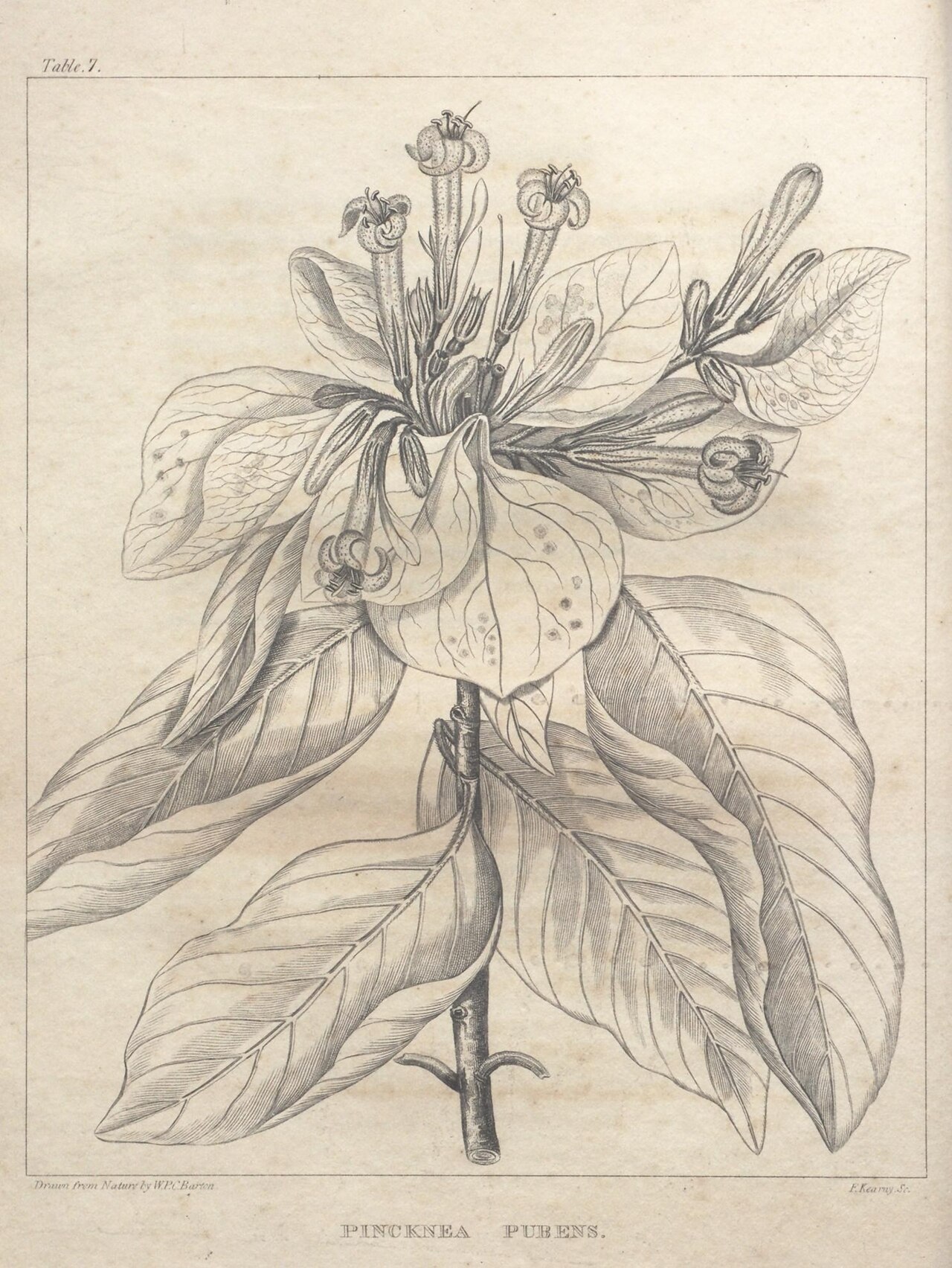
Leaves are large, opposite, broadly oval to elliptical, 4 to 8 inches long, with smooth margins and a soft, slightly fuzzy texture on the underside. They are deciduous, turning an unremarkable yellow-brown before dropping in fall, well after the tree’s striking summer flowering display has finished.
Flowers & Fruit
The true flowers are narrow, tubular, greenish-yellow to cream, about 1 to 1½ inches long, with rose-colored spots or stripes inside the throat. What draws the eye, however, are the enlarged, petal-like calyx lobes on many of the flower clusters — broad, leafy bracts up to 3 inches long that flush pale pink to rosy-white, mimicking large flower petals and giving the tree its showy, almost tropical appearance from a distance. Blooming runs from late spring into summer. The fruit is a small, rounded, woody capsule that splits to release numerous tiny, winged seeds in fall.
Quick Facts
| Scientific Name | Pinckneya bracteata (syn. Pinckneya pubens) |
| Family | Rubiaceae (Coffee/Madder) |
| Plant Type | Deciduous Small Tree / Large Shrub |
| Mature Height | 10–25 ft |
| Mature Spread | 8–15 ft |
| Growth Rate | Moderate |
| Sun Exposure | Part Sun to Part Shade |
| Water Needs | High; consistently moist to wet |
| Soil Type | Poorly drained, acidic, sandy to peaty soils |
| Soil pH | 4.5–6.0 (acidic) |
| Bloom Time | Late spring – summer |
| Flower Color | Cream with rose stripes; showy pink-white bracts |
| Fall Color | Undistinguished yellow-brown |
| Fruit | Small woody capsules with winged seeds |
| Deer Resistant | Moderate |
| USDA Hardiness Zones | 7–9 |
Native Range
Fevertree occurs in a narrow band of the southeastern Coastal Plain, found mainly across Georgia, northern Florida, and southeastern South Carolina. It is nowhere abundant, occurring as scattered populations rather than a continuous range, and has been documented as regionally rare or declining in parts of its distribution due to wetland drainage and habitat conversion.
Within this range, Fevertree is a specialist of wet, acidic, poorly drained sites: swamp forest edges, bayheads, pitcher-plant bogs, and the margins of blackwater streams and cypress ponds, typically from near sea level up to about 400 feet elevation. It usually grows as a scattered understory or edge tree rather than forming pure stands, often sharing its boggy habitat with pitcher plants and other wetland specialists.
Because it depends on consistently saturated, acidic wetland soils that have been extensively drained and altered across the Coastal Plain, Fevertree populations are considered vulnerable in several states, making conservation-minded cultivation in suitable garden conditions a meaningful way to support the species.
📋 Regional plant lists featuring Fevertree: Georgia, Alabama & Mississippi · North Carolina & South Carolina
Growing & Care Guide
Fevertree rewards gardeners who can offer it the consistently damp, acidic conditions of its native wetland-edge habitat. Dry, alkaline, or heavy clay sites are poor matches for this species, but a boggy corner of the garden or a rain garden setting can let it thrive.
Light
Partial sun to partial shade suits Fevertree best, echoing the dappled light of the swamp-forest edges and bayheads where it grows naturally. Too much deep shade reduces flowering, while full, unshaded Deep South sun can stress the tree if soil moisture is not consistently high.
Soil & Water
Consistently moist to wet, acidic soil is essential — this is not a drought-tolerant species. Sandy or peaty soils that stay damp, such as those found along pond margins or in low-lying rain garden areas, closely mimic its native habitat. Avoid alkaline soils, which can cause nutrient deficiencies and poor growth.
Planting Tips
Plant container-grown trees in early spring, choosing the lowest, dampest part of the landscape available — a pond edge, rain garden, or low spot that collects runoff. Mulch generously to retain moisture and moderate soil temperature, and water deeply and regularly during establishment and any dry spells, since this species does not tolerate extended drought.
Pruning & Maintenance
Minimal pruning is needed; remove only dead, damaged, or crossing branches to maintain an open, airy form that shows off the summer bloom display. Fevertree generally has few serious pest or disease problems when grown in appropriately wet, acidic conditions.
Propagation
Fevertree can be propagated from seed sown soon after collection in fall, or from softwood cuttings taken in early summer. Seed germination and seedling establishment benefit from consistently moist, humid conditions that replicate the swampy forest floor where the species naturally regenerates.
Landscape Uses
Fevertree’s showy summer bracts and wetland tolerance make it valuable in several garden settings:
- Rain garden or bog garden specimen tree
- Pond-edge and wetland restoration plantings
- Understory accent in moist, partially shaded native woodland gardens
- Conservation and native-plant collector gardens in the Deep South
Wildlife & Ecological Value
As an uncommon wetland-edge species, Fevertree provides a distinctive and locally important resource within the swamp and bog habitats of the southeastern Coastal Plain.
For Birds
Historical accounts and field observations note that Bachman’s Sparrow — a declining, habitat-specialist songbird of the Southeast — has long been associated with Fevertree habitat, as depicted in early Audubon-era natural history illustrations of the species perched among its branches. The open branching structure also provides cover for a variety of swamp-edge songbirds.
For Mammals
The dense wetland thickets where Fevertree often grows alongside Sweetbay Magnolia and Pond Cypress provide cover and travel corridors for White-tailed Deer and smaller mammals moving through Coastal Plain swamp-forest habitat.
For Pollinators
The tubular summer flowers attract a range of nectar-seeking insects and hummingbirds, which can access the narrow floral tube, while the showy pink bracts likely help draw pollinators’ attention from a distance in the dim light of the swamp-forest understory.
Ecosystem Role
Fevertree occupies a specialized niche along the transition between open wetland and forest, contributing to the structural diversity of bayhead and bog-margin plant communities that support a range of wetland-dependent wildlife, including rare and declining species associated with the Southeast’s shrinking acidic wetlands.
Cultural & Historical Uses
Fevertree earned its common name from the historical use of its bitter inner bark, which was employed by early American settlers and some Indigenous communities of the Southeast as a treatment for fevers, in a tradition echoing the use of its tropical relative, cinchona bark, as a source of quinine for treating malaria. The resemblance between the two plants’ bark and medicinal reputation is reflected in another old common name, Georgia Bark.
Botanist William Bartram documented the species during his travels through the Southeast in the 18th century, and it was later named in honor of South Carolina statesman Charles Cotesworth Pinckney. The genus Pinckneya remains monotypic in North America, with Fevertree as its sole representative — a distinction that has long made it a plant of interest to botanists and tree collectors.
Today, Fevertree’s historical medicinal use is of historical interest only; it is not a substitute for modern medicine, and the tree’s primary contemporary value lies in native-plant horticulture, wetland conservation, and its striking, little-known ornamental display.
Frequently Asked Questions
Is Fevertree related to the tree that produces quinine?
Yes, loosely. Fevertree belongs to the same plant family (Rubiaceae) as cinchona, the South American tree whose bark is the traditional source of quinine, and shares a similar bitter-bark, fever-remedy reputation, though the two are different genera.
What are the big pink “petals” on Fevertree flowers?
They are not petals but enlarged, petal-like calyx lobes — modified sepals that flush pink to white and surround some of the flower clusters, creating a showy display that lasts longer than the true flowers themselves.
How wet does the soil need to be for Fevertree?
Very wet to consistently moist. In the wild it grows at swamp margins, bayheads, and bog edges, and garden specimens perform best in rain gardens, pond margins, or other reliably damp, acidic sites rather than typical well-drained landscape beds.
Is Fevertree rare?
It is uncommon throughout its naturally narrow range in Georgia, northern Florida, and southeastern South Carolina, and its wetland habitat has been reduced by drainage and development, making it a species of regional conservation concern in parts of its range.
Can Fevertree be eaten or used medicinally today?
No. While its bark was historically used as a folk fever remedy, this is a historical practice, not a current recommendation, and the plant should not be used for self-treatment of any medical condition.

Looking for a nursery that carries Fevertree?
Browse our native plant nursery directory: Georgia · South Carolina
For more Southeastern flowering tree ideas, see our guides to the best flowering trees to grow in Georgia and best flowering trees for the Carolinas.