Santa Cruz Cypress (Hesperocyparis abramsiana)
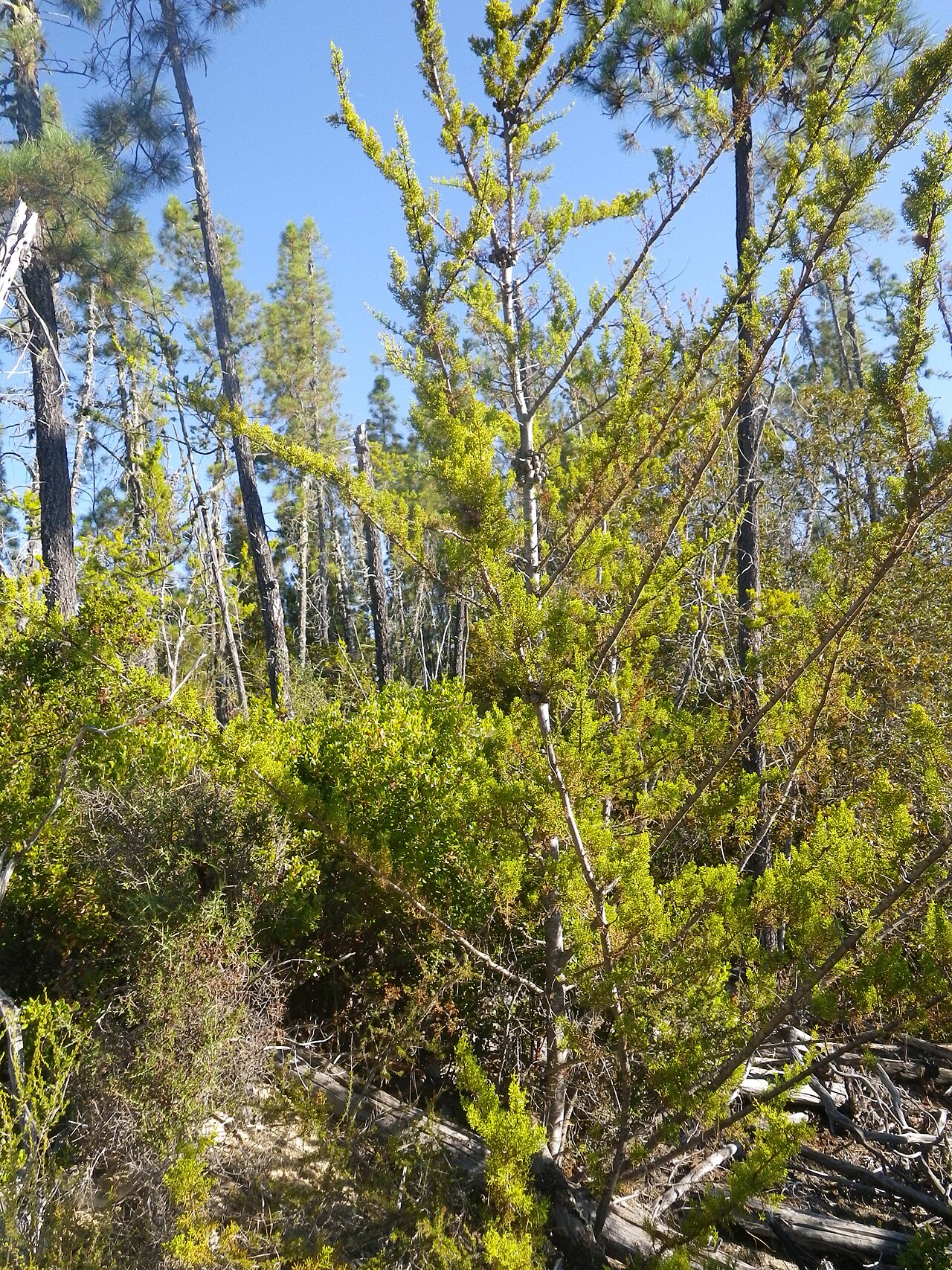
Hesperocyparis abramsiana (formerly classified as Cupressus abramsiana), commonly called Santa Cruz Cypress, is one of California’s rarest conifers — a narrow endemic restricted to a handful of groves in the Santa Cruz Mountains of Santa Cruz and San Mateo counties. It is a pyramidal evergreen tree with scale-like foliage and small, hard cones that depend on fire to release their seeds, a classic example of the “closed-cone” conifer strategy found in several of California’s rare cypresses.
Santa Cruz cypress exists today in only about five known natural groves, confined to sandstone and shale outcrops where competition from faster-growing trees is limited. It was federally listed as endangered in 1987 and was reclassified to threatened status in 2016 after decades of conservation work, though its total wild population remains small — on the order of a few thousand individuals across all known groves combined.
This is not a tree for casual garden use. It is legally protected, and because wild seed collection could harm already-fragile populations, any planting of Santa Cruz cypress should come from responsibly propagated nursery stock, ideally through conservation-oriented programs, and gardeners should never attempt to collect material from wild groves.
Identification
Santa Cruz cypress grows as a narrow to broadly pyramidal tree, typically 30 to 80 feet tall, with branches that often extend nearly to the ground. Growth is moderate, and trees can live for well over a century where fire does not intervene.
Bark & Stems
The bark is fibrous and grayish brown, developing thin vertical ridges with age. Branches are relatively slender for a cypress, 2 to 4 inches in diameter even on substantial limbs, giving mature trees a somewhat finer-textured silhouette than bulkier cypress species.
Leaves
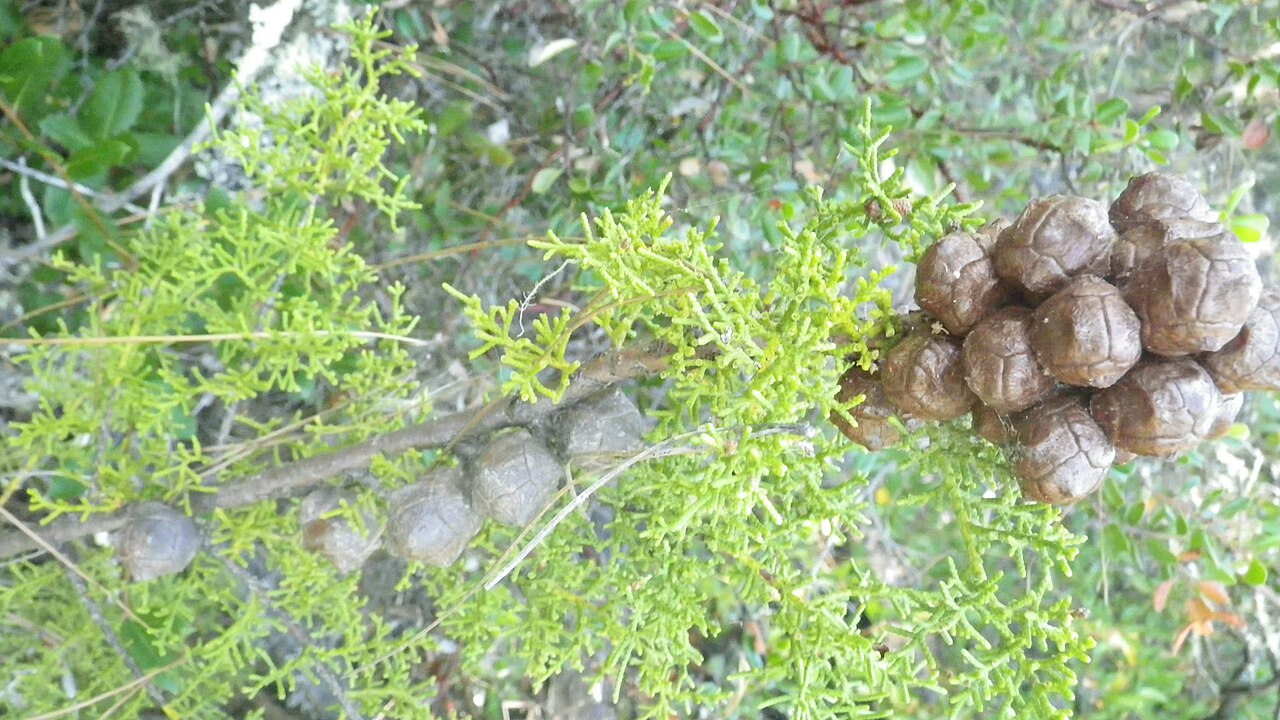
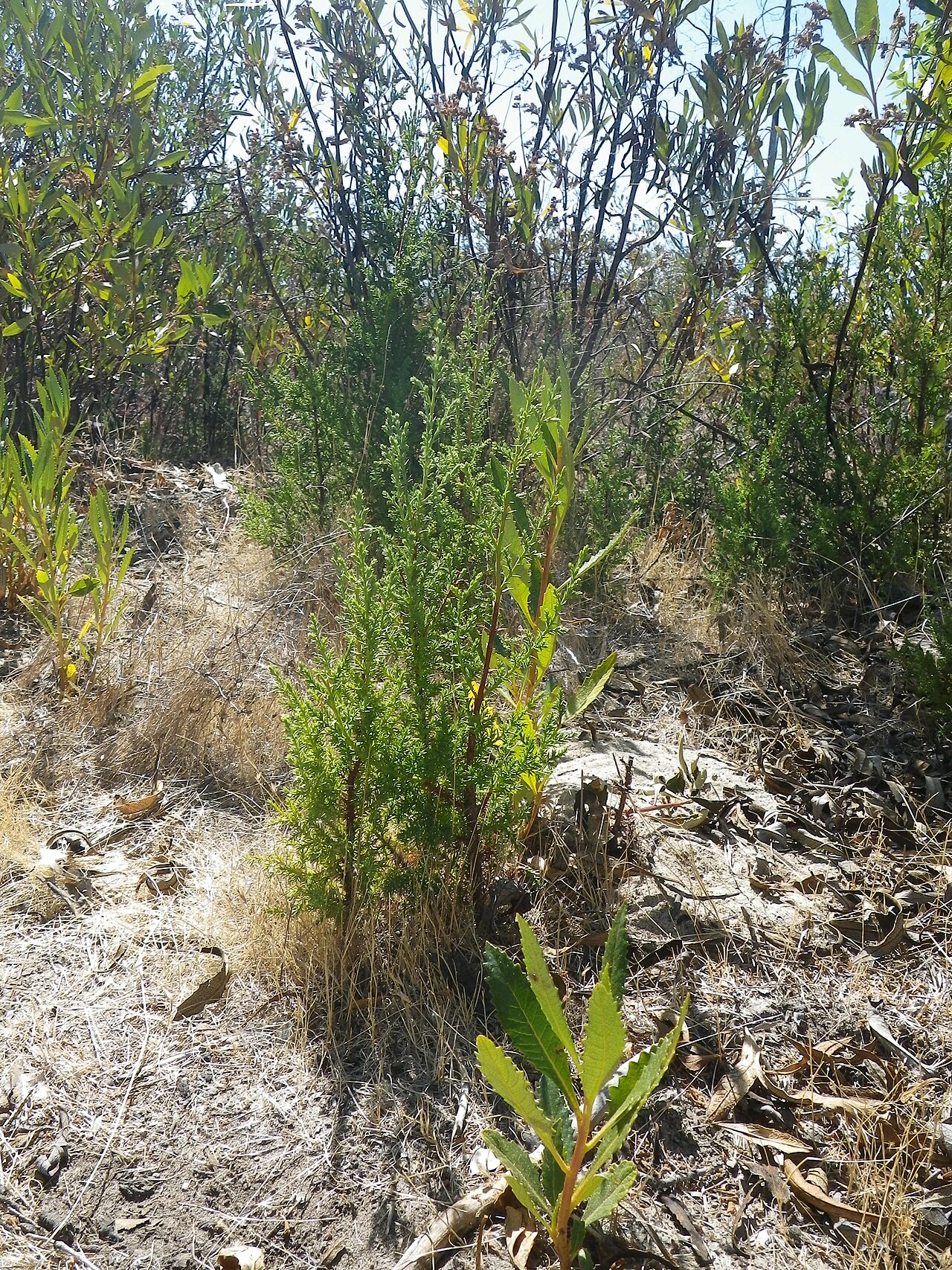
Foliage is made up of tiny, scale-like leaves pressed closely against slender branchlets, typical of cypresses, growing up to about ½ inch long and persisting for several years before shedding. The foliage is a bright to medium green and gives off a resinous scent when crushed.
Flowers & Fruit
Like other cypresses, Santa Cruz cypress is wind-pollinated, with small, inconspicuous pollen cones releasing pollen in late winter to spring. The rounded seed cones, about ¾ to 1¼ inches across, have distinctive pointed bumps (umbos) on each scale and mature over about two years. Crucially, the cones stay sealed shut with resin and remain on the tree indefinitely — sometimes for decades — until the heat of a fire melts the resin and triggers them to open and release seed onto the freshly burned, nutrient-rich ground below.
Quick Facts
| Scientific Name | Hesperocyparis abramsiana (syn. Cupressus abramsiana) |
| Family | Cupressaceae (Cypress) |
| Plant Type | Evergreen conifer tree |
| Mature Height | 30–80 ft |
| Mature Spread | Narrow to broadly pyramidal; branches often to the ground |
| Growth Rate | Moderate |
| Sun Exposure | Full Sun |
| Water Needs | Low once established |
| Soil Type | Poor, sandy or shaley, well-drained; sandstone-derived soils in the wild |
| Soil pH | Acidic to neutral |
| Bloom Time | Late winter–spring (pollen cones) |
| Flower Color | Not applicable (conifer; small brown pollen cones) |
| Fall Color | None (evergreen) |
| Fruit | Woody seed cones, ¾–1¼ in, stay closed until fire |
| Deer Resistant | Yes (resinous conifer foliage) |
| USDA Hardiness Zones | 8–9 |
Native Range
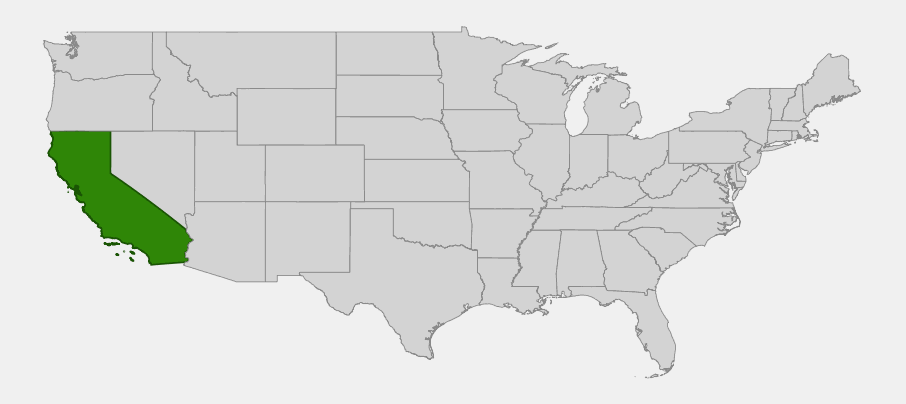
Santa Cruz cypress is one of the most range-restricted conifers in North America, known from only about five natural groves in the Santa Cruz Mountains of west-central California, spanning parts of Santa Cruz and San Mateo counties. Four small groves occur in Santa Cruz County; a fifth, more isolated grove sits on Butano Ridge in San Mateo County.
It grows on poorly developed sandstone or granitic soils at elevations of roughly 1,000 to 2,500 feet, in a climate of cool, foggy, wet winters and hot, dry summers typical of the Santa Cruz Mountains’ inland slopes. Within this narrow niche, it occurs in chaparral and closed-cone pine forest, often alongside knobcone pine and other fire-adapted species that share its strategy of serotinous, fire-triggered cones.
Because its total range is so small, Santa Cruz cypress is exceptionally vulnerable to habitat loss, altered fire regimes, and competition from invasive plants such as French broom and silver wattle, which can shade out seedlings. It was listed as federally endangered in 1987 and reclassified to threatened in 2016 following conservation gains, but it remains one of California’s rarest native trees and is protected by federal and state law.
📋 Regional plant lists featuring Santa Cruz Cypress: California & Nevada
Growing & Care Guide
Santa Cruz cypress is occasionally grown in cultivation, mainly in botanic gardens and conservation nurseries, and only from responsibly propagated stock. If you do obtain a nursery-grown plant, its care largely mirrors its wild habitat preferences.
Light
Give it full sun. In the wild it grows in open chaparral and pine forest gaps with strong light, and it performs best with plenty of direct sun.
Soil & Water
Plant in poor, well-drained soil; rich garden soil and regular fertilizing are unnecessary and can encourage weak, overly fast growth. Water occasionally during the first one to two years to establish roots, then reduce watering significantly — established trees are adapted to dry Mediterranean summers and need very little supplemental irrigation.
Planting Tips
Choose a well-drained slope or raised area rather than a low spot that collects water. Because Santa Cruz cypress needs open conditions to thrive, avoid planting it where larger, faster-growing trees will soon overtop and shade it out. Only plant nursery-propagated specimens obtained through legitimate, conservation-aware sources — never collect seed, cones, or seedlings from wild groves, which are protected by law.
Pruning & Maintenance
Minimal pruning is needed; remove dead branches as they occur. Avoid heavy shaping, which disrupts the tree’s naturally graceful pyramidal form. Watch for and remove any invasive shrubs such as French broom growing nearby, since these compete aggressively with cypress seedlings in restoration settings.
Landscape Uses
- Conservation and restoration plantings within its historic Santa Cruz Mountains range, the primary legitimate use of this species
- Botanic garden and arboretum specimens for public education about California’s rare conifers
- Specimen conifer in large native gardens with suitable dry, sandy, sunny conditions, using nursery stock only
Wildlife & Ecological Value
As a rare, localized conifer, Santa Cruz cypress plays an outsized role in the small patches of habitat where it grows, and its survival is intimately tied to fire.
For Pollinators
Being wind-pollinated, the tree does not rely on insect pollinators, but its dense evergreen canopy provides shelter for a variety of insects that in turn support birds and other wildlife in the surrounding chaparral.
For Birds
The dense, often low-branching canopy offers nesting and roosting cover for chaparral and woodland birds, a valuable resource in the Santa Cruz Mountains’ sandstone chaparral, where tall cover can be limited.
For Mammals
Small mammals use the cover of cypress groves for shelter, and the trees contribute to the overall structural diversity of the surrounding chaparral and closed-cone pine forest community.
Ecosystem Role
Santa Cruz cypress is a textbook example of a fire-dependent species: its cones stay sealed with resin for years or decades, opening only when fire heat melts the seal, releasing seed onto freshly cleared, nutrient-rich ground. This tight fire dependency means both too-frequent and too-infrequent fire can threaten the species — frequent fire kills young trees before they reach reproductive age and build a cone bank, while fire suppression prevents regeneration entirely, leaving aging groves with no young trees coming up beneath them.
Cultural & Historical Uses
Santa Cruz cypress has essentially no history of traditional use; its extreme rarity and restricted range meant it was never a significant resource for timber, fuel, or craft material, unlike more widespread California conifers.
Its primary human history is scientific and conservation-related. First collected in 1881 near Ben Lomond Mountain in the Santa Cruz Mountains, it was recognized early as an unusual, highly localized cypress and became an important case study in California conifer taxonomy. Its genus placement has shifted over time — it was long known as Cupressus abramsiana before New World cypresses were reclassified into the genus Hesperocyparis based on genetic studies distinguishing them from Old World cypresses.
Today the tree’s significance is almost entirely tied to conservation. Listed under the Endangered Species Act since 1987 and reclassified from endangered to threatened in 2016, it stands as one of California’s success stories in rare-plant management, even as its total population remains small and vulnerable to wildfire, development, and competition from invasive species.
Frequently Asked Questions
Is it legal to collect seeds or cuttings from wild Santa Cruz cypress?
No. Santa Cruz cypress is federally protected as a threatened species, and collecting material from wild groves without authorization is illegal and can further endanger already-small populations. Any garden or restoration planting should use responsibly propagated nursery stock.
Why does Santa Cruz cypress need fire to reproduce?
Its seed cones are sealed shut with resin and can remain closed on the tree for years or decades. Only the heat of a wildfire melts this resin seal, opening the cones and releasing seed onto the freshly burned, open ground that young cypress seedlings need to establish, since they cannot compete well in shaded, undisturbed habitat.
How many Santa Cruz cypress trees are left?
Wild populations are estimated at roughly a few thousand individuals spread across about five known groves in Santa Cruz and San Mateo counties, making it one of the most range-restricted conifers in North America.
Is Santa Cruz cypress the same as Cupressus abramsiana?
Yes. Cupressus abramsiana is the older scientific name; the species was reclassified into the genus Hesperocyparis along with other New World cypresses following genetic studies, so Hesperocyparis abramsiana is now the accepted name.
Can I plant Santa Cruz cypress in my garden?
Only if you can source responsibly propagated nursery stock, ideally through a conservation program. Given its threatened status and narrow natural range, it is better suited to botanic collections, conservation plantings, and restoration projects within its historic range than to typical home landscaping.

Looking for a nursery that carries Santa Cruz Cypress?
Browse our native plant nursery directory: California