Hawaiian Holly / Kāwaʻu (Ilex anomala)
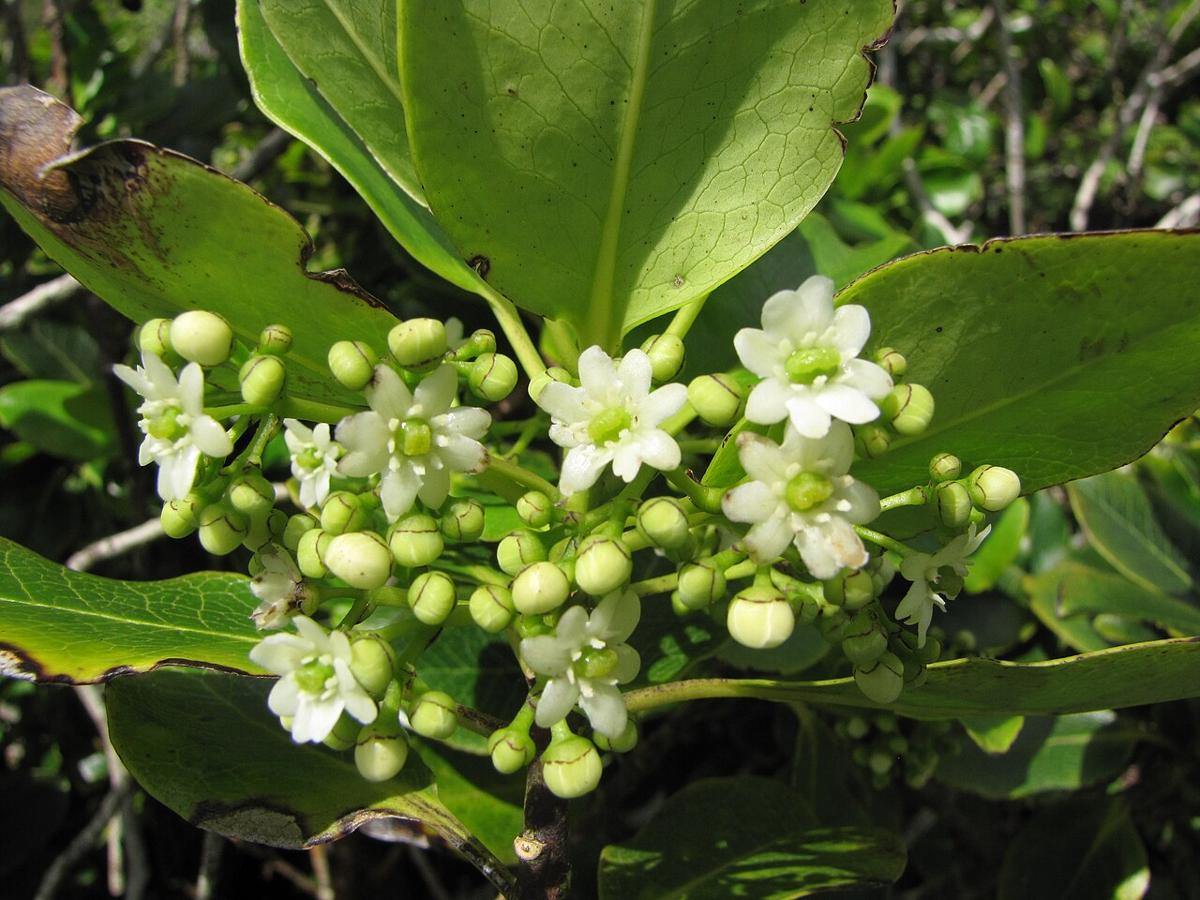
Ilex anomala, known in Hawaiian as Kāwaʻu and commonly called Hawaiian Holly (also ʻaiea on Kauaʻi), is the only member of the holly family (Aquifoliaceae) native to the Hawaiian Islands. Unlike the familiar spiny, red-berried hollies grown in mainland gardens, kāwaʻu has smooth-edged, glossy leaves and purple-black fruit — a reminder that “holly” here refers to genus, not to the prickly look most people associate with the word.
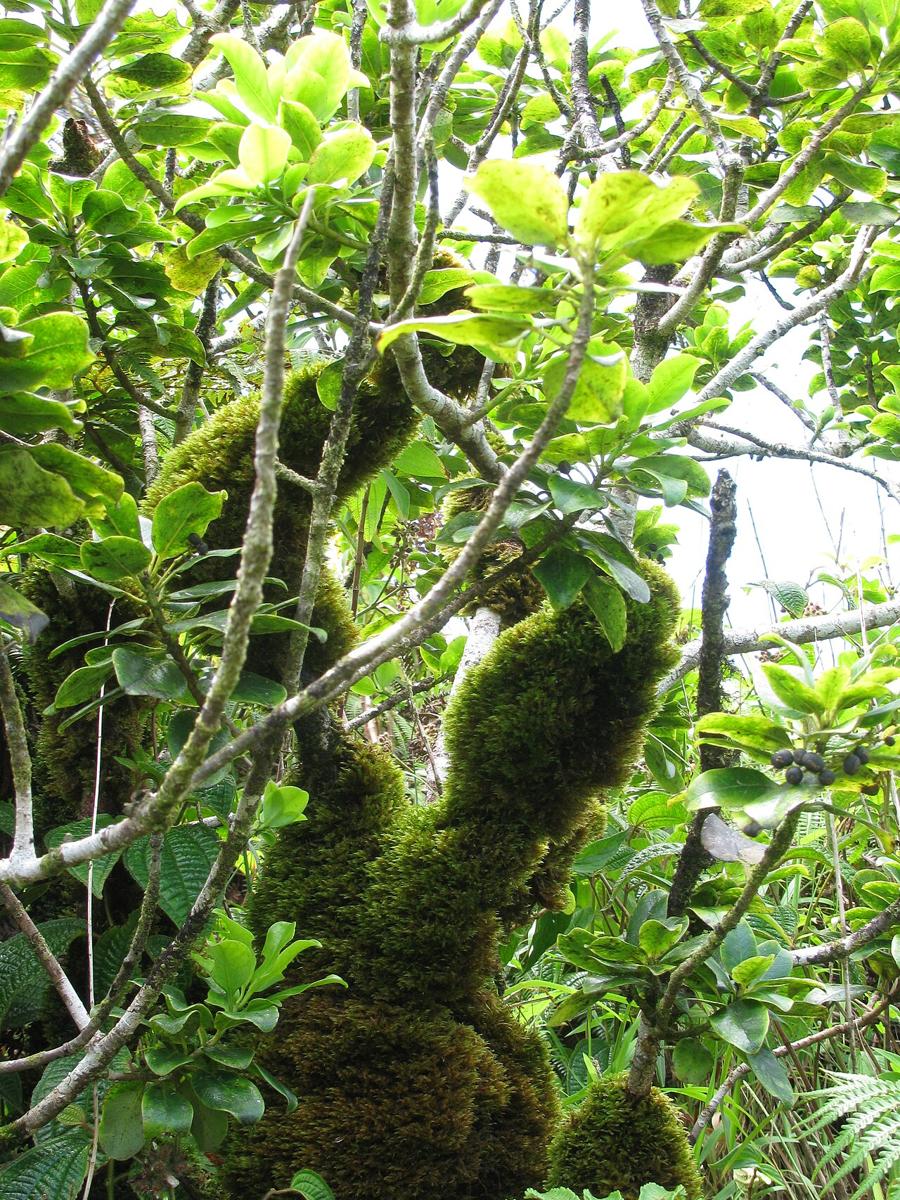
Kāwaʻu is indigenous rather than strictly endemic: the same species also grows wild in French Polynesia’s Marquesas and Society Islands, making it one of a relatively small number of native Hawaiian trees with a natural range that extends beyond the archipelago. Within Hawaiʻi, it is a widespread and often abundant tree of mesic and wet mountain forest on every main island, frequently found growing alongside ʻŌhiʻa Lehua (Metrosideros polymorpha) in mossy, cloud-forest conditions.
For Hawaiian gardeners with a cool, moist, higher-elevation site, kāwaʻu makes a handsome evergreen tree with glossy foliage, modest white flowers, and attractive purple fruit that draws native birds. It is a solid, relatively easy-care choice for native forest restoration and shaded landscape plantings alike.
Identification
Kāwaʻu is an evergreen shrub or tree, typically 15 to 50 feet tall in favorable forest conditions, with a dense, rounded crown and often moss-covered branches in the cool, wet upland forest where it is most common.
Leaves
Leaves are opposite to subopposite, simple, leathery, glossy dark green above and paler beneath, with smooth (not toothed or spiny) margins — a key difference from mainland hollies. Leaf shape and size vary somewhat across the species’ range, which spans a wide range of forest elevations and conditions.
Flowers
Small, white, four- or five-petaled flowers are borne in clusters at the leaf axils, opening from pale green buds. Individually modest, a well-flowered tree produces an attractive overall display, and the blooms draw small native and introduced pollinating insects.
Fruit
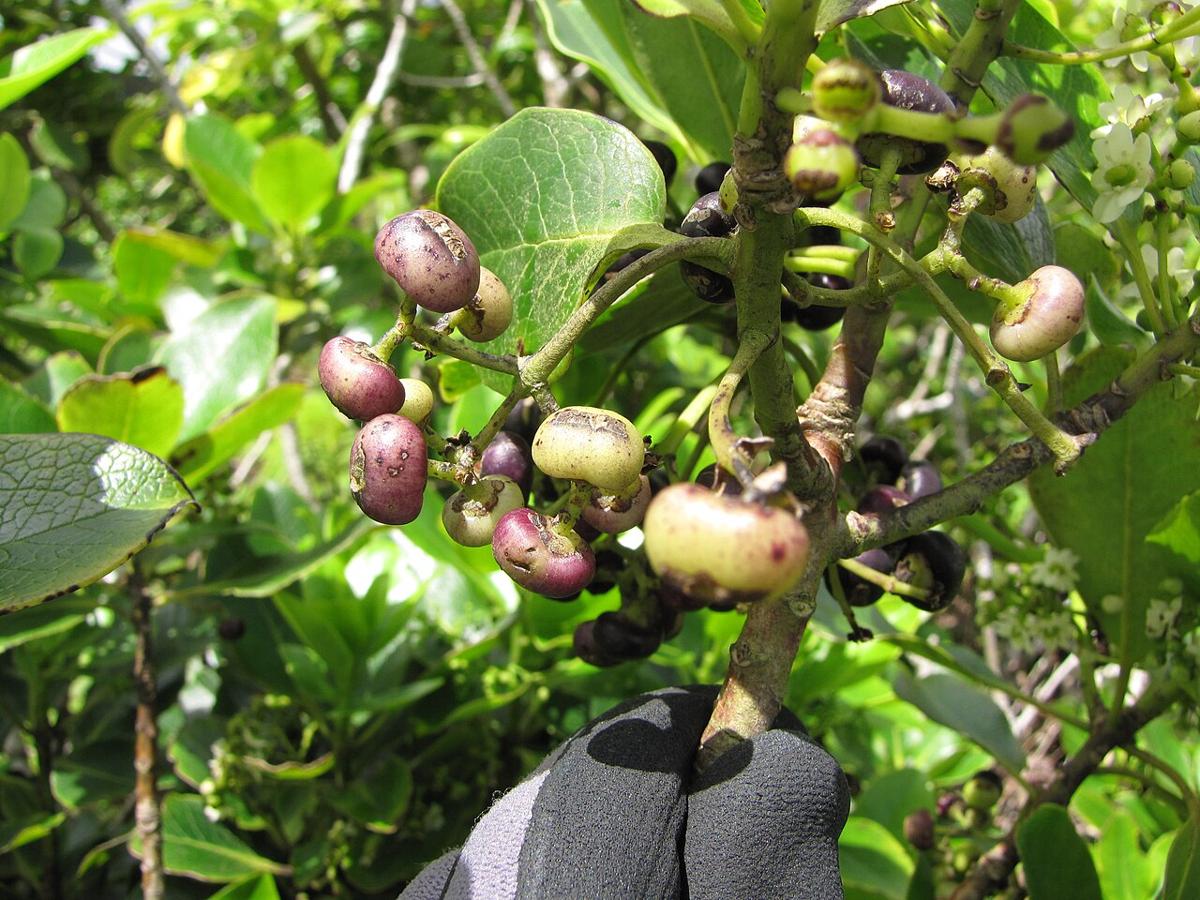
The fruit is a small, rounded drupe that ripens through shades of pink and purple to a dark purple-black when fully mature, typically containing several seeds. Clusters of ripening fruit in different stages of color are a reliable field mark and a valuable food source for native forest birds.
Quick Facts
| Scientific Name | Ilex anomala |
| Family | Aquifoliaceae (Holly) |
| Plant Type | Evergreen Shrub / Tree |
| Mature Height | 15–50 ft |
| Growth Rate | Slow to Moderate |
| Sun Exposure | Partial Shade to Full Sun |
| Water Needs | Moderate to High |
| Soil Type | Moist, humus-rich mountain forest soils |
| Flower Color | White |
| Fruit | Purple-black drupe |
| Special Trait | Only native Hawaiian holly; smooth (not spiny) leaves |
| USDA Hardiness Zones | 10–11 |
Native Range
Kāwaʻu is indigenous to the Hawaiian Islands, occurring on all the main islands, and is also native to the Marquesas and Society Islands of French Polynesia. In Hawaiʻi it typically grows in mixed mesic and wet forest at elevations of roughly 2,000 to 4,600 feet, often in cloud forest conditions with abundant moss and epiphytes.
Within the United States it is found only in Hawaiʻi and does not occur in the continental states.
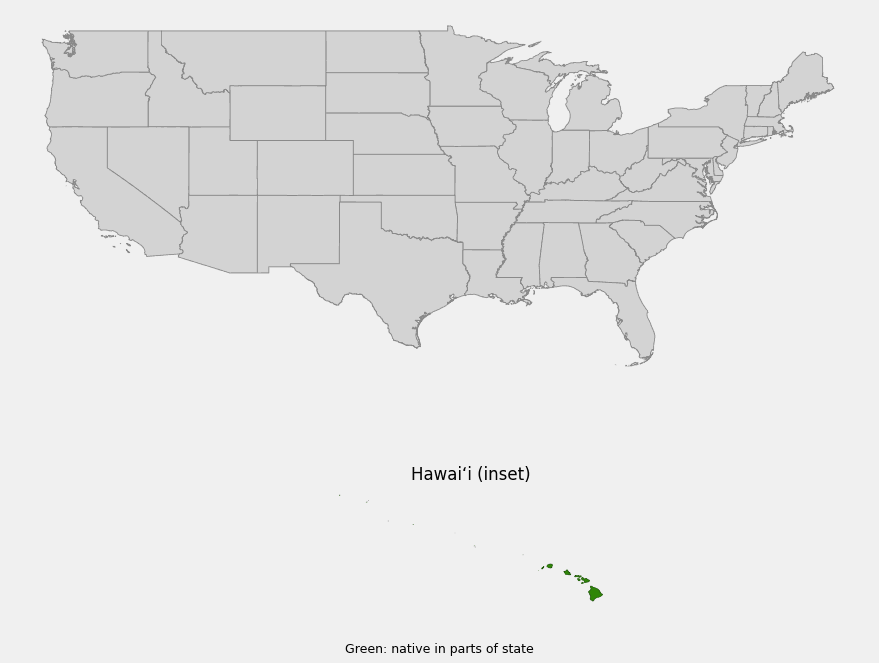
📋 Regional plant lists featuring Hawaiian Holly: Hawaii
Growing & Care Guide
Kāwaʻu is a good choice for Hawaiian gardens at cooler, higher-elevation or consistently moist sites, where it grows into an attractive, dense evergreen tree with relatively low maintenance needs.
Light & Site
It tolerates a range of light from partial shade to full sun, reflecting its presence in both forest understory and more open canopy gaps in the wild. Choose a site with good air movement, since it is adapted to breezy upland forest conditions.
Soil & Water
Moist, humus-rich mountain forest soils suit it best, with consistent rainfall or irrigation rather than drought. It is not a plant for hot, dry leeward gardens; it performs best where rainfall is reliable or supplemental watering can mimic its native cloud-forest conditions.
Planting Tips
Choose a cooler, wetter garden microclimate if possible, and mulch well to retain moisture around young plants. Pair it with other mesic to wet-forest natives for a naturalistic planting that echoes its wild forest associations.
Pruning & Maintenance
Minimal pruning is required; shape lightly if a more formal hedge or screen form is desired, since the dense evergreen foliage responds reasonably well to occasional trimming. Remove dead wood as needed.
Pests & Problems
Kāwaʻu has no major pest or disease problems reported in cultivation. In consistently wet garden settings, watch drainage carefully, since prolonged waterlogging rather than ample rainfall is what causes root problems in most upland Hawaiian forest natives.
Landscape & Restoration Uses
- Wet and mesic forest restoration at mid to upper elevations
- Evergreen screening or hedging in cooler native gardens
- Bird-friendly native plantings, for its fruit
- Mixed plantings alongside ʻŌhiʻa Lehua and other wet-forest natives
Wildlife & Ecological Value
Kāwaʻu is a widespread and ecologically significant component of Hawaiian mountain forest, valuable both for its fruit and its role in forest structure.
For Birds
The purple-black fruit is eaten by native and introduced forest birds, which help disperse seeds throughout the mesic and wet forest zones where kāwaʻu grows. Because it is widespread and often fruits reliably, it is one of the more dependable native food sources in upland Hawaiian forest.
Ecosystem Role
As one of the more common native trees across Hawaiʻi’s mesic and wet mountain forests, kāwaʻu contributes substantially to canopy and sub-canopy structure, moisture retention, and habitat complexity, often supporting mosses, ferns, and other epiphytes on its branches. Its wide elevational and geographic range makes it a valuable, resilient anchor species for native forest restoration projects across the islands.
Cultural & Historical Uses
Kāwaʻu (also recorded as kaʻwaʻu, and ʻaiea on Kauaʻi) has long been recognized as a distinct and useful forest tree in Hawaiian tradition, valued among other things for wood used in implements and construction in some accounts from the Hawaiian Ethnobotany Database. As a common, widespread tree across the main islands’ mountain forests, it would have been a familiar sight to Hawaiians traveling through upland forest zones for resource gathering.
Because the species is shared with the Marquesas and Society Islands of French Polynesia, kāwaʻu also reflects the broader botanical connections across the Polynesian Pacific, where closely related or identical species often appear across island groups separated by thousands of miles of ocean.
Frequently Asked Questions
Is Hawaiian holly related to the holly used for Christmas decorations?
Yes, it belongs to the same genus, Ilex, as English and American holly, but kāwaʻu has smooth, non-spiny leaves rather than the prickly foliage most people associate with holiday holly.
Is kāwaʻu only found in Hawaiʻi?
No — while it is a widespread native tree throughout the Hawaiian Islands, the same species also occurs naturally in the Marquesas and Society Islands of French Polynesia.
Does kāwaʻu need a lot of water?
Yes, relative to many Hawaiian natives; it is adapted to moist mesic and wet mountain forest and performs best with consistent rainfall or irrigation rather than drought conditions.
Is kāwaʻu fruit poisonous?
Specific toxicity data for kāwaʻu fruit is limited, and like most Ilex species, it should be treated as a wildlife food plant rather than something for people to eat; do not consume the fruit.
Can kāwaʻu grow in full sun?
It tolerates a range of light conditions from partial shade to full sun, but performs best with reliable moisture regardless of light level, since it is not a drought-adapted species.
How can I tell kāwaʻu apart from ʻōhiʻa lehua when they grow together?
Kāwaʻu has smooth-margined, glossy opposite leaves and small white flowers followed by purple-black fruit, while ʻōhiʻa lehua has fuzzy new growth and showy red (or sometimes yellow or orange) pompom-like flowers — once you have seen both side by side in the same mossy forest, the difference in leaf texture and flower shape becomes easy to spot.

Looking for a nursery that carries Hawaiian Holly?
Browse our native plant nursery directory: Hawaii