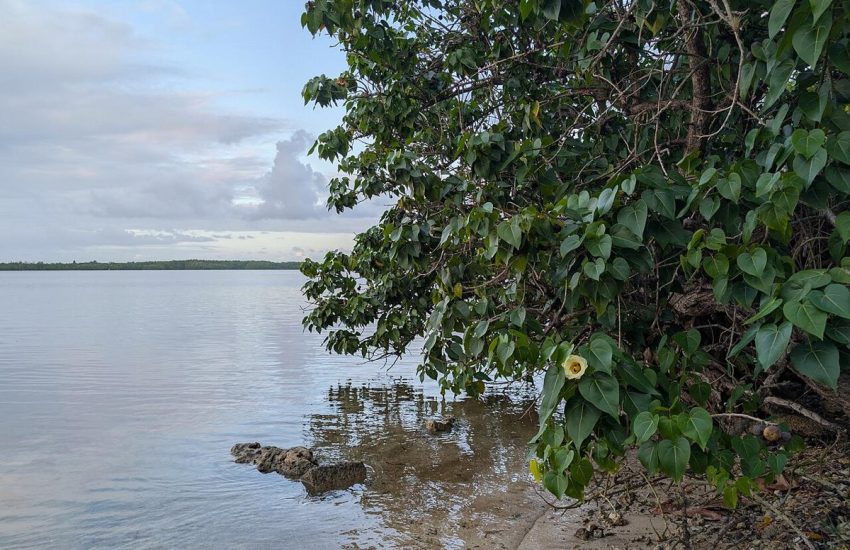
Kōpiko (Psychotria mariniana)
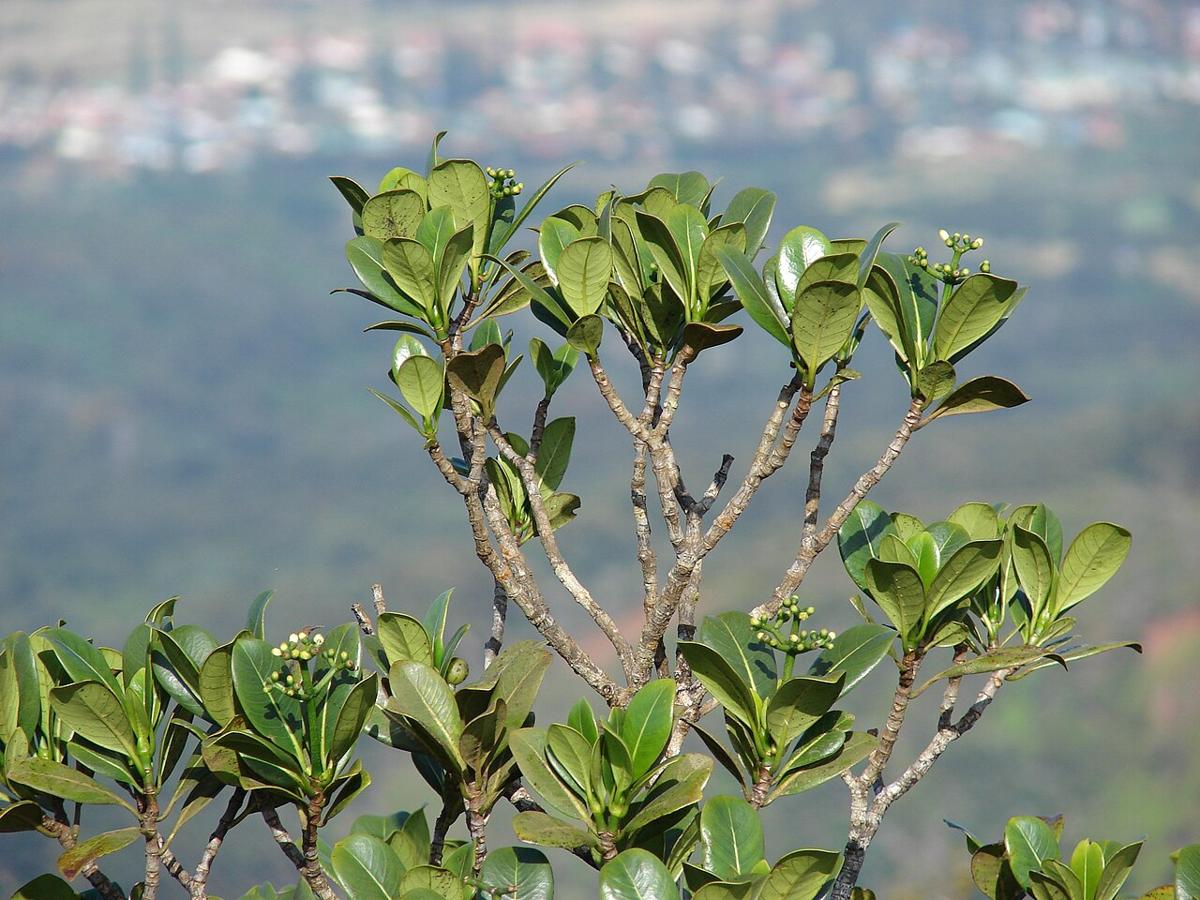
Psychotria mariniana, known in Hawaiian as Kōpiko, is a small to medium tree in the coffee family (Rubiaceae), the same family as commercial coffee, and is endemic to the Hawaiian Islands. The Hawaiian name kōpiko is shared across all the native Hawaiian Psychotria species — there are several, each occupying somewhat different islands and elevations — so this particular species is sometimes distinguished in field guides simply as kōpiko or forest wild coffee.
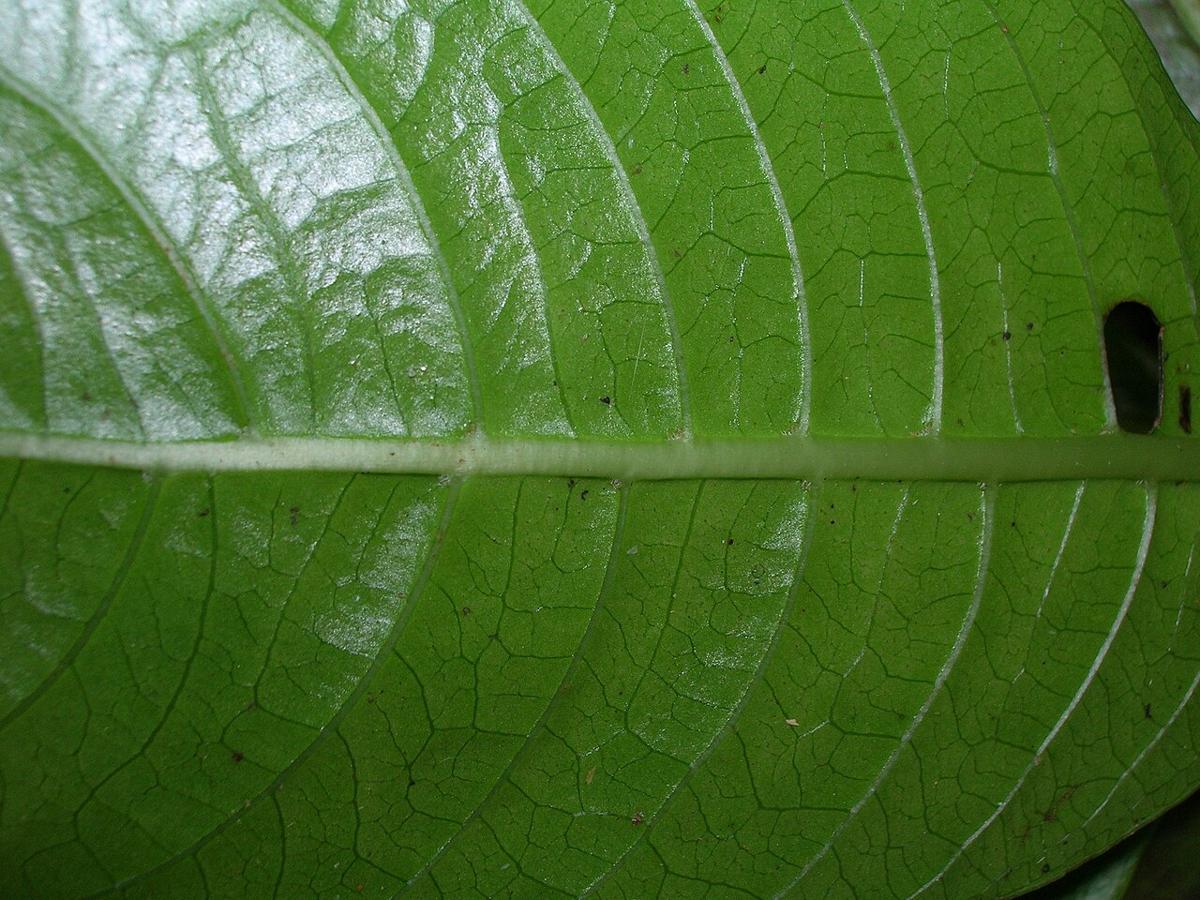
The name itself has a botanical story behind it: a distinctive line of raised glands runs along the underside of the midrib of each leaf, and piko means “navel” in Hawaiian, giving kōpiko its name. This leaf feature, together with the plant’s dark bark, glossy evergreen foliage, and small orange fruit, makes it identifiable once you know what to look for, even though the small white flowers themselves are easy to overlook.
Kōpiko grows naturally in mesic and wet forest understory on several islands, often in the shaded company of other native trees. It is closely related to Kōpiko (Psychotria hawaiiensis), a sibling species found on different islands and sometimes at different elevations; the two share the Hawaiian name and general look but are distinct species with their own ranges.
Identification
Kōpiko is a tree of variable size, typically a shrub or small tree in the understory but capable of reaching larger stature in favorable forest sites, with dark, somewhat rough bark and an evergreen, leafy crown.
Leaves
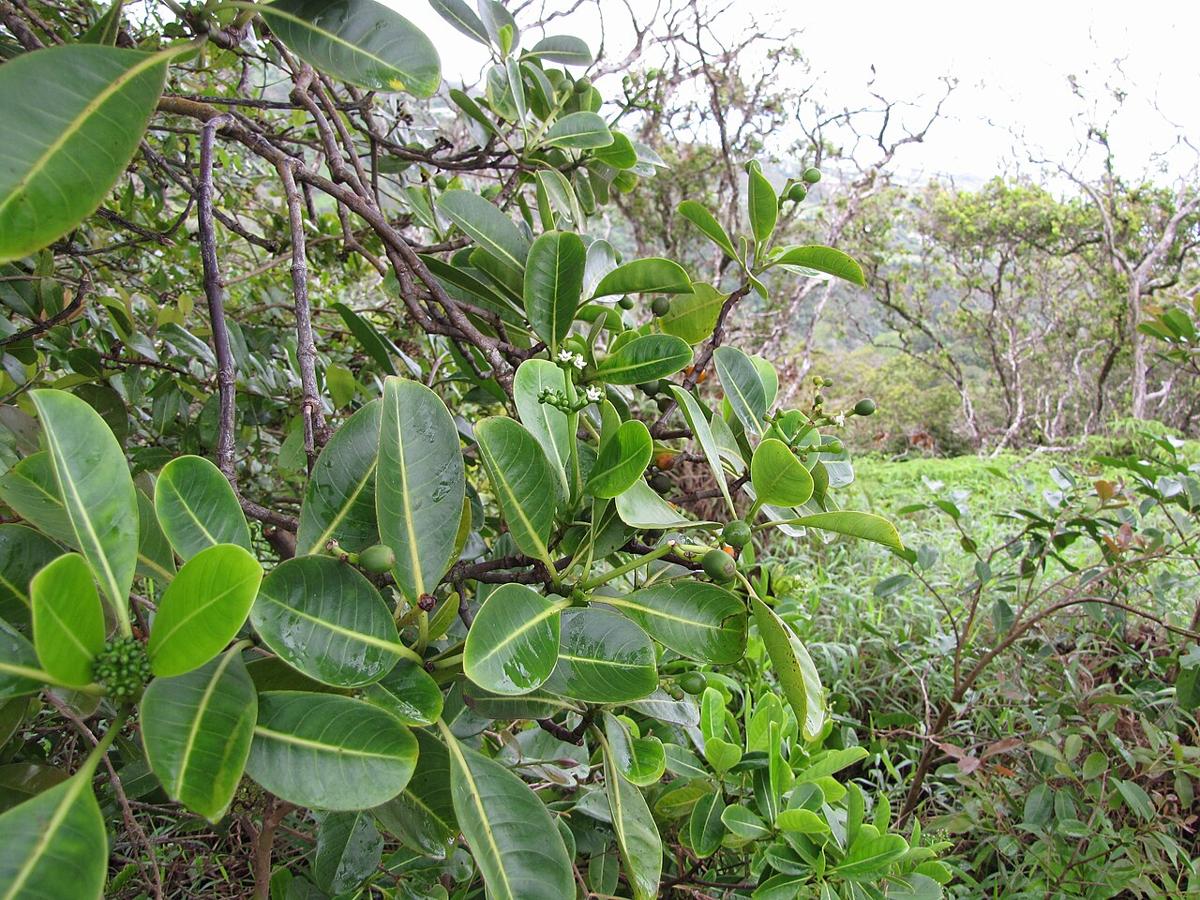
Leaves are opposite, simple, leathery, and glossy dark green, typically oval to elliptic with a prominent pale midrib. The telltale identification feature is a row of small pit-like glands running along the underside of the midrib — the source of the plant’s Hawaiian name — visible on close inspection of a mature leaf.
Flowers
Small white, star-shaped flowers are borne in branched clusters at the leaf axils or branch tips, opening from pale green buds. They are modest in size and not a major ornamental feature, typical of the Rubiaceae’s smaller-flowered genera.
Fruit
The fruit is a small, rounded, two-seeded orange drupe, ripening from green through the clustered buds to a bright orange when mature. Ripe fruit is an important and conspicuous food source for native and introduced forest birds, and its color makes fruiting kōpiko easy to spot in the forest canopy.
Quick Facts
| Scientific Name | Psychotria mariniana |
| Family | Rubiaceae (Coffee) |
| Plant Type | Evergreen Tree / Large Shrub |
| Mature Height | 10–25 ft (variable) |
| Growth Rate | Slow to Moderate |
| Sun Exposure | Partial Shade to Shade |
| Water Needs | Moderate to High |
| Soil Type | Humus-rich, well-drained forest soils |
| Flower Color | White |
| Fruit | Small orange drupe |
| Special Trait | Gland-lined midrib gives the plant its Hawaiian name |
| USDA Hardiness Zones | 10–11 |
Native Range
Kōpiko is endemic to the Hawaiian Islands, where it is recorded on Kauaʻi, Oʻahu, Molokaʻi, Lānaʻi, and Maui, growing in mesic to wet forest understory from lowland elevations up into montane forest. It is not documented as native to Hawaiʻi Island.
It is not native anywhere outside the Hawaiian Islands and does not occur in the continental United States.
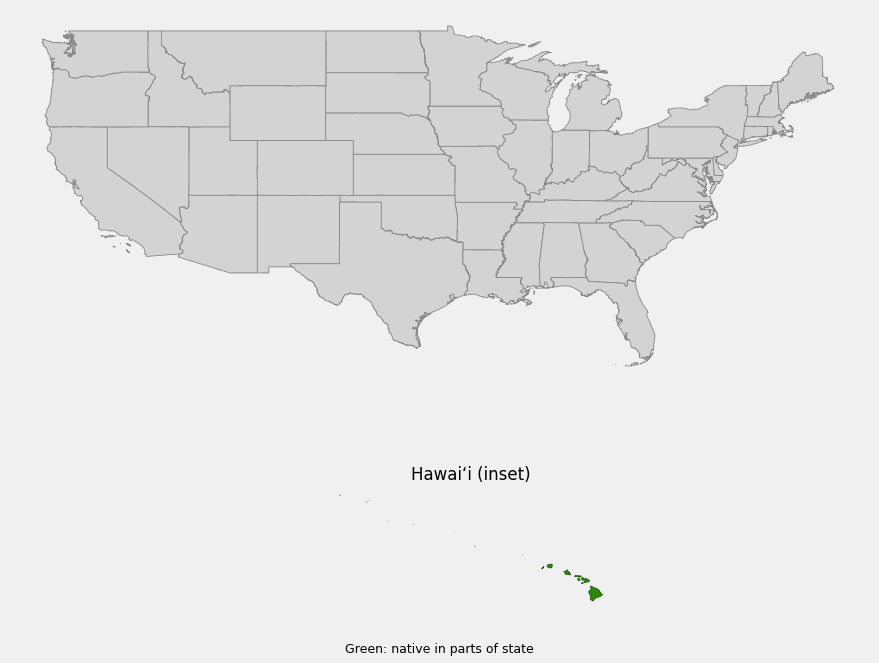
📋 Regional plant lists featuring Kōpiko: Hawaii
Growing & Care Guide
Kōpiko works well as an understory native in shaded, moist Hawaiian gardens, especially mixed native plantings designed to recreate forest layering rather than open, sunny landscapes.
Light & Site
Give it partial shade to shade, mimicking its natural understory position beneath taller forest canopy. It is not suited to full, exposed sun, which can scorch its glossy leaves.
Soil & Water
Humus-rich, well-drained forest soils suit it best, with consistent moisture rather than drought. It is adapted to the steadier rainfall of mesic and wet forest and does not tolerate prolonged dry spells the way dry-forest natives do.
Planting Tips
Plant kōpiko beneath or among taller native trees to provide the dappled shade it prefers, and group several together if space allows, since cross-pollination between plants can improve fruit set for the birds that rely on it. Source nursery-grown stock rather than wild-collected plants.
Pruning & Maintenance
Minimal pruning is needed; remove dead or crowded branches to maintain good air circulation in humid garden settings. The plant’s slow, steady growth habit means it rarely needs heavy corrective pruning.
Pests & Problems
Kōpiko has few serious pest problems in cultivation, though like many Hawaiian natives it can be outcompeted by aggressive weeds if not maintained during establishment. Clear competing weedy growth around young plants until they are well rooted, and watch for slugs on new growth in consistently moist garden settings.
Landscape & Restoration Uses
- Understory native plantings beneath larger forest trees
- Wet and mesic forest restoration projects
- Bird-friendly native gardens, for its fruit
- Shaded native landscaping where full sun is not available
Wildlife & Ecological Value
Kōpiko is a steady, if understated, contributor to Hawaiian forest food webs, valued mainly for its fruit rather than showy flowers.
For Birds
The bright orange fruit is readily eaten by native and introduced forest birds, which disperse the seeds throughout the forest understory. In intact mesic and wet forest, fruiting kōpiko trees are a dependable food source across much of the year.
Ecosystem Role
As a common understory tree across several islands, kōpiko helps fill out the mid-canopy layer of native Hawaiian forest, providing structure and food resources that support the broader forest bird community. Its persistence in forest remnants makes it a useful indicator and building block for restoration plantings aiming to rebuild multi-layered native forest, where it typically grows beneath taller canopy trees rather than forming the forest’s uppermost layer itself.
Cultural & Historical Uses
The Hawaiian name kōpiko is applied broadly across the native Hawaiian Psychotria species, reflecting the shared leaf feature that gives the group its name. As forest trees rather than prominent cultivated plants, the various kōpiko species are more documented today for their ecological role in native forest than for specific traditional practical uses, though their presence throughout accessible native forest meant they were a familiar part of the landscape to Hawaiians moving through mesic and wet forest zones.
Modern interest in kōpiko centers on forest restoration and native landscaping, where it is valued as a reliable, lower-maintenance understory tree that supports native bird populations. Hikers on established Hawaiian trails through mesic forest, such as the Waihee Ridge Trail on Maui, regularly pass fruiting kōpiko trees, and the species has become a familiar reference point in native plant identification walks and interpretive signage.
Frequently Asked Questions
What does the name kōpiko mean?
Piko means “navel” in Hawaiian, referring to the row of small gland-like pits along the underside of each leaf’s midrib — a distinguishing feature of the native Hawaiian Psychotria species.
How is this kōpiko different from Psychotria hawaiiensis?
Both are called kōpiko in Hawaiian and belong to the same genus, but they are distinct species with different island ranges; Psychotria mariniana occurs on Kauaʻi, Oʻahu, Molokaʻi, Lānaʻi, and Maui, while Psychotria hawaiiensis has its own separate distribution.
Is kōpiko related to coffee?
Yes — it belongs to the Rubiaceae, the same plant family as commercial coffee (Coffea), though kōpiko itself is grown for native landscaping and forest restoration, not as a coffee substitute.
Does kōpiko need full sun?
No. It is naturally an understory tree and grows best in partial shade to shade; full, exposed sun can stress or scorch the foliage.
Is kōpiko fruit edible for people?
There is no reliable record of kōpiko fruit being used as a human food source; treat it as a wildlife food plant for native birds rather than an edible landscape fruit.
How fast does kōpiko grow?
It is a slow to moderate grower, typical of shaded Hawaiian understory trees, and gardeners should expect it to take several years to reach a well-branched, fruiting size rather than filling in quickly like many sun-loving landscape shrubs.

Looking for a nursery that carries Kōpiko?
Browse our native plant nursery directory: Hawaii