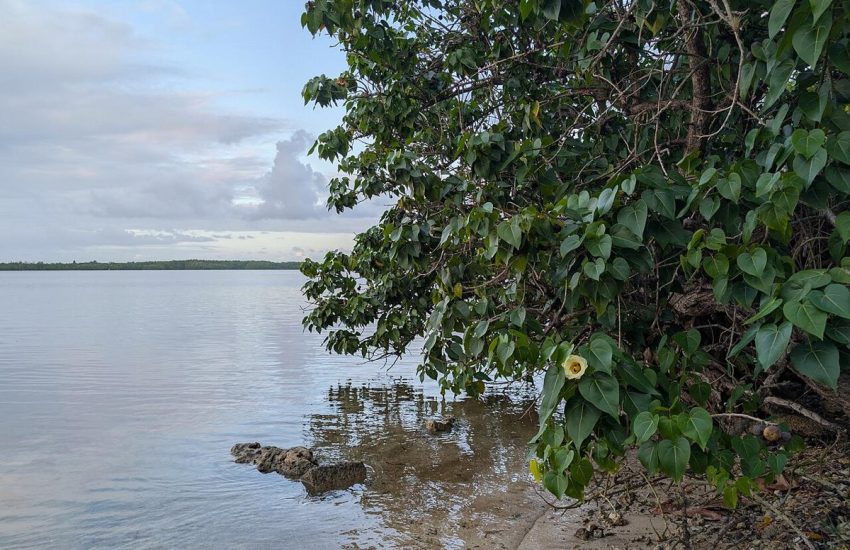
Cooke’s Kokiʻo (Kokia cookei)
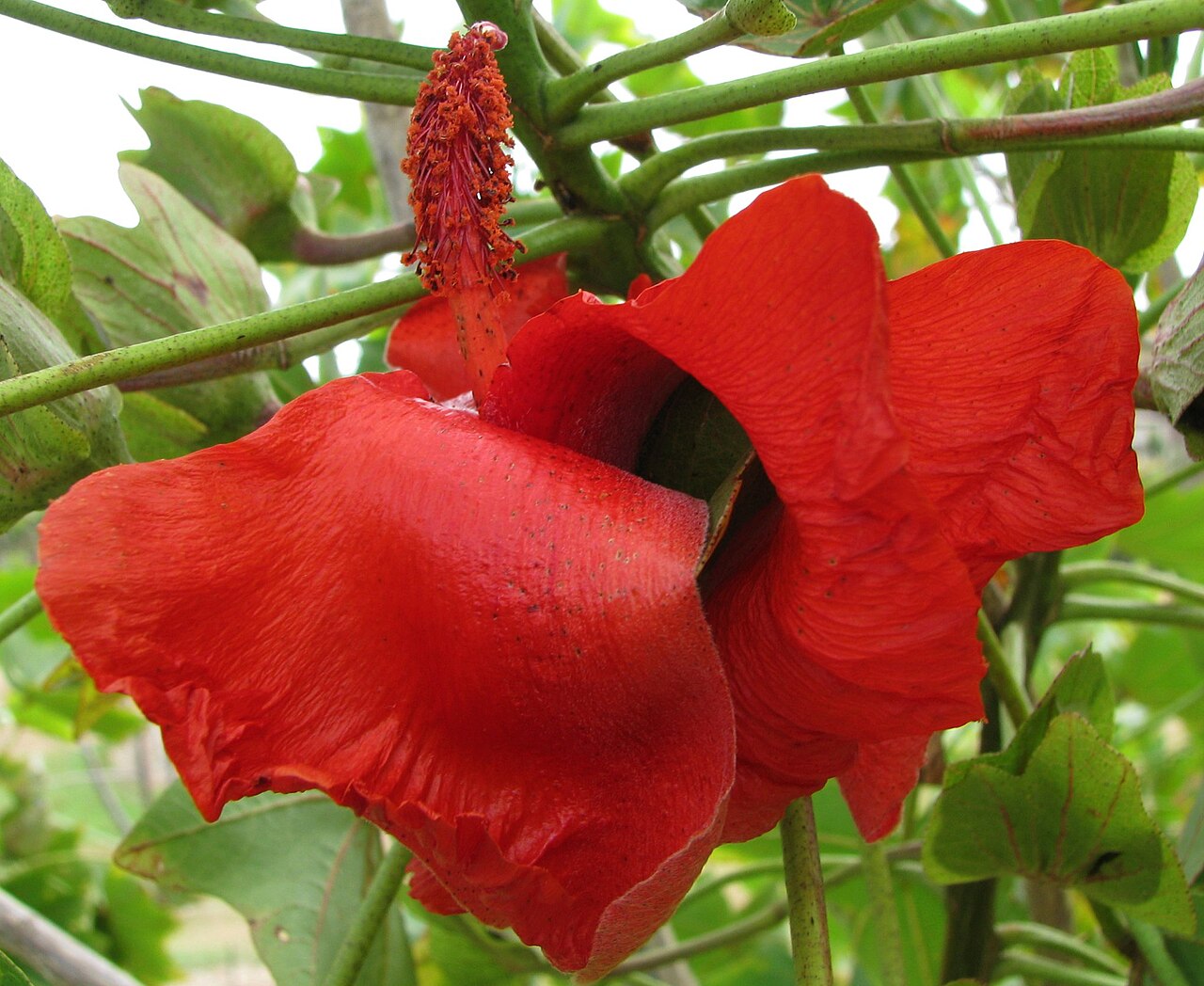
Kokia cookei, known as Cooke’s Kokiʻo, Molokaʻi Kokiʻo, or the Hawaiian treecotton, is a small deciduous tree in the mallow family (Malvaceae) that is, in the strictest sense, extinct in the wild. Every plant alive today is a grafted descendant of a single wild individual that was found on western Molokaʻi and lost to fire in 1978 — making this one of the rarest trees on the planet, surviving entirely through human cultivation.
The species was never common even by Hawaiian standards: when botanists first documented it in the 1860s, only three trees could be found, and the population shrank from there as lowland dry forest on Molokaʻi was converted to grazing land. The last known wild tree, rediscovered decades later near Mahana on Molokaʻi’s leeward side, was propagated by grafting cuttings onto its close, also-endangered relative Kokia kauaiensis before fire destroyed the original tree. Today roughly two dozen grafted plants survive across botanical gardens and conservation collections on Molokaʻi, Maui, Oʻahu, and Hawaiʻi Island, including specimens maintained at places like the Waimea Valley Cultural Garden on Oʻahu.
Cooke’s kokiʻo is not something you buy at a nursery — it is essentially never available commercially, and every individual is tracked and propagated as part of coordinated conservation efforts. This guide exists to document the species and its needs for native-plant conservationists, botanical gardens, and anyone curious about one of Hawaiʻi’s most extreme cases of a species surviving by the thinnest possible thread.
Identification
Cooke’s kokiʻo is a small, deciduous tree, typically growing to only about 10 feet (3 m) tall, considerably smaller than its larger relative, the Hawaiian cotton tree (Kokia drynarioides).
Leaves
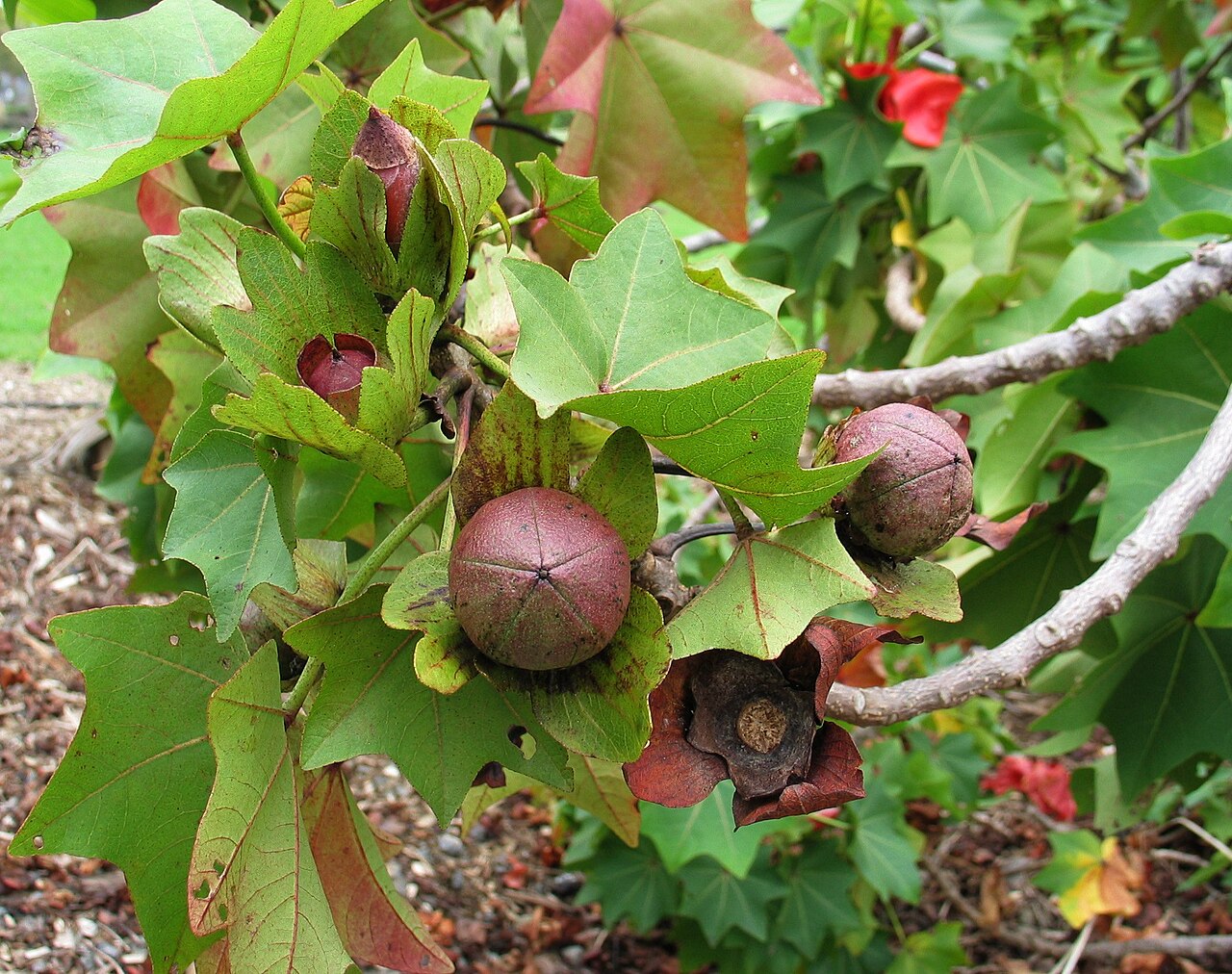
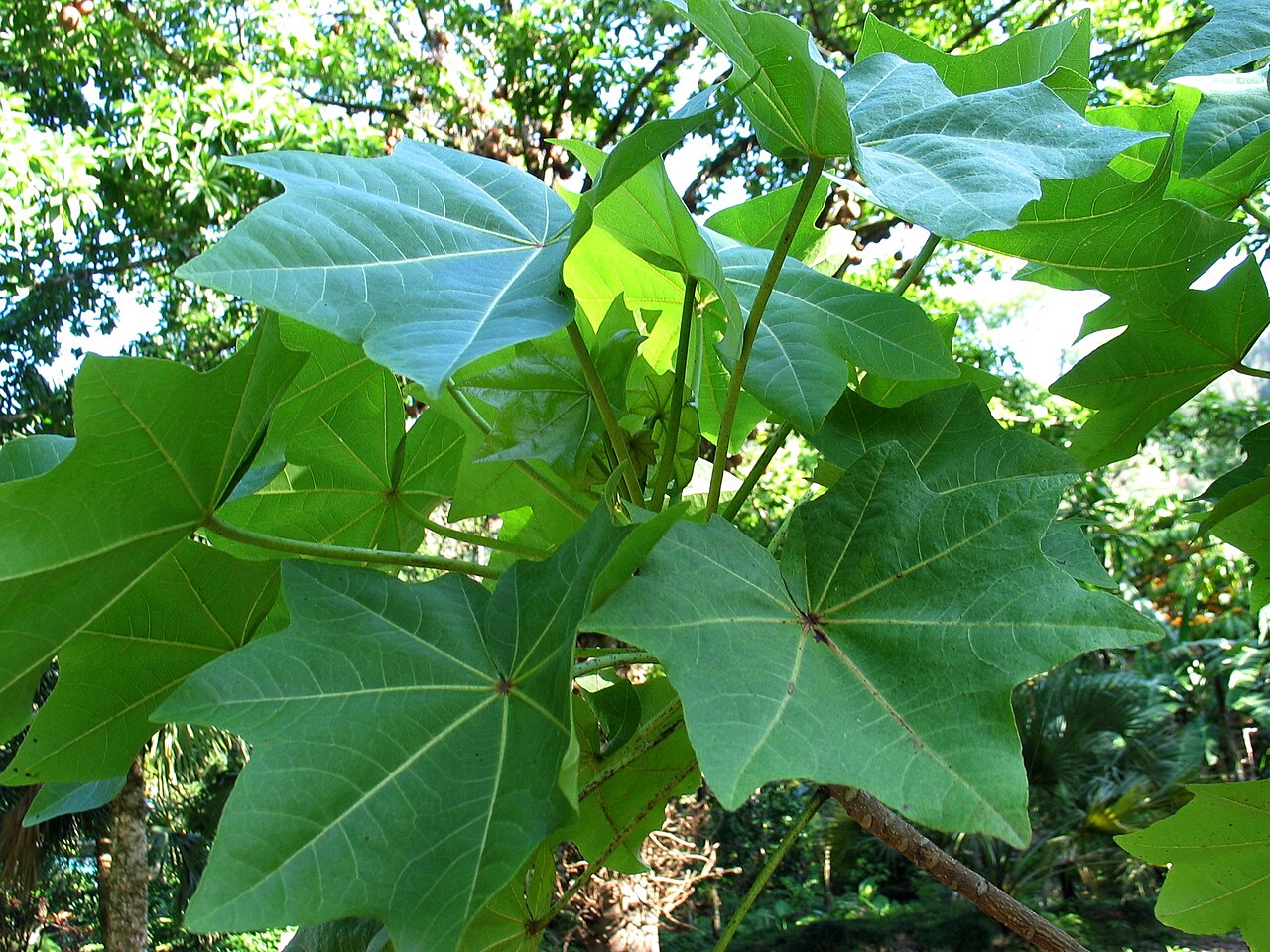
Leaves are simple (not compound) but deeply palmately lobed with 5 to 7 pointed lobes, giving them a maple-like silhouette similar to other Kokia species. The tree is deciduous, dropping its leaves during the dry season — an unusual trait among Hawaiian natives and a clue to its dry forest origins.
Flowers
The flowers are the standout feature: large, deep red, and loosely funnel-shaped to curled, with petals that twist rather than opening fully flat. They resemble an oversized, more open version of the curled blooms of Hawaiian cotton tree, and like that species, they are thought to be adapted for pollination by native Hawaiian birds.
Fruit
The fruit is a dry, five-lobed capsule covered in short, dense hairs, which splits open at maturity to release seeds. As in other Kokia species, the seed coat carries sparse cottony fibers, which is the origin of the common name “treecotton,” though the fibers have no commercial use.
Quick Facts
| Scientific Name | Kokia cookei |
| Family | Malvaceae (Mallow) |
| Plant Type | Small Deciduous Tree |
| Mature Height | About 10 ft |
| Growth Rate | Moderate |
| Sun Exposure | Full Sun |
| Water Needs | Low once established |
| Soil Type | Well-drained, dry-forest soils |
| Flower Color | Deep red, curled and funnel-shaped |
| Conservation Status | Federally Endangered; IUCN Extinct in the Wild |
| USDA Hardiness Zones | 11 |
Native Range
Cooke’s kokiʻo was historically endemic to the lowland dry forest of leeward (western) Molokaʻi, near Mahana, at roughly 660 feet (200 m) elevation. Only a handful of individuals were ever documented, and the species is now extinct in the wild — the last original tree was lost to fire in 1978 after cuttings had already been grafted onto a related species for safekeeping. It is not known to have occurred naturally on any other Hawaiian island or anywhere in the continental United States; all plants today exist only in cultivation, including conservation collections on Molokaʻi itself as well as Oʻahu, Maui, and Hawaiʻi Island.
In its historic Molokaʻi dry forest habitat, it would have grown alongside other now-rare lowland dry forest natives found elsewhere in the islands, such as ʻAʻaliʻi (Dodonaea viscosa) and its own close relative, the Hawaiian Cotton Tree (Kokia drynarioides), which survives today on Hawaiʻi Island under similarly dire conservation pressure.
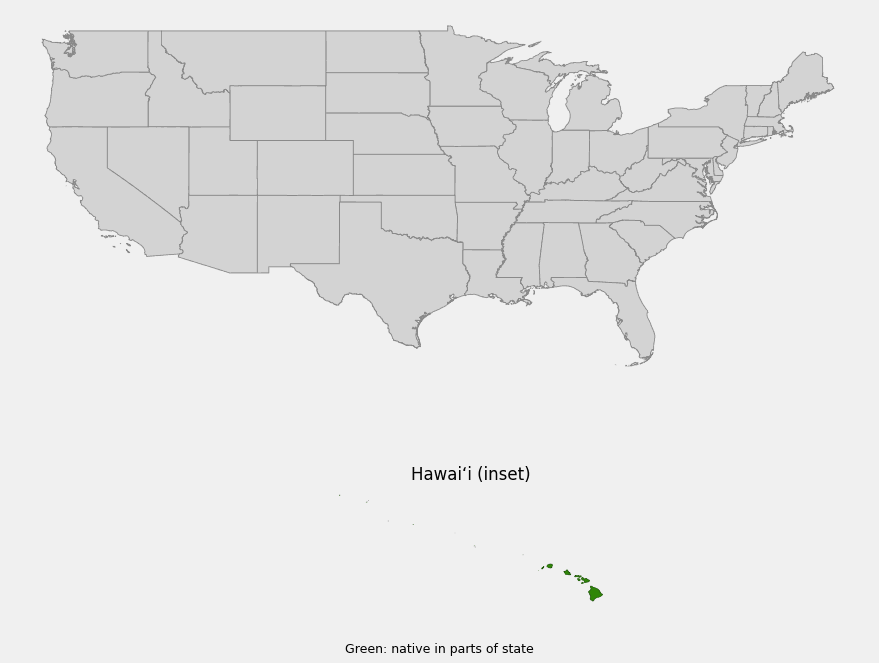
📋 Regional plant lists featuring Cooke’s Kokiʻo: Hawaii
Growing & Care Guide
Every existing Cooke’s kokiʻo is a conservation asset, grown exclusively through coordinated propagation programs rather than ordinary retail sources. If you are fortunate enough to be involved in one of these programs, the general care below reflects what is known about the species’ needs, drawn from its native dry forest habitat and from cultivated specimens.
Light
Full sun is preferred, matching the open, exposed lowland dry forest conditions of its historic Molokaʻi habitat.
Soil & Water
Well-drained soils are essential. Young grafted plants need consistent water while establishing root systems, but like other dry forest Kokia species, mature plants are drought tolerant and do not do well in constantly wet or poorly drained ground.
Planting Tips
Because every individual represents irreplaceable genetic material for a species extinct in the wild, plantings are managed carefully by botanical gardens and conservation nurseries, with attention to documentation, genetic diversity among the limited founder stock, and protection from fire, pests, and grazing animals — the same threats that drove the species to extinction in the wild in the first place.
Pruning & Maintenance
As a deciduous tree adapted to a seasonal dry climate, it naturally sheds leaves during dry periods; this is normal and not a sign of poor health. Minimal pruning is needed beyond removing dead wood.
Landscape & Conservation Uses
- Ex-situ conservation collections at botanical gardens across the Hawaiian Islands
- Grafting and propagation programs aimed at preserving the species’ genetics
- Specimen planting in protected conservation gardens for its large red flowers
Wildlife & Ecological Value
Cooke’s kokiʻo’s large, curled red flowers follow the same general pollination strategy seen in its relative the Hawaiian cotton tree, likely adapted historically for native Hawaiian nectar-feeding birds. With the species extinct in the wild and surviving only in cultivated, often isolated settings, these original pollination relationships can no longer be observed in nature, which is itself a sobering illustration of how extinction unravels ecological relationships long before the last individual plant disappears.
Ecosystem Role
As a species that no longer exists in any wild ecosystem, Cooke’s kokiʻo’s remaining ecological role is almost entirely symbolic and educational — a living reminder of how much of Hawaiʻi’s lowland dry forest, and the species within it, has already been lost. Its continued survival in cultivation keeps the door open for potential future reintroduction if suitable protected habitat can ever be restored on Molokaʻi.
Cultural & Historical Uses
Cooke’s kokiʻo has no significant recorded history of traditional material use, largely because it was already extremely rare by the time Western botanists documented it in the 1860s, when only three individuals were known. Its significance today is almost entirely as a conservation icon: one of the clearest living examples in Hawaiʻi, and arguably in the world, of a plant species kept alive solely through human intervention after its last wild representative was lost.
The genus Kokia contains just four species, all endemic to Hawaiʻi and all rare or extinct in the wild. You can read more about its larger, Hawaiʻi Island relative in our guide to the Hawaiian Cotton Tree, and about Hawaiʻi’s broader rare flowering tree heritage in our guide to Hawaiʻi’s rarest flowering trees and flowering trees of Hawaii.
Frequently Asked Questions
Is Cooke’s kokiʻo truly extinct?
It is extinct in the wild, meaning no naturally occurring wild populations remain. However, it survives as roughly two dozen grafted plants maintained in botanical gardens and conservation collections across several Hawaiian islands, so the species itself is not extinct in the strict biological sense.
Can I grow Cooke’s kokiʻo in my garden?
Realistically, no. Every known individual is part of a tracked conservation program, and the species is not available through ordinary nurseries. This guide is intended primarily for documentation and conservation awareness rather than as a how-to for home gardeners.
How is Cooke’s kokiʻo still alive if the last wild tree died?
Before the final wild tree was destroyed by fire in 1978, cuttings had already been grafted onto its close relative Kokia kauaiensis as rootstock. All plants alive today descend from those grafted cuttings.
How is Cooke’s kokiʻo different from the Hawaiian cotton tree?
Both are rare, red-flowered Kokia species, but Cooke’s kokiʻo is smaller (about 10 feet tall versus 10–20 feet for Hawaiian cotton tree), has simple rather than compound lobed leaves, and is extinct in the wild, whereas Hawaiian cotton tree still has a tiny number of wild individuals on Hawaiʻi Island.
Why did Cooke’s kokiʻo go extinct in the wild?
Its lowland dry forest habitat on Molokaʻi was converted to agriculture and grazing land starting around a thousand years ago, and the few remaining individuals and their habitat continued to decline under pressure from introduced grazing animals and fire until none were left in the wild.

Looking for a nursery that carries Cooke’s Kokiʻo?
Browse our native plant nursery directory: Hawaii