
Buttonsage (Lantana involucrata)
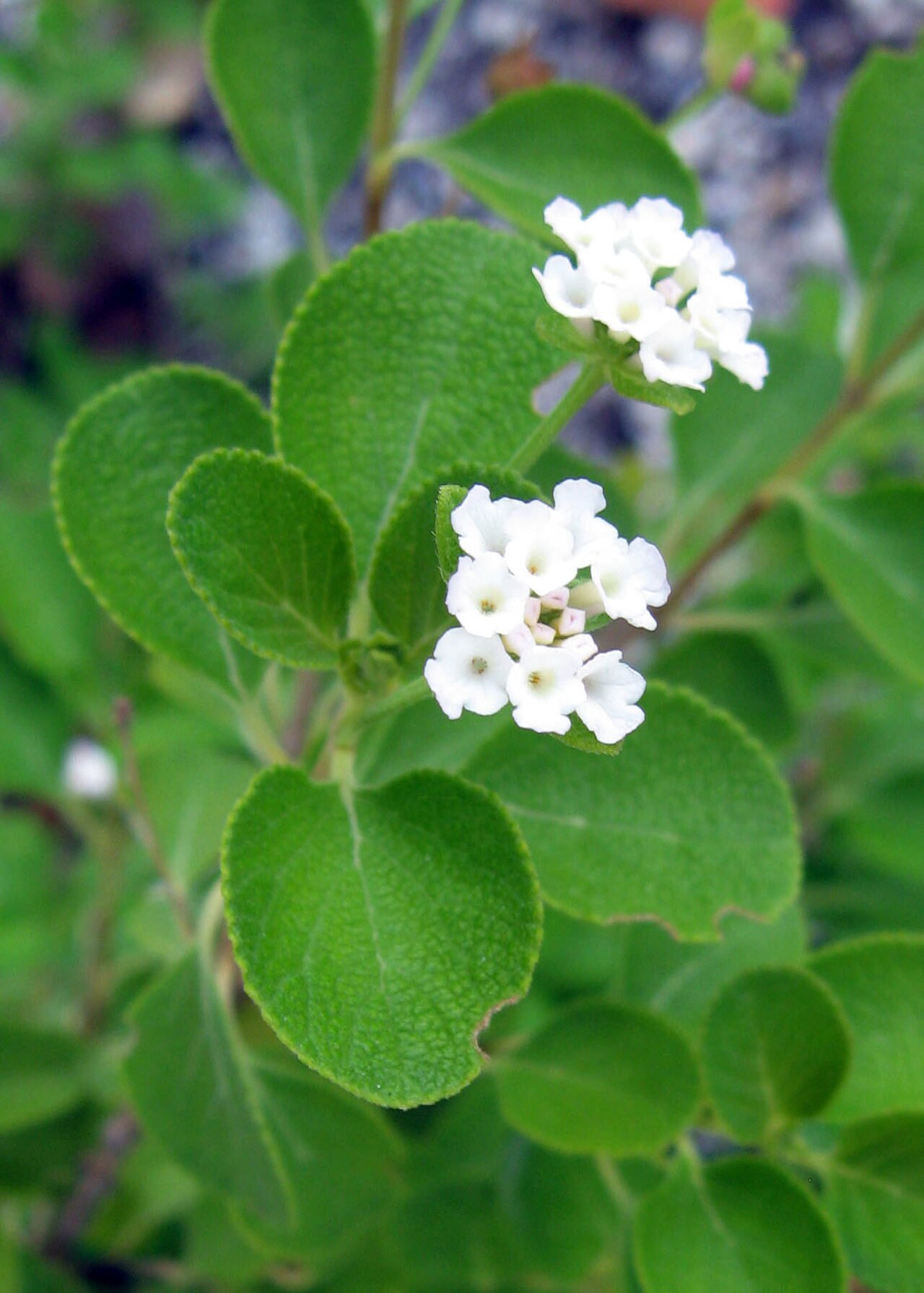
Lantana involucrata, known as Buttonsage, wild sage or wild lantana, is a small, evergreen native shrub of coastal South Florida, the Florida Keys and the Caribbean. It forms a dense, rounded mound of soft, gray-green, sage-scented leaves and produces small, flat-topped clusters of white to pale lavender flowers with yellow centers through most of the year, followed by bright purple fruits. It belongs to the verbena family (Verbenaceae).
Buttonsage is the native, well-behaved cousin of the common garden lantana, Lantana camara, a shrub from the American tropics that has escaped from cultivation and become invasive in Florida and many other warm regions. Buttonsage has no prickles on its stems, smaller white flowers instead of the orange, red and yellow of L. camara, and rounded, softly hairy leaves. USDA PLANTS lists it as native to Florida, Puerto Rico and the U.S. Virgin Islands.
It is a tough plant for sunny, sandy and rocky coastal gardens, where it tolerates drought, wind and some salt, and it is a dependable nectar plant for butterflies year-round. This guide covers how to identify buttonsage, where it grows, and how to use it in a South Florida native landscape.
Identification
Look for a low, many-branched shrub with small, rounded, soft-hairy leaves that smell like sage when crushed, and small white flower heads held on stalks just beyond the leaves.
Growth Habit
Buttonsage is a densely branched, upright to rounded shrub, usually 3 to 6 feet tall and 2 to 3 feet wide. FNPS gives 4 to 6 feet, occasionally to 10 feet in sheltered sites. The stems are slender, gray-brown and unarmed, without the small hooked prickles of Lantana camara. On exposed dunes and rocky shores it often stays low and compact.
Leaves
The leaves are opposite, oval to nearly round, mostly 1/2 to 1 1/2 inches long, with finely scalloped (crenate) edges. They are thick, gray-green and covered with soft hairs, so they feel velvety and look wrinkled. Crushed leaves have a pungent, sage-like smell, the source of the names buttonsage and wild sage.
Flowers
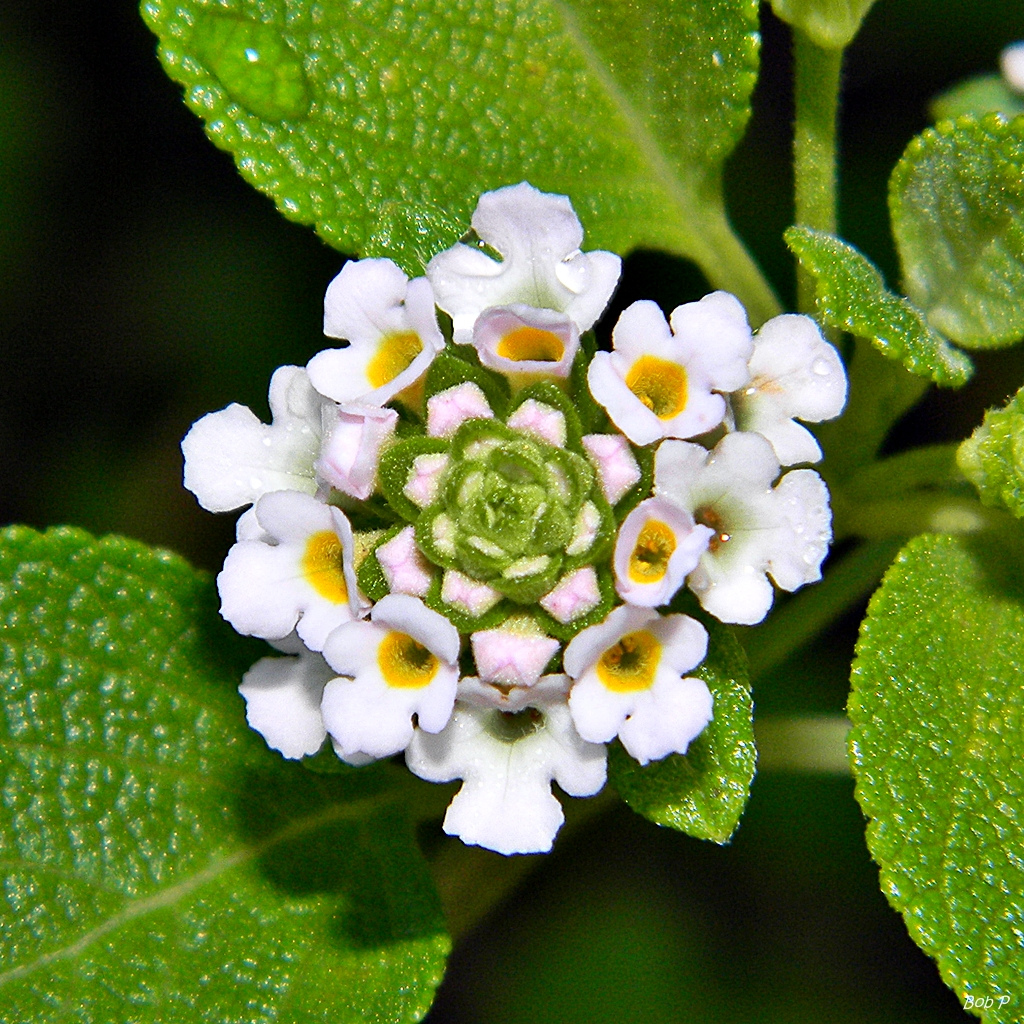
Small, tubular flowers with four or five flaring lobes open in dense, rounded clusters about 1/2 to 1 inch across, held on stalks from the leaf axils. They are white, often flushed pale pink or lavender, with a yellow eye. The flowers open from the outside of the cluster inward around a green, button-like center of bracts, and the plant blooms and fruits nearly all year in South Florida.
Fruit & Seeds
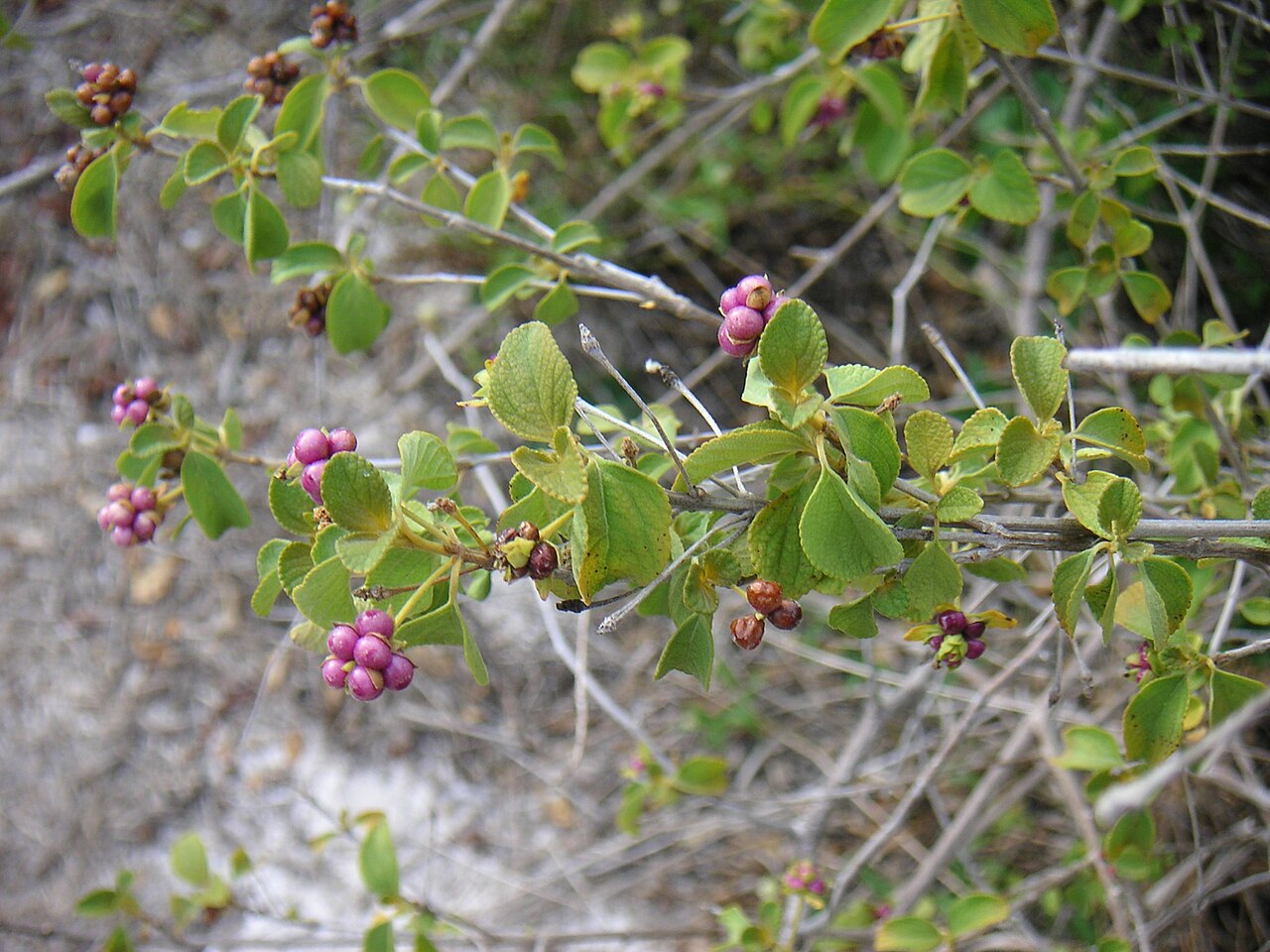
The fruit is a small, round drupe about 1/4 inch across, borne in tight clusters. It ripens from green to pink and then glossy purple, each containing a single hard seed. Like other lantanas, the fruit is not for people to eat.
Similar Species
Invasive Lantana camara has prickly stems, larger, rough, more pointed leaves and showy flowers that change from yellow to orange, red or pink. Texas Lantana (L. urticoides), native from Texas west, has yellow-orange-red flowers. Native pineland lantana (L. depressa), a Florida endemic, has yellow flowers.
Quick Facts
| Scientific Name | Lantana involucrata (accepted by USDA PLANTS) |
| Family | Verbenaceae (verbena family) |
| Plant Type | Evergreen shrub |
| Mature Height | 3–6 ft (occasionally to 10 ft) |
| Mature Spread | 2–4 ft |
| Growth Rate | Moderate to fast |
| Sun Exposure | Full sun to part sun |
| Water Needs | Low; very drought tolerant once established |
| Soil Type | Well-drained sand, shell or limestone |
| Soil pH | Neutral to alkaline (about 6.5–8.5) |
| Bloom Time | Year-round in South Florida |
| Flower Color | White to pale lavender with a yellow eye |
| Fall Color | None; evergreen |
| Fruit | Small glossy purple drupes, year-round |
| Deer Resistant | Yes; aromatic foliage is seldom browsed |
| USDA Hardiness Zones | 10a–11 |
Native Range
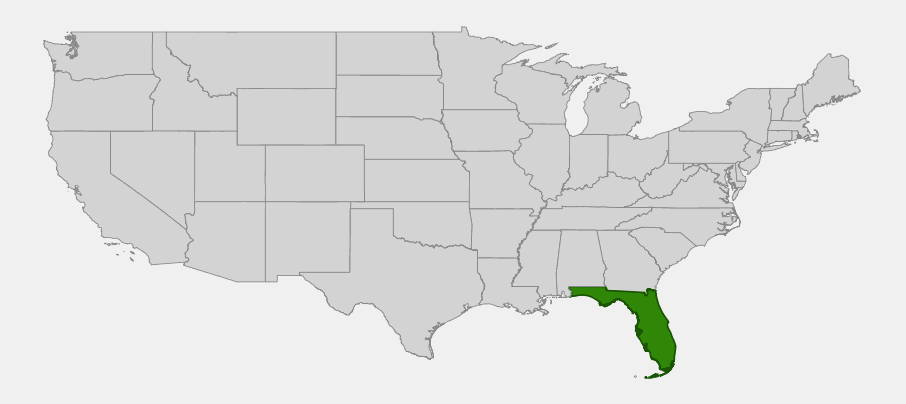
Buttonsage is a plant of the American tropics. The Lady Bird Johnson Wildflower Center gives its range as South Florida to South America, and it is widespread in the Bahamas and the Caribbean, including Puerto Rico and the U.S. Virgin Islands, where USDA PLANTS lists it as native. In the continental United States it grows wild only in southern Florida.
In Florida it is found mainly along the coasts of the southern peninsula and throughout the Florida Keys. FNPS lists its natural habitats as coastal dunes, disturbed openings in tropical hammocks where there is enough light, and pine rocklands. The Lady Bird Johnson Wildflower Center also notes coastal shell ridges, and it is a common shrub of coastal strand and rocky shorelines in the Keys.
It is not listed as threatened by the State of Florida. Its coastal habitat has been heavily reduced by development, but the plant itself is widely grown by native nurseries and easy to find for landscaping.
📋 Regional plant lists featuring Buttonsage: North & South Florida
Growing & Care Guide
Buttonsage is one of the easiest native shrubs for sunny South Florida gardens. FNPS lists it as available from native nurseries and at FNPS plant sales, and it is a good substitute for invasive Lantana camara and its hybrids.
Light
Full sun gives the densest growth and the most flowers. It tolerates part sun, but in shade it becomes thin and leggy and blooms less.
Soil & Water
Plant it in well-drained sand, shell or limestone soils; it does not tolerate soggy ground. Water regularly for the first few months, then it can survive long dry periods without irrigation. FNPS rates it as tolerating some salty wind but not direct salt spray or flooding with salt water, so place it behind the front line of dune plants.
Planting Tips
Space plants 2 to 3 feet apart for a low hedge or mass planting, or use single plants in a butterfly garden or mixed coastal border. FNPS recommends it as a cover plant, hedge or screen. It is frost-tender and best suited to South Florida and the Keys; in Central Florida it may be damaged by hard freezes but often regrows from the base.
Pruning & Maintenance
Buttonsage can get leggy with age. The Lady Bird Johnson Wildflower Center notes that periodic pruning keeps it dense. Trim lightly after a flush of flowers or cut it back by about a third in late winter. It needs no fertilizer in native soils and has few pest problems.
Propagation
It grows from seed and from softwood cuttings, according to the Lady Bird Johnson Wildflower Center. Clean the pulp from ripe purple fruits and sow the seeds fresh. Cuttings root readily in a moist, well-drained mix in warm weather.
Landscape Uses
- Butterfly gardens: year-round nectar for many South Florida butterflies
- Coastal landscapes: drought- and wind-tolerant shrub for sunny sites behind the dunes
- Low hedges and screens: dense, aromatic shrub that takes trimming
- Lantana camara replacement: a native alternative to invasive garden lantana
- Bird gardens: purple fruits eaten by birds
Wildlife & Ecological Value
Because it blooms and fruits almost continuously, buttonsage is a steady food source for butterflies and birds in coastal South Florida.
For Pollinators
FNPS notes that it attracts butterflies and other pollinators, including bees, and occasionally hummingbirds. Skippers, hairstreaks, sulphurs and other small butterflies visit the flowers, which are rich in nectar for their size.
For Birds
Birds eat the fruits, according to FNPS. Mockingbirds, catbirds and other fruit-eating songbirds feed on them and disperse the seeds.
For Mammals
The aromatic foliage is not a favored browse plant. The dense, low branches give cover to small animals such as lizards on dunes and rocky shores.
Ecosystem Role
Buttonsage is part of the coastal strand and rockland shrub layer of South Florida and the Caribbean, helping to stabilize sand and providing nectar and fruit through the year. Planting it instead of Lantana camara helps reduce the spread of the invasive species.
Cultural & Historical Uses
The genus name Lantana was borrowed from an old Latin name for the wayfaring tree, Viburnum lantana, whose flower clusters look somewhat similar. The species name involucrata refers to the involucre, the ring of bracts beneath each flower cluster.
The names buttonsage and wild sage come from the sage-like smell of its leaves and its small, round flower clusters. The plant is not related to true sage (Salvia), which belongs to the mint family.
As garden lantana spread through the tropics and became a serious weed, native lantanas such as buttonsage gained attention from native plant gardeners as substitutes. In Florida, native plant societies and nurseries now promote buttonsage as a way to get the butterfly value of lantana without adding to the spread of an invasive species.
Frequently Asked Questions
Is buttonsage invasive?
No. Buttonsage is native to South Florida, the Caribbean and tropical America. The invasive species is Lantana camara, the common garden lantana with prickly stems and orange, red or yellow flowers.
Is buttonsage salt tolerant?
Moderately. FNPS rates it as tolerant of some salty wind but not direct salt spray or salt-water flooding, so plant it behind the front-line dune plants.
How tall does buttonsage get?
Usually 3 to 6 feet tall and 2 to 4 feet wide, occasionally to 10 feet. Regular trimming keeps it compact.
Can I grow buttonsage outside South Florida?
It is a tropical, frost-tender shrub, best in zones 10 and 11. In colder areas it can be grown in a container and brought indoors in winter.
Are buttonsage berries edible?
No. Treat them as inedible. Lantana species contain compounds that can be toxic, so keep children and pets from eating the fruit. Birds eat them without harm.

Looking for a nursery that carries Buttonsage?
Browse our native plant nursery directory: Florida