
Beach Creeper (Ernodea littoralis)
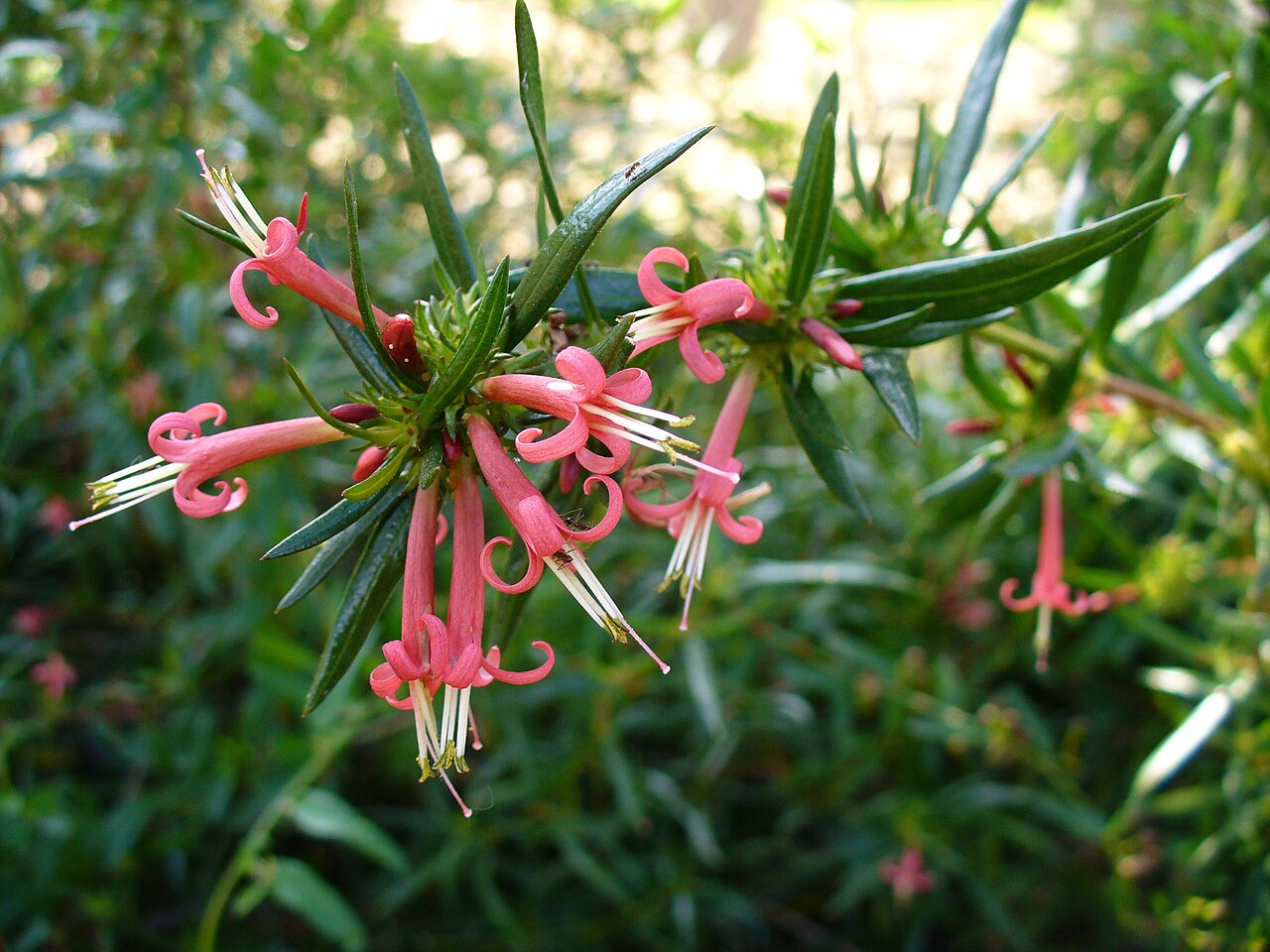
Ernodea littoralis, known as Beach Creeper or coughbush, is a low, sprawling shrub of south Florida’s beaches, dunes and coastal rocklands. Its arching green stems form tidy mounds 1 to 3 feet high and several feet across, covered with narrow, glossy, almost succulent leaves. Through most of the year it bears small, slender, pink to red tubular flowers, followed by bright golden-yellow berries.
Beach creeper is a member of the coffee family (Rubiaceae), the same family as wild coffee, firebush and the gardenias. The species name littoralis means “of the seashore”, and few Florida shrubs are better suited to that setting. It tolerates salt spray, wind, intense sun, drought and nutrient-poor sand, and it helps hold sand in place on the dunes.
In the United States it grows naturally only in Florida, where it is common on the southern coasts and the Keys. It is also native to Puerto Rico, the Virgin Islands, the Bahamas and the Caribbean. Landscapers in coastal south Florida use it as a durable native groundcover that needs almost no care once established. This guide covers identification, range, care and wildlife value.
Identification
Beach creeper has a distinctive look: low mounds of bright green, needle-like to strap-shaped leaves that often turn yellow-green in full sun, pink trumpet flowers in the leaf axils, and gold berries. Its leaves are the best field mark when it is not in flower.
Growth Form
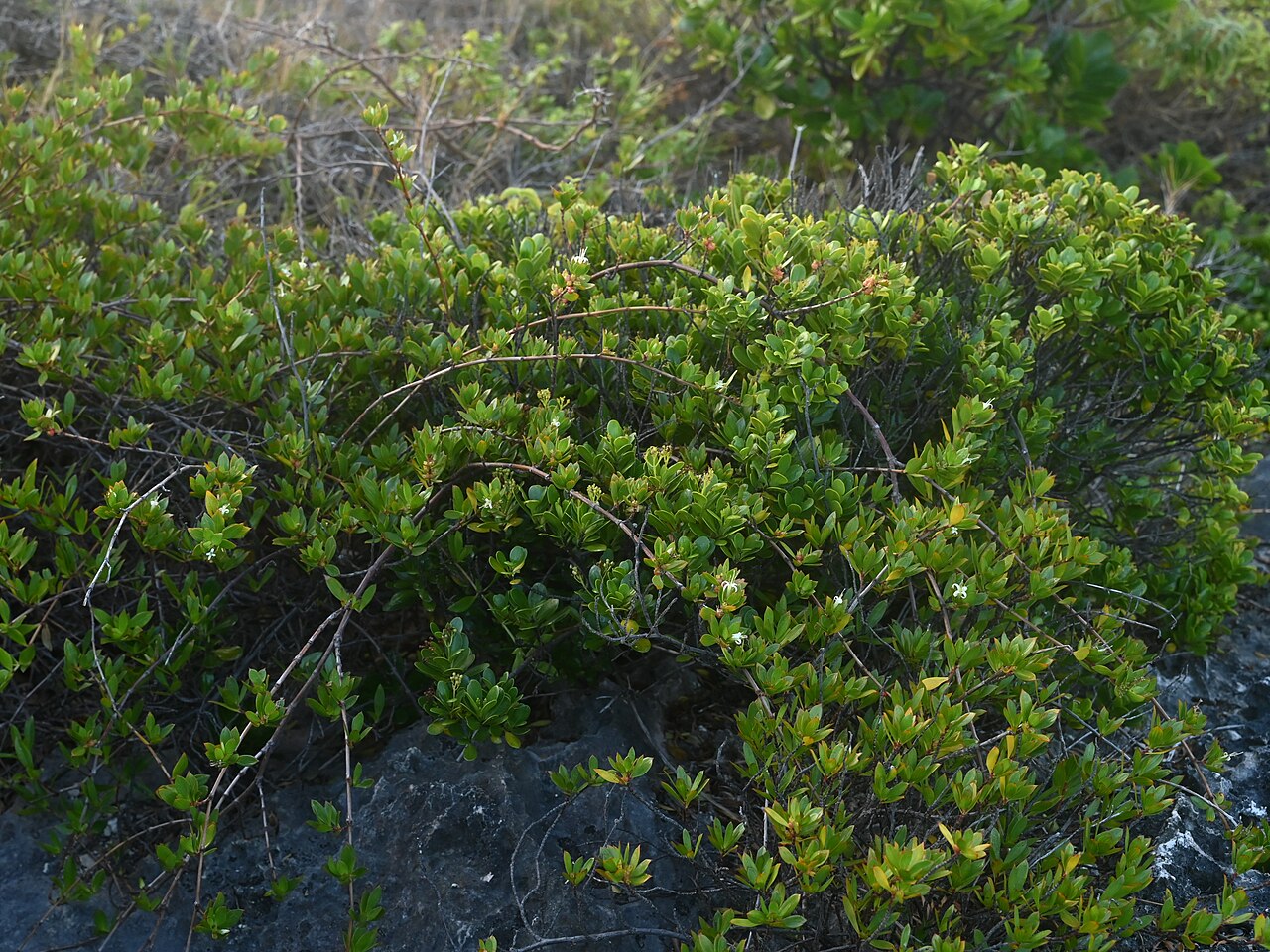
It is a low, much-branched evergreen shrub with trailing to arching stems that root where they touch the sand. Plants are usually 1 to 2 feet tall and occasionally reach about 3 feet, spreading 3 to 6 feet or more. Older stems become woody and reddish brown at the base.
Leaves
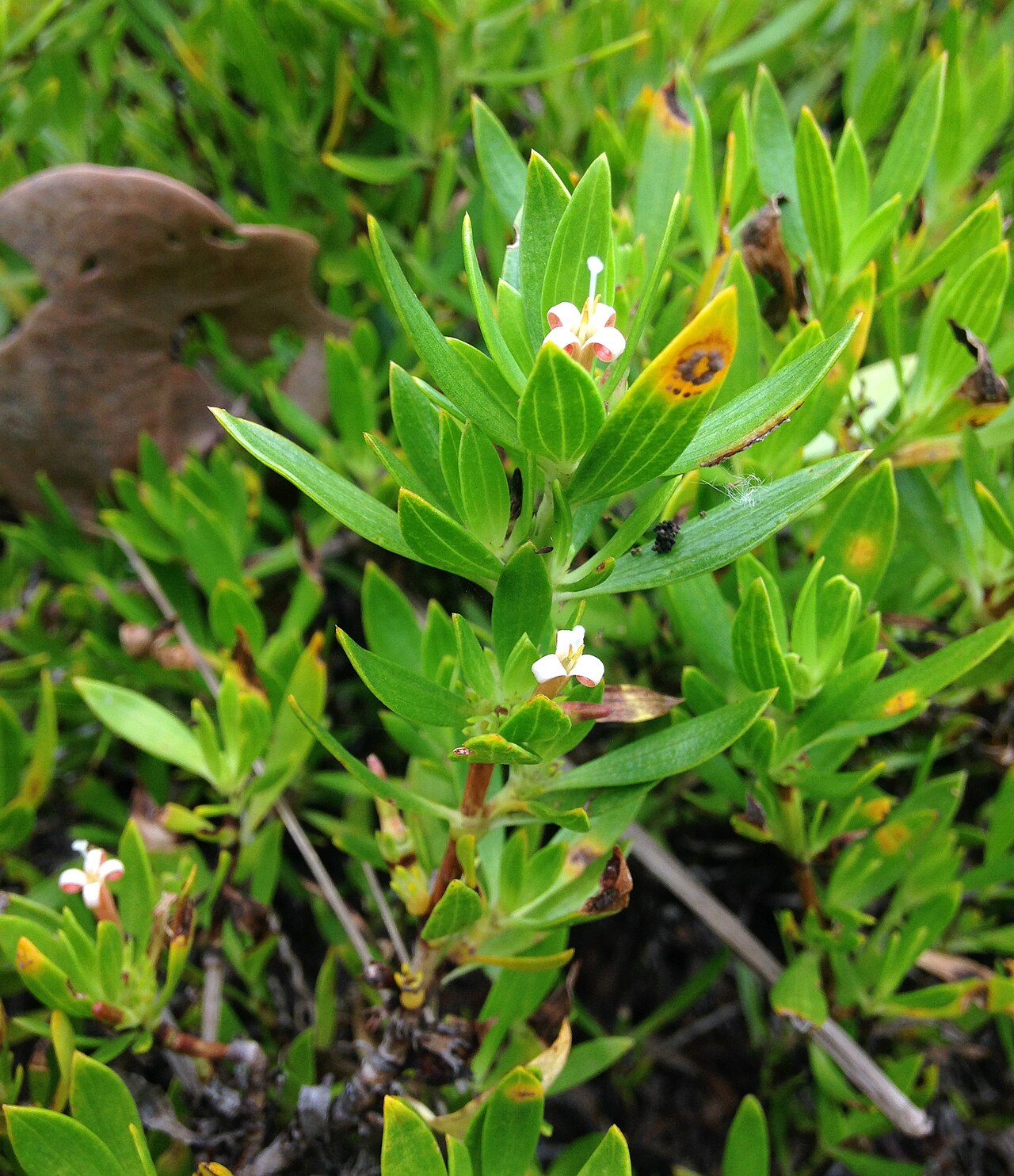
The leaves are opposite or crowded near the branch tips, stalkless, narrow and lance-shaped, usually ¾ to 2 inches long and less than ¼ inch wide. They are thick and somewhat fleshy, glossy on top, and marked with several fine veins that run lengthwise from base to tip, which is unusual in the coffee family. In very sunny, dry, or salty sites many leaves turn yellow or orange, which is normal and not a sign of disease.
Flowers
Flowers are single in the leaf axils. Each is a slender tube about ½ inch long that opens into four to six narrow lobes which curl backward, exposing the stamens. Color ranges from pale pink or white to deep coral-pink and red, and the tube is often darker than the lobes. In south Florida beach creeper can flower in any month, most heavily in spring and summer.
Fruit
The fruit is a small, round to egg-shaped drupe about ¼ inch across, ripening to golden yellow or orange-yellow. It contains a few hard seeds and is eaten by birds and small animals, which spread the plant along the coast.
Quick Facts
| Scientific Name | Ernodea littoralis Sw. |
| Family | Rubiaceae (coffee family) |
| Plant Type | Low evergreen shrub; groundcover |
| Mature Height | 1–3 ft |
| Mature Spread | 3–6 ft or more |
| Growth Rate | Moderate |
| Sun Exposure | Full sun |
| Water Needs | Low; very drought tolerant once established |
| Soil Type | Beach sand, shell, or limestone; well-drained and low in nutrients |
| Soil pH | Neutral to alkaline, about 6.5–8.5 |
| Bloom Time | Year-round in south Florida; heaviest spring–summer |
| Flower Color | Pale pink to coral-pink or red; occasionally white |
| Fall Color | None; evergreen (leaves often yellow-green in sun) |
| Fruit | Small golden-yellow drupe |
| Deer Resistant | Moderate |
| USDA Hardiness Zones | 10–11 (9b in protected coastal sites) |
Native Range
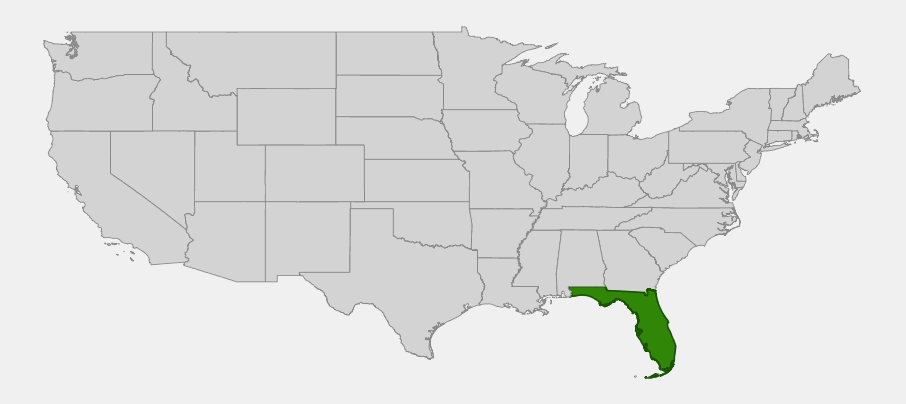
Within the United States, beach creeper is native only to Florida. USDA PLANTS also lists it as native in Puerto Rico and the U.S. Virgin Islands. Beyond U.S. territory it is native through the Bahamas and the islands of the Caribbean, including Cuba, Hispaniola, Jamaica and the Lesser Antilles, where it grows on the same kind of sandy and rocky shores.
The Atlas of Florida Plants maps it in coastal counties of central and south Florida, extending north along the coasts into central Florida and south through Miami-Dade, Monroe and the Florida Keys. It is most abundant on the southeast coast and in the Keys, where coastal strand and dunes are its main habitat.
Typical habitats are beach dunes, coastal strand, maritime hammock edges, and coastal rock barrens. A narrow-leaved form, sometimes treated as var. angusta, grows inland in the pine rocklands of Miami-Dade County and the Keys. Beach creeper also colonizes disturbed coastal sand along roadsides and causeways.
📋 Regional plant lists featuring Beach Creeper: North & South Florida
Growing & Care Guide
Beach creeper is one of the toughest native groundcovers for south Florida coastal landscapes. It is widely available from native plant nurseries in 1- and 3-gallon containers. Buy nursery-grown plants and never dig plants from beaches or dunes, where disturbing vegetation is often illegal and damages dune stability.
Light
Full sun is essential. Beach creeper grows densest and flowers best in open, sunny sites. In shade it becomes thin, sprawling and short-lived.
Soil & Water
It needs fast-draining soil such as beach sand, shell, crushed limestone or sandy fill, and it grows well in poor soils. Water new plants every few days for the first month, then gradually less. Once established it needs no irrigation in most of south Florida. It has high salt tolerance and can be used in the front line of coastal plantings exposed to salt spray. Overwatering, poorly drained soil, and fertilizer cause rot and weak growth.
Planting Tips
Plant in spring or at the start of the summer rainy season, spacing plants 2 to 3 feet apart for a groundcover. It works on slopes, in rock gardens, along sunny walks and driveways, and on dunes behind the beach. Combine it with dune sunflower, seaside goldenrod and other salt-tolerant natives. It is frost-tender and best suited to coastal south Florida.
Pruning & Maintenance
Beach creeper needs very little care. Trim stems that wander onto paths, and cut back older plants by about a third in late winter if they become open in the center. Do not fertilize. Yellowing leaves in full sun and dry conditions are normal.
Propagation
It roots readily from stem cuttings and from stems that have already rooted where they touched the sand, which can be cut and potted. Seed from ripe yellow fruits can also be sown in sandy mix, but cuttings are faster.
Landscape Uses
- Coastal groundcover: for dunes, sandy slopes and front-line salt-spray zones
- Low-maintenance landscapes: a drought- and heat-proof groundcover for parking islands and sunny banks
- Dune stabilization: its mats help hold sand in place behind the beach
- Butterfly and bird gardens: year-round flowers for pollinators and fruit for birds
- Rock and pine rockland gardens: spilling over limestone in Miami-Dade and Keys yards
Wildlife & Ecological Value
Beach creeper is an important plant of south Florida’s coastal strand. Its year-round flowers and fruits feed animals in a harsh habitat with few resources.
For Pollinators
The narrow pink tubes are visited by butterflies, including skippers and sulphurs, and by long-tongued bees.
For Birds
Birds such as northern mockingbirds and gray catbirds eat the golden fruits, and the dense mounds give cover to ground-feeding birds and lizards on the open dunes.
For Mammals
Small mammals may eat fallen fruits.
Ecosystem Role
Beach creeper’s spreading, rooting stems help bind dune sand, and its tolerance of salt spray and burial lets it hold ground behind the pioneer zone of sea oats and railroad vine. Along with other strand shrubs, it forms the transition from open dunes to maritime hammock.
Cultural & Historical Uses
The Swedish botanist Olof Swartz described Ernodea littoralis in 1788 from plants he collected in Jamaica, as part of his work on the flora of the West Indies. The genus Ernodea is a small group of shrubs centered in the Caribbean.
The common name coughbush suggests a traditional use in folk medicine in the Caribbean, but documentation is limited, and the plant should not be used as a home remedy. The name beach creeper describes its creeping habit on coastal sand.
Today beach creeper is one of the most widely planted native groundcovers in coastal south Florida. Florida native plant groups often recommend it for dune plantings and low-maintenance, salt-tolerant landscapes.
Frequently Asked Questions
Why are my beach creeper leaves turning yellow?
Yellow or orange leaves are normal in full sun, drought and salt spray. Only worry if stems are dying back, which usually means soggy soil or too much water.
Is beach creeper salt tolerant?
Yes. It has high salt tolerance and grows naturally on beach dunes exposed to salt spray. It is one of the best native groundcovers for oceanfront landscapes in south Florida.
Can I grow beach creeper in central or north Florida?
It is sensitive to frost and grows best in coastal south Florida and the Keys, roughly USDA zones 10 and 11. It may survive in protected coastal sites a little farther north but can be killed back by freezes.
Does beach creeper attract butterflies?
Yes. Its tubular flowers are visited by butterflies and long-tongued bees through much of the year, and the fruits are eaten by birds.
How fast does beach creeper spread?
Moderately. A single plant can spread 3 to 6 feet over a few years, rooting as it goes. Plant 2 to 3 feet apart for faster coverage.

Looking for a nursery that carries Beach Creeper?
Browse our native plant nursery directory: Florida