
Feay’s Prairie Clover (Dalea feayi)
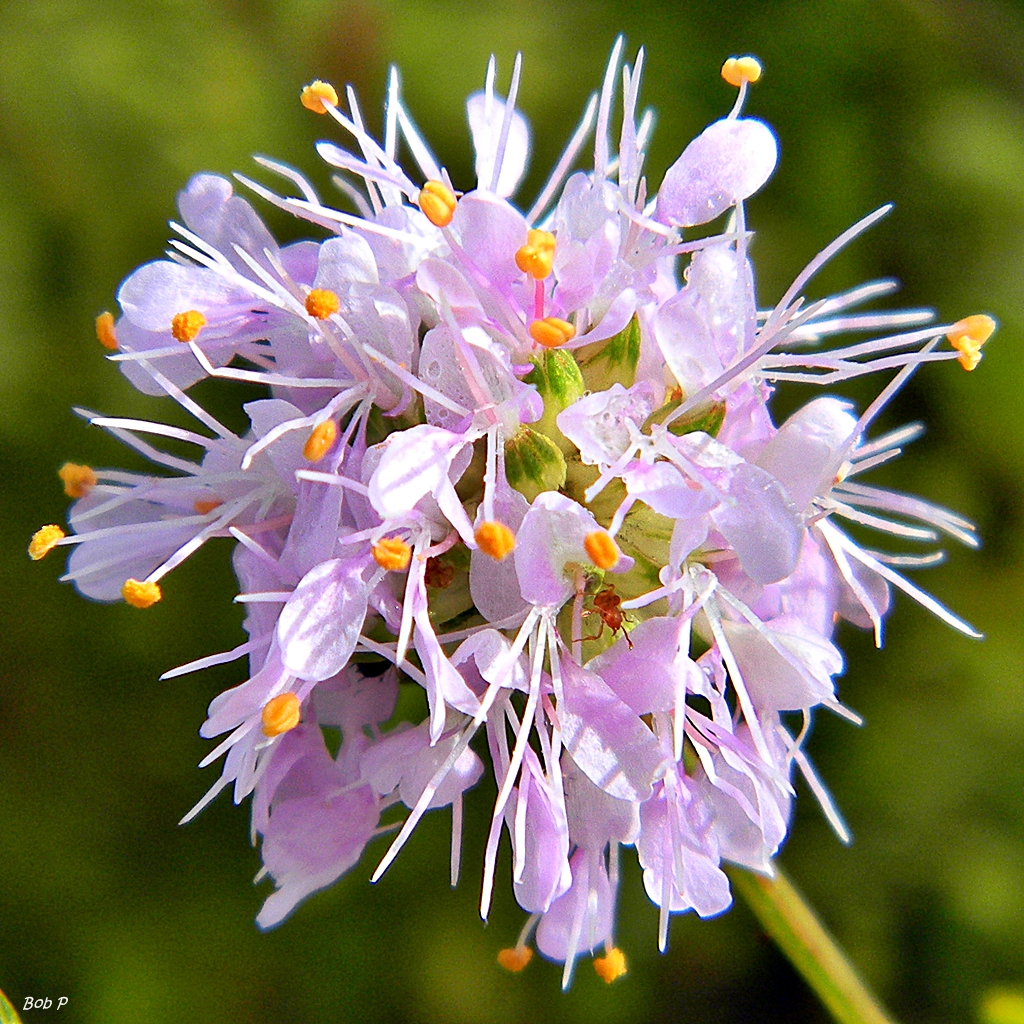
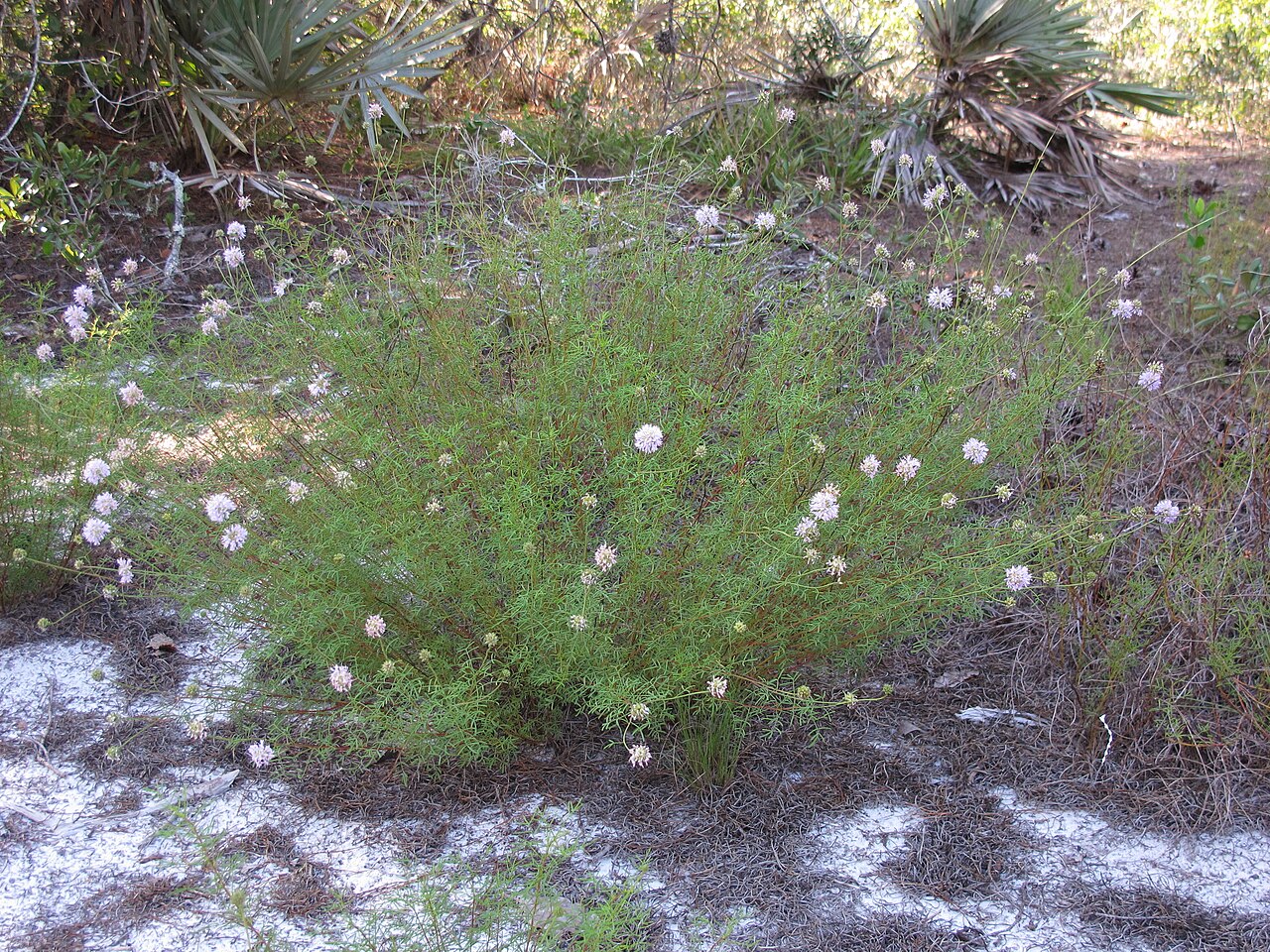
Dalea feayi, known as Feay’s Prairie Clover or Feay’s dalea, is a wiry little legume of Florida’s white-sand scrub and sandhills. It grows as a loose, airy subshrub two to two and a half feet tall, with thread-fine leaflets and stems so slender that the plant reads mostly as a green haze. Against that haze it carries round heads of pale rose-lavender flowers about three-quarters of an inch across, each head bristling with long stamens tipped in orange pollen.
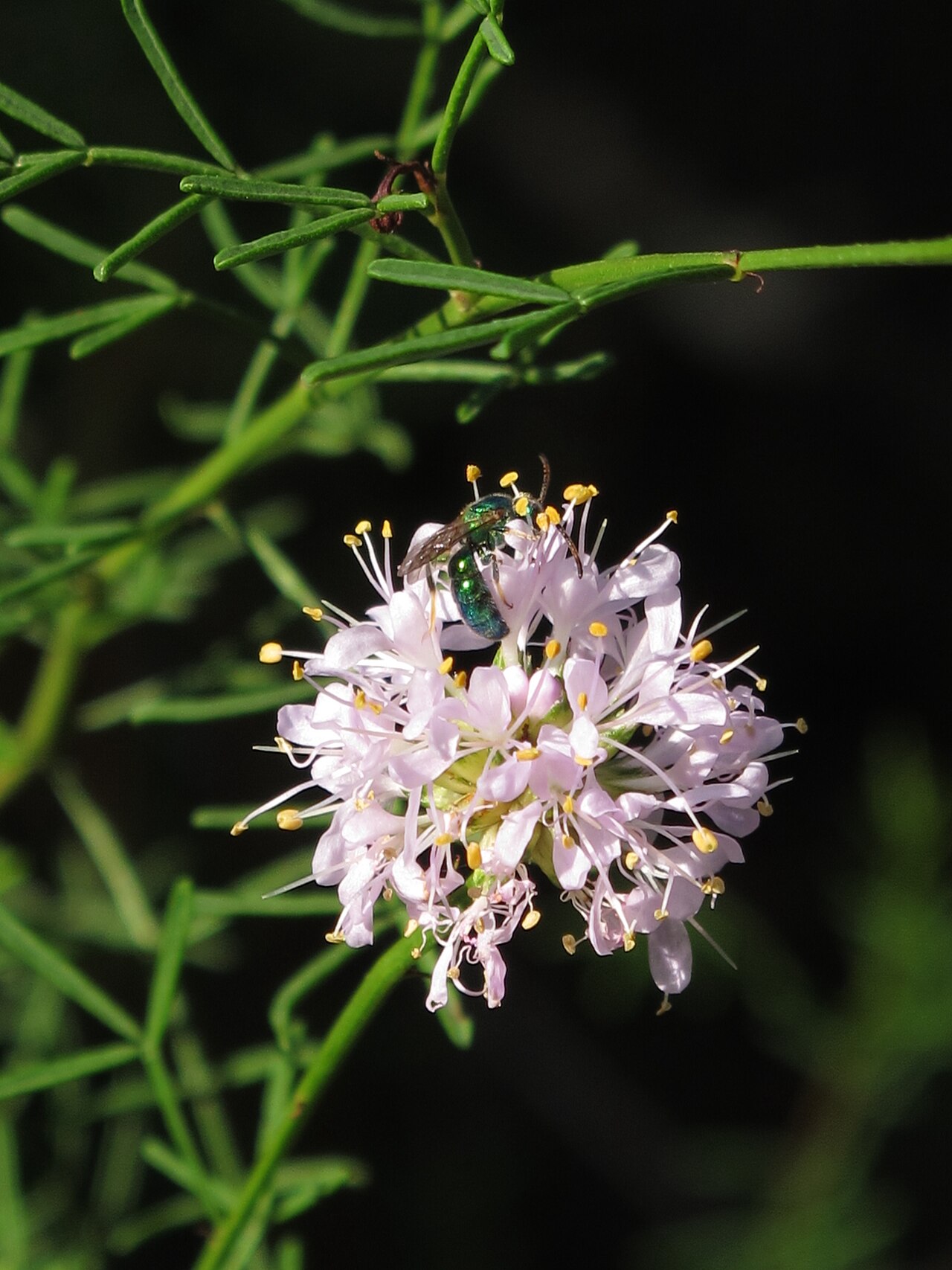
For a plant of such dry, sterile ground it is remarkably generous. Flowering runs through much of the year in Florida, peaking in summer and fall, and the Xerces Society flags it as a species of special value to native bees, bumble bees and honey bees. On a warm scrub morning the heads are almost never empty: sweat bees, leafcutter bees, bumble bees and bella moths all work them.
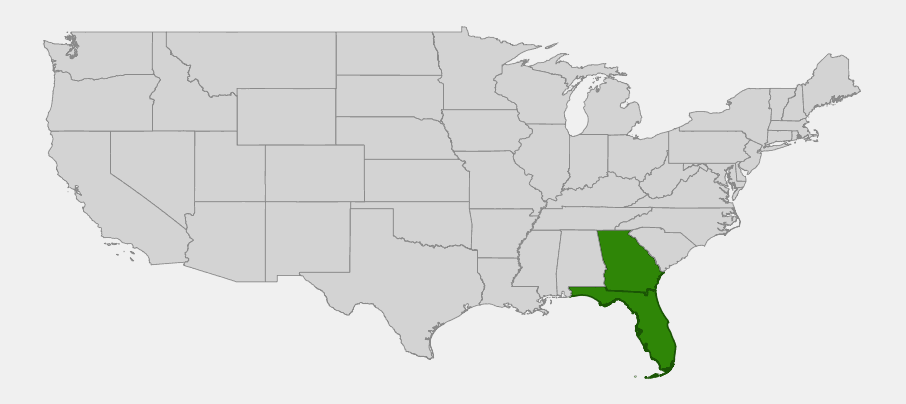
Feay’s prairie clover is close to being a Florida endemic. USDA PLANTS records it only from Florida and Georgia, and the great majority of the range is the Florida peninsula and Panhandle. It belongs to the shrinking community of plants adapted to deep, sterile, fire-maintained sand, which is also some of the most heavily developed land in the state. This guide covers identification, range, how to grow it in a dry sunny garden, and its value to wildlife.
Identification
Florida has only a few native Dalea species, and Feay’s prairie clover is the one most people meet in scrub. Its combination of a woody base, needle-thin leaflets and small round heads of pale pink flowers is not easily confused with anything else in that habitat.
Stems & Habit
The plant builds a short woody base and sends up many slender, wiry, much-branched stems to about two or two and a half feet, occasionally a little taller. The overall shape is a loose open mound rather than a dense bush, and the branches arch outward so that a mature plant can be three feet across while looking almost transparent. Stems are smooth, greenish to reddish-brown, and dotted with tiny resin glands that smell faintly aromatic when crushed. A deep taproot anchors the plant in loose sand and carries it through long dry spells.
Leaves
Leaves are alternate and pinnately compound, but the leaflets are so narrow that the leaf hardly looks compound at all. Each leaf has roughly three to seven leaflets, each one linear or thread-like, a quarter to three-quarters of an inch long, and barely a millimeter wide, often folded or rolled along its length. They are dotted with glands and are a dull gray-green. This fine texture reduces water loss in a habitat where surface sand can reach extreme temperatures.
Flowers
Flowers are packed into dense, rounded to shortly cylindric heads about half to three-quarters of an inch across, each on a slim stalk at the end of a branch. Individual flowers are tiny pea flowers, pale rose-pink to lavender, occasionally nearly white, and they open a few at a time from the base of the head upward. The showiest feature is the stamens: five of them per flower, long, pale, and tipped with bright orange-yellow anthers that project well beyond the petals and give the whole head a fuzzy, pin-cushion look.
In Florida flowering can occur in any month, but the heaviest bloom is from roughly June through October. The green bracts and calyx teeth remain after the petals drop, so old heads stay as small gray-green burrs on the stems.
Fruit & Seeds
Each fertile flower makes a tiny one-seeded pod enclosed in the persistent, gland-dotted calyx. The pods do not split open; the whole calyx-and-pod unit falls as a dispersal package, moved mainly by gravity, by wind rolling it across bare sand, and by animals. Seeds are small, smooth and hard-coated, and like most legume seeds they benefit from scarification before sowing.
Quick Facts
| Scientific Name | Dalea feayi (A. Gray) Barneby (USDA symbol DAFE2; syn. Petalostemon feayi) |
| Family | Fabaceae (pea family) |
| Plant Type | Perennial subshrub with a woody base and deep taproot |
| Mature Height | 1.5–2.5 ft |
| Mature Spread | 2–3 ft; loose and open |
| Growth Rate | Moderate |
| Sun Exposure | Full sun |
| Water Needs | Low; strongly drought tolerant once established |
| Soil Type | Deep, sterile, well-drained sand; sharp drainage is essential |
| Soil pH | About 5.0–7.0 |
| Bloom Time | Peak June–October; scattered bloom possible year-round in Florida |
| Flower Color | Pale rose-pink to lavender with orange-tipped stamens |
| Fall Color | None; stems stay gray-green |
| Fruit | Tiny one-seeded pod enclosed in a gland-dotted calyx |
| Deer Resistant | Moderately; not a preferred browse |
| USDA Hardiness Zones | 8–10 |
Native Range
USDA PLANTS and the Lady Bird Johnson Wildflower Center record Feay’s prairie clover from two states, Florida and Georgia, and almost the entire range lies in Florida. The Atlas of Florida Plants maps it through the peninsula and across much of the Panhandle, with Georgia occurrences restricted to the deep-sand country near the Florida line. Many Florida references describe it as endemic or near-endemic to the state, and in practice a gardener outside Florida and far south Georgia is outside its range.
Its habitat is narrow and specific: Florida scrub, scrubby flatwoods, sandhills, sand pine ridges, coastal dunes and the bare sandy openings between them. These are places with deep, nutrient-poor, excessively drained sand, intense sun at ground level, and a fire regime that periodically removes woody cover. The plant needs the open, unshaded gaps in that landscape; it does not persist under a closed canopy or in soil with much organic matter or clay.
Because so much of Florida’s dry sand ridge country has been converted to housing and citrus, scrub plants in general have lost a large share of their original habitat. Feay’s prairie clover is not currently listed as endangered or threatened by the state or federal government, but its fortunes are tied to the same preserves and fire-managed ridges that protect rarer scrub endemics. Garden plants should be nursery-grown; never dig plants from the wild, since the deep taproot makes transplanting from the wild futile as well as damaging.
📋 Regional plant lists featuring Feay’s Prairie Clover: North & South Florida · Alabama, Georgia & Mississippi
Growing & Care Guide
Feay’s prairie clover is easy in exactly one situation: hot, open, sharply drained sand. It asks for no irrigation, no fertilizer and no mulch, and it fails quickly in heavy, rich or wet soil. Think of it as a scrub plant that happens to be ornamental rather than as a border perennial.
Light
Full sun, all day. This is a plant of bare, blazing white sand, and it will not flower in shade. Even light overhead cover from oaks causes stems to stretch and bloom to drop away.
Soil & Water
Deep sand or a very sandy, gritty mix with rapid drainage. The plant tolerates soils so poor that little else grows, and it fixes its own nitrogen through root nodules, so fertilizer is both unnecessary and harmful. Water new plants until they root out, then stop; established plants rely on a deep taproot and resent regular irrigation. Avoid planting it in a bed on an automatic sprinkler system, and never let it sit in soil that stays damp.
Planting Tips
Plant small container stock in spring or early summer, when warm soil encourages fast root growth, and handle the taproot carefully. Set the crown slightly high so that sand drains away from the woody base. Space plants about two to three feet apart and let the stems weave together, or combine them with other dry-sand natives rather than planting a solid block. Do not apply bark mulch over the root zone; a thin layer of coarse sand or pine straw is better, and bare sand is better still.
Pruning & Maintenance
Almost none. A light trim in late winter keeps the plant from getting leggy and encourages a flush of branching, but hard pruning into old wood is risky. Remove encroaching grasses and vines so the plant keeps its open sand. In fire-managed landscapes it resprouts from the woody base after a burn; in a garden a late-winter cutback mimics that effect.
Propagation
Grow from seed. Collect heads when the calyx-and-pod units are dry and brown, rub them to free the seed, and scarify the hard coat lightly with sandpaper before sowing in a gritty, free-draining mix in spring. Inoculating with a rhizobium suited to Dalea can improve seedling vigor, though plants usually find partners on their own in native sand. Softwood cuttings taken in early summer root inconsistently, so seed is the practical route.
Landscape Uses
- Florida scrub and sandhill gardens: one of the best flowering natives for deep sterile sand
- Pollinator gardens: long bloom season and recognized special value to native bees, bumble bees and honey bees
- Xeriscape and no-irrigation beds: thrives with no supplemental water after establishment
- Coastal dune plantings: handles heat, glare and salt-laden wind on stabilized back dunes
- Scrub restoration: a nitrogen-fixing native that helps rebuild the herb layer of degraded sand ridges
- Butterfly and moth habitat: nectar for skippers and sulphurs and a host association with the bella moth
Wildlife & Ecological Value
Dry Florida scrub produces little nectar for much of the year, so a plant that flowers heavily through the hottest months carries unusual weight for the insects that live there.
For Pollinators
The Xerces Society lists Dalea feayi as having special value to native bees, bumble bees and honey bees. The small, massed pea flowers suit a wide range of visitors: metallic green sweat bees in Augochloropsis and Agapostemon, leafcutter bees, bumble bees, small wasps, hover flies and butterflies, especially skippers and sulphurs. The day-flying bella moth (Utetheisa ornatrix), a conspicuous pink-and-orange moth of Florida sand country, is a frequent visitor. Because the heads open a few flowers at a time over a long season, the plant delivers a small but very steady supply of pollen and nectar.
For Birds
The tiny one-seeded pods are eaten by ground-feeding birds such as sparrows and towhees, and the branches offer cover for small birds in open scrub. Its larger value to birds is indirect: by supporting insects, it feeds the nestlings of birds such as the Florida scrub-jay that depend on this habitat.
For Mammals
Browsing by deer and rabbits is light. Gopher tortoises, which are a keystone species in the same sandhill and scrub communities, graze a wide range of low herbaceous plants and may take the foliage.
Ecosystem Role
As a legume, Feay’s prairie clover forms root nodules with nitrogen-fixing bacteria and adds nitrogen to some of the poorest soil in the Southeast, which benefits neighboring plants. It is adapted to fire: the woody base and deep taproot survive the periodic burns that keep scrub and sandhill open, and plants often flower strongly in the seasons after a fire. Its decline in any particular area is usually a sign that fire has been excluded and woody cover has closed in, or that the sand ridge has been developed.
Cultural & Historical Uses
Asa Gray described the plant in the nineteenth century as Petalostemon feayi, honoring William T. Feay, a physician in Savannah, Georgia, who collected extensively in Georgia and Florida and supplied specimens to the leading American botanists of his day. The botanist Rupert Barneby later moved the species, with most other North American Petalostemon, into Dalea during his monumental revision of the group, and Dalea feayi is the accepted name today. The older name still turns up in regional floras and herbarium labels.
The genus Dalea commemorates Samuel Dale, an English botanist and apothecary of the early eighteenth century. Most of its roughly 160 species are plants of dry open country in the Americas, and the familiar prairie clovers of the Great Plains, such as purple prairie clover, are the group’s better-known members. Feay’s prairie clover is the Florida sand-country representative of that line.
Florida native plant nurseries have brought it into cultivation over the past few decades, and it now appears in Florida Native Plant Society recommendations for scrub and sandhill gardens and in pollinator planting lists. It remains a specialist’s plant: beautiful in the right soil, short-lived and disappointing in the wrong one, and worth seeking out from a nursery that grows Florida scrub species rather than generic perennials.
Frequently Asked Questions
Is Feay’s prairie clover endemic to Florida?
Nearly. USDA PLANTS records it from Florida and Georgia, with the Georgia occurrences limited to deep-sand country near the Florida line, and most of the range is in the Florida peninsula and Panhandle. Many Florida sources treat it as a state endemic, which is close enough to the truth for gardening purposes.
Will it grow in ordinary garden soil?
Usually not for long. It needs deep, sterile, sharply drained sand and full sun. In amended, rich or clay soil, or anywhere water lingers, the taproot rots and the plant declines within a season or two. If your soil is not sandy, grow it in a raised sand bed or a large container of gritty mix rather than trying to improve a border for it.
Do I need to fertilize it?
No. It is a legume that fixes its own nitrogen through root nodules, and it evolved on some of the poorest soil in the Southeast. Fertilizer produces soft, floppy growth, reduces flowering and shortens the plant’s life.
How do I grow it from seed?
Collect the dry calyx-and-pod units in fall, rub out the seed, and scarify the hard coat lightly with sandpaper. Sow in spring in a gritty, free-draining mix, keep it barely moist and warm, and pot seedlings on quickly so the taproot is not deformed. Plant out while the plants are still small.
Is it good for bees?
Yes, unusually so. The Xerces Society lists it as having special value to native bees, bumble bees and honey bees. Its long flowering season in a dry habitat with few other nectar sources makes it more important to scrub insects than its small flowers suggest.

Looking for a nursery that carries Feay’s Prairie Clover?
Browse our native plant nursery directory: Florida & Georgia