
Mountain Phacelia (Phacelia imbricata)
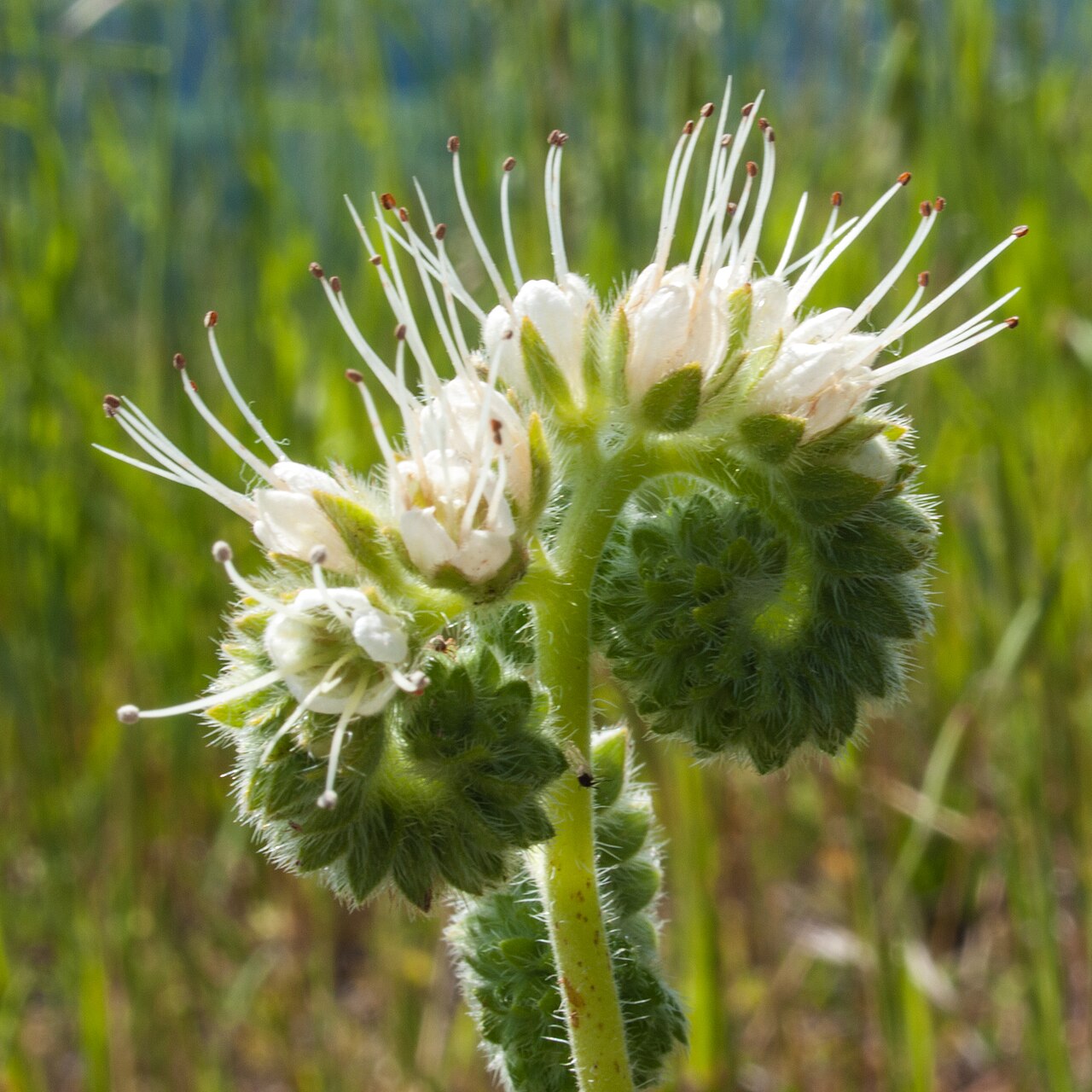
Phacelia imbricata, known here as Mountain Phacelia (USDA: imbricate phacelia), is a bristly perennial wildflower of California and Baja California. It belongs to the borage family (Boraginaceae), in the group once separated as the waterleaf family (Hydrophyllaceae). From spring into summer it produces dense, coiled clusters of small, white to pale lavender, bell-shaped flowers with long stamens that stick out like whiskers.
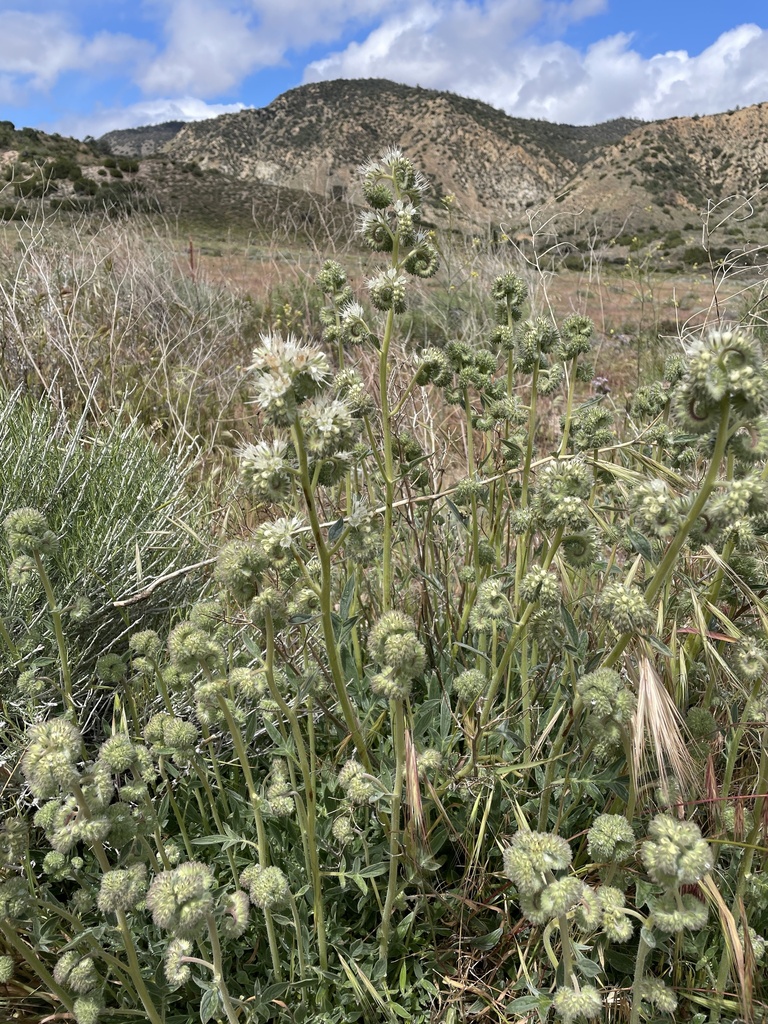
It is a common plant of rocky slopes, chaparral, oak woodland, coastal scrub and open forest in the foothills and mountains of California, from the North Coast Ranges and Sierra Nevada south to the Transverse and Peninsular Ranges and into northern Baja California. Plants grow from a woody base and can be low and sprawling or upright and up to about 3 feet tall.
Mountain phacelia is a tough, drought-tolerant plant that bees love. It is best suited to naturalistic gardens, slopes and habitat plantings. Note: like many phacelias, its stiff, glandular hairs can cause an itchy skin rash in sensitive people, so wear gloves when handling it.
Identification
Look for a bristly, gray-green perennial with divided leaves and dense, curled flower clusters, like fiddleheads, of small white to pale lavender bells with protruding stamens.
Growth Habit
A perennial (sometimes short-lived) herb growing from a woody root crown. Several stems rise from the base and may sprawl along the ground or stand upright, usually 8 to 32 inches tall and occasionally over 3 feet. Stems and leaves are covered with stiff, bristly hairs and smaller glandular hairs.
Leaves
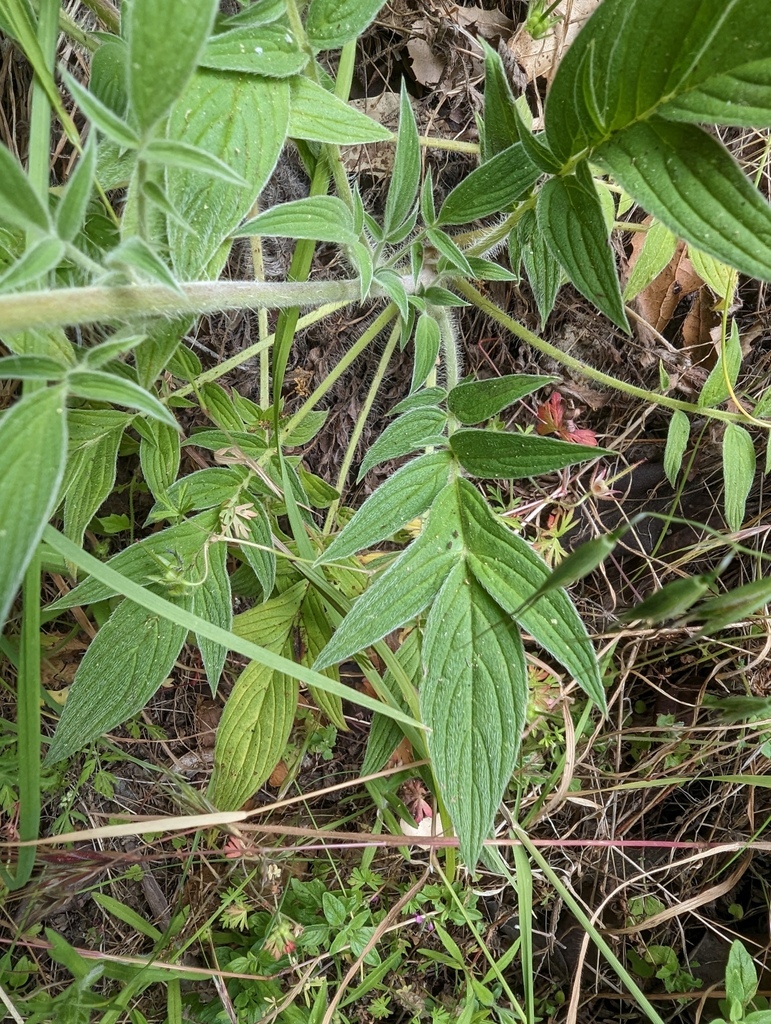
The leaves are mostly near the base and lower stem, up to about 6 inches long. Most are divided into 3 to 9 lance-shaped to oval leaflets, with the end leaflet usually the largest; upper leaves are smaller and may be undivided. The leaves are gray-green and rough with stiff hairs.
Flowers
Flowers are packed into dense, one-sided, coiled clusters (scorpioid cymes) that unroll as the flowers open, often several clusters together at the stem tips. Each flower is bell-shaped, about 1/4 inch long, white to pale lavender, with five stamens that stick out well beyond the petals. The bristly calyx lobes and closely spaced flowers give the coils a densely overlapping look. Flowering is from about April to July.
Fruit
The fruit is a small, round capsule holding one to four tiny seeds, enclosed by the persistent, bristly calyx.
Look-alikes
California phacelia (P. californica) is a similar perennial of the coast, with leaves that are mostly undivided or with just a few small side lobes and usually lavender flowers. Caterpillar scorpionweed (P. cicutaria) is an annual with finely divided, fern-like leaves. Two subspecies are recognized: subsp. imbricata, more upright, and subsp. patula, with more spreading stems.
Quick Facts
| Scientific Name | Phacelia imbricata |
| Family | Boraginaceae (borage family); formerly Hydrophyllaceae |
| Plant Type | Herbaceous perennial |
| Mature Height | 8–32 in (occasionally to 4 ft) |
| Mature Spread | 1–2 ft |
| Growth Rate | Moderate |
| Sun Exposure | Full sun to part shade |
| Water Needs | Low; drought tolerant |
| Soil Type | Rocky, gravelly or sandy well-drained soils; also serpentine |
| Soil pH | Slightly acidic to neutral (about 6.0–7.5) |
| Bloom Time | April–July |
| Flower Color | White to pale lavender |
| Fall Color | None |
| Fruit | Small round capsules |
| Deer Resistant | Yes; bristly foliage is rarely browsed |
| USDA Hardiness Zones | 7–10 |
Native Range
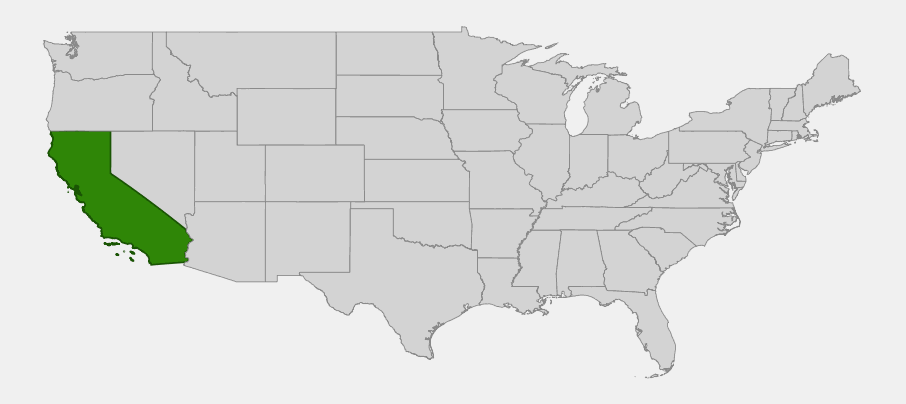
USDA PLANTS lists mountain phacelia as native to California, and it also grows in northern Baja California, Mexico. It is one of the most widespread perennial phacelias in the state.
It grows in the North and South Coast Ranges, the San Francisco Bay Area hills, the foothills and lower slopes of the Sierra Nevada, the Transverse Ranges (including the Santa Monica, San Gabriel and San Bernardino Mountains), and the Peninsular Ranges. It also reaches the edges of the deserts and the eastern Sierra.
It favors dry, open, rocky places: chaparral and coastal sage scrub, oak and pine woodland, rock outcrops and roadcuts, and sometimes serpentine soils, from near sea level to about 8,000 feet. It often appears in large numbers after fire.
📋 Regional plant lists featuring Mountain Phacelia: California & Nevada
Growing & Care Guide
Mountain phacelia is an easy, unfussy plant for dry, sunny California gardens, especially on slopes and in habitat gardens where its bristly texture is not a problem.
Light
Full sun to part shade. In hot inland gardens it appreciates some afternoon shade.
Soil & Water
Plant in well-drained, rocky, gravelly or sandy soil. It tolerates poor soils, including serpentine. Water during its first year, then little or not at all in summer once established. Too much summer water shortens its life.
Planting Tips
Plant in fall or winter so rains can establish the roots. Place it on slopes, in rock gardens, among chaparral shrubs or along the edges of a dry meadow. Keep it away from paths and play areas, since the bristly hairs can irritate skin.
Pruning & Maintenance
Cut back the old flowering stems in late summer or fall to keep the plant tidy and encourage fresh growth. Wear gloves and long sleeves when handling it.
Propagation
Grow from seed sown in fall. Seed of many phacelias germinates better after cold or smoke treatment, reflecting their tendency to sprout after fire. It often reseeds in open, disturbed soil.
Landscape Uses
- Pollinator gardens: a long-blooming bee magnet
- Slopes and banks: a tough perennial for dry hillsides
- Chaparral and habitat gardens: blends with native shrubs
- Rock gardens: sprawls between stones in sun
- Restoration: quick cover after fire or disturbance
Wildlife & Ecological Value
Like most phacelias, mountain phacelia is an excellent pollinator plant and a valuable part of California’s chaparral and woodland communities.
For Pollinators
The many small flowers produce abundant nectar and pollen and are visited heavily by native bees, including bumble bees and many solitary bees, as well as honey bees, flies and small butterflies. Phacelias are among the most important pollen sources for bees in California.
For Birds
Seed-eating birds may forage on the small seeds, and insect-eating birds hunt the many insects drawn to the flowers.
For Mammals
The bristly foliage is seldom browsed by deer or rabbits.
Ecosystem Role
It quickly colonizes burned or disturbed slopes, helping to hold soil while shrubs regrow, and supports a diverse community of pollinating insects.
Cultural & Historical Uses
The genus name Phacelia comes from the Greek phakelos, “bundle” or “cluster,” for the crowded flower clusters. The species name imbricata means “overlapping,” like roof tiles, describing the tightly packed flowers and calyx lobes in the coils.
Phacelias are well known among hikers and gardeners for causing skin irritation. The rash, a form of contact dermatitis, comes from chemicals in the glandular hairs and affects some people much more than others.
Phacelias are prized by beekeepers and farmers as bee plants. A relative, Phacelia tanacetifolia, is widely grown as a cover crop for pollinators around the world.
Frequently Asked Questions
Why is it called mountain phacelia here?
Its USDA name is imbricate phacelia. “Mountain phacelia” reflects its common habitat on rocky slopes in California’s foothills and mountains.
Can mountain phacelia cause a rash?
Yes, in some people. Like many phacelias, its bristly, glandular hairs can cause an itchy skin rash. Wear gloves and long sleeves when handling it.
Is mountain phacelia a perennial?
Yes. It grows from a woody base and lives several years, though individual plants can be short-lived.
Is it good for bees?
Very good. Its abundant small flowers attract bumble bees, many native solitary bees and other pollinators.
Does mountain phacelia need summer water?
No. Once established, it is drought tolerant and does best with little or no summer water.

Looking for a nursery that carries Mountain Phacelia?
Browse our native plant nursery directory: California

