
Munchkin Dudleya (Dudleya gnoma)
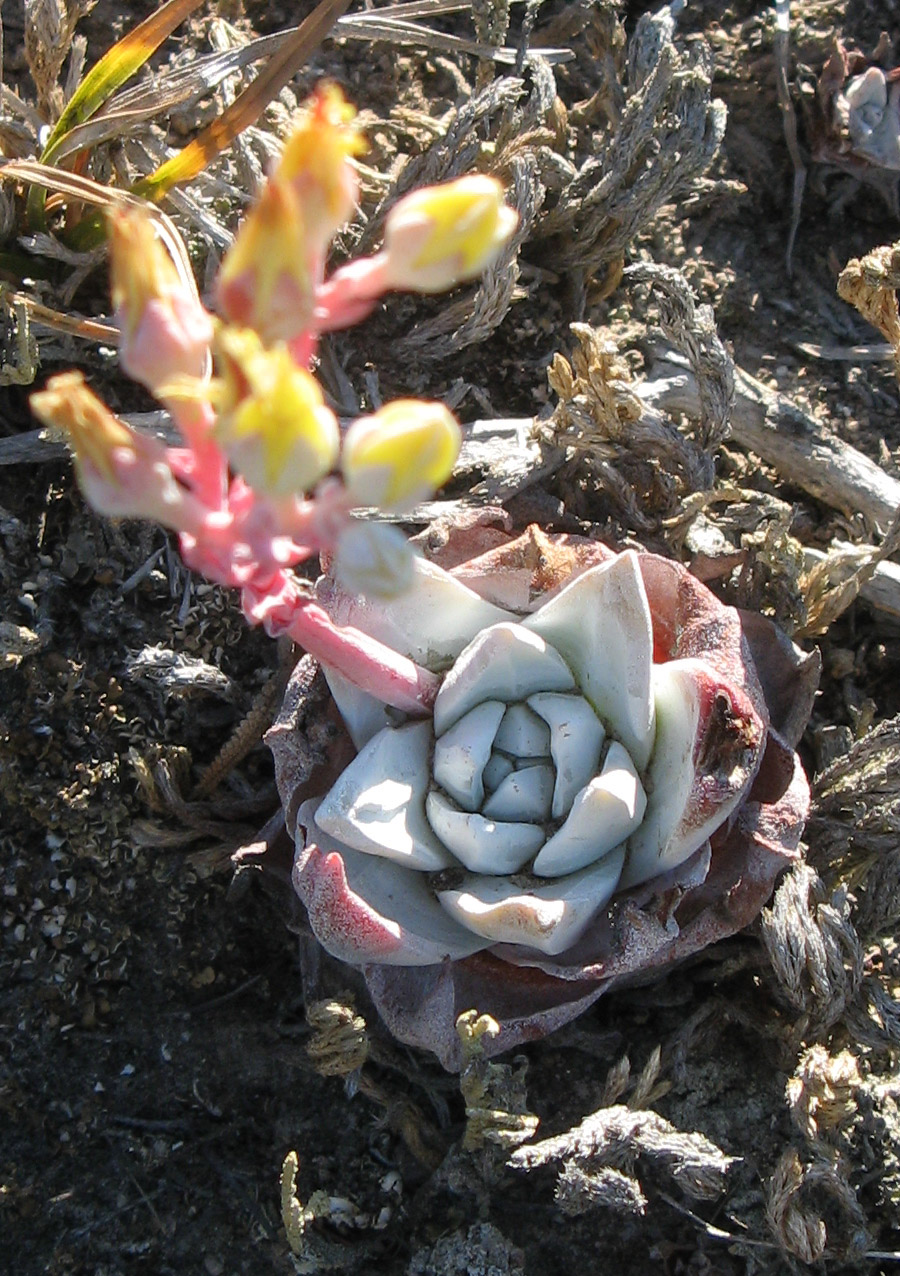
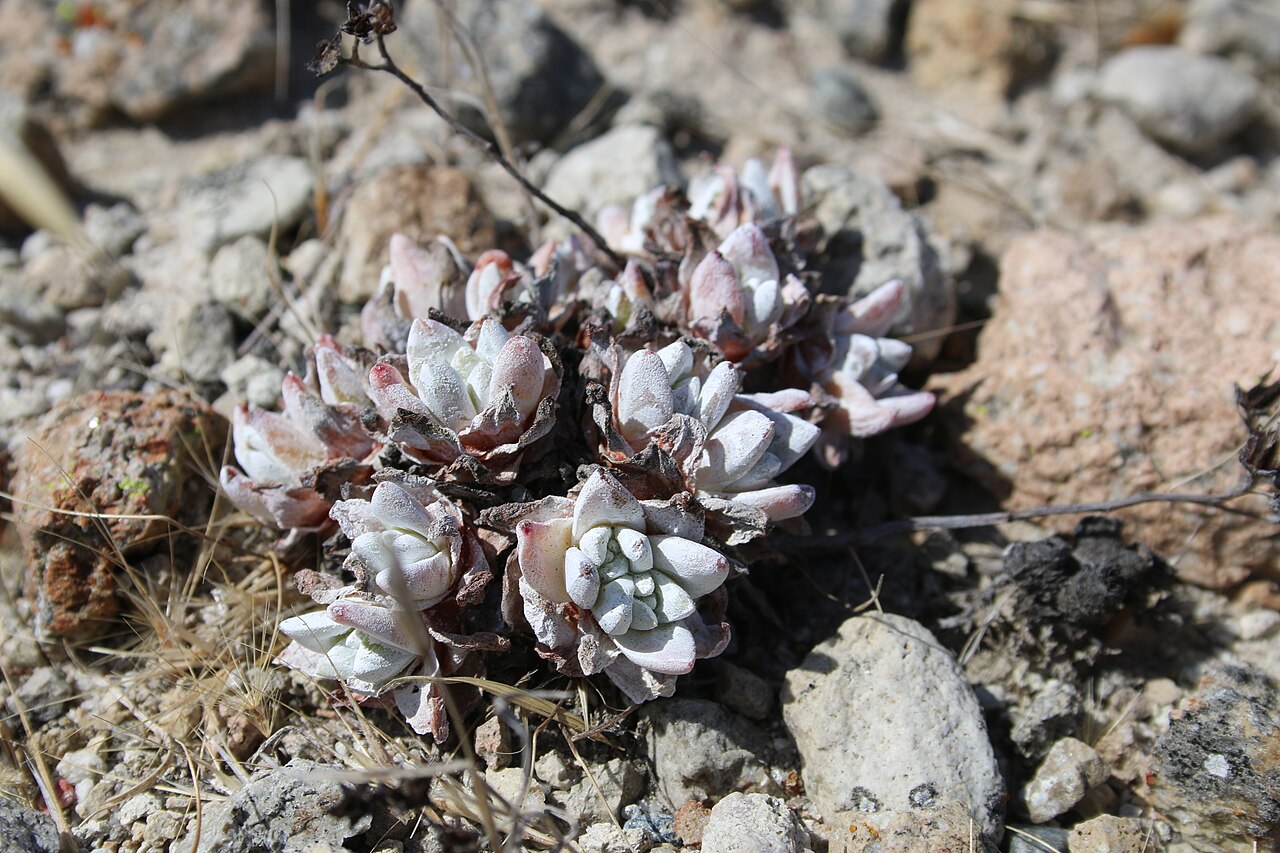
Dudleya gnoma, the Munchkin Dudleya (USDA: munchkin liveforever), is a tiny succulent in the stonecrop family with one of the smallest natural ranges of any California plant. In the wild it grows only on a ridge on the eastern side of Santa Rosa Island, one of the Channel Islands off Santa Barbara, where it forms tight clumps of chalk-white rosettes, each usually under 2 inches across, on thin volcanic soil.
It is also one of the best-known dudleyas in cultivation. A dwarf, intensely white form sold as ‘White Sprite’ has been grown by succulent collectors since the 1970s, which is why many people search for this plant without realizing how rare it is in nature. NatureServe ranks the species G1, critically imperiled: it is known from a single population of three colonies, so one severe drought, fire or poaching incident could wipe out the wild plants.
Its name has a tangled history. The plant was long treated as a dwarf form of Greene’s liveforever (Dudleya greenei), which also grows on Santa Rosa Island, and Stephen McCabe described it as a separate species in 1997. Some botanists still disagree: the Jepson eFlora, California’s standard flora, has treated it within Dudleya greenei, while USDA PLANTS and many succulent references keep it as Dudleya gnoma. Whatever name you use, wild plants are protected inside Channel Islands National Park. Buy only nursery-propagated plants, and never collect plants or seed from the wild.
Identification
Munchkin dudleya is a miniature, evergreen rosette succulent. Its small size, triangular leaves and heavy white wax set it apart from the larger dudleyas that grow on the island’s cliffs.
Rosettes & Leaves
Plants grow from a short, thick stem (caudex) about ½ to ¾ inch wide and form clumps of 1 to about 24 rosettes, with the whole plant rarely more than 4 inches across. Each rosette is usually ⅓ to 2 inches wide and holds up to 20 fleshy leaves that are triangular to triangular-ovate and only about ¼ to ½ inch long. The leaves are covered in a powdery white wax (farina) that gives the plant its chalky look and often blushes pink or lavender in sun and drought. In summer the leaves dry somewhat but are not shed.
Flowers
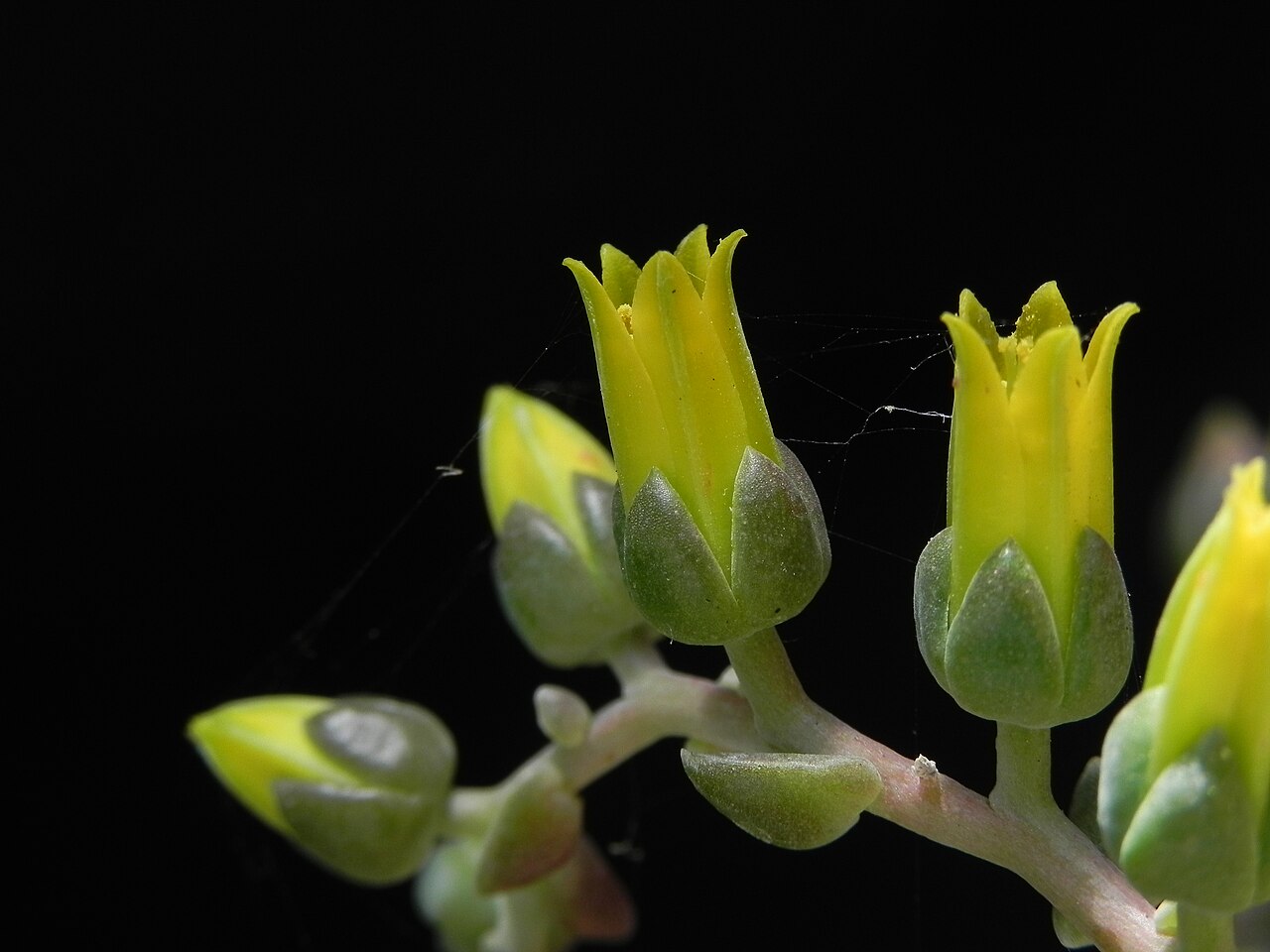
In May and June, each rosette may send up a flower stalk 1 to 5 inches tall, studded with small triangular bracts and often tinged pink or red. The stalk usually forks into two short branches, each carrying 1 to 10 flowers on very short stalks. The flowers are pale to bright yellow, with five pointed petals about ⅓ inch long that are joined only at the base and spread slightly at the tips.
Fruit
After flowering, each flower forms a cluster of small, upright follicles that split open in summer to release dust-fine seeds.
Look-alikes
Its close relative Dudleya greenei grows on cliff faces and seacliffs on the same island and is larger in every way, with longer, more oblong leaves that are rounder in cross-section and blunter at the tips, and usually three or more branches in the flower stalk. Mainland species such as Chalk Liveforever are also white but form single rosettes many times larger, and Coast Dudleya has longer, green to gray leaves. In gardens, munchkin dudleya is sometimes confused with small echeverias, which are not native to California.
Quick Facts
| Scientific Name | Dudleya gnoma S. McCabe (treated within D. greenei by the Jepson eFlora) |
| Family | Crassulaceae (stonecrop family) |
| Plant Type | Evergreen rosette-forming succulent perennial |
| Mature Height | About 1 in (rosettes); 1–5 in in flower |
| Mature Spread | 2–4 in clumps |
| Growth Rate | Slow |
| Sun Exposure | Full sun to light shade |
| Water Needs | Very low; winter rain only, dry in summer |
| Soil Type | Thin, gravelly, very fast-draining mineral soil |
| Soil pH | About 6.0–7.5 |
| Bloom Time | May–June |
| Flower Color | Pale to bright yellow |
| Fall Color | Evergreen; leaves blush pink in sun and drought |
| Fruit | Small follicles with dust-fine seeds |
| Deer Resistant | Moderate; gophers, rodents and snails can damage it |
| USDA Hardiness Zones | 9–11 |
Native Range
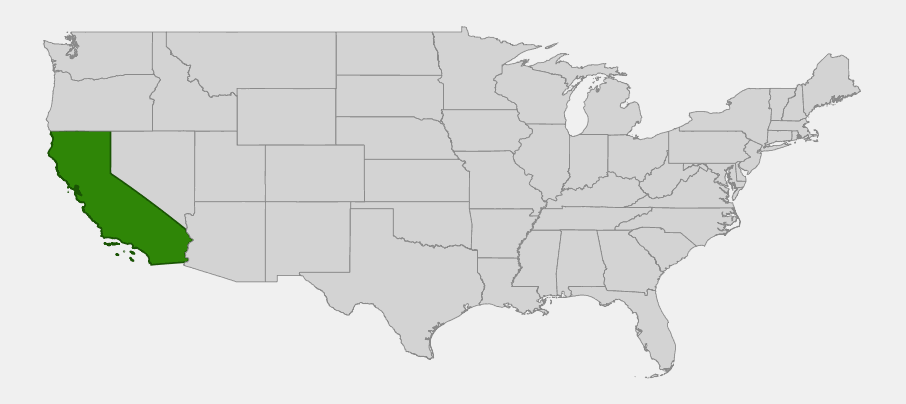
Munchkin dudleya is endemic to Santa Rosa Island in Santa Barbara County, California, the second-largest of the northern Channel Islands. USDA PLANTS lists it only for California, and it is known from a single population on a ridge on the eastern side of the island, made up of three colonies. The map shows California as a whole, but in the wild this plant occupies only a few small patches of one island inside Channel Islands National Park.
It grows on flat to gently sloping, rocky ground with shallow, gravelly soil weathered from Miocene volcanic rock, in open coastal grassland and scrub kept cool and foggy by the ocean. This sets it apart from Dudleya greenei, which clings to cliff faces in canyons and along seacliffs. Rain falls mostly in winter, and the plants grow from late fall to spring and slow down in the dry summer.
For more than a century the island was a cattle ranch, and introduced deer and elk were kept for hunting. Grazing and trampling damaged much of the native vegetation. The cattle were removed in the late 1990s and the last deer and elk by 2011, and the island’s plant life has been recovering since. Munchkin dudleya still faces risks from its tiny gene pool, extreme drought and illegal collecting, since rare dudleyas are targeted by poachers for the succulent trade.
📋 Regional plant lists featuring Munchkin Dudleya: California & Nevada
Growing & Care Guide
Munchkin dudleya is sold by succulent and California native nurseries, most often as the cultivar ‘White Sprite’ and sometimes as tissue-cultured plants of the wild species. Buy only nursery-propagated plants; never collect plants or seed from Santa Rosa Island, which is a national park where all plants are protected. It is more particular than most dudleyas: it wants winter moisture and a dry, cool summer, and summer watering can rot or kill its roots.
Light
Bright light keeps the rosettes compact and white. Near the coast, give it full sun; in hot inland gardens, give it bright light with afternoon shade. In low light the rosettes stretch and lose their wax.
Soil & Water
Use a very fast-draining, mostly mineral mix, such as pumice or crushed lava with a little cactus soil, or plant it in a rock crevice or gravel garden. Water during the cool season when the plant is actively growing, letting the mix dry between waterings. From about June to October, keep it nearly dry; a light misting in extreme heat is enough. Water at the base of the plant, not over the leaves, because water washes off the protective white wax and can sit in the rosette.
Planting Tips
Plant or repot in fall, at the start of the growing season. Set the caudex slightly high, angled if possible, with a collar of grit so water drains away from the stem. It does very well in small pots, troughs and rock gardens, which keep its size in proportion. Protect it from hard frost; it tolerates light frost but not long periods of cold, wet soil.
Pruning & Maintenance
Don’t touch the leaves: fingerprints remove the white coating, and it takes a long time to regrow. Pull off dried flower stalks once seed has dropped. Watch for mealybugs, aphids on flower stalks, snails and gophers in the ground.
Propagation
Sow the dust-fine seed on the surface of a gritty mix in fall or winter, and keep it barely moist and bright. Seedlings are slow, taking two to three years to reach flowering size. Clumping plants can also be divided carefully by removing an offset rosette with some stem and letting the cut dry before potting. Nurseries also propagate it by tissue culture, which reduces pressure on wild plants.
Landscape Uses
- Succulent collections: a classic small dudleya for pots, troughs and display benches
- Rock and crevice gardens: tucked between stones in coastal California gardens
- Containers: well suited to small pots where drainage can be controlled
- Conservation interest: a living example of the Channel Islands’ unique flora
Wildlife & Ecological Value
On Santa Rosa Island, munchkin dudleya is part of a recovering island ecosystem with many plants and animals found nowhere else.
For Pollinators
The small yellow flowers are visited by native bees and other small insects. The pink flower stalks and nectar of dudleyas also attract hummingbirds, which visit dudleya flowers on the Channel Islands and mainland.
For Birds
Small birds may pick at seeds or the insects on the plants, but munchkin dudleya is too small and rare to be an important food source for birds.
For Mammals
Before the island’s cattle, deer and elk were removed, grazing and trampling damaged dudleya populations. Native island deer mice and other small animals may still nibble the plants.
Ecosystem Role
Like other dudleyas, it is a pioneer of thin rocky soils where few other plants can grow, holding small pockets of soil in place. Its single wild population makes it an indicator of how well the island’s native vegetation is recovering after more than a century of ranching.
Cultural & Historical Uses
The genus Dudleya honors William Russel Dudley, the first head of the botany department at Stanford University. The species name gnoma refers to a gnome, a nod to the plant’s miniature size, and the common name “munchkin” makes the same joke.
The plant was first noticed in the 1950s. Botanist Reid Moran considered it a dwarf form of Dudleya greenei and shared cuttings with growers, and in the early 1970s Abbey Garden nursery introduced it to the trade as ‘White Sprite’. Paul Thomson called it Dudleya nana in 1988, but that name was not validly published, and Stephen McCabe formally described it as Dudleya gnoma in 1997. Not all botanists agree it is distinct: the Jepson eFlora has treated it within D. greenei.
Because most plants in gardens descend from a few old collections or tissue culture, cultivation helps protect the wild colonies. Dudleyas have been heavily poached along the California coast in recent years for overseas succulent markets, which is why it matters to buy from reputable nurseries that sell propagated plants.
Frequently Asked Questions
Where does munchkin dudleya grow in the wild?
Only on Santa Rosa Island in Channel Islands National Park, California, on a ridge on the eastern side of the island. It is known from a single population of three colonies.
Is Dudleya gnoma the same as ‘White Sprite’?
‘White Sprite’ is the common cultivated form of Dudleya gnoma, a dwarf, very white selection introduced in the early 1970s from plants collected by Reid Moran. Tissue-cultured plants of the wild species tend to have somewhat larger rosettes.
Is Dudleya gnoma a separate species from Dudleya greenei?
Botanists disagree. Stephen McCabe described it as a separate species in 1997, and USDA PLANTS accepts it as Dudleya gnoma. The Jepson eFlora, California’s standard flora, has treated it as part of Dudleya greenei.
How do I keep munchkin dudleya alive?
Give it bright light, a very gritty mix and water only during the cool season. Keep it nearly dry in summer, water at the base rather than over the leaves, and don’t handle the rosettes, which removes their white wax.
Is munchkin dudleya endangered?
It is not federally listed, but NatureServe ranks it G1, critically imperiled, because it has only one wild population. All plants on Santa Rosa Island are protected by the National Park Service. Buy only nursery-propagated plants.

Looking for a nursery that carries Munchkin Dudleya?
Browse our native plant nursery directory: California

