
Coast Dudleya (Dudleya caespitosa)
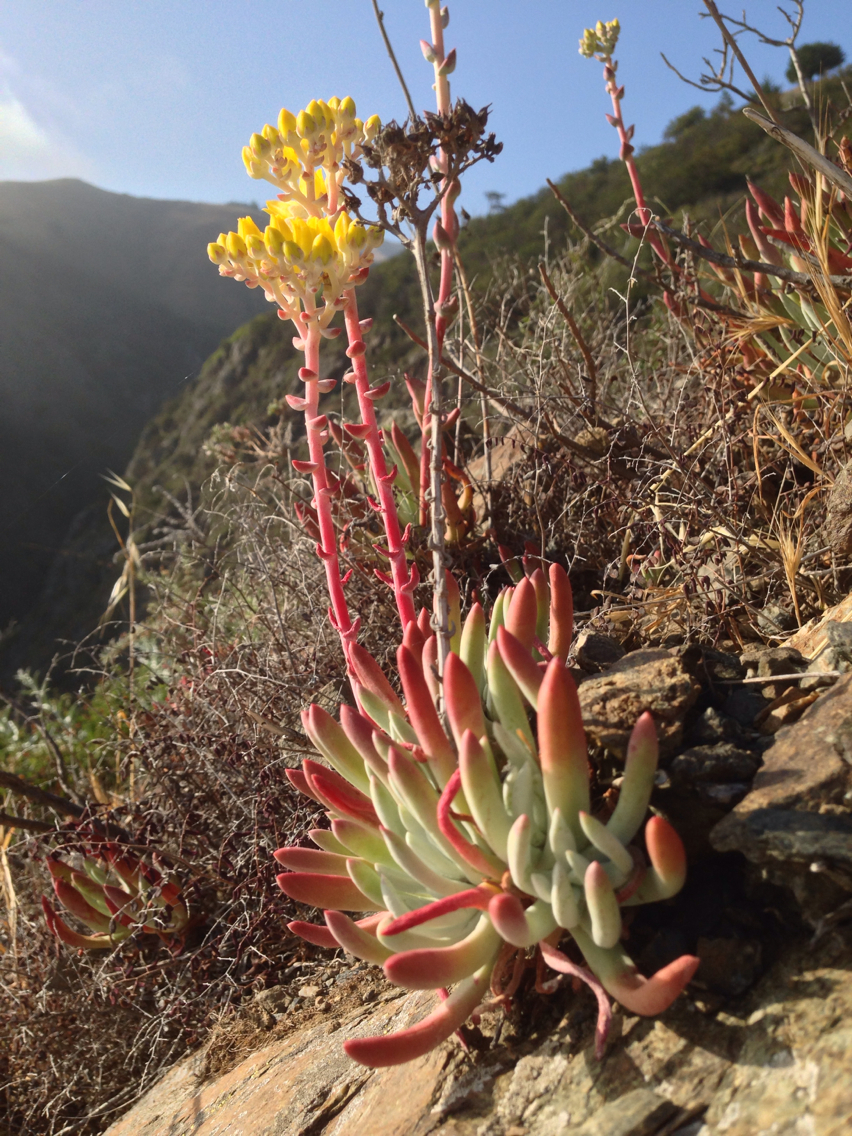
Dudleya caespitosa, Coast Dudleya, also called sea lettuce or sand lettuce, is a clumping succulent found only in California. It grows on sea cliffs, coastal bluffs, rocky outcrops and dunes along the central and southern California coast.
It forms loose clumps of fleshy rosettes, sometimes more than a hundred, each 3 to 12 inches across, with thick, strap-shaped, green to gray-green leaves that often blush red or pink in sun and drought. From spring into summer, branched red stalks up to 2 feet tall carry clusters of tubular, bright yellow to orange-yellow flowers.
Coast dudleya is a striking plant for coastal rock gardens, walls and containers, and its flowers attract hummingbirds and bees. Like other wild dudleyas it has been targeted by poachers, so buy plants only from reputable nurseries and never collect them from the wild.
Identification
Look on sea cliffs, bluffs and coastal rocks for clumps of fleshy, pointed-leaved rosettes, often flushed with red, with tall, branched reddish stalks of yellow tubular flowers in spring and summer.
Growth Habit
A perennial succulent with a short, thick, woody stem (caudex) about 1/2 to 1 1/2 inches wide, often branching to form loose clumps of many rosettes. On old plants the stems are partly exposed between dry, dead leaves.
Leaves
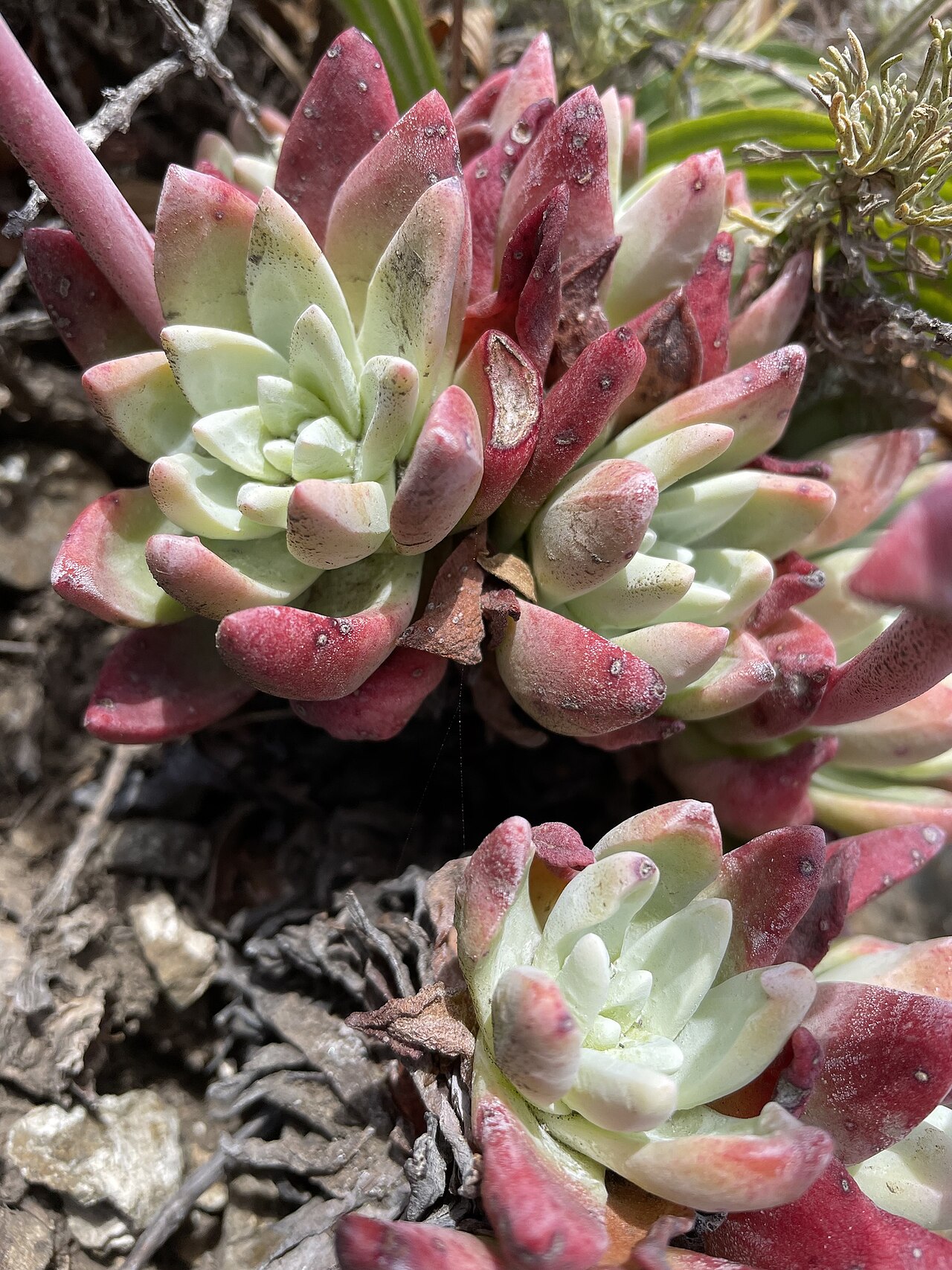
Each rosette has about 15 to 30 thick, fleshy leaves, usually 2 to 8 inches long and about 1/2 to 3/4 inch wide, lance-shaped to oblong with pointed tips. They range from green to gray-green or lightly powdery and turn red or pink at the tips and edges in sun or drought.
Flowers
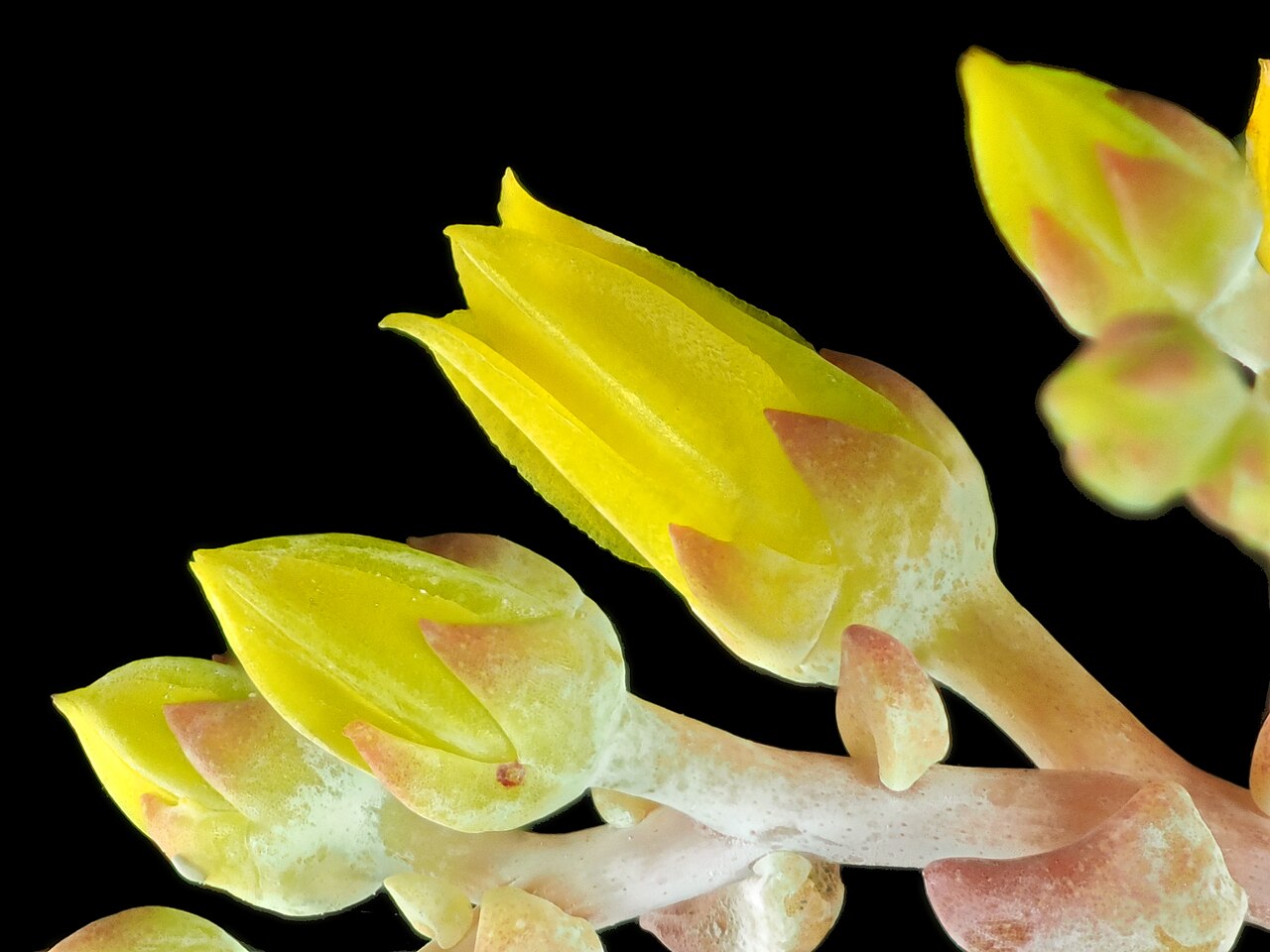
Flower stalks are 4 to 24 inches tall and reddish, with small leaf-like bracts and 3 to 5 main branches. Each branch carries 4 to 15 upright, tubular flowers about 1/3 to 2/3 inch long. The petals are joined at the base and bright yellow to orange-yellow, sometimes tinged red. Bloom is mainly in spring and early summer.
Fruit
The fruit is a cluster of small, upright follicles that split to release tiny, dust-like seeds.
Look-alikes
Bluff lettuce grows mostly north of the Golden Gate and has shorter, broader, often powdery leaves in tight rosettes. Lanceleaf liveforever grows inland in southern California and usually has solitary rosettes. Canyon liveforever has broader leaves and red to orange flowers. Coast dudleya is part of a variable group of species that can be hard to tell apart where their ranges meet.
Quick Facts
| Scientific Name | Dudleya caespitosa |
| Family | Crassulaceae (stonecrop family) |
| Plant Type | Perennial succulent |
| Mature Height | 4–12 in (flower stalks to 2 ft) |
| Mature Spread | 1–2 ft clumps |
| Growth Rate | Slow |
| Sun Exposure | Full sun to part shade |
| Water Needs | Very low; dry summers |
| Soil Type | Rocky, sandy or gravelly, very well-drained soil |
| Soil pH | Slightly acidic to alkaline (about 6.0–8.0) |
| Bloom Time | Spring to early summer |
| Flower Color | Bright yellow to orange-yellow |
| Fall Color | Leaves often flush red in drought |
| Fruit | Small follicles with tiny seeds |
| Deer Resistant | Moderately; deer and snails may eat young leaves |
| USDA Hardiness Zones | 9–11 |
Native Range
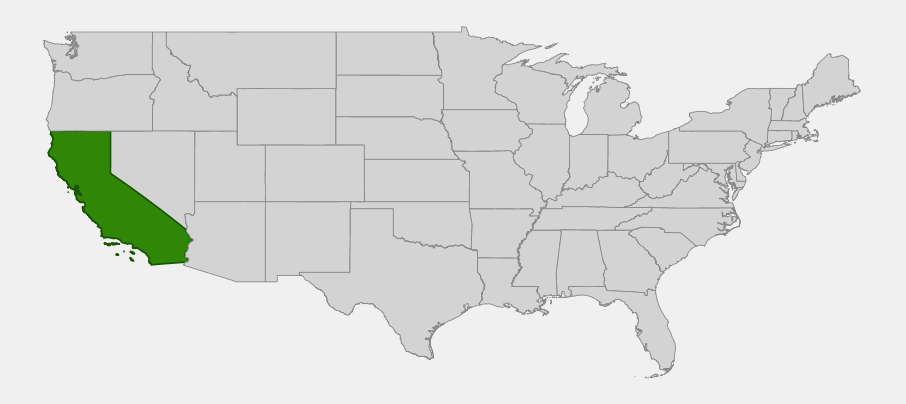
Coast dudleya is endemic to California. USDA PLANTS records it in California only.
Plants identified as this species grow along the coast from about Point Reyes in Marin County south through the San Francisco Bay Area, Santa Cruz, Monterey and Big Sur, San Luis Obispo and Santa Barbara counties to the Malibu coast. Because it belongs to a variable complex of closely related dudleyas, its exact limits are hard to define.
It grows on sea cliffs, coastal bluffs, rocky outcrops, road cuts and stabilized dunes, usually within sight or sound of the ocean, from sea level to a few hundred feet. It often grows in cracks in rock where little else can take hold.
📋 Regional plant lists featuring Coast Dudleya: California & Nevada
Growing & Care Guide
Coast dudleya is one of the easier dudleyas to grow, especially in coastal gardens. Like all dudleyas it needs excellent drainage and dry summers, and it should only be bought from nurseries that propagate their own plants.
Light
Full sun on the coast. Inland, give it morning sun and afternoon shade, as it can scorch in hot summer sun.
Soil & Water
Plant in very fast-draining, rocky, sandy or gritty soil, or in a cactus mix in containers. Water occasionally from fall through spring, and keep it nearly dry in summer, when it is semi-dormant. Summer water in warm weather can cause rot.
Planting Tips
Plant it at an angle in a rock wall, slope, crevice or boulder pocket so water runs off the rosettes rather than collecting in them. It also does well in pots and shallow troughs.
Pruning & Maintenance
Remove spent flower stalks after seed falls. Leave the old dry leaves on the stems, since they help protect the plant. Watch for slugs, snails and mealybugs.
Propagation
Grow from seed sown on the surface of a gritty mix and kept lightly moist, or by carefully removing and rooting offset rosettes from nursery plants. Never collect plants from the wild; dudleya poaching is illegal in California.
Landscape Uses
- Rock gardens and walls: grows in cracks and crevices
- Coastal gardens: tolerates salt spray and wind
- Containers and troughs: compact, colorful succulent rosettes
- Hummingbird gardens: tubular yellow flowers in spring and summer
- Fire-wise plantings: fleshy, water-filled leaves
Wildlife & Ecological Value
Coast dudleya adds flowers and food to the harsh environment of coastal cliffs and bluffs.
For Pollinators
Hummingbirds visit the tubular yellow flowers, and bees and other insects also gather nectar and pollen. The long flower stalks provide food over several weeks in spring and summer.
For Birds
Hummingbirds are the main bird visitors. Small birds may also forage for insects among the rosettes on cliff faces.
For Mammals
Its leaves are sometimes eaten by deer, rabbits and rodents where they can reach them, but its cliffside sites protect many plants.
Ecosystem Role
It is one of the few plants able to grow on bare coastal rock and in crevices, using CAM photosynthesis to save water. Its clumps help trap soil and organic matter in rock cracks, giving other plants a foothold.
Cultural & Historical Uses
The genus Dudleya honors William Russel Dudley, the first head of the botany department at Stanford University. The species name caespitosa means “growing in tufts or clumps.”
It was first described in 1803 as Cotyledon caespitosa, with a mistaken note that it came from the Cape of Good Hope. The botanist John Lindley later called it “a very distinct-looking kind, but not one that is handsome,” an opinion most gardeners today would not share.
Wild dudleyas, especially on the coast, have been poached and smuggled for overseas succulent markets. California strengthened penalties for taking them in 2021. Enjoy coast dudleya where it grows and buy only nursery-grown plants.
Frequently Asked Questions
Where does coast dudleya grow?
On sea cliffs, coastal bluffs, rocky outcrops and dunes along the central and southern California coast, from about Point Reyes to Malibu.
Is coast dudleya easy to grow?
It is one of the easier dudleyas, if given very fast-draining soil, sun near the coast and little summer water.
When does coast dudleya bloom?
Mainly in spring and early summer, with branched red stalks of bright yellow tubular flowers.
Can I collect coast dudleya from the wild?
No. Wild dudleyas are protected from poaching in California, and collecting them harms native populations. Buy nursery-grown plants.
Does coast dudleya attract hummingbirds?
Yes. Hummingbirds visit its tubular yellow flowers, as do bees and other insects.

Looking for a nursery that carries Coast Dudleya?
Browse our native plant nursery directory: California

