Seaside Daisy (Erigeron glaucus)
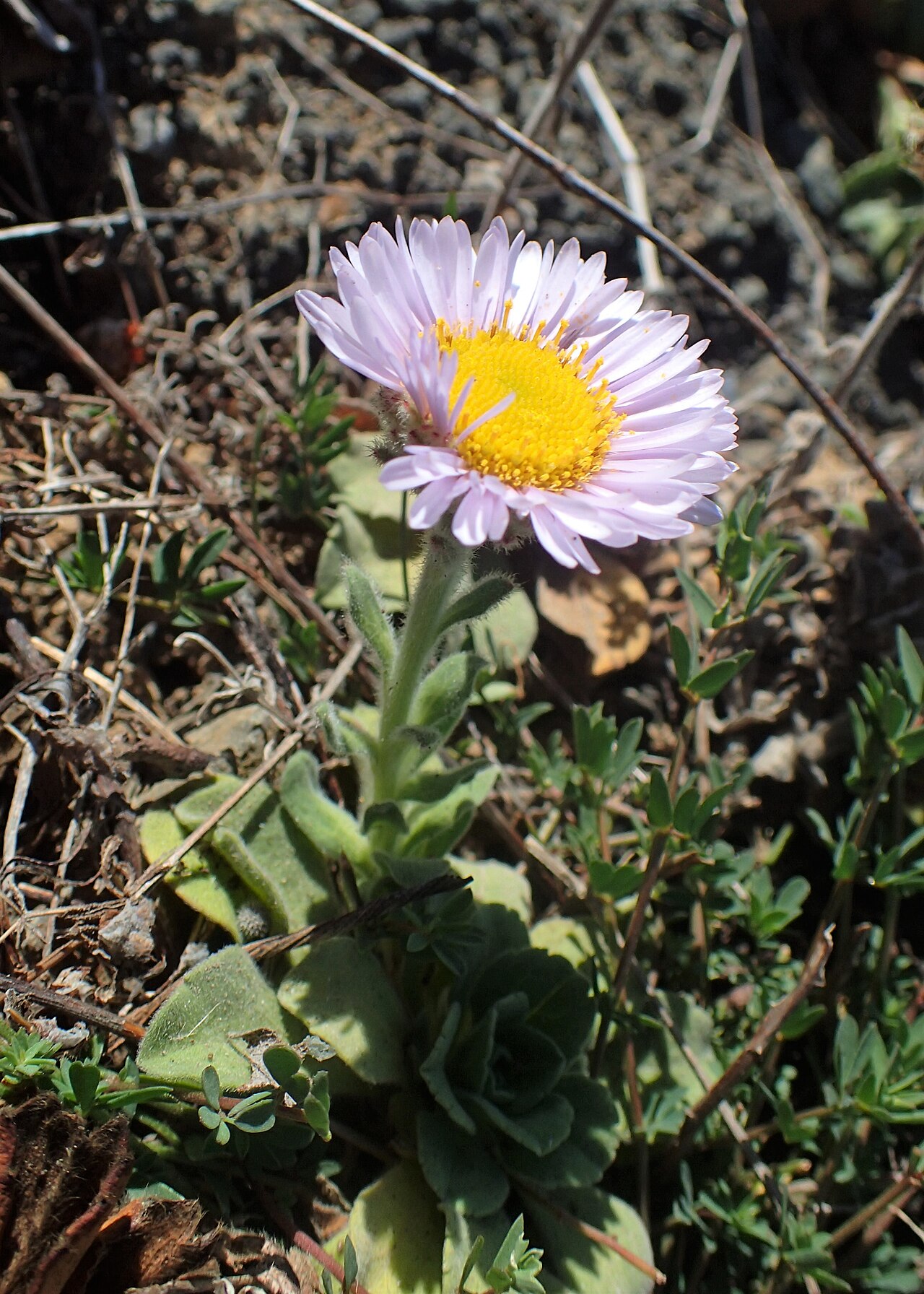
Erigeron glaucus, commonly called seaside daisy or seaside fleabane, is a low, mounding perennial wildflower found almost nowhere but the fog-washed bluffs and dunes of the California and southern Oregon coast. It belongs to the aster family (Asteraceae) and is one of the most dependable, best-loved native groundcovers sold in California nurseries — a plant that looks tidy and green all year, then covers itself in pale lavender-pink, daisy-shaped flowers for months at a stretch.
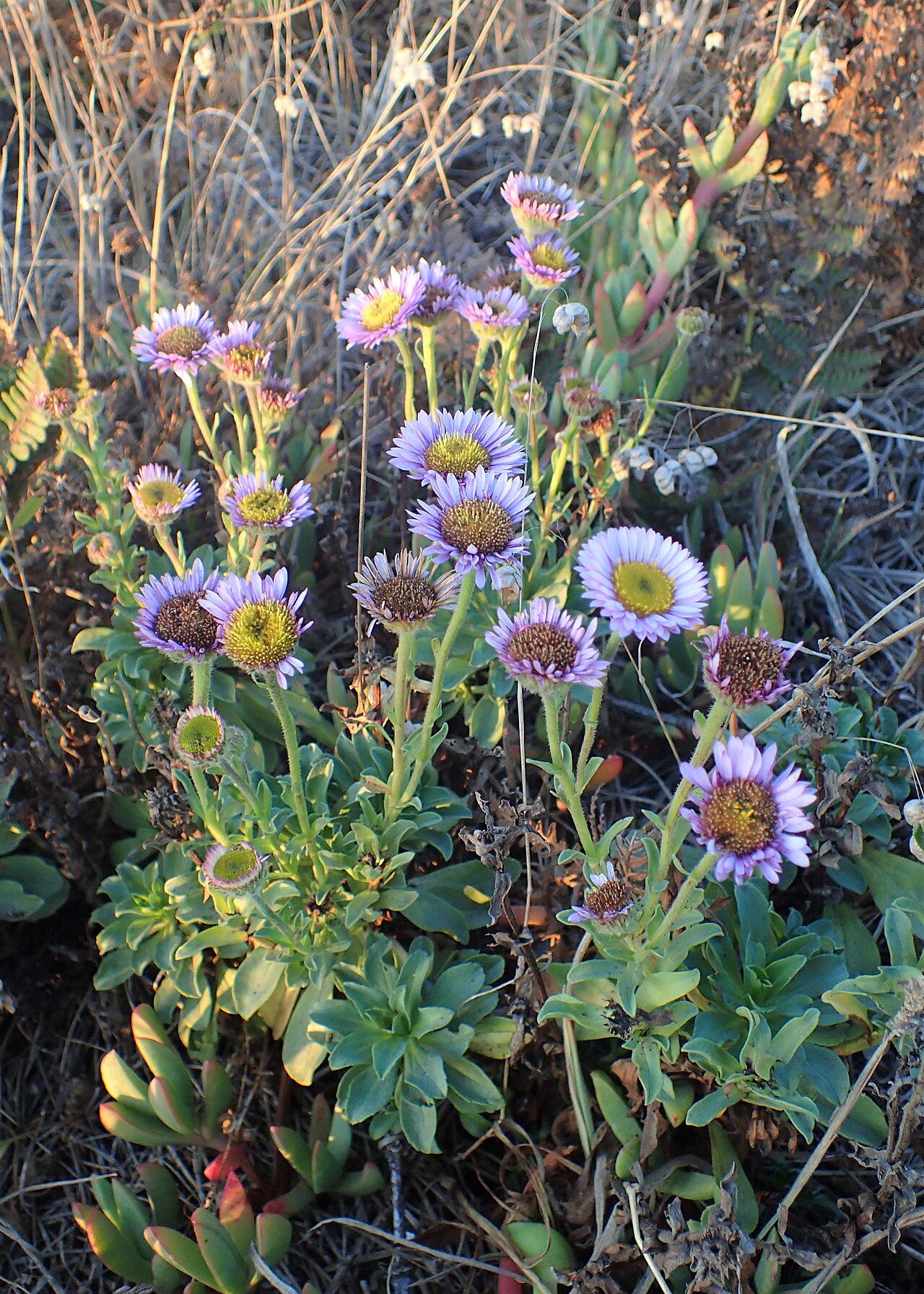
In the wild, seaside daisy grows directly in sand, rock crevices, and thin coastal soils that bake in salt spray and wind, which is exactly why it performs so well in difficult garden spots. The thick, blue-green (glaucous) leaves that give the species its name form a dense, slowly spreading rosette a few inches tall, topped from spring through fall by one- to two-inch flower heads with pale lavender to pink-purple rays surrounding a bright yellow center.
Because it tolerates wind, salt, drought, and poor soil while asking for almost nothing in return, seaside daisy has become a staple of coastal gardens, highway plantings, and erosion-control projects up and down the California coast and in milder gardens well inland. It is equally at home tucked into rock gardens, cascading over a low wall, or massed as a flowering groundcover in a dry, sunny bed.
Identification
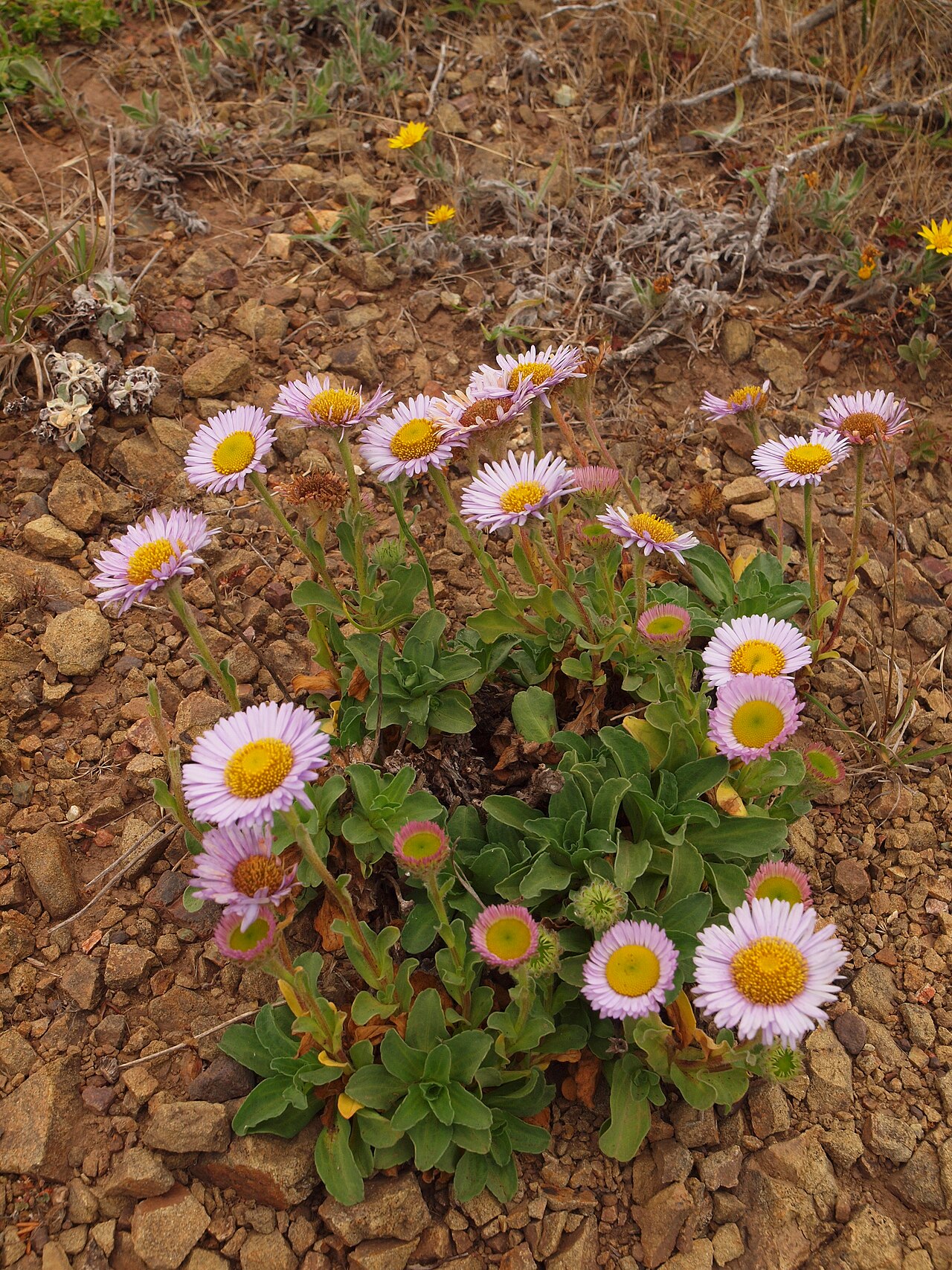
Seaside daisy is a low, spreading, woody-based perennial typically 6 to 18 inches tall and 1 to 3 feet across, forming loose mats or mounds. Established plants develop a somewhat woody base (a caudex) from which new rosettes of leaves arise each year, allowing the clump to slowly widen over time without becoming invasive.
Leaves
The leaves are thick, fleshy, and spoon-shaped (spatulate), 1 to 4 inches long, often with a few shallow teeth or lobes near the tip. Their blue-green, slightly glaucous color — a waxy coating that reduces water loss and reflects intense coastal sun — is the single most useful identification feature and the source of the species name glaucus. Fine hairs give the foliage a soft, slightly fuzzy texture. Leaves are evergreen in mild coastal climates, giving the plant year-round presence in the landscape.
Flowers
Flower heads are 1 to 2 inches across, held singly or a few together on stout, hairy stalks that rise just above the foliage. Each head has 50 to 150 narrow ray florets in shades of pale lavender, pink-purple, or occasionally near-white, surrounding a dense, bright yellow disc of tiny tubular florets. Bloom is heaviest from April through July but can continue sporadically through fall, especially near the immediate coast where summer fog keeps plants cool and hydrated.
Fruit & Seeds
Like other fleabanes, seaside daisy produces small, dry, one-seeded fruits (cypselae) tipped with a tuft of fine bristles (pappus) that catches the wind, much like a dandelion seed. Seed set is reliable, and plants will self-sow modestly in open, sandy soil, though deadheading spent flower heads keeps the look tidier and often extends the bloom season.
Quick Facts
| Scientific Name | Erigeron glaucus |
| Family | Asteraceae (Aster/Sunflower) |
| Plant Type | Evergreen Perennial Wildflower / Groundcover |
| Mature Height | 6–18 in |
| Mature Spread | 1–3 ft |
| Growth Rate | Moderate |
| Sun Exposure | Full Sun to Part Sun |
| Water Needs | Low to Moderate |
| Soil Type | Sandy or rocky, well-drained; tolerates poor soil |
| Soil pH | 6.0–7.5 (neutral to slightly acidic) |
| Bloom Time | April – July, sporadically into fall |
| Flower Color | Pale lavender to pink-purple with yellow disc |
| Fall Color | None (evergreen blue-green foliage) |
| Fruit | Tiny wind-dispersed achenes (not ornamental) |
| Deer Resistant | Yes, generally |
| USDA Hardiness Zones | 8–10 |
Native Range
Seaside daisy is a true coastal endemic, native to a narrow strip of shoreline running from the southern Oregon coast through essentially the entire length of the California coast. It is almost never found more than a few miles from salt water, growing on bluffs, dunes, rocky headlands, and coastal scrub where onshore fog and wind moderate the climate year-round.
Within this coastal band it grows in coastal bluff scrub, dune scrub, and the margins of coastal prairie, often rooted directly into cracks in sea cliffs or sandy soils just above the beach. Typical companions include beach strawberry, California poppy, and coyote brush, along with other low, salt-tolerant coastal natives that share its taste for full sun and lean soil.
Although it is extremely popular in gardens well beyond its native range — it is planted throughout California and in similar mild climates worldwide — gardeners inland or outside USDA zones 8–10 should treat it as a non-native ornamental rather than a native plant for their own region, since its wild range is restricted to the immediate Pacific coast.
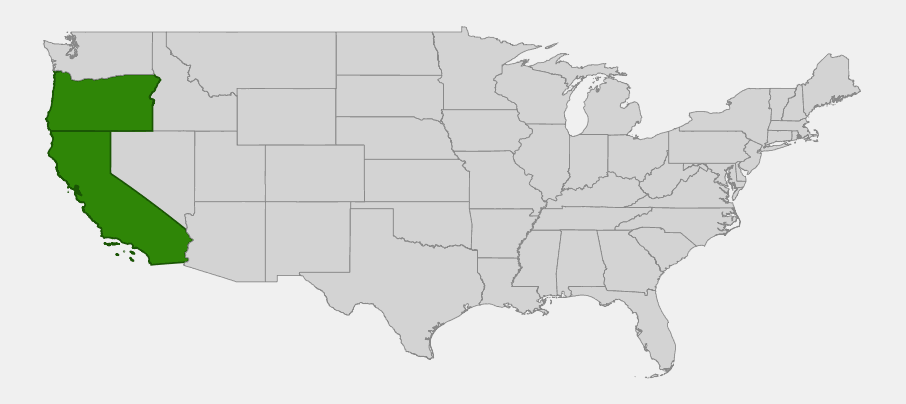
📋 Regional plant lists featuring Seaside Daisy: California & Nevada · Western Oregon & Western Washington
Growing & Care Guide
Seaside daisy is one of the easiest and most forgiving California native perennials to grow, which is a big part of why it shows up in nurseries, freeway medians, and home gardens across the state. Give it sun and drainage and it will reward you with months of flowers and almost no maintenance.
Light
Plant seaside daisy in full sun along the immediate coast, where cool fog and onshore breezes keep plants from stressing. Moving inland, where heat is more intense, light afternoon shade helps keep foliage looking fresh through the hottest months. In deep shade, plants stretch, bloom poorly, and lose their tidy mounding habit.
Soil & Water
Good drainage is the single most important requirement — seaside daisy is adapted to sandy and rocky coastal soils and will rot in heavy, wet clay. Once established, it is quite drought tolerant and needs only occasional deep watering during the dry season in most coastal gardens. Inland gardens benefit from somewhat more regular water, especially in the first year, but established plants still prefer to dry out between waterings. It tolerates salt spray and salty soils without issue.
Planting Tips
Set out nursery plants in fall or early spring so roots can establish before summer heat. Space plants 12 to 18 inches apart for a continuous groundcover effect, or further apart if used as individual accents in a rock garden. Raised beds, berms, or slopes work well where drainage is a concern. Seaside daisy also does well in containers and in cracks of dry-stacked rock walls.
Pruning & Maintenance
Shear plants back by about a third after the main spring flush of bloom to encourage repeat flowering and keep the mound compact; without this light haircut, clumps can become woody and sparse in the center after a few years. Deadheading individual spent flower heads extends bloom but is optional on a planting of any size. Older, leggy clumps can be rejuvenated by cutting back hard in early spring or replaced with fresh divisions.
Propagation
Seaside daisy is easily propagated from stem cuttings taken in spring or fall, from divisions of the woody base, or from seed sown in fall. Cuttings root readily in sandy mix and is the most reliable way to multiply a favorite flower color, since seedlings can vary somewhat in bloom shade.
Landscape Uses
- Flowering groundcover for sunny, well-drained slopes and banks
- Coastal and seaside gardens where salt spray and wind limit plant choices
- Rock gardens and cracks in dry-stacked walls
- Erosion control on dunes and coastal bluffs
- Drought-tolerant borders and low-water landscaping
- Pollinator gardens paired with other coastal natives
Wildlife & Ecological Value
Despite its small stature, seaside daisy punches above its weight as a wildlife plant, offering reliable nectar and pollen through a long bloom season on a coastline where floral resources can be limited.
For Pollinators
The flat, accessible flower heads are a magnet for native bees, honeybees, syrphid flies, and butterflies, including coastal populations of skippers and small butterflies that rely on the long bloom period. The abundant yellow disc florets provide an easy nectar and pollen source for a wide range of generalist pollinators.
For Birds
Seaside daisy is not a major food source for birds directly, but the insects it attracts — including small bees and flies — provide foraging opportunities for insectivorous songbirds working the coastal scrub. Dense mounding clumps also offer low cover for ground-foraging birds.
For Mammals
The plant is not a significant forage species for mammals and is generally left alone by deer and rabbits, which is one reason it has become so popular in gardens plagued by browsing wildlife.
Ecosystem Role
As a long-lived, mat-forming perennial rooted into thin coastal soils, seaside daisy helps stabilize dunes and bluff faces against wind and water erosion. Its presence in coastal scrub and dune communities supports the broader mosaic of low, salt-tolerant vegetation that buffers more sensitive habitat inland and provides structure for invertebrates adapted to the coastal zone.
Cultural & Historical Uses
Seaside daisy does not carry the extensive documented medicinal or utilitarian history of larger native shrubs and trees, but it has long been a familiar sight to coastal California communities, growing wild on the same bluffs and dunes that people have walked, fished, and gathered along for generations.
Its real cultural importance today is horticultural: seaside daisy was one of the earlier California coastal wildflowers to be widely adopted into nursery cultivation, prized for its reliability in difficult coastal and seaside conditions where few other flowering perennials perform as well. Several cultivated selections have been developed from wild populations for denser habit or particular flower color, and the species remains a mainstay recommendation in coastal and water-wise gardening guides throughout California.
Because it establishes quickly, tolerates poor soil, and needs little irrigation once rooted in, seaside daisy is also widely used in public landscaping — along coastal highways, in parking strips, and in erosion-control plantings on cut slopes — making it one of the more visible native wildflowers for anyone traveling the California coast.
Frequently Asked Questions
Is seaside daisy the same as common fleabane?
No. “Seaside daisy” refers specifically to Erigeron glaucus, a coastal California and Oregon native. The genus Erigeron includes many other fleabane species across North America, but seaside daisy is distinguished by its thick, blue-green leaves and strictly coastal habitat.
Will seaside daisy grow away from the coast?
It can be grown as a garden ornamental well inland, but it will need more consistent water and some afternoon shade to cope with heat it would never experience in its native coastal fog belt. In its true native range it is restricted to areas close to the ocean.
How long does seaside daisy live?
Individual clumps typically remain vigorous for about five to eight years before becoming woody and sparse in the center. Shearing after bloom and occasional rejuvenation pruning extend this, and plants are easy to propagate from cuttings or divisions to keep a planting going indefinitely.
Does seaside daisy spread aggressively?
No. It spreads slowly by its own expanding woody base and modest self-seeding in open soil, but it is not considered weedy or invasive and stays well-behaved in garden settings.
What pairs well with seaside daisy in a garden?
Other low-water coastal and chaparral natives work well, including California poppy, beach strawberry, and California buckwheat, all of which share its preference for full sun and excellent drainage.

Looking for a nursery that carries Seaside Daisy?
Browse our native plant nursery directory: California · Oregon