Smoke Tree (Psorothamnus spinosus)
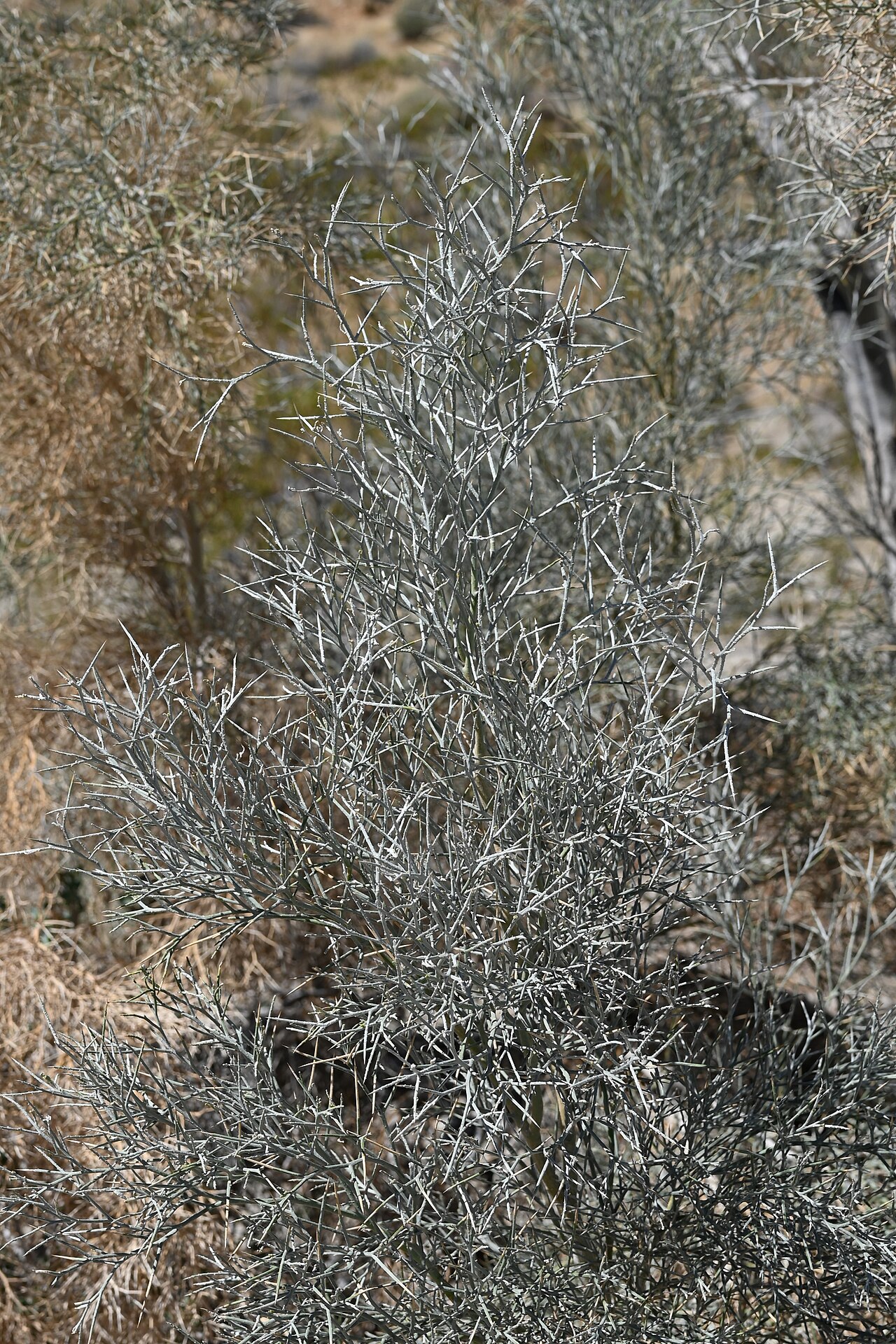
Psorothamnus spinosus, commonly called smoke tree or desert smoke tree, is one of the most distinctive small trees of the low Sonoran and Colorado desert washes. A member of the legume family (Fabaceae), it takes its name from its dense tangle of fine, silvery-gray, nearly leafless spiny branches, which from a distance give the plant a soft, smoky haze — especially striking against the tan sand of a dry desert wash. This species is not related to the eastern American smoke tree (Cotinus obovatus), which belongs to an entirely different plant family and shares only a common name.
Smoke tree is a true wash specialist, found almost exclusively in the sandy beds of desert washes where seasonal flash floods scarify its hard seed coat, a requirement for germination that makes the species essentially restricted to active desert drainages. For a few weeks each early summer, the otherwise gray, twiggy plant transforms with a flush of small but vivid indigo-purple, pea-like flowers that cover the branches.
Because of its unusual dependence on flash flooding for reproduction, smoke tree is difficult to establish from seed in cultivation without replicating that scarification process, but established nursery plants make a striking, low-water accent for desert gardens that mimic its natural wash habitat, prized for its ghostly silver form and brief but brilliant purple bloom.
Identification
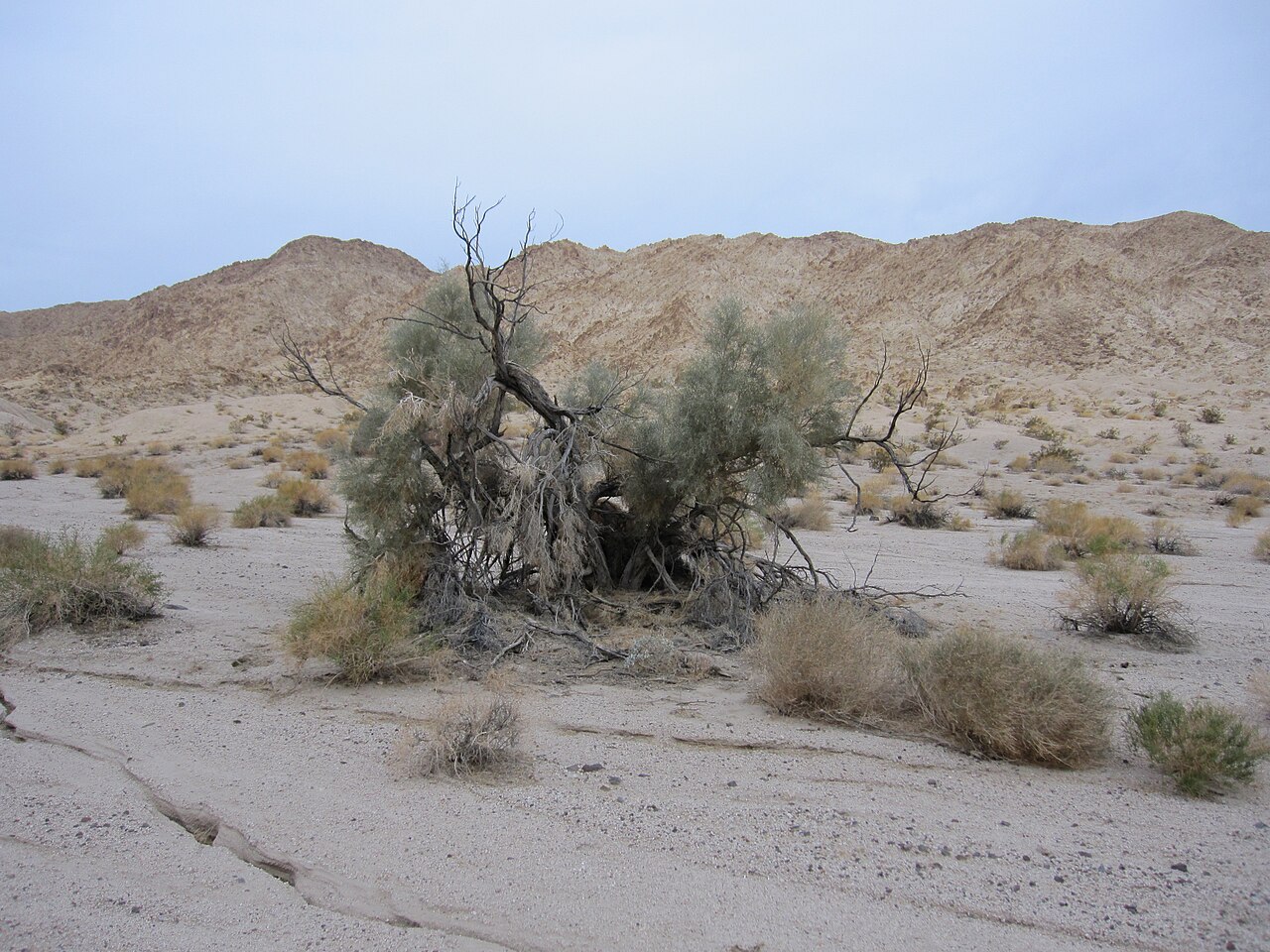
Smoke tree is a large, rounded, intricately branched shrub or small tree, typically 10 to 20 feet tall, with a dense, tangled silhouette of fine, gray-green to silvery branches that create its characteristic smoky appearance.
Bark & Stems
Young branches are covered in fine, silvery-gray, silky hairs that give the whole plant a pale, hazy cast, while older stems and the trunk develop rougher, grayish-brown bark. Branches are intricately interwoven and tipped with stiff, sharp spines, giving the plant a dense, thorny structure that deters browsing.
Leaves
Leaves are tiny, simple, grayish, and short-lived, often dropping quickly in dry conditions so that the plant appears essentially leafless — and therefore nearly all gray branch and spine — for much of the year. This near-total leaflessness is an adaptation to minimize water loss in one of the hottest, driest environments in North America, with the silvery branches themselves taking over much of the plant’s photosynthesis.
Flowers
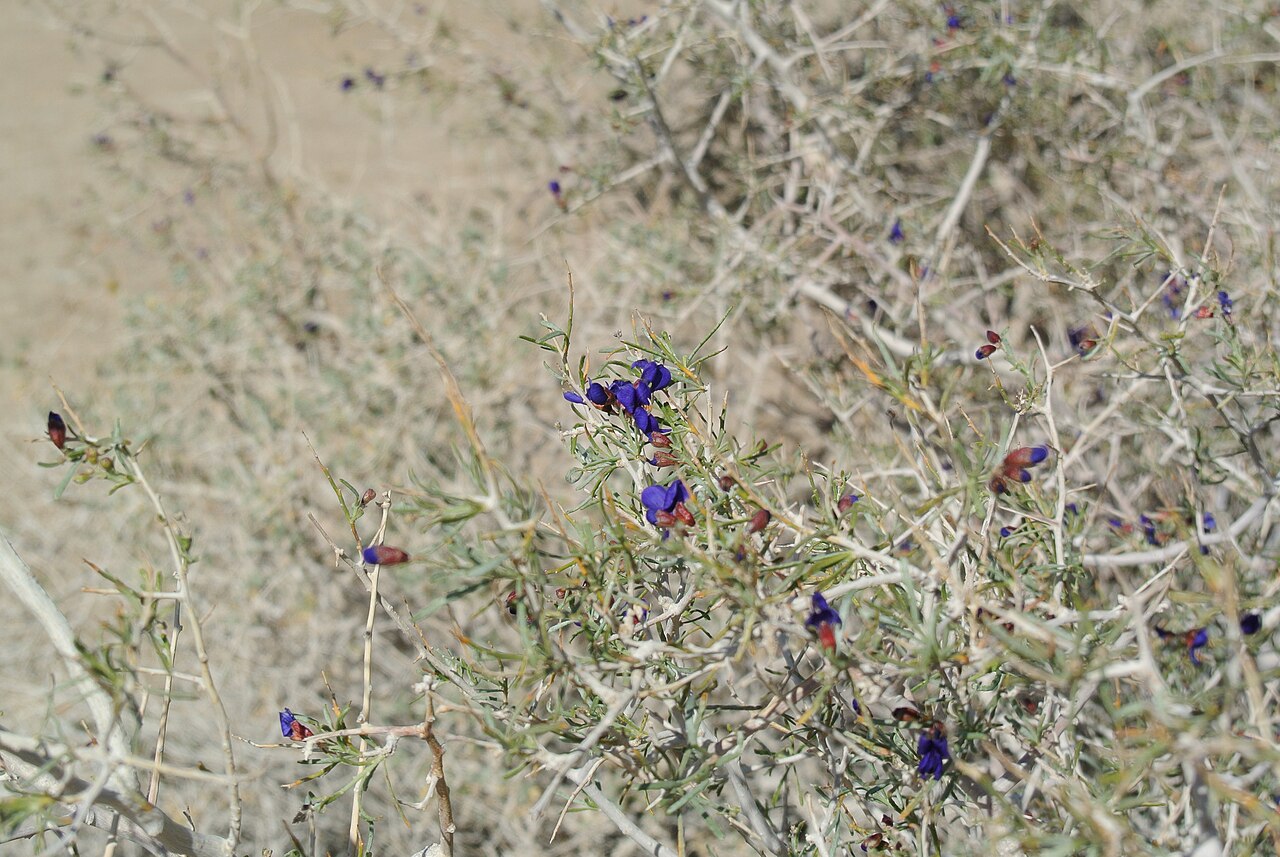
In late spring to early summer, smoke tree produces a profusion of small, pea-shaped flowers in vivid indigo-blue to violet-purple, clustered densely along the spiny branches. The bloom is brief, typically lasting only two to three weeks, but is spectacular enough that it draws visitors to desert washes specifically to see it, standing out dramatically against the plant’s silvery, haze-gray form.
Fruit & Seeds
Flowers are followed by small, hairy, single-seeded pods that are dispersed primarily by seasonal flash floods moving through the wash. The seed coat is extremely hard and essentially impermeable to water, so germination in the wild depends on the physical abrasion (scarification) the seeds receive while tumbling along the sandy wash bottom during flooding — a key reason the species is so tightly tied to active desert drainages.
Quick Facts
| Scientific Name | Psorothamnus spinosus (syn. Dalea spinosa) |
| Family | Fabaceae (Legume/Pea) |
| Plant Type | Deciduous/Semi-Leafless Small Tree or Large Shrub |
| Mature Height | 10–20 ft |
| Mature Spread | 10–20 ft |
| Growth Rate | Slow |
| Sun Exposure | Full Sun |
| Water Needs | Very Low (adapted to flash-flood washes) |
| Soil Type | Deep sand; fast-draining wash soils |
| Soil pH | 7.0–8.5 (neutral to alkaline) |
| Bloom Time | May – June |
| Flower Color | Indigo-blue to violet-purple |
| Fall Color | None (silvery-gray year-round) |
| Fruit | Small hairy one-seeded pods |
| Deer Resistant | Yes |
| USDA Hardiness Zones | 9–11 |
Native Range
Smoke tree is native to the hottest, lowest-elevation deserts of the Southwest, found in southeastern California, southern Nevada, and western Arizona, within the Sonoran and Colorado desert regions. It is one of the more range-restricted desert trees, closely tied to a specific habitat type rather than broadly distributed across the desert landscape.
Unlike most desert shrubs, which grow on open flats and slopes, smoke tree is essentially confined to the sandy bottoms of desert washes and arroyos, where periodic flash flooding both scarifies its seeds for germination and deposits the fine sand the species requires. It is rarely found more than a few feet from an active or historic wash channel, growing alongside other wash specialists such as desert ironwood and blue palo verde.
Because of this tight habitat dependency, smoke tree is a reliable indicator of active desert wash systems, and its presence signals the periodic flooding and deep sandy soils that define this distinctive desert microhabitat.
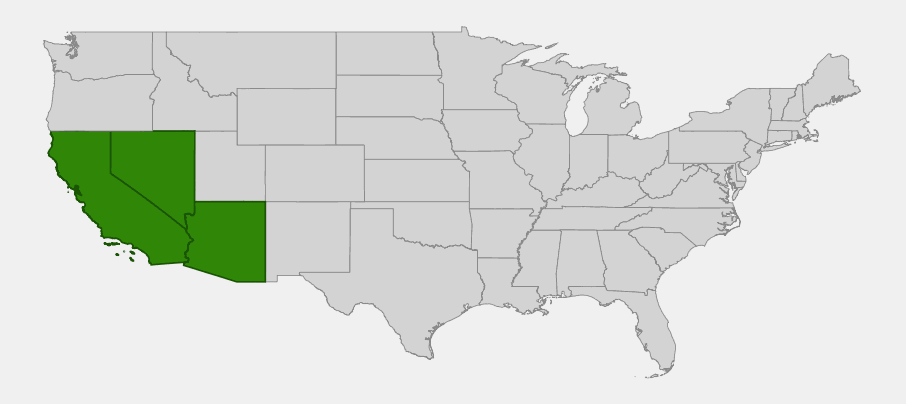
📋 Regional plant lists featuring Smoke Tree: California & Nevada · Arizona & New Mexico
Growing & Care Guide
Smoke tree is a striking but specialized plant, best suited to desert gardens that can replicate at least some of its natural wash conditions — deep, fast-draining sand and infrequent but deep soakings.
Light
Full sun is required. Smoke tree is adapted to the most intense, reflected heat of the low desert floor and will not perform well with any significant shade, which encourages sparse, weak growth.
Soil & Water
Deep, fast-draining sandy soil is essential, mimicking the wash habitat where the species naturally grows. It is extremely drought tolerant once established and should be watered deeply but infrequently, allowing the soil to dry out completely between waterings; overwatering or poor drainage quickly leads to root problems. In the garden, an occasional deep soak during the hottest months is usually sufficient for an established plant.
Planting Tips
Start with nursery-grown container stock rather than attempting direct seeding, since wild seed requires the mechanical scarification of flash flooding to germinate reliably; nurseries typically scarify seed mechanically or with acid treatment before sowing. Plant in the lowest, sandiest part of the garden if possible, and avoid heavy or clay soils entirely. Handle plants carefully, as mature branches are tipped with sharp spines.
Pruning & Maintenance
Smoke tree needs very little pruning. Remove dead or damaged wood as needed, and avoid heavy shaping, which disrupts its naturally airy, twiggy silhouette — much of its appeal lies in its wild, unstructured form. Wear thick gloves when working near the plant due to its spines.
Propagation
Propagation is almost always from seed, which must be scarified — either mechanically nicked or soaked in sulfuric acid briefly, as commercial growers do — to overcome the hard seed coat before it will germinate reliably. Without scarification, seeds may remain dormant in the soil for years, just as they would while waiting for a flash flood in the wild.
Landscape Uses
- Specimen accent for its unusual silvery, smoke-like silhouette
- Low desert xeriscapes with deep sandy or decomposed granite soil
- Dry wash or arroyo-style gardens that mimic its native habitat
- Extreme low-water landscaping in the hottest, driest garden zones
- Wildlife and pollinator gardens for its brief but valuable bloom
Wildlife & Ecological Value
Smoke tree is a valuable structural and floral resource in the sparse, extreme-heat desert wash habitats where few other woody plants can establish.
For Pollinators
The brief but abundant indigo-purple flower display draws native bees and other pollinating insects in large numbers during its short bloom window, providing a concentrated nectar and pollen resource at a time when little else is flowering in the low desert.
For Birds
The dense, spiny branch structure offers secure nesting and roosting cover for small desert birds, protected from predators by the thorny tangle of stems. Birds also forage among the branches for insects attracted to the flowers.
For Mammals
Small mammals use the dense cover of smoke tree thickets for shelter from the intense desert sun and from predators, and various desert rodents may feed on the seed pods when available.
Ecosystem Role
As a nitrogen-fixing legume, smoke tree helps enrich the otherwise nutrient-poor sandy soils of desert washes, benefiting neighboring plants. Its dense root system helps stabilize sandy wash banks against erosion, while its canopy provides one of the few sources of shade and structure in an open wash environment, making it disproportionately important to the wildlife that shares its narrow habitat niche.
Cultural & Historical Uses
Smoke tree does not carry the extensive documented food or fiber use associated with many other desert legumes such as honey mesquite, likely reflecting both its restricted wash habitat and its tough, spiny structure, which limits practical harvesting. It is, however, a well-known and culturally recognized feature of the low desert landscape, particularly in places like Anza-Borrego Desert State Park and the Colorado Desert, where its brief but spectacular spring bloom has long drawn desert travelers and wildflower enthusiasts.
Early desert travelers and settlers often used the presence of smoke tree as a practical sign of an active wash course, useful information for navigation and for anticipating potential flash-flood hazards in desert terrain. Its distinctive silvery form has also made it a recognizable subject in Southwestern desert photography and art, symbolizing the stark, minimalist beauty of the low desert wash landscape.
In contemporary desert horticulture, smoke tree is valued chiefly for its ornamental and ecological role rather than for any utilitarian use, prized by native-plant gardeners for its singular appearance and its tight ecological connection to the desert wash systems it depends on.
Frequently Asked Questions
Is desert smoke tree the same as American smoke tree?
No. Desert smoke tree (Psorothamnus spinosus) is a Southwest desert legume unrelated to American smoke tree (Cotinus obovatus), an eastern U.S. tree in the cashew family. They share only a common name, inspired in each case by a hazy, smoke-like appearance.
Why won’t my smoke tree seeds germinate?
Smoke tree seeds have an extremely hard coat that, in the wild, is worn down by tumbling in flash-flood debris. Without this scarification — done at home by nicking the seed coat or soaking briefly in acid, as nurseries do — seeds can remain dormant for years.
Does smoke tree need regular watering?
No. It is adapted to long dry periods between infrequent flash floods and performs best with deep, infrequent watering rather than regular irrigation. Overwatering is more likely to harm the plant than underwatering.
Can smoke tree be grown outside a wash setting?
Yes, as long as the soil is deep, sandy, and extremely well-drained; it does not require an actual flowing wash to grow in the garden, but it will struggle in heavy or poorly drained soil of any kind.
How long does smoke tree bloom?
The flower display is brief, typically lasting only two to three weeks in late spring to early summer, making timing important for anyone hoping to see it in bloom in the wild or in the garden.

Looking for a nursery that carries Smoke Tree?
Browse our native plant nursery directory: California · Nevada · Arizona