Coast Buckwheat (Eriogonum latifolium)
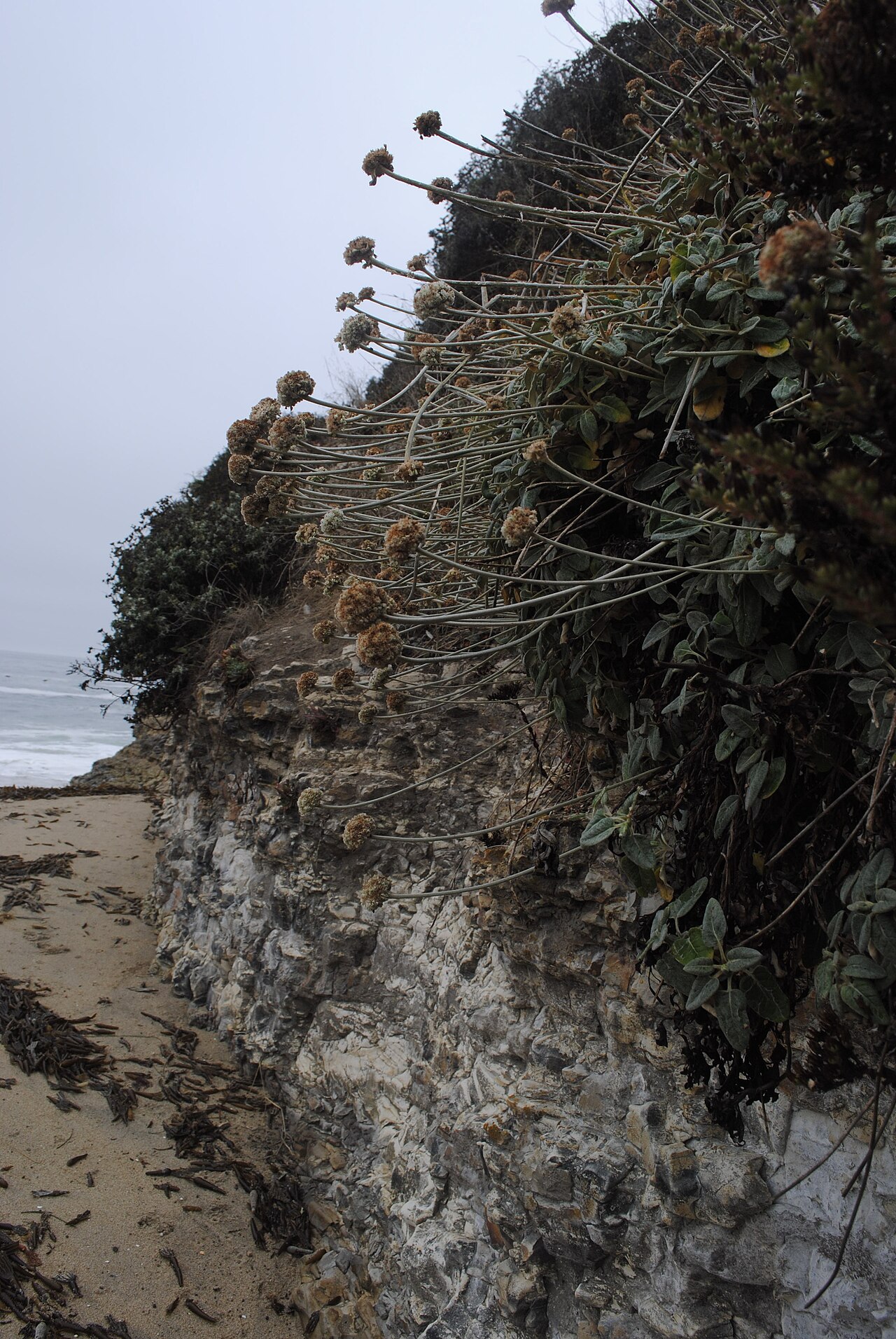
Eriogonum latifolium, known as coast buckwheat or seaside buckwheat, is a tough, low-growing perennial wildflower native to bluffs, dunes, and rocky headlands along the California and southern Oregon coast. A member of the Polygonaceae (buckwheat family), it is one of the signature plants of the coastal bluff community, forming rounded mounds of woolly, gray-green leaves topped with ball-like clusters of small cream to pinkish-white flowers through much of the growing season.
Coast buckwheat is built for exposure: salt spray, relentless wind, thin sandy or rocky soil, and long rainless summers. Its leaves are covered in fine white hairs that reflect sun and reduce water loss, giving the whole plant a soft, silvery cast that stands out against darker coastal shrubs. Stout, woody flowering stems rise above the foliage and arch outward, often draping over rock edges, and remain attractive even after the flowers fade to rust and brown in late summer.
Beyond its good looks, coast buckwheat is an ecological keystone on the California coast: it is the primary host plant for several rare and endangered buckwheat-dependent butterflies, including the federally endangered El Segundo blue. For gardeners anywhere within its native range, it is an easy, rewarding, exceptionally drought-tolerant choice for erosion control and pollinator habitat on dry, sunny sites.
Identification
Coast buckwheat is a low, woody-based perennial subshrub, typically 6 to 20 inches (15–50 cm) tall and spreading 1 to 3 feet (30–90 cm) wide, with a mounding, somewhat sprawling habit. Older plants develop thick, woody stems at the base that can trail or scramble over rock.
Leaves
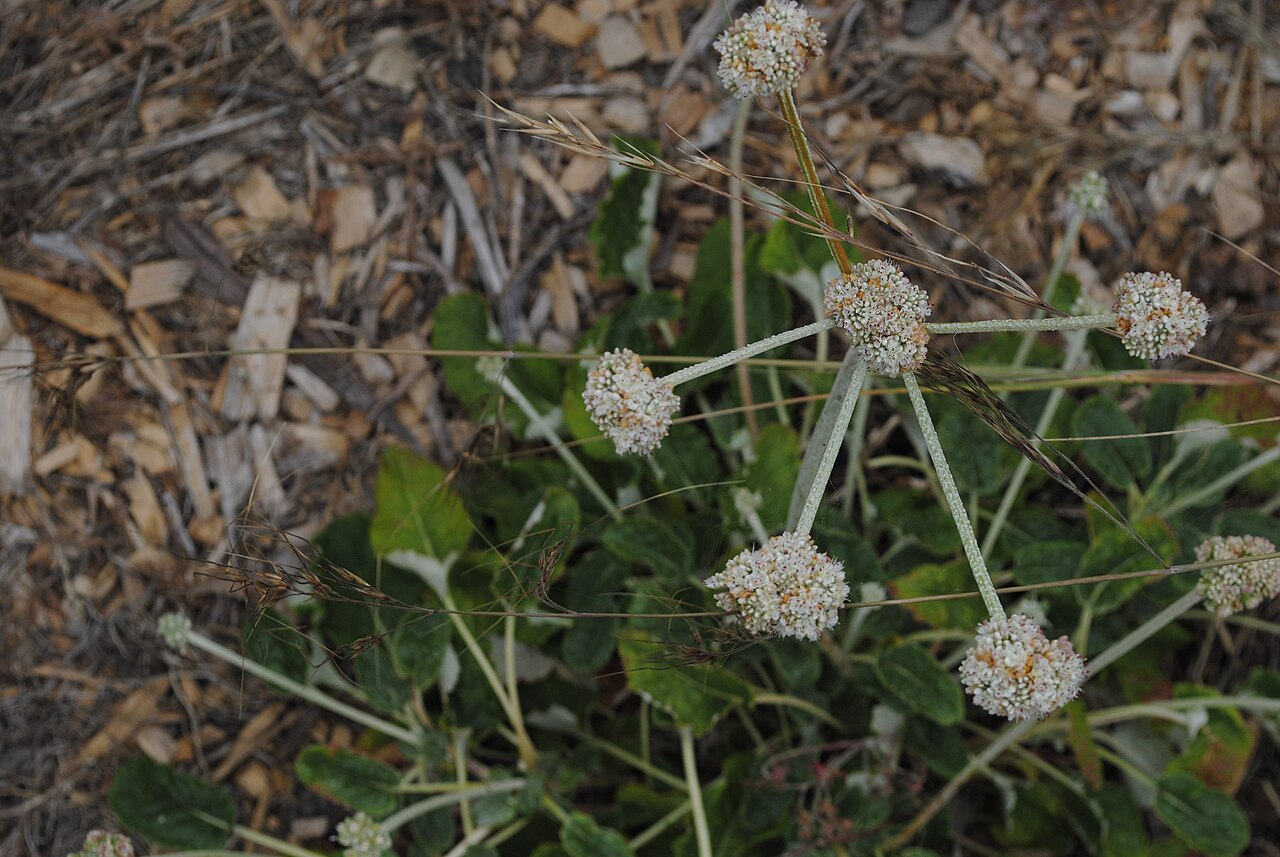
The leaves are oval to rounded, ½ to 2 inches (1–5 cm) long, clustered toward the base of the plant on short petioles. They are thick and leathery, with a dense covering of fine white or gray hairs (tomentum) on the underside and often the upper surface as well, giving the foliage a soft, woolly, gray-green to white appearance that is a key field mark distinguishing it from other coastal buckwheats.
Flowers
Leafless flowering stems rise 6 to 18 inches above the foliage, branching near the top into one to several rounded, ball-like flower clusters (involucres) ½ to 1½ inches across. The tiny individual flowers are cream to white, often aging to pink or rust, and are produced over a long season from late spring into fall. The overall effect is a cluster of soft, pom-pom-like flower heads nodding atop wiry stems.
Fruit & Seeds
After flowering, each small flower matures into a tiny, three-angled, dry seed (achene). The spent flower clusters dry to a warm rust-brown and persist on the plant well into winter, remaining a food source for seed-eating birds and adding texture to the coastal landscape even in the off season.
Quick Facts
| Scientific Name | Eriogonum latifolium |
| Family | Polygonaceae (Buckwheat) |
| Plant Type | Woody-Based Perennial Subshrub |
| Mature Height | 6–20 in (15–50 cm) |
| Mature Spread | 1–3 ft (30–90 cm) |
| Growth Rate | Moderate |
| Sun Exposure | Full Sun to Light Shade |
| Water Needs | Low |
| Soil Type | Sandy, rocky or gravelly; fast-draining |
| Soil pH | 6.0–7.5 (slightly acidic to neutral) |
| Bloom Time | May – October |
| Flower Color | Cream to white, aging to pink or rust |
| Fall Color | Dried flower heads turn rust-brown, persisting into winter |
| Fruit | Tiny three-angled dry achenes |
| Deer Resistant | Yes |
| USDA Hardiness Zones | 8–10 |
Native Range
Coast buckwheat is native to the immediate coast and coastal foothills of California, from the Oregon border south through most of the California coastline, with a native extension into the southwestern corner of Oregon. It is a plant of exposed, well-drained sites directly influenced by marine conditions: sea bluffs, coastal dunes, bald headlands, and rocky coastal scrub, almost always within sight or smell of the ocean.
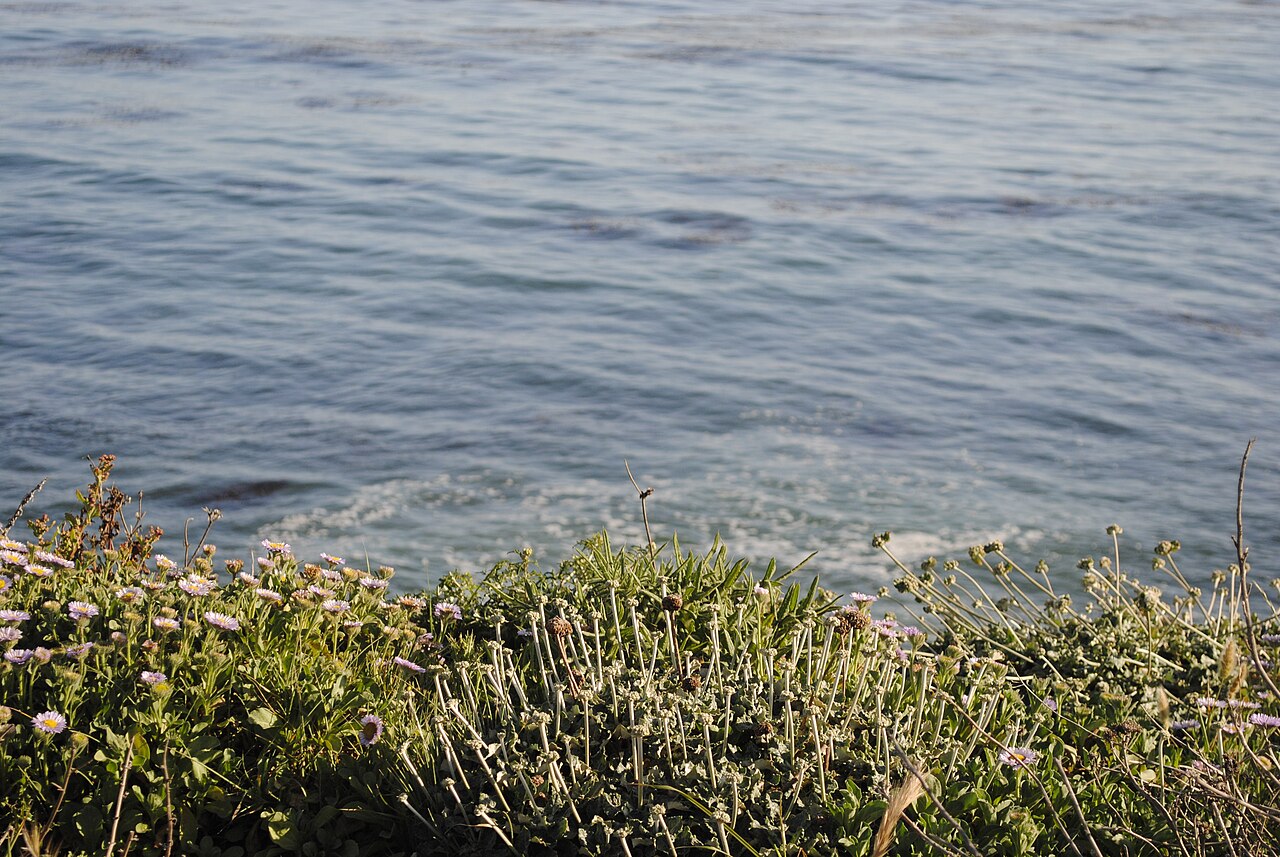
Within this narrow coastal belt it grows from sea level up to a few thousand feet in coastal mountains, often forming a dominant groundcover on bluffs alongside seaside daisy and coastal sagebrush. It tolerates the salt-laden wind and fog that define the immediate coastal strip, conditions that exclude many inland plants.
Coast buckwheat remains widespread and common through most of its native range, though coastal development has reduced or fragmented habitat in some areas, particularly in southern California, where it is critically important as the required host plant for several rare, localized butterfly populations.
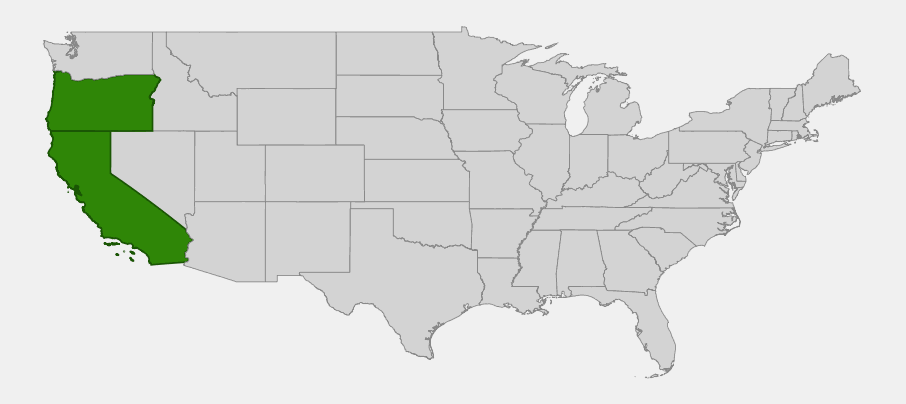
📋 Regional plant lists featuring coast buckwheat: California & Nevada · Western Oregon & Western Washington
Growing & Care Guide
Coast buckwheat is an exceptionally easy, low-maintenance native for gardens within its coastal range, well suited to difficult sites where salt spray, wind, and dry soil rule out most other perennials.
Light
Full sun produces the most compact growth and the heaviest bloom. In hotter inland edges of its range, a bit of afternoon shade is tolerated, but coast buckwheat is at its best directly exposed to coastal sun and wind.
Soil & Water
Plant in sandy, rocky, or gravelly soil with excellent drainage; coast buckwheat is adapted to lean, mineral soils and performs poorly in rich, heavily amended garden beds. Once established, it needs no irrigation beyond natural rainfall and coastal fog drip. Occasional deep watering during the first year helps roots establish, but year-round supplemental water encourages rot and shortens the plant’s life.
Planting Tips
Set out young plants in fall so roots can establish over the cool, wet season before the first dry summer. Choose the sunniest, best-drained spot available — a slope, raised bed, or rocky bank mimics its native bluff habitat. Space plants 2 to 3 feet apart to allow for its mounding, spreading growth habit.
Pruning & Maintenance
Little pruning is needed. Many gardeners leave the dried, rust-colored flower heads standing through winter for seed-eating birds and garden texture, then cut back old flowering stems in late winter before new growth begins. Avoid heavy pruning into bare wood, as recovery can be slow.
Propagation
Coast buckwheat can be grown from seed sown in fall, though germination is often slow and uneven. Semi-hardwood cuttings taken in late summer root readily with rooting hormone and provide a faster path to flowering-size plants true to the parent.
Landscape Uses
Coast buckwheat fits naturally into dry, exposed, coastal-style plantings:
- Coastal bluff and dune gardens replicating its native habitat
- Erosion control on sunny, well-drained slopes and banks
- Pollinator and butterfly gardens, especially where rare coastal butterflies occur
- Rock gardens and gravel beds paired with other coastal natives
- Low-water groundcover for sunny, unirrigated areas
- Mixed native borders with seaside daisy and coastal sagebrush
Wildlife & Ecological Value
Coast buckwheat is one of the most ecologically important plants of the California coastal bluff community, anchoring a food web built around its long bloom season and dense foliage.
For Pollinators
The long bloom period, often from late spring well into fall, makes coast buckwheat an exceptionally valuable nectar source on the coast, where it flowers when many other plants have finished. Native bees, honeybees, wasps, and a wide range of butterflies and moths visit the flower clusters steadily through the season.
Butterflies
Coast buckwheat is the required larval host plant for several rare, highly localized coastal butterflies, most famously the federally endangered El Segundo blue (Euphilotes battoides allyni), whose entire life cycle — egg, larva, pupa, and adult — depends on this plant and its close relatives at remnant dune and bluff sites in southern California. Other regional buckwheat-blue butterflies depend on related coastal Eriogonum species in similar fashion.
Birds
The dried seed heads that persist into winter provide forage for sparrows, finches, and other small seed-eating birds, at a season when the bare, windswept bluffs offer little other food.
Ecosystem Role
Coast buckwheat’s deep, woody root system and dense, spreading growth help stabilize loose dune sand and eroding bluff faces, reducing wind and water erosion on some of the most exposed, unstable soils along the coast. Its presence often marks healthy remnant coastal scrub, and its loss to development or trampling is a direct threat to the specialized insects that depend on it.
Cultural & Historical Uses
Coastal Indigenous peoples of California, including Ohlone and Chumash communities, made use of various native buckwheats in their territories, though documented, species-specific uses of coast buckwheat itself are limited compared with some of its showier inland relatives. Buckwheats in general were valued across California for medicinal teas and poultices prepared from the dried flowers and leaves, used traditionally for minor ailments.
In more recent decades, coast buckwheat has taken on a different kind of cultural significance: it has become a symbol of coastal habitat restoration in southern California, where conservation groups plant it specifically to support the recovery of endangered buckwheat-dependent butterflies on remnant dune and bluff fragments. Native plant nurseries along the coast now routinely stock it for exactly this purpose.
Horticulturally, coast buckwheat has long been appreciated by California native plant gardeners for its toughness and long bloom season, and it remains a mainstay recommendation for low-water, pollinator-friendly coastal landscaping.
Frequently Asked Questions
Is coast buckwheat the same as the buckwheat grown for grain?
No. Coast buckwheat is unrelated to culinary buckwheat (Fagopyrum esculentum), though both belong to the broader buckwheat family Polygonaceae. Coast buckwheat is strictly an ornamental and ecological native plant, not a food crop.
Why is coast buckwheat important for butterflies?
It is the sole or primary larval host plant for several rare coastal butterflies, including the federally endangered El Segundo blue. The caterpillars feed exclusively on its flowers and foliage, making the plant essential to these butterflies’ survival at the few remaining dune and bluff sites where both still occur.
How much water does coast buckwheat need once established?
Very little. Within its native coastal range it survives on winter rain and fog alone. Inland or in hotter microclimates, an occasional deep soak in summer helps, but frequent watering, especially in summer, is more likely to cause root rot than to help the plant.
Will coast buckwheat grow well away from the immediate coast?
It can succeed in gardens somewhat inland of its native range if given full sun and sharp drainage, but it is at its best — and most useful for conservation — when planted within or very near its native coastal distribution in California and southwestern Oregon.
How is coast buckwheat different from seaside buckwheat?
They are the same plant: “seaside buckwheat” is simply an alternate common name used by the USDA PLANTS database for Eriogonum latifolium, while “coast buckwheat” is the more commonly used name in California horticulture and conservation literature.

Looking for a nursery that carries coast buckwheat?
Browse our native plant nursery directory: California · Oregon