Desert Trumpet (Eriogonum inflatum)
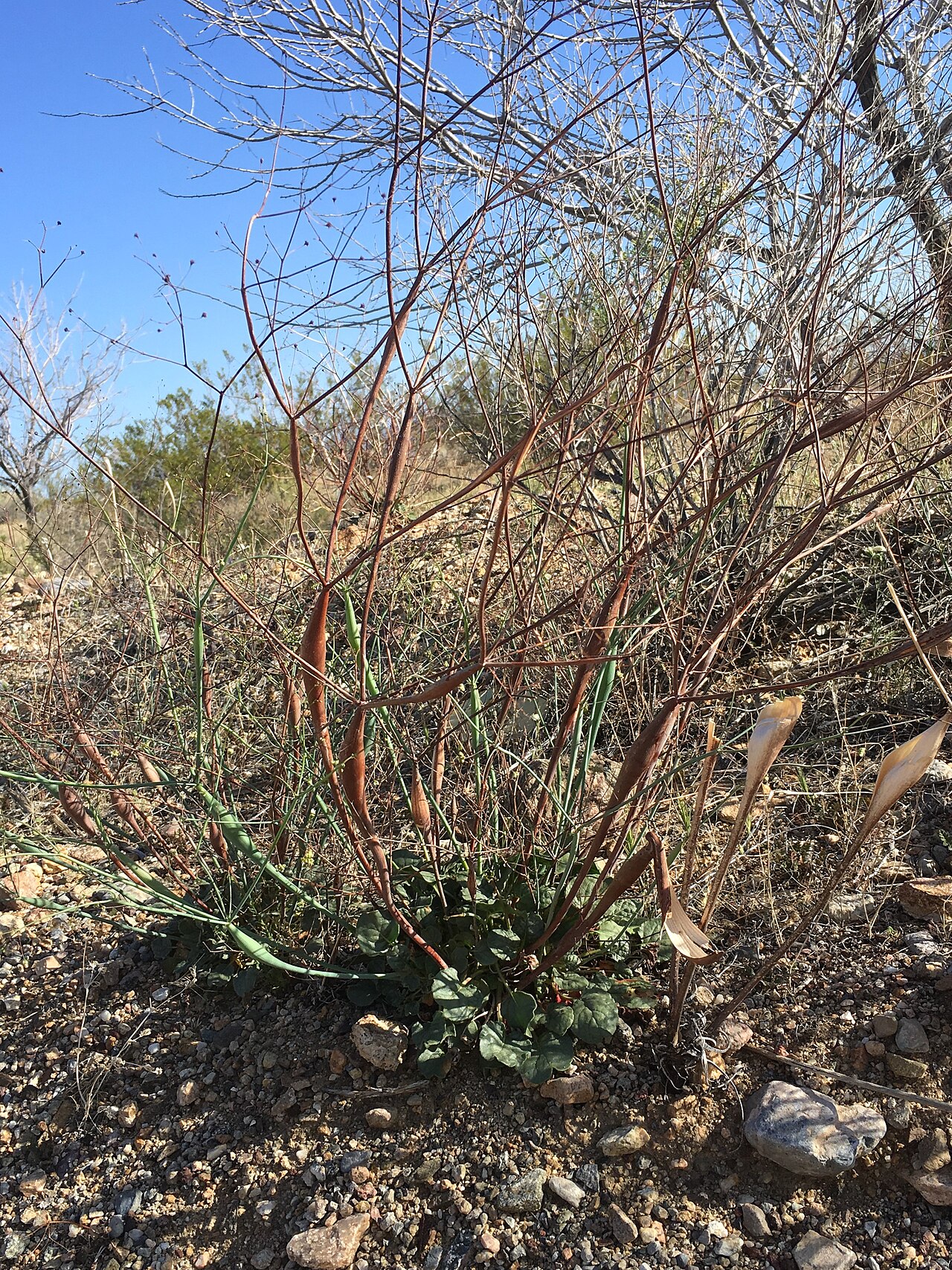
Eriogonum inflatum, aptly called desert trumpet, is one of the most distinctive native wildflowers of the arid Southwest, instantly recognizable for the balloon-like, inflated swelling partway up its otherwise slender flowering stems. Native to dry washes, mesas, and open desert flats across California, Nevada, Utah, Arizona, Colorado, and New Mexico, it is a member of the Polygonaceae (buckwheat family) and a dependable, drought-defying presence in some of the hottest, driest ground in North America.
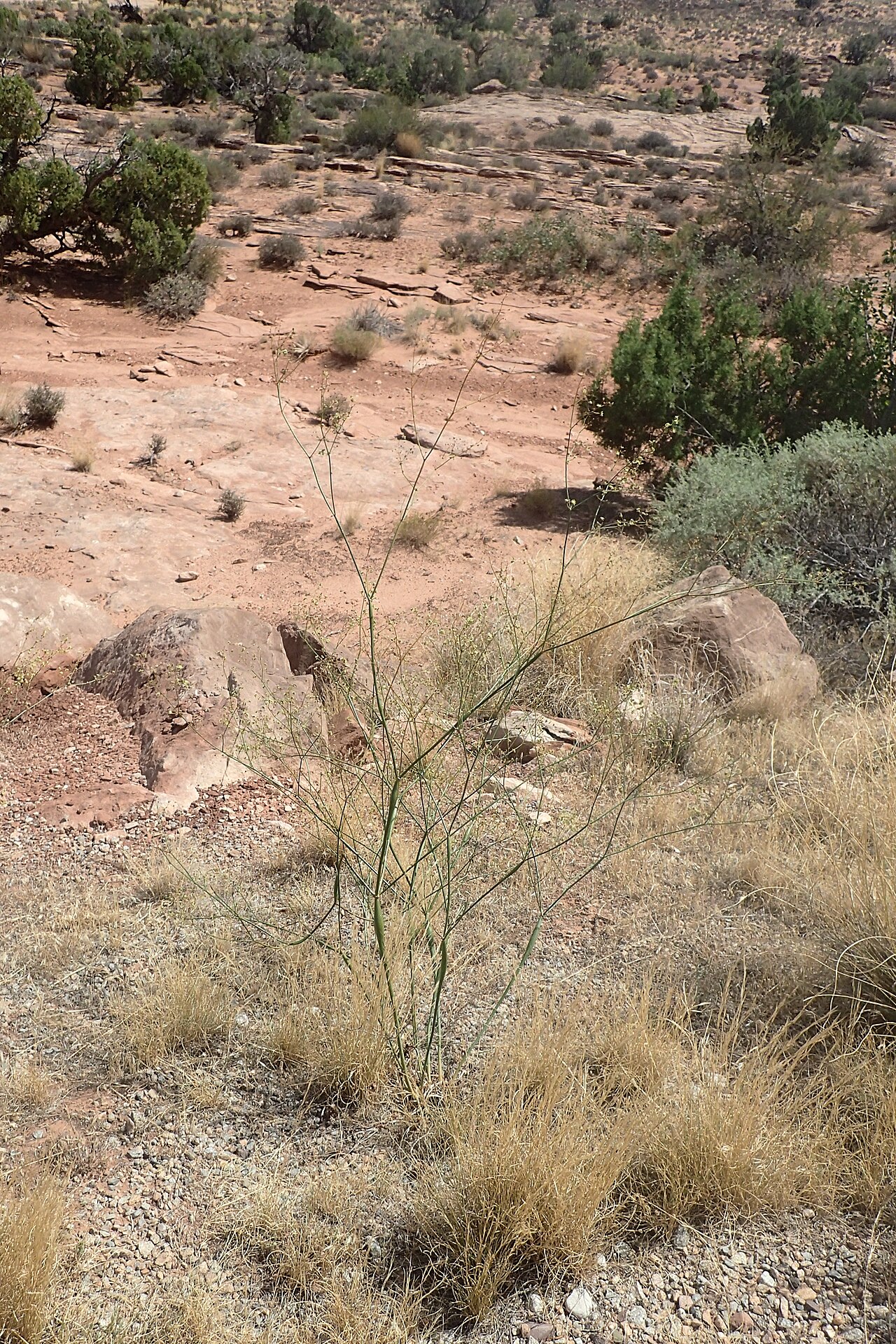
The plant grows from a low, sparse rosette of small, rounded leaves close to the ground, sending up wiry, blue-green stems that branch and rebranch into an airy, candelabra-like framework. Partway up the main stem, just below the first branching point, the stem swells into a distinctive hollow, papery chamber — the “inflated” feature for which the species is named — before resuming its slender form and branching into clusters of tiny yellow flowers.
Though modest in size and color, desert trumpet is a reliable, long-season bloomer that asks for almost nothing: baking heat, reflected sun, and soil so lean and rocky that few other plants can establish there. For desert and xeriscape gardeners within its native range, it offers an easy, water-wise, and conversation-starting addition to the landscape.
Identification
Desert trumpet is a herbaceous annual or short-lived perennial, typically 1 to 3 feet (30–90 cm) tall, with an open, airy, much-branched form. Its most memorable feature by far is the swollen, inflated section of the main stem, usually located a few inches to a foot above the ground, just below the point where branching begins.
Stems
The stems are slender, smooth, and blue-green to grayish, rising from the basal rosette and swelling into a hollow, papery, trumpet- or balloon-shaped chamber before narrowing again and branching repeatedly into a loose, wiry framework. This inflated stem section is thought to function partly as a water-storage reservoir and partly as a brood chamber exploited by certain insects, and it often persists as a dried, straw-colored structure long after the plant has finished flowering.
Leaves
Leaves are few and inconspicuous, clustered in a small basal rosette at ground level, round to kidney-shaped, ½ to 1½ inches (1–4 cm) across, often somewhat fleshy and sometimes finely hairy. By the time the plant is in full bloom, the basal leaves may have withered, leaving the bare, branching stems as the dominant visual feature.
Flowers
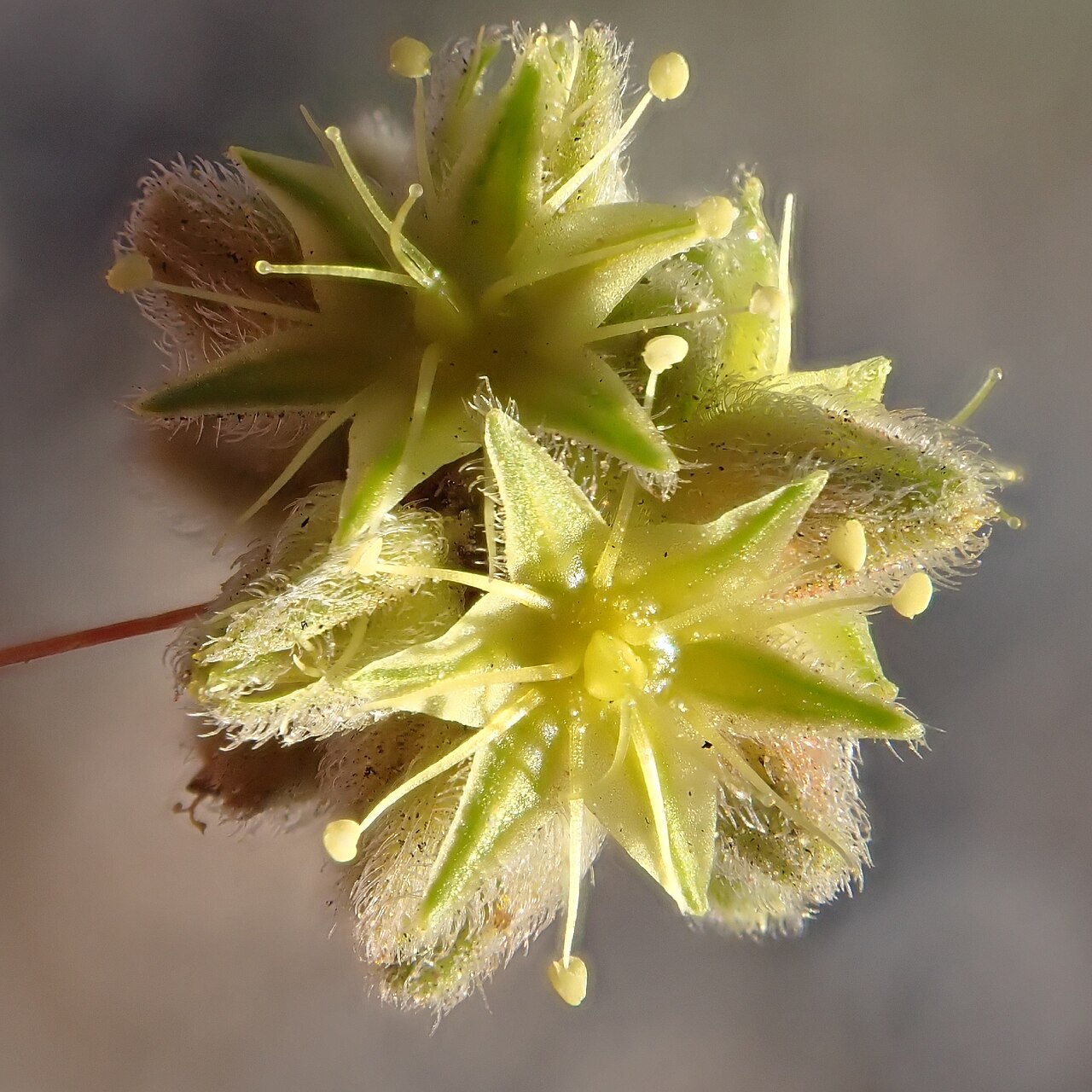
Small clusters of tiny flowers appear at the tips of the branching stems from spring through summer, each flower only about 1/16 to 1/8 inch (2–3 mm) across, pale yellow and sometimes aging to a dusty rose or reddish tone. Individually inconspicuous, the flowers are produced in enough quantity along the branched framework to give the whole plant a light, airy haze of pale yellow at the peak of bloom.
Fruit & Seeds
Flowers mature into tiny, three-angled, dry achenes. The dried stems, including the characteristic inflated section, often remain standing through summer and into fall, bleached pale tan by the desert sun.
Quick Facts
| Scientific Name | Eriogonum inflatum |
| Family | Polygonaceae (Buckwheat) |
| Plant Type | Annual to Short-Lived Perennial |
| Mature Height | 1–3 ft (30–90 cm) |
| Mature Spread | 1–2 ft (30–60 cm) |
| Growth Rate | Moderate to fast after rain |
| Sun Exposure | Full Sun |
| Water Needs | Very Low |
| Soil Type | Sandy, rocky or gravelly desert soil; sharply drained |
| Soil pH | 7.0–8.5 (neutral to alkaline) |
| Bloom Time | April – September |
| Flower Color | Pale yellow, aging to dusty rose |
| Fall Color | Stems bleach to straw-tan, persisting into fall |
| Fruit | Tiny three-angled dry achenes |
| Deer Resistant | Yes |
| USDA Hardiness Zones | 7–10 |
Native Range
Desert trumpet is native across the arid Southwest, including California, Nevada, Utah, Arizona, Colorado, and New Mexico. It is a true desert specialist, found on open, sun-baked flats, dry washes, rocky mesas, and sandy or gravelly slopes throughout the Mojave, Sonoran, and Great Basin deserts, as well as the Colorado Plateau’s canyon country.
Within this range it tolerates extreme heat, alkaline soils, and long periods without rain, often appearing in large numbers after wet winters and springs, then persisting as dried, standing skeletons through the dry season. It grows from near sea level in the low desert up to around 7,000 feet in pinyon-juniper woodland openings.
Desert trumpet remains common and widespread throughout its native range, often one of the most conspicuous wildflowers along desert roadsides and trails after a good bloom year.
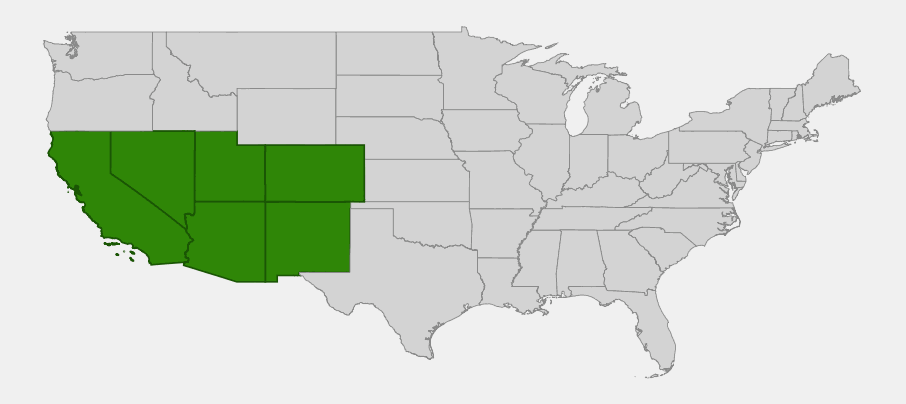
📋 Regional plant lists featuring desert trumpet: California & Nevada · Arizona & New Mexico · Utah & Western Colorado
Growing & Care Guide
Desert trumpet is about as low-maintenance as native wildflowers get, built for reflected desert heat and soil that would defeat most garden perennials.
Light
Full, unfiltered sun is essential. Desert trumpet is adapted to open desert flats with no shade and performs poorly, becoming leggy and sparse-flowered, in anything less than full sun exposure.
Soil & Water
Plant in sandy, rocky, or gravelly soil with excellent drainage; heavy clay or consistently moist soil will quickly rot the roots. Desert trumpet needs very little supplemental water once established and, in its native range, relies almost entirely on seasonal rainfall. Established plants can be left entirely on natural precipitation except during unusually long dry spells.
Planting Tips
Sow seed directly in fall, allowing winter chill and moisture to break dormancy before spring germination, which mimics the plant’s natural cycle. Choose the hottest, most exposed, best-drained spot in the garden — a gravel bed, rocky slope, or desert-style xeriscape planting is ideal. Thin or space young plants 12 to 18 inches apart to allow their airy, branching form to develop fully.
Pruning & Maintenance
Little to no maintenance is required. Many desert gardeners leave the dried, pale tan stems standing through fall and winter, since the inflated stem sections remain an interesting architectural feature even after flowering ends. As an annual or short-lived perennial, desert trumpet often reseeds itself in suitable open ground, renewing the planting without intervention.
Propagation
Propagation is almost always by seed, sown in fall for natural winter stratification, or started in containers with a period of cold, moist storage to improve germination. Established plants reseed readily in open, undisturbed desert soil.
Landscape Uses
Desert trumpet’s unusual form and extreme drought tolerance suit it to specific, sun-baked garden settings:
- Desert and xeriscape gardens as an architectural, water-wise accent
- Gravel and rock gardens replicating open desert flats
- Native wildflower meadows in low- and mid-elevation desert regions
- Pollinator gardens for its long bloom season in extreme heat
- Educational and demonstration gardens showcasing desert plant adaptations
Wildlife & Ecological Value
Though modest in appearance, desert trumpet supports a surprising amount of desert wildlife, in part because of its unusual inflated stems.
For Pollinators
The small flowers, produced over a long season from spring into late summer, attract a wide range of native bees, wasps, flies, and small butterflies at a time when flowering plants are scarce across the open desert. Its reliability as a nectar source in extreme heat makes it disproportionately valuable to desert pollinator communities.
Specialized Insects
The hollow, inflated stem sections are famously used as brood chambers by certain native insects, including some gall-forming flies and wasps, which lay eggs inside the swollen tissue; the larvae develop protected within the stem. This relationship is one of the more studied examples of a specific insect-plant interaction tied to this species’ unusual stem architecture.
Birds & Small Mammals
Seed-eating birds and small desert rodents forage on the tiny seeds produced in quantity along the branching stems, particularly valuable in years following good winter rains when desert trumpet blooms abundantly.
Ecosystem Role
As a fast-establishing annual or short-lived perennial, desert trumpet often appears quickly on disturbed desert soils, helping provide early-season ground cover, nectar, and seed resources while slower-growing desert shrubs reestablish after disturbance.
Cultural & Historical Uses
Indigenous peoples of the desert Southwest, including various Great Basin and Southwestern tribes, found practical uses for desert trumpet’s distinctive hollow stems, reportedly using the dried, inflated sections as makeshift smoking pipes — a use noted in regional ethnobotanical records and reflected in some of the plant’s historical common names. Dried stems were also sometimes used as simple drinking straws or tubes, taking advantage of their naturally hollow structure.
Beyond these practical uses of the stem, documented food or medicinal uses specific to desert trumpet are limited, likely reflecting its small size and the general preference among desert peoples for other, more substantial native food and medicine plants in the same harsh environment.
Today, desert trumpet is valued primarily as a distinctive native wildflower for desert landscaping and as a point of interest in desert natural history, both for its “inflated” form and for its specialized relationship with stem-dwelling insects.
Frequently Asked Questions
Why does desert trumpet’s stem have a swollen section?
The exact function of the inflated stem is still debated among botanists, but it is thought to help the plant store water and may also result partly from insect activity, since certain native insects use the hollow chamber as a brood site. The swelling is a reliable identifying feature regardless of its exact purpose.
Is desert trumpet an annual or a perennial?
It can behave as either, depending on rainfall and local conditions — often completing its life cycle in a single season as a true annual in drier years, but persisting and reflowering as a short-lived perennial where moisture is more reliable.
How much water does desert trumpet need in a garden?
Very little. It is adapted to some of the driest soils in North America and should be planted in full sun with sharp drainage and minimal supplemental irrigation; overwatering is far more likely to kill it than drought.
Can I use the dried stems as pipes, like some Indigenous peoples historically did?
Historical use of the dried, hollow stems as simple smoking pipes is documented among some desert Indigenous communities, but this is a historical practice, not a modern recommendation, and dried plant material should not be used for inhalation without understanding the associated risks.
Will desert trumpet reseed itself in my garden?
Yes, in suitable open, well-drained desert soil it often reseeds readily, especially after a wet winter, renewing the planting from year to year without needing to be replanted.

Looking for a nursery that carries desert trumpet?
Browse our native plant nursery directory: California · Nevada & New Mexico · Utah · Arizona · Colorado