Top 5 Best Cat Grass and Pet-Safe Plant Growing Kits in 2026
We independently select all products and services. If you click through links we provide, Plant Native may earn a commission with no extra cost to you. As an Amazon Associate I earn from qualifying purchases.
Last updated: August 23, 2026
If you share your home with a curious feline, you’ve probably caught them nibbling on your houseplants at least once. Cat grass kits offer a simple, safe solution — giving your cat a dedicated patch of greens to munch on while keeping your toxic houseplants out of harm’s way. These kits typically contain wheatgrass, oat grass, or a blend of pet-safe seeds that sprout in just days, providing fiber that aids digestion and helps reduce hairballs.
After researching dozens of cat grass and pet-safe plant growing kits, we tested the most popular options from trusted brands. We evaluated ease of setup, germination speed, organic certification, planter quality, and overall value. Whether you want a decorative planter for your kitchen counter or a budget-friendly multi-pack, our picks cover every need and budget.
Below you’ll find our top 5 recommendations for 2026, including detailed pros, cons, and honest assessments to help you choose the perfect cat grass kit for your furry friend.
Our top pick

- USDA organic seed mix with non-GMO wheatgrass and oat grass blend
- Adorable white ceramic cat mug planter doubles as home décor
- Sprouts in 5–7 days with minimal effort — just add water
Cons
- Single planter means you’ll need refill seeds after each growth cycle
- Ceramic mug has no drainage holes, so overwatering is easy
The Cat Ladies Organic Cat Grass Kit is our top pick because it combines quality, aesthetics, and simplicity better than any other kit on the market. The organic seed blend — a mix of wheatgrass, oat, barley, and rye — produces thick, lush grass that cats love. The white cat-shaped ceramic planter is genuinely cute and looks great on a windowsill or kitchen counter, making it the kind of product you won’t want to hide away.
Setup couldn’t be easier: drop in the included soil disk, add water to expand it, sprinkle the seeds, and within five to seven days you’ll have a full patch of vibrant green grass. The only real downside is the lack of drainage in the ceramic mug, so you’ll want to water sparingly and pour off any excess. Overall, this is the kit we’d recommend to anyone who wants a hassle-free, attractive cat grass solution.
Best for gifts
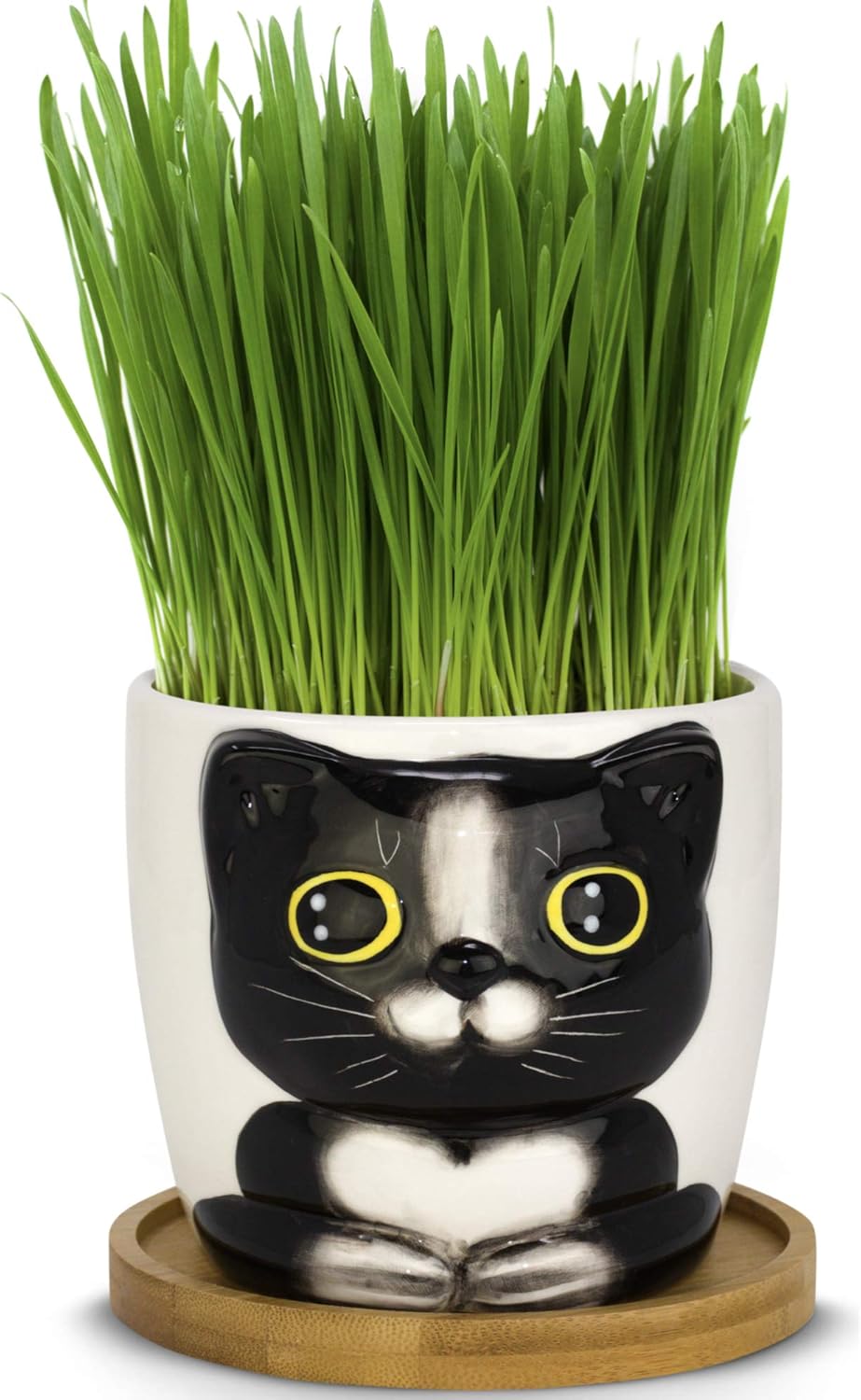
- Adorable cat-face design pot makes it a standout gift for cat lovers
- Organic non-GMO wheatgrass seeds included with fiber soil disc
- Compact size fits perfectly on windowsills and small countertops
Cons
- Pot is plastic rather than ceramic, which feels less premium
- Smaller growing area produces less grass per cycle than larger kits
Window Garden’s cat grass kit is purpose-built for gifting. The planter features an expressive kitty face that genuinely makes people smile, and the whole package arrives neatly boxed with everything you need: seeds, soil disc, and the planter itself. It’s the kind of gift that feels thoughtful without requiring the recipient to buy anything extra.
The organic wheatgrass seeds germinate reliably in about a week, and the fiber soil is cleaner and less messy than traditional potting mixes. The trade-off is size — the pot is on the smaller side, so you’ll get a modest patch of grass rather than a lush meadow. If your cat is a heavy grazer, you might want to supplement with the 3-pack version (B07J5P1SNL). But as a standalone gift or starter kit, this is hard to beat.
Best cat-proof design
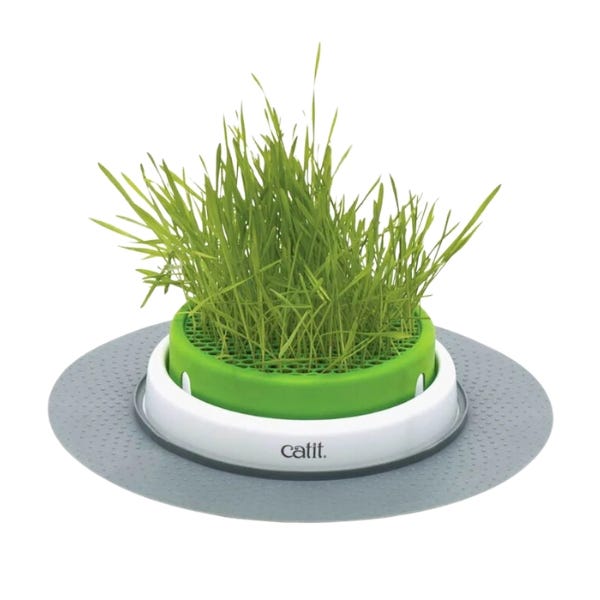
- Anti-tip low-profile design with grid cover prevents cats from digging in soil
- Built-in drainage holes prevent overwatering and root rot
- Uses vermiculite instead of soil for a cleaner, tidier growing experience
Cons
- Seeds and vermiculite refill kits sold separately from the planter
- Grid cover can make it harder for kittens to reach shorter grass
- Plastic construction feels utilitarian rather than decorative
If your cat treats every planter like a personal excavation site, the Catit Senses 2.0 is your answer. Its low-profile, wide-base design makes it nearly impossible to knock over, and the snap-on grid cover keeps paws out of the growing medium while still letting grass blades poke through for easy nibbling. It’s the most functional, cat-proof design we’ve tested.
The planter uses vermiculite rather than soil, which eliminates the mess factor entirely — no dirt on your floors or countertops. The built-in drainage holes are a smart addition that most competitors lack. The main catch is that you need to buy the Catit grass seed refill kit separately, which adds to the total cost. But once you have the planter, refills are inexpensive, and the system works beautifully for years. This is the pick for multi-cat households or anyone tired of cleaning up overturned planters.
Best budget pick
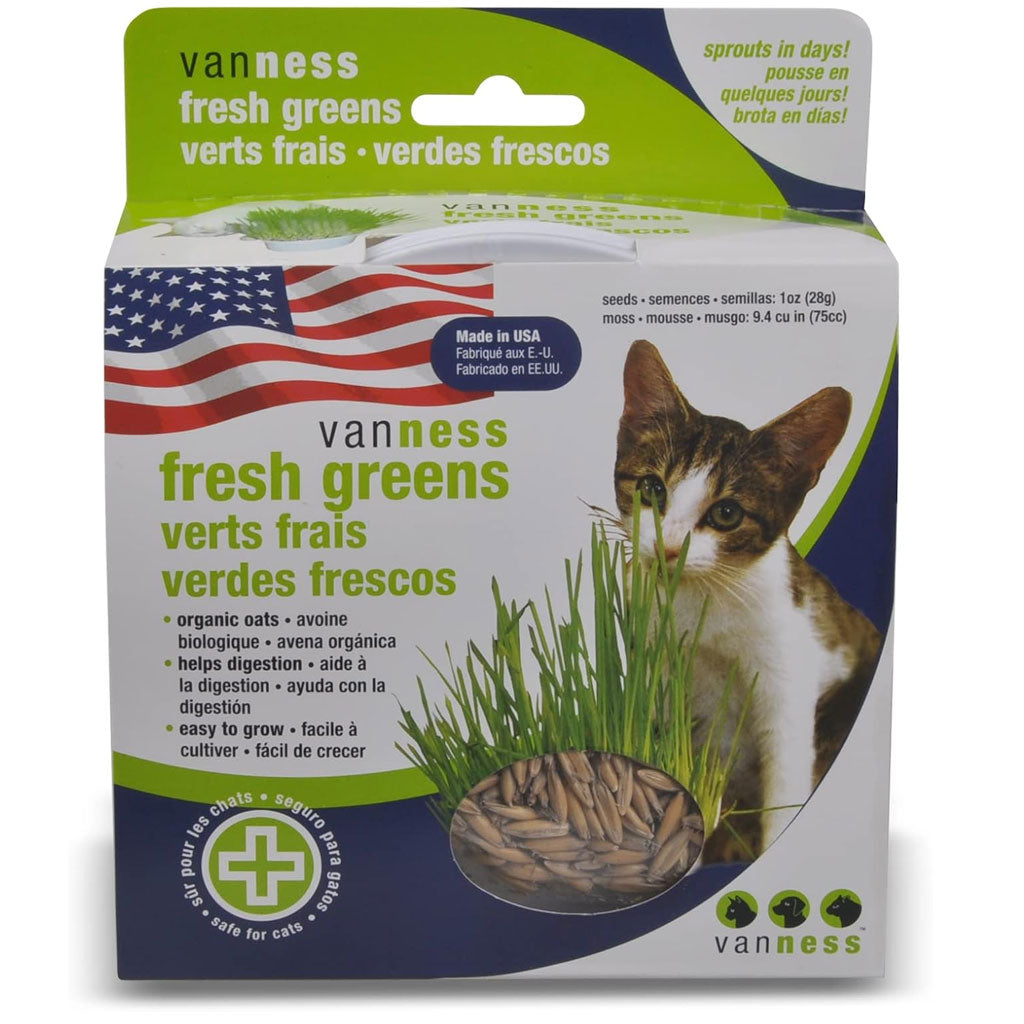
- Excellent value — three complete growing kits at a fraction of competitor prices
- Organic oat seeds sprout in as few as 3–5 days
- Simple self-contained containers require zero setup beyond adding water
Cons
- Disposable plastic containers aren’t reusable or eco-friendly
- Oat grass only — no wheatgrass or seed variety blend
Van Ness has been making pet products for decades, and their Cat Oat Garden Kit reflects that experience: it’s straightforward, reliable, and priced to move. Each of the three containers comes pre-loaded with organic oat seeds and growing medium. Peel the lid, add water, and you’ll have grass in three to five days — genuinely the fastest germination of any kit we tested.
The trade-off for the low price is presentation. These are simple plastic tubs with no decorative appeal whatsoever, and they’re meant to be discarded after each growing cycle. If aesthetics matter to you, pair them with a separate planter. But if you just want affordable, fast-growing grass your cat will love, Van Ness delivers. The 3-pack format also means you can stagger plantings so fresh grass is always available.
Best value multi-pack

- Three separate BPA-free growing containers for staggered planting
- 100% organic, non-GMO, locally sourced seed blend
- Each container is self-contained — seeds, soil, and planter in one
Cons
- Containers are basic and purely functional — no decorative value
- Smaller individual containers produce modest grass patches
If you’ve already fallen in love with The Cat Ladies’ quality but want more grass for your money, their 3-pack is the way to go. Each container comes with organic seeds and a soil disk, ready to grow independently. The genius move is staggering your plantings — start one container every two weeks, and you’ll have a continuous supply of fresh grass year-round.
The BPA-free containers are a nice touch for pet safety, and the locally sourced, non-GMO seed blend is the same quality you get in their premium planter kits. The containers themselves are purely utilitarian, so if you want something prettier, simply transplant the growing grass into a decorative pot. For households with multiple cats or heavy grazers, this multi-pack offers the best cost-per-serving of fresh cat grass.
Cat Grass Buying Guide: What to Know Before You Buy
What Is Cat Grass and Why Do Cats Need It?
Cat grass is a general term for several pet-safe grasses — most commonly wheatgrass, oat grass, barley grass, and rye grass. Unlike catnip (which produces a euphoric response), cat grass serves a nutritional purpose. It provides dietary fiber that helps cats pass hairballs, aids digestion, and delivers vitamins A, D, and niacin. Indoor cats especially benefit from cat grass since they don’t have access to outdoor greens.
Organic vs. Non-Organic Seeds
We strongly recommend choosing organic, non-GMO seed mixes. Since your cat will be eating the grass directly, pesticide and herbicide residues are a real concern with conventional seeds. Every kit on our list uses organic seeds, and you should hold any kit you consider to the same standard. Look for USDA Organic certification on the packaging.
Soil vs. Soilless Growing Media
Traditional soil works well but can be messy — cats love to dig, and potting soil on your kitchen floor isn’t anyone’s idea of fun. Alternatives like vermiculite (used by Catit) and fiber soil discs (used by Window Garden) are cleaner and lighter. Hydroponic or jute mat-based systems are also gaining popularity for their zero-mess appeal. Each medium grows grass equally well; choose based on your tolerance for dirt.
How Often Should You Replace Cat Grass?
Cat grass typically lasts 2–3 weeks before it starts to yellow and wilt. Plan to start a new batch every 10–14 days for continuous availability. Multi-pack kits like the Van Ness 3-pack or The Cat Ladies 3-pack are ideal for staggered planting schedules. Most cats self-regulate their grass intake, so you don’t need to worry about overfeeding.
Safety Considerations
All five products on our list are pet-safe, but here are general guidelines: avoid any grass treated with fertilizers or pesticides, ensure the planter doesn’t have small removable parts that could be a choking hazard, and supervise your cat’s first few interactions with a new grass kit. If your cat vomits frequently after eating grass, consult your veterinarian — while occasional vomiting is normal (and often intentional), frequent episodes could indicate an underlying issue.