Best Composting Worms for Your Vermicomposting System: A Comprehensive Guide
We independently select all products and services. If you click through links we provide, Plant Native may earn a commission with no extra cost to you.
Last updated: November 13, 2026

Vermicomposting is a sustainable and eco-friendly way of disposing of organic waste. It is a process that uses worms to break down food scraps and other organic materials into nutrient-rich compost. One of the essential components of vermicomposting is the composting worms. These worms are different from regular earthworms and are specifically bred for their ability to consume and break down organic waste quickly.
When it comes to selecting the best composting worms for vermicomposting systems, there are a few critical factors to consider. The most important factor is the type of worm. The two most commonly used worms for vermicomposting are Red Wigglers (Eisenia fetida) and European Nightcrawlers (Eisenia hortensis). Red Wigglers are the most popular choice for home vermicomposting systems because they are easy to care for, reproduce quickly, and can consume up to half their body weight in organic waste each day. European Nightcrawlers, on the other hand, are larger and more robust than Red Wigglers, making them a better choice for larger-scale vermicomposting systems.
Another critical factor to consider when selecting composting worms is the source. It is essential to purchase worms from a reputable supplier to ensure that they are healthy and disease-free. Additionally, the supplier should provide information on how to care for the worms and what to feed them.
In this article, we spent several hours researching and testing different types of composting worms to identify the best options for vermicomposting systems. We will provide an in-depth analysis of the Red Wigglers and European Nightcrawlers, including their benefits, drawbacks, and how to care for them. We will also discuss the critical factors to consider when purchasing composting worms to ensure that you get the best quality worms for your vermicomposting system.
Best Composting Worms for Vermicomposting Systems
We have researched and tested various composting worms for vermicomposting systems and have compiled a list of the best options available on Amazon. These worms are highly efficient in breaking down organic waste and producing nutrient-rich compost for your plants. Whether you are a beginner or an experienced vermicomposter, our list has something for everyone. So, without further ado, let’s take a look at the best composting worms for vermicomposting systems.
Our top pick
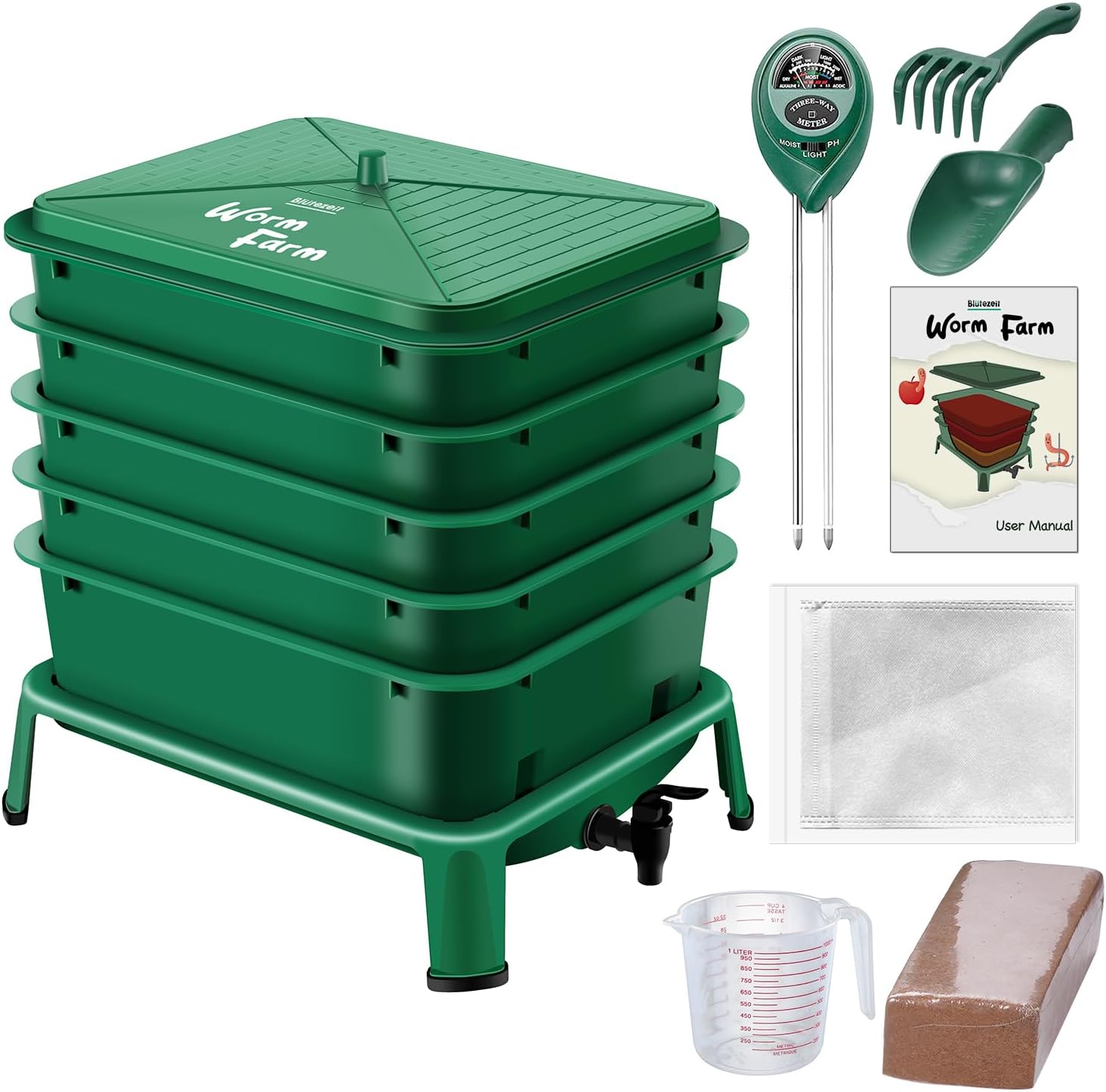
- Complete starter kit with tools, coir brick and a soil meter.
- Stacking trays let worms move up as you harvest.
- Spigot for collecting worm tea.
- Compact enough for a balcony, garage or kitchen.
Cons
- Worms are sold separately.
- Plastic trays are less sturdy than heavier bins.
- Moisture needs regular checks to keep worms healthy.
The Blütezeit 5-tray bin is an easy, all-in-one way to start vermicomposting: add bedding, red wigglers and kitchen scraps, and the stacking trays make harvesting castings straightforward.
Best runner-up
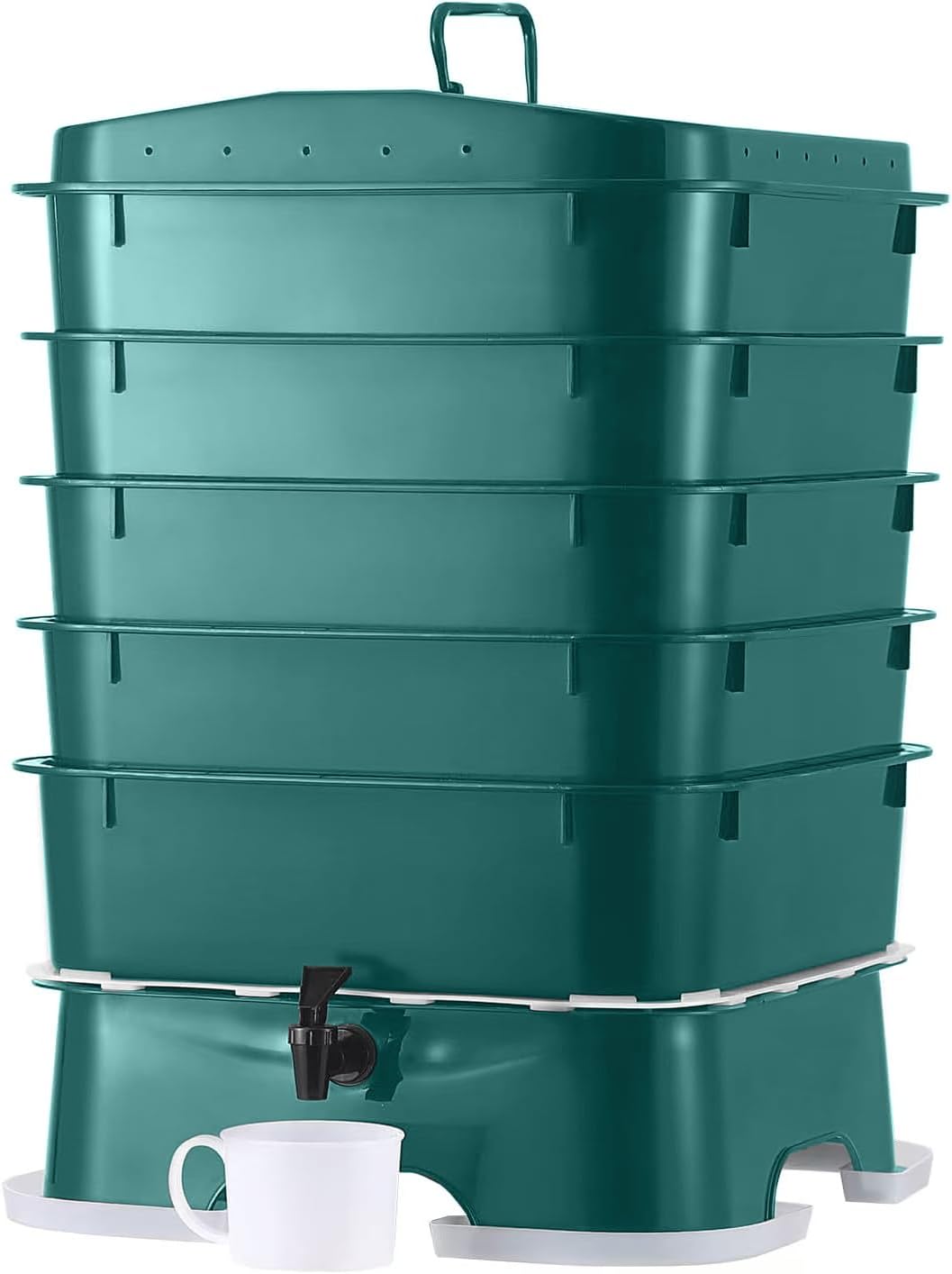
- The smallest footprint for the highest composting efficiency.
- Odorless composting with the V-board and coconut mat built into the lid.
- Moisture control with the improved lid design.
Cons
- Assembly instructions can be confusing.
- Some users have reported issues with worms escaping.
- The price point may be a bit high for some.
The VermiHut Plus 5-Tray Worm Compost Bin is a great choice for those who want to start vermicomposting without taking up too much space. The unique design of this worm bin allows for a high composting efficiency, making it perfect for those who want to reduce their food waste.
The V-board and coconut mat built into the lid help to make the composting process odorless, which is a huge plus for those who want to keep their living space smelling fresh. The improved lid design also makes it possible to control the moisture level in the bin, providing a comfortable environment for the worms.
While the assembly instructions may be a bit confusing for some, the product is well-made and sturdy once assembled. Some users have reported issues with worms escaping, but this can be easily remedied by using a window screen or similar material to cover the top tray.
Overall, we believe that the VermiHut Plus 5-Tray Worm Compost Bin is a great investment for anyone who wants to start vermicomposting. It may be a bit pricey, but the high composting efficiency and odorless composting make it worth the investment.
Best budget option

- The in-bed design makes it easy to use and more convenient than other composting systems.
- The Vego Garden Worm Composter is made of durable, BPA-free Polypropylene Plastic (PP), which is specifically meant for outdoor use.
- The composting process is much faster than traditional methods, taking only 2-3 months.
Cons
- The holes in the composter are large, which can lead to worms spreading into the surrounding soil.
- You’ll need to add “grit” to the compost, which can be a hassle.
- The Vego Garden Worm Composter is relatively small and may not be suitable for larger gardens.
The Vego Garden In-Ground Worm Composter is an excellent option for anyone who wants to turn their organic waste into nutrient-rich garden bed material. The in-bed design makes it easy to use, and the durable, BPA-free Polypropylene Plastic (PP) ensures it will last for years to come.
One of the biggest advantages of this composter is how quickly it works. The composting process takes only 2-3 months, which is much faster than traditional methods. This means you’ll be able to use your compost sooner and see the benefits in your garden faster.
However, there are a few drawbacks to consider. The holes in the composter are relatively large, which can lead to worms spreading into the surrounding soil. You’ll also need to add “grit” to the compost, which can be a hassle. Finally, the Vego Garden Worm Composter is relatively small and may not be suitable for larger gardens.
Overall, we think the Vego Garden In-Ground Worm Composter is an excellent option for anyone who wants to compost efficiently and sustainably. It’s easy to use, durable, and produces nutrient-rich compost quickly.
Best premium choice

- The bin is lightweight and portable, making it easy to relocate as needed and compact enough to keep on countertops or other small spaces.
- The kit includes a step-by-step guide for setting up and maintaining a worm farm, making it easy for beginners to get started.
- The composting worms eat a variety of organic matter such as fruit and vegetable scraps, dried leaves, cardboard, and shredded paper that would otherwise be thrown away.
Cons
- The bin is relatively small, which may be a limitation for those with larger households or gardens.
- The kit only includes one coco coir brick, so additional composting materials will need to be purchased separately.
- The spigot may be prone to leaking if not tightened properly.
The Worm Nerd 4-Tray Worm Composting Bin Kit is a compact starter bin, about 10 x 9 inches and 12 inches tall when assembled, that comes with a coco coir brick and a 4-page guide to setting up and maintaining a worm farm, including tips on moisture, food, light, pH and temperature.
Composting worms eat fruit and vegetable scraps, dried leaves, cardboard and shredded paper that would otherwise go to the landfill, and the castings they produce make a nutrient-rich soil additive for your plants.
Because the bin is small, it suits small households best; larger households or gardens may need a bigger bin. Make sure the spigot is tightened properly before use to avoid leaks.
Overall, the Worm Nerd 4-Tray Worm Composting Bin Kit is an efficient and easy way to reduce landfill waste and improve plant health.
Also great
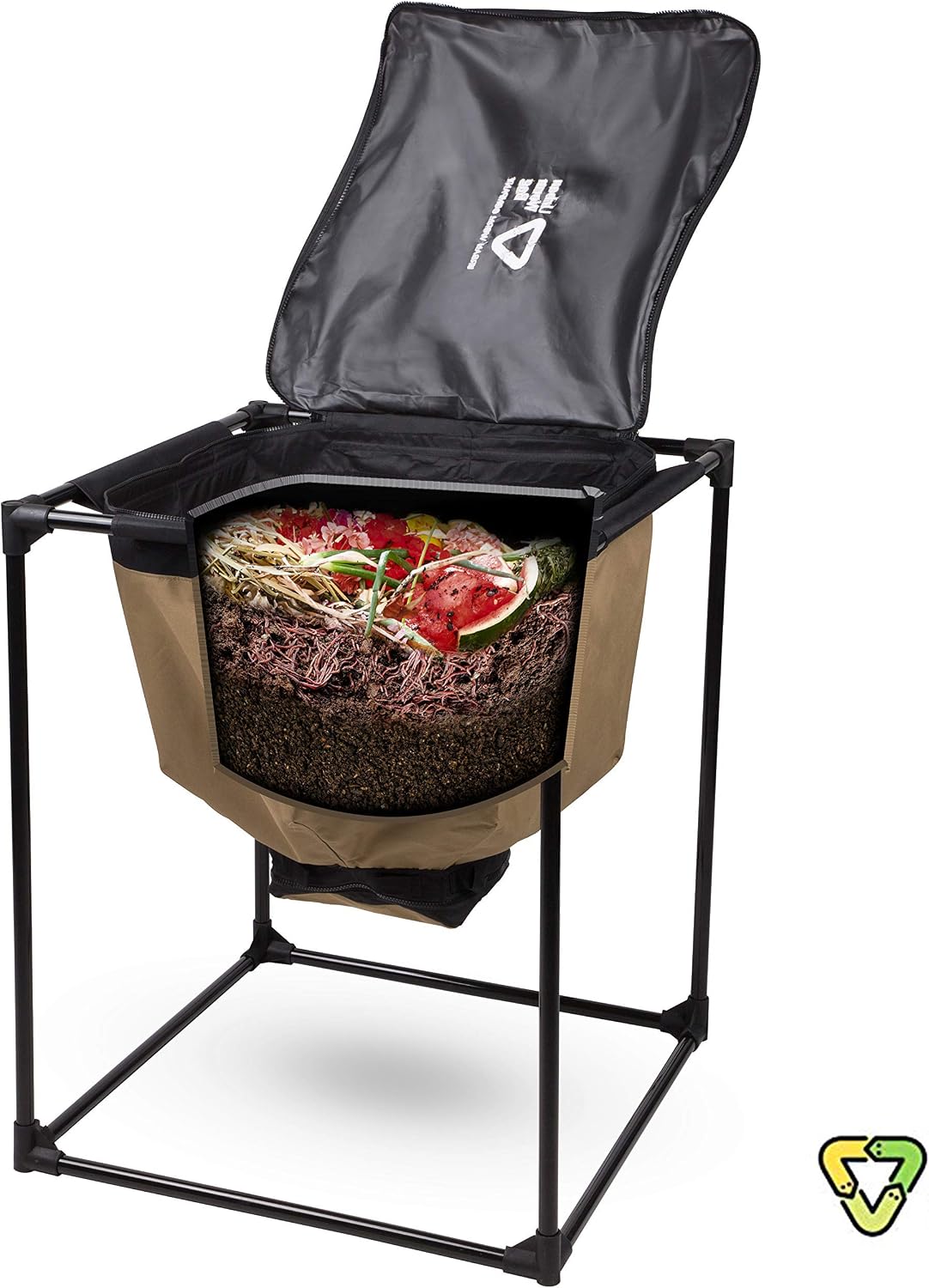
- Harvest castings from the bottom without disturbing the worms.
- Breathable fabric helps prevent soggy, smelly bedding.
- Large capacity for families and heavy food waste.
- Tool-free assembly.
Cons
- Higher price than plastic tray bins.
- No spigot for worm tea.
- Large footprint (about 27 x 27 in).
The Urban Worm Bag is a good upgrade for households that produce a lot of food scraps and want a low-fuss, continuous-flow system.
Also great
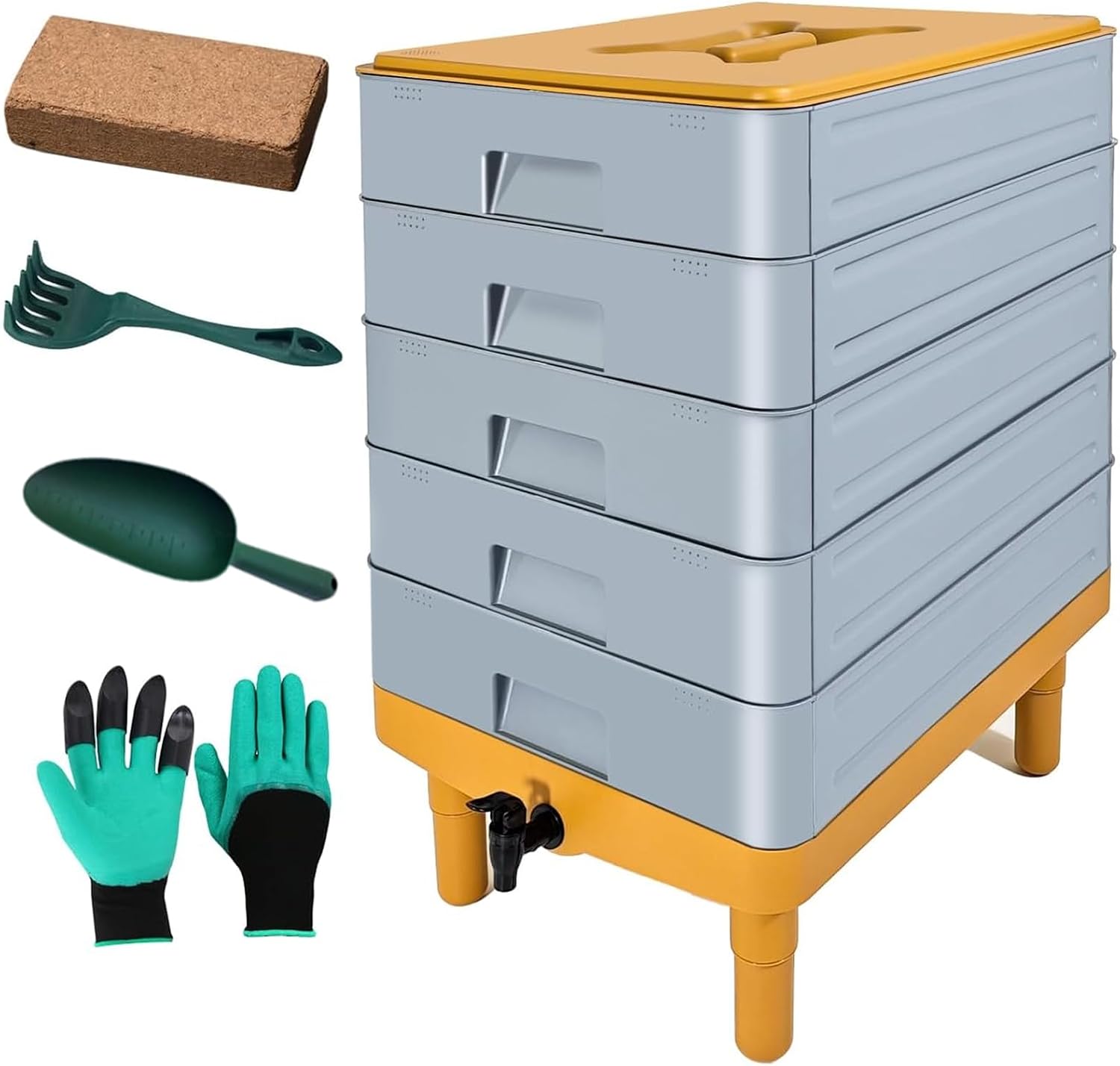
- Large 100 L capacity across five trays.
- Faucet for worm tea.
- Ventilated, closed design to keep odors in.
- Gloves, coir and hand tools included.
Cons
- Worms are not included.
- Heavier and taller than compact countertop bins.
- Fewer Amazon ratings than the bigger brands.
The TOP XIAN composter suits households that want lots of tray space for kitchen scraps, along with the basic tools to get started.
When choosing the best composting worms for your vermicomposting system, there are a few key features to consider. Here are some important factors to keep in mind:
Not all worm species are created equal when it comes to vermicomposting. The two most common species used for composting are Red Wigglers (Eisenia fetida) and European Nightcrawlers (Eisenia hortensis). Red Wigglers are smaller and reproduce more quickly, making them a good choice for smaller vermicomposting systems. European Nightcrawlers are larger and more robust, making them a good choice for larger systems or outdoor composting.
The number of worms you need will depend on the size of your vermicomposting system and how much organic waste you produce. As a general rule of thumb, you will need about 1 pound of worms for every square foot of surface area in your compost bin. So, if you have a 2 square foot bin, you will need 2 pounds of worms.
When purchasing composting worms, it is important to buy from a reputable supplier to ensure that you are getting healthy, high-quality worms. Look for suppliers that specialize in composting worms and have a good reputation in the industry.
Composting worms are relatively inexpensive, but prices can vary depending on the species and quantity you need. Red Wigglers are generally less expensive than European Nightcrawlers, and larger quantities will be more cost-effective than smaller quantities.
When buying composting worms, look for suppliers that package their worms in breathable containers, such as mesh bags or cardboard boxes. Avoid suppliers that package their worms in plastic bags, as this can cause the worms to suffocate.
By considering these factors, you can choose the best composting worms for your vermicomposting system and ensure that your organic waste is turned into nutrient-rich compost for your garden.
The top worm species recommended for efficient vermicomposting are the Red Wiggler (Eisenia fetida) and the European Nightcrawler (Eisenia hortensis). Both species are highly efficient in breaking down organic waste and producing nutrient-rich compost.
Red Wiggler worms are smaller and more active than Nightcrawlers, making them more efficient in breaking down organic waste. Nightcrawlers, on the other hand, are larger and less active, making them better suited for outdoor composting systems.
The ideal number of worms required to initiate a vermicomposting system depends on the size of the system and the amount of organic waste being produced. As a general rule, a pound of worms (approximately 1,000 worms) is sufficient for a small-scale vermicomposting system.
Indian Blue worms (Perionyx excavatus) can be used in outdoor composting systems, but they are not as efficient as Red Wigglers or Nightcrawlers in breaking down organic waste. They are better suited for processing animal manure and other high-nitrogen waste.
Reputable sources for purchasing composting worms include online retailers, local garden centers, and worm farms. It is important to ensure that the worms are healthy and free from disease before purchasing them.
A worm species suitable for garden composting should be efficient in breaking down organic waste, adaptable to different environmental conditions, and able to survive in a range of temperatures. Red Wigglers and Nightcrawlers are two species that are well-suited for garden composting.
Buying Guide
When choosing the best composting worms for your vermicomposting system, there are a few key features to consider. Here are some important factors to keep in mind:
Worm Species
Not all worm species are created equal when it comes to vermicomposting. The two most common species used for composting are Red Wigglers (Eisenia fetida) and European Nightcrawlers (Eisenia hortensis). Red Wigglers are smaller and reproduce more quickly, making them a good choice for smaller vermicomposting systems. European Nightcrawlers are larger and more robust, making them a good choice for larger systems or outdoor composting.
Worm Quantity
The number of worms you need will depend on the size of your vermicomposting system and how much organic waste you produce. As a general rule of thumb, you will need about 1 pound of worms for every square foot of surface area in your compost bin. So, if you have a 2 square foot bin, you will need 2 pounds of worms.
Worm Quality
When purchasing composting worms, it is important to buy from a reputable supplier to ensure that you are getting healthy, high-quality worms. Look for suppliers that specialize in composting worms and have a good reputation in the industry.
Worm Price
Composting worms are relatively inexpensive, but prices can vary depending on the species and quantity you need. Red Wigglers are generally less expensive than European Nightcrawlers, and larger quantities will be more cost-effective than smaller quantities.
Worm Packaging
When buying composting worms, look for suppliers that package their worms in breathable containers, such as mesh bags or cardboard boxes. Avoid suppliers that package their worms in plastic bags, as this can cause the worms to suffocate.
By considering these factors, you can choose the best composting worms for your vermicomposting system and ensure that your organic waste is turned into nutrient-rich compost for your garden.
Frequently Asked Questions
What are the top worm species recommended for efficient vermicomposting?
The top worm species recommended for efficient vermicomposting are the Red Wiggler (Eisenia fetida) and the European Nightcrawler (Eisenia hortensis). Both species are highly efficient in breaking down organic waste and producing nutrient-rich compost.
How do Red Wiggler worms compare to Nightcrawlers for composting effectiveness?
Red Wiggler worms are smaller and more active than Nightcrawlers, making them more efficient in breaking down organic waste. Nightcrawlers, on the other hand, are larger and less active, making them better suited for outdoor composting systems.
What is the ideal number of worms required to initiate a vermicomposting system?
The ideal number of worms required to initiate a vermicomposting system depends on the size of the system and the amount of organic waste being produced. As a general rule, a pound of worms (approximately 1,000 worms) is sufficient for a small-scale vermicomposting system.
Can Indian Blue worms be used in outdoor composting systems, and how do they perform?
Indian Blue worms (Perionyx excavatus) can be used in outdoor composting systems, but they are not as efficient as Red Wigglers or Nightcrawlers in breaking down organic waste. They are better suited for processing animal manure and other high-nitrogen waste.
Where can one find reputable sources for purchasing composting worms?
Reputable sources for purchasing composting worms include online retailers, local garden centers, and worm farms. It is important to ensure that the worms are healthy and free from disease before purchasing them.
What characteristics make a worm species suitable for garden composting?
A worm species suitable for garden composting should be efficient in breaking down organic waste, adaptable to different environmental conditions, and able to survive in a range of temperatures. Red Wigglers and Nightcrawlers are two species that are well-suited for garden composting.
We independently select all products and services. If you click through links we provide, Plant Native may earn a commission with no extra cost to you. As an Amazon Associate I earn from qualifying purchases.