
Best LED Grow Lights for Indoor Plants in 2024: Top Picks for Optimal Growth
We independently select all products and services. If you click through links we provide, Plant Native may earn a commission with no extra cost to you.
Last updated: November 13, 2026
LED grow lights have revolutionized indoor gardening. They allow plant enthusiasts to cultivate a wide variety of species year-round. These lights mimic the sun’s spectrum, providing plants with the necessary light for photosynthesis and growth.
Indoor gardeners can now grow herbs, vegetables, and even flowering plants regardless of outdoor conditions or limited natural light.
When choosing LED grow lights, several factors are crucial to consider. The light spectrum, intensity, and coverage area are key elements that affect plant growth. Energy efficiency is another important aspect, as it impacts both electricity costs and environmental footprint. We also evaluated the durability and heat management of each unit, as these factors contribute to the longevity and safety of the grow lights.
We tested and compared numerous LED grow lights to find the best options for indoor plants in 2024. Our research focused on lights that deliver optimal plant growth while being user-friendly and cost-effective for home gardeners.
Best LED Grow Lights for Indoor Plants in 2024
We’ve researched and tested numerous LED grow lights to bring you this curated list of top performers. Our selections cater to various plant types, grow spaces, and budgets, ensuring you’ll find the ideal lighting solution for your indoor garden.
Our top pick
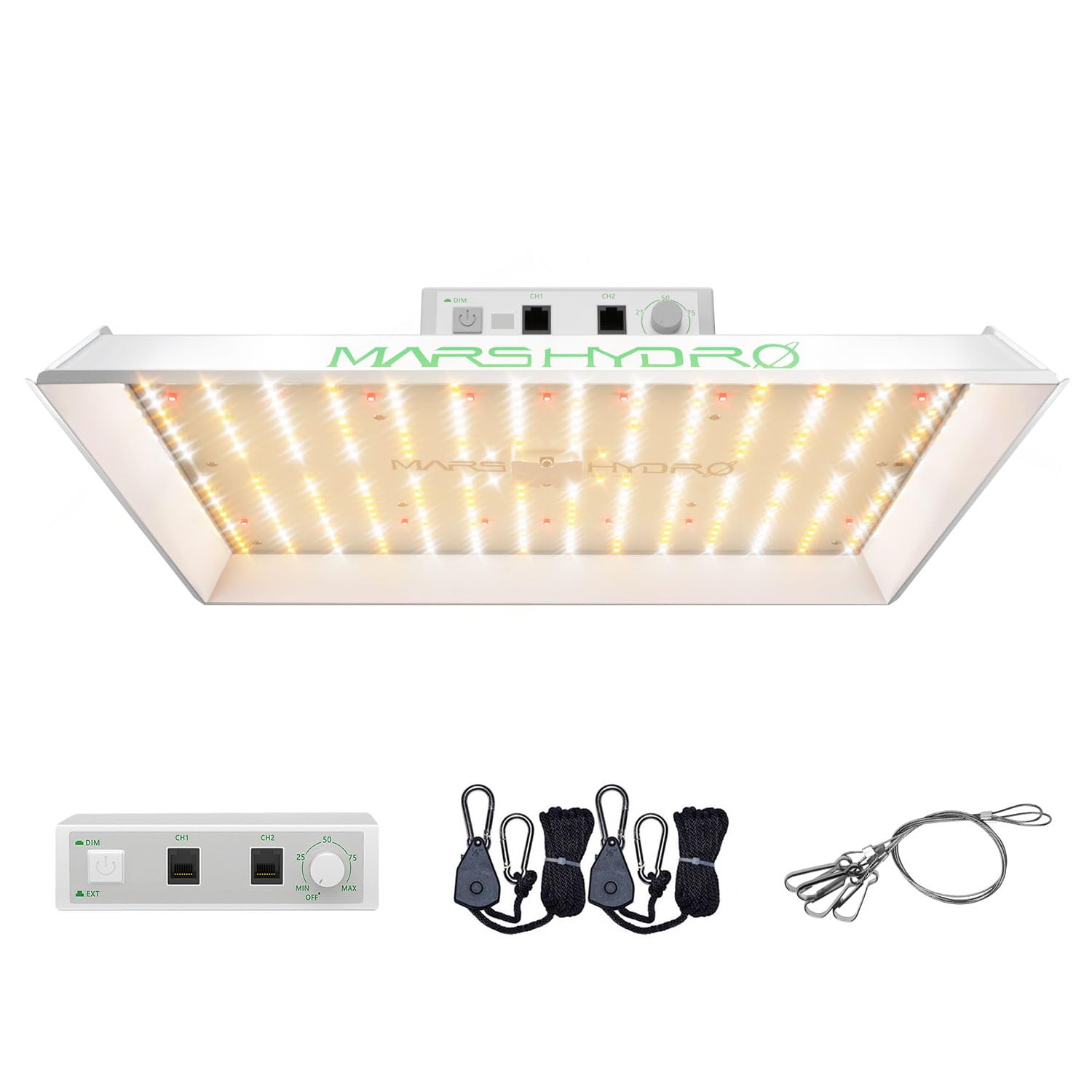
- Excellent light coverage and intensity
- Energy-efficient with adjustable dimming
- Runs cool and quiet without fans
Cons
- May be too strong for some seedlings
- Higher initial cost compared to basic grow lights
- Requires proper hanging setup
The MARS HYDRO TS1000 draws 150 watts from 354 LEDs and is designed to replace a single-ended 250W HPS. Its recommended coverage is 2.5 x 2.5 ft, up to 3 x 3 ft, which suits small to medium tent setups.
The upgraded white reflective hood has a 120° refraction angle, and the diode layout is denser in the middle and sparser at the sides for more even coverage. The full spectrum includes warm and cool white light plus 730-740nm red/IR for every stage from seedling to flowering.
A dimming knob on the external driver adjusts output from 0 to 100%, and lights can be daisy-chained with an RJ12 connector sold separately. The fanless aluminum design runs silently.
Best runner-up
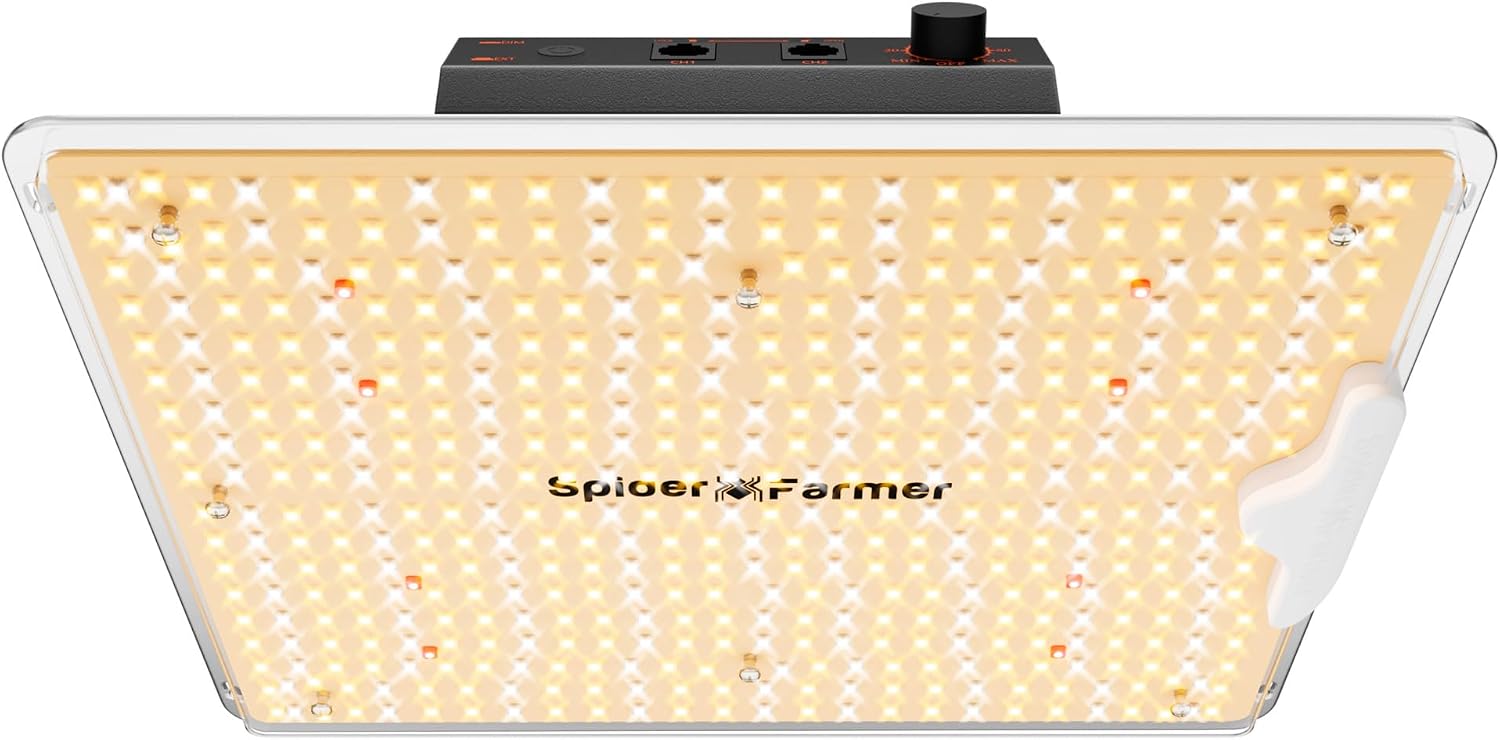
- Efficient 100W draw with upgraded diodes
- Full-spectrum light for all growth stages
- Durable aluminum construction with 5-year warranty
Cons
- 2 x 2 ft flowering footprint is small for bigger grows
- May require additional units for larger grow areas
- Slightly higher initial cost compared to budget options
The Spider Farmer SF1000D uses upgraded diodes on a waterproof LED board and consumes only 100 watts, with output the brand compares to a 200W HID light. Its footprint is 3 x 3 ft for vegetative growth and 2 x 2 ft for flowering.
The spectrum combines blue, 660-665nm red, 3000K and 5000K white, and IR for every growth stage, from germination and cuttings to flowering.
For heat management, Spider Farmer uses a large solid aluminum heat sink with no fan, plus protective cable covers, so it runs silently. The light is dimmable, and Spider Farmer backs it with a 5-year warranty.
Best budget option
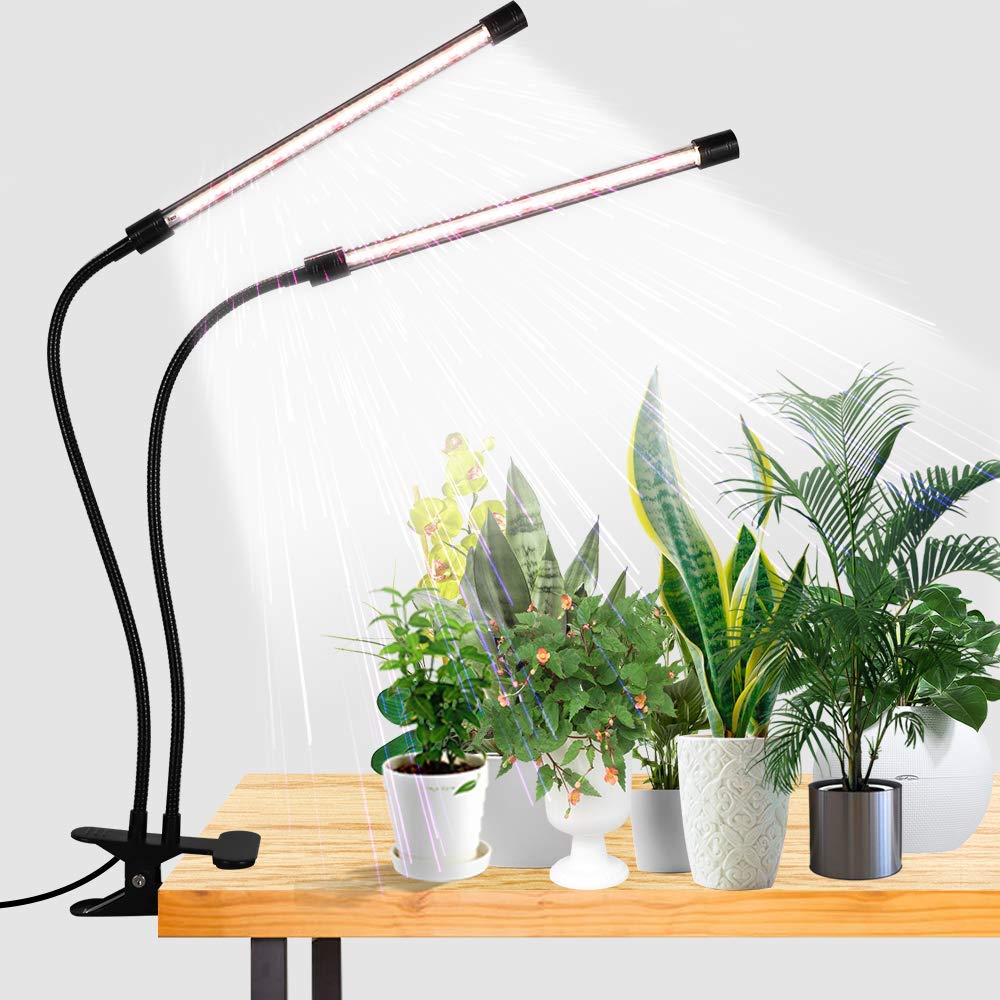
- Full spectrum light mimics natural sunlight
- Convenient timer and dimming options
- Flexible gooseneck for easy positioning
Cons
- Clip strength may vary
- Light coverage limited for larger plants
- Only two brightness levels (50% and 100%)
The GooingTop grow light pairs 74 white LEDs at 6000K with 10 red LEDs to approximate full-spectrum noon sunlight, giving small plants optimal conditions for growth. Its 95 CRI light is soft and flicker-free enough to double as a reading lamp.
A remote on the cord sets a 4, 8 or 12-hour timer that repeats every 24 hours, and switches brightness between 50% and 100%. The flexible gooseneck and clamp attach to a shelf or desk and aim light at the pots below.
It draws about 10 watts, which the brand estimates at roughly $2 a month running 12 hours a day. It is best for small plants such as herbs, microgreens and African violets; larger plants may need more than one light.
Best premium choice

- Excellent light distribution and canopy penetration
- Dimmable with daisy chain capability
- Energy-efficient with superior heat dissipation
Cons
- May be overkill for small-scale growers
- Higher initial cost compared to basic models
- Requires careful height adjustment for optimal results
The VIPARSPECTRA P2000 uses an upgraded diode layout for a uniform PAR map and deep canopy penetration. Its spectrum combines 660nm red with 3000K and 5000K white light for every stage from veg to flower, with recommended coverage of 4 x 3 ft for vegetative growth and 4 x 2 ft for flowering.
A dimmer knob adjusts brightness and can turn the light fully off, and up to 20 P2000 lights can be daisy-chained for larger rooms or vertical setups. The fanless design relies on large solid aluminum heat sinks, so it runs quietly.
It costs more than entry-level panels, but for serious indoor growers who want to cover a larger area, this light is a solid choice.
Also great

- Uniform light distribution with optical lens design
- Dimmable and daisy-chainable for scalability
- Full spectrum coverage for all growth stages
Cons
- May be overkill for casual growers
- Needs hanging space above the canopy
- Higher initial cost compared to basic models
The VIPARSPECTRA XS1500 Pro uses optical lenses to concentrate its light with minimal loss and spread an even PPFD to the corners of its footprint: 3 x 3 ft for vegetative growth and 2 x 2 ft for flowering. Two units cover a 4 x 2 ft tent.
A dimmer controls light level, and the daisy-chain capability links up to 20 lights for unified dimming in larger setups.
The spectrum combines 3000K and 5000K white, 660nm red and 730nm IR for every stage from seed starting to flower. It draws only 150W, compared with the traditional 250W HPS/MH light it is designed to replace, and an aluminum heat sink handles heat dissipation.
Buying Guide
When selecting LED grow lights for indoor plants, several key factors should be considered. We’ll explore the most important features to evaluate.
Light Spectrum
Look for lights that offer a full spectrum, including blue, red, and white wavelengths. This mimics natural sunlight and supports all growth stages.
Intensity and Coverage
Choose lights with adjustable intensity to cater to different plant needs. Consider the coverage area to ensure even light distribution across your growing space.
Energy Efficiency
LED lights are known for their efficiency. Check the wattage and compare it to the light output to find the most cost-effective option.
Heat Management
Proper heat dissipation is crucial. Look for lights with built-in cooling systems or heat sinks to prevent overheating and protect your plants.
Durability and Lifespan
Invest in lights made with quality materials. A longer lifespan means better value for your money and less frequent replacements.
Ease of Use
Consider features like programmable timers, dimming options, and easy installation. These can greatly simplify your plant care routine.
Warranty and Support
A good warranty indicates the manufacturer’s confidence in their product.
Reliable customer support can be invaluable if issues arise.
By carefully evaluating these aspects, we can choose LED grow lights that best suit our indoor gardening needs and help our plants thrive.
We independently select all products and services. If you click through links we provide, Plant Native may earn a commission with no extra cost to you. As an Amazon Associate I earn from qualifying purchases.
led grow lights letting you grow herbs and vegetables year-round is what I’m after this winter.