Best Soil for Coreopsis Growth Essential Tips for Healthy, Vibrant Blooms
Last updated: August 28, 2026
Coreopsis, or tickseed, is a perennial wildflower native to North America. People love it for its bright, daisy-like flowers.
It really does best when you plant it in soil that matches its natural habitat. That’s the sweet spot for healthy growth and those eye-catching blooms.
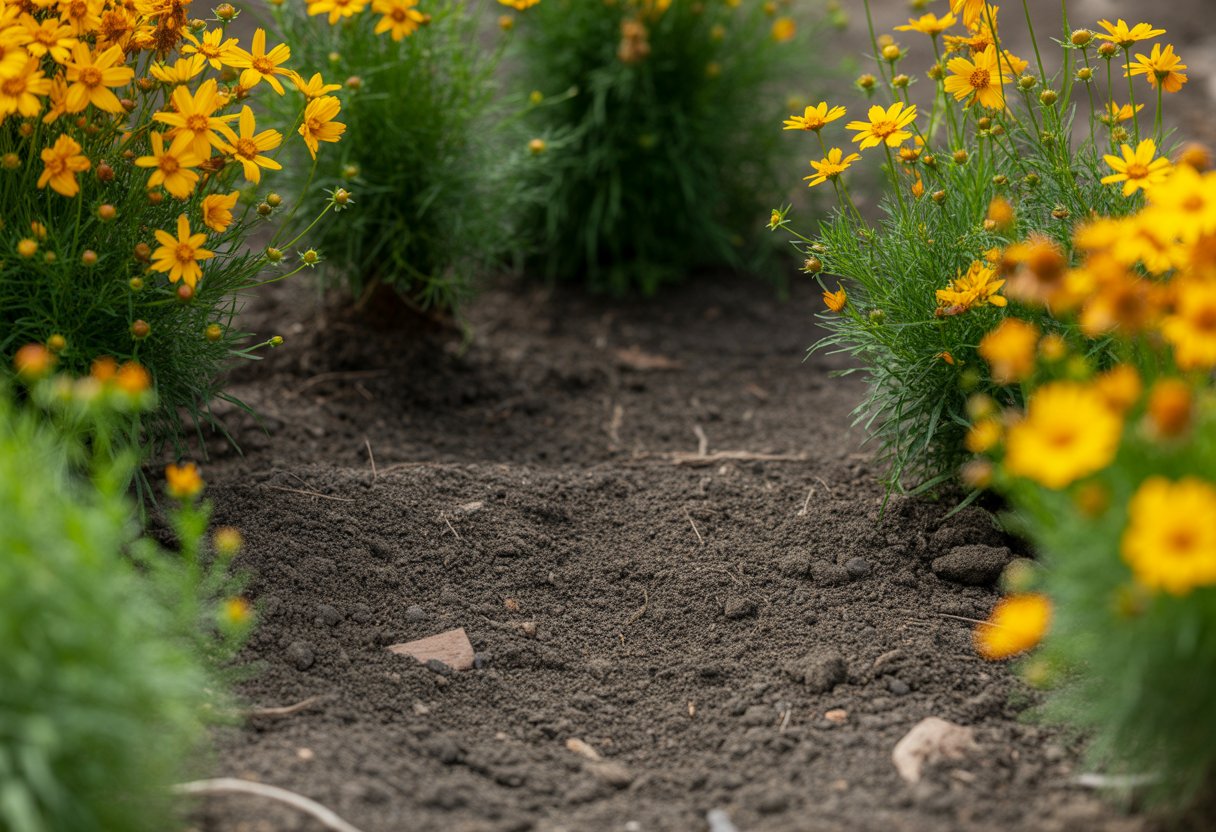
The best soil for coreopsis is well-drained, sandy or loamy, with moderate fertility and a neutral to slightly acidic pH. This kind of soil lets water flow through, so roots don’t get soggy, and the plant gets just enough nutrients to thrive.
Tickseed adapts well but really prefers soil that doesn’t hold onto too much moisture. If you want robust coreopsis, focus on these soil conditions and you’ll get a long-lasting, colorful show.
Ideal Soil Conditions for Coreopsis Growth
Coreopsis does best in soil conditions that support steady growth and don’t require a ton of fuss. Knowing what it likes in terms of soil type, pH, and nutrients makes it easier to keep it happy in different gardens or USDA zones.
Soil Type and Texture
Coreopsis likes well-drained soil. Roots hate sitting in water, so drainage is key if you want it to stick around year after year.
Sandy or loamy soils with decent drainage are ideal. Clay soils often cause headaches since they hold too much water.
A lot of folks amend their garden beds to help with texture and drainage. Adding organic matter like compost helps sandy soils keep some moisture and lets heavy soils drain better.
You’ll see coreopsis do well in cottage gardens with good, well-draining soil. It’s pretty reliable in USDA zones 4 through 9.
Soil pH Requirements
Coreopsis likes soil with a pH between 6.0 and 7.0—that’s mildly acidic to neutral. This range makes nutrients more available and helps roots develop well.
If your soil’s pH is way off, nutrients get locked up and blooms suffer. Test your soil before planting.
If you need to adjust, use lime to raise pH or sulfur to lower it.
Nutrient Needs and Fertilization
Coreopsis is a low-maintenance perennial. It doesn’t need much fertilizer.
Too much nitrogen just gives you lots of leaves and not many flowers.
A balanced fertilizer like 10-10-10, or a slow-release kind applied once in early spring, is enough for blooming and growth. Don’t overdo it, or you’ll mess up the balance.
Mulch helps keep nutrients and moisture in the soil.
Planting and Maintaining Coreopsis in Different Soils
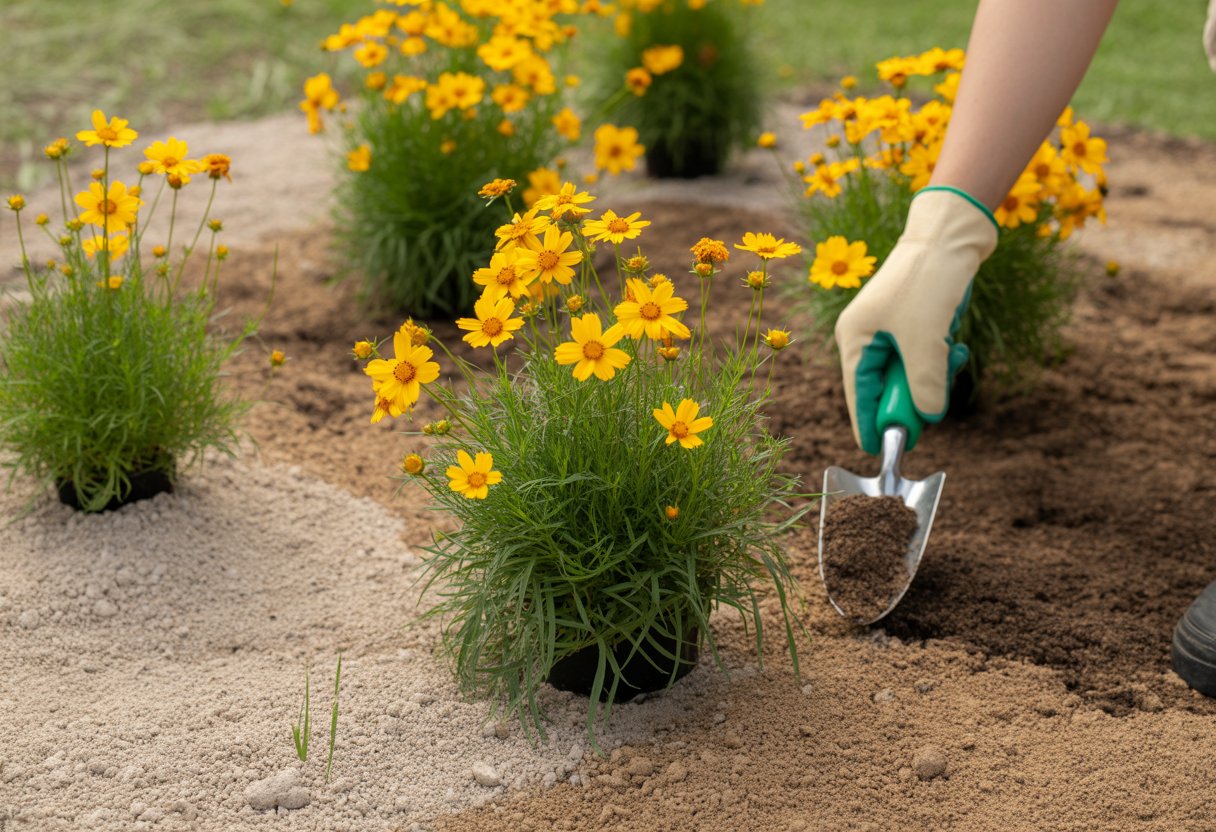
Coreopsis really takes off when you pay attention to soil type, water, and root health. Give it enough space and handle it gently when transplanting or dividing.
Managing soil moisture and drainage helps prevent root rot and keeps those flowers coming.
Transplanting and Division
When you transplant coreopsis, spacing is important. Set plants 12 to 18 inches apart for good air flow and fewer diseases.
Transplant in spring or early fall when it’s not too hot or cold. That way, plants don’t get too stressed.
Division works well for older coreopsis plants. Do it every 2 to 3 years, either in early spring or fall.
Lift the clump, separate the roots with a clean tool, and only keep the healthy parts. That gives you the best chance for strong regrowth.
Handle seedlings with care. Wait until they have two sets of true leaves before moving them, so you don’t disturb the roots too much.
Watering and Soil Moisture Management
Coreopsis can handle drought once it’s established, but it needs consistent moisture when it’s young and during flowering.
Water deeply but not too often. This helps roots grow down deep.
Sandy, well-draining soil lets excess water escape, which is perfect for coreopsis.
If you water too much or your soil drains poorly, root rot can set in fast.
Check soil moisture by touching the surface—water when it’s dry about an inch down. Mulch helps keep moisture in and keeps the soil temperature steady.
Enhancing Drainage for Optimal Health
If you have heavy or clay soil, drainage can be a problem. Roots don’t like sitting in water.
Mix in organic matter like compost or coarse sand to add air and nutrients.
Raised beds or mounded rows help, especially if your soil isn’t ideal. This keeps roots from getting waterlogged after rain.
Test your soil to check pH and texture. Coreopsis likes it neutral to slightly acidic (pH 6.0–7.0).
Tweak the soil so it drains well, and you’ll have healthy, low-maintenance plants with plenty of cut flowers.
Challenges and Solutions for Soil-Related Issues
Soil issues with coreopsis usually mean diseases, pests, or just bad conditions. You’ll need to prevent problems, manage pests, and keep the soil in good shape to keep plants and pollinators happy.
Common Soil-Borne Diseases and Prevention
Coreopsis can get hit by fungal diseases like powdery mildew, botrytis, downy mildew, and root rot. Root rot shows up in soggy soil and can kill the plant fast.
Use well-drained soil and don’t overwater to keep those problems at bay.
Aster yellows is another issue, spread by leafhoppers. You’ll notice stunted growth and weird flowers.
Remove infected plants right away to stop it spreading. Prune and deadhead regularly to let air flow through and cut down on fungus risk.
Fungicides or neem oil can help with powdery mildew and botrytis, but honestly, keeping things clean and removing debris works better in the long run.
Pest Management in Different Soils
Soil type affects pests like aphids, spider mites, and slugs. Aphids and mites love dry, dusty spots, while slugs go for moist, poorly drained areas.
Sprinkle diatomaceous earth to keep slugs away. Bring in beneficial insects or use neem oil to handle aphids and spider mites.
Skip the heavy fertilizer—too much makes soft growth that pests love.
Keep an eye on your plants and keep the soil healthy. Rotate crops and clear away plant debris to give pests fewer places to hide.
Soil Amendments for Problematic Conditions
If you’ve got heavy clay or poorly drained soil, you’ll need to amend it for coreopsis. It likes sandy or loamy soil.
Add compost to improve texture, drainage, and nutrients.
For very acidic or nutrient-poor soils, use a balanced slow-release fertilizer. That helps plants grow without making them too leafy, which attracts pests.
Mix in sand or perlite to boost drainage even more.
Don’t plant in spots that stay wet. Test your soil before planting so you know what to add for the best results.
Optimizing Blooms and Colors Through Soil Selection
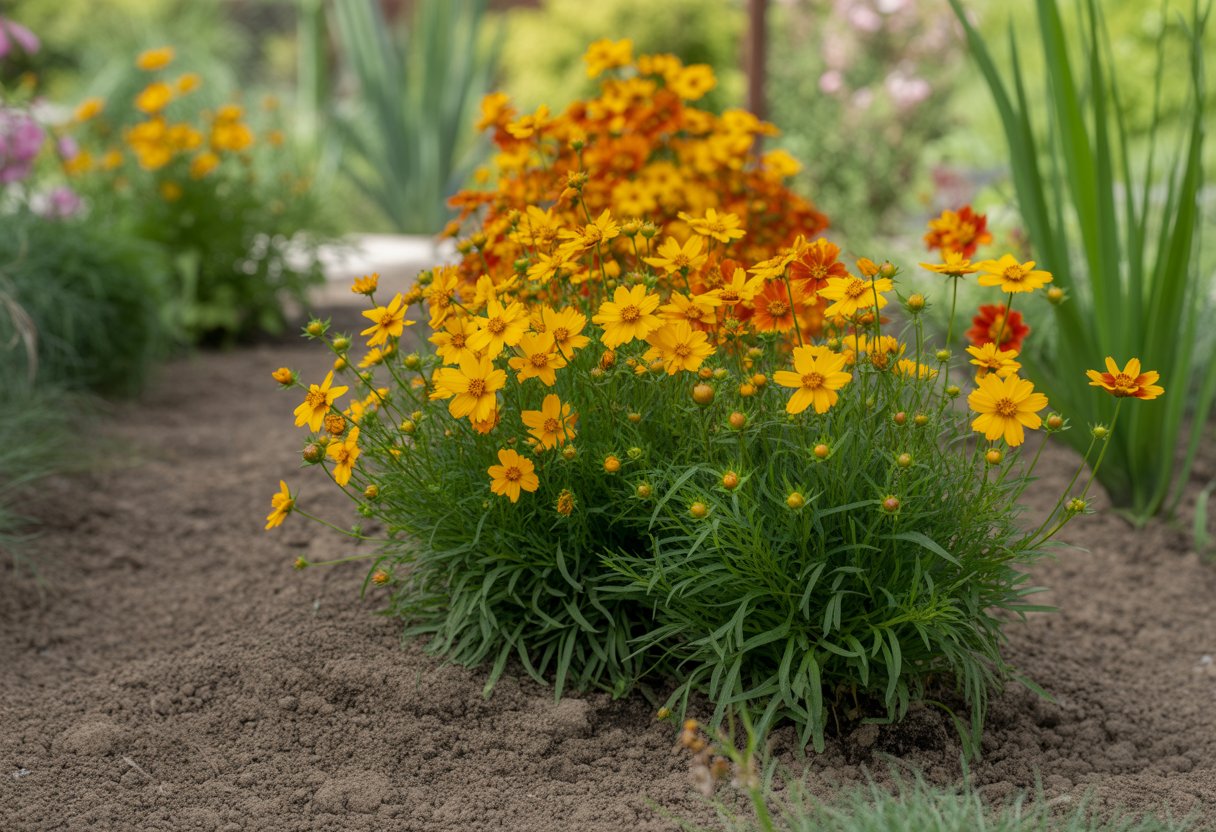
Soil really affects how bright coreopsis flowers look and how long they keep blooming. The right soil balance means stronger plants, deeper colors, and more pollinators.
Good soil management also helps with coreopsis hybrids and those you see in wildflower or pollinator gardens.
Enhancing Flower Color with Soil Choices
Different coreopsis species—like tall coreopsis and moonbeam—show off more vibrant golden-yellow blooms in well-drained, slightly acidic to neutral soils (pH 6.0 to 7.0). Soils rich in organic matter make nutrients like phosphorus and potassium more available, which brings out the color.
Avoid soils with too much nitrogen. That just gives you more leaves, not more flowers.
For threadleaf and lanceleaf coreopsis, a sandy loam or loamy soil keeps roots happy and supports semi-double blooms. Zagreb and large-flowered types also respond to balanced nutrients with vivid colors.
Supporting Long Blooming Season
Long-blooming varieties like plains coreopsis and coreopsis tinctoria need soil that holds some moisture but drains well. This keeps them blooming from early summer into fall without stressing out.
A layer of mulch helps keep soil moisture steady and temperature even, which is great for tall and lanceleaf coreopsis. Skip heavy clay soils—they trap water and cut the bloom season short.
Add compost to improve soil structure and support beneficial microbes. That way, your coreopsis keeps flowering longer.
Best Soil Practices for Pollinator Gardens
Pollinator gardens really thrive when the soil supports both coreopsis plants and those hardworking pollinators—bees and butterflies. Coreopsis, a member of the asteraceae family, draws in these helpful insects if you give it nutrient-balanced, well-draining soil.
A slightly sandy or loamy texture lets the roots breathe and helps plants grow strong. Skip the chemical fertilizers; they can do more harm than good for pollinators.
Try adding organic amendments instead. They feed the soil slowly, so your coreopsis tickseed and hybrids stay happy and keep butterflies coming back all season.