
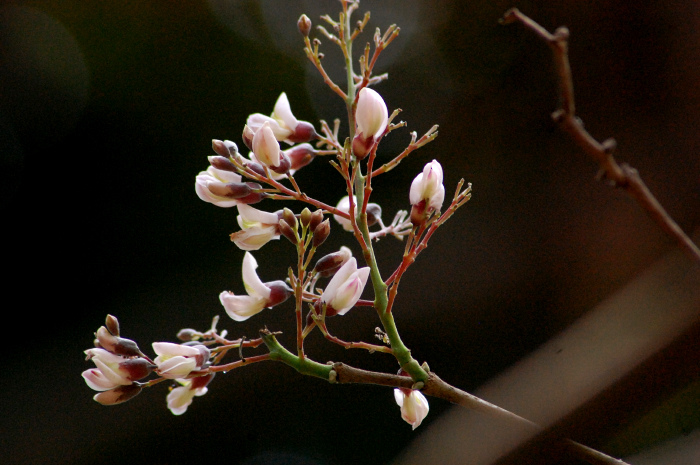
Jamaica dogwood’s showy pea-like flowers open on bare branches in spring, before the new leaves emerge. Photo: jayeshpatil912 / Wikimedia Commons (CC BY 2.0) Piscidia
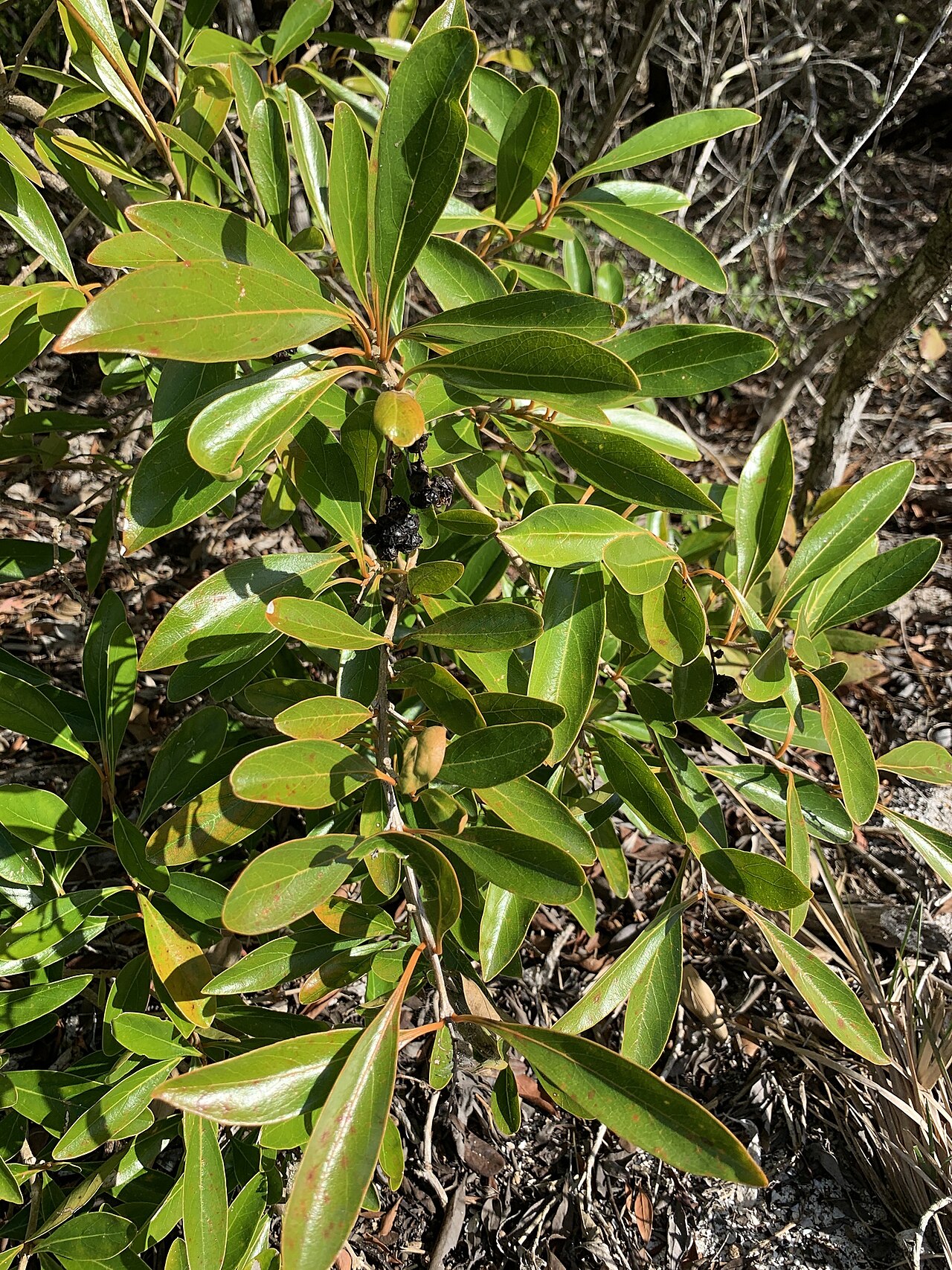
Florida fiddlewood’s glossy, leathery leaves with orange-tinged new growth and ripening dark fruit. Photo: ceherzog, Siesta Key, Osprey, FL / Wikimedia Commons (CC BY 4.0)
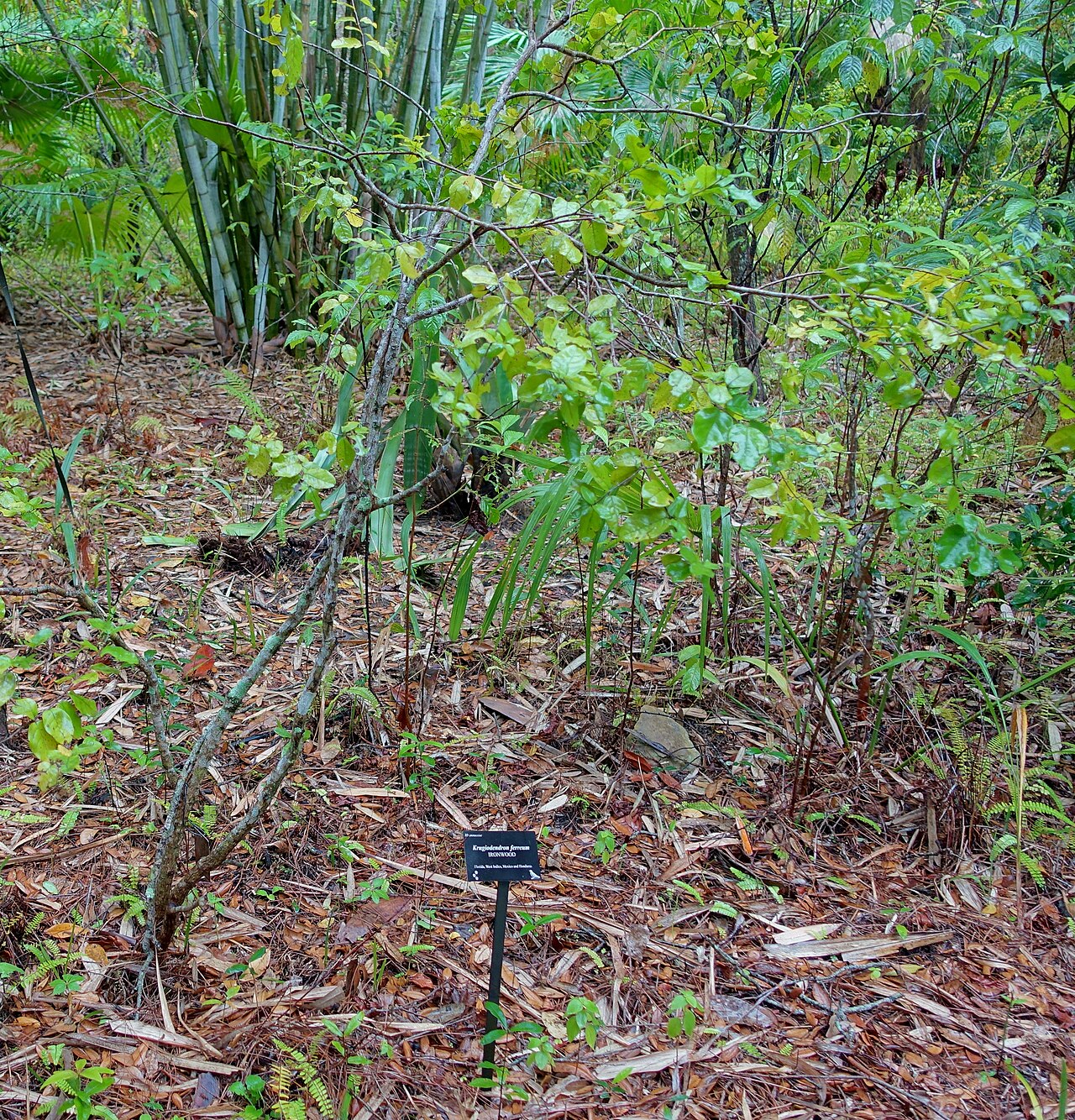
Black ironwood growing in its native hardwood hammock understory, where it tolerates deep shade for decades. Photo: Daderot, McKee Botanical Garden, Vero Beach, FL /
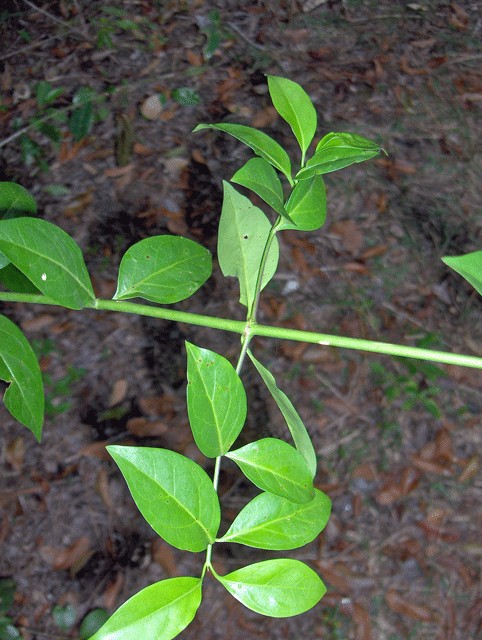
White stopper’s typical multi-trunked, dense growth form in Florida hammock habitat. Photo: Homer Edward Price (Wikimedia Commons, CC BY 2.0). Eugenia axillaris, commonly known as
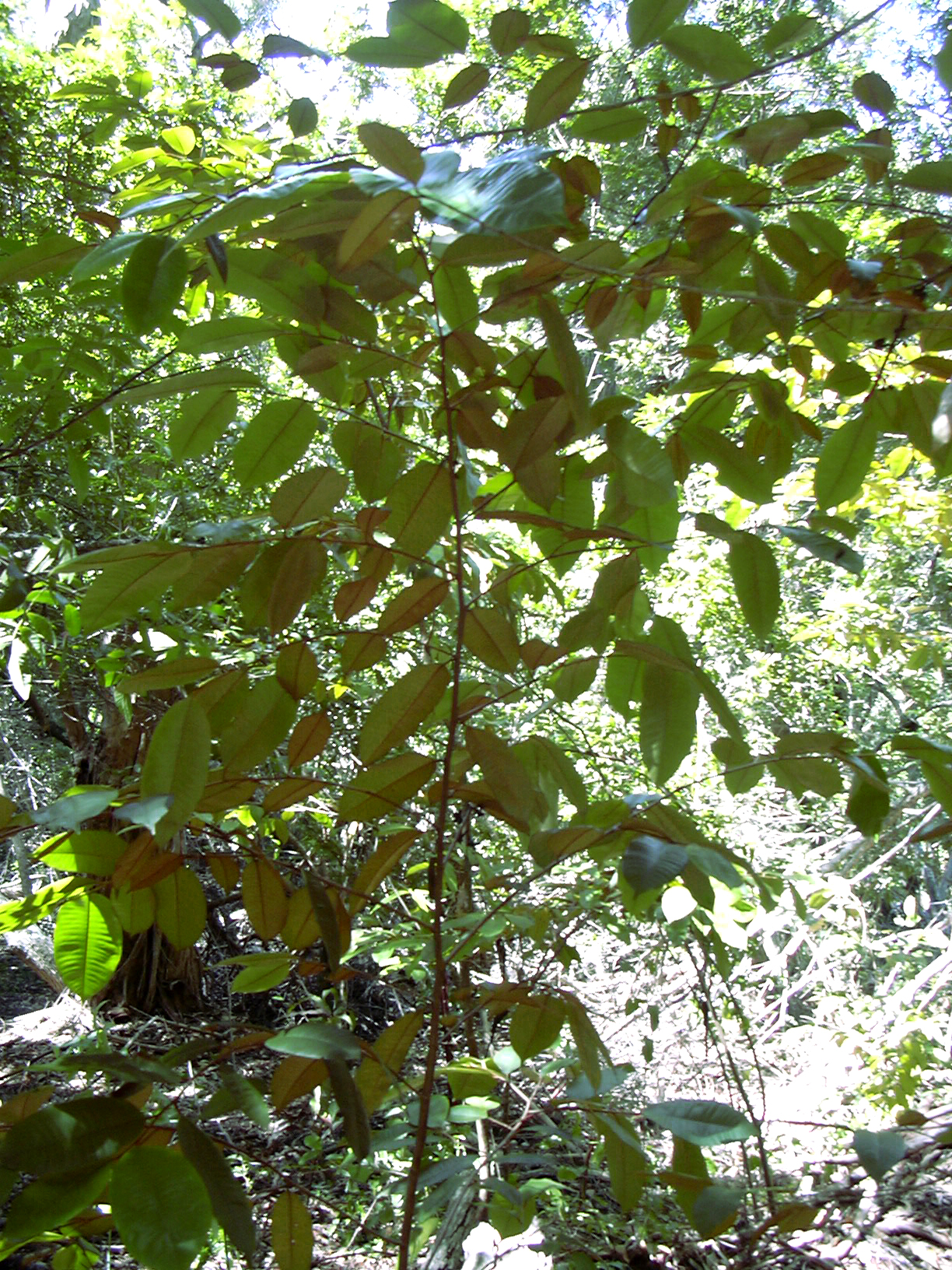
Satinleaf growing in its native tropical hardwood hammock habitat in South Florida. Photo: Forest & Kim Starr (Wikimedia Commons, CC BY 3.0). Chrysophyllum oliviforme, commonly
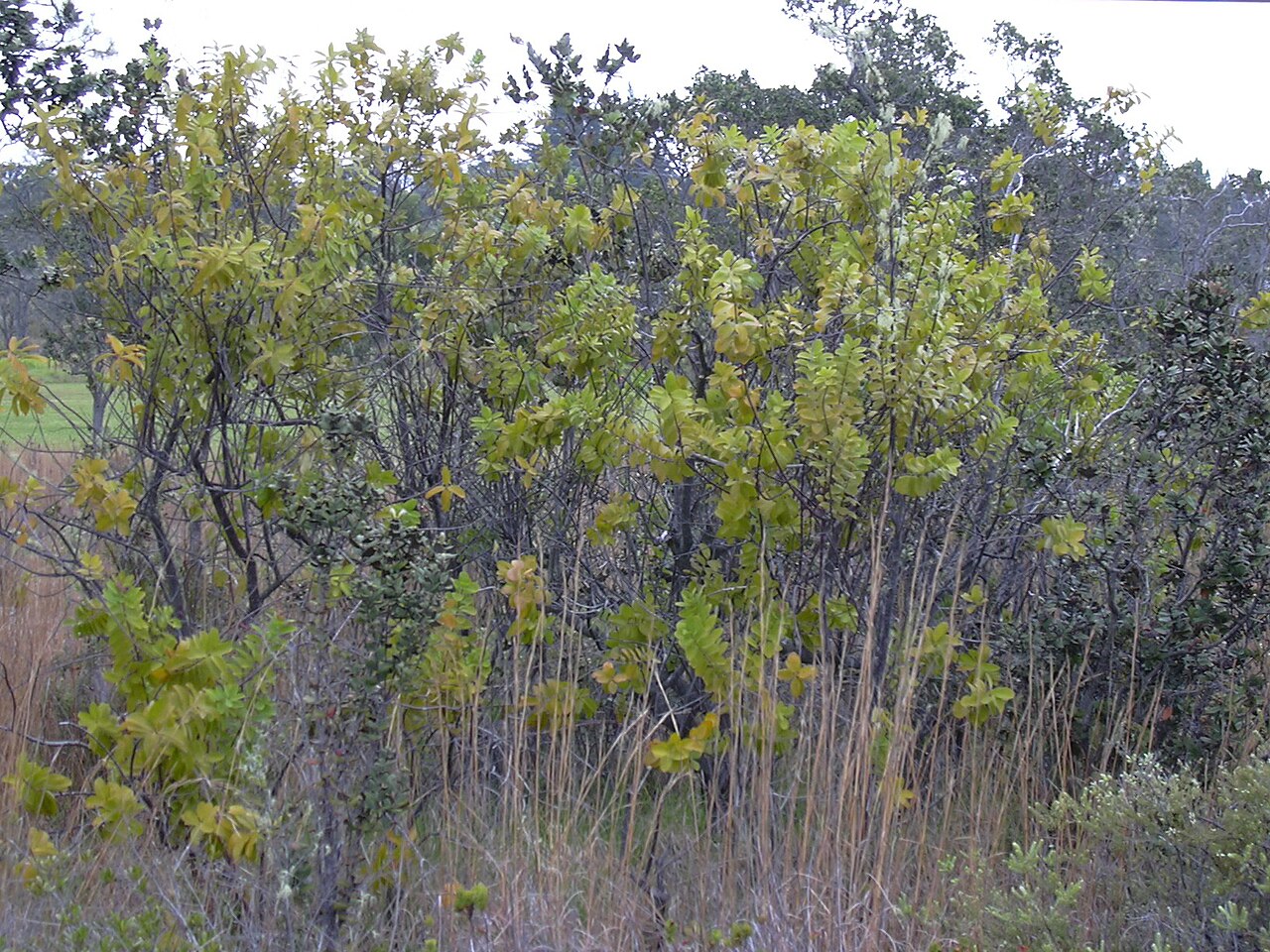
Mountain sandalwood growing in its typical multi-stemmed form in dry, open Hawaiʻi Island habitat. Photo: Forest & Kim Starr (Wikimedia Commons, CC BY 3.0). Santalum
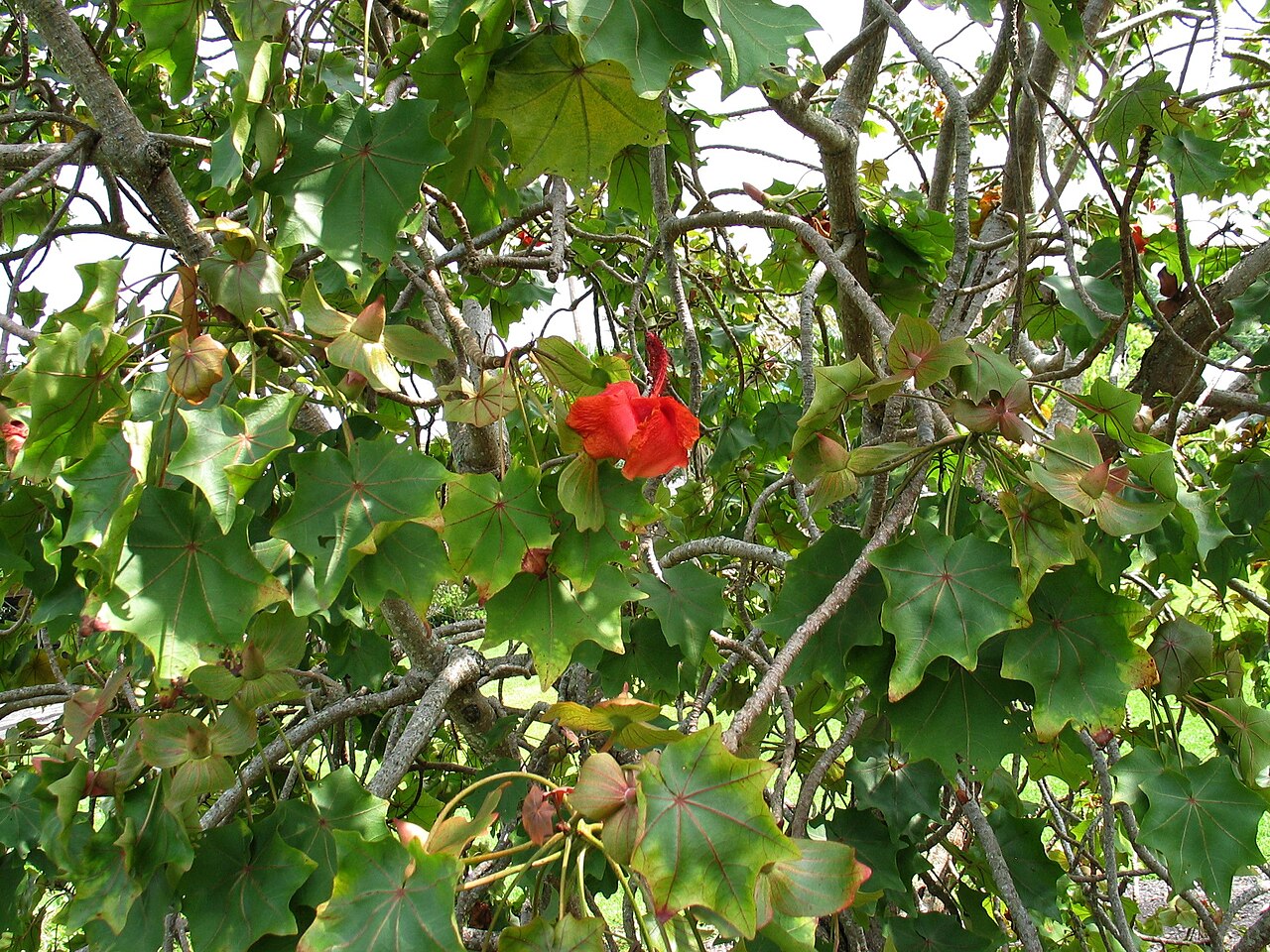
Hawaiian cotton tree in bloom, showing its distinctive maple-like leaves and curled orange-red flower. Photo: David J. Stang (Wikimedia Commons, CC BY-SA 4.0). Kokia drynarioides,
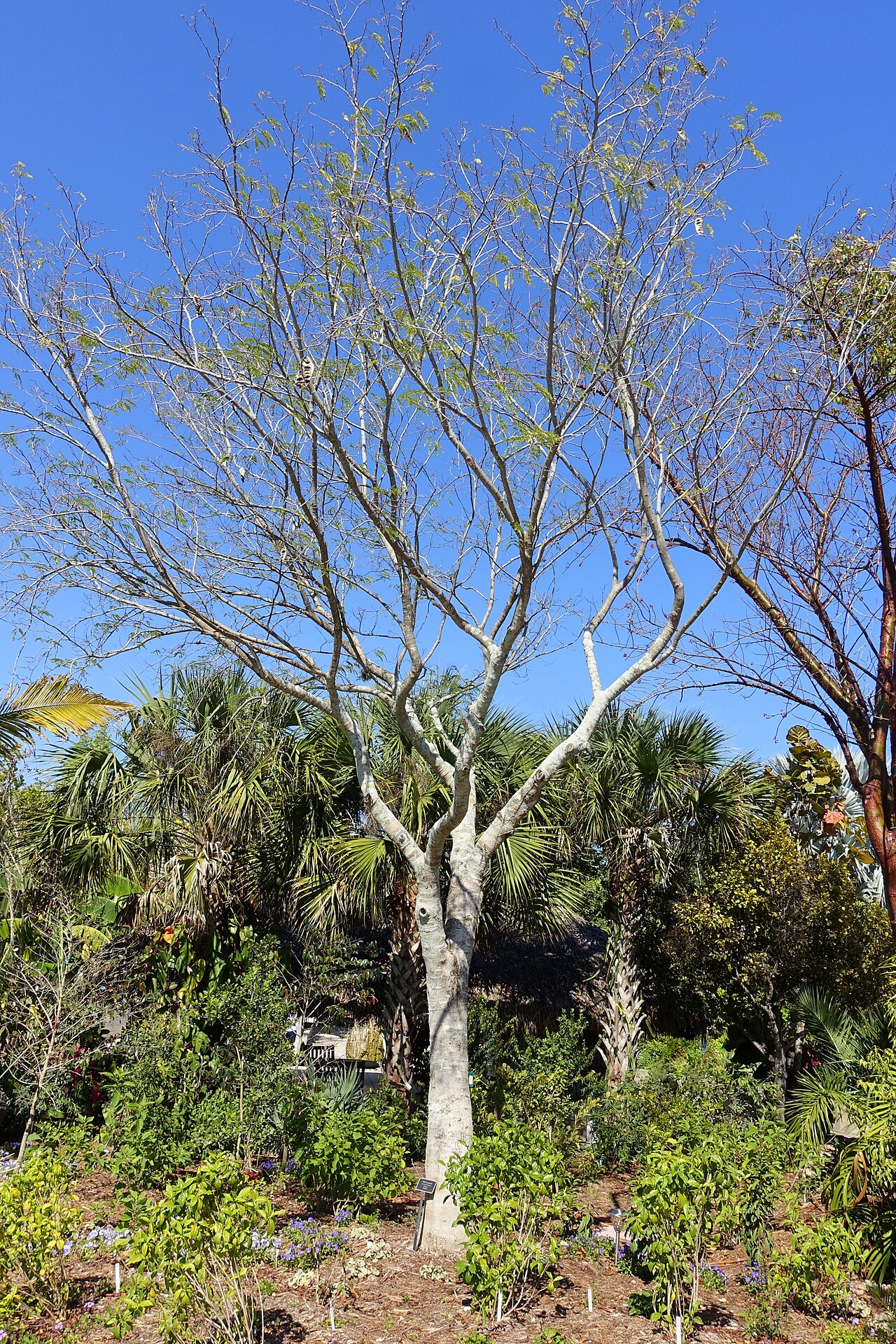
A wild tamarind’s smooth, pale gray trunk and open, airy crown, shown here in a lightly leafless winter state. Photo: Daderot, Wikimedia Commons (CC0) Lysiloma
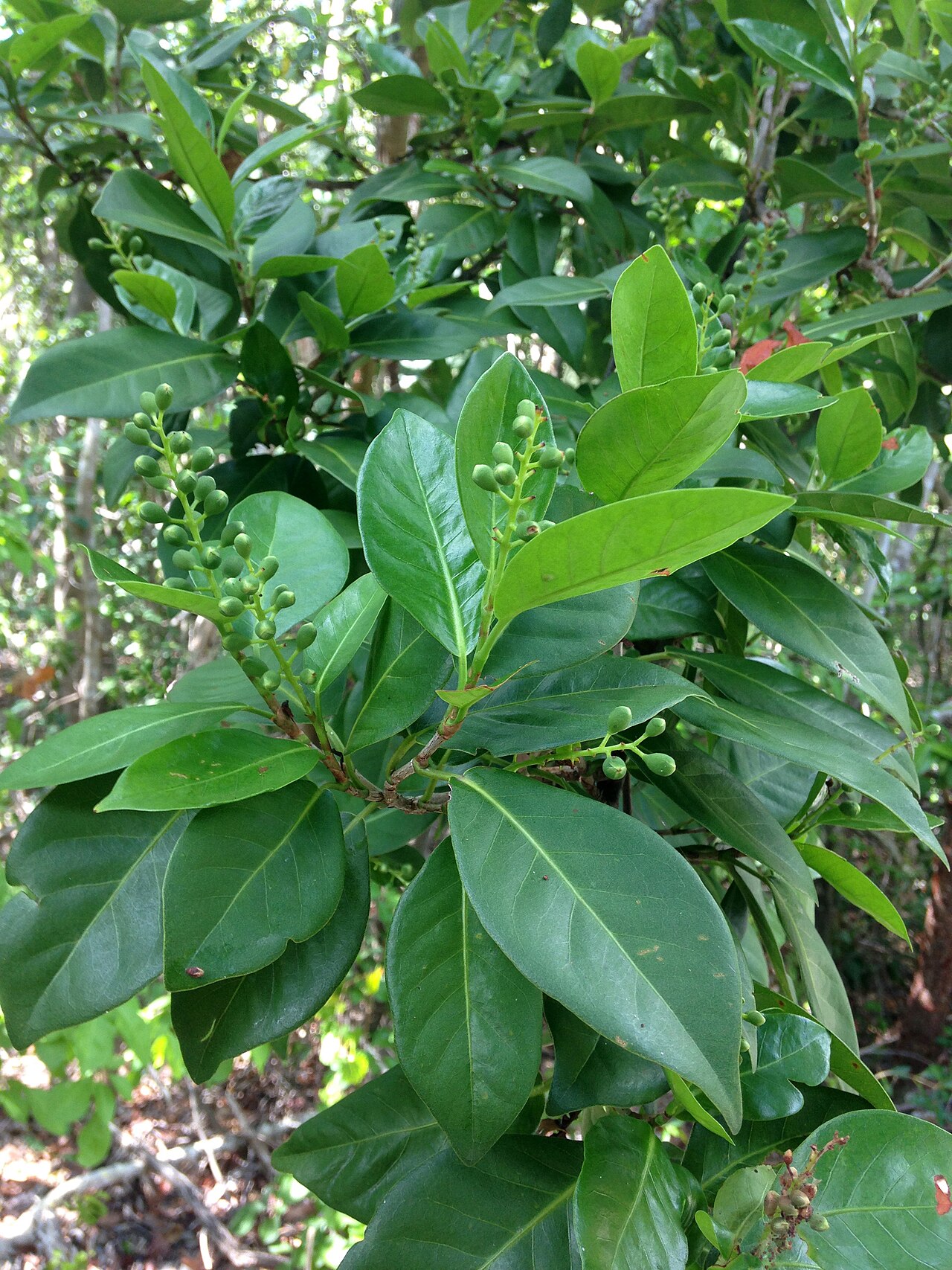
Glossy, leathery pigeon plum foliage with young fruit forming along the flower spikes. Photo: Forest & Kim Starr/Mason Brock, Wikimedia Commons (Public domain) Coccoloba diversifolia,
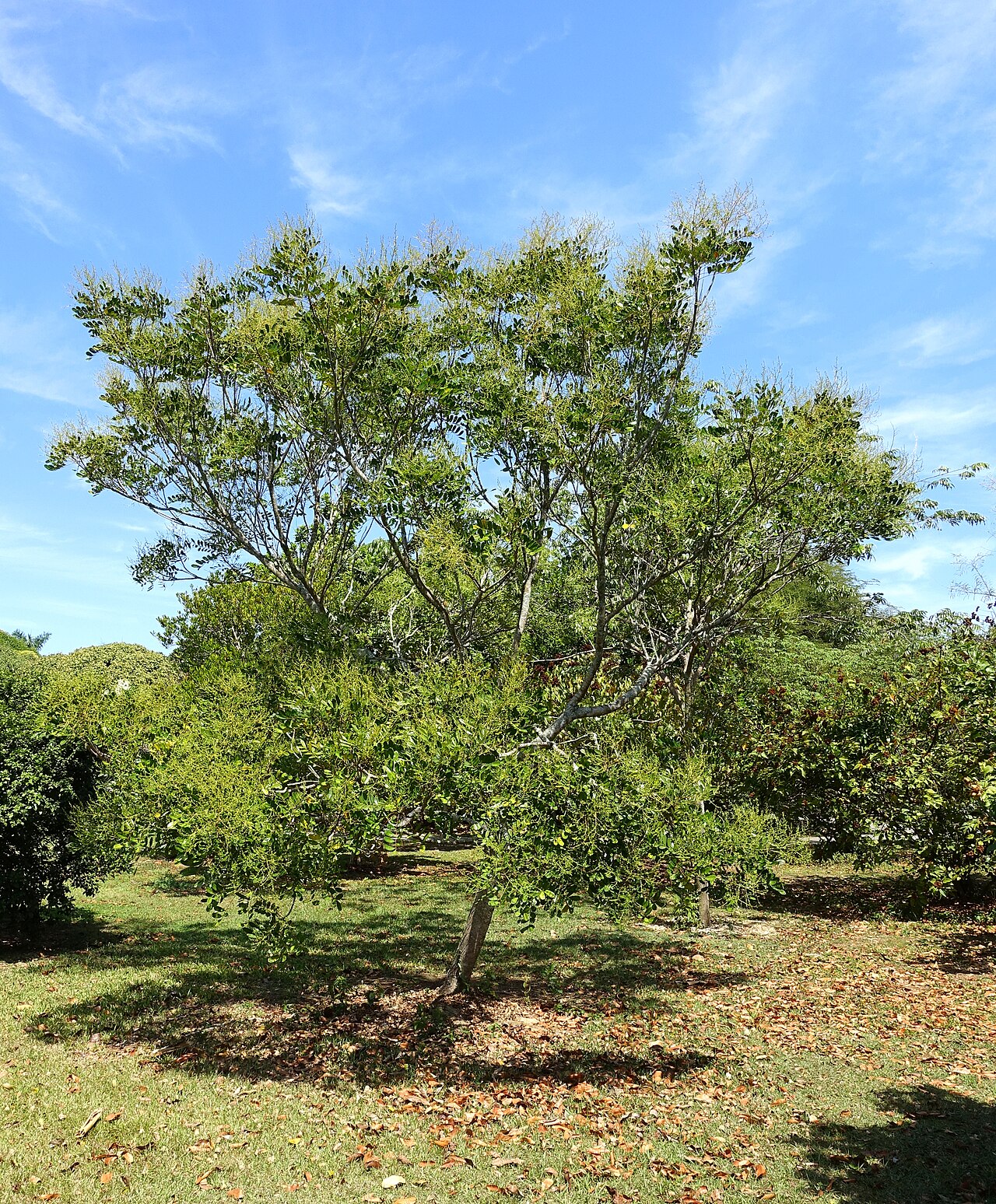
A mature paradise tree’s broad, feathery crown, shaped by fine pinnately compound leaves. Photo: Daderot, Wikimedia Commons (CC0) Simarouba glauca, the Paradise Tree (also called
View More