
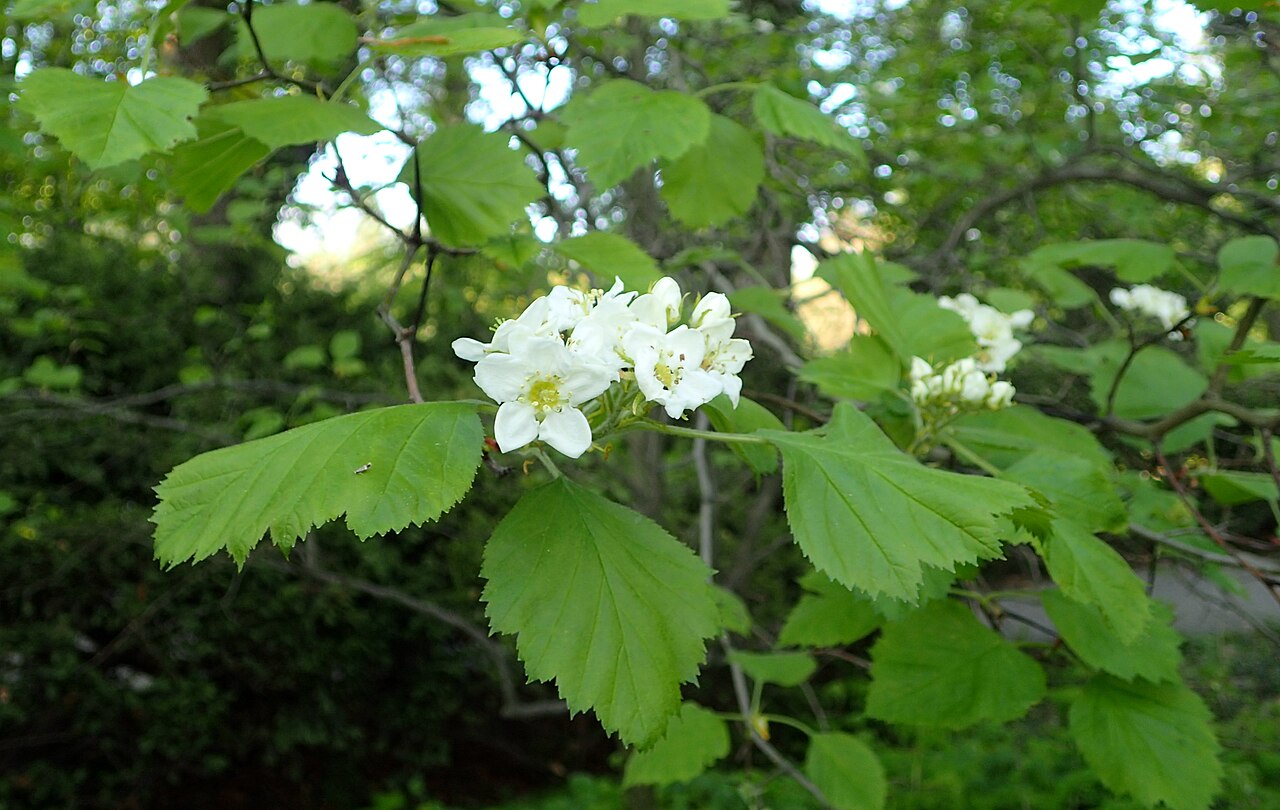
Flowering branch of Copenhagen hawthorn (cultivated arboretum specimen). Photo: Krzysztof Ziarnek, Kenraiz, Wikimedia Commons (CC BY-SA 4.0) Crataegus intricata, known as Copenhagen Hawthorn, thicket hawthorn,
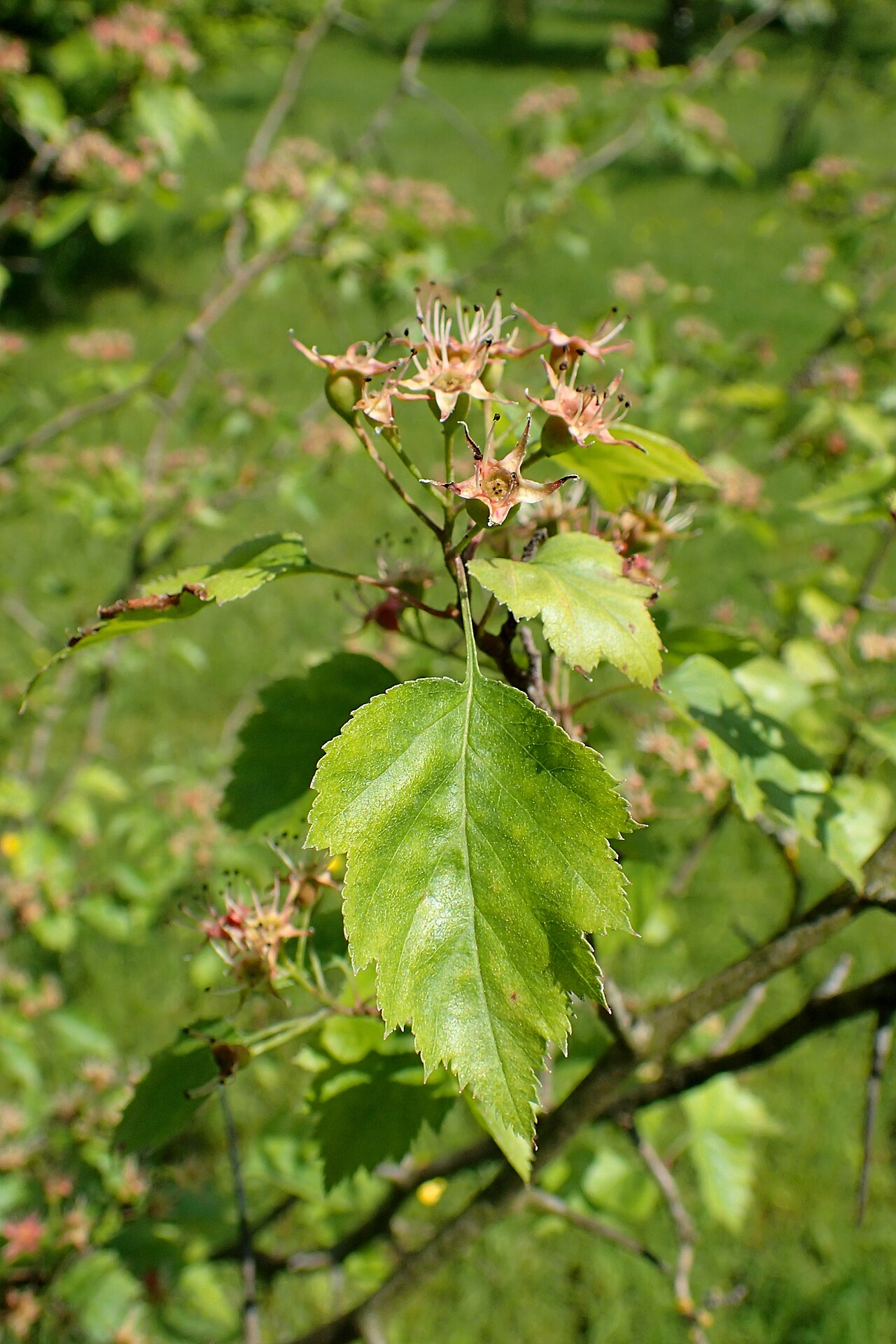
Bigfruit hawthorn branch with spent spring flowers and toothed, lobed foliage (cultivated specimen). Photo: Krzysztof Ziarnek, Kenraiz, Wikimedia Commons (CC BY-SA 4.0) Crataegus macrosperma, known
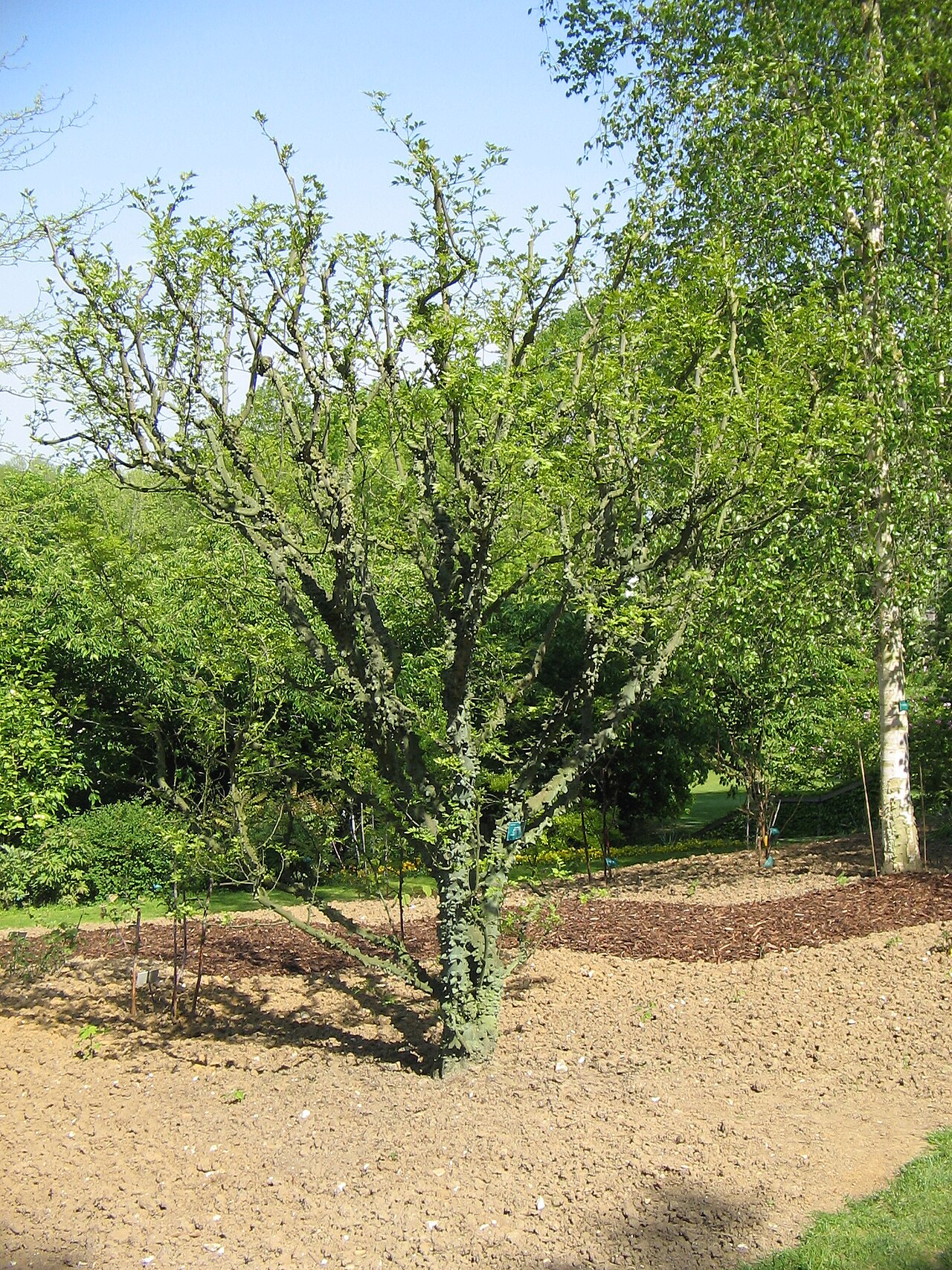
A mature prickly ash showing its typical open, multi-stemmed form. Photo: Meneerke bloem, Wikimedia Commons (CC BY-SA 3.0) Zanthoxylum americanum, commonly called prickly ash, northern
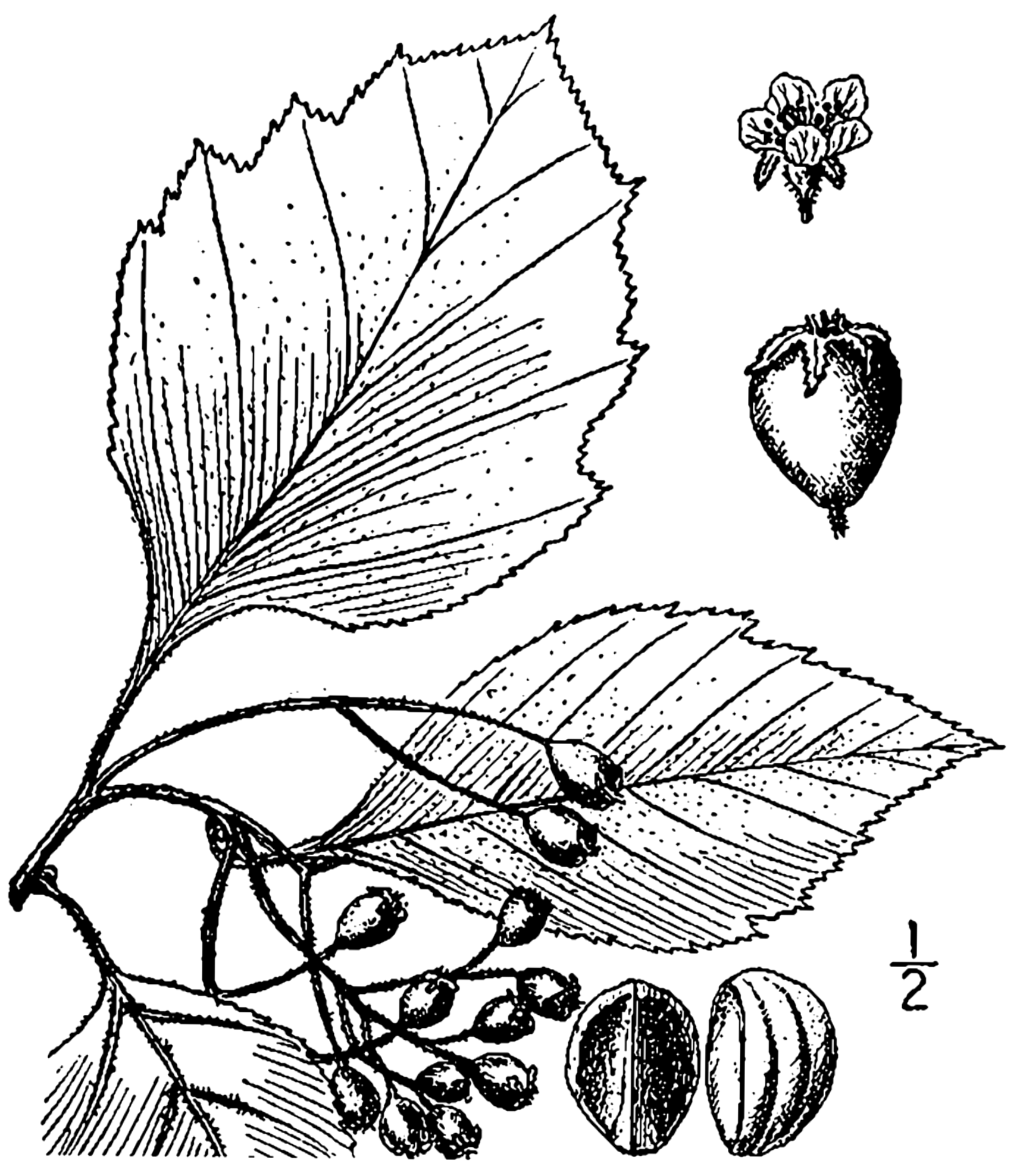
Pear hawthorn: leaf, flower cluster, and pear-shaped fruit. Illustration from Britton & Brown, An Illustrated Flora of the Northern United States (1913), public domain. Crataegus
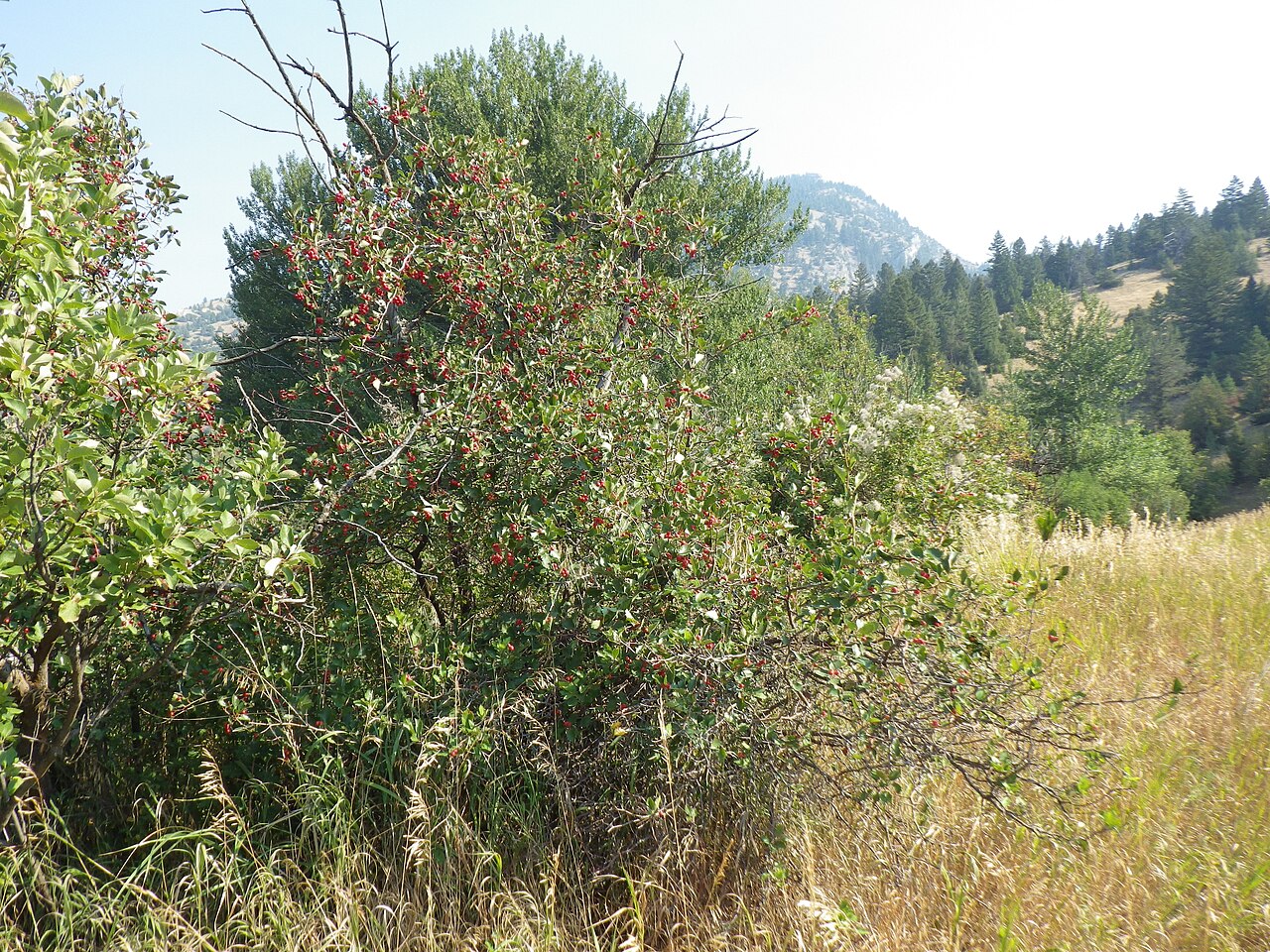
A fireberry hawthorn shrub loaded with ripening fruit at a Montana meadow edge. Photo: Matt Lavin, Wikimedia Commons (CC BY-SA 2.0) Crataegus chrysocarpa, commonly known
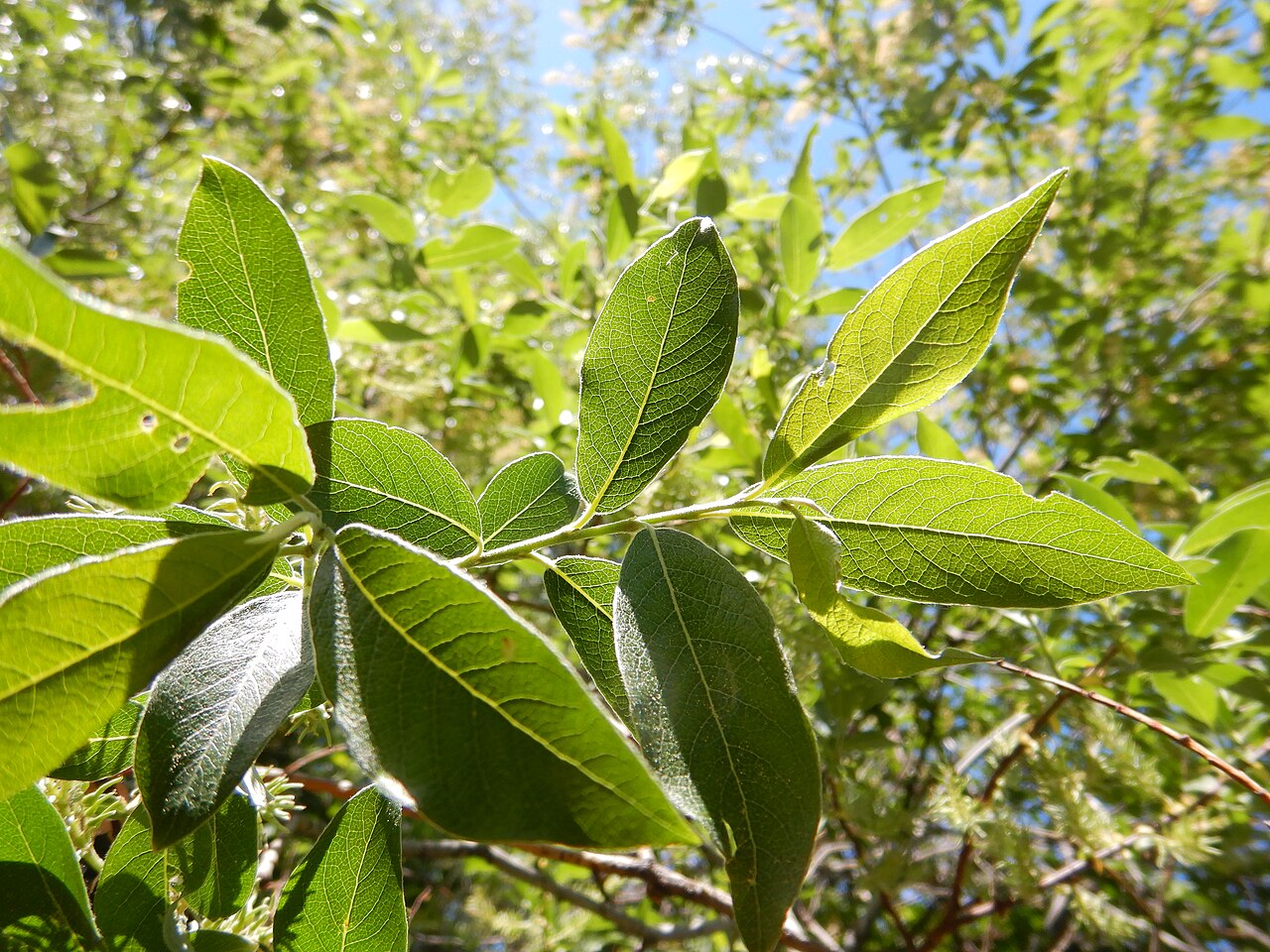
Bebb willow foliage, with the leaf’s characteristic pale, net-veined underside visible in the light. Photo: Matt Lavin, Wikimedia Commons (CC BY-SA 2.0) Salix bebbiana, commonly
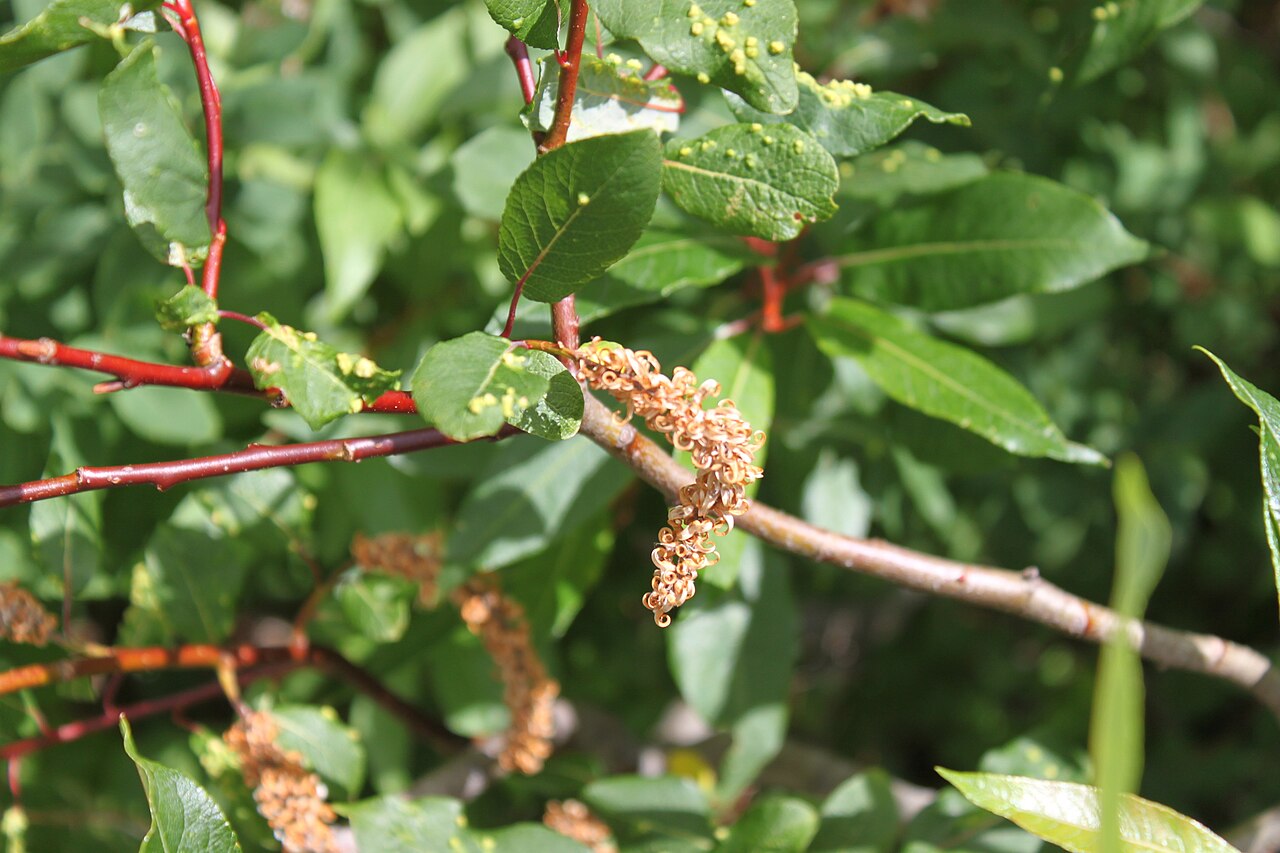
Balsam willow foliage and fruiting catkins on characteristic reddish-brown twigs. Photo: Étienne Lacroix-Carignan, Wikimedia Commons (CC0) Salix pyrifolia (syn. Salix balsamifera), commonly called balsam willow,
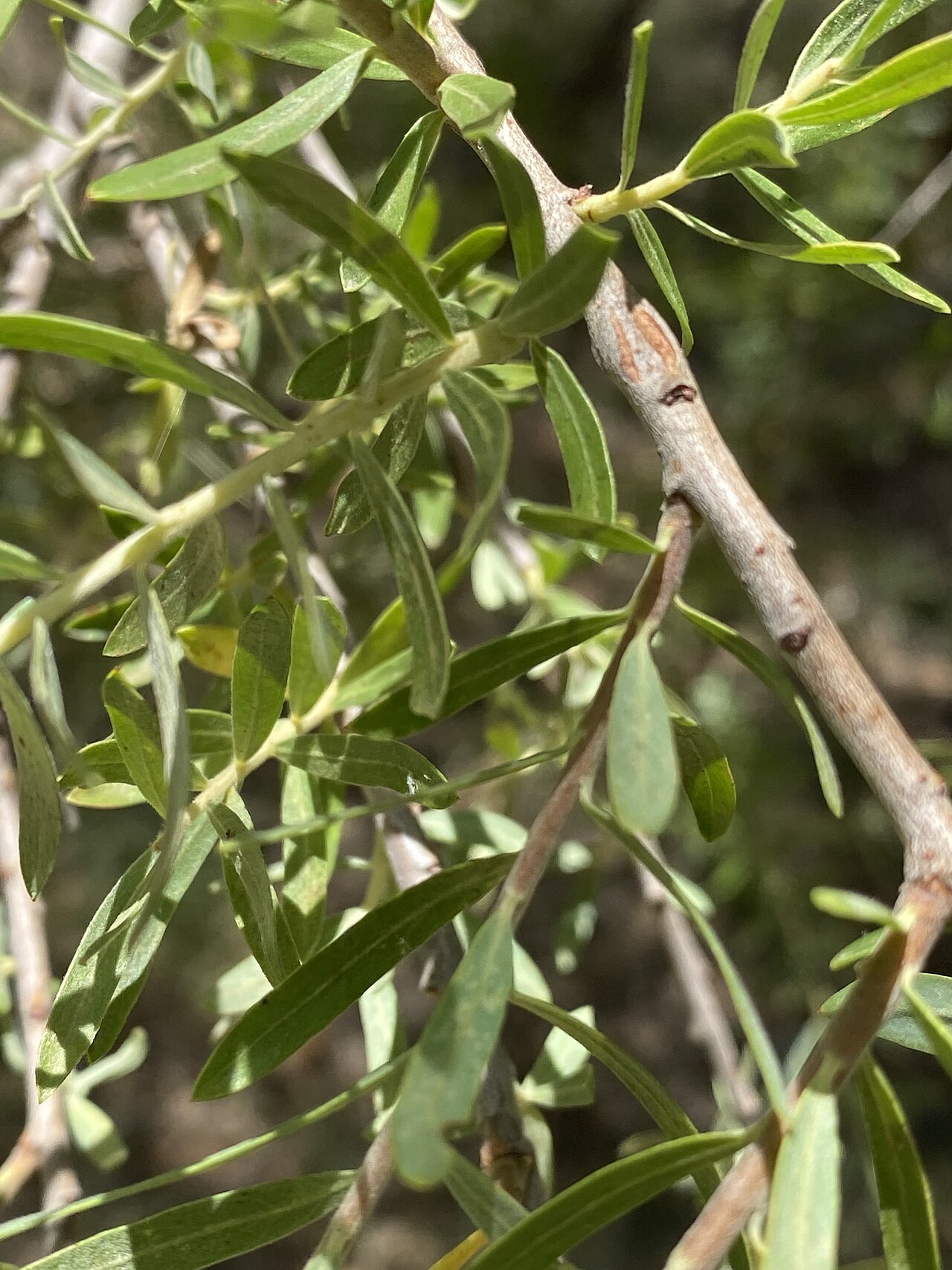
Narrow, needlelike leaves give Yewleaf Willow its name and its distinctive feathery texture. Photo: Daniel McNair, Wikimedia Commons / iNaturalist (CC BY 4.0) Salix taxifolia,
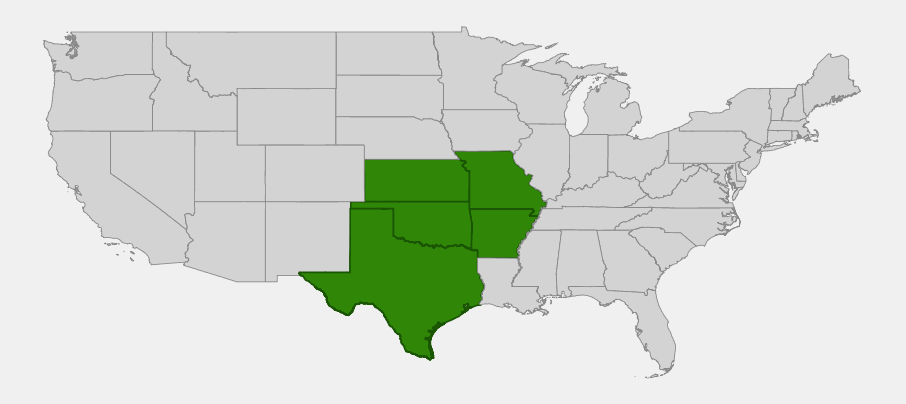
Crataegus reverchonii, known as Reverchon Hawthorn or Reverchon’s haw, is a thorny, small-fruited native shrub or small tree of the south-central prairies and woodland edges.
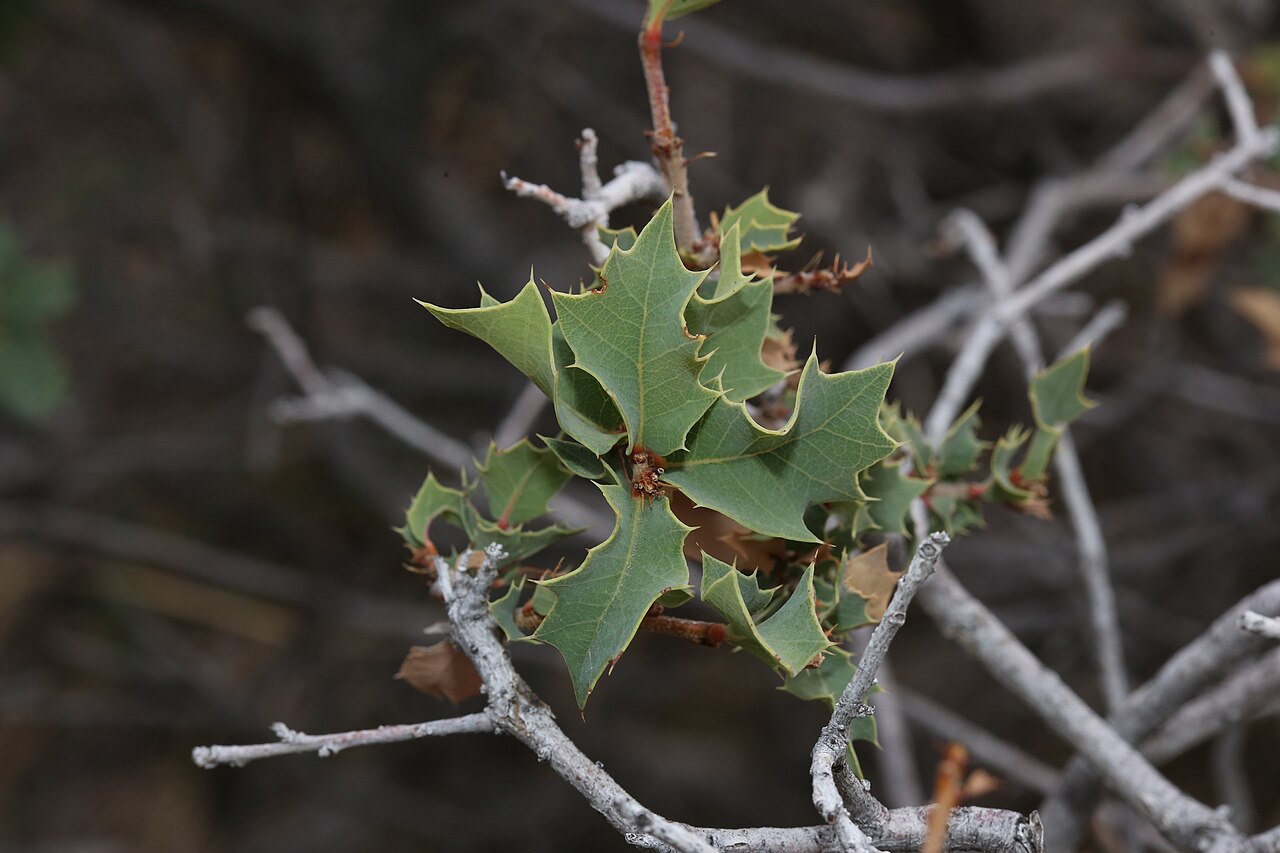
Small, spine-toothed, holly-like leaves are the clearest field mark of Hinckley Oak. Photo: Reid Hardin, Wikimedia Commons / iNaturalist (CC BY 4.0) Quercus hinckleyi, the
View More