
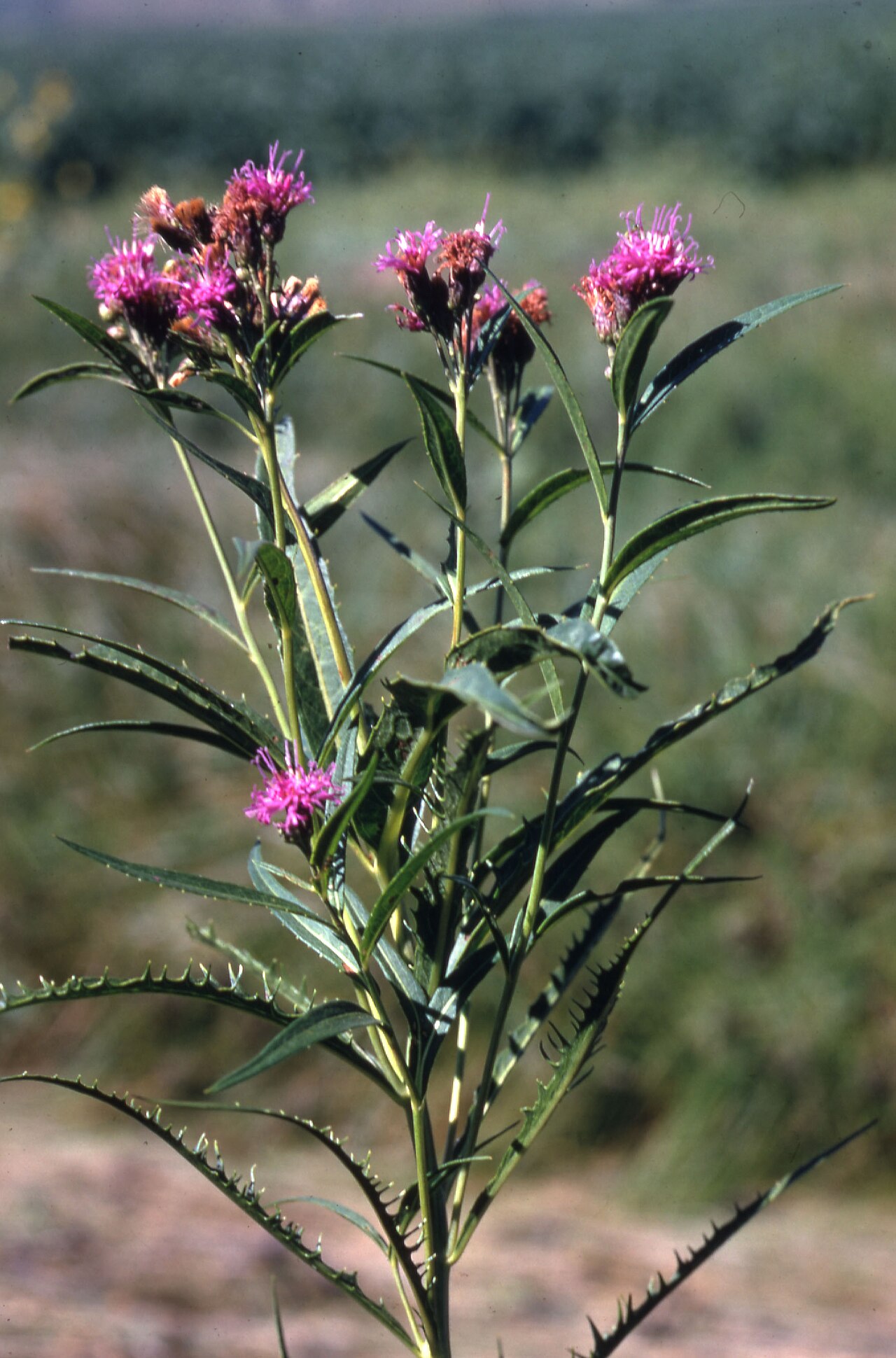
Western ironweed flowering in shortgrass prairie near Badlands National Park. Photo: NPS Staff, via Wikimedia Commons (Public domain) Vernonia baldwinii, commonly called Western Ironweed or
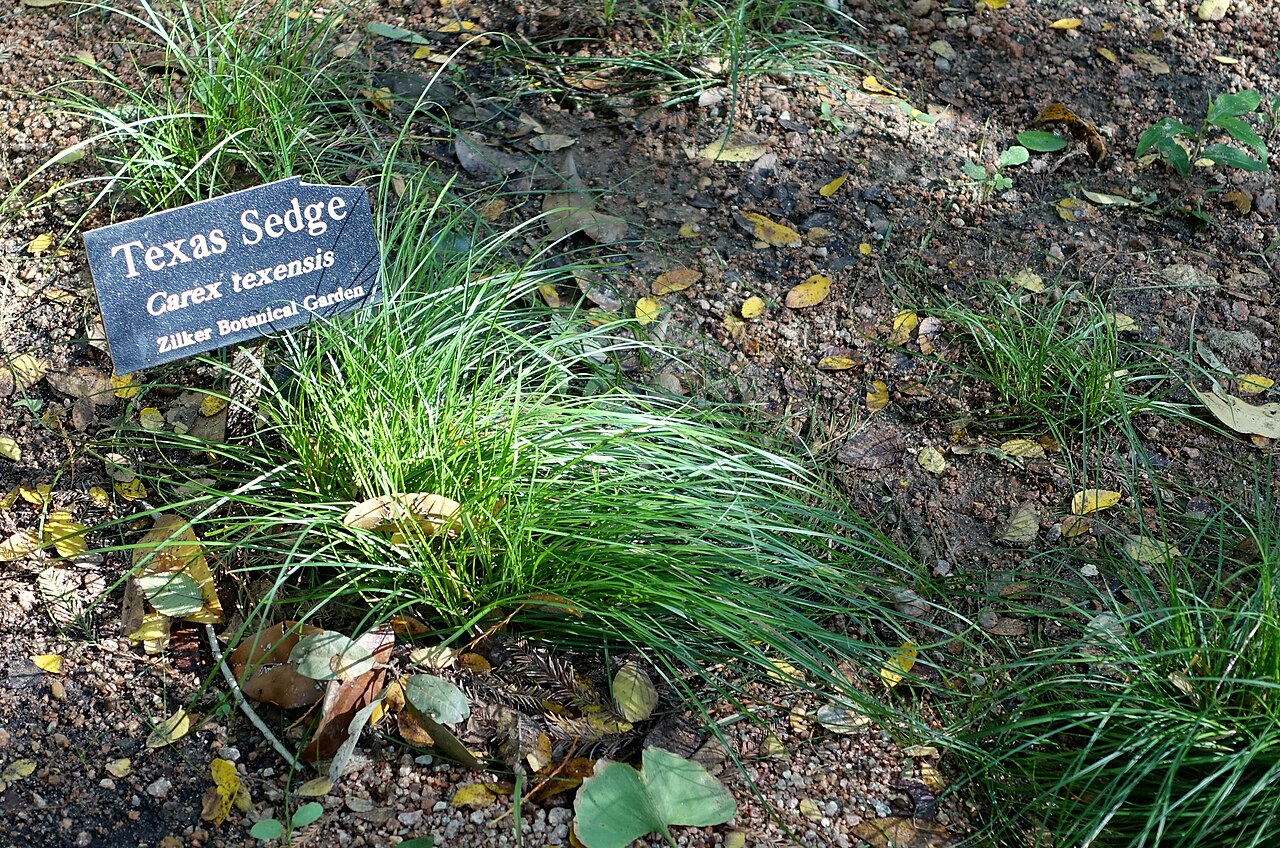
A clump of Texas sedge showing its fine, arching, fountain-like foliage, a popular lawn alternative for shade. Photo: Daderot, Zilker Botanical Garden, via Wikimedia Commons
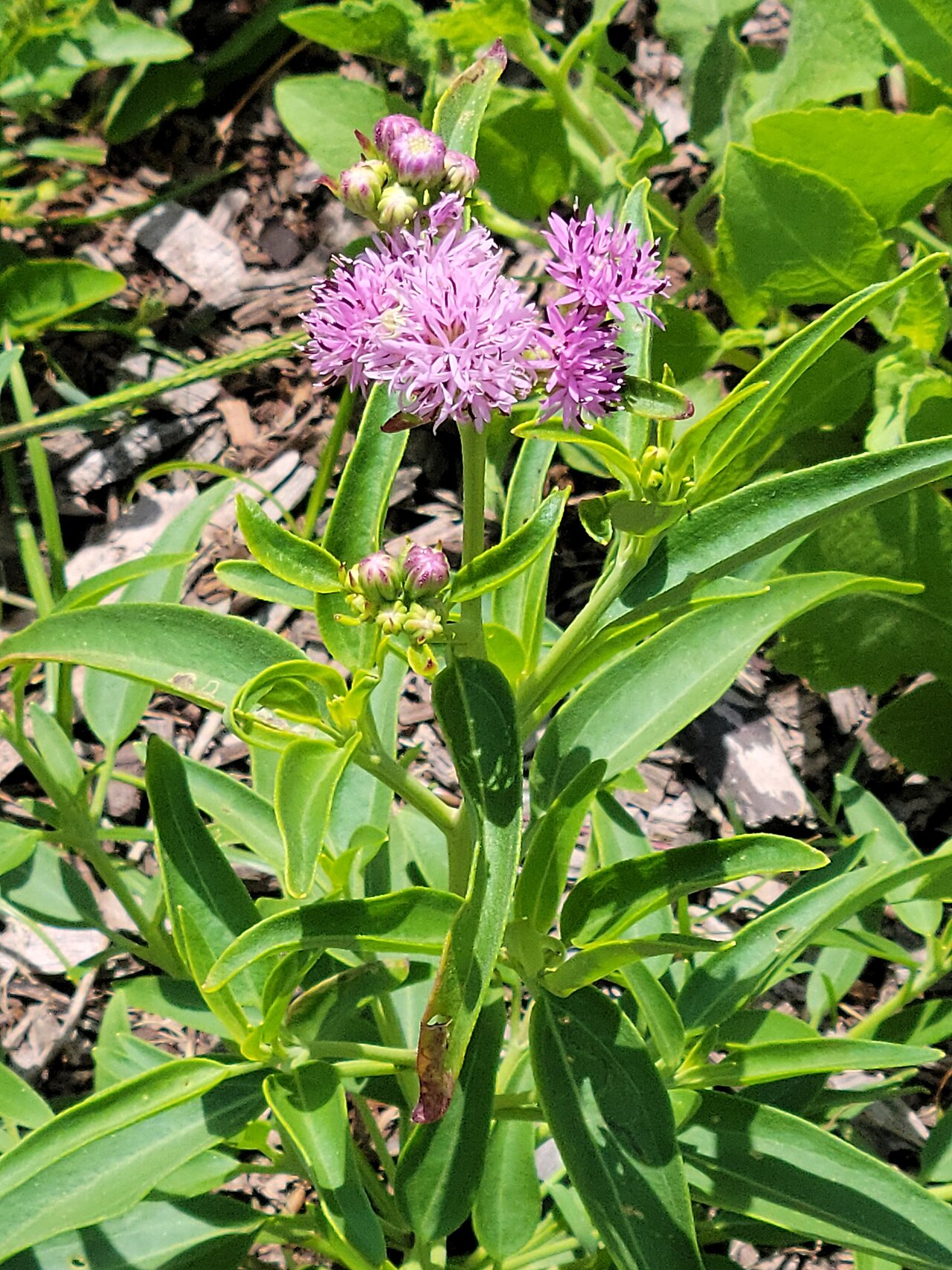
Texas palafoxia in bloom, showing its clustered pink disc flowers and succulent-looking lance-shaped leaves. Photo: johnyochum, via iNaturalist/Wikimedia Commons (CC BY 4.0) Palafoxia texana, commonly
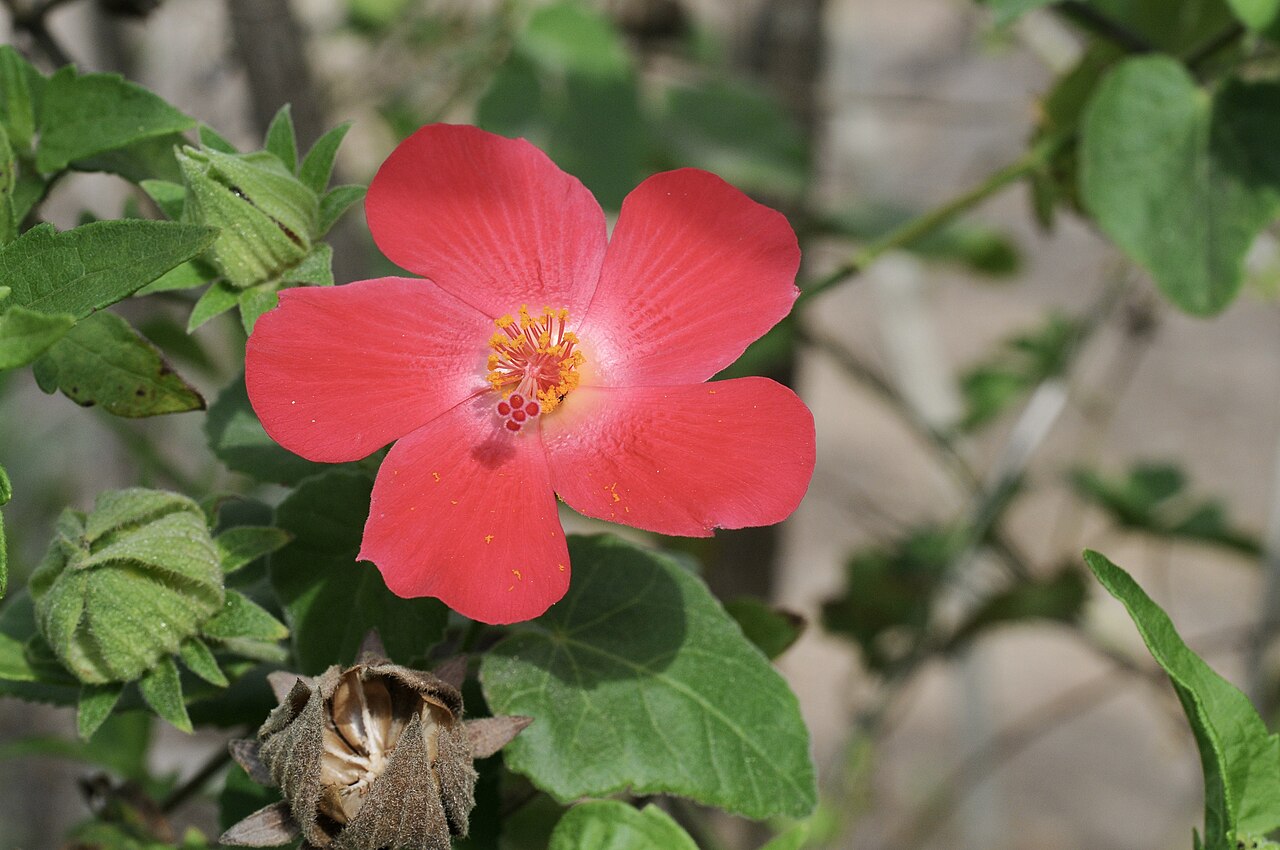
A heartleaf hibiscus flower at Bentsen-Rio Grande Valley State Park, its crimson petals and golden-tipped stamens drawing in hummingbirds and butterflies. Photo: sonnia hill, via
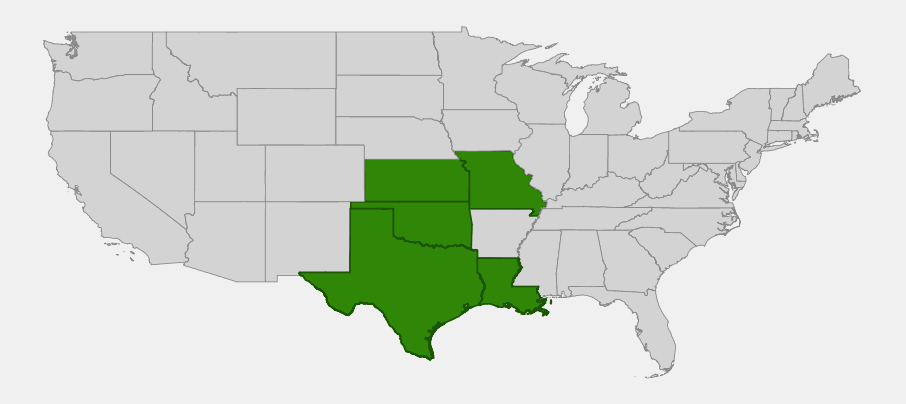
Liatris mucronata (treated by USDA PLANTS as Liatris punctata var. mucronata), commonly called Cusp Blazing Star, Texas Gayfeather or Texas Liatris, is a tough, drought-proof
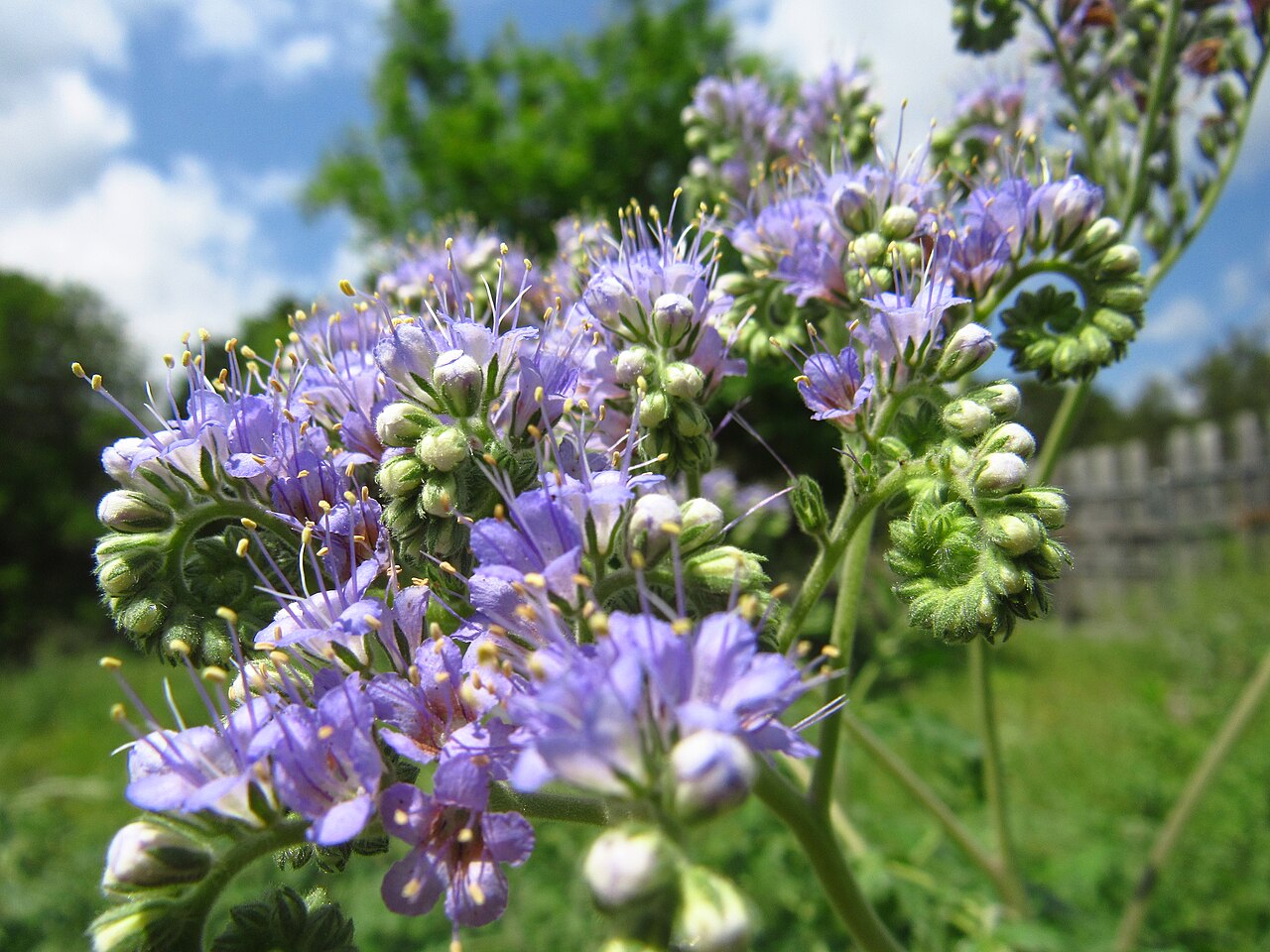
Blue curls flowering in East Texas, showing the coiled, fiddlehead-like flower clusters that give the plant its common name. Photo: Joey1daddy, via Wikimedia Commons (CC
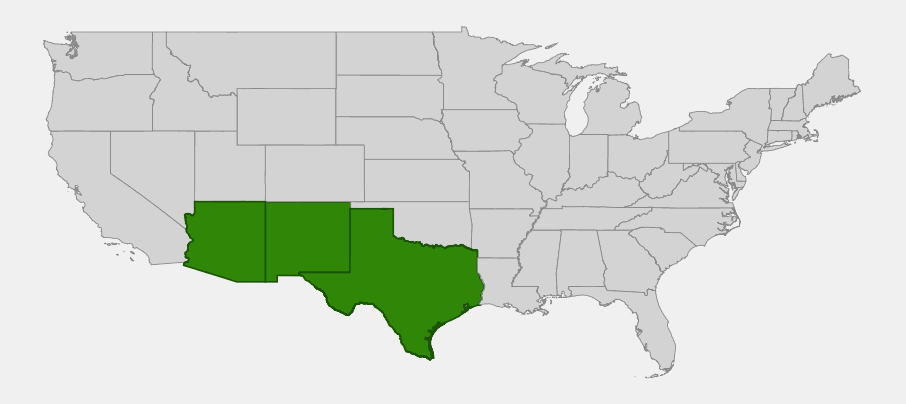
Castilleja lanata, commonly called woolly paintbrush or white-woolly Indian paintbrush, is a striking perennial wildflower of the dry rocky hills along the US–Mexico borderlands, found
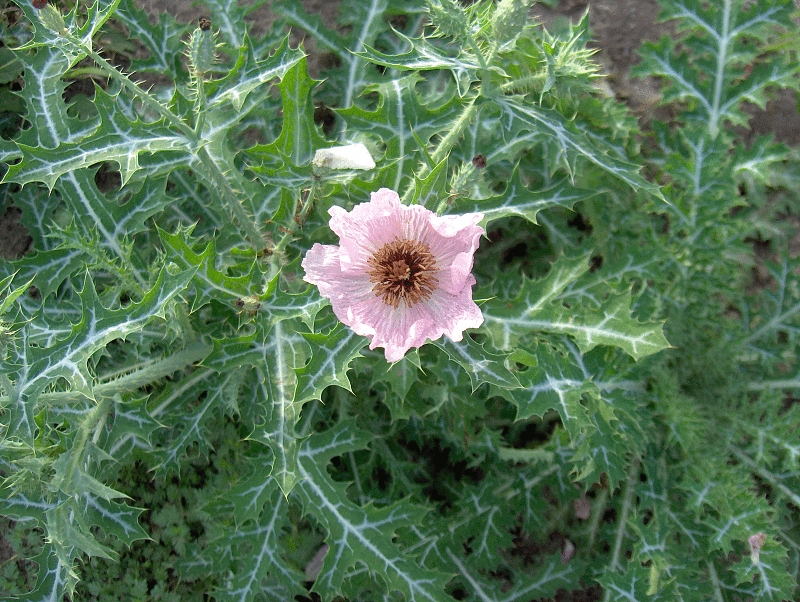
A red prickly poppy flower opening amid its spiny, pale-veined foliage in a Texas field. Photo: homeredwardprice, via Wikimedia Commons (CC BY 2.0) Argemone sanguinea,
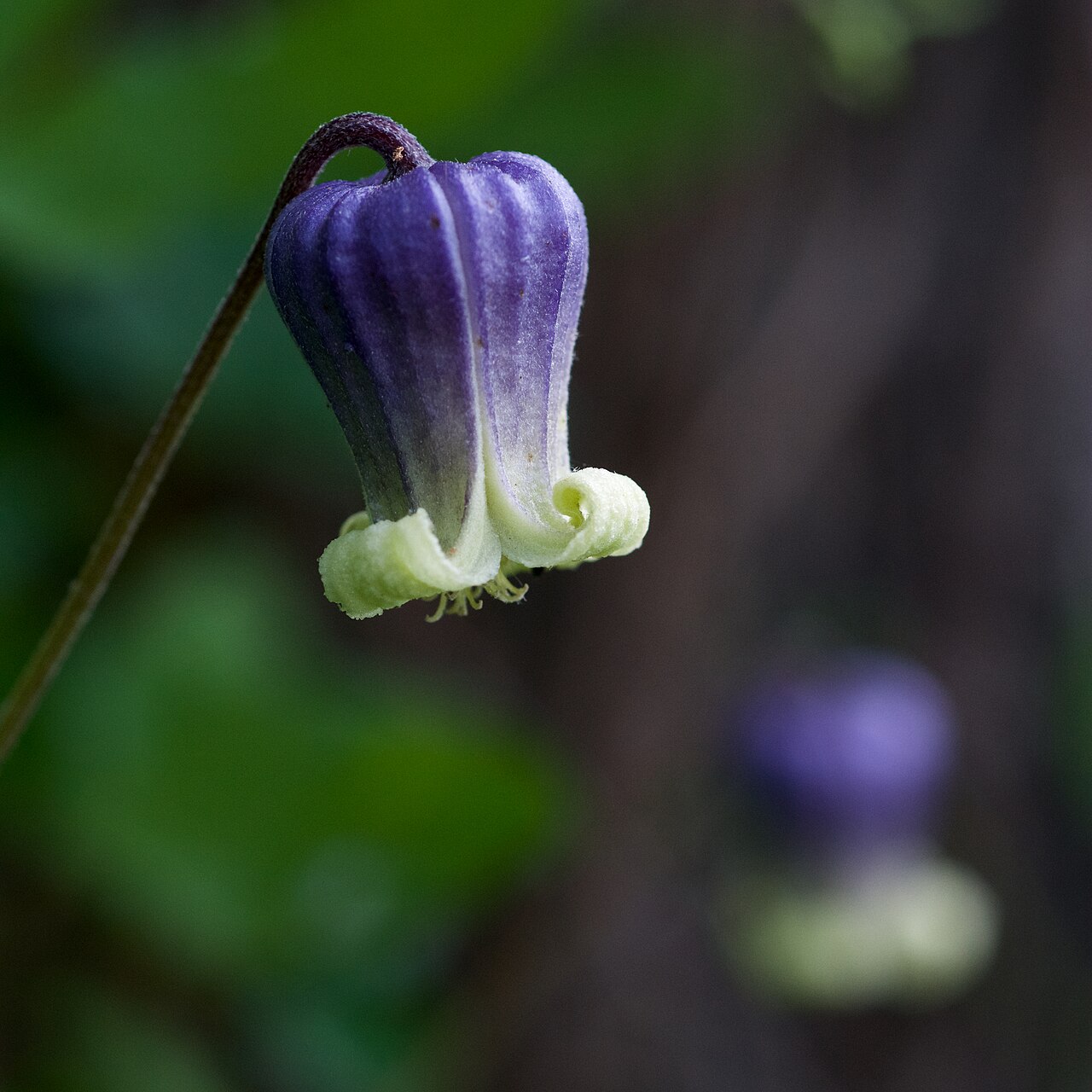
The distinctive nodding, urn-shaped flower of purple leatherflower, its thick sepals curling back at the tips. Photo: Eric Hunt, via Wikimedia Commons (CC BY-SA 4.0)
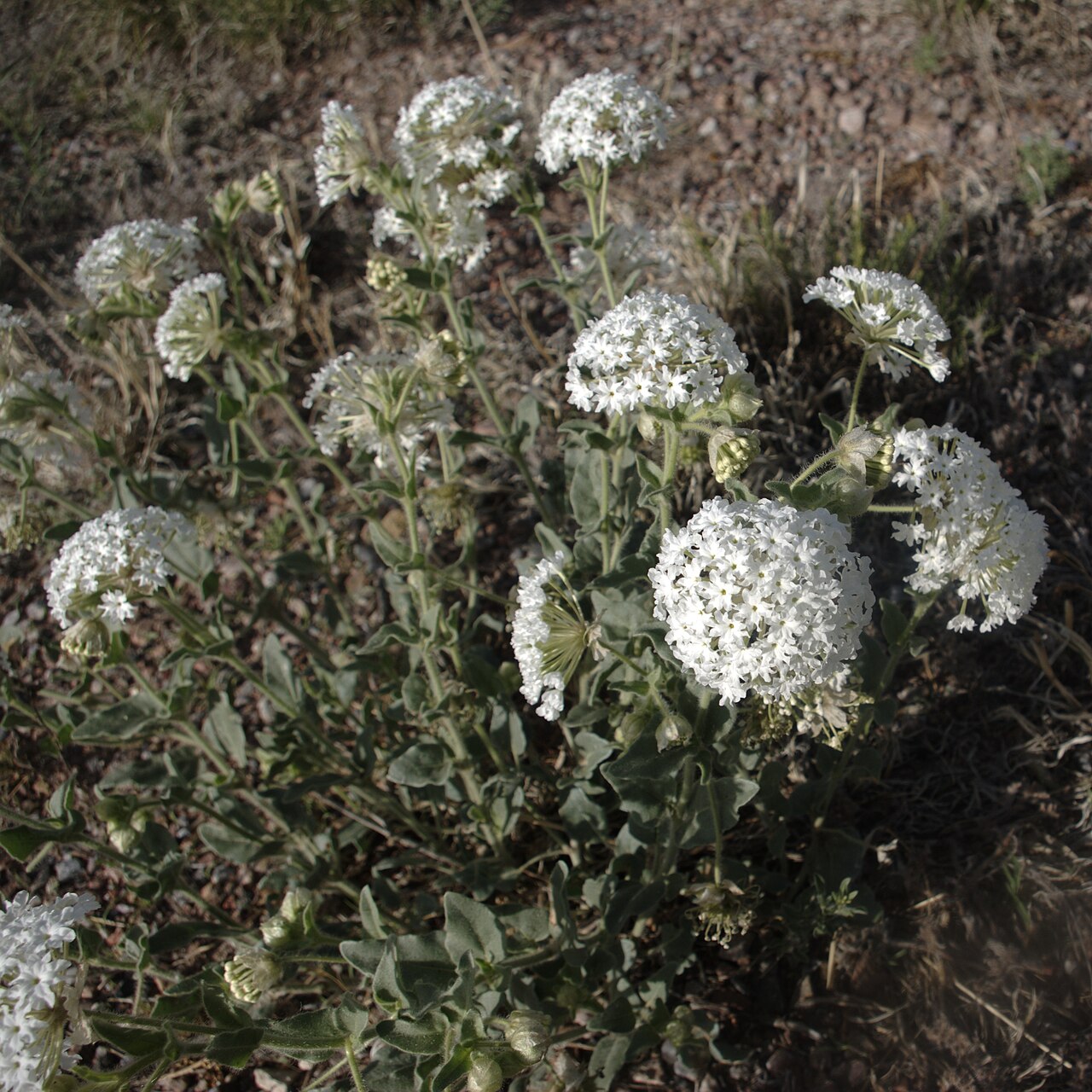
A prairie sand verbena plant covered in round, white flower clusters on a dry, gravelly New Mexico slope. Photo: JerryFriedman, via Wikimedia Commons (CC BY-SA
View More