
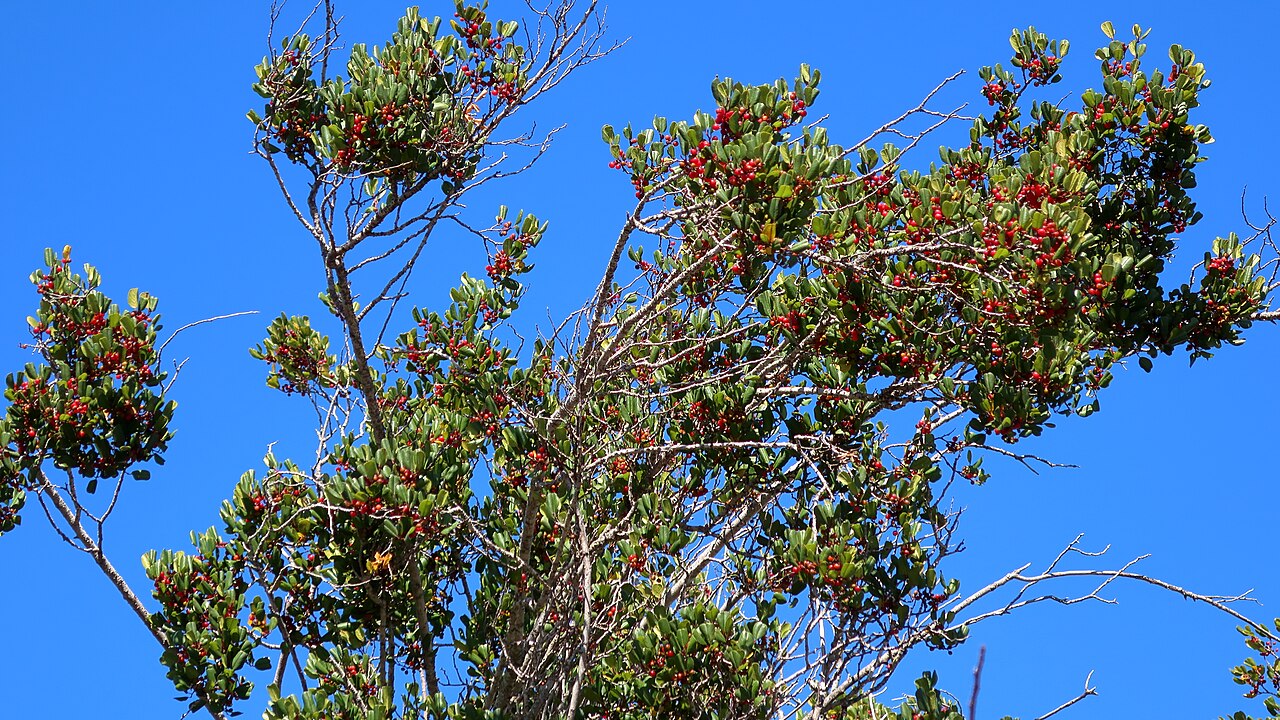
A hollyleaf redberry shrub heavy with ripening fruit, a common sight in California chaparral in late summer. Photo: cultivar413, Wikimedia Commons (CC BY 2.0) Frangula
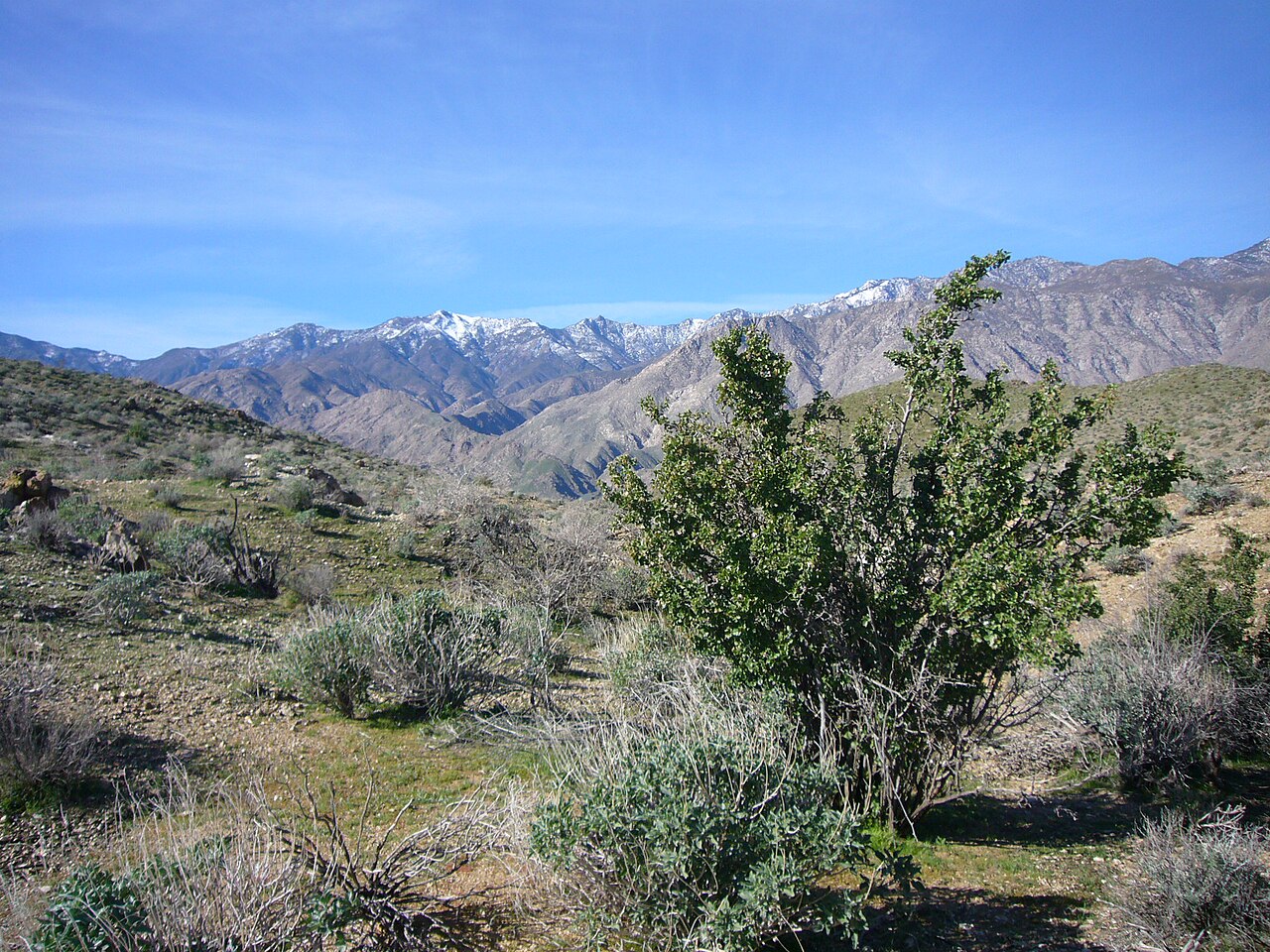
Desert apricot growing on a dry slope at the edge of the Colorado Desert, Riverside County, California. Photo: Florian Boyd, Wikimedia Commons (CC BY-SA 2.0)
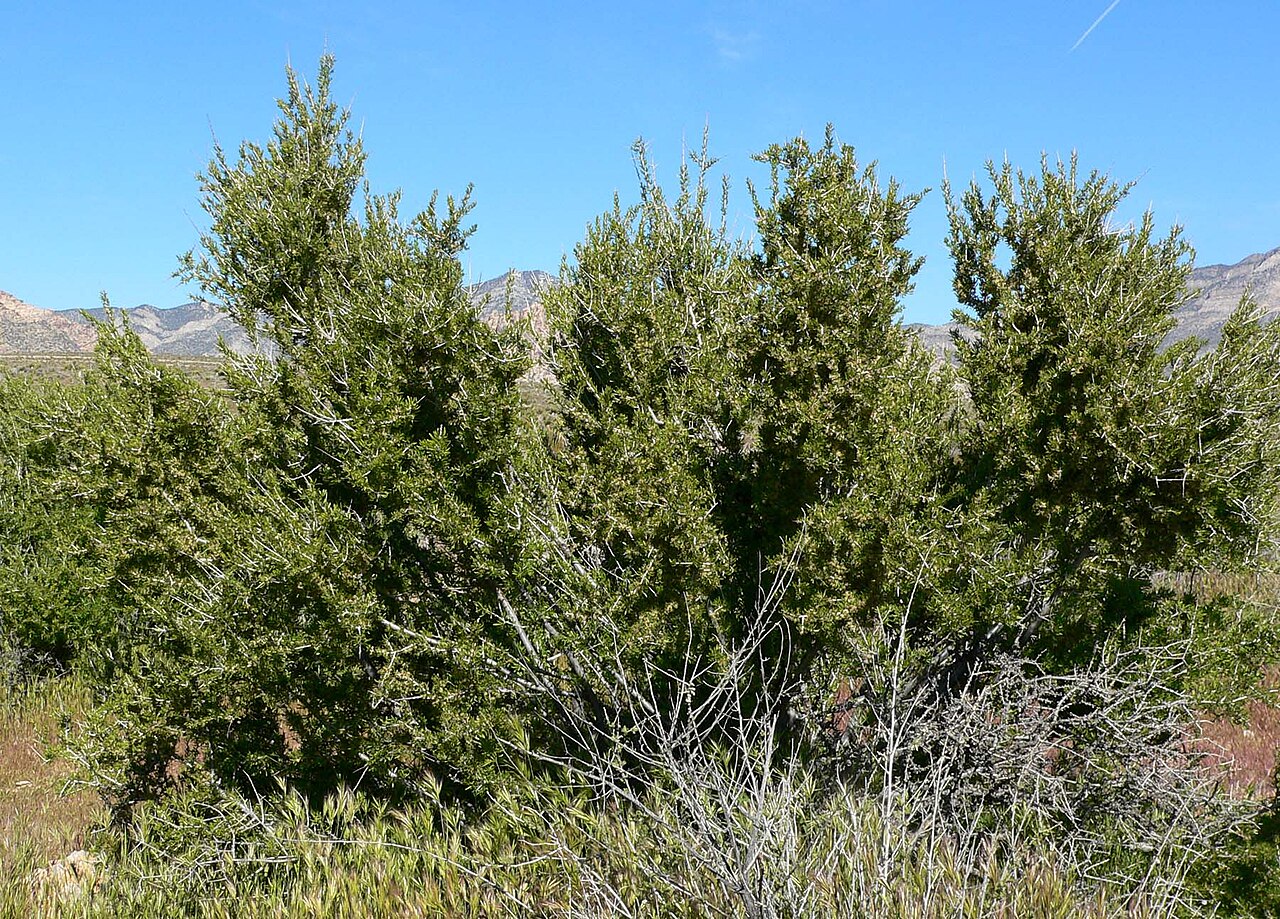
Desert almond forming dense, rounded thickets in the Mojave Desert. Photo: Stan Shebs, Wikimedia Commons (CC BY-SA 3.0) Prunus fasciculata, commonly called desert almond, is
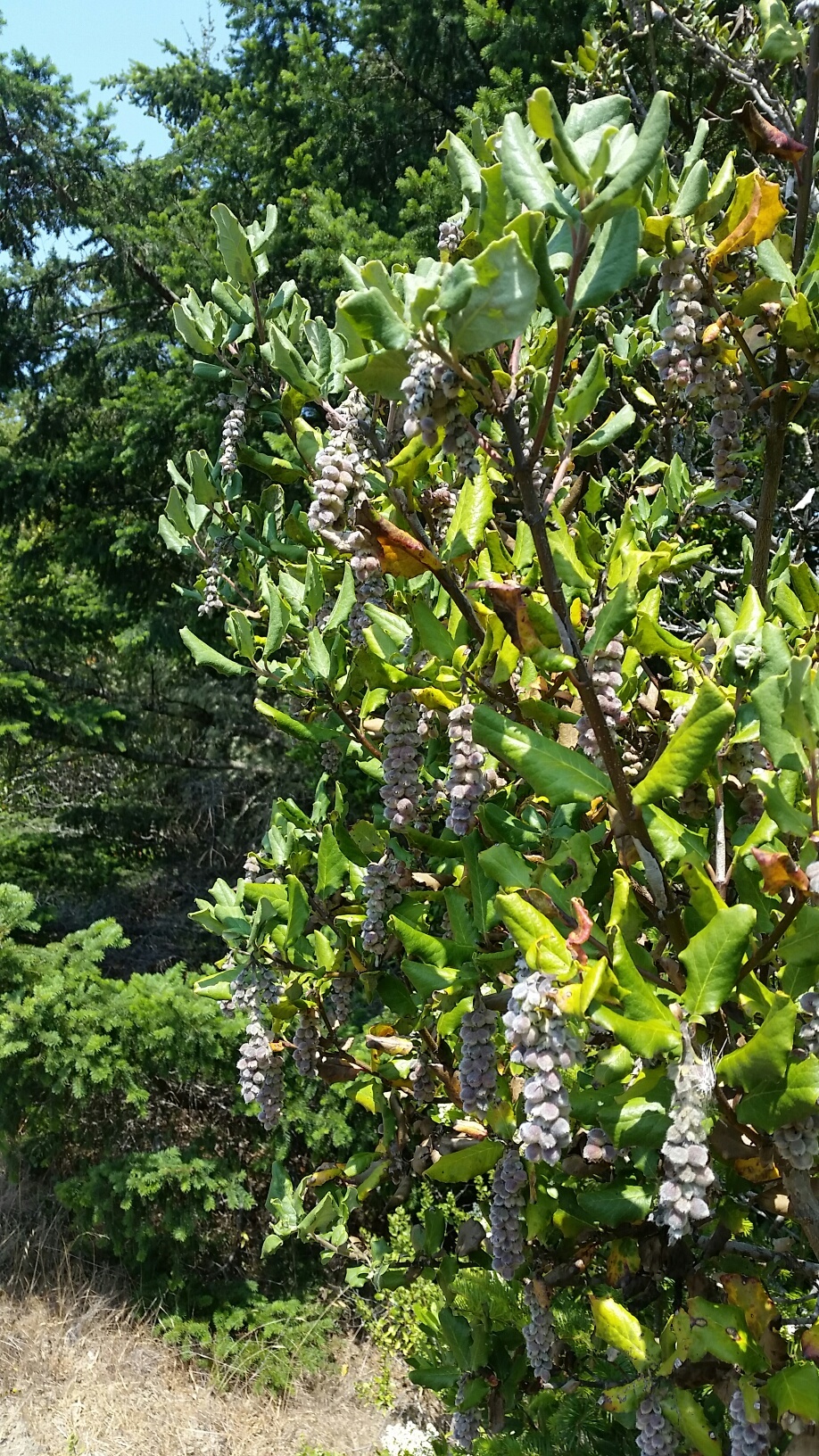
A coast silktassel shrub draped in its distinctive fruit chains near Sonoma Coast State Park, California. Photo: arlenedevitt, iNaturalist, via Wikimedia Commons (CC0) Garrya elliptica,
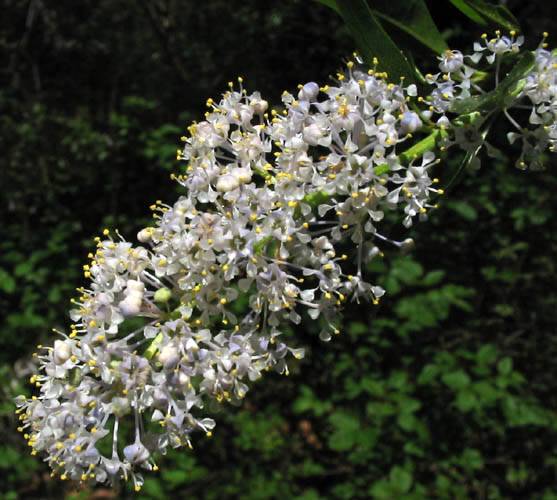
Greenbark ceanothus in full spring bloom along the Grotto trail, Channel Islands National Park. Photo: Anthony J. Valois, Wikimedia Commons (public domain) Ceanothus spinosus, commonly
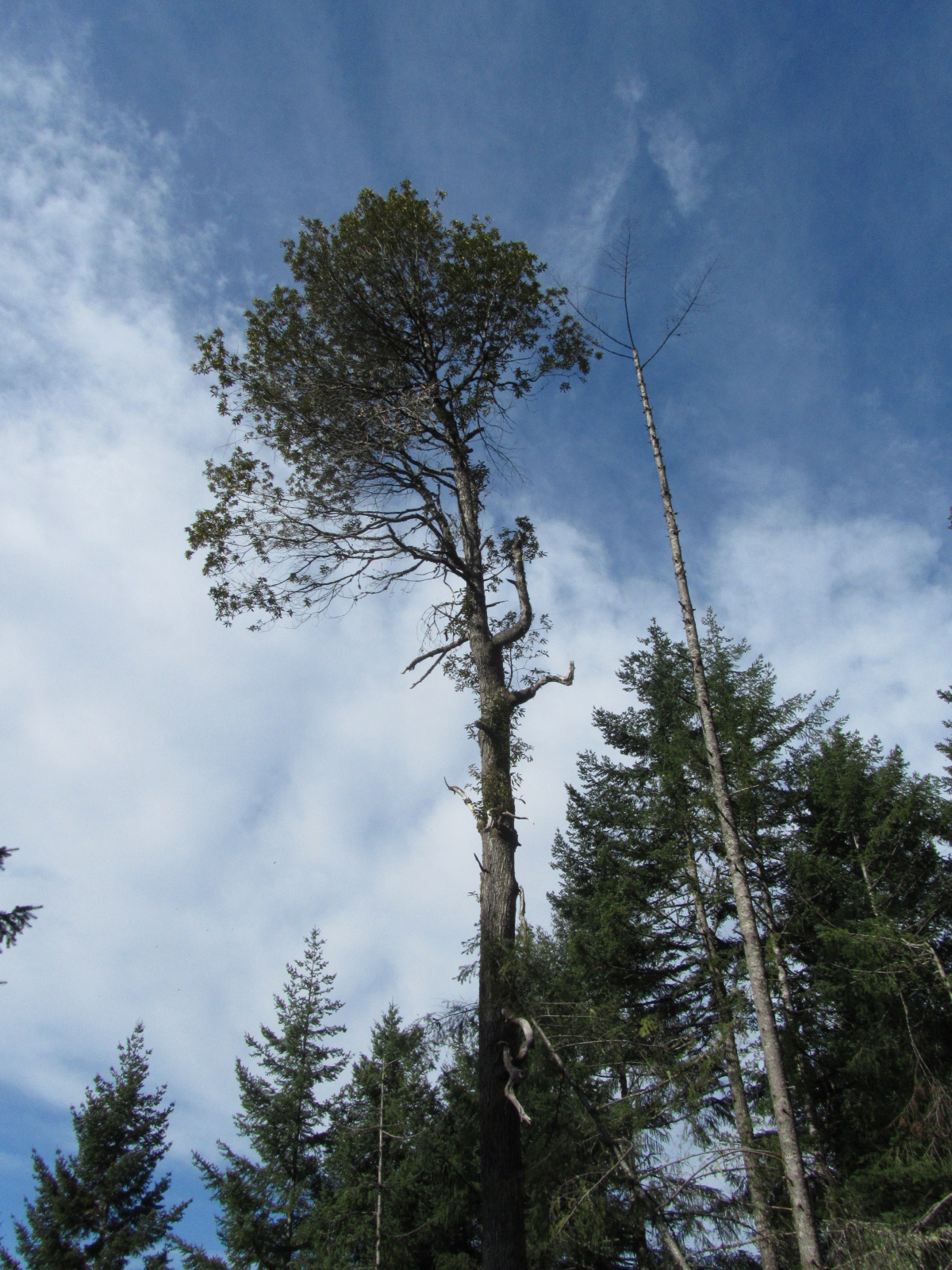
A mature Giant chinquapin reaching into the forest canopy, its rounded crown distinct from the surrounding conifers. Photo: theforestprimeval, Wikimedia Commons (CC BY-SA 2.0) Chrysolepis
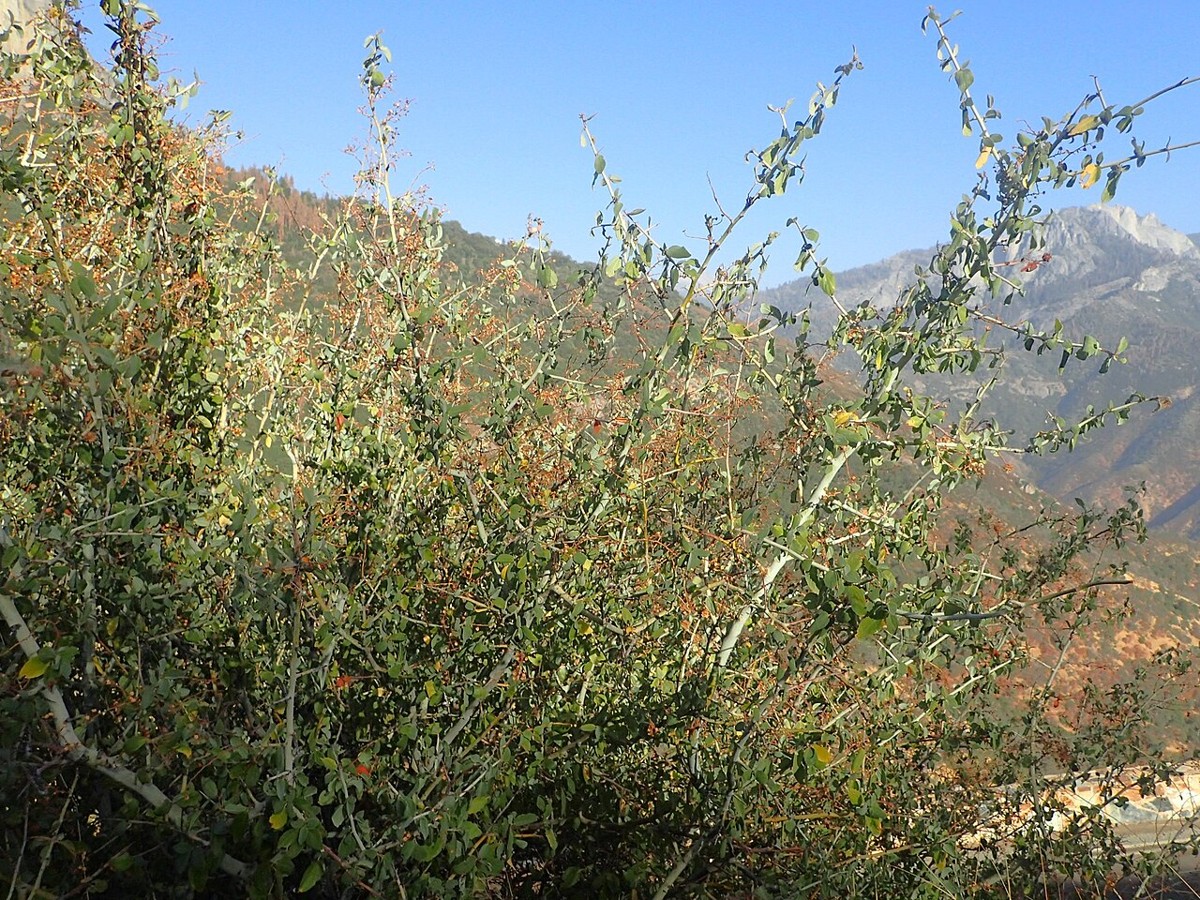
Chaparral whitethorn forming a dense stand on a foothill slope near Sequoia National Park. Photo: Krzysztof Ziarnek, Wikimedia Commons (CC BY-SA 4.0) Ceanothus leucodermis, commonly
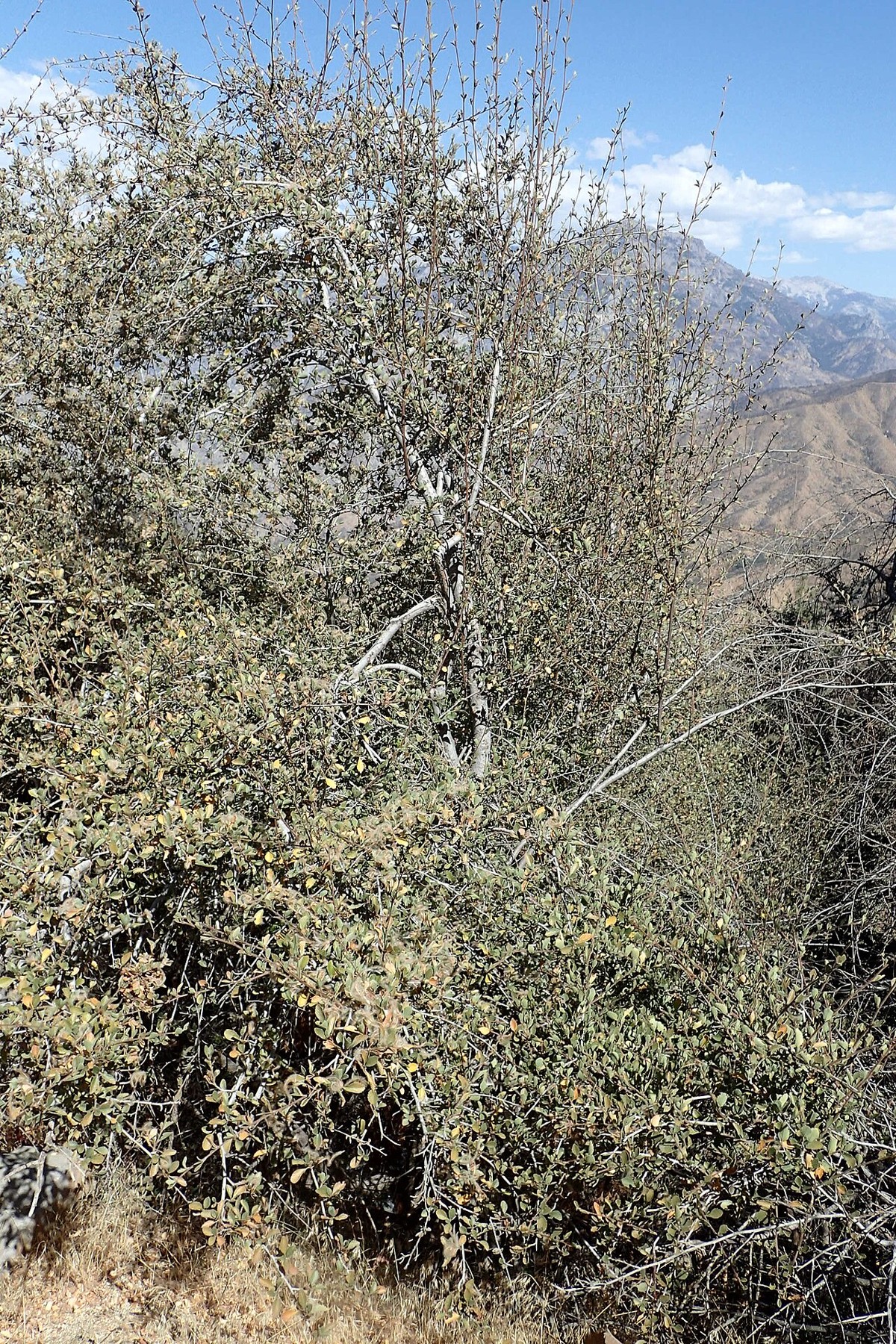
A mature Birchleaf mountain mahogany shrub on a foothill ridge above Kings Canyon, California. Photo: Krzysztof Ziarnek, Wikimedia Commons (CC BY-SA 4.0) Cercocarpus betuloides, commonly
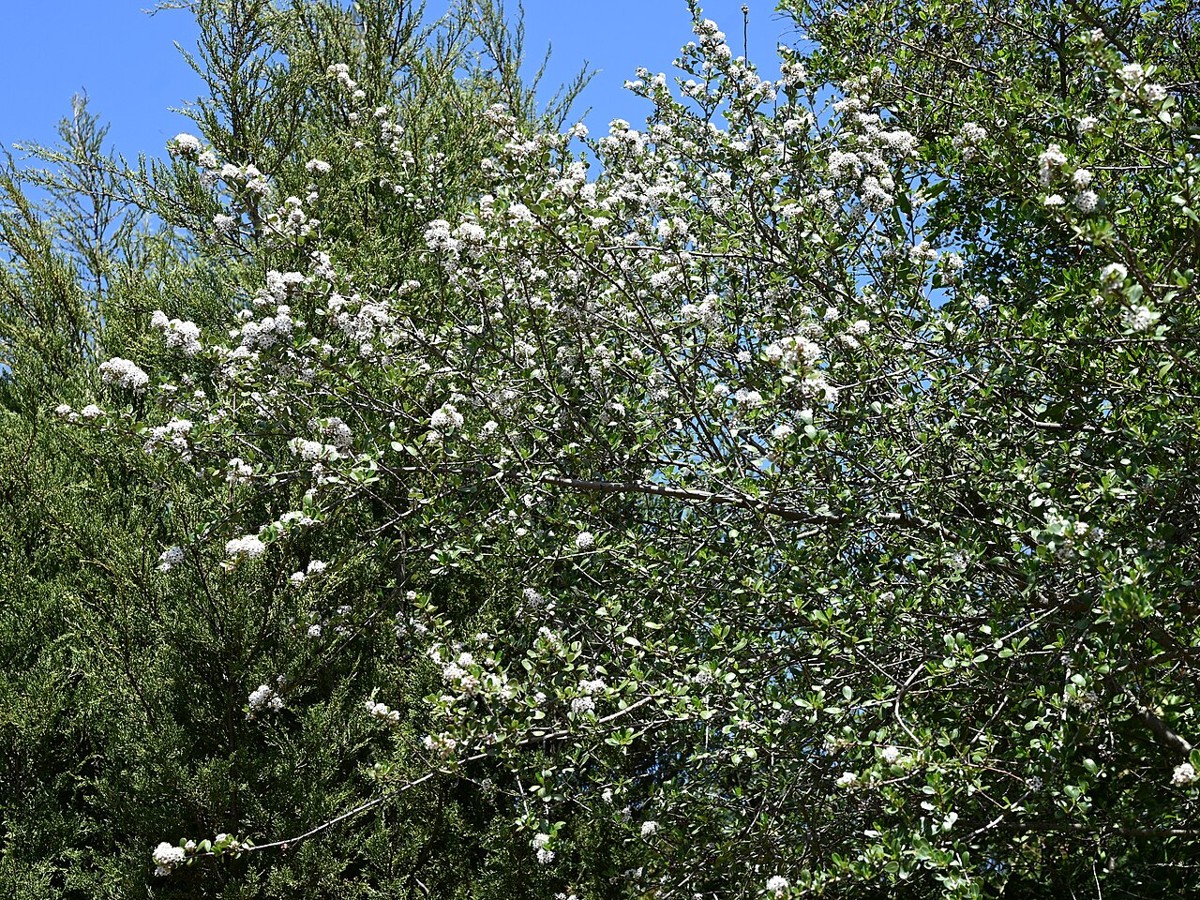
Bigpod ceanothus in full winter bloom, one of the first chaparral shrubs to flower each year. Photo: Krzysztof Ziarnek, Wikimedia Commons (CC BY-SA 4.0) Ceanothus
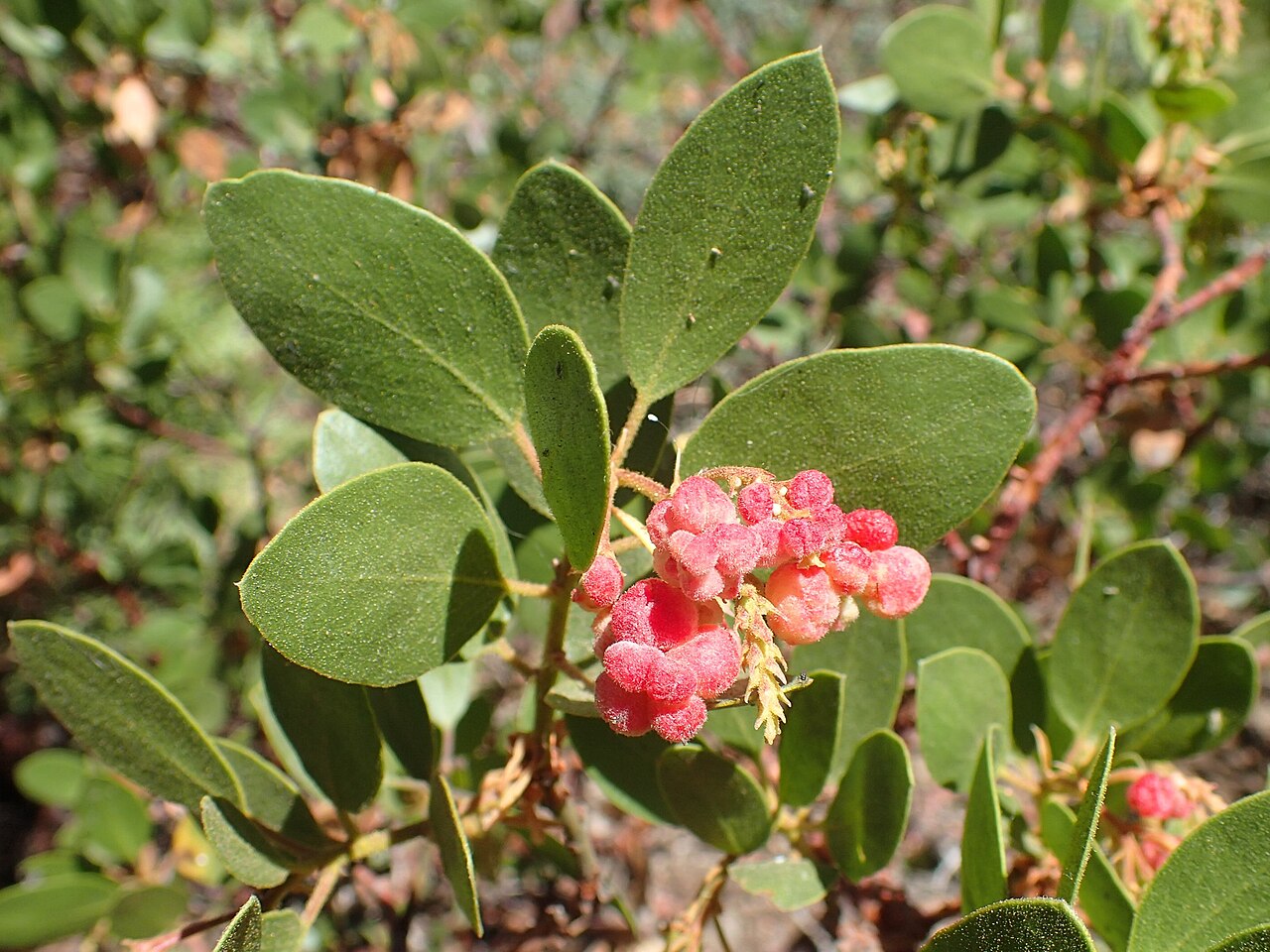
Whiteleaf manzanita branch showing the pale, gray-green foliage and sticky developing fruit that give the species its common names. Photo: Krzysztof Ziarnek, Kenraiz / Wikimedia
View More