Composting Tips for Arizona Gardeners: Maximizing Soil Health in Arid Climates
Last updated: August 28, 2026
Gardening in Arizona isn’t quite like gardening anywhere else. The hot, dry climate and limited organic material force you to rethink a lot of the basics.
Composting can really improve soil structure, help the ground hold onto moisture, and deliver the nutrients your plants are starving for. But the key to successful composting here? It’s all about balancing moisture and managing heat, so you don’t end up with a pile that’s bone-dry or cooked to death.
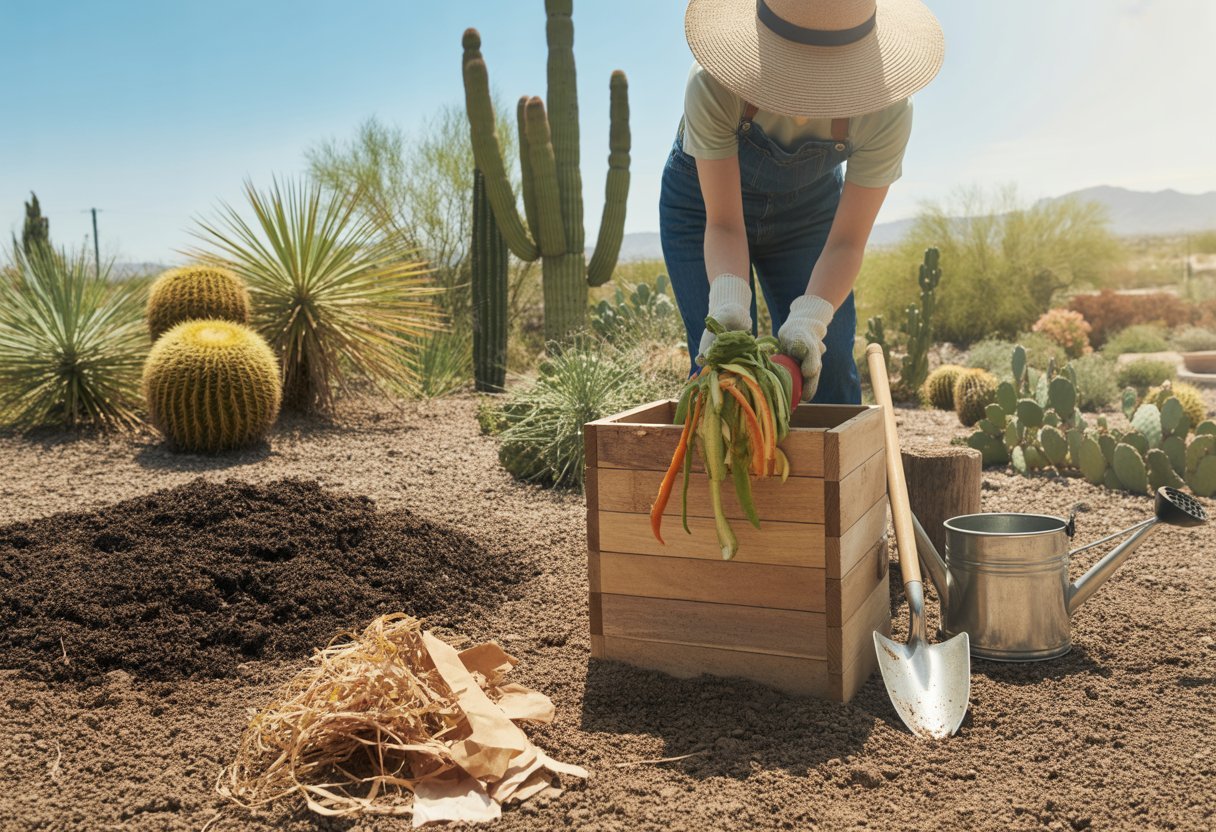
Most Arizona gardeners know the struggle: rapid evaporation and slow decomposition feel like the norm. Still, if you tweak your composting approach for the desert, you can build up rich, fertile soil—even in this climate.
Mixing green and brown materials while keeping an eye on moisture is absolutely essential. There’s no shortcut around it.
You can make good use of local stuff like yard waste and kitchen scraps, but Arizona’s weather demands you pay attention. Aerating the pile and providing shade help keep things active year-round, even when it’s blazing hot.
Understanding Composting in Arizona’s Climate
Arizona’s desert climate forces you to adapt your composting game. You have to manage moisture and balance your organic materials, or nothing’s breaking down.
Unique Challenges of Desert Gardening
Low humidity and brutal sun dry out compost piles in a flash. If you let them dry, microbes slow down, and the pile just sits there.
You’ll need to water your pile every few days—just enough to keep it damp, not soggy. It’s a delicate dance.
Hot days can speed up decomposition, but if your pile gets too wet, you’ll start smelling it. Flies and rodents love a sloppy pile, too.
Enclosed bins or a tarp can help keep pests out and your pile in better shape. It’s not foolproof, but it makes a difference.
Getting enough organic waste is another headache. Desert landscaping doesn’t leave you with much plant debris, so you might have to toss in more kitchen scraps or buy some greens to keep the compost balanced.
Key Components for Successful Composting
Aim for a carbon-to-nitrogen (C) ratio around 30:1. In Arizona, dry leaves, straw, and wood chips bring in the carbon, while kitchen scraps provide the nitrogen.
Turn your pile regularly. That simple act keeps it aerated and avoids the nasty smells that come from compacted, airless material.
Keeping the pile moist matters way more than you’d think. A spray bottle or soaker hose helps you nail that “wrung-out sponge” feel.
Find a shaded spot for your compost. Shade keeps things from drying out and lets microbes work longer, even in the heat.
If you can, insulate the pile with straw or mulch—it helps buffer those wild temperature swings.
Best Practices for Arizona Compost Piles
You’ve got to pay attention to heat, dryness, and local quirks if you want your compost pile to thrive in Arizona. Bin placement and moisture control matter more than you might expect.
Selecting and Placing Compost Bins
Go for compost bins made of heavy plastic or wood—opaque ones work best. They hold in moisture and regulate temperature better than open piles or wire bins.
Bins need ventilation, so look for ones with holes or slats. That way, air gets in, but your pile doesn’t dry out too fast.
Put your bin in a shady or partly shaded spot. Arizona’s sun can be relentless, and direct exposure dries out your pile in no time.
If you can, keep the bin close to a water source. It just makes life easier.
Set bins right on the soil, not on concrete or gravel. That way, microbes and worms can move in and do their thing.
Don’t crowd bins against trees—roots get in the way, and too much shade can slow decomposition.
Managing Moisture and Temperature
Moisture control is huge in Arizona. Your pile should feel damp, not soaked—think of a sponge that’s been wrung out.
Water the pile often, especially when it’s hot and dry. There’s no way around it.
Covering piles with a tarp or lid keeps moisture in and wind out. Plus, it keeps critters from poking around.
Keep an eye on the temperature. You want the inside of the pile around 110-140°F.
If it gets too hot, turn the pile to cool it off and add air. If it’s too cold, add more green material or a bit of water to kickstart the microbes.
Turning the pile regularly keeps things moving and helps you avoid problems.
Choosing and Layering Organic Matter
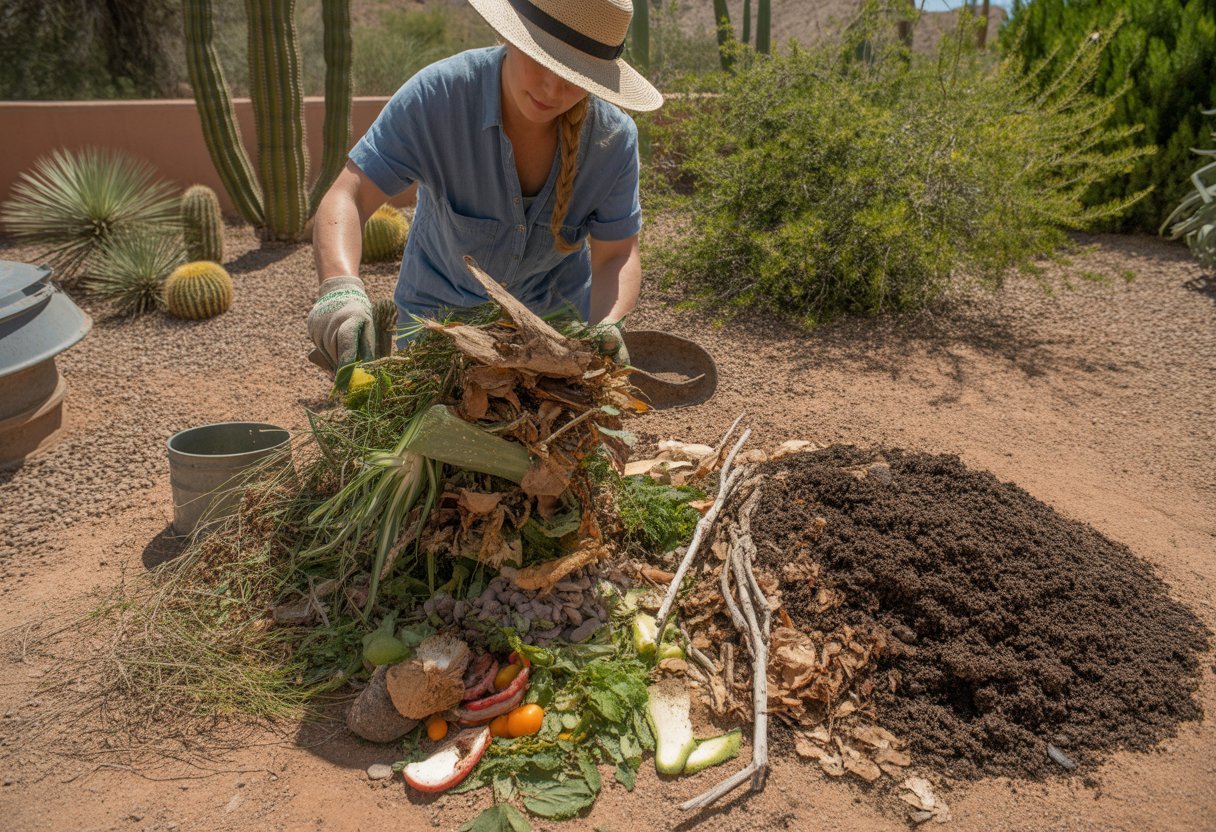
Picking the right stuff to compost is half the battle in Arizona. Layering matters, too, if you want compost that actually helps your garden.
Ideal Materials for Hot, Dry Climates
Go for materials that hold moisture and break down at a steady pace. Vegetable scraps, coffee grounds, and fresh grass clippings are solid sources of nitrogen.
Pair those with browns: dried leaves, straw, and shredded paper bring the carbon. Don’t dump in a ton of dry wood chips—they just sit there forever.
You can add cactus trimmings or succulents, but don’t overdo it. They’ve got water, sure, but their waxy skins slow things down.
Chop or shred materials before tossing them in. It helps everything decompose faster.
Balancing Greens and Browns Effectively
Shoot for a carbon-to-nitrogen ratio close to 30:1. Two parts brown to one part green usually works out well here.
Start with a thick layer of browns at the bottom. It helps air get through.
Alternate thin layers of greens and browns, and add a little water as you go. Don’t flood the pile, just keep it from drying out.
Turn the pile every couple of weeks. It mixes in oxygen and speeds up the process.
If you get the balance right, microbes go to town and you end up with compost that actually benefits Arizona soils.
Harvesting and Using Black Gold in Your Garden
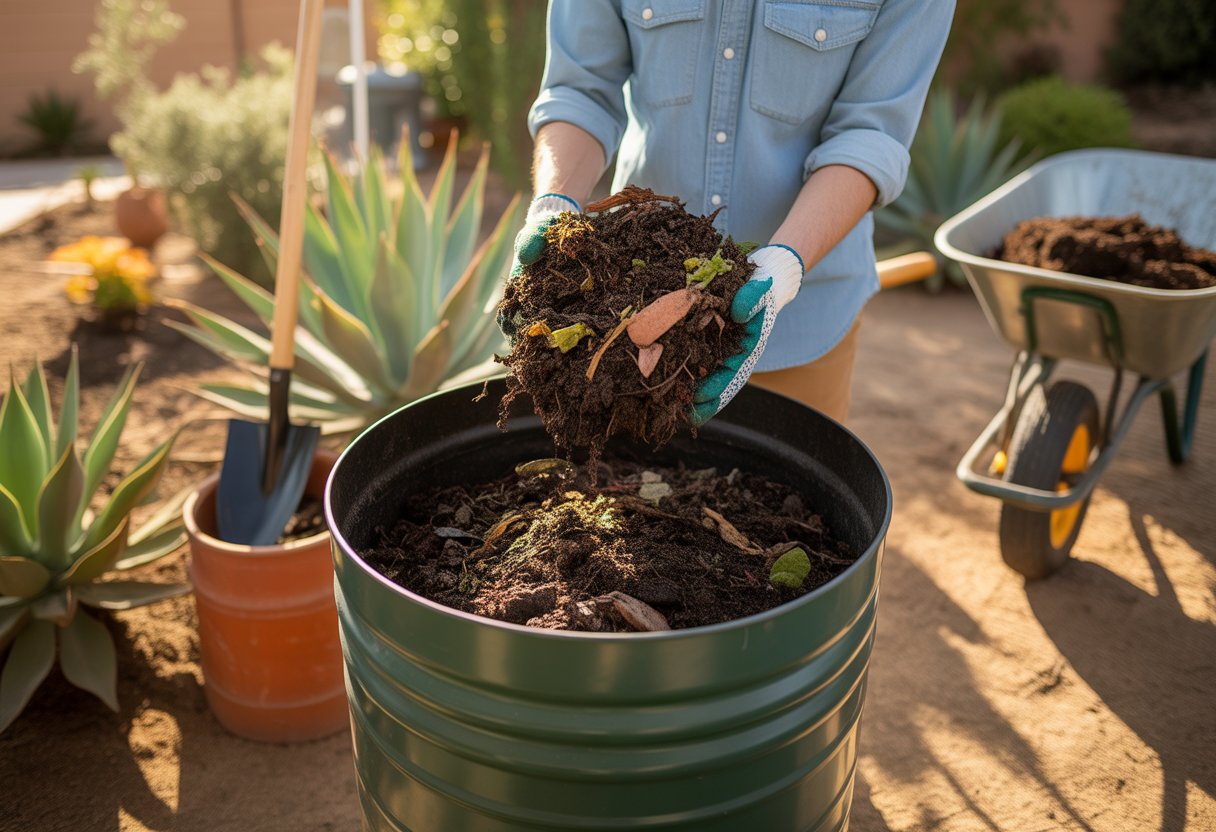
Compost really pays off when it’s fully broken down and you use it to improve soil health. Timing and how you use it both matter, or you risk overwhelming your plants instead of helping them.
When and How to Harvest Compost
You’ll know compost is ready when it’s dark, crumbly, and smells earthy—nothing like those old food scraps you started with. In Arizona, it usually takes 3 to 6 months if you keep up with turning and watering.
Look for a uniform texture with no big chunks or recognizable scraps. Use a shovel or pitchfork to pull finished compost from the bottom or center, since that’s where it breaks down fastest.
If you find bits that aren’t ready, just toss them back in for another round. If your compost looks dry, moisten it before spreading it in the garden—microbes need that moisture to work their magic.
Applying Compost for Maximum Benefit
Spread compost in thin layers—about 1 to 2 inches thick. If you pile it on too thick, you might smother your plants or cause water to run off instead of soaking in.
Scatter compost around the base of your plants, or work it into garden beds. This way, you’re giving the soil a solid nutrient boost.
When you’re prepping a vegetable garden, mix compost into the top 6 inches of soil before you plant. That step really helps seeds sprout and roots get established.
If your plants are already growing, try side-dressing compost around the drip line. That lets nutrients trickle down slowly over time.
Compost also works great as mulch. It keeps moisture in—which matters a lot in Arizona’s heat—and helps block weeds.
Just a heads up: don’t lay fresh compost right on seedlings. Sometimes, it’s got microbes that might bother those delicate roots.