
Irrigation Systems for New Gardens A Complete Guide to Efficient Watering Solutions
Last updated: October 20, 2026
Starting a new garden takes planning—and let’s be honest, a bit of guesswork, too. Plants need steady water, and figuring out how to make that happen without spending all day with a hose isn’t exactly thrilling.
An irrigation system makes life easier by getting water where it needs to go, when it needs to get there. It cuts down on waste and helps your plants grow up healthy.
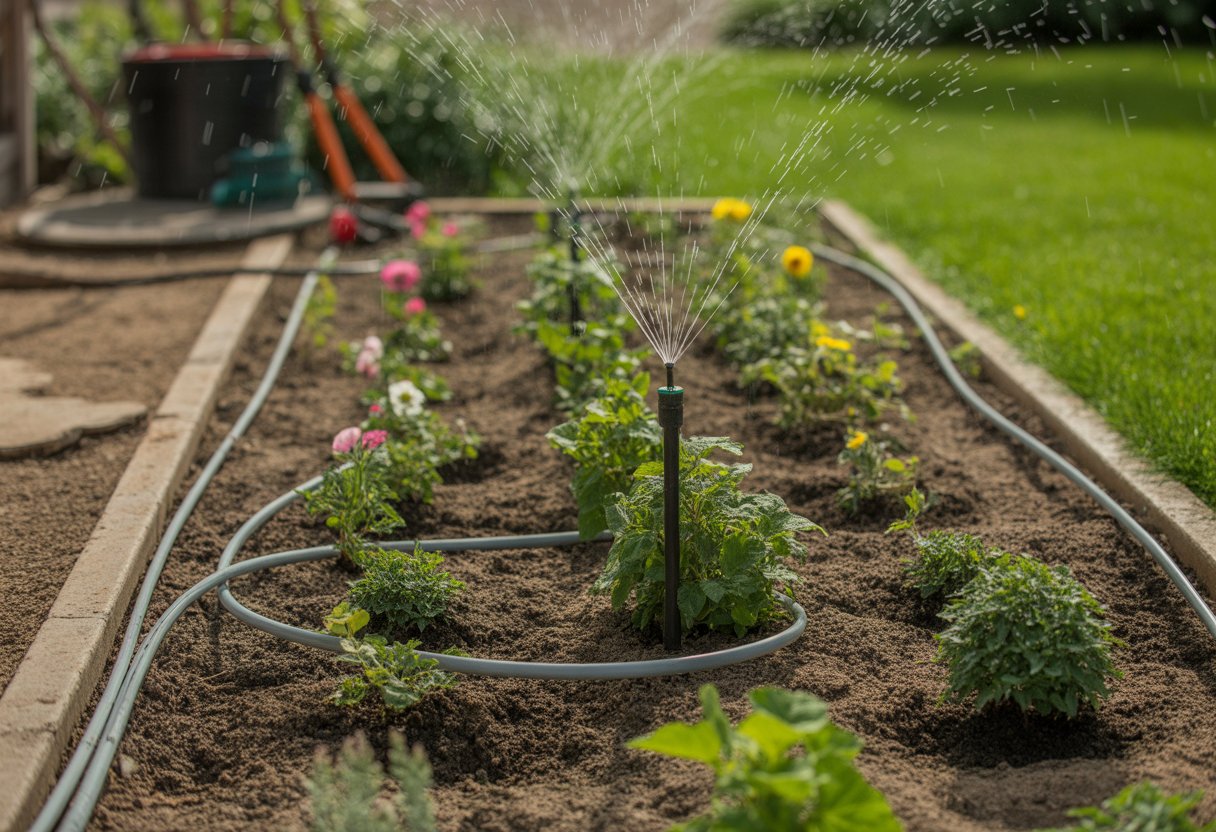
The best irrigation system for a new garden really depends on your space, what you’re growing, and how much water you have to work with. Drip irrigation usually wins for precision, but there’s no one-size-fits-all answer.
Picking the right setup saves you time and gives your plants a fighting chance by getting water right to the roots.
Drip, sprinkler, and soaker hose systems all have their place. Understanding each option lets you build a watering routine that fits your garden’s quirks.
Choosing the Right Irrigation System for New Gardens
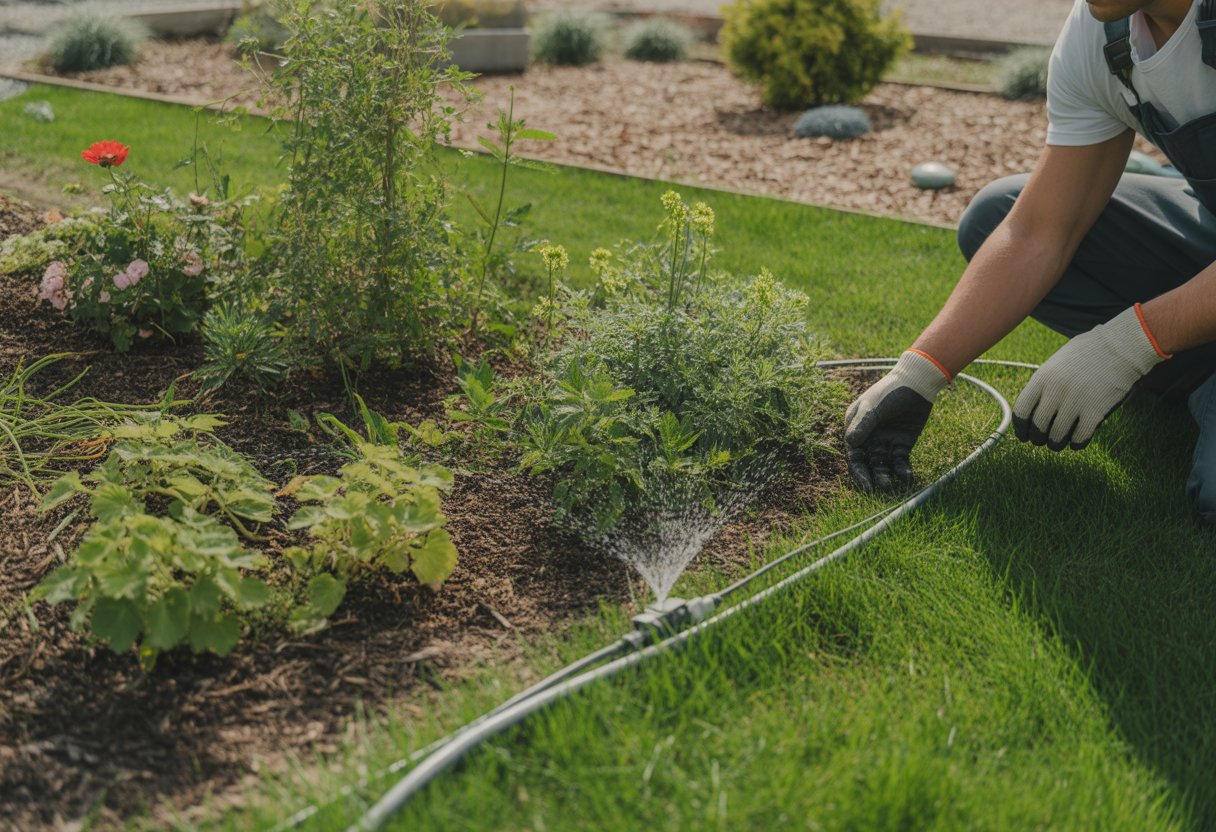
Choosing an irrigation system means looking at your garden’s layout, soil, and water source. These factors affect what will actually work and help you avoid wasting resources.
Assessing Garden Layout and Soil Type
Layout matters a lot. If you’ve got rectangular or uniform beds, drip irrigation or soaker hoses can target water right where you want it.
Odd shapes or slopes? Adjustable spray heads might do the trick.
Soil type changes the game, too. Sandy soil drains fast, so you’ll need to water more often but not as much each time.
Clay holds onto water but can get soggy or cause runoff, so a slower drip helps avoid puddles.
It helps to map out your garden and note where the sun hits. That way, you can set up zones and tweak your watering schedule for each area’s needs.
Evaluating Water Source and Pressure
Water source isn’t just a boring detail—it’s huge. City water usually gives you steady pressure, which is great for sprinklers.
If you’re using a well or rain barrels, pressure can be lower and less predictable, so drip or micro-irrigation might be better.
Grab a gauge and check your pressure. Sprinklers like 30-50 psi. Drip systems are happy with 10-30 psi.
If your pressure’s off the charts, add a regulator or valve to keep things from blowing out. Make sure your system’s flow rate (GPM) matches your design, or you’ll end up frustrated.
Determining Watering Needs for Garden Beds and Lawn
Garden beds like things precise and moderate. Drip irrigation or micro-sprays cut down on evaporation and get water right to the roots.
Lawns? They need broad coverage. Rotor or spray sprinklers work well if you space them right, or you’ll get weird dry spots.
Think about what you’re growing and how old the plants are. Seedlings want frequent, gentle water, while established plants can handle deeper, less frequent drinks.
If you’ve got a mix, set up different zones and schedules. Watering early in the morning helps cut down on evaporation and disease.
Timers can make your life much easier here.
Types of Irrigation Systems for New Gardens
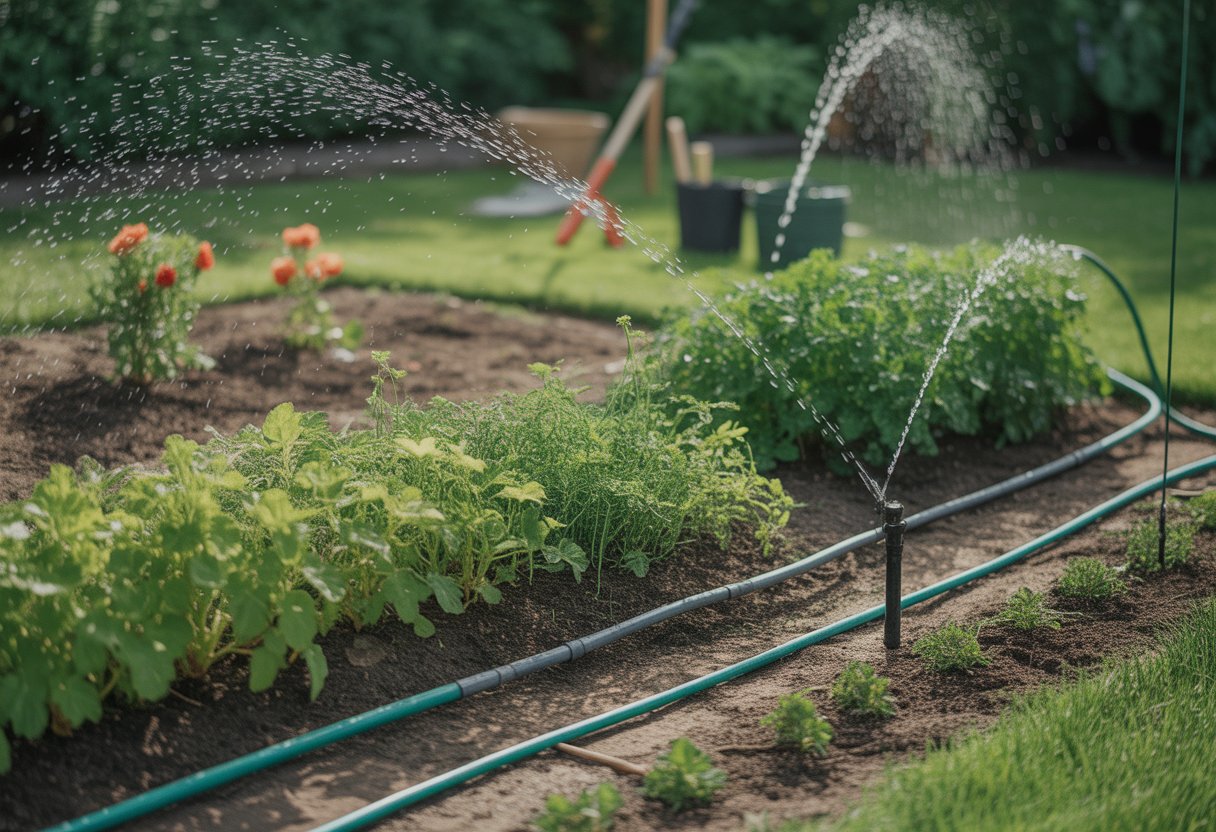
Your garden’s size, what you’re planting, and how much water you want to use all play into which system will work. Drip irrigation gives you control, while sprinklers cover big areas.
Automation is a lifesaver if you don’t want to be out there every morning.
Drip Irrigation and Emitters
Drip irrigation gets water right to the roots using tubes and tiny emitters. It’s efficient—less evaporation, less runoff.
Emitters come in different flow rates, usually between 0.5 and 2 gallons per hour. You can dial it in for each plant’s needs.
This setup works great for veggies, flowers, and container plants. You’ll need to lay out tubing and stick emitters close to the roots.
Drip systems save water and help keep weeds down since you’re not watering everything.
Sprinkler Systems for Lawns and Large Areas
Sprinklers shine when you’ve got a lot of ground to cover. They use rotating or fixed heads, so you can set them up for different patterns and distances.
Spray heads work for tight spots, while rotor heads can reach out over 30 feet. Set them up on a timer for even coverage.
You’ll need to design carefully to avoid puddles or missed spots. Sprinklers do use more water than drip systems, but sometimes it’s the only practical choice for a big lawn.
Soaker Hoses and Their Applications
Soaker hoses are simple and surprisingly effective. They’re porous and let water seep out slowly along their length.
Lay them on or under mulch, close to your plants, and you’ll get gentle, steady watering. They’re cheap and easy to install—perfect for flower beds, shrubs, or rows of veggies.
Soaker hoses help cut down on erosion and water waste. They work best on flat or gently sloped ground.
They’re not as precise as drip irrigation, but for dense plantings, they get the job done.
Automated and Programmable Watering Systems
Automated irrigation systems use programmable timers to handle watering for you.
You can use timers with drip, sprinkler, or soaker hose setups. Set the duration and frequency, and let the system handle the rest.
Some fancy models come with moisture sensors or weather controls. They’ll skip a cycle if it rains, which is pretty cool.
Automation means you’re less likely to over- or underwater. For new gardens, it’s a game-changer.
Installation Tips and Best Practices
Getting your irrigation set up right makes a big difference. You want full coverage, but you also need to adjust for weather, manage pressure, and avoid plant problems.
Proper System Overlap and Coverage
Aim for each sprinkler head to reach its neighbors. This overlap helps avoid dry patches.
Try to cover at least half the spray zones with each head. That way, you get even watering without wasting water.
Rotor heads usually go 30-50 feet apart, while spray heads need just 10-15 feet. After installing, run the system and check for gaps or soggy spots.
Adjust heads or spray patterns as needed. It’s a bit of trial and error, honestly.
Adjusting for Rainfall and Seasonal Changes
Change your watering schedule when the weather shifts. Adding a rain sensor or weather-based controller keeps the system off during storms.
In cooler, wetter months, cut back on watering. Too much water can rot roots.
When it’s hot and dry, water a bit longer but less often. Deep, occasional watering helps roots grow deeper.
Keep an eye on the forecast and tweak your system. You don’t have to guess every day, but don’t just set it and forget it either.
Using Pressure Regulators and Check Valves
Pressure regulators keep your system running smoothly, usually between 30-50 psi. Too much pressure can turn your sprinklers into misters, wasting water.
Check valves stop water from draining out after the system shuts off. This prevents puddles in low spots.
Install these near valves and sprinkler heads to make your system more reliable and cut down on water waste.
Preventing Fungal Diseases and Promoting Deep Watering
Try not to water the leaves—focus on the soil near the roots. Drip systems or well-aimed sprayers help keep foliage dry and reduce disease risk.
Water deeply but not too often. Aim for moisture to reach 6-12 inches down.
Check for signs of fungal problems now and then. If you spot issues, tweak your schedule or method to keep your garden healthy.
Maintenance and Optimization of Garden Irrigation
Keeping your irrigation system in shape saves water and keeps everything running smoothly. Adjust as the seasons change, and use the right tools to get the most out of your setup.
Routine Inspection and Troubleshooting
Check your system regularly for leaks, clogs, or broken parts. Look at emitters, sprinkler heads, and all the connections on timers and hoses.
Run the system once a month to catch any issues early. Clogs in drip emitters or soaker hoses can mess with water flow.
Replace or clean parts as needed to keep things consistent. Watch water pressure, too—too high can wreck hoses, too low means poor coverage.
A simple pressure gauge can tell you if things are in the right range.
Seasonal Adjustments and Timer Settings
Update your timer settings with the seasons. When it gets hot, you’ll probably need to water more often.
Set timers for early morning to save water and avoid evaporation. In cooler months, scale back or pause watering to avoid soggy soil.
Don’t forget to reset timers after power outages or daylight saving changes. Smart timers can take some of the hassle out of this by adjusting schedules based on weather data.
Sometimes, even with automation, it pays to double-check things yourself.
Efficient Use of Garden Hoses and Accessories
Choosing the right garden hose diameter really changes how much water you get and how hard it comes out. Most folks end up with a 5/8-inch hose—it just works for most gardens and feels manageable.
If you use hose splitters or timers with several outlets, you can control water flow to different zones. Snip-n-Drip accessories let you send water straight to the roots, which helps cut down on runoff.
Storing hoses right makes a difference. I always wind mine on a reel and drain them after use, since it keeps them from kinking or getting wrecked by the sun or cold.
 Looking for a nursery that carries native plants?
Browse our native plant nursery directory
Helpful article, thanks!